Best lure color for murky water bottomfishing
Navigating the beautiful, yet sometimes challenging, waters off Hawaii for bottomfish can be a truly rewarding experience, but nothing throws a wrench into a perfect day quite like murky water. When the ocean turns cloudy, whether from heavy rains, stirred-up sediment, or even plankton blooms, it can feel like your usual go-to lures just disappear into the haze, leaving you wondering if any fish will ever see them. It's a common frustration, making anglers second-guess every cast. This comprehensive guide will dive deep into understanding what makes a lure effective in Hawaii's murky bottomfishing conditions, focusing on the best colors and techniques to help you hook up even when visibility is poor.
Understanding Murky Water Conditions and Their Impact on Bottomfishing
Before we even talk about lure colors, it's crucial to grasp why murky water poses such a challenge and how it fundamentally alters the underwater environment for our finned friends. It's not just about things looking a little fuzzy; it changes everything.
What Makes Water Murky in Hawaii?
Hawaii’s pristine waters are famous, but even here, conditions can change dramatically. Murky water isn't a single phenomenon; it can stem from several sources, each affecting visibility differently.
First off, we have heavy rain runoff. After a significant rain event, especially on islands with steep slopes like Oahu or the Big Island, streams and rivers swell, carrying rich, red volcanic soil and debris into coastal waters. This influx creates plumes of brown water that can extend far offshore, significantly reducing clarity. Imagine trying to see a small object at the bottom of a coffee mug – that's often what fish are dealing with. These conditions often mean a sudden drop in water temperature and salinity, which can also affect fish behavior.
Secondly, strong currents, heavy surf, or even volcanic activity can lead to stirred-up sediment. On shallower banks or near shorelines, powerful ocean movements can churn the seafloor, suspending sand, silt, and organic matter in the water column. While not as widespread as rain runoff, localized areas can become very turbid, especially around reef edges or sandy drop-offs. Fishing in these areas is like trying to find a needle in a dusty haystack.
Lastly, algal blooms or high plankton concentrations can cause murkiness. These natural phenomena occur when microscopic marine organisms reproduce rapidly, turning the water a greenish, brownish, or even reddish hue. While often a sign of a healthy ecosystem, they significantly reduce light penetration, making the water dark and opaque even on a sunny day. This type of murkiness can sometimes be patchy, with clear water just a short distance away, making it a frustrating puzzle to solve. Understanding the specific type of murkiness can sometimes give you a clue about what colors might penetrate best.
How Murky Water Affects Bottomfish Behavior and Vision
Think about how you navigate a dark room versus a brightly lit one. Fish are no different. When the water turns murky, their primary sense of sight, which is often crucial for hunting, becomes severely compromised. Many of Hawaii's prized bottomfish species, such as opakapaka, onaga, and kalekale, are visual predators to varying degrees, relying on their eyes to spot prey.
In low visibility, fish compensate by relying more heavily on their other senses: their lateral line system to detect vibrations and pressure changes, and their sense of smell to locate food. This means that a lure that might be highly effective in clear water because of its realistic appearance could be completely ignored in murky conditions if it doesn't offer these other sensory cues. They simply can't see it, or if they do, it might just appear as a faint, indistinct blob.
The reduced light penetration also changes the way colors appear underwater. Red, for example, is the first color to disappear in the water column, even in clear conditions. In murky water, that effect is amplified, making many natural-looking baits appear dull or even black very quickly. This is why our choice of lure color becomes so critical; we're trying to choose colors that either retain some visibility or create a strong contrast that fish can detect even with their diminished sight. We want to present something that shouts, "Here I am!" rather than whispers.
Top Lure Colors for Murky Water Bottomfishing in Hawaii
When the water clarity takes a dive, so too can an angler's confidence. But don't despair! Certain lure colors are scientifically proven to perform better in these challenging conditions. It’s all about physics and how light penetrates water, or in this case, doesn't penetrate.
High-Contrast Colors that Stand Out
In murky water, the goal isn't necessarily to perfectly mimic baitfish colors; it's to create the most visible target possible. This is where high-contrast colors truly shine. They create a distinct silhouette or glow that stands apart from the surrounding turbid water.
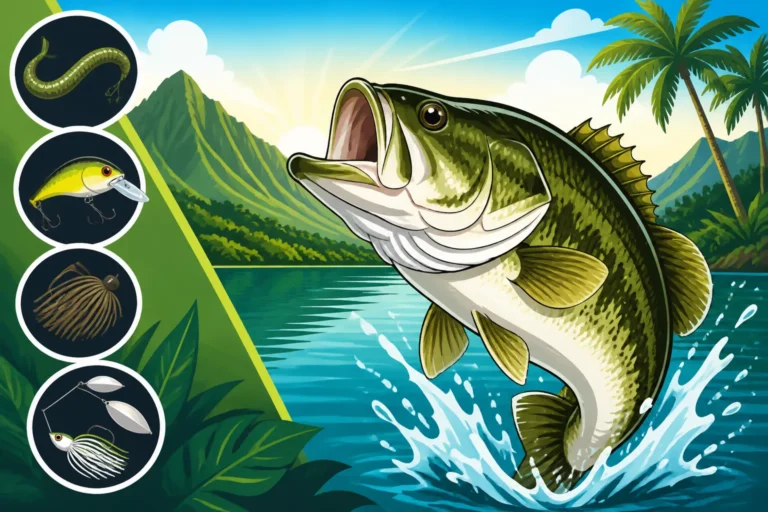
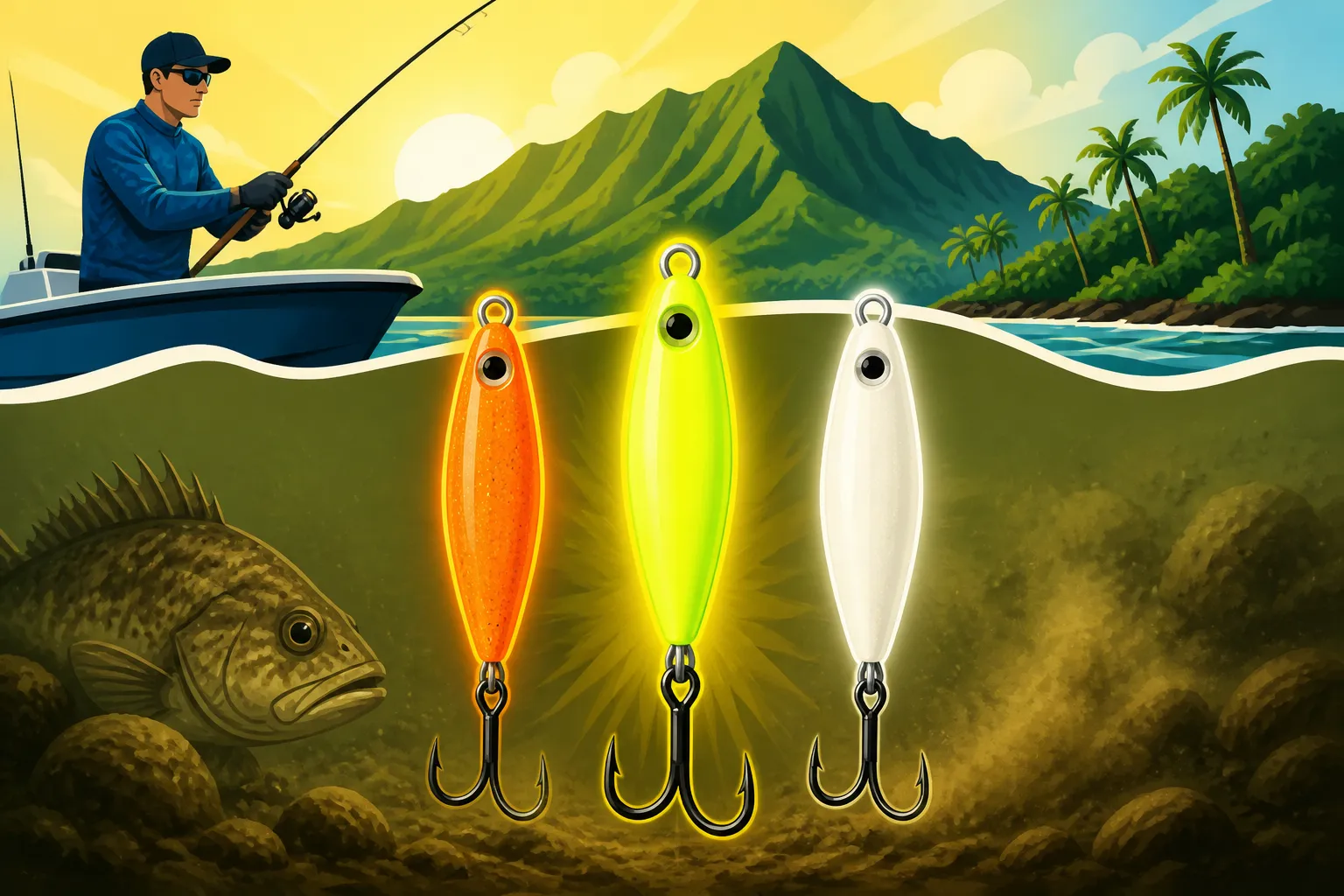
One of the absolute champions for murky water is chartreuse. This vibrant yellow-green color is often one of the last colors to disappear in the water column, making it incredibly effective. It's almost universally recommended for stained or muddy conditions, whether you're targeting freshwater bass or deep-sea bottomfish. Many anglers targeting opakapaka and onaga with jigs find chartreuse or chartreuse combinations to be killer in deeper, dimmer conditions that mimic murk.
Another fantastic option is bright orange. Similar to chartreuse, orange maintains its visibility surprisingly well in low light, especially when there’s some ambient light filtering down. It creates a bold, distinct presence that fish can pick up, particularly those that might be sight-feeding on crustaceans or other brightly colored bottom dwellers. Think about those vibrant shrimp or crabs that stand out against the reef – orange can mimic that natural pop.
Hot pink is another dark horse that surprises many. While it might seem counterintuitive since red light disappears quickly, pink often carries a strong UV signature that can make it pop to fish even when it looks dull to the human eye. In murky coastal areas where papio and smaller ulua might be lurking, a pink grub or jighead can be incredibly effective. Consider trying this, especially if you're targeting fish in shallower, turbid areas closer to shore where some light still penetrates.
Finally, a stark white or bright yellow can also be very effective, particularly if they have a fluorescent quality. White creates a very strong contrast against a dark, murky background, making it easy to spot. These colors are not about blending in; they're about screaming for attention. When you're dropping a jig into an area with poor visibility, the last thing you want is for your lure to become invisible. These bright, almost unnatural colors are designed to overcome that challenge.
Glow-in-the-Dark and UV-Enhanced Lures
When conventional bright colors aren't enough, it's time to bring out the big guns: lures that actively emit or reflect light. This is especially true when fishing deeper spots where natural light struggles to reach, even in clear conditions, let alone murky ones.
Glow-in-the-dark lures are a game-changer for deep-water bottomfishing or when fishing in extremely turbid conditions. These lures absorb light from the surface (or from a flashlight charge) and then slowly emit it, creating a persistent, enticing glow underwater. Species like opakapaka, onaga, and even ulua in deeper channels can be incredibly attracted to this steady light source. The glow acts as a beacon, drawing fish in from a distance when they can't rely on sight. When you're searching for these specialized lures or the right glow sticks to insert into your soft plastics, places like Amazon often have a fantastic selection that you might not find in local tackle shops. Having a few glow jigs in your tackle box for those dark, murky days is a non-negotiable for serious bottomfish anglers.
UV-enhanced lures are a slightly different beast. While they don't glow in the traditional sense, they reflect ultraviolet light, which penetrates deeper and more effectively into the water column than visible light. Many baitfish and crustaceans have natural UV reflective properties, so these lures mimic a very natural signal that fish are attuned to. Even if a lure looks dull to us in murky water, if it has a strong UV signature, it can still appear vibrant and distinct to a fish. Many modern soft plastics, jig skirts, and even some hard baits now incorporate UV properties. It’s a subtle advantage, but one that can make all the difference in challenging conditions. Look for lures labeled "UV bright" or "UV reactive."
Natural-Looking Baits and Darker Silhouettes
While it might seem contradictory after discussing bright and glowing lures, there are scenarios in murky water where darker, more natural-looking colors can still be highly effective. This approach relies on creating a strong silhouette against the limited ambient light from the surface.
Imagine a dark shape passing in front of a faint light source. That's the principle at play here. When you have murky water that's dark but still allows some diffused light from above, a lure in black, dark blue, or deep purple can create a very clear, distinct outline that fish can detect with their eyes, even if they can't discern details. This is particularly effective for predatory fish that ambush prey, as a dark silhouette can appear larger and more substantial than a brightly colored lure that might blend into the diffuse light.
For bottomfish like ulua or even some larger papio that might be hunting in turbid inshore areas, a dark-colored jig or soft plastic grub can often trigger strikes. The key here is the contrast in value (lightness/darkness) rather than color hue. A black lure against a slightly lighter, murky background will stand out. This approach also works well if the murky water is particularly deep or dark, mimicking the appearance of natural prey that fish might be accustomed to seeing as mere shadows. When choosing soft plastics, consider darker shades of purple, brown, or black, especially if they have some glitter or flecks that might catch any available light.
Rigging and Technique Considerations for Murky Water
Lure color is just one piece of the puzzle. When fishing in murky conditions, you need to adjust your entire presentation to maximize your chances. Fish are relying on different senses, so you need to appeal to them.
Vibrations and Scent: Beyond Just Color
Since sight is diminished, engaging a fish's lateral line and sense of smell becomes paramount. This is where incorporating vibrations and scent can turn a slow day into a productive one.
Vibrations are incredibly important. Fish use their lateral line to detect subtle pressure changes in the water, allowing them to "feel" prey moving nearby. Lures that produce strong vibrations can be detected from a greater distance in murky water. Think about jigs with erratic actions, soft plastics with paddle tails that thump, or even lures equipped with rattles. A noisy jig that clacks against the bottom or a soft plastic with a strong tail kick can send out distress signals that bottomfish can't ignore, even if they can't see it clearly. When you're looking for these types of lures or even small rattle inserts to add to your existing soft plastics, Amazon is a convenient place to explore a wide variety of options.
Scent attractants are another absolute must for murky conditions. If a fish can't see your lure, give it something to smell! There are countless commercial scent gels, sprays, and pastes available that can be applied to lures. These products, often made with fish oils, amino acids, or pheromones, create a scent trail in the water that fish can follow directly to your bait. You can apply them liberally to jigs, soft plastics, or even live bait. Some soft plastics come pre-impregnated with scent, making them a dual threat with color and smell. When adding scent, don't be shy; you want a strong, lasting trail that disperses in the water. Remember, your goal is to make your lure irresistible to a fish that might be relying almost entirely on its olfactory senses.
Slowing Down Your Presentation and Lure Action
In clear water, a fast, erratic retrieve can mimic fleeing baitfish. In murky water, that same retrieve might just send your lure zipping past unseen and unfelt. A slower, more deliberate presentation is often the key to success.
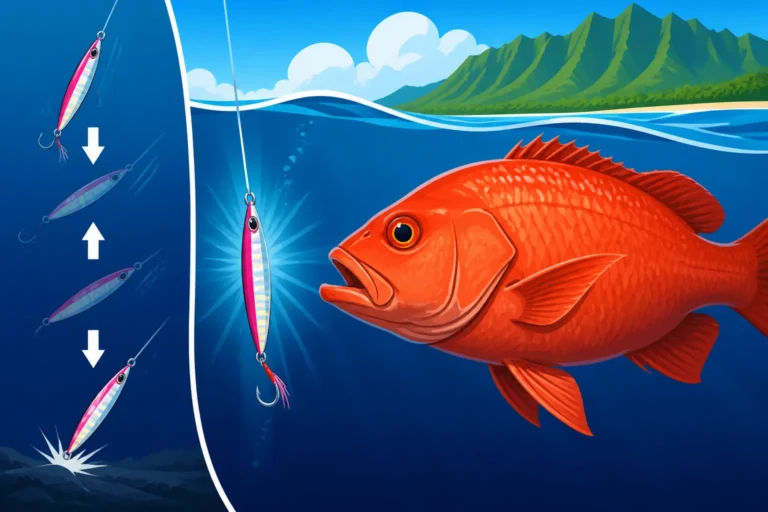
When bottomfishing in murky conditions, give the fish ample time to locate your lure. This means a slower retrieve speed and pauses in your action. Instead of a rapid jigging motion, try more exaggerated, slower lifts and drops. Let the lure sit on the bottom for a few seconds longer, stirring up a small puff of sediment, which can attract curious bottom dwellers. The vibrations and scent will have more time to disperse, and a slower-moving target is much easier for a fish to intercept when its vision is impaired. Think of it like walking slowly through a dimly lit room; you move cautiously to avoid bumping into things. Fish do the same.
For jigging, consider a "dead stick" approach where you let the jig rest on the bottom for a prolonged period, only twitching it occasionally. Or, try long, slow sweeps of the rod, allowing the jig to rise and fall gracefully. This less aggressive action gives bottomfish, which might be more sluggish or less prone to chase in poor visibility, a better opportunity to move in for the strike. This technique is especially useful when targeting species like the Onaga (Ruby Snapper) Habits, which are often found on deep, dark bottoms and rely heavily on scent and subtle movements.
Line Strength and Leader Choices in Low Visibility
One of the few advantages of murky water is that fish are far less likely to be "line shy." This means you can often get away with heavier line and leader choices than you might typically use in crystal-clear Hawaiian waters.
In clear water, a thin fluorocarbon leader is often critical to avoid spooking wary fish. However, in murky conditions, visibility is already so low that the diameter of your line becomes much less of a factor. This means you can opt for a heavier fluorocarbon or monofilament leader, increasing your abrasion resistance against rough bottom structure without sacrificing bites. If you're fishing around sharp coral or lava rock, being able to use a 60-80 lb leader for species like ulua, instead of a lighter 40 lb, can save you from frustrating break-offs. This is particularly true if you're engaging in Bottomfishing in Hawaii, where snags are a constant threat.
Similarly, your main line's visibility is also less of a concern. While many anglers prefer braided line for its sensitivity and strength, the color of the braid typically doesn't matter much in murky conditions. Focus instead on choosing a line that gives you the best feel for the bottom and can withstand the fight from powerful bottomfish. The less you have to worry about a fish seeing your line, the more you can focus on making sure your gear is robust enough to land it.
Practical Tips and Gear for Murky Water Bottomfishing
Tackling murky water requires a slight shift in mindset and sometimes, a few extra tools in your arsenal. It's about being prepared for low visibility and maximizing every advantage you can get.
Essential Gear to Have on Hand
Beyond just your rods and reels, having the right ancillary gear can make a huge difference when the water clarity drops.
First, consider a good headlamp or flashlight. This is invaluable, especially if you're fishing at dawn, dusk, or night, which can often be prime times for bottomfish. You'll need it to charge glow lures, tie knots, and generally see what you're doing. A light with a red-light setting can preserve your night vision while still providing enough illumination for tasks.
Next, a good supply of extra tackle is always wise. Murky water often means fishing closer to structure, increasing the chances of snagging. Having extra jigs, weights, and hooks in your preferred murky-water colors is a smart move. Don't forget those scent attractants we talked about earlier. Keep a variety on hand, as some days fish might prefer one scent over another.
Finally, a sturdy pair of gloves can protect your hands from line cuts and sharp fish, especially when you might not see your catch as clearly during the landing process. You can find a wide range of these practical fishing accessories, from headlamps to tackle storage and gloves, conveniently on Amazon. Being well-prepared ensures you can focus on the fishing, not on what you forgot.
Locating Fish in Challenging Conditions
Finding fish is always the first challenge, and murky water just ratchets up the difficulty. Your electronics and understanding of structure become even more critical.
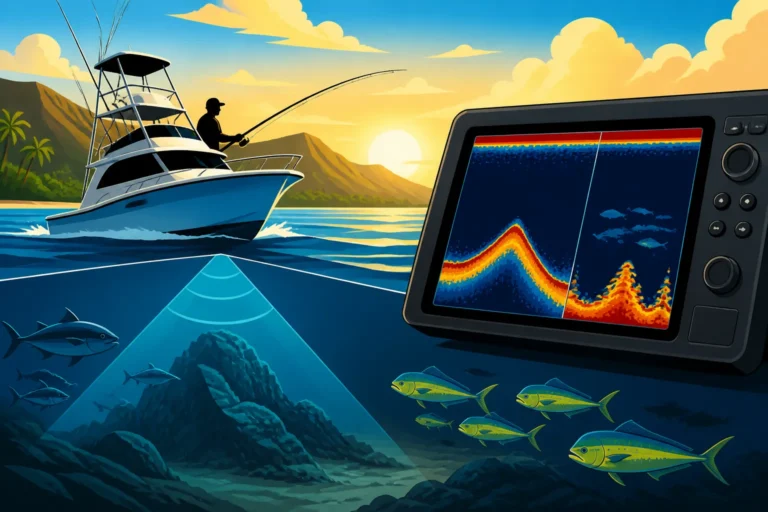
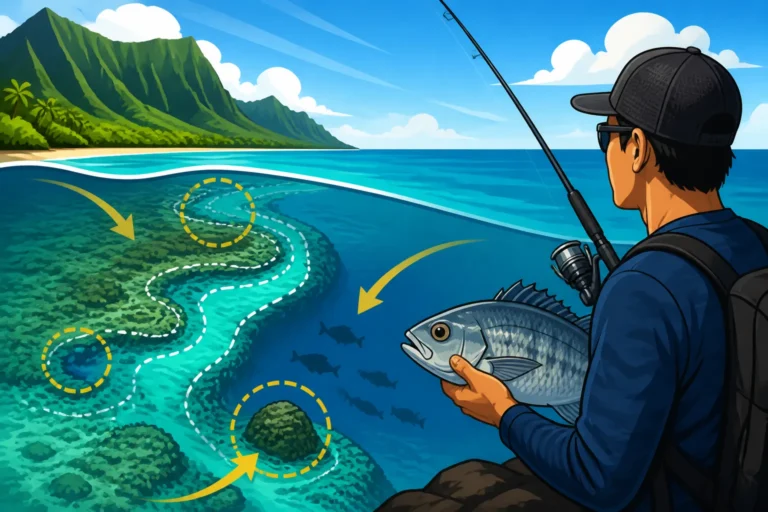
Your sonar or fishfinder is your best friend in these conditions. Since you can't see the fish visually, you must rely on your electronics to paint a picture of the underwater world. Look for distinct marks on the bottom, bait balls, and changes in depth or structure. Bottomfish often congregate around ledges, rock piles, and submerged pinnacles. Pay close attention to these "fish magnets" even if they look barren on your screen in clear water, as murky conditions might just push fish deeper into these hiding spots. Knowing How to Locate Bottomfish Structure with Sonar is a skill that pays off immensely here.
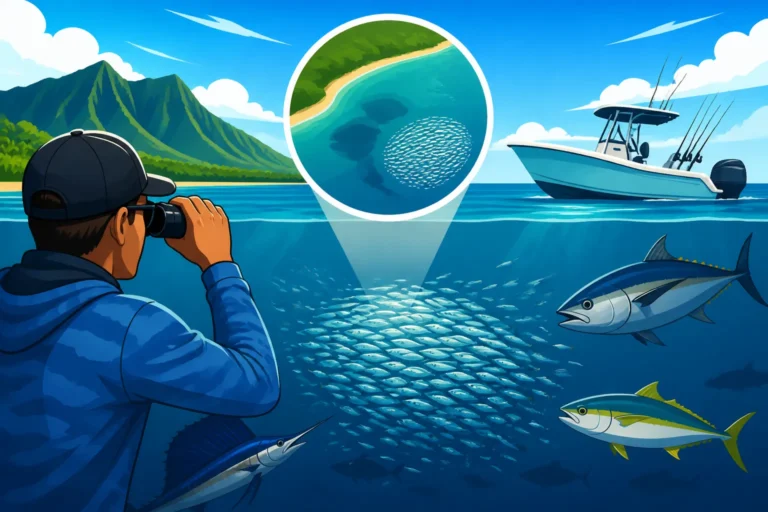
Current seams and natural funnels are also prime areas to investigate. Murky water doesn't mean fish stop eating; it just means they might change their feeding patterns. Look for areas where clearer water meets turbid water, or where currents concentrate baitfish. These transition zones can be highly productive. Similarly, channels between reefs or points where current accelerates can funnel both bait and predatory bottomfish.
Troubleshooting When Fish Aren't Biting
Even with the right colors and techniques, some days are just tough. Don't get discouraged; instead, adopt a troubleshooting mindset.
If your usual murky water colors aren't producing, experiment. Switch from a chartreuse jig to a pink one, or try a dark purple soft plastic. Sometimes a subtle shift in hue or a different size can make all the difference. Remember, fish might be keying in on a very specific type of prey that day.
Vary your retrieve and lure action. If a slow retrieve isn't working, try a slightly faster one to create more vibration, or add a longer pause. Experiment with how high you lift the jig off the bottom. Sometimes, fish just want a different presentation. If you've been jigging, try a straight retrieve with a scented soft plastic.
Lastly, if all else fails with your artificials, consider adding a piece of natural bait to your jig or hook. A small piece of squid, an opelu strip, or a chunk of ahi belly can provide a powerful scent and taste profile that even the most reluctant bottomfish can't resist. You can find a variety of bait rigs and components easily on Amazon to rig up your natural offerings. Remember, the goal is to get a bite, and sometimes a combined approach of artificial and natural is the most potent.
Lure Color Effectiveness in Murky Water Bottomfishing
To help visualize your options, here's a quick guide to common lure colors and their general effectiveness in varying murky conditions for Hawaii bottomfishing.
| Lure Color | Primary Mechanism in Murky Water | Best For | Notes |
|---|---|---|---|
| Chartreuse | High contrast, visible light penetration | General murkiness, moderate depth, rain runoff | Often the top performer; excellent for attracting attention from a distance. |
| Bright Orange | High contrast, some light penetration | Moderate murkiness, shallower areas, mimicking crustaceans | Good for active predators; stands out well against darker backgrounds. |
| Hot Pink | UV reflection, high contrast | Moderate to light murkiness, deeper water (UV), inshore turbid zones | Strong UV signature can make it "pop" to fish eyes even when it looks dull to humans. |
| White/Yellow | Maximum contrast, brightness | Heavy murkiness, dark water conditions, strong silhouette | Creates a stark, bright target; often effective when other colors fail. |
| Glow (Luminous) | Active light emission | Deep water, extreme murkiness, night fishing | Acts as a beacon; essential for areas with no ambient light. Remember to "charge" with a flashlight. |
| Dark Blue/Purple | Strong silhouette | Very dark murky water, deeper areas (silhouette against faint light) | Effective for ambush predators; presents a solid, easy-to-detect shape. |
| Black | Strongest silhouette | Extremely dark or deep murky water, low ambient light | Creates the most defined silhouette against any faint light source; good for shy or light-sensitive fish. |
Remember, this table provides general guidelines. The exact effectiveness can vary based on the specific species you're targeting, the depth, and the precise nature of the murkiness. Don't be afraid to experiment!
When you're out there on the water, whether you're targeting large Ulua (Giant Trevally) Fishing in Hawaii or smaller reef fish, understanding how to adapt to murky conditions is a valuable skill. It's not about giving up, but about adjusting your strategy and using the right tools for the job. You might even find that some of your best fishing days happen when other anglers stay home, frustrated by the lack of clarity. So, load up your tackle box with some vibrant and glowing lures, embrace the challenge, and remember that even in the murkiest waters, there are always fish waiting to be caught.
Disclaimer
Fishing involves inherent risks, including injury and drowning. Always prioritize safety, wear appropriate personal flotation devices, and be aware of your surroundings. Fishing regulations in Hawaii can change. It is your responsibility to check the latest rules and licensing requirements with the Hawaii Division of Aquatic Resources (DAR) before fishing. This guide is for informational purposes only and does not constitute professional advice.