How to catch ulua during a big surf swell
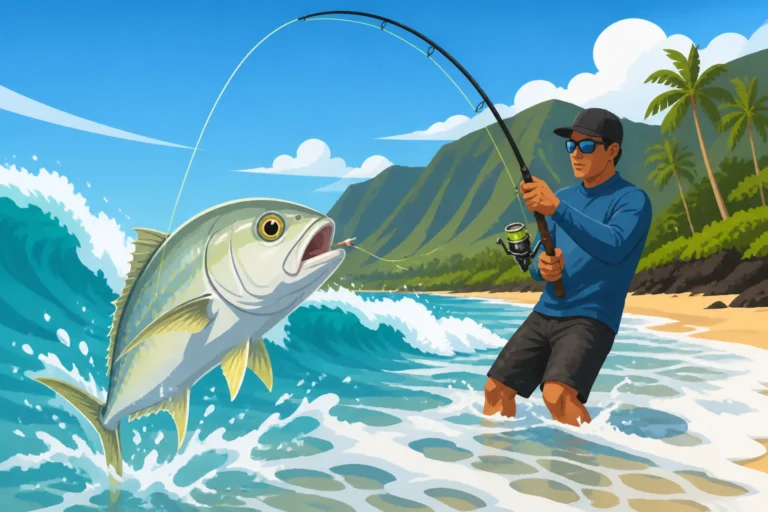
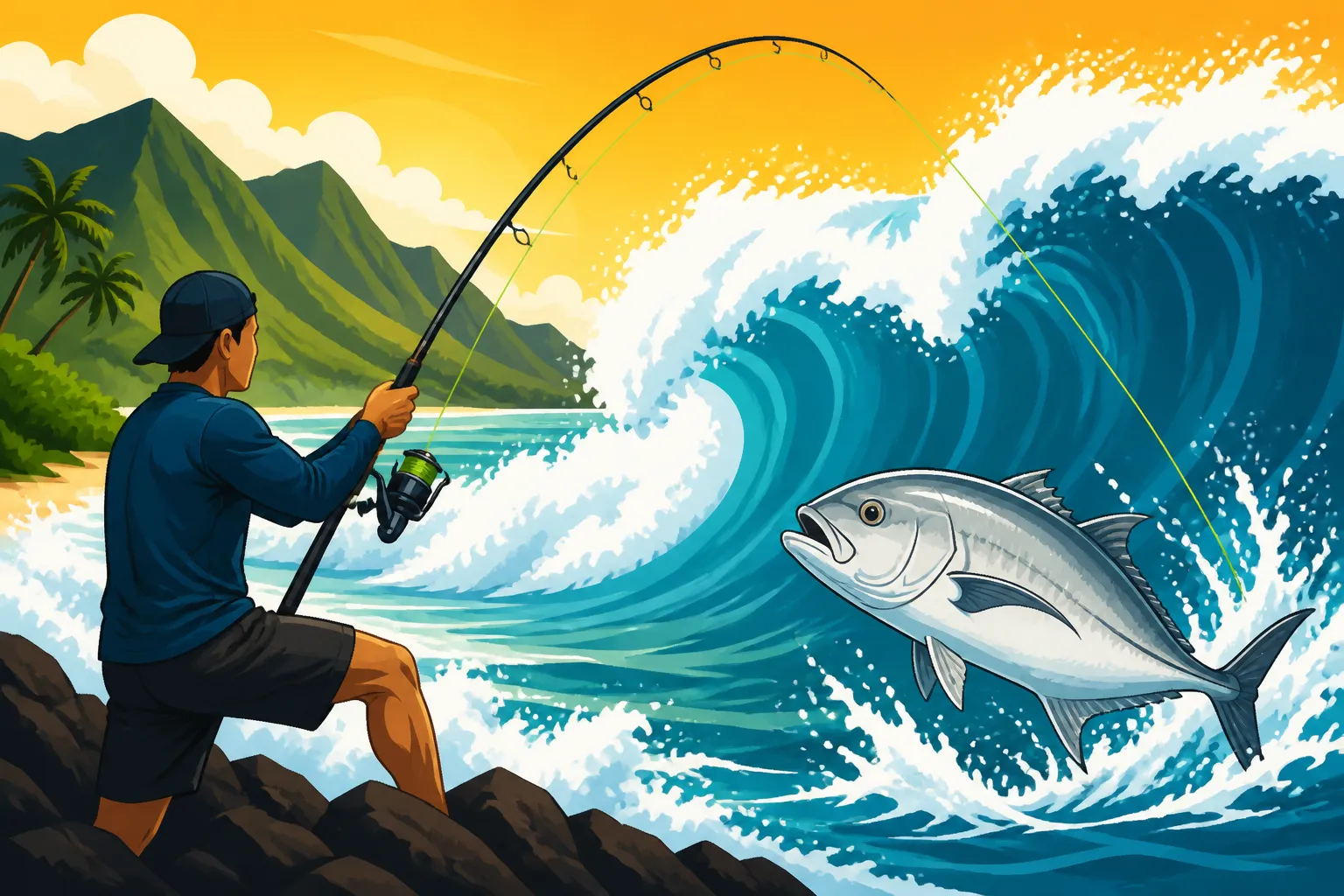
Fishing for ulua in Hawaii is an incredible experience, but when the ocean decides to show its true power with a big surf swell, it can feel like your chances of landing one of these magnificent trevally disappear faster than a baitfish in a feeding frenzy. The roar of the waves, the impossible currents, and the sheer force of the water can make traditional shore fishing seem utterly futile. But don't give up hope! This guide is all about equipping you with the knowledge and techniques to not just survive, but thrive, when targeting ulua during those epic big surf conditions.
Understanding Ulua Behavior in Big Surf
It might seem counterintuitive, but big surf conditions, while challenging for anglers, actually create prime hunting opportunities for ulua. These powerful predators are keenly aware of how the ocean's churn can work to their advantage, and understanding their behavior is the first step to success.
Why Ulua are Active During Swells
When those large swells start rolling in and crashing against the shoreline, they're doing a lot more than just looking impressive. This immense energy stirs up the ocean floor, dislodging all sorts of delicious morsels that ulua absolutely feast on. Think about it: crabs and other crustaceans get tumbled out of their hiding spots in the rocks and sand, making them easy targets. Limu (seaweed) and other marine vegetation are ripped free, which in turn displaces small baitfish and invertebrates that feed on them. It's a natural buffet line for opportunistic predators.
Beyond the food bonanza, big surf also oxygenates the water, which can invigorate fish and make them more active. The reduced water clarity that often accompanies large swells also works in the ulua's favor. They are ambush predators, and murky water provides excellent cover, allowing them to approach unsuspecting prey without being easily seen. They use the powerful currents and the chaos of the whitewater to their advantage, lurking in strategic spots, ready to pounce. It's a high-energy environment, and these powerful fish are perfectly adapted to exploit it.
Reading the Water: Rips, Channels, and Washes
During big surf, the ocean transforms into a complex system of currents and features that can be baffling if you don't know what you're looking for. However, with practice, you can learn to read the water and identify the "highways" and "restaurants" that ulua frequent. The key is to look for areas where the water is moving, especially where it's pulling away from shore or creating deeper pockets.
One of the most important features to spot are rip currents. These are narrow, powerful currents that flow quickly away from the shore, often appearing as a channel of choppy or discolored water where waves aren't breaking as consistently. Ulua love to patrol the edges of these rips, using them to conserve energy while waiting for disoriented baitfish or crustaceans to be swept out. Setting your bait just outside a rip current, or letting it drift into its calmer edges, can be incredibly effective. Another prime location is in channels – deeper troughs or cuts between sandbars or reef structures. These natural pathways offer a sheltered route for ulua to move closer to shore to feed without being constantly battered by waves. You'll often see waves breaking on either side of a channel, with the water in the middle appearing darker and less turbulent. Finally, look for areas where waves are consistently washing over rocky ledges or reef flats. These "washes" create aerated, food-rich zones where bait gets trapped and dislodged. Ulua will often sit just on the seaward edge of these washes, waiting for food to be flushed off the reef. If you're looking for more general guidance on understanding the ocean, you might find our guide on Shore Fishing Techniques for Hawaii helpful, even if it doesn't specifically address big surf.
Essential Gear and Bait for Big Surf Ulua Fishing
Tackling ulua in big surf isn't for the faint of heart, and it certainly isn't for flimsy gear. Your equipment needs to be robust, capable of handling immense strain, and reliable when it matters most. Skimping on tackle in these conditions is a surefire way to lose a fish of a lifetime.
Heavy-Duty Rods, Reels, and Line
When you're facing down powerful waves and an equally powerful fish, your rod and reel are your first line of defense. You'll want to invest in a serious surf setup. Look for longer, stout surf rods, typically in the 10 to 14-foot range. These longer rods provide the leverage needed for long casts, help keep your line above breaking waves, and have the backbone to turn a large ulua. Materials like graphite or composite blends offer a good balance of strength and sensitivity.
For reels, a large capacity conventional or heavy-duty spinning reel is essential. Models from reputable brands like Penn, Daiwa, or Shimano (which you can often find great deals on through Amazon) are popular choices among experienced ulua anglers. These reels need excellent drag systems, corrosion resistance, and the capacity to hold plenty of heavy line. We're talking 50-80 lb test mono or 80-100 lb test braided line. While braid offers incredible sensitivity and casting distance, a shock leader of heavy monofilament (100-200 lb) is crucial to absorb the initial impact of a strike and provide abrasion resistance against sharp rocks and coral. Don't forget a sturdy sand spike or rock holder to keep your rod secure when you're not actively holding it – a lost rod in big surf is a real heartbreaker. For more specific recommendations, check out our article on Best Rod setup for surfcasting ulua.
The Best Baits and Rigs for Challenging Conditions
Choosing the right bait and rigging it properly are paramount when fishing for ulua in big surf. Your bait needs to be substantial enough to attract a large predator, hardy enough to stay on the hook through powerful wave action, and presented effectively to get a bite.
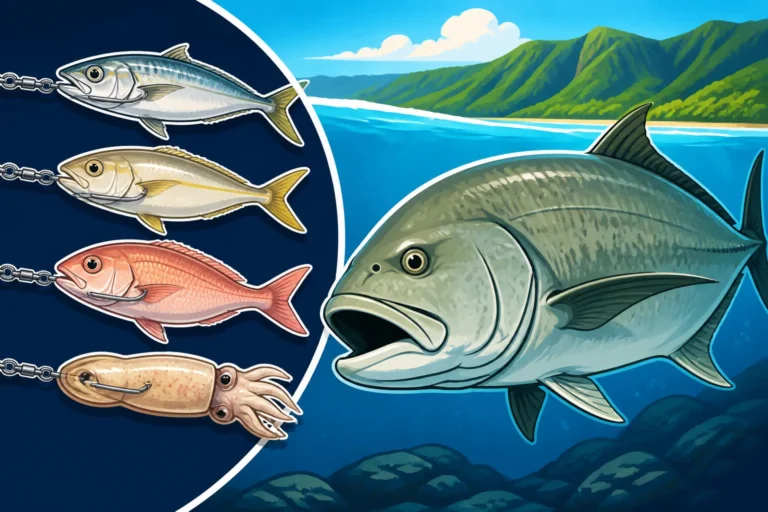
Large, hardy baits are your best bet. Whole or large chunks of fresh opelu (mackerel scad), akule (bigeye scad), or hage (triggerfish) are excellent choices. Many local anglers also swear by octopus (tako), as its tough texture helps it stay on the hook longer and its natural scent is irresistible to ulua. You can often source these baits from local fish markets, or, if you're ambitious, catch them yourself.
The sliding bait rig is the go-to setup for big surf ulua fishing. This rig allows your bait to move more naturally with the current while your heavy sinker stays put, minimizing snags. It typically involves a large, heavy sinker (pyramid or Sputnik sinkers in the 6-12 ounce range, or even heavier depending on the current) that is threaded onto your main line, followed by a swivel. A heavy leader (100-200 lb fluorocarbon or monofilament) with a stout, large hook (like a 10/0-14/0 circle hook or J-hook) is then tied to the other end of the swivel. The heavy sinker is designed to dig into the sand or wedge into rocks, holding your bait in the strike zone. Sometimes, a fish-finder rig with a breakaway sinker can also be effective in particularly snaggy areas. You can find specialized terminal tackle for these rigs on Amazon too, ensuring you're ready for whatever the ocean throws at you. Don't forget to look into Sliding Bait Techniques for Ulua for a deeper dive into this specific rig.
Strategic Techniques for Successful Ulua Angling in Big Surf
Successfully catching ulua during a big surf swell requires more than just heavy gear; it demands strategic thinking, precise execution, and a whole lot of patience. These conditions test your resolve, but with the right approach, you can turn frustration into triumph.
Positioning and Casting Strategies
Your position on the shoreline is critical, not just for casting, but for safety. First and foremost, never turn your back on the ocean during a big swell. A rogue wave can sweep you off your feet and into dangerous conditions in an instant. Always maintain situational awareness. Look for elevated positions if possible, giving you a better view of the incoming waves and the ability to spot rips and channels. Scouting your chosen spot during a lower tide, if safe, can reveal underwater structures that become prime feeding grounds when the tide comes in and the surf picks up.
Casting in big surf is an art. You need to generate enough power to launch your heavy bait and sinker beyond the immediate whitewater and into the deeper water where ulua are likely to be lurking. This often requires a "power cast" or a "pendulum cast," techniques that take practice to master safely. Timing your cast is crucial. Watch the sets of waves; you want to cast immediately after a large set has broken, during the momentary lull before the next set rolls in. This gives your bait a chance to sink and settle without being immediately washed back to shore. Aim for the edges of rip currents or the darker water of channels you've identified. Remember, getting your bait into the right spot and keeping it there is half the battle. If you're new to surfcasting, consider practicing your casting technique with lighter weights on a calm day.
Setting Up and Waiting: Patience is Key
Once your bait is out there, securely anchored, the waiting game begins. But "waiting" isn't passive; it's an active exercise in vigilance and patience. Your rod needs to be securely set in a robust sand spike or a rock holder that can withstand the pull of heavy waves and the sudden strike of an ulua. Many anglers attach bells or electronic bite alarms to their rod tips, as the constant noise and movement of big surf can make it difficult to detect a bite visually.
It's important to differentiate between wave action jostling your line and a true ulua bite. Ulua bites are usually unmistakable – a powerful, sudden, and sustained pull that can nearly rip the rod from its holder. Resist the urge to constantly check your bait or reel in prematurely. Ulua are not always fast biters; they might mouth the bait first. When that unmistakable strike comes, you need to react instantly with a strong, sweeping hookset to drive the hook home, especially with circle hooks. Then, prepare for a battle. The immense power of these fish, combined with the relentless force of the breaking waves, will test every fiber of your being and every component of your tackle.
Fighting and Landing Ulua in Heavy Seas
Landing a large ulua in calm conditions is a challenge, but in big surf, it becomes an epic struggle. These fish are renowned for their brute strength, powerful runs, and dirty fighting tactics, often heading straight for the nearest reef or rock. The added force of the waves amplifies every move they make.
When an ulua hits, immediately lean into the rod, maintaining a steady, heavy pressure. The goal is to turn the fish away from structure and prevent it from "holing up." You'll need to use your body weight and the power of your rod to pump and reel, gaining line when you can. Pay close attention to the waves. Sometimes, you can use the receding water of a wave to your advantage, gaining precious yards of line as the fish is pulled shoreward. However, be prepared to brace yourself when an incoming wave slams into your line, adding incredible strain.
Teamwork is invaluable if you're fishing with a buddy. One person can focus on fighting the fish, while the other prepares for the landing. For landing, especially from rocky points or steep beaches, safety is paramount. Never wade into dangerous surf to grab a fish. Wait for a lull in the waves, or guide the fish into a calm wash zone where you can safely secure it with a gaff or by hand, if possible, without risking your own safety. Remember, a fish of this size and power, combined with challenging conditions, requires respect and caution. Our article on Ulua Average Size in Hawaii might give you an idea of what you're up against! And for those wondering about the regulations, check out Hawaii Bag and Size Limits by Species to make sure you're compliant.
Safety First: Navigating Dangerous Surf Conditions
This cannot be stressed enough: your safety is always more important than catching a fish. Big surf in Hawaii can be incredibly dangerous, even for experienced ocean-goers. Knowing when and where to fish, and what precautions to take, is paramount.
Assessing Conditions and Knowing Your Limits
Before you even head out the door, check the surf forecast. Websites like Surfline or local news weather reports can give you crucial information about wave heights, swell direction, and period. Understand that a "small" swell to a surfer might still be a "big" swell for a shore angler, especially if it's hitting a particular coastline directly. Pay attention to local beach closures or warnings. If it looks too big, or if you feel uncomfortable, don't go. There will always be another day to fish.
Always be honest about your own physical capabilities and experience level. Big surf fishing is physically demanding and requires a high level of ocean awareness. It's not the time to be learning basic casting techniques or testing new gear. If you're unsure, go with an experienced mentor or choose a calmer day. Never fish alone in challenging conditions. Having a buddy can literally be a lifesaver, whether it's for spotting rogue waves, helping with a difficult landing, or assisting in an emergency. Remember to respect the ocean's power. If you're just starting out, there are many Best Shore Fishing Spots in Hawaii that are more beginner-friendly.
Essential Safety Gear and Practices
Beyond your fishing tackle, certain safety items are non-negotiable when fishing in big surf.
- Footwear with excellent grip: Slippery rocks and wet sand are common hazards. Closed-toe water shoes or reef boots with sturdy soles will protect your feet and prevent falls.
- Life Vest (PFD): If you're fishing from a rocky ledge where you could be swept into deeper water, or if you're venturing close to the water's edge, wearing a personal flotation device is a smart, potentially life-saving decision. Even if you're a strong swimmer, the currents and waves can be overwhelming.
- A sturdy, comfortable backpack: To carry water, snacks, sunscreen, a first-aid kit, and your cell phone (in a waterproof bag).
- Communication: Always let someone know where you are going and when you expect to return. Have a fully charged cell phone.
- Sun Protection: The Hawaiian sun is intense. Wear a hat, sunglasses, and plenty of reef-safe sunscreen.
- Don't take unnecessary risks: Avoid areas with extremely steep drop-offs, treacherous rocks, or powerful shore break. Stick to areas you know or have scouted carefully.
For your catch, having a well-insulated cooler, perhaps one purchased conveniently from Amazon, is practical for keeping your fish fresh. Most importantly, trust your instincts. If a spot feels unsafe or the conditions suddenly worsen, pack up and move to a safer location, or call it a day. Ulua are magnificent fish, but no catch is worth risking your life. For comprehensive rules, make sure to read the Hawaii Fishing Regulations Explained before heading out.
Recommended Big Surf Ulua Gear
To help you get ready for your next big surf ulua adventure, here’s a quick overview of essential gear recommendations.
| Category | Item | Key Features & Considerations |
|---|---|---|
| Rod | Heavy-Duty Surf Rod | 10-14 feet, fast action, strong backbone (e.g., graphite or composite) |
| Reel | Large Capacity Reel | 50-80 lb mono or 80-100 lb braid capacity, strong drag, corrosion-resistant (spinning or conventional) |
| Main Line | Braided Line | 80-100 lb test, good casting distance, sensitive to bites |
| Shock Leader | Monofilament | 50-80 lb test, 20-30 feet long, absorbs shock, abrasion resistant |
| Casting Leader | Fluorocarbon/Mono | 100-200 lb test, 3-5 feet long, abrasion resistant, low visibility (fluorocarbon) |
| Hooks | Circle or J-Hooks | 10/0 – 14/0, strong, sharp, appropriate for large baits |
| Sinkers | Pyramid/Sputnik | 6-12 oz (or heavier), designed to hold bottom in heavy current |
| Bait | Large, Fresh Baits | Whole opelu, akule, hage, octopus, large chunks of mackerel, squid |
| Rod Holder | Sand Spike/Rock Pod | Sturdy, durable material (aluminum, PVC, rebar) to secure rod in sand or rocks |
| Safety Gear | PFD, Grippy Shoes | Essential for personal safety; good traction is crucial on wet surfaces |
Disclaimer
Please be aware that fishing regulations in Hawaii can change. It is your responsibility to check the latest rules and regulations from the Hawaii Division of Aquatic Resources (DAR) before engaging in any fishing activities. Always prioritize safety and respect the marine environment.