Best jig weight for bottomfishing in deep water
Trying to dial in the perfect jig weight for deep water bottomfishing in Hawaii can feel like a never-ending puzzle. You've got the current pulling, the line stretching, and that nagging doubt about whether your presentation is even reaching the fish, let alone enticing them. It's a common frustration, especially when you're targeting those elusive deep-dwelling uku, opakapaka, or onaga. This guide is here to untangle that complexity, helping you understand the crucial factors that dictate your jig weight choice, ensuring your lure gets down to the strike zone and stays there effectively.
Understanding the Unique Challenges of Deep Water Bottomfishing
Deep water bottomfishing in Hawaii isn't like casting a spoon from the beach. You're dealing with immense depths, often hundreds of feet, where conditions above the surface might be calm but the underwater world is a dynamic, complex environment. Successfully getting your jig to the bottom and working it effectively requires a precise understanding of these challenges.
Current and Drift: The Underwater River
One of the biggest adversaries in deep water is the current. Below the surface, currents can be surprisingly strong and run in different directions than the surface current or wind. Imagine trying to drop a feather directly down into a strong river – it's going to get swept away. The same principle applies here. A jig that's too light will simply "kite" or get swept away horizontally by the current, never truly reaching the desired depth or remaining in the strike zone for long. This is incredibly frustrating, as you spend more time guessing where your jig is than actively fishing. The deeper you go, the more pronounced this effect becomes. Sometimes you might think you're on the bottom, only to realize your jig is actually hundreds of feet away, far from any fish-holding structure you marked on your sonar.
Depth and Line Scope: The Sagging String Effect
The sheer depth itself presents another significant hurdle. When you're dropping a line 300, 500, or even 800 feet, gravity isn't the only force at play. The weight of the fishing line itself, combined with the drag of the line through the water, creates what's known as "line scope." This means that for every foot of depth, you might have to let out significantly more than a foot of line to reach the bottom. A lighter jig exaggerates this, causing your line to bow out dramatically, making it difficult to feel subtle bites and even harder to maintain proper contact with your lure. It's like trying to pull a wagon with a bungee cord – there's a lot of give and lag. You want a direct connection to your jig to maximize sensitivity and hook-setting power.
Target Species and Presentation: Matching the Meal
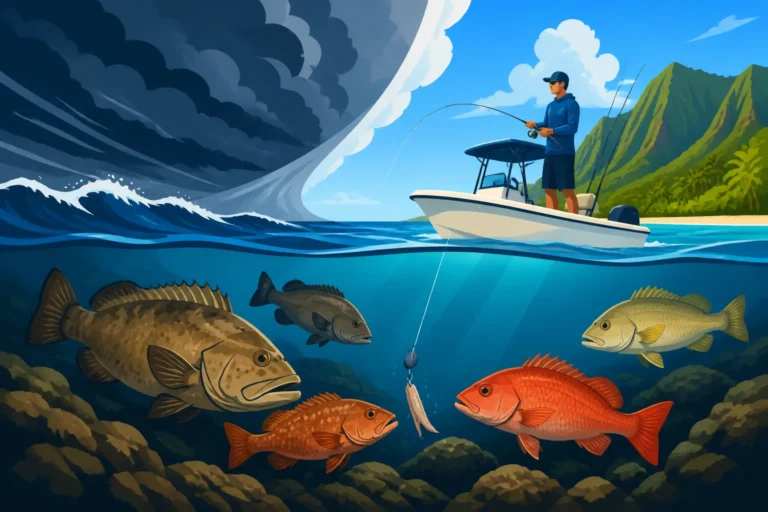
Different deep water Bottomfish Species of Hawaii have varying feeding habits and preferences. Are you targeting an aggressive uku that might chase a fast-moving jig, or a more lethargic onaga that prefers a slower, more subtle presentation? The weight of your jig, along with its design, directly impacts how it behaves in the water column. A heavy, slender jig will plummet quickly and retrieve with a tight, erratic action. A lighter, wider jig might flutter down more slowly, imitating a wounded baitfish, but it sacrifices depth penetration and current resistance. Understanding what you're fishing for and how that fish typically reacts to a lure is crucial. You want your jig to mimic natural prey and behave in a way that triggers a strike, not just get to the bottom.
Factors Influencing Your Jig Weight Choice
Choosing the right jig weight isn't a "one size fits all" situation. There are multiple variables at play, and a seasoned angler knows how to quickly assess these conditions and adapt their tackle. It's all about finding that sweet spot where your jig gets to the fish and performs as intended.
Water Conditions: Current Strength, Wind, and Boat Drift
This is perhaps the most critical factor. On any given day in Hawaii, the current can be mild or screaming, and the wind can whip up a chop that pushes your boat around.
- Current Strength: If you're fishing an area known for strong currents, like many of the deep drop-offs along the Kona Coast, you'll immediately know you need heavier jigs. When you drop your jig and it takes an eternity to reach the bottom, or you let out excessive line, it's a clear sign you need to up the weight. I've been in situations where a 6oz jig was perfect one day, and the next, I needed a 12oz or even 16oz just to get a vertical presentation.
- Wind and Boat Drift: Even if the underwater current isn't furious, a strong wind pushing your boat can cause a significant drift. This drift, combined with depth, creates a severe angle on your line, making a lighter jig ineffective. You might be dropping straight down in theory, but the boat's movement drags your line horizontally. This is where mastering How to Locate Bottomfish Structure with Sonar becomes even more crucial, as a jig that's drifting too far off target is useless.
Rod, Reel, and Line Setup: The System's Capacity
Your fishing gear isn't just a collection of individual components; it's a system that needs to work in harmony.
- Rod Power and Action: A light inshore rod designed for papio isn't going to handle a 10oz jig effectively at 500 feet. You need a stout rod with enough backbone to both cast/drop heavy jigs and, more importantly, to fight powerful deepwater fish. Look for rods rated for heavier lure weights and line classes.
- Reel Size and Line Capacity: Your reel needs to hold enough line, often hundreds of yards of braided line, to reach those deep zones. Furthermore, it needs a strong drag system to handle the heavy weights and the powerful runs of deepwater species.
- Line Type: Braided line is almost universally preferred for deep water jigging due to its minimal stretch and thin diameter, which significantly reduces current resistance compared to monofilament. However, even with braid, heavier jigs are necessary to cut through the water efficiently. Using a fluorocarbon leader is also standard practice for stealth and abrasion resistance. When considering your setup, remember that all these components must be balanced. Trying to cast a 12oz jig on a light rod or reel is a recipe for disaster and potential gear damage. For more on optimizing your gear, check out our guide on Best Rig for Bottomfishing in Deep Water.
Jig Style and Profile: How Shape Influences Descent and Action
It’s not just about the weight; the actual shape and profile of your jig play a huge role.
- Slender, Streamlined Jigs: These jigs, often referred to as "knife jigs" or "speed jigs," are designed to cut through the water quickly and efficiently. They have minimal drag, allowing them to reach deep depths faster with less weight than a wider jig. Their action is often fast and erratic on the retrieve, mimicking fleeing baitfish, which is great for triggering reaction strikes from aggressive fish like uku.
- Wider, Flatter Jigs: Sometimes called "slow-pitch" or "flutter jigs," these have a broader profile designed to fall with a more tantalizing, wounded-fish flutter. They create more drag, meaning you might need a slightly heavier version of this style to reach the same depth as a streamlined jig in the same conditions. However, their slower, more seductive fall can be irresistible to certain deepwater species, especially when they're less aggressive. The choice between a narrow or wide profile often comes down to the activity level of the fish and the specific presentation you're trying to achieve.
Boat Size and Anchoring vs. Drifting: Stationary or Moving
How your boat is positioned is another significant factor.
- Anchoring: If you're able to anchor directly over a deepwater pinnacle or ledge, you can often get away with slightly lighter jigs because your boat isn't drifting. This allows for a more vertical presentation and less line scope. However, anchoring in deep water with strong currents can be extremely challenging and sometimes dangerous.
- Drifting: Most deep water bottomfishing in Hawaii is done while drifting. This is where current, wind, and boat speed become paramount. If you're drifting quickly, even with a strong current, you'll need heavier jigs to maintain a vertical presentation. Smaller boats might drift faster due to less hull resistance, requiring heavier jigs to compensate. Larger, heavier boats might drift slower, allowing for slightly lighter presentations, but they are still subject to significant line angle in strong currents. Understanding how your boat interacts with the elements is key to selecting the right weight.
Recommended Jig Weights for Various Depths and Conditions
Let's talk brass tacks about actual weights. While every fishing scenario is unique, there are some general guidelines that can help you get started and adapt as conditions change.
Shallow to Mid-Depths (50-200 feet)
When you're exploring the shallower edges of the deep drop-offs, perhaps targeting smaller opakapaka, taape, or even some of the larger papio that roam these depths, you generally won't need colossal weights.
- Typical Range: For depths between 50 and 100 feet, you might start with jigs in the 2-4 ounce (60-120 gram) range. This is usually sufficient for moderate currents and allows for good lure action.
- Mid-Range Depths (100-200 feet): As you push past the 100-foot mark, especially if there's any current or drift, you'll want to move up to 4-8 ounces (120-220 grams). This provides enough heft to quickly get your jig down and maintain a better angle on your line. For example, if you're jigging for something like a gray snapper (uku) around 150 feet off the Big Island, and there's a decent current, an 8-ounce knife jig is often a solid starting point. It's heavy enough to get down, but still light enough to work aggressively without completely fatiguing you.
Deep to Ultra-Deep Waters (200-800+ feet)
This is where the real deepwater bottomfishing comes into play, targeting trophy onaga, opakapaka, and other prized species. This realm demands serious weight.
- 200-400 Feet: In this depth range, currents can vary dramatically, but a good starting point for moderate conditions would be 8-12 ounces (220-340 grams). If the current is strong or your drift is fast, don't hesitate to jump to 14-16 ounces (400-450 grams). You need that mass to punch through the water column.
- 400-800+ Feet (Ultra-Deep): This is the domain of truly heavy jigs. When you're fishing these extreme depths, typically for onaga or even larger ruby snappers, you'll be looking at jigs in the 16-24 ounces (450-680 grams) range, and sometimes even heavier. It's not uncommon to see anglers using jigs up to 32 ounces (around 900 grams) or more if the current is absolutely ripping or you're fishing the deepest edges of a seamount. The goal here is less about a subtle presentation and more about simply getting to the fish. You're typically vertical Jigging for Bottomfish in Hawaii, focusing on getting that jig to the bottom and then working it with slow, methodical lifts.
Adjusting for Strong Currents or High Drift
This is the golden rule of deep water bottomfishing: always be ready to go heavier. If you drop your jig and it takes longer than expected to reach the bottom, or your line forms a huge bow, you need to increase your weight.
- Monitor Your Line Angle: A good rule of thumb is to aim for a line angle of roughly 45 degrees or less from vertical when your jig is at the bottom. If it's much steeper than that, you're either drifting too fast, the current is too strong, or your jig is too light.
- Bump Up Incrementally: Don't be afraid to increase your jig weight by 2-4 ounces at a time until you achieve a more vertical presentation. It's far better to be slightly overweighted and get to the fish than to be underweighted and miss the strike zone entirely.
- Consider a Different Jig Style: Sometimes, it's not just weight. If you're struggling with a wider, flutter-style jig, switching to a more streamlined knife jig of the same weight can often help you cut through the water more effectively. This is especially true when targeting fast-moving pelagics like tuna that might be temporarily holding deep. You can also explore Best Jigging Spoon for Deep Bottomfish which often have excellent hydrodynamics.
Tips for Selecting and Using Your Jigs Effectively
Beyond just picking a weight, there are some practical tips that can significantly improve your success rate in deep water bottomfishing. It's a game of constant adjustment and learning.
The "Feel" Test: Knowing When It's Right
This is an intangible skill that comes with experience, but it's vital. When your jig hits the bottom, you should feel a distinct tap or slackening of the line. When you lift and drop the rod, you should feel the weight of the jig as it falls, and then the tap as it makes contact again.
- Too Light: If you're not feeling the bottom at all, or only sporadically, and your line is bowing out significantly, your jig is too light. You're essentially just dragging a string.
- Just Right: When you have good contact, can feel the jig hit the bottom, and can feel its subtle movements as you work it, you're likely in the sweet spot. You'll also notice less line scope, making it easier to detect those light bites that deepwater fish often deliver.
- Too Heavy (Rare but Possible): While less common in deep water, if your jig is too heavy, it can become cumbersome to work, tiring you out quickly. It might also plummet so fast that it overshoots the strike zone if the fish are suspended a bit off the bottom. However, for true deep bottom species, being slightly heavy is almost always better than being too light.
Carrying a Variety: Your Essential Jig Arsenal
Never go out with just one size or style of jig. Hawaiian deepwater conditions are too variable. A well-prepared angler carries a range of weights and styles.
- Weight Range: Aim to have jigs ranging from 4 ounces all the way up to 24 ounces (or even 32+ ounces for extreme depths) in 2-4 ounce increments.
- Style Variety: Include both streamlined knife jigs for speed and wider, slow-pitch jigs for flutter action. Different days, different fish, different moods.
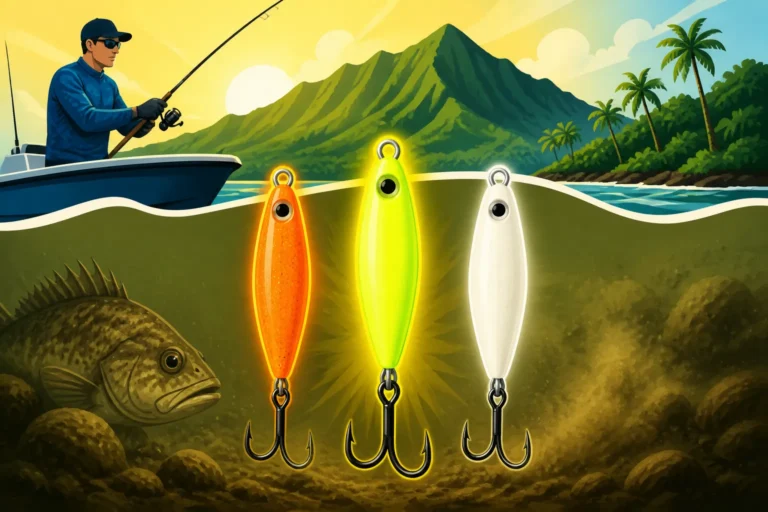
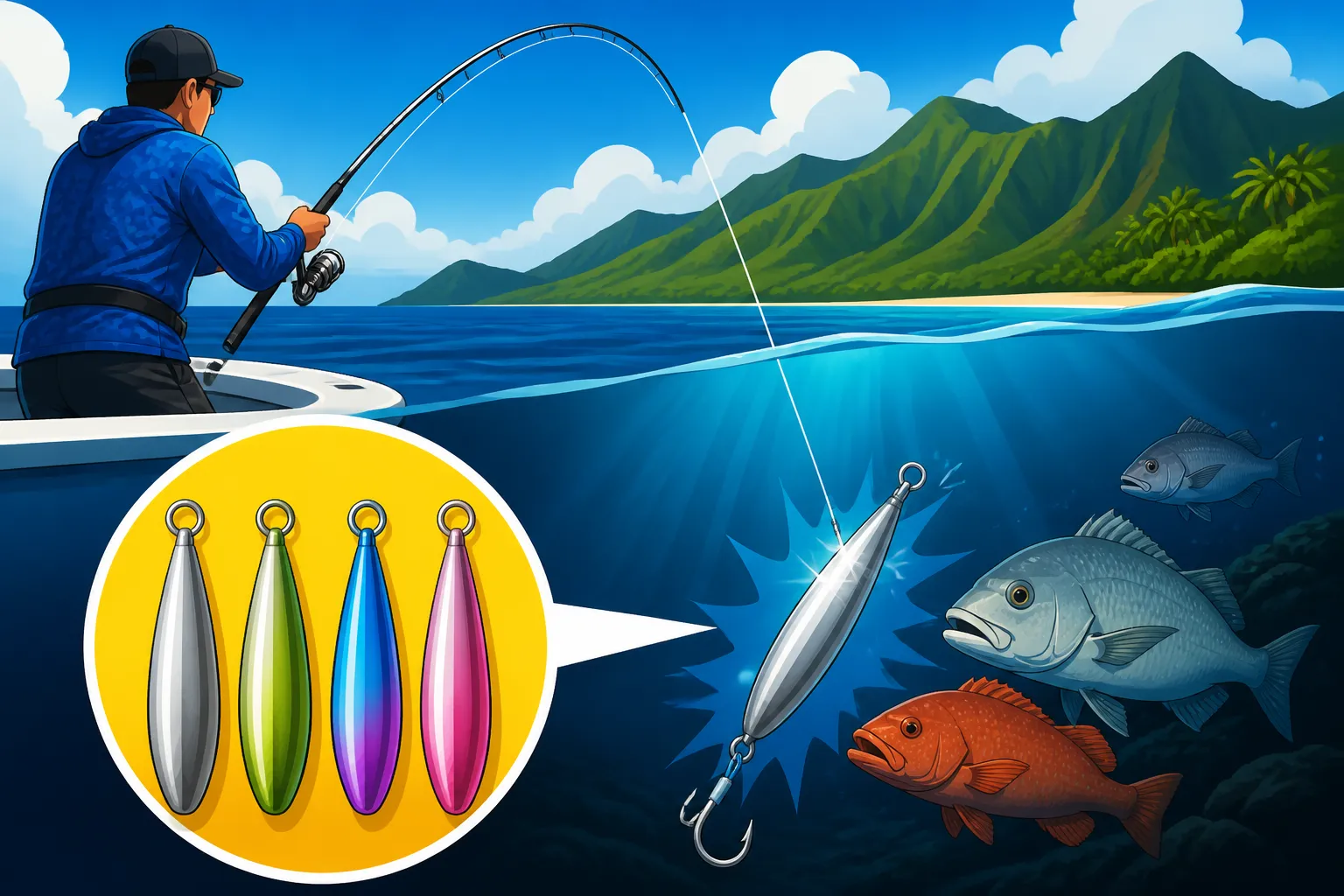
- Color and Glow: While weight is primary, don't underestimate color. Have some natural baitfish patterns, but also some bright, iridescent, and glow-in-the-dark options. Luminescent jigs are incredibly effective in the low light of deep water. You can find a fantastic selection of these various jigs on Amazon, often with detailed reviews that can help you gauge their performance in different conditions. It’s always good to stock up before your next trip.
Maximizing Efficiency and Effectiveness
Beyond just jig weight, a few other considerations can make a huge difference:
- Electric Reels: For depths exceeding 400-500 feet, especially if you're repeatedly dropping and retrieving heavy jigs, an electric reel can be a game-changer. It reduces fatigue, allowing you to fish longer and more effectively. Many deep drop charters utilize them.
- Targeting Structure: Always use your sonar to locate fish-holding structure like ledges, pinnacles, or drop-offs. Dropping your jig into open, barren water, regardless of weight, is rarely productive. Learning Best Sonar Settings for Finding Structure off Kona is invaluable.
- Patience and Persistence: Deep water bottomfishing is not a rapid-fire technique. It requires patience. Let your jig get all the way down. Work it methodically. Pay attention to every bump and subtle change in line tension. Sometimes the bite is incredibly light, especially on deep-dwelling fish that aren't used to seeing a lot of pressure. Remember, a lighter jig might simply be taken for a ride by the current, never getting the chance to be seen by a hungry opakapaka. It's often worth the extra effort to get a heavier jig down there and really work the zone.
Choosing the right jig weight for deep water bottomfishing in Hawaii is a blend of science, experience, and intuition. It requires understanding the dynamic underwater environment, matching your gear to the task, and having a diverse arsenal of jigs at your disposal. Don't be afraid to experiment, and always pay attention to how your jig is performing in the water. The deeper you go, the more critical that perfect weight becomes, allowing you to effectively present your lure to those incredible bottomfish species that call the Hawaiian depths home.
Disclaimer
The information provided in this guide is for general informational purposes only. Fishing regulations, conditions, and best practices can change. Always consult the latest Hawaii Department of Land and Natural Resources (DLNR) Division of Aquatic Resources (DAR) regulations before fishing. Adhere to all local, state, and federal laws. Fishing can be a dangerous activity; always prioritize safety and wear appropriate personal flotation devices when on the water.