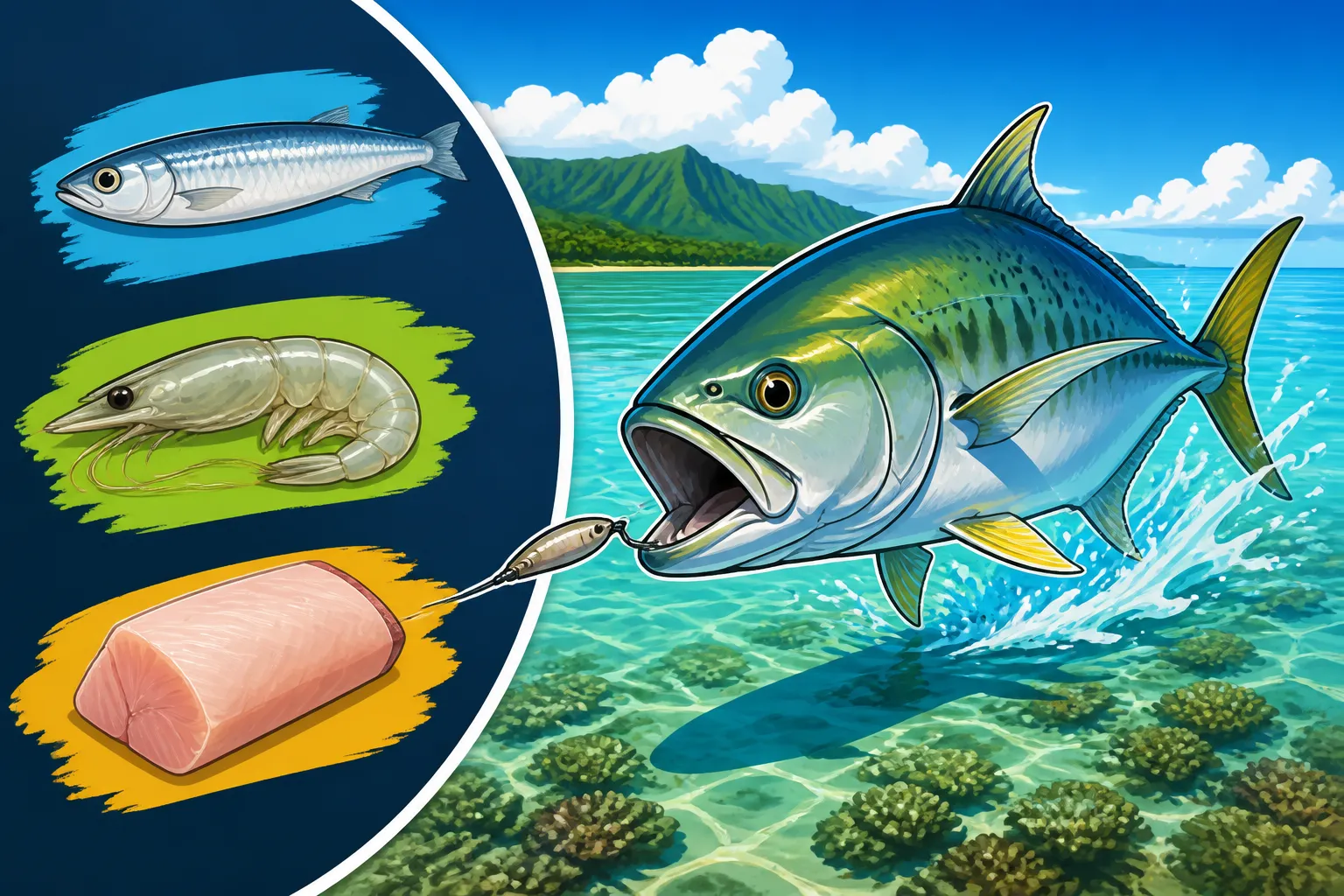
Best bait for whipping papio on reef flats
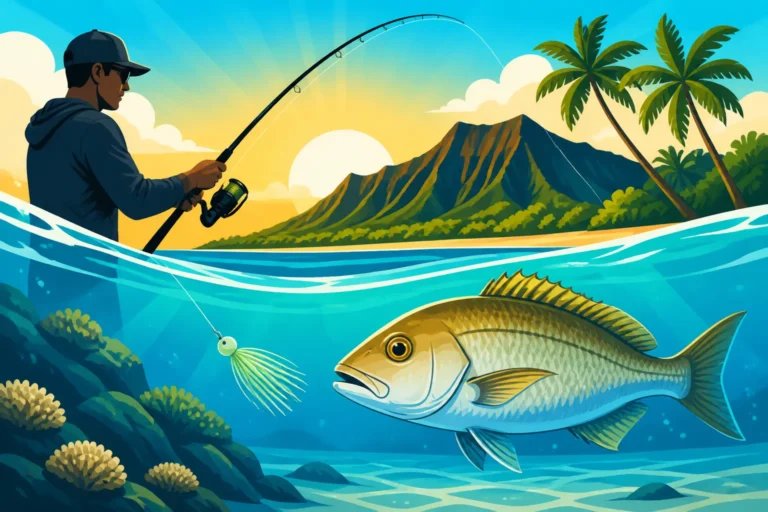
Trying to entice papio on Hawaii's beautiful, shallow reef flats can feel like you're trying to win over a finicky teenager – they're there, you know they're hungry, but getting them to commit to your offering is a whole different story. These aggressive, yet often elusive, juvenile giant trevally are a blast to catch from shore, but choosing the right bait for whipping them can make or break your day. This guide will dive deep into the best bait options, both live and artificial, to help you understand what makes papio tick on the flats and how to consistently hook up.
Understanding Papio's Reef Flat Lifestyle
Papio, the younger, smaller versions of the mighty ulua, are incredibly popular targets for shore anglers across Hawaii. They patrol the shallow reef flats, drop-offs, and sandy channels, constantly on the hunt for their next meal. But what exactly are they looking for in these intricate underwater landscapes? Knowing their natural diet and habits is the first step to choosing the perfect bait.
The Papio's Reef Flat Playground
Reef flats are dynamic ecosystems, teeming with life. For papio, these areas are both a hunting ground and a nursery. They dart in and out of coral heads, cruise along sandy patches, and ambush unsuspecting prey hiding in the mix. Think of it like a bustling underwater supermarket for them. They're opportunistic feeders, meaning they'll eat just about anything that looks vulnerable and bite-sized, but they definitely have preferences. During high tide, they'll push further onto the flats, exploring crevices and shallower areas that might be inaccessible at low tide. This makes understanding tide cycles critical for targeting them. Conversely, as the tide recedes, they often retreat to the deeper edges of the flats or nearby channels, creating prime ambush points. Knowing these movements can help you position your bait where the fish are most likely to encounter it.
Why Papio Are Such Picky Eaters Sometimes
While papio are generally aggressive, they can be surprisingly selective, especially when there's an abundance of natural food. They’re often feeding on small baitfish, crustaceans, and even cephalopods that inhabit the reefs. If the water is clear and calm, they can easily scrutinize your offering. A bait that looks unnatural, moves incorrectly, or smells off will likely be ignored. This is where the term "whipping" comes in – it’s an active fishing style that requires casting and retrieving, often quickly, to mimic fleeing prey. The goal isn't just to present food, but to trigger a predatory instinct. They're constantly evaluating threats and opportunities, so your bait needs to convincingly replicate something they'd naturally attack. For a deeper dive into their life stages and how they grow into their larger counterparts, check out our article on Papio Growth Stages Into Trophy Ulua.
The Best Live Baits for Whipping Papio on Reef Flats
When it comes to getting a bite, live bait often holds an undeniable advantage. The natural scent, movement, and vibration of a live offering can be irresistible to a cruising papio, especially on clear, shallow flats where they can be more discerning. The challenge, of course, is sourcing and keeping these baits alive.
A Pupu Platter for Papio: Top Live Bait Choices
You can't go wrong with live bait for papio. Here in Hawaii, there are a few local favorites that consistently produce:
- Opelu (Mackerel Scad): These small, silvery baitfish are probably the king of papio baits. They're natural prey, found schooling around many of the same areas where papio hunt. A frisky opelu twitching on the end of your line sends out all the right signals. They're relatively streamlined, making them great for whipping with lighter tackle.
- Akule (Bigeye Scad): Similar to opelu but often a bit larger, akule are another excellent choice. Papio, especially the larger ones, can't resist a struggling akule. These are robust baits that can withstand a lot of casting and still stay lively. Finding schools of akule can be a challenge, but when you do, your papio success rate will soar.
- Small Shrimp/Prawns: While not as common for "whipping" in the traditional sense, a small, live ghost shrimp or Hawaiian prawn hooked lightly through the tail can be deadly when papio are being particularly finicky or are focused on bottom-dwelling prey. These are especially effective in calmer, clearer water where papio are browsing the bottom.
- Juvenile Mullet (ʻAmaʻama): If you can get your hands on small mullet, they make fantastic papio bait. They're hardy and offer a substantial meal, often attracting larger papio. They naturally inhabit the same shallow waters, making them a very convincing offering.
Each of these baits has its own appeal, but the common thread is that they are all part of the natural diet of papio on our reef flats. Presenting them as naturally as possible is key.
Sourcing and Keeping Your Live Bait Alive
Getting live bait isn't always as simple as walking into a bait shop. Often, you'll need to catch it yourself. Small throw nets are excellent for catching opelu, akule, or mullet in harbors or protected bays. If you're targeting shrimp, a small dip net or even a simple trap can work. Once you have your bait, keeping it alive and healthy is paramount. A good bait bucket with an aerator is essential. You can find reliable, battery-operated aerators on platforms like Amazon that will keep your bait lively for hours. Remember, a lively bait is a productive bait. If your bait is sluggish, it won't attract papio nearly as effectively. Changing the water periodically, especially if it gets warm, can also significantly extend the life of your precious cargo. For more general advice on fishing our shores, take a look at our Shore Fishing Techniques for Hawaii guide.
Effective Artificial Lures for Whipping Papio
Sometimes, live bait isn't feasible, or you simply prefer the challenge and versatility of artificial lures. Modern lures are incredibly effective at mimicking natural prey, and when fished correctly, they can trigger aggressive strikes from papio, often out-competing live bait in certain situations.
Lures That Mimic Nature's Best
The key to artificial lures for papio is matching the hatch and creating an irresistible action. Here are some top choices:
- Small Poppers: There's nothing quite like a papio blowing up on a surface popper. Small poppers (think 1-3 inches) create a commotion on the surface, mimicking a struggling baitfish. This is incredibly effective at dawn, dusk, or when papio are actively feeding near the surface. Popular brands like Heddon's Tiny Torpedo or smaller Yo-Zuri poppers are great options.
- Twitchbaits/Minnow Plugs: These shallow-diving hard baits are designed to imitate small baitfish. A sharp twitch-pause retrieve makes them dart erratically, just like a panicked fish. This action is incredibly effective over reef flats and along channel edges. Look for lures in the 2-4 inch range from brands like Rapala or Daiwa. These can be purchased easily through online retailers like Amazon, offering a wide selection of colors and sizes to choose from.
- Soft Plastic Grubs/Swimbaits: When papio are being shy or are holding deeper, soft plastics can be a game-changer. Rigged on a small jig head (1/8 to 1/4 ounce), a grub or swimbait can be bounced along the bottom or slowly retrieved through the water column. The subtle tail action often fools wary papio. Colors like pearl white, chartreuse, or natural baitfish patterns are typically effective.
- Metal Jigs/Spoons: While often associated with deeper water, small metal jigs (1/4 to 1/2 ounce) can be incredibly effective for whipping papio from shore, especially when cast far out into deeper pockets or channels adjacent to the flats. A fast, erratic retrieve makes them flash and dart, mimicking a fleeing baitfish. These are particularly good for getting extra casting distance.
Color, Size, and Action Matters
The choice of lure, size, and color should always be influenced by the prevailing conditions and what the papio are likely feeding on.
- Color: In clear water, natural colors like silver, blue, green, or white tend to work best. When the water is murkier or on overcast days, brighter colors like chartreuse, pink, or even orange can stand out more effectively. Sometimes, a "bleeding" bait pattern (red accents) can also trigger a strike.
- Size: Always try to match the size of the predominant baitfish in the area. If you see small schools of opelu, use a lure that's similarly sized. Too large, and they might ignore it; too small, and they might not notice it.
- Action: This is perhaps the most critical aspect. A popper needs to pop, a twitchbait needs to twitch, and a swimbait needs to swim. Experiment with your retrieve speed and cadence. Sometimes a slow, steady retrieve is best, other times a series of violent twitches followed by a long pause is what gets the bite. Don't be afraid to mix it up until you find what the fish want on that particular day. Our article on Best Techniques for Whipping for Papio goes into much more detail on how to get the action just right.
Rigging Your Bait and Presenting Lures for Success
You’ve got your bait, whether it’s live and wiggling or a perfectly crafted artificial. Now, how do you get it in front of a papio in a way that’s irresistible? It’s all about the rigging and presentation.
Matching Your Rig to Your Bait
The right rig ensures your bait or lure behaves naturally and effectively. For whipping papio, simplicity and sensitivity are often key.
- Live Bait Rigging: For opelu, akule, or mullet, a single hook (usually a circle hook, size 1/0 to 3/0, depending on bait size) through the nose or just behind the dorsal fin allows the bait to swim freely and naturally. A small split shot a foot or two above the bait can help with casting distance and keeping the bait in the strike zone, especially if there's current. If you're fishing smaller shrimp or prawns, a small hook (size 4-8) through the tail segment is ideal. You want minimal weight to allow the bait to drift naturally. Fluorocarbon leader (15-25 lb test) is highly recommended for its invisibility and abrasion resistance against reef structure.
- Artificial Lure Rigging: Most artificial lures come with treble hooks, but many experienced anglers will switch these out for single hooks to make de-hooking easier and reduce damage to the fish (especially if practicing catch and release). For poppers and twitchbaits, a direct tie or a small, strong snap swivel will work best to preserve the lure's action. For soft plastics, a jig head of appropriate weight is crucial. Ensure your knot is strong – a Palomar or uni-knot are excellent choices. Using a leader slightly heavier than your main line (e.g., 20 lb leader on 15 lb main line) can prevent break-offs from sharp coral or a papio's rough mouth. You can find a good selection of quality leader material on platforms like Amazon.
Reading the Flats and Presenting Your Offering
Understanding where papio are likely to be hiding and how to get your bait there is half the battle.
- Identify Key Structures: Look for changes in depth, darker patches of coral, rocky points, sandy channels between reefs, or areas where waves are breaking. These are all potential ambush points or feeding grounds. Papio love structure where they can hide and dart out to grab prey. In Hawaii, many productive spots are near lava rock formations that extend into the ocean. Keep an eye out for any nervous baitfish skipping on the surface, as this is a sure sign of predators below. To help you locate these promising areas, our article on Best Reef Fishing Spots in Hawaii offers valuable insights.
- Fan Casting: Instead of casting to the same spot repeatedly, fan cast, covering a wide area from left to right, and varying your casting distance. This increases your chances of hitting a pocket where papio are holding. Once you get a bite, focus your next few casts on that immediate vicinity, as papio often hunt in small schools.
- Vary Your Retrieve: This cannot be stressed enough. Papio can be finicky. One day they want a fast, erratic retrieve, the next they want a slow, twitchy presentation. With poppers, experiment with hard pops, soft bloops, or even a walk-the-dog retrieve. With twitchbaits, try short, sharp twitches followed by pauses, or a steady retrieve with occasional jerks. The fish will tell you what they prefer. Don't be afraid to experiment until you find the magic cadence. For more specific tactics, consider reading up on Best Casting Technique for Shore-Based Papio.
By combining the right bait, the proper rig, and a keen eye for reading the water, you'll significantly increase your chances of hooking into some hard-fighting papio on Hawaii's beautiful reef flats. Just remember to always be mindful of local regulations and practice responsible fishing. You can usually find the most up-to-date information on Reading the Hawaii DLNR Fishing Regulations.
Here's a quick comparison of popular papio bait options:
| Bait Type | Pros | Cons | Ideal Conditions | Recommended Rigging |
|---|---|---|---|---|
| Live Opelu | Irresistible natural action & scent | Hard to source, requires aerated bucket | Clear water, active papio, early morning/dusk | Single hook through nose, light leader |
| Live Akule | Good size for larger papio, hardy | Can be large for smaller papio, hard to source | Choppy water, targeting bigger fish | Single hook through dorsal, strong leader |
| Small Poppers | Exciting surface strikes, covers water | Less effective in rough/murky water | Calm water, low light, actively feeding papio | Direct tie or small snap swivel |
| Twitchbaits | Excellent baitfish imitation, versatile | Can snag on reef, action dependent on angler | Clear to slightly turbid water, varied depths | Direct tie or small snap swivel |
| Soft Plastics | Subtle action, effective for wary fish | Less casting distance, can be torn by reef | Deeper pockets, finicky fish, calmer conditions | Jig head (1/8-1/4 oz), light fluorocarbon leader |
| Metal Jigs | Excellent casting distance, good flash | Can sink quickly, less natural action | Deeper channels, windy conditions, fast retrieve | Direct tie, heavier leader |
The Broader Picture of Papio Fishing
Whipping for papio on the reef flats is more than just throwing out a line; it's about connecting with the rhythm of the ocean and understanding the intricate ecosystem. Each day brings new challenges and learning opportunities. The fish might be responding to the tides, the moon phase, the water clarity, or even the subtle changes in barometric pressure.
For instance, understanding the different species of fish that frequent these areas can also give you an edge. Papio are juvenile trevally, but there are other fish like moi, kumu, and even small ulua that might be patrolling the same waters. Sometimes, a targeted approach for papio might accidentally land you one of these other exciting reef inhabitants. Always be aware of the Hawaii Bag and Size Limits by Species for whatever you might catch.
It's also worth noting that papio are a schooling fish, especially when they're actively feeding. If you catch one, there's a good chance there are more in the immediate vicinity. This is where consistent casting and retrieval, coupled with keen observation, really pays off. Watching for bird activity, changes in water color, or even the sight of baitfish being chased can tip you off to where the papio are hunting.
Finally, remember that patience is a virtue in fishing, especially for species as clever as papio. There will be days when they seem to bite at anything, and days when they're completely shut down. Don't get discouraged! Use those slower days to experiment with different baits, retrieves, and fishing spots. Every cast is a chance to learn something new about these magnificent fish and the incredible Hawaiian waters they call home. When you're thinking about whether a specific body of water is open for fishing, our article on Hawaii Fishing Season Dates and Closures can be a huge help.
Disclaimer
Fishing regulations and conditions can change rapidly. Always check the latest Hawaii Division of Aquatic Resources (DAR) regulations before heading out. This guide is for informational purposes only and should not replace official government resources. Adhere to all local, state, and federal laws and practice responsible angling.