Best technique for reading a rip current for fishing
Standing on Hawaii's beautiful shores, it's easy to get lost in the rhythmic beauty of the waves, but for us anglers, those patterns tell a crucial story. Sometimes, despite what looks like perfect water, the fish just aren't biting. Or worse, you cast your line only to have it immediately swept sideways, leaving you frustrated and wondering why your bait isn't staying where you want it. This usually points to one thing: a rip current. These powerful, narrow channels of water flowing rapidly away from shore can seem like a nuisance or even a danger, but for a seasoned angler, they're actually a huge advantage. This guide will walk you through how to spot a rip current, understand its dynamics, and most importantly, how to use it to your fishing benefit.
Understanding the Anatomy of a Rip Current
Rip currents often get a bad rap for being dangerous to swimmers, and they certainly can be if you don't know how to handle them. But for us who fish, understanding their behavior is the first step to unlocking some truly prime fishing opportunities. Think of them not as obstacles, but as nature's conveyor belts for bait and predators.
The 'River of Water' Concept
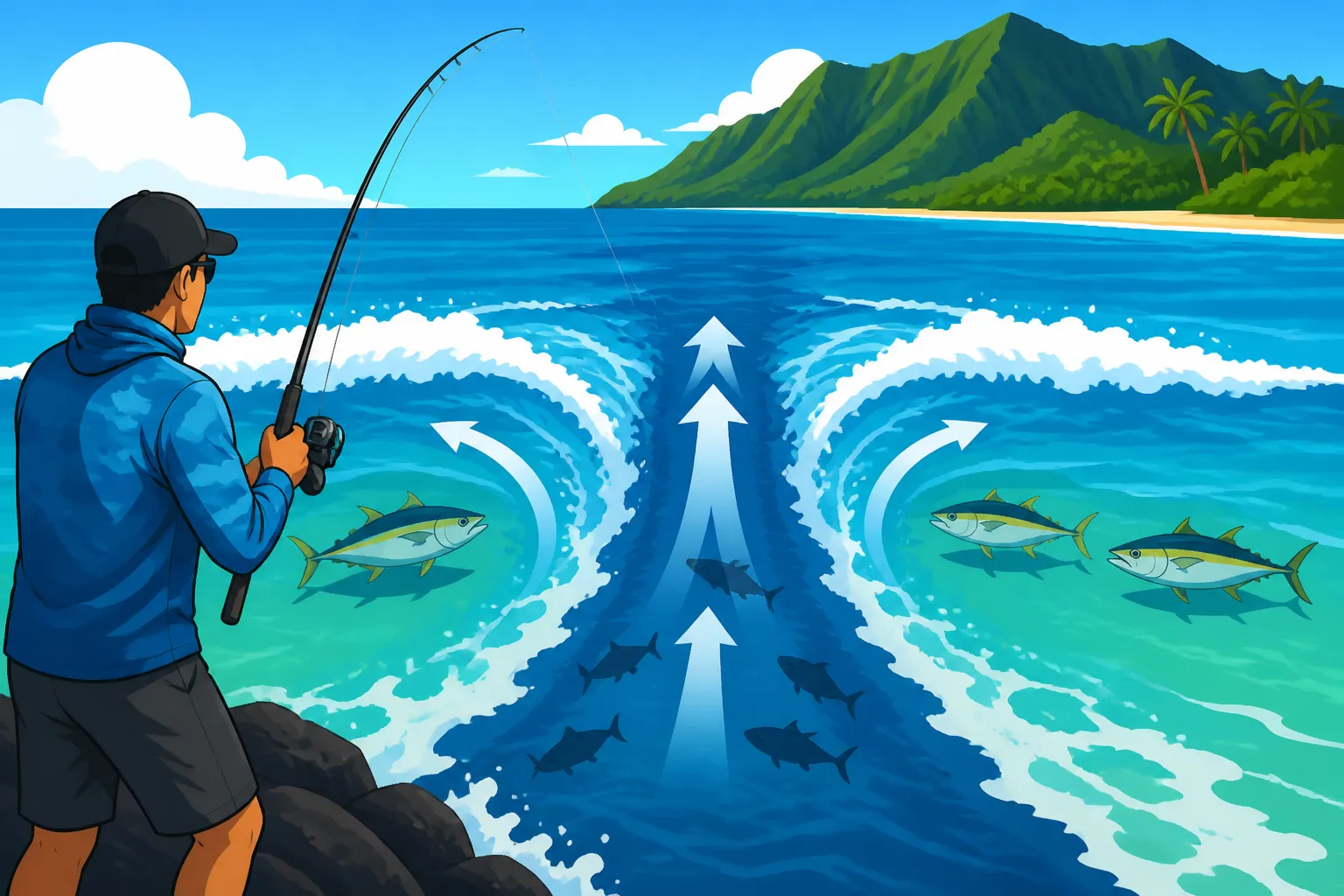
Imagine the ocean's waves constantly pushing water towards the shore. This water has to go somewhere, right? It can't just pile up. So, it finds the path of least resistance to flow back out to sea. These paths are what we call rip currents, and they act like fast-moving rivers cutting through the incoming surf. They're typically strongest near breaks in sandbars, around jetties, or where the shoreline topography creates a funnel. The water within a rip often looks calmer than the breaking waves on either side, which can be deceptive for swimmers, but it's a huge clue for us.
This outward flow can be incredibly strong, moving at speeds that far exceed any Olympic swimmer. The strength and speed of a rip current can vary greatly depending on the size of the waves, the tide, and the specific underwater topography. A small day with gentle waves might have barely noticeable rips, while a day with a big south swell can generate rips that are truly formidable. Knowing this variability is key, as it dictates how you'll approach fishing it.
How Rip Currents Form
Rip currents are primarily driven by wave action. As waves break on the shore, they push a lot of water onto the beach. This water then accumulates, creating a slight elevation in water level near the shore. This pressure difference forces the water to flow back out to sea through the easiest available channels. These channels are often depressions or deeper spots in the seabed, or gaps in sandbars where the waves aren't breaking as consistently. The stronger the waves and the more water that piles up, the more powerful the rip current will be.
Think about how the water rushes out after a big set of waves breaks on the beach. That concentrated flow is the genesis of a rip. The topography of the ocean floor, whether it's a sandy beach, a reef, or a rocky point, plays a huge role in shaping these currents. For example, a break in a coral reef can act like a natural sluice, concentrating the outbound flow and creating a strong rip that hugs the reef's edge. This constant interaction between waves, tide, and seabed creates a dynamic environment that, once understood, can be incredibly predictable for the observant angler.
Visual Cues of a Rip Current
Spotting a rip current from shore is probably the most important skill you can develop as an angler targeting these areas. It's not always obvious, especially to the untrained eye, but with practice, you'll start to see the tell-tale signs. One of the clearest indicators is a channel of churning, choppy water, often discolored with sand or sediment, extending seaward beyond the breaking waves. This discolored water is a dead giveaway – it's the current pulling sand and debris from the nearshore out into deeper water.
Another common sign is a gap in the incoming wave pattern. Where the waves on either side of the rip are breaking consistently, the water over the rip current itself might appear flatter or have smaller, unorganized waves. This is because the strong outgoing current suppresses the incoming waves, making them less likely to break. You might also see foam, seaweed, or other debris moving steadily offshore in a narrow band. These visual cues are your primary tools for locating these productive fishing grounds. Keep your eyes peeled for these features, as they'll guide you to where the action is.
Reading Rip Currents for Angling Advantage
Now that we know how to spot them, let's talk about why these "rivers of water" are so fantastic for fishing in Hawaii. It's all about food and ambush points. Many anglers might shy away from these areas, but that's where the smart money is.
Why Fish Like Rip Currents
Fish, especially predatory species, are naturally drawn to rip currents for a few key reasons. First and foremost, rip currents are prime feeding grounds. They act like natural conveyor belts, carrying baitfish, crustaceans, and other marine organisms from the shallows out into deeper water. Smaller baitfish often get caught in the outward flow, making them easy targets for larger predators waiting at the edges or where the current dissipates. This makes it a buffet line for bigger fish.
Secondly, the turbulent water created by a rip current offers excellent cover for predatory fish. The stirred-up water reduces visibility, allowing them to ambush unsuspecting prey more effectively. Species like ulua (giant trevally), papio (juvenile trevally), and even some reef fish will sit just outside the main current or along its calmer edges, waiting for food to be delivered to them. It's a low-energy way for them to feed, conserving their strength while the ocean does the work of bringing dinner. You can find some excellent information on targeting these fish in How to Catch Ulua from Shore and How to Catch Papio on Hawaii's Shoreline.
Identifying Productive Zones within a Rip
Not all parts of a rip current are equally productive. The real skill lies in identifying the "sweet spots" where fish are most likely to congregate. Generally, the most productive areas are along the edges of the rip current, where the fast-moving water meets the calmer surrounding water. This transition zone creates a current seam, which is a classic ambush point for predators. Baitfish get disoriented as they exit the main rip and are easy pickings here.
Another highly productive zone is the head of the rip – the area furthest offshore where the current starts to spread out and lose its force. This is where all the food that's been carried out by the rip eventually settles or slows down, creating a feeding frenzy opportunity. Depending on the size of the rip, this could be anywhere from a few dozen yards to hundreds of yards offshore. Shoreline features like rocky points or sandbars that create the rip also often hold fish, as they provide structure and shelter. Observing how debris moves in the rip can give you a clear indication of these zones.
Safety First: Distinguishing Fishable Rips from Dangerous Ones
While rips can be fantastic for fishing, safety must always come first. Some rip currents are simply too powerful or located in areas too hazardous for safe fishing, especially for shore anglers. A rip current that is pulling with extreme force, especially around jagged lava rock or near heavy surf breaks, might be too dangerous to cast into, as a rogue wave could easily pull you in. If the current is so strong that your line is instantly swept away and you can't hold bottom, it might be more trouble than it's worth.
Always observe the conditions for a good 15-20 minutes before casting. Look for the size of the waves, the speed of the current, and any visible hazards. If you're unsure, err on the side of caution. Consider the tide as well; a rip might be fishable at high tide but become extremely dangerous as the tide drops and exposes more rocks or increases the current speed. Remember, a good pair of water shoes or cleats can provide much-needed grip on wet, slippery rocks. For those venturing out in kayaks, life jackets are non-negotiable, and it's always wise to let someone know your fishing plans. You can also review Hawaii Boating Laws for Anglers for more insight into safety regulations.
Practical Techniques for Fishing Rip Currents
Fishing a rip current isn't just about casting into it; it's about understanding how your bait or lure will behave in that specific flow and adjusting your approach accordingly. It's a bit of a dance with the ocean, and when you get it right, the rewards are often spectacular.
Equipment Considerations for Rip Current Fishing
Fishing in rip currents, especially from shore, demands robust gear that can stand up to the challenge. You'll want a sturdy surf rod, typically 10-12 feet or longer, capable of making long casts and handling heavy weights. Pairing this with a tough spinning reel spooled with strong braided line, say 30-50 lb test, is a good starting point. Braided line offers superior casting distance and sensitivity, crucial for detecting subtle bites in turbulent water. For leaders, fluorocarbon in the 40-80 lb range is usually a good bet, offering abrasion resistance against rocks and invisibility to wary fish.
When it comes to terminal tackle, heavy pyramid or Sputnik sinkers (often 4-8 ounces or more, depending on current strength) are essential to help your bait hold bottom. Circle hooks are excellent for live baiting and help ensure a good hookset without deep-hooking the fish. Consider also bringing a pair of polarized sunglasses – they are invaluable for spotting those subtle visual cues of a rip current. You can find a wide range of these items on platforms like Amazon, ensuring you have the right tools for the job. Having the right gear not only increases your chances of success but also helps you manage the powerful forces at play. Check out Best rod setup for surfcasting ulua for more specifics on tackle.
Casting and Presentation Strategies
The goal when fishing a rip current is often to get your bait or lure into those productive seam lines or the head of the rip and keep it there, or at least present it naturally. If you're using bait, a long cast upcurrent from your target zone is often effective. This allows your sinker to hit the bottom and then slowly drift into the rip's edge or the calmer water just beyond it. The current will carry the scent of your bait, attracting fish from downcurrent. Live baits, like a small opelu or akule, fished on a sliding rig can be deadly in these areas, allowing the bait to swim naturally while holding position.
For lure fishing, jigs, spoons, or heavy poppers can be cast directly into the rip. The key here is working your lure with the current, making it look like a disoriented baitfish struggling against the flow. Sometimes, a quick retrieve across the current or a slow jigging motion right in the rip's head can trigger aggressive strikes. Pay close attention to how your line is behaving; if it's getting swept too quickly, you might need a heavier sinker or a different approach. Experimentation is key, as every rip current, and even the same rip on different days, will have its own unique personality. Learning Shore Fishing Techniques for Hawaii will undoubtedly help you refine these strategies.
Interpreting the Bite and Fighting Fish
Detecting a bite in a strong rip current can be challenging. The constant pull of the current on your line can feel like a fish nibbling, so you'll need to develop a keen sense for distinguishing between current drag and an actual strike. Watch your rod tip carefully. A sharp, sustained bend or a rapid series of jerks, rather than a steady pull, often indicates a fish. Sometimes, the line might suddenly go slack if a fish swims towards you with the current. Don't be afraid to strike at anything that feels out of the ordinary.
Once you've hooked a fish, the fight changes dramatically. That same strong current that delivered your prey now works against you, making every run feel twice as powerful. You'll need to use the rod's backbone and your reel's drag system effectively to gain line. Try to steer the fish out of the strongest part of the rip if possible, as fighting directly against the current will quickly exhaust both you and the fish, potentially leading to a pulled hook or broken line. Work with the waves and current to your advantage, timing your retrieves and pumps between incoming swells. A strong grip and steady footing, especially on rocky shorelines, are paramount during this stage. Remember to review Hawaii Bag and Size Limits by Species to ensure your catch is legal to keep!
Spotting Rip Currents from Shore
Developing an eye for rip currents is an art form that comes with practice. The more time you spend observing the ocean, the better you'll become at identifying these fish-attracting phenomena. It’s not just about what you see, but what you don’t see.
Looking for the 'Gap' in the Waves
One of the most classic signs of a rip current is a noticeable "gap" or channel in the breaking waves. Picture this: you're looking out at the ocean, and on either side, waves are consistently peaking and crashing, creating a line of whitewater. But then, there's a section, usually narrower, where the waves don't seem to break as much, or they break in a disorganized, smaller fashion. This calmer-looking stretch is often the rip current.
The powerful outward flow of the rip essentially "flattens" the incoming waves as they pass over it, preventing them from curling and breaking consistently. This can be deceiving for beachgoers, as a calm-looking area might seem safer, when in fact, it's a fast-moving river. For anglers, however, this visual cue is gold. It points directly to the channelized outflow where bait and predators will be moving. When you see this phenomenon, your angler's radar should be going off, signaling a potential hotspot.
Discolored Water and Debris
Another highly reliable indicator of a rip current is discolored water or a visible trail of floating debris moving steadily offshore. As the rip current scours the seabed and pulls water from the nearshore, it often picks up sand, sediment, and organic matter. This can make the water in the rip appear murkier, browner, or simply different in color than the clear, incoming waves on either side. It's like a dirty streak extending out into the cleaner ocean.
Beyond just discoloration, keep an eye out for anything floating on the surface – foam, seaweed, leaves, or even trash. If you see these items moving rapidly and consistently in a narrow band away from the shore, you've almost certainly identified a rip current. This debris acts as a natural float, showing you the exact path and speed of the outgoing flow. This visual confirmation not only helps you locate the rip but also gives you clues about its strength and where it might be carrying potential bait. Platforms like Amazon offer good quality polarized sunglasses that can dramatically enhance your ability to spot these subtle color changes and floating indicators from a distance.
The Role of Wave Patterns and Shoreline Features
Understanding how waves behave and how the coastline is shaped are critical for becoming a master rip current reader. Rip currents are rarely random; they are typically formed by consistent factors. Look for areas where waves are breaking differently. Are they consistently breaking far out and then reforming closer to shore, leaving a calmer channel in between? That could be a rip. Are waves washing up into a specific cove or bay, and then rushing back out through a narrow opening? That's another classic rip formation.
Shoreline features play a huge role. Jetties, rock walls, and natural gaps in coral reefs or sandbars often funnel the retreating water, creating concentrated rip currents. These man-made or natural structures dictate where the water can easily flow back to sea. For instance, a long, sandy beach might have multiple rips forming and dissipating, while a rocky coastline with distinct points might have more stable, predictable rips near those points. Learning about Hawaii shoreline fishing rights and public access rules and exploring different coastal structures will give you a better understanding of how these features influence ocean dynamics and where to find the best rips for fishing.
Disclaimer
This article is for general informational purposes only and does not constitute professional advice. Laws, prices and regulations vary by location and change over time. Consult a qualified professional for guidance on your specific situation.