Best trolling speed for ahi in Hawaii
Getting the trolling speed just right for ahi (Yellowfin Tuna) in Hawaii can feel like cracking a secret code. You’re out there on the vast Pacific, the sun is blazing, and you know the fish are around, but if your lures aren't swimming just right, or your live bait isn't presenting naturally, you might as well be dragging a stick. This guide is all about demystifying that crucial element of speed, helping you understand how to fine-tune your approach for the best possible chance at landing that prized ahi.
Understanding Ahi Behavior and Why Trolling Speed Matters So Much
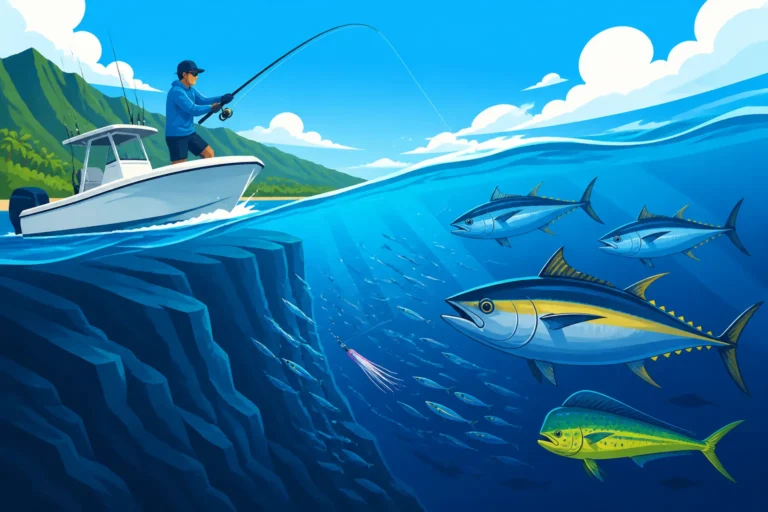
Ahi, or Yellowfin Tuna, are apex predators in Hawaii's waters, known for their incredible speed, strength, and voracious appetites. They are constantly on the move, hunting schools of baitfish like mackerel scad (opelu), squid, and even smaller tuna. Their behavior is highly reactive, meaning they'll strike at what looks like an easy, fleeing meal. This is where trolling speed becomes absolutely critical.
Mimicking Natural Prey Movement
The primary goal of trolling is to simulate a natural prey item moving through the water. If your lure or bait is moving too fast, it might appear unnatural, or worse, the ahi might not have enough time to zero in and strike. Conversely, if you're too slow, your presentation can look lifeless and unappealing. Think about a school of baitfish scattering – they dart and weave, but maintain a certain speed to escape. Your trolling spread needs to replicate that frantic, yet controlled, escape. Different types of lures and baits have specific "sweet spots" where they perform optimally, creating the enticing action that triggers an ahi’s predatory instinct. Mastering the art of How to Catch Ahi in Hawaii often comes down to this subtle dance of speed and presentation.
Factors Influencing Ideal Trolling Speed
While there are general guidelines, the "perfect" trolling speed for ahi isn't a fixed number. It's a dynamic range influenced by several environmental and tactical factors. The condition of the ocean, including current and swell, plays a huge role. Fishing into a strong current will require more engine RPMs to maintain the same boat speed over ground compared to fishing with the current. Similarly, large swells can cause your boat speed to fluctuate wildly, impacting lure action. The type of bait or lure you're using is another major factor; a heavy skirted lure designed to run deep will have a different optimal speed than a lighter, more erratic surface lure. Even the depth you're targeting can influence speed, as different thermal layers and bait concentrations might call for specific adjustments.
Optimal Trolling Speeds for Ahi in Hawaiian Waters
When you're out chasing ahi off the Kona Coast or any other prime Hawaiian fishing ground, you'll generally be looking at a range of speeds that have proven effective over countless hours on the water. However, it's not just about picking a number and sticking to it; it's about constant adjustment and observation.
General Speed Ranges: Live Bait vs. Lures
Most experienced Hawaii anglers will tell you there’s a noticeable difference in ideal trolling speeds depending on whether you're pulling live bait or artificial lures.
- Live Bait Trolling: When you're slow-trolling live opelu, mackerel, or even small tuna, your speed needs to be considerably slower than with lures. The goal here is to keep the bait alive, swimming naturally, and appearing as if it's struggling or disoriented, but still capable of making an escape. Typically, this means speeds anywhere from 1.5 to 3.5 knots. This range allows the live bait to swim freely and realistically, without being dragged unnaturally through the water, which can kill it quickly or make it look completely unappetizing. Sometimes, you might even "drift fish" for ahi with live bait, especially when you mark a bait ball or school of tuna. This technique, similar to Drift Fishing for Ahi in Hawaii, involves minimal boat movement, letting the current do most of the work to present the bait.
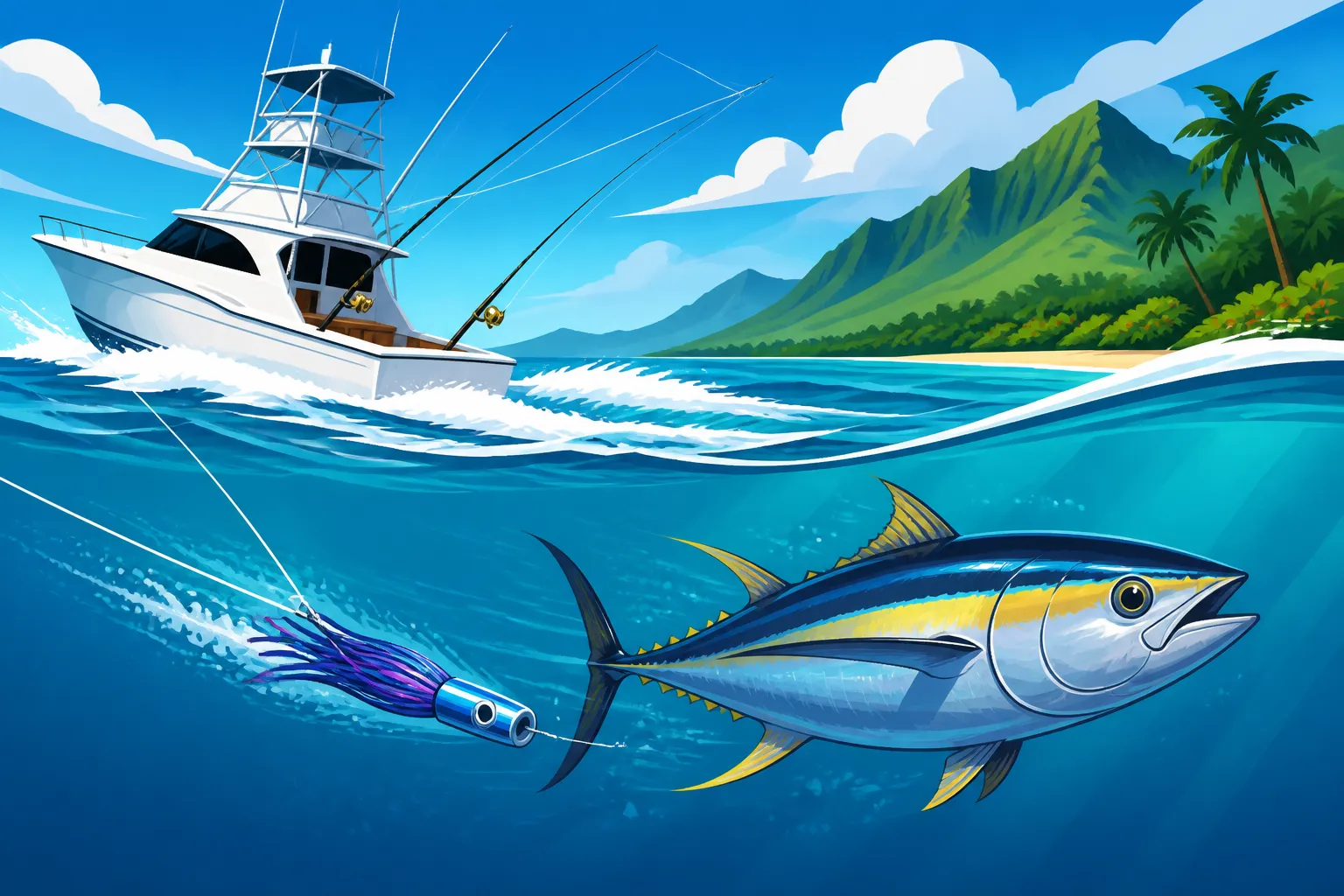
- Artificial Lure Trolling: This is where the speeds pick up. Lures are designed to generate their own action at certain speeds, mimicking fleeing baitfish, and often rely on water pressure to wiggle, dive, and splash. For general ahi trolling with a spread of lures, you’re usually looking at speeds between 6 to 10 knots. This allows the lures to "swim" effectively, create the right amount of commotion, and cover ground quickly to find active fish. Certain lure styles might perform better at the lower or higher end of this spectrum, and understanding these nuances is key.
Adjusting Speed for Current and Swell
The ocean is rarely a millpond, and Hawaiian waters, especially, can have strong currents and significant swells. These conditions are critical to consider for maintaining your effective trolling speed over ground and ensuring your lures are working correctly.
- Against the Current: If you're trolling directly into a strong current, your boat's engine RPMs will need to be higher to maintain your desired speed over ground. Your GPS speed is what matters most here, not necessarily your boat's speedometer which only measures speed through water. If you don't increase your RPMs, your lures will slow down and lose their action.
- With the Current: When trolling with the current, you’ll need to reduce your engine RPMs significantly to keep your boat speed consistent over ground. If you maintain the same RPMs as when you were going against the current, you’ll end up speeding far too fast, potentially causing lures to blow out of the water or present unnaturally.
- Swells and Chop: Large swells can make maintaining a consistent speed a real challenge. As your boat goes up a wave, speed decreases; as it slides down the back, speed increases. This constant fluctuation can hinder lure action. In these conditions, many captains slightly increase their target speed to ensure that even at the slowest point (climbing a wave), the lures still have enough action. It might mean temporarily hitting 10-12 knots on the downhill slide, but the average speed will be closer to your optimal range.
Specific Speed Recommendations for Different Lure Types
Different lures are engineered for different presentations and, therefore, different speeds.
- Skirted Trolling Lures: These are the bread and butter for many ahi anglers. They typically run well between 7 and 9 knots. Lighter skirts and smaller heads might perform better at the lower end, while heavier, larger bullet or plunger heads can handle higher speeds, sometimes up to 10 knots, without blowing out. The action you're looking for is a consistent "pop" and "wiggle," with the lure occasionally breaking the surface to create a splash.
- Chuggers/Poppers: Designed to create significant surface disturbance, chuggers often work best between 6 and 8 knots. They need enough speed to "grab" water and create a distinct pop or splash, mimicking a frantic baitfish. Too fast, and they might tumble or blow out; too slow, and they simply drag.
- Deep Divers/Plugs: If you’re targeting ahi that might be a bit deeper, these lures are useful. Their design incorporates a lip or bib to force them down. These often have a narrower optimal speed range, typically 5 to 7 knots. They need enough speed to dive correctly and impart their inherent swimming action, but too much speed can cause them to track erratically or pull too hard on the line.
- Jet Heads: These lures are designed with holes or jets that create a smoke trail or bubble stream, imitating fleeing bait. They can often handle a bit more speed, performing well from 8 to 11 knots. The bubble trail is a key attractant, and sufficient speed ensures it's consistent.
Remember, the goal is to make your lures look alive and enticing. Don’t be afraid to experiment with slight speed variations until your spread looks just right. This constant adjustment is a hallmark of Trolling Techniques for Hawaii Pelagics.
Techniques for Dialing in Your Trolling Speed
Finding that sweet spot for trolling speed for ahi isn't just about theory; it's an active process of observation and adjustment. It’s what separates a productive day from a frustrating one.
Monitoring Speed Accurately with GPS and Boat Instruments
Gone are the days of guessing your speed by the feel of the boat. Modern electronics are your best friend here.
- GPS (Global Positioning System): This is your most reliable tool for measuring speed over ground (SOG). SOG is crucial because it tells you how fast your lures are actually moving relative to the seabed, which is what the fish perceive. Your boat’s pitot tube or paddlewheel speedometer measures speed through water, which can be dramatically different depending on currents. Most modern chartplotters and fishfinders have integrated GPS, displaying SOG prominently. Having a dedicated GPS unit or a backup on your phone (with a marine app) can be invaluable. Many anglers use apps like Navionics or C-MAP on a tablet to monitor their track and speed, readily available through platforms like Amazon.
- Tachometer/RPM Gauge: While not directly measuring speed, your tachometer (RPM gauge) is vital for consistency. Once you find an effective speed (SOG) for a specific heading and conditions, note the RPMs. This allows you to return to that "power setting" when conditions are similar, making minor adjustments based on your GPS.
- Current Meters: For the truly dedicated, a current meter can give you real-time data on the current's speed and direction, allowing you to fine-tune your RPMs even more precisely to maintain your SOG.
Reading Your Lures and Bait in the Water
The best feedback loop for your trolling speed isn't just your instruments – it’s observing your spread.
- Lure Action: Take the time to watch your lures. Are they swimming cleanly? Are they tracking straight? Are they popping and splashing with the right rhythm? If a skirted lure is tumbling erratically or riding on its side, you might be going too fast. If it’s just dragging lifelessly, you’re likely too slow. Each lure has its own unique dance, and you'll learn to recognize when it's performing its best. Sometimes, a slight S-turn with the boat can allow you to observe the lures on the inside and outside of the turn, seeing how the speed differential affects their action.
- Bait Presentation: With live bait, the observation is even more crucial. Your live opelu should be swimming naturally, occasionally darting, but not struggling against the line. If it’s being dragged lifelessly or constantly spinning, your speed is too high. If it’s barely moving, you might be too slow or your bait is getting tired. Sometimes, the only way to effectively present live bait is to match your boat speed to the current speed, making it appear almost stationary – a technique often used when the Ahi Migration Patterns Around Hawaii bring schools close to shore or structure.
Adjusting for Boat Traffic and Environmental Factors
The ocean is a shared space, and other boats, particularly sportfishing charters, can impact your trolling strategy.
- Boat Traffic: In popular areas like the Kona Coast, you’ll encounter other boats. This means you might need to adjust your course, and consequently, your speed. Don’t blindly follow your GPS if it puts you in a collision course or directly over another boat’s lines. Be courteous and adjust. Sometimes, slowing down momentarily to let another boat pass, or speeding up to clear a crowded area, is necessary. Then, return to your optimal speed.
- Birds and Bait Balls: Keep a keen eye out for working birds or visible bait balls. These are major indicators of ahi presence. When you approach one, you might want to slightly reduce your speed and make tighter turns, especially if you’re using live bait, to maximize your time in the strike zone. The goal isn't to blast through the bait, but to present your offerings in a way that mimics what the ahi are already feasting on. This is where insights into Best Bait for Ahi Fishing really come into play.
- Water Color and Temperature Breaks: Ahi often congregate around changes in water temperature or color, which can indicate current lines or upwellings. When you hit one of these "breaks," it's a good idea to maintain your optimal speed and even work the area thoroughly with multiple passes, as these are prime feeding grounds.
Equipment Considerations for Effective Trolling
Having the right gear isn't just about landing the fish; it's about making sure your trolling strategy is effective from the start. Your rods, reels, lines, and especially your lures, all play a role in how well you can maintain and utilize optimal trolling speeds for ahi.
Rods, Reels, and Line Setup for Trolling
When you’re trolling for powerful ahi, your tackle needs to be robust and reliable.
- Rods: Trolling rods for ahi typically range from 30-pound class to 80-pound class, depending on the target size and your personal preference for fight intensity. They should have a strong backbone to handle the violent strikes and deep runs of an ahi, yet offer enough tip action to visually detect lure performance and subtle bites. Many charter boats run custom stand-up rods for this kind of fishing.
- Reels: Lever drag reels are preferred for trolling, allowing for easy adjustment of drag pressure during a fight. Brands like Shimano, Penn, and Daiwa offer excellent options. A good trolling reel needs significant line capacity – think 500-800 yards of line – to handle long runs. Two-speed reels are also highly advantageous, allowing you to quickly reel in slack or apply more cranking power during a tough fight.
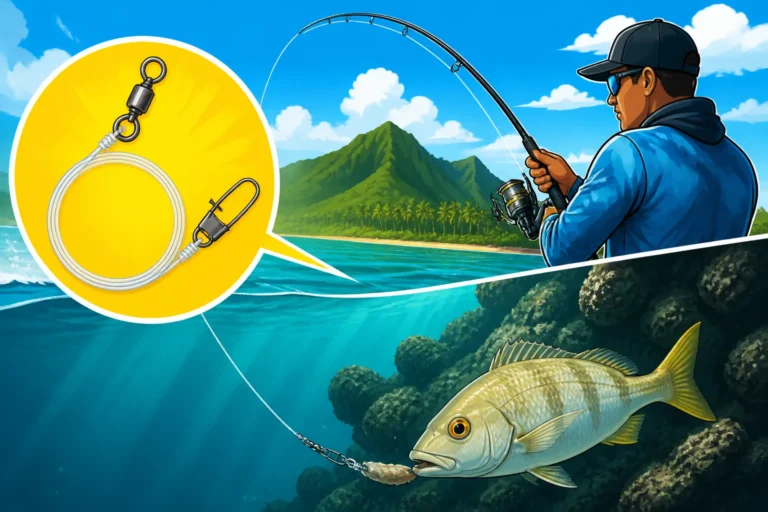
- Line: Monofilament line is commonly used for its stretch and shock absorption, which can be crucial when a fast-moving ahi strikes a lure moving at 8 knots. For heavy trolling, 80-130 lb test monofilament is common. Some anglers opt for braided line with a long monofilament top shot for increased sensitivity and capacity. Your leader material, usually heavy fluorocarbon, is critical for abrasion resistance against the ahi’s rough skin and bill, and for its low visibility. This robust setup is essential for managing the sheer power discussed in Ahi (Yellowfin Tuna) Fishing in Hawaii.
Lures and Their Speed Tolerances
The lures you choose are intrinsically linked to your trolling speed. Not all lures are created equal, and understanding their design is key.
- Lure Weight and Hydrodynamics: Heavier lures, or those with specific hydrodynamic designs (like slanted heads or internal weights), are designed to stay in the water better at higher speeds. Lighter lures might "skip" or "blow out" of the water if you troll too fast. Conversely, a very heavy lure might require more speed to generate its intended action.
- Skirt Materials: The material and length of the lure skirts can also influence performance. Softer, more flexible skirts often have more enticing action at slightly lower speeds, while stiffer, thicker skirts might need a bit more speed to properly flare and undulate. You can find a vast selection of lure options and skirt materials on Amazon, allowing you to tailor your spread to different conditions and target species.
- Lure Spread: How you arrange your lures in the water (your "spread") also matters. Shorter lines often get more surface action due to boat turbulence, while longer lines run in cleaner water. Matching lure types to their position in the spread and intended speed is a nuanced art.
Importance of Outriggers and Dredges
These pieces of equipment, while not directly influencing your boat's speed, significantly enhance your trolling effectiveness by optimizing lure presentation.
- Outriggers: These long poles extend out from the sides of the boat, allowing you to spread multiple lines wider. This prevents tangles, creates a larger "footprint" of lures, and importantly, allows some lures to run in calmer, undisturbed water outside the boat's wake. This cleaner water can be crucial for enticing wary ahi. Outriggers also elevate the line, creating a more natural "swim" for the lure.
- Dredges: A dredge is a non-baited spreader bar or frame adorned with dozens of artificial baitfish (often naturalistic silicone or Mylar imitations). It's deployed to run subsurface, creating the illusion of a massive school of baitfish. While dredges don't catch fish directly, they act as a massive attractant, drawing ahi into your spread where your baited lures are waiting. The drag created by a dredge can be significant, and you'll need to account for this in your boat's power settings to maintain your desired SOG.
Having the right combination of these elements allows you to fine-tune your entire trolling system, ensuring that every lure in your spread is working optimally at your chosen speed.
Troubleshooting Common Trolling Speed Issues
Even with the best preparation, you’ll inevitably run into challenges when trolling for ahi. The key is to recognize the signs and know how to adjust. A good angler is always troubleshooting!
Not Getting Bites: What to Adjust
It's probably the most frustrating scenario: you're trolling, the conditions look good, but the rods stay stubbornly quiet. Don't despair; it's a call to action to reassess your strategy, and often, speed is the first place to look.
- Vary Your Speed (Slightly): If you're consistently running at 8 knots and not getting hits, try dropping down to 7 knots for a while, or bumping it up to 9. A subtle change can sometimes make all the difference, especially if the fish are lethargic or unusually aggressive. Remember, ahi react to a wide range of stimuli, and a different lure action created by a speed change might just be the trigger.
- Change Lures/Bait: Sometimes, the issue isn't speed, but presentation. If you've been running skirted lures and getting nothing, switch to a live bait if you have it, or try a different type of lure altogether – perhaps a chugger for more surface commotion, or a deep diver if you suspect the fish are holding lower. The Best Lures for Marlin Trolling off Kona can sometimes also be effective for ahi, but specific ahi lures are usually a safer bet.
- Look for Structure/Life: Are you in the right area? Check your fishfinder for bait balls, temperature breaks, or significant bottom structure. Birds working the surface are a huge indicator. If you're in barren water, no speed will make a difference. Sometimes, you need to change location before you change speed.
- Check Leader and Connections: It's a basic, but crucial step. A kinked leader, a dull hook, or a frayed connection can deter fish. Take a moment to inspect your tackle.
Lures Not Running Correctly
This is a common issue, and usually, the culprit is speed or rigging. When your lures aren't performing as intended, they're not attracting anything but maybe seaweed.
- Lure "Blow Out": If your lures are frequently skipping out of the water, tumbling, or riding on their side, you're almost certainly going too fast for that particular lure. This is especially common with lighter skirted lures or chuggers.
- Solution: Gradually reduce your trolling speed. If reducing speed isn't an option (e.g., if other lures are performing well), consider switching to a heavier lure, one with a more aggressive head design, or a shorter-lipped deep diver designed for higher speeds. Ensure your lures are properly weighted, and perhaps consider adding an in-line trolling weight from a vendor like Amazon to keep them submerged.
- Lure "Washing Out" / No Action: If your lures are simply dragging through the water with no wiggle, splash, or erratic movement, you're likely going too slow. They aren't generating enough water pressure to activate their designed action.
- Solution: Slowly increase your trolling speed until you see the desired action return. Watch your rod tips – they should have a consistent pulsing or wiggling action that matches the lure’s performance.
- Tangles and Cross-Overs: Tangles in your spread are often caused by lures running erratically or by poor boat handling.
- Solution: Ensure all your lures are running true and at their optimal speed. Use outriggers to spread lines wide. When making turns, do so gradually and observe your lines to prevent them from crossing. The tighter the turn, the more risk of tangles.
Dealing with Varying Weather Conditions
Hawaii's weather can be dynamic, and what works in calm seas won't necessarily work when the wind picks up.
- Rough Seas/Choppy Conditions: In choppy water, your boat's speed over ground will fluctuate more, and lures can get knocked around.
- Solution: As mentioned earlier, sometimes a slight increase in average speed helps keep lures in the water and working, even through the troughs of waves. Focus on maintaining a consistent average SOG. Heavier lures tend to perform better in these conditions.
- Strong Currents: Currents are a constant factor in Hawaii.
- Solution: Always rely on your GPS (SOG) for speed. If you're fighting a strong head current, you'll need higher RPMs to maintain your trolling speed. Conversely, if you're running with a strong tail current, you'll need to drastically reduce RPMs to avoid speeding. Ignoring current can lead to lures not working correctly. For instance, if you're trying to achieve 7 knots SOG into a 2-knot current, your boat will need to be moving through the water at 9 knots.
By understanding these common issues and having a plan to address them, you'll be much better equipped to adapt to the unpredictable nature of ahi fishing in Hawaii. A proactive approach to monitoring and adjusting your trolling speed and spread is what ultimately leads to more flags flying from the outriggers.
Disclaimer
Fishing involves inherent risks. Always prioritize safety, wear appropriate safety gear, and be aware of all local regulations. Conditions can change rapidly, so check weather forecasts before heading out. This guide provides general information and should not replace professional advice or local expertise. Always check the latest Hawaii fishing regulations from the Department of Land and Natural Resources (DLNR) before fishing.