What to bring for a full-day offshore charter in Kona
There's nothing quite like the excitement of booking a full-day offshore fishing charter off the Kona Coast, but that excitement can quickly turn to anxiety when you start wondering what in the world you're supposed to bring for an entire day out on the open ocean. It's easy to overpack or, worse, forget something absolutely crucial for your comfort and enjoyment. This comprehensive guide will walk you through all the essentials, from personal comfort items to specialized fishing gear and important pre-trip checks, ensuring your Kona deep-sea adventure is unforgettable for all the right reasons.
Essential Personal Gear for a Comfortable Day at Sea
A full day out on the vast Pacific can be an incredible experience, but it also means prolonged exposure to the elements. Being prepared with the right personal gear is key to staying comfortable, safe, and focused on the fishing, rather than battling sunburn or dehydration. Think of it like a mini expedition – every item has a purpose in keeping you happy from sunrise to sunset.
Protecting Yourself from the Sun and Elements
The Hawaiian sun is no joke, especially when you're offshore with reflective water all around you. What feels like a gentle warmth in the morning can quickly become an intense blaze by midday, leading to severe sunburn if you're not diligent. Beyond the sun, occasional squalls or sea spray can leave you damp and uncomfortable, so having a plan for changing weather is crucial.
First and foremost, sunscreen is an absolute non-negotiable. And not just any sunscreen – you'll want to choose a reef-safe variety. Hawaii has strict laws about sunscreens containing oxybenzone and octinoxate because these chemicals are harmful to our delicate coral reefs. Look for brands that specifically state "reef-safe" or "mineral-based" with zinc oxide or titanium dioxide as the active ingredients. Apply it generously before you even leave the dock, and reapply every couple of hours, especially after getting wet from sea spray or sweating. Many first-timers underestimate how quickly they can burn, even on a cloudy day.
Next up, headwear is your best friend. A wide-brimmed hat offers superior protection for your face, ears, and neck compared to a baseball cap. The brim helps shield your eyes, too, reducing glare. Coupled with a good pair of polarized sunglasses, you'll not only protect your eyes from harmful UV rays but also cut down on the glare reflecting off the water. This can make a huge difference in spotting activity on the surface, or simply relaxing without squinting all day. Don't forget a sunglass strap; the ocean has a way of claiming unattended items!
Finally, consider your clothing. While it might seem counterintuitive to wear long sleeves in warm weather, lightweight, long-sleeved fishing shirts made from quick-dry, UPF-rated fabric are incredibly effective at preventing sun exposure. They keep you cooler than you might think by wicking away sweat and providing a physical barrier against UV rays. A light rain jacket or windbreaker is also a smart addition, even on a clear forecast day. Conditions can change rapidly offshore, and it’s a lifesaver for cutting the wind during an early morning run or shedding unexpected sea spray. Nobody wants to be shivering for hours, even in paradise.
Keeping Hydrated and Energized
An all-day offshore charter is physically demanding, even if you’re just sitting back waiting for a bite. The sun, heat, and constant motion of the boat can quickly lead to dehydration and energy slumps, which are the last things you want when a marlin decides to hit. Staying on top of your hydration and nutrition game will ensure you have the stamina and focus when it truly counts.
Water, and lots of it, should be at the top of your packing list. You’ll be surprised how much you’ll drink throughout the day without even realizing it. While some charters might provide basic beverages, bringing your own insulated water bottle filled with ice-cold water is always a good idea. Consider freezing a bottle or two beforehand; they’ll slowly melt, providing refreshingly cold water later in the day. Beyond plain water, electrolyte drinks can be incredibly beneficial. Sports drinks or electrolyte mixes help replenish essential salts and minerals lost through sweating, preventing cramping and fatigue.
For food, think easy-to-eat, non-messy snacks and a simple lunch. Forget anything that needs extensive preparation or refrigeration unless you've confirmed your charter has a galley. Sandwiches, wraps, granola bars, fruit (like apples or oranges that don't bruise easily), nuts, and dried fruit are all excellent choices. Avoid anything too greasy or heavy, as these can sometimes contribute to seasickness. Packing a variety of options can also help if your appetite changes due to the motion of the boat. Many people find smaller, frequent snacks easier to handle than one large meal.
Don't rely solely on what the charter might offer. While many reputable Kona charters are great about providing some refreshments, personal preference and dietary needs vary wildly. Bringing your own ensures you have exactly what you want, when you want it, to keep your energy levels up. It's a small effort that pays big dividends in your overall enjoyment.
Appropriate Attire and Footwear
What you wear on a fishing charter might seem like a minor detail, but it can significantly impact your comfort and safety. You’re looking for practicality, protection, and the ability to adapt to varying conditions throughout the day. The goal is to be comfortable enough to enjoy the fight of a lifetime, not to be distracted by soggy shoes or chafing clothes.
Start with quick-dry clothing. Cotton is generally a poor choice for any water activity because once it gets wet, it stays wet, leading to chafing and a chill. Performance fabrics that wick moisture away from your skin and dry rapidly are ideal. This includes synthetic blends or merino wool. As mentioned, long-sleeved shirts are great for sun protection, but a comfortable t-shirt or tank top layered underneath can also be a good idea for flexibility.
Layers are your friend on a full-day offshore trip. The early morning can be cool with the boat speeding out to the fishing grounds, but by midday, it can be scorching. As the sun begins to set, the air cools again. Being able to shed or add a light jacket, hoodie, or long-sleeved shirt means you can adjust to the temperature fluctuations without hassle. A simple, breathable hoodie can be great for both sun protection and warmth.
For footwear, non-slip, closed-toe shoes are absolutely essential. The deck of a boat, especially one that's been catching fish, can become wet, slimy, and slippery in an instant. Open-toed sandals or flip-flops offer no protection for your toes if a piece of tackle drops or a fish thrashes, and they provide poor traction. Deck shoes, boat shoes, or even athletic shoes with good grip are your best bet. Make sure they’re comfortable enough to stand in for extended periods and can get wet. Nobody wants to be struggling for balance when a big fish is on the line.
Fishing-Specific Items You Might Want to Bring
While your Kona offshore charter will undoubtedly provide all the necessary fishing gear, some anglers prefer to use their own or bring specialized items to enhance their experience. It's important to clarify with your captain what is permissible, but having certain personal items can really elevate your day, especially if you have a particular style of fishing or a passion for documenting your adventures.
Personal Rods, Reels, and Tackle (If Allowed)
Bringing your own fishing gear on a charter can be a bit of a nuanced topic. Most reputable Kona charters, which you can often research and book through platforms like FishingBooker, will supply top-of-the-line rods, reels, and tackle that are perfectly suited for the target species in Hawaiian waters, whether it's marlin, ahi, or mahi-mahi. This gear is maintained by the crew and is designed to handle the big fish you're hoping to catch.
However, some experienced anglers prefer the familiarity and feel of their own equipment. If you fall into this category, it is absolutely critical to clear it with your captain before your trip. Not all charters allow personal gear, and for good reason. Using equipment that's unfamiliar or not rated for the specific type of offshore fishing can lead to breakages, lost fish, or even danger to other passengers if not handled correctly. A good captain will appreciate your enthusiasm but prioritize safety and success.
If you do get the green light, consider what you're bringing. For a full-day offshore trip targeting pelagics off Kona, you'd likely be looking at heavy conventional tackle for trolling or deep jigging. Think about the species: a powerful big game conventional reel spooled with heavy braid and a fluorocarbon leader, matched to a robust offshore rod. Bringing a tackle box might be overkill, as most charters have a vast array of lures and baits. Instead, maybe a small bag with a few of your favorite go-to lures, leader material, or specific hooks you trust could be an option. Remember, the crew is there to help, and their local knowledge of what works best on a given day is invaluable, so be open to their suggestions, even if you brought your own gear.
Specialized Gear for Photography or Recording
Capturing the thrill of reeling in a big marlin or the stunning Hawaiian scenery is a fantastic way to relive your adventure. While most people rely on their smartphones, specialized gear can truly take your memories to the next level. Just like fishing gear, however, consider the marine environment – salt, spray, and potential splashes are constant threats.
A waterproof camera or an action camera like a GoPro is highly recommended for offshore photography and videography. These cameras are built to withstand the elements, and many can be easily mounted to railings or worn to capture hands-free footage of the action. Don't forget essential accessories: spare batteries (a full day of shooting can drain them quickly), extra memory cards, and maybe a floating wrist strap or case, just in case. There's nothing worse than getting the perfect shot of a jumping mahi-mahi only to find your battery died or your card is full.
For those using their smartphones, a waterproof and floatable phone case is a must-have. These cases not only protect your device from water damage but also ensure it doesn't sink to the bottom of the ocean if accidentally dropped. Also, consider a portable power bank for charging your phone, as phone batteries can deplete quickly with photo and video use, especially if you're battling a fish for a long time. Having your phone charged is also important for communication or in case of an emergency.
Remember to be mindful of your surroundings and the crew while filming. Don't let your photography interfere with the fishing action or crew operations. A quick chat with your captain at the start of the trip about where you plan to film can go a long way in ensuring everyone has a great day.
Fish Care and Transportation (If Keeping Catch)
One of the best parts of a successful fishing charter is bringing home some fresh Hawaiian fish for dinner. However, there are considerations for how that catch will be handled and transported, and it’s always best to understand the charter’s policy beforehand. This is particularly important for species like ahi or ono, which are prized for their culinary value.
Most Kona offshore charters will have excellent systems in place for handling your catch. This usually involves bleeding, gilling, gutting, and icing down the fish immediately to ensure the best possible quality. The crew are experts at this. They’ll often store the fish in large onboard coolers. However, the charter’s policy on who keeps what can vary. Some charters are strictly "catch-and-release" for certain species, others operate on a "boat keeps all" policy (especially for high-value commercial species, though often a portion might be cleaned for passengers), and some will share the catch among the anglers. Always confirm this when you book, whether directly with the captain or through booking sites like FishingBooker.
If you plan on taking some fish home, consider how you’ll get it from the boat to your accommodation, especially if you’re flying or have a long drive. Bringing your own soft-sided cooler bag and some large Ziploc bags can be incredibly useful. While the charter might provide some initial bagging, having extra to protect your vehicle or hotel room from fish juices is always a good idea. Some charter services will even offer to fillet and bag your fish for you right at the dock, which is a huge convenience.
For interisland travel or flying back to the mainland, you'll need a proper cooler that can be checked as luggage, and dry ice might be necessary. Research airline regulations for transporting seafood well in advance. Don't assume you can just show up at the airport with a plastic bag of fish. Being prepared for fish care and transportation ensures that your delicious catch remains fresh and makes it safely to your plate, or home freezer.
Navigating Common Challenges: Comfort and Safety at Sea
Spending a full day on the ocean can present a few unique challenges, even in the calm waters off Kona. Addressing potential issues like seasickness, minor injuries, or communication needs proactively can save you a lot of discomfort and ensure a much more enjoyable and safe fishing experience.
Combating Seasickness Effectively
Seasickness is one of the most common worries for anyone heading out on an offshore charter, and for good reason—it can absolutely ruin a trip. Even seasoned anglers can occasionally fall victim to a particularly choppy day. The good news is there are many strategies you can employ to prevent or mitigate it, giving you a fighting chance to enjoy your day.
The most common approach is over-the-counter medication. Options like Dramamine or Bonine are widely available and can be very effective. The key is to take them before you board the boat, usually an hour or two prior, as they work best preventatively. Once you start feeling sick, it's often too late for them to be fully effective. Always read the instructions and be aware of potential side effects, such as drowsiness. If you're particularly prone to motion sickness, consulting your doctor for a prescription patch (like scopolamine) might be a good idea; these are usually applied behind the ear and offer longer-lasting relief. Check out our detailed Seasickness tips for a Hawaii fishing charter for more in-depth advice.
Beyond medication, there are several non-pharmacological methods that can help. Ginger is a natural remedy known for its anti-nausea properties. You can bring ginger candies, ginger ale, or even fresh ginger to chew on. Acupressure bands, like Sea-Bands, worn on the wrists, work by applying pressure to specific points to alleviate nausea for some people. During the trip, try to stay on deck in the fresh air, looking out at the horizon. This helps your brain reorient itself with the boat's motion. Avoid going below deck or staring at your phone or a book, as this can exacerbate symptoms.
What you eat and drink also plays a role. Stick to bland foods before and during the trip, and avoid alcohol or greasy meals. Staying hydrated is also crucial, but stick to water or clear electrolyte drinks. If you do start to feel queasy, tell the crew. They are experienced with seasickness and can often offer advice or help you find a comfortable spot on the boat. Having a plan for seasickness can make all the difference between a miserable day and a memorable one.
Personal First Aid and Hygiene Items
While your charter boat will be equipped with a comprehensive first aid kit, having a small, personal kit with a few basics can be incredibly convenient for minor issues. When you're offshore, you're a long way from a pharmacy, so being self-sufficient for small scrapes, headaches, or irritations is a smart move.
Your personal first aid kit should include basics like band-aids, antiseptic wipes, and pain relievers (like ibuprofen or acetaminophen) for headaches or minor aches that can pop up from the sun or boat motion. If you have any personal medications, such as an inhaler or allergy medication, make sure those are easily accessible and you have more than enough for the duration of the trip. Consider any specific needs you might have, like blister treatment if you’re prone to them from new shoes, or anti-itch cream for insect bites (though offshore mosquitos are rare, you might get a bite at the dock).
For hygiene, hand sanitizer or wet wipes are invaluable. After baiting a hook, handling fish, or just before eating your snacks, you’ll appreciate being able to clean your hands quickly. The ocean environment can be surprisingly grimy, and keeping hands clean helps prevent spreading any germs. Some charter boats have restrooms with running water and soap, but it's always good to have your own backup.
Finally, while it might seem like a small thing, consider bringing a few small plastic bags or motion sickness bags. Even if you've taken precautions against seasickness, having a discrete way to handle an unexpected bout of nausea can provide peace of mind and keep the boat clean. It’s always better to have them and not need them than to need them and not have them.
Important Documents and Communication
You might be heading out for a fun day on the water, but it's still important to have essential documents readily available and a plan for communication, just in case. While your focus will be on the fishing, a little bit of preparation here ensures peace of mind.
First, always carry a valid form of identification. This could be your driver's license or state ID. While it might not be checked on the boat, it's good practice for any travel. Also, bring cash in small denominations. This is crucial for things like tipping the deckhand, which is customary and highly appreciated, or for any unexpected purchases at the dock. Tipping etiquette is a big part of charter fishing culture; you can learn more in Tipping Etiquette for Hawaii Fishing Charters.
Regarding fishing licenses, many Hawaii fishing charters cover the licensing requirements for their passengers, especially for marine recreational fishing. However, it’s always wise to confirm this when you book your trip. If you are required to have your own, make sure you have it on hand. You can find more details in guides like Do You Need a Fishing License in Hawaii or Hawaii nonresident marine fishing license, explained. Even if the charter provides it, understanding the regulations is part of being a responsible angler.
For communication, your cell phone is your primary tool. Ensure it's fully charged before you leave. As mentioned, a waterproof case is a smart investment. While offshore, cell service can be spotty or non-existent far from land. Don't rely on it for constant communication. Let someone on shore know your general plans and when you expect to return. Many charters, especially those found on platforms like FishingBooker, will provide a contact number for the captain or crew in case you need to reach them before the trip. Having the charter's contact information readily available, along with your booking confirmation, is also a good idea.
Things to Confirm with Your Kona Charter Before You Go
Before stepping foot on the dock in Kona, a quick conversation or review of your charter’s policies can eliminate many uncertainties and set you up for a smooth, enjoyable day. Every charter is a bit different, and clarifying these details beforehand ensures you and the crew are on the same page, avoiding any surprises.
Charter's Inclusions and Exclusions
One of the biggest questions anglers have revolves around what’s included in the price of their trip. Kona charters typically vary in what they provide, and clarifying this early prevents misunderstandings and allows you to pack appropriately.
Most offshore charters will include all the necessary fishing gear – rods, reels, tackle, and bait. This is a huge convenience, as offshore gear is expensive and specialized. However, it's always worth a quick confirmation, especially if you have a specific type of fishing in mind or are bringing your own gear (as discussed earlier). Some may also provide water and a basic cooler with ice. Beyond that, provisions can differ widely.
It's important to ask about food and drinks. Some higher-end or longer full-day charters might include a light breakfast, lunch, and a selection of non-alcoholic beverages. Others might expect you to bring everything yourself. Don't assume anything. If they don't provide meals, plan to pack enough food and snacks for the entire day, as outlined previously. Similarly, if you want specific beverages, confirm if you can bring your own. Most charters are fine with you bringing your own non-alcoholic drinks, but rules on alcohol can vary. Knowing these details helps you manage your expectations and pack smarter. For more general advice on what to expect, check out What to Expect on a Hawaii Fishing Charter.
Rules on Personal Gear and Catch Policy
As discussed, bringing personal fishing gear needs pre-approval. But beyond rods and reels, there might be other items you're considering. What about a large camera bag, a drone, or a giant tackle box? Space on a boat, especially for a full day trip with multiple anglers, can be limited. Asking about any restrictions on personal item size or type is courteous and practical.
The catch policy is another crucial conversation. This is where you clarify what happens to the fish you catch. Is it strictly catch-and-release for certain species like blue marlin? If you catch edible fish like ahi, mahi-mahi, or ono, will you get to keep a portion? Some charters have a "boat keeps the fish" policy, particularly if they are trying to offset their operational costs or have a commercial license, but they might offer to cut you some fillets. Others are happy for you to take home a portion of the table fare.
When you're researching and booking your charter, whether through a local contact or a service like FishingBooker, make sure to read all the fine print or ask direct questions about the catch policy. If you're hoping to stock your freezer, this information is paramount. Also, confirm if the crew will clean and fillet your fish for you at the dock, and if there's an extra charge for this service. Knowing these rules ensures there are no awkward surprises when you return to the harbor after a successful day on the water.
Weather Contingencies and Communication
The weather in Kona can be famously calm and consistent, especially on the leeward side of the Big Island, but it's still the ocean, and conditions can change. Having a clear understanding of the charter's policy regarding weather is essential, both for your safety and your travel plans.
Ask your captain or booking agent about their weather cancellation policy. What happens if the weather turns too rough or unsafe? Will the trip be rescheduled, or will you receive a refund? Knowing this provides peace of mind, especially if you've traveled a long way for your fishing adventure. Don't push to go out in unsafe conditions; a good captain will always prioritize passenger safety above all else. For insights into general boating regulations in Hawaii, you can refer to Hawaii Boating Laws for Anglers.
Finally, confirm the best way to communicate with the charter in the days leading up to your trip, especially for last-minute checks or if you have questions. Will they call or text you if there are changes due to weather or mechanical issues? And what’s the best way for you to reach them if you have a problem or are running a few minutes late on the morning of your trip? Many captains prefer a text message or a call to a specific number. Having this contact information readily available, along with the meeting point and departure time, will make the start of your day stress-free.
Full-Day Offshore Kona Charter Checklist
To help you prepare for your full-day offshore fishing adventure in Kona, here's a handy checklist of recommended items:
| Category | Essential Items | Recommended Additions | Notes |
|---|---|---|---|
| Sun Protection | Reef-safe sunscreen | Lip balm with SPF, UV Buff/Gaiter | Apply generously before boarding and reapply often. Protects marine life. |
| Wide-brimmed hat | Better face/neck coverage than a baseball cap. | ||
| Polarized sunglasses with strap | Cuts glare, protects eyes. | ||
| Lightweight, long-sleeved UPF shirt | Light windbreaker/rain jacket | Quick-dry fabric is best. Layers are key for temperature changes. | |
| Hydration & Food | Reusable water bottle (filled) | Electrolyte drinks/mixes | Plenty of water is crucial. Freeze bottles for longer cold. |
| Easy-to-eat snacks | Simple sandwich/wrap, fruit | Avoid greasy or heavy foods to prevent seasickness. | |
| Footwear & Attire | Non-slip, closed-toe shoes | Extra pair of socks | Deck shoes or athletic shoes with good grip. Safety first! |
| Quick-dry shorts/pants | Avoid cotton. | ||
| Comfort & Safety | Seasickness medication (taken in advance) | Ginger chews/ale, acupressure bands, small motion sickness bags | Prevention is best. Consult doctor if prone to severe motion sickness. Read our Seasickness tips for a Hawaii fishing charter. |
| Basic personal first aid kit | Hand sanitizer/wet wipes | Band-aids, pain reliever, any personal medications. | |
| Documents & Tech | Valid ID | Cash (for tips, unexpected purchases) | Tipping is customary; refer to Tipping Etiquette for Hawaii Fishing Charters. |
| Waterproof phone case (floatable) | Portable power bank, waterproof camera/GoPro | Protect your tech! Spare batteries/memory cards for cameras. | |
| Charter booking confirmation | Captain's contact info | Important for communication and reference. | |
| Personal fishing license (if required) | Confirm with charter if they provide. See Hawaii Fishing License Guide for 2026. | ||
| Optional Fishing Gear | Small bag with favorite lures (if allowed) | Personal rod/reel (with captain's prior approval) | Most charters provide excellent gear, but some prefer their own. |
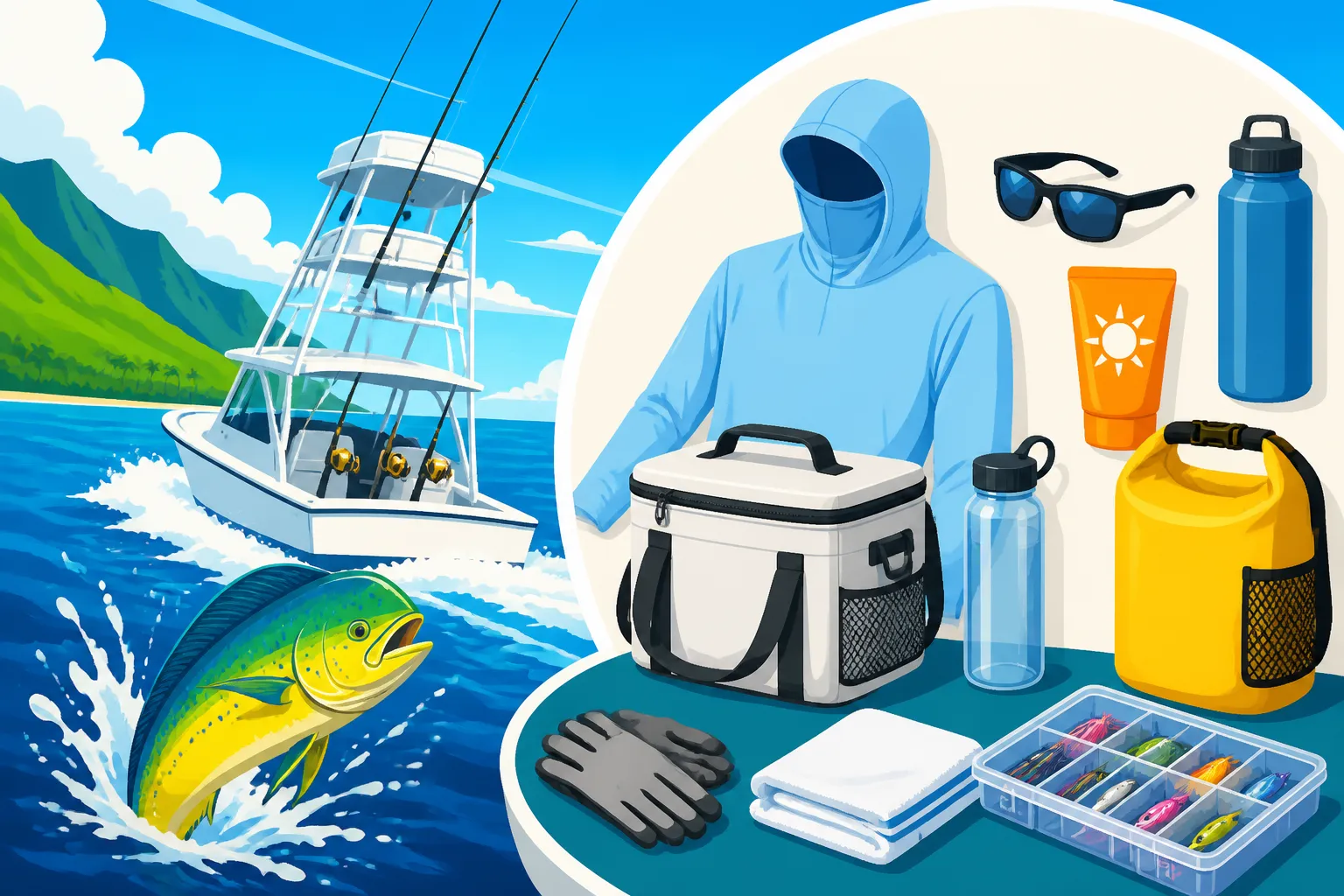
| Soft-sided cooler bag (for catch) | Ziploc bags for fillets | Confirm charter's catch policy beforehand. |
Disclaimer
This article is for general informational purposes only and does not constitute professional advice. Laws, prices and regulations vary by location and change over time. Consult a qualified professional for guidance on your specific situation.