Cancellation policy for Hawaii fishing charters
Planning a dream fishing trip to Hawaii can be exhilarating, but the thought of unforeseen circumstances forcing a cancellation can throw a real wrench in those plans. It’s a common worry – what if the weather turns, someone gets sick, or your travel schedule unexpectedly shifts? This guide is here to walk you through the typical cancellation policies you'll encounter with Hawaii fishing charters, empowering you to understand your options, protect your investment, and navigate any bumps in the road with confidence.
Understanding Standard Cancellation Policies for Hawaii Fishing Charters
When you book a fishing charter in Hawaii, you’re not just reserving a spot on a boat; you’re entering into an agreement with a small business that relies on that booking to cover its costs, pay its crew, and keep its operation afloat. Because of this, cancellation policies are a crucial part of the booking process, designed to balance the needs of both the angler and the charter operator. These policies aren't just arbitrary rules; they're in place to ensure the sustainability of these often family-run businesses.
The Role of Deposits and Full Payments
Almost every Hawaii fishing charter, whether you’re booking a Half-Day Charters in Hawaii or a full-day adventure, will require some form of payment upfront to secure your trip. This typically comes in one of two forms: a deposit or a full payment.
- Deposits: A deposit is usually a percentage of the total trip cost, or sometimes a flat fee, paid at the time of booking. It holds your date and covers the charter’s initial administrative costs and the opportunity cost of turning away other potential customers. The terms around this deposit are vital – is it refundable, non-refundable, or partially refundable under certain conditions? This is where the cancellation policy kicks in. If you cancel within the acceptable window, you might get your deposit back, often minus a small processing fee. If you cancel too late, that deposit is typically forfeited.
- Full Payments: Some charters, especially those booked closer to the trip date or for shorter trips, may require full payment upfront. In these cases, the cancellation policy dictates how much, if any, of that full payment you can expect back if you need to cancel. It's often more stringent than a deposit policy, meaning a full refund becomes less likely as the trip date approaches.
It's absolutely essential to clarify these payment structures and their refundability before handing over any money. A quick phone call or a thorough read of the booking platform’s terms (many booking sites like FishingBooker make this information readily available) can save you a lot of heartache down the line.
Common Cancellation Windows and Penalties
Charter operators typically establish a specific timeframe, or "cancellation window," within which you can cancel your trip without incurring the full financial penalty. This window can vary significantly, so don't assume every charter operates the same way.
| Cancellation Notice Period | Typical Outcome for Customer (Example) | Typical Outcome for Charter Operator |
|---|---|---|
| 30 Days or More | Full refund of deposit or full payment. | Ample time to rebook the date, minimal financial loss. |
| 7 to 29 Days | Partial refund (e.g., 50% of deposit), or deposit forfeiture. | Some time to rebook, but potential for lost revenue. |
| 48 Hours to 6 Days | Deposit forfeiture, or potentially a rebooking fee. | Very difficult to rebook, likely lost revenue for the day. |
| Less Than 48 Hours | Full payment forfeited, or charged for the full trip amount. | Significant financial loss, as boat and crew were committed. |
| No-Show | Full payment forfeited, often charged the full amount if not pre-paid. | Complete loss of revenue, wasted preparation, crew time. |
This table provides a general overview, but each charter’s policy will have its own nuances. For instance, some may offer a credit for future trips instead of a cash refund, especially for cancellations just outside the ideal window. Others might have a sliding scale, where the percentage refunded decreases as you get closer to the trip date. When you're thinking about How to Choose a Hawaii Fishing Charter, don't just look at the boat and the fish they catch; really dig into these policy details.
Factors Influencing Charter Cancellation Policies
It might seem unfair to lose money on a canceled trip, but when you consider the unique challenges of running a fishing charter in a place like Hawaii, the reasons behind these policies become clearer. Several factors play a significant role in how and why cancellation terms are structured.
Weather-Related Cancellations
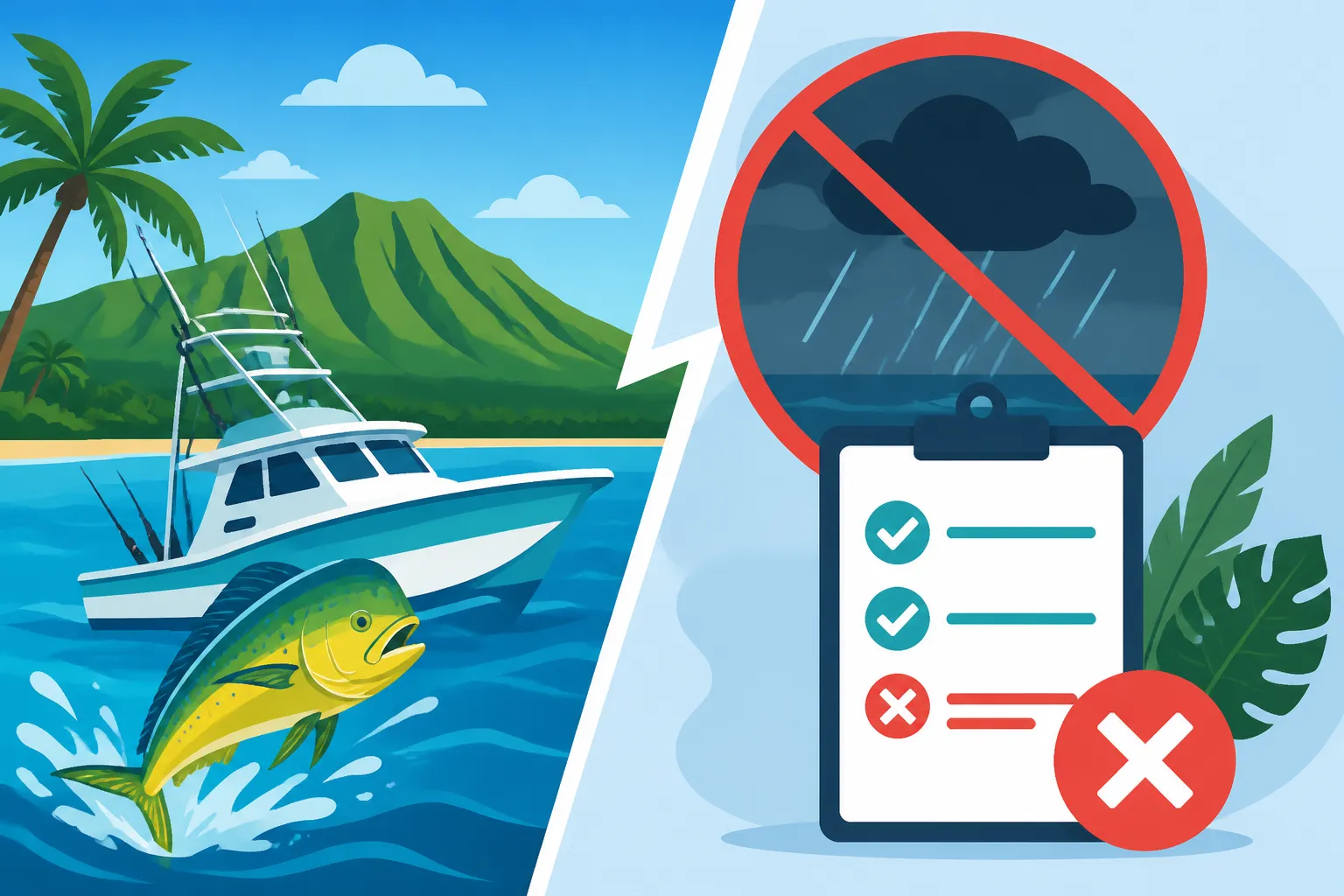
This is arguably the most common reason for a charter cancellation, and it's almost always at the captain's discretion. Safety is paramount, and no reputable captain will take their guests out in conditions that are unsafe or would make for an miserable experience.
- Captain's Call on Safety: If the captain determines that the sea conditions (high swells, strong winds, heavy rain) make fishing dangerous or unfeasible, they will cancel the trip. This isn't just about comfort; it's about avoiding serious risks like seasickness, injuries, or even capsizing in extreme cases. For example, if you've booked a deep sea trip out of Honokohau Harbor and a large south swell rolls in, making the entrance channel hazardous and offshore conditions rough, the captain will likely call it off. When this happens, you almost always receive a full refund or the option to reschedule. This distinction is crucial: the charter is canceled for safety reasons by the professional, not by your choice. Knowing What happens if weather cancels a Hawaii charter can ease a lot of anxiety when planning.
- "Small Craft Advisories" vs. "Rough but Fishable": There’s a difference between a small craft advisory (which often leads to a cancellation) and simply "rough seas." Some anglers are perfectly fine with a bumpy ride if the fish are biting, while others prefer calm waters. A captain might explain that while it’s not ideal, it’s still safe. In these borderline cases, if you choose to cancel, it might fall under your own discretion rather than a captain-initiated cancellation, potentially affecting your refund. Always have an honest conversation with the captain if you have concerns about conditions.
Mechanical Issues or Unforeseen Charter Problems
While rare for well-maintained boats, mechanical breakdowns can happen. Imagine showing up at Maalaea Harbor ready to go, only to find the engine won't start.
- Charter Operator's Responsibility: If the charter boat experiences a mechanical failure, or if the captain becomes ill and no suitable replacement can be found, the cancellation is entirely on the charter operator. In these instances, you are always entitled to a full refund. Many reputable charters will also try to help you find an alternative booking with another local operator, especially if you're only on the island for a short time. This is a testament to the strong community among fishing charters in Hawaii.
- Booking Platform Assistance: If you booked through a major platform like FishingBooker, they often have customer service teams that can step in to assist with refunds or rebooking options if the charter itself cancels due to mechanical issues or other unforeseen problems on their end. They act as an intermediary, which can be a huge relief.
Customer-Initiated Cancellations
This category covers cancellations made by you, the angler, for various personal reasons. This is where cancellation policies become most critical to understand.
- Changes in Travel Plans: Flights delayed, canceled, or changed? Family emergency back home? These things happen and are often outside your control. However, from the charter's perspective, they’ve still held that date for you. The closer to the trip date these changes occur, the harder it is for the charter to fill that spot, leading to potential forfeiture of your deposit or full payment.
- Illness or Injury: Getting sick while on vacation is a bummer, especially if it means missing a fishing trip. While charters are typically empathetic, their business still needs to operate. Unless the policy specifically states otherwise, a sudden illness preventing you from going might still fall under the standard cancellation terms, especially if it's within the non-refundable window.
- Simply Changing Your Mind: Deciding you'd rather go snorkeling or just relax by the pool? That's your prerogative, but it also means the charter will likely enforce its cancellation policy strictly, as they were holding a valuable spot for you.
Navigating Cancellations: What to Do and How to Protect Your Trip
Understanding cancellation policies is one thing; knowing how to navigate a real-world cancellation scenario is another. Being proactive and informed can save you stress and money.
Reviewing the Policy Immediately After Booking
The moment you book your Hawaii Fishing Charter Cost Guide adventure, whether it's for Kona Coast Marlin fishing or a quiet bottomfishing trip off Maui, take a few minutes to read the cancellation policy thoroughly. Don’t just skim it.
- Print It Out or Save a Screenshot: Have a copy readily accessible. This eliminates any confusion later on. Look for specifics: what are the deadlines for a full refund? What percentage is forfeited for late cancellations? Are there exceptions for medical emergencies or travel disruptions?
- Clarify Any Ambiguities: If anything in the policy isn't clear, contact the charter directly or the booking platform (like FishingBooker’s support team) for clarification. It's much better to ask questions upfront than to be surprised later. Understand if they offer any flexibility for rescheduling within a certain timeframe, even if a refund isn't possible.
Communication is Key
If you foresee the need to cancel or if an unexpected event occurs, communicate with the charter as soon as humanly possible.
- Early Notification: The sooner you notify the charter, the better your chances of a favorable outcome. If you cancel with enough lead time, the charter might be able to rebook the date, and you’ll likely receive a full or partial refund. Even if you're past the "full refund" window, early notification might allow them to rebook, potentially mitigating your loss.
- Be Clear and Concise: Clearly state your intention to cancel and the reason, if you feel comfortable sharing it. Be polite and understand that they are running a business.
- Confirm in Writing: Always follow up a phone call with an email to create a written record of your cancellation request. This can be invaluable if there are any disputes later regarding when and how you canceled.
Considering Travel Insurance
For many, especially those traveling a long distance to Hawaii, travel insurance can be a worthwhile investment to protect against unforeseen circumstances.
- "Cancel For Any Reason" Policies: While pricier, these policies offer the ultimate flexibility, allowing you to cancel your trip (including charter bookings) for virtually any reason and still recover a significant portion of your non-refundable expenses.
- Standard Travel Insurance Coverage: Most standard travel insurance policies cover cancellations due to medical emergencies, severe weather (like hurricanes that shut down airports), or other significant disruptions to your travel plans. Check if your policy specifically covers activity bookings like fishing charters. This can be a lifesaver if, for example, your flight to Maui is canceled, preventing you from making your scheduled Maalaea Harbor trip.
- Read the Fine Print: Just like with charter policies, scrutinize your travel insurance policy’s terms and conditions to understand what is and isn't covered, the claims process, and any deductibles.
Finding Charters with Flexible Cancellation Policies
While many charters have standard, somewhat strict policies due to the nature of their business, some do offer more flexibility. Knowing how to find them can be a big advantage.
Utilizing Online Booking Platforms and Filters
Websites like FishingBooker are fantastic resources because they aggregate numerous charters and often allow you to filter or clearly display cancellation policies.
- Policy Transparency: Good booking platforms prioritize transparency, clearly stating each charter’s cancellation terms on their listing page. This allows you to compare policies side-by-side before committing.
- Direct Contact Information: Even if you find a charter through an aggregator, don't hesitate to use the provided contact information to call them directly. A personal conversation can often yield more nuanced information about their flexibility, especially if you have a specific concern. For example, if you're booking well in advance for a Best Marlin Charters off the Kona Coast trip and are worried about a potential family event, a direct chat might reveal they're willing to be flexible with rescheduling if given ample notice.
Charters with "No Deposit" or "Pay on the Day" Options
These are less common, especially for premium offshore trips, but they do exist, particularly for smaller inshore or shore-based guiding services.
- Reduced Risk for Anglers: If you find a charter that doesn't require a deposit or allows you to pay upon arrival, your financial risk for cancellation is minimal. However, these charters might be harder to find and tend to book up quickly precisely because of their flexibility.
- Building Trust: Operators offering these terms often rely on a strong reputation and trust within the local community. While convenient for anglers, it means they might have a stricter "no-show" policy or expect higher courtesy if you do need to cancel.
The Value of Rescheduling Over Refunding
Sometimes, the best "cancellation" policy isn't a refund at all, but the option to reschedule your trip.
- Maintaining Your Experience: Many charters prefer to reschedule rather than refund, especially if you've canceled due to illness or minor travel changes. This allows them to retain your business and you still get to experience your What to Expect on a Hawaii Fishing Charter.
- Flexibility for Both Parties: If you know your dates are somewhat fluid, or if you're a repeat visitor to Hawaii, look for charters that explicitly mention flexibility with rescheduling, particularly for non-weather-related cancellations given sufficient notice. They might offer a credit that can be used within a certain timeframe (e.g., 12 months). This is a great alternative when a cash refund isn't possible, ensuring your fishing dreams aren't completely dashed.
By carefully reviewing cancellation policies, communicating effectively, considering travel insurance, and seeking out flexible options, you can book your Hawaii fishing adventure with greater peace of mind. Remember, a little preparation goes a long way in ensuring your trip, whether it's for giant trevally or rainbow trout at Kokee, is as smooth and stress-free as possible.
Disclaimer
This article is for general informational purposes only and does not constitute professional advice. Laws, prices and regulations vary by location and change over time. Consult a qualified professional for guidance on your specific situation.