Onaga (Ruby Snapper) Habits
For many anglers, the thought of dropping a line into the deep, dark abyss off Hawaii's coasts is both thrilling and a little intimidating. You're not just fishing; you're venturing into a world few ever see, targeting fish like the magnificent Onaga, or ruby snapper, that make their home in these extreme conditions. This guide will pull back the curtain on the intriguing habits of Onaga, helping you understand their world so you can better find and catch these prized deepwater dwellers.
Understanding the Elusive Onaga: A Deep Dive into the Ruby Snapper
The Onaga, with its striking ruby-red hue and delicate, flavorful meat, is one of Hawaii's most sought-after deepwater bottomfish. But they don't just swim up to your boat asking to be caught. Their very nature, driven by the harsh realities of their deep-sea environment, makes them an elusive and challenging target. Understanding their habits isn't just a matter of curiosity; it's the foundation of any successful deep-dropping expedition.
What Makes Onaga So Special (And So Challenging)
Imagine living in a world where sunlight never penetrates, where temperatures hover just above freezing, and where pressure could crush a human in an instant. That's the Onaga's reality. These fish have evolved specialized adaptations to thrive in such an environment, making them incredibly tough survivors. For anglers, this means they aren't going to be found in shallow reefs or cruising near the surface. You're talking about precision deep-dropping, often in hundreds of feet of water, sometimes over a thousand. The equipment alone needs to be robust, and your understanding of currents, structure, and their subtle movements becomes paramount. It's a true test of patience and skill, but the reward – that beautiful, delicious ruby snapper – is absolutely worth the effort. There's a reason why stories of landing a big Onaga are recounted with such reverence.
Identifying the Ruby Snapper: Key Features
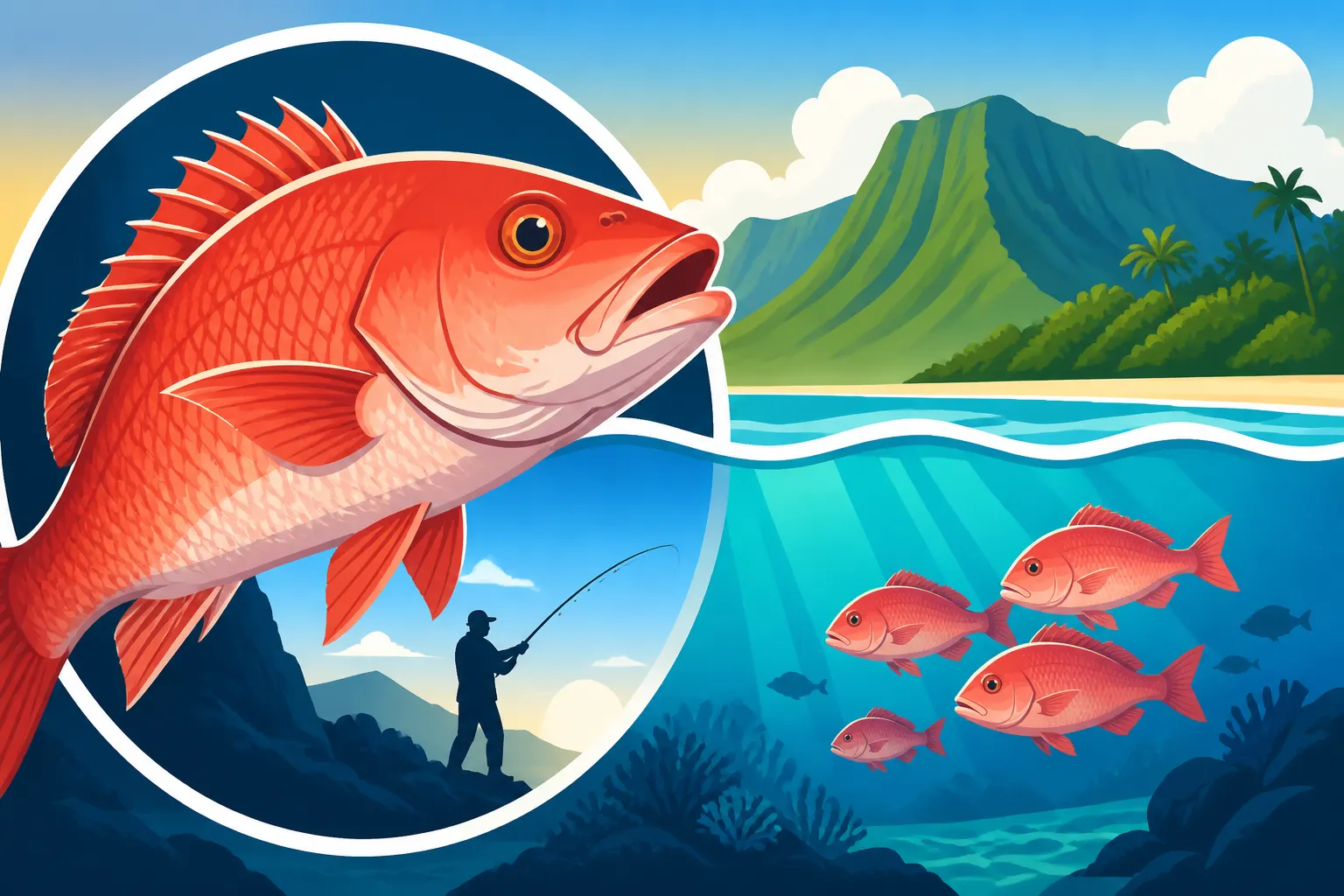
While the name "ruby snapper" gives away their most defining characteristic, there's more to identifying an Onaga than just its color. These fish typically sport a vibrant, almost iridescent red or reddish-pink body, often fading to a lighter pink or white on their belly. One of their most distinctive features is their extremely long, slender caudal fin (tail), which tapers to a point and can be dramatically extended, almost streamer-like. Their eyes are relatively large, an adaptation to their low-light habitat, and their body is elongated and streamlined, built for efficiency in the water column. They also possess a relatively small mouth with sharp, conical teeth, indicative of their predatory diet. When you pull one up from the deep, there's no mistaking its elegant form and stunning color for any other fish, though they do share some familial resemblance to other deepwater bottomfish like the opakapaka. For a broader look at the deepwater denizens, check out Bottomfish Species of Hawaii.
The Deepwater Lair: Onaga Habitat and Preferred Structures
Onaga are true residents of the deep, having adapted perfectly to the extreme conditions found far beneath the waves. Their preferred habitat isn't random; it's intricately linked to specific depths, temperatures, and the availability of complex underwater structures that offer both shelter and hunting grounds. To successfully target Onaga, you really need to think like one, understanding where they'd feel most comfortable and where they'd find their next meal.
Depths and Temperatures: Where Onaga Call Home
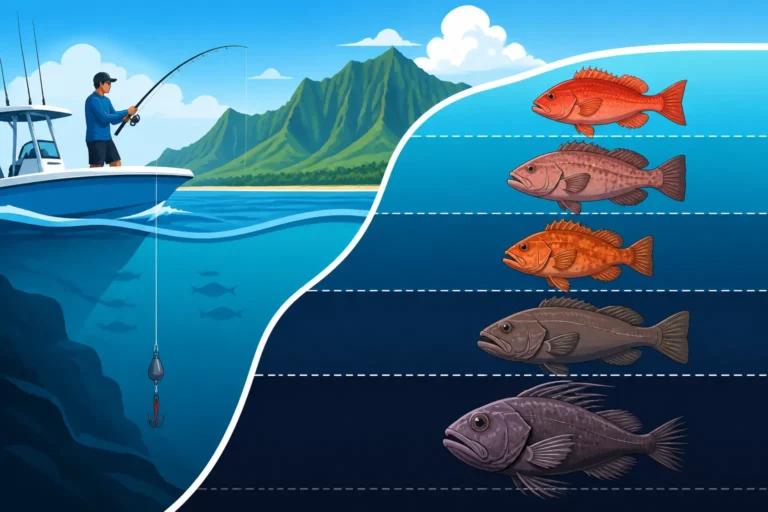
When we talk about Onaga, we're talking about significant depth. These fish are typically found in waters ranging from about 600 to 1,200 feet, sometimes even deeper. This deep zone, known as the mesopelagic or twilight zone, is characterized by perpetual dimness, near-freezing temperatures (around 38-45°F or 3-7°C), and immense pressure. These conditions are critical to the Onaga's biology; they are not built for warmer, shallower waters. If you're fishing shallower than 500 feet, you're likely in the wrong zone for consistent Onaga catches. Understanding How deep bottomfish species live is crucial for setting up your gear correctly. The rapid change in pressure when they're reeled to the surface is often why they arrive with distended eyes or stomachs – a clear indicator of their deep-dwelling nature.
The Importance of Submerged Structure and Seamounts
Just like land animals need trees and caves, deep-sea fish need structure. Onaga aren't just drifting aimlessly in the open ocean at these depths; they associate very strongly with submerged geological features. Think of underwater mountains (seamounts), steep drop-offs, ledges, ridges, and canyons. These features create upwellings and currents that concentrate nutrients and baitfish, making them prime feeding grounds. The irregular terrain also provides shelter from larger predators and a place to rest. When you're scouting for Onaga, you're not looking for flat, sandy bottoms; you're looking for dramatic contours on your sonar. Many of Hawaii's deep-sea fishing grounds are famous precisely because of these unique underwater geographies. Finding the right "sweet spot" on one of these structures can mean the difference between an empty cooler and a banner day.
Onaga Concentration Zones: FADs and Deep Drop-Offs
While natural structure is key, Onaga can also be found congregating around Fish Aggregating Devices (FADs) or buoys that are anchored in deep water. These man-made structures essentially act like artificial seamounts, attracting baitfish and, subsequently, predators like Onaga. However, they're usually found deeper than the pelagic species like Ahi and Mahimahi that hang near the surface FADs. When targeting Onaga around FADs, you'll need to focus on the anchoring lines or any debris that has accumulated deep down. More commonly, you'll find them along the extreme edges of Hawaii's islands, where the continental shelf abruptly drops off into the abyssal plain. These deep drop-off areas, like those off the Kona Coast or the dramatic ledges surrounding Maui, are classic hunting grounds for Onaga. Utilizing a good fish finder to mark these features is indispensable. Without that kind of technology, you're practically fishing blind in thousands of feet of water. You might find some excellent locations if you consult a guide on Best Bottomfishing Spots in Hawaii.
What's on the Menu? Onaga Foraging Behavior and Diet
To catch a fish, you've got to know what it likes to eat! Onaga are opportunistic predators, but their diet is specifically tailored to the types of prey available in their deepwater habitat. Understanding their preferred meals and when they're most actively hunting can dramatically increase your chances of a strike. They aren't going to chase a marlin lure, that's for sure.
Preferred Prey: From Squid to Small Fish
The Onaga's diet primarily consists of organisms found in the deep ocean. Squid, in particular, are a major food source. Their soft bodies and relatively slow movement make them an easy target for a deepwater ambush predator. Various species of deep-sea shrimp and crabs also make up a significant portion of their diet. Small, schooling deepwater fish, often those that migrate vertically in the water column (like lanternfish or hatchetfish), are also on the menu when available. Essentially, if it lives deep, moves relatively slowly, and fits in an Onaga's mouth, it's fair game. This preference for squid and small crustaceans is why fresh, natural baits mimicking these creatures are so effective when deep-dropping. You can often find pre-packaged frozen squid or fish bait at local tackle shops, or order specialized deepwater glow baits and rigs through online retailers like Amazon to ensure you're equipped for the depths.
Nocturnal Feeders? Debunking Myths and Understanding Feeding Times
There's a common misconception that many deep-sea fish are exclusively nocturnal due to the constant darkness of their environment. While some deepwater species do exhibit heightened activity at night, Onaga are generally considered active feeders throughout the day. In their light-starved world, there isn't much difference between "day" and "night" in terms of ambient light. Their feeding activity is more likely influenced by the vertical migration of their prey, currents, and tidal movements that bring food closer to their hiding spots.
For anglers, this means you don't necessarily need to target specific "night feeds" for Onaga. Instead, focus on optimal conditions like calm seas (which make deep-dropping easier and more accurate), favorable currents that align with structure, and the presence of bait. However, some experienced captains do report that a change in ambient light, even minimal, during dawn and dusk can sometimes trigger a feeding response, similar to how it affects shallower species. Experimentation and paying close attention to your bite patterns over several trips will give you the most accurate picture for your specific fishing grounds.
Decoding Onaga Behavior for Anglers: Keys to a Successful Catch
Understanding the "personality" of Onaga – how they interact with each other and their environment – is another critical piece of the puzzle. Are they solitary hunters or do they move in packs? How do they react to a hooked fish, or to the sudden presence of a bait in their world? These behavioral insights can help you refine your techniques and maximize your deep-drop success.
Schooling Dynamics: Are They Solitary or Social?
Onaga are not typically known to form large, tightly packed schools like some pelagic species. Instead, they are more often found in loose aggregations or smaller groups, particularly around prime feeding grounds or structural features. It's more common to find a handful of Onaga in a specific honey hole rather than a massive school. This means that if you hook one Onaga, there's a good chance there are others nearby, making that spot worth multiple drops. However, it also means you might not get constant, rapid-fire bites; patience and precise deployment of your gear are key.
Their loosely social nature likely stems from the dispersed nature of food sources in the deep ocean. While they might gather where food is concentrated, they don't rely on mass schooling for protection in the same way fish in the upper water column do. When you find that magical spot, you might pull up a few, but don't expect to fill your boat with hundreds. Each Onaga is a prize, and finding that concentration is what makes the effort worthwhile.
Reacting to Pressure: The Shy Nature of Deepwater Fish
Deepwater fish like Onaga are, by nature, less accustomed to disturbances than their shallow-water cousins. The deep ocean is generally a stable, quiet environment. This means they can be quite sensitive to changes, and fishing pressure can impact their behavior. If a spot gets overfished or too many boats are constantly dropping lines, Onaga might become wary and move to less disturbed areas.
Furthermore, when an Onaga is hooked, its behavior can sometimes alert others nearby. While they don't communicate in a way we understand, the thrashing of a hooked fish or the sound/vibration can sometimes make other Onaga hesitant to bite. It's a fine line: capitalize on a hot spot, but also be mindful not to "spook" the area entirely. Using light-sensitive baits or glow sticks attached to your rig can be incredibly effective in their low-light world, drawing them in without relying on sound or scent alone. You can find a wide variety of these specialized deep-drop lights on Amazon, which can give you an edge in attracting these shy, deep-dwelling fish.
Gear Up: Techniques and Tackle Tailored to Onaga Habits
Catching Onaga isn't something you do with a simple spinning rod and a handful of shrimp. This requires specialized gear and techniques designed to handle the immense depths and the powerful, though often subtle, fight of these ruby jewels. Getting your setup right is half the battle when you're targeting fish that live a thousand feet down.
The Art of Deep Dropping and Essential Equipment
Deep dropping for Onaga is a methodical process. It starts with having the right equipment. You'll need a heavy-duty rod, typically a fast-action stand-up rod or even an electric reel setup, capable of handling significant weight and resistance. Conventional reels with high line capacity (at least 600-1000 yards of braid) are essential, as monofilament stretches too much at these depths. Braided line is king here for its sensitivity and minimal stretch. For leaders, heavy monofilament or fluorocarbon (100-200lb test) is necessary to withstand abrasive structure and the Onaga's sharp teeth.
Terminal tackle includes heavy lead weights (often 2-5 pounds or more, depending on current and depth) to get your bait down quickly. Circle hooks are often preferred to prevent gut-hooking, especially if you plan to release fish or are targeting for specific size limits. Multi-hook rigs, like a Sabiki-style rig with larger, stronger hooks, can allow you to present multiple baits at different depths. For specific guidance on getting your bait down, read up on Best Bait for Deep Drop Onaga Fishing. The goal is to get your bait precisely where the Onaga are, hold it there, and feel even the slightest tap from below. This often involves drift fishing rather than anchoring, allowing you to cover more ground over a structure.
| Component | Description | Why it's Critical for Onaga Fishing |
|---|---|---|
| Rod | Heavy-duty, fast-action boat rod (e.g., 6' to 7' jigging or electric reel rod) | To handle heavy weights, absorb shock from swells, and fight deep-dwelling fish. |
| Reel | High-capacity conventional reel (electric reels highly recommended for deep drops) | Spool capacity for 1000+ feet of line; electric reels reduce physical strain and retrieve time. |
| Line | 80-150 lb braided line (main line); 100-200 lb mono/fluorocarbon leader | Braided line offers minimal stretch for sensitivity; heavy leader resists abrasion from structure. |
| Weights | Lead weights (2-5+ lbs, depending on current and depth) | Essential for rapid descent to deepwater habitats and maintaining vertical presentation. |
| Hooks | Large, strong circle hooks (e.g., 9/0 – 12/0) | Prevents gut-hooking, ensures secure hook sets, and handles the strong jaws of Onaga. |
| Lights/Attractants | Deepwater glow lights, LED strobe lights, or chemical light sticks | Attracts curious deepwater fish in perpetually dark environments, increasing visibility of your bait. |
| Bait | Fresh squid, whole mackerel, or cut pieces of fish (e.g., aku, opelu) | Mimics natural prey, fresh bait maximizes scent and appeal in cold, deep water. |
| Electronics | High-resolution fish finder/sonar with deep penetration capabilities, GPS with mapping | Locates deepwater structure and marks fish concentrations; critical for navigating and finding spots. |
Bait and Lure Selection: Matching the Onaga's Palate
As mentioned, Onaga are big fans of squid, so fresh squid is almost always your top bait choice. Whole squid, or large chunks of squid, presented on a multi-hook rig, can be irresistible. Other effective natural baits include small whole fish like mackerel, opelu (mackerel scad), aku (skipjack tuna) strips, or even chunks of larger fish. The fresher the bait, the better, as scent plays a crucial role in attracting deepwater fish in the dark.
While natural bait is king, artificial attractants can significantly enhance your presentation. Deepwater LED lights, chemical light sticks, or even reflective mylar strips attached to your rig can draw attention in the pitch-black depths. Some anglers also use specialized deep-drop lures, often weighted jigs designed to mimic squid or baitfish, which can be tipped with a piece of bait for added scent. Remember, in their world, visual cues are limited, so anything that emits light or a strong scent trail will stand out. You can find a good selection of specialized deep-drop lures and lights, including those from brands often sold on Amazon, designed specifically for these conditions.
Fight Dynamics: Bringing a Deepwater Fish to the Surface
Hooking an Onaga is a thrill, but the fight is unique. Unlike pelagic fish that make screaming runs, Onaga's fight is often characterized by a powerful, deep pull. They will try to pull you back to the sanctuary of the structure, so getting them off the bottom quickly is critical. Once you've cleared the immediate structure, the fight often becomes a steady, heavy retrieve.
When using an electric reel, the fight is less about muscle and more about managing the retrieve speed and ensuring your line doesn't get tangled. If you're on a conventional setup, it's a grind. You'll pump and reel, slowly gaining line, often feeling the immense pressure of the water on the fish. Be mindful of the rapid pressure change as you bring them up; they're not adapted to surface conditions. Handle them quickly and carefully, especially if you plan to keep them, to preserve the quality of their delicate meat. Landing an Onaga from the depths is a hard-earned victory, one that speaks volumes about your skill and dedication. It's a truly unique experience in the world of Hawaii fishing, and one that many seasoned anglers hold in the highest regard.
Disclaimer
This article is for general informational purposes only and does not constitute professional advice. Laws, prices and regulations vary by location and change over time. Consult a qualified professional for guidance on your specific situation.