How to tell kumu from weke
It can be incredibly frustrating to be out on the beautiful Hawaiian reefs, rod in hand or spear ready, and catch a gorgeous goatfish, only to stare at it and wonder, "Is this a kumu, or is it a weke?" The truth is, distinguishing between these two popular and delicious Hawaiian goatfish species can be a real head-scratcher, even for seasoned anglers. This guide is here to clear up that confusion, offering clear, actionable ways to tell a kumu from a weke so you can confidently identify your catch and understand the specific regulations that apply to each.
Navigating the Wonderful World of Hawaiian Goatfish: Kumu vs. Weke
The waters surrounding our islands are teeming with incredible marine life, and among the most sought-after by local fishermen are the goatfish, known in Hawaiian as Mullidae. These fish are recognized by their two prominent barbels (whisker-like appendages) under their chins, which they use to probe the sandy bottom and coral rubble for crustaceans, worms, and small invertebrates. It's truly fascinating to watch them "sniff" around the seafloor. While they all share this common feeding strategy, the devil is in the details when it comes to identifying individual species within this family. Many anglers, especially those new to Hawaii, often lump all reddish or brownish goatfish together, but there are distinct differences that every responsible angler should know, not just for bragging rights, but for adherence to local regulations and appreciation of our ecosystem. Understanding these differences also enhances your fishing experience, allowing you to target specific species with tailored techniques and baits.
The challenge really comes down to the sheer diversity. "Goatfish" isn't just one fish; it's a whole family, and "weke" itself is a term that encompasses several distinct species, adding layers to the identification puzzle. Imagine trying to differentiate between different types of snapper without knowing the nuances of each. That's often what it feels like for many when they encounter a kumu and a weke side-by-side. Our goal here is to give you the confidence to look at your catch and know definitively what you have, which is crucial for respecting bag limits and protecting our precious marine resources. We'll dive into the specific traits that set each fish apart, from their coloration and patterns to their fin structures and preferred habitats.
Unpacking the Distinctive Traits of Kumu (Reddish Goatfish)
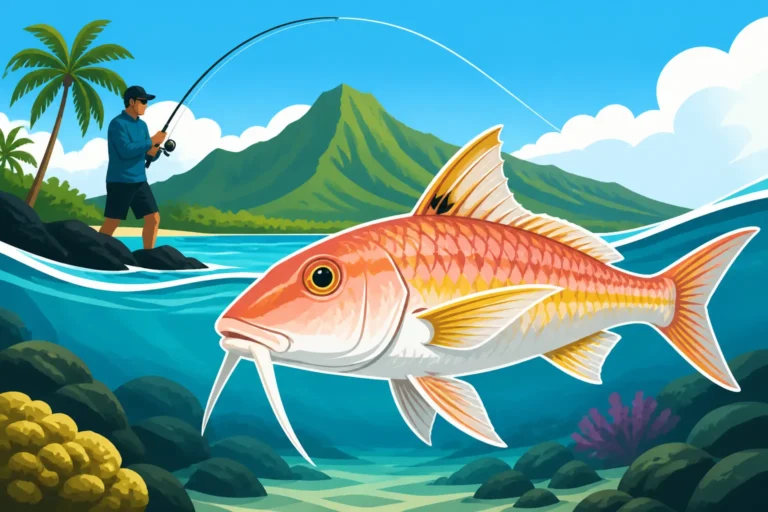
The kumu, or Parupeneus porphyreus, is truly one of Hawaii's most iconic and prized goatfish. Often referred to as the "reddish goatfish," it's instantly recognizable by its striking, almost glowing, reddish-pink to reddish-brown coloration. This color can intensify or lighten depending on the fish's mood, depth, or habitat, but the underlying warm, fiery hue is almost always present. When you see a kumu freshly caught, it's often a vibrant spectacle of reds and oranges that truly stands out. Beyond its primary color, kumu typically lack any prominent horizontal stripes or bars on their body, which is a key distinguishing feature from many weke species. Instead, their bodies are usually a more uniform shade, perhaps with subtle blotches or dappling that blend with the reef environment, making them perfectly camouflaged masters of their domain as they root around for food.
Look closely at the fins of a kumu. While the body is mostly uniform, their dorsal and caudal (tail) fins often display a beautiful yellowish or orange tint, sometimes with a few faint darker spots or lines, but nothing as distinct as the markings found on some weke. The barbels, those sensitive "whiskers," are also typically reddish or pinkish, matching their body color. Kumu are also known for their relatively deep body shape compared to some of the more elongated weke species. They have a more robust, chunky appearance, which contributes to their reputation as excellent table fare. When they reach larger sizes, this body shape becomes even more pronounced. Kumu (Goatfish) in Hawaii details more about this specific species.
In terms of size, kumu can grow quite large, often reaching lengths that make them a very respectable catch. While they're often found in rocky and coral reef areas, especially where there's sandy bottom interspersed, they prefer slightly deeper reef environments than some weke, often in depths ranging from a few feet out to a couple of hundred feet. You might find them schooling in small groups over patches of sand between coral heads, diligently working their barbels to uncover hidden prey. Their presence is a good indicator of a healthy reef system, and their beautiful appearance makes them a joy to encounter.
Decoding the Diverse Characteristics of Weke (Many Varieties to Know)
Now, "weke" is where things get a bit more complex, as it’s a general Hawaiian name for several species of goatfish. Unlike the relatively singular kumu, the term weke encompasses a diverse group, and many of these Mulloidichthys and Upeneus species have distinct patterns and colors that set them apart from kumu and even from each other. For example, the Weke 'ula (Upeneus taeniopterus), also known as the many-barred goatfish, is a prime candidate for confusion due to its reddish-pinkish overall body tone. However, its name gives a clue: it typically has noticeable dark bars or blotches along its sides, especially when stressed or first caught, which you won't see on a kumu. Its body shape tends to be more slender and elongated than the robust kumu.
Another common weke is the Weke lau'ia (Mulloidichthys flavolineatus), often called the yellowstripe goatfish. This species is usually easier to differentiate from kumu due to its prominent yellow stripe running horizontally from its eye to its tail. Its overall body color is silvery-white to yellowish, a stark contrast to the kumu's red. Its fins also tend to be yellow. Then there’s the infamous Weke pahulu (Upeneus arge), or the doublebar goatfish, which has distinct dark bars on its sides and can be quite large. This particular weke has a reputation for occasionally causing ciguatera fish poisoning, making accurate identification particularly important. Knowing your weke species can literally be a matter of health and safety. What ciguatera fish poisoning is and which species carry it is a good read if you're concerned about this.
The barbels of weke species also vary. While kumu typically have reddish barbels, many weke species, especially the yellowstripe, will have white or yellowish barbels that contrast with their body color. The fins on weke often show more distinct markings, stripes, or spots compared to the kumu's generally plainer, tinted fins. Habitat-wise, many weke species, like the yellowstripe, are more commonly found in shallower, sandy-bottomed areas, sometimes in large schools, whereas kumu tend to favor rocky or coral-rich areas, often in deeper waters. Weke (Goatfish) in Hawaii provides a deeper dive into the characteristics of these different weke varieties.
Practical Tips for Telling Them Apart on the Reef
When you're out there enjoying the ocean, whether you're shore fishing from a rocky point or snorkeling with a spear, quick identification skills are invaluable. The first thing your eye should go to is the overall body coloration and pattern. Kumu generally boast a uniform, rich reddish-pink to reddish-brown hue without strong horizontal stripes or distinct bars. Think of it as a solid, fiery red canvas. If you see prominent dark bars, blotches, or a distinct yellow stripe running down the side, you're almost certainly looking at a weke. For instance, if you're pulling in a fish with a striking yellow line, it's very likely a weke lau'ia. If it has darker, vertical bars, it might be a weke 'ula or weke pahulu, even if it has a reddish tint.
Next, pay attention to the fin colors and markings. Kumu typically have yellowish or orange-tinted fins that are relatively plain, perhaps with very subtle, indistinct markings. On the other hand, many weke species, especially the yellowstripe, will have bright yellow fins. The weke 'ula might have slightly more pronounced reddish-orange fins with faint banding, but still distinct from the kumu. The body shape is also a good secondary indicator. Kumu are generally deeper-bodied and more robust, appearing stockier. Many weke, particularly the 'ula and lau'ia, tend to be more slender and elongated, almost cigar-shaped in comparison. This difference in build becomes more apparent as the fish grow.
Finally, consider the habitat where you caught the fish. While there can be overlap, kumu generally prefer rocky or coral-strewn areas, often in slightly deeper water. Many weke species, such as the yellowstripe, are more common over vast sandy flats and can be found in shallower water, sometimes in very large, visible schools. If you’re fishing a deep-water drop-off near a vibrant coral reef, your chances of catching a kumu are higher. If you're wading over a wide, sandy flat, you might be more likely to encounter weke lau'ia. Keeping an eye on these subtle environmental cues can give you a helpful hint before you even get the fish close enough to examine in detail. Knowing what fish species thrive on shallow reef flats versus deeper waters can really help narrow down your guesses.
Here's a quick reference table to help visualize the key differences:
| Feature | Kumu (Parupeneus porphyreus) | Weke (e.g., Mulloidichthys flavolineatus, Upeneus taeniopterus) |
|---|---|---|
| Common Name | Reddish Goatfish | Yellowstripe Goatfish, Many-barred Goatfish, Doublebar Goatfish, etc. |
| Overall Color | Uniform reddish-pink to reddish-brown | Varies widely: silvery with yellow stripe, reddish with dark bars |
| Body Patterns | Generally uniform, lacking strong horizontal stripes or bars | Often has distinct yellow stripe (lau'ia) or dark vertical bars ('ula, pahulu) |
| Fin Color/Markings | Yellowish or orange tint, relatively plain, subtle lines | Often bright yellow (lau'ia) or reddish with more distinct banding/spots |
| Body Shape | Deeper-bodied, more robust and stocky | Typically more slender and elongated |
| Barbel Color | Usually reddish-pink, matching body | Varies: white/yellow (lau'ia), sometimes reddish but often contrasting |
| Preferred Habitat | Rocky/coral reefs, usually deeper sandy pockets within reefs | Sandy flats, often shallower waters, sometimes in large schools |
| Ciguatera Risk | Generally very low | Present in some species, notably Weke pahulu |
Accurate identification isn't just about satisfying curiosity; it's essential for responsible fishing. Bag and size limits often differ between species, and conservation efforts depend on anglers correctly identifying their catch. For example, specific regulations exist for different goatfish, and adhering to them helps ensure healthy fish populations for future generations. Hawaii Bag and Size Limits by Species is an important resource for every angler. Plus, let's be honest, knowing exactly what you caught makes the stories around the dinner table even better! When considering best eating fish species from Hawaiian waters, both Kumu and Weke are highly regarded, but some anglers have preferences, and the risk of ciguatera with specific weke species means knowing your catch can protect your health.
Disclaimer
This article is for general informational purposes only and does not constitute professional advice. Laws, prices and regulations vary by location and change over time. Consult a qualified professional for guidance on your specific situation.