Best waters for trophy marlin in Hawaii
If you've ever dreamt of battling a true giant of the sea, the majestic marlin, then Hawaii is likely at the top of your list. But for many anglers, the sheer vastness of the Pacific can make pinpointing the best spots for a genuine trophy marlin feel overwhelming. This guide will cut through the noise, revealing the legendary waters where granders are consistently hooked and explaining precisely why these specific locations are so productive for those chasing the fish of a lifetime.
The Undisputed Reign of Kona's Waters for Trophy Marlin
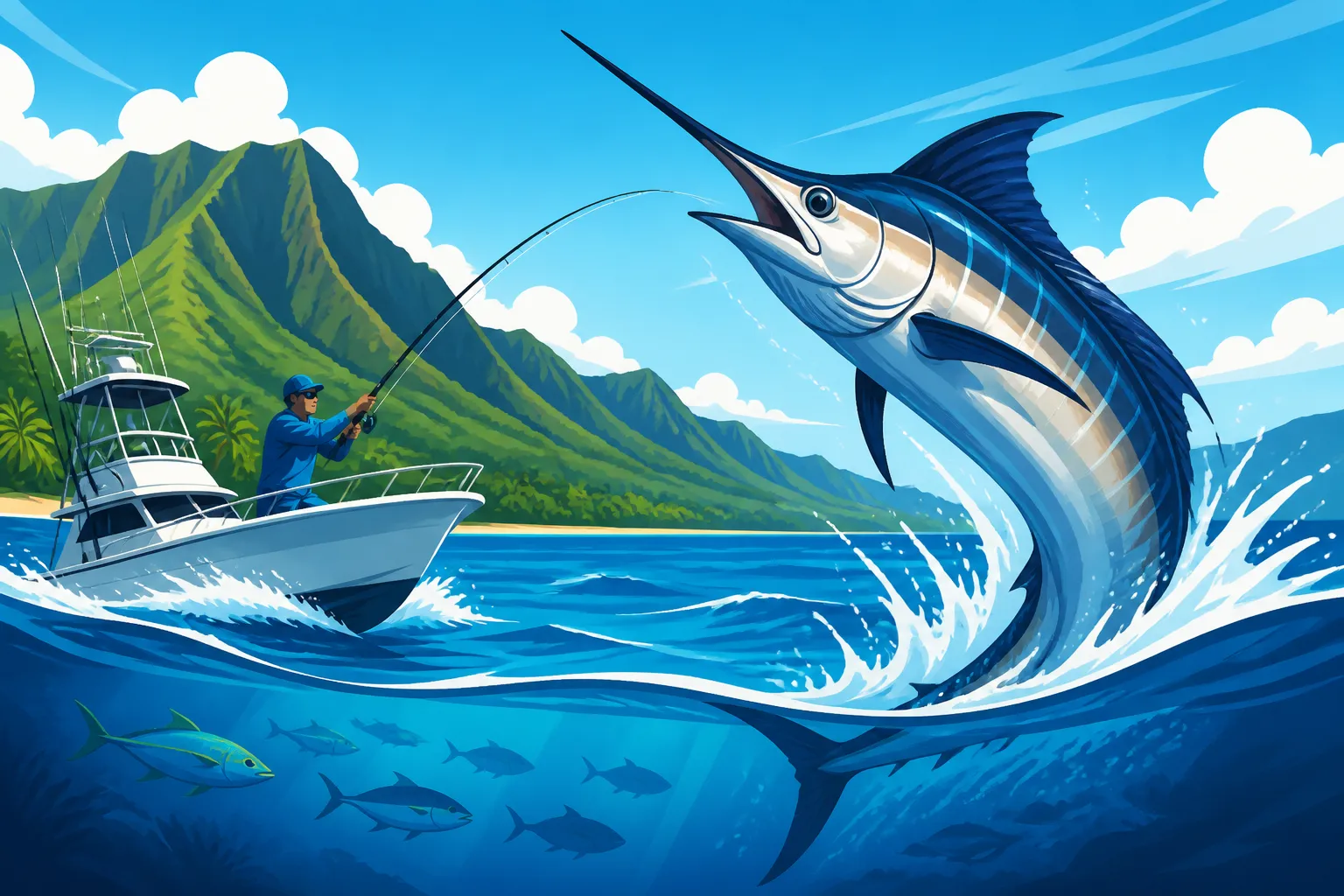
When serious anglers talk about trophy marlin in Hawaii, one name comes up more than any other: Kona. The leeward side of the Big Island isn't just famous; it's legendary, and for very good reasons that are deeply rooted in geography and oceanography.
The Kona Coast: A Natural Marlin Magnet
What makes the Kona Coast such a powerhouse for massive marlin? It boils down to a unique combination of factors. Unlike many other island chains, the Big Island plunges almost immediately into incredibly deep water, often reaching thousands of feet just a short distance from shore. This creates a natural "express lane" for pelagic species like marlin. The underwater topography is complex, with seamounts, ledges, and canyons that act as aggregation points for baitfish, which in turn attract their apex predators.
Furthermore, Kona benefits from its location on the leeward side of the Big Island. This means the waters are typically much calmer than other exposed coastlines, creating ideal conditions for offshore trolling. While big swells can certainly roll in, for much of the year, anglers enjoy relatively placid seas, which is not only more comfortable but also allows for better lure presentation and fish spotting. The currents off Kona are also incredibly complex and dynamic, often creating thermal breaks and upwellings that concentrate nutrient-rich water and, consequently, baitfish schools, forming a perfect hunting ground for hungry marlin.
The 100-Fathom Line and Beyond: Where Giants Roam
The term "100-fathom line" is almost sacred among Kona's marlin fishermen, and for good reason. A fathom is six feet, so we're talking about a depth of 600 feet. This isn't just an arbitrary depth contour; it's often where the seafloor drops sharply, creating a distinct edge. This edge acts like an invisible highway and a feeding ground for many pelagic species, including the big blue marlin that trophy hunters seek. This is where the nutrient-rich deep water often meets the shallower, warmer surface layers, creating perfect conditions for baitfish to thrive and congregate.
Beyond this line, you'll find even deeper waters, often punctuated by Fish Aggregating Devices (FADs). These FADs are essentially floating platforms anchored in very deep water, acting as magnets for baitfish and, subsequently, larger predators. While FADs can hold all sorts of pelagic species, they are prime spots for blue marlin, especially when bait schools are thick around them. Professional captains meticulously monitor these FADs, often finding success by targeting the areas around them or the current lines leading to them. Remember, these offshore areas are vast, and understanding the nuances of current, temperature, and structure, like those found around FADs, is key to success. You might even find marlin patrolling the edges of Hawaii Fish Replenishment Area boundaries in West Hawaii if bait is abundant.
Seasonal Peaks and Prime Conditions
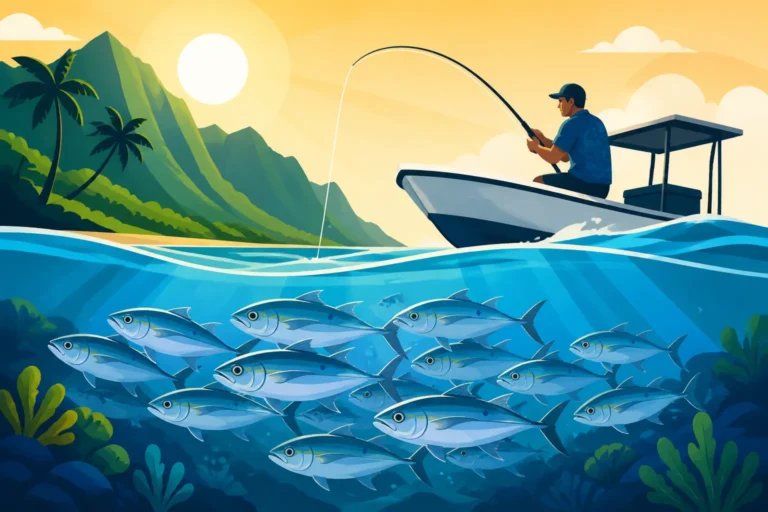
While Kona boasts a reputation for year-round marlin fishing, there are certainly periods when the odds of encountering a trophy fish increase. Generally, the summer months, roughly from May through September, are considered prime time for blue marlin. This is when the water temperatures are at their warmest, and vast schools of baitfish, like skipjack tuna (aku) and yellowfin tuna (ahi), are migrating through Hawaiian waters. These baitfish are the primary food source for big marlin, and when they are abundant, the marlin follow.
However, it's a common misconception that marlin fishing completely shuts down outside of these peak months. Kona's unique geography allows for good fishing throughout the year, with striped marlin becoming more prevalent during the cooler winter months. Trophy blue marlin can still be caught any time the conditions are right – clear blue water, strong current lines, and active bait. A skilled captain will always be looking for these indicators, regardless of the calendar. Understanding the Best Time of Year to Fish in Hawaii involves more than just months; it's about water conditions, bait migration, and even lunar phases, all of which contribute to a successful trophy hunt.
Understanding What Makes a "Trophy" Marlin in Hawaii
The term "trophy" can mean different things to different anglers, but when it comes to marlin in Hawaii, especially off Kona, there's a certain standard that truly sets these fish apart. It's not just about size, but also the challenge, the fight, and the sheer power of these magnificent creatures.
Defining a Grander and Beyond
For blue marlin, the ultimate trophy is undoubtedly a "grander" – a fish weighing 1,000 pounds or more. Catching a grander is a rare feat, a pinnacle accomplishment in sportfishing that only a select few anglers ever achieve. Hawaii, particularly the Kona Coast, is one of the very few places in the world where granders are caught with any regularity. These fish are ancient, powerful, and incredibly intelligent, making every hook-up an epic battle.
While blue marlin are the primary target for grander hopefuls, other marlin species also offer incredible trophy opportunities. Striped marlin, for instance, are smaller but incredibly acrobatic and beautiful, with a trophy fish typically weighing in the 100-200 pound range. Black marlin, while less common in Hawaiian waters, are also a highly prized catch. Each species presents its own unique challenge and thrill, and while a grander blue marlin might be the ultimate dream, any marlin over a certain size, especially one that tests your skill and endurance, can be considered a personal trophy. Checking out the Hawaii State Fish Records by Species can give you a real appreciation for the size and scope of the fish swimming in these waters.
The Role of Baitfish and the Food Chain
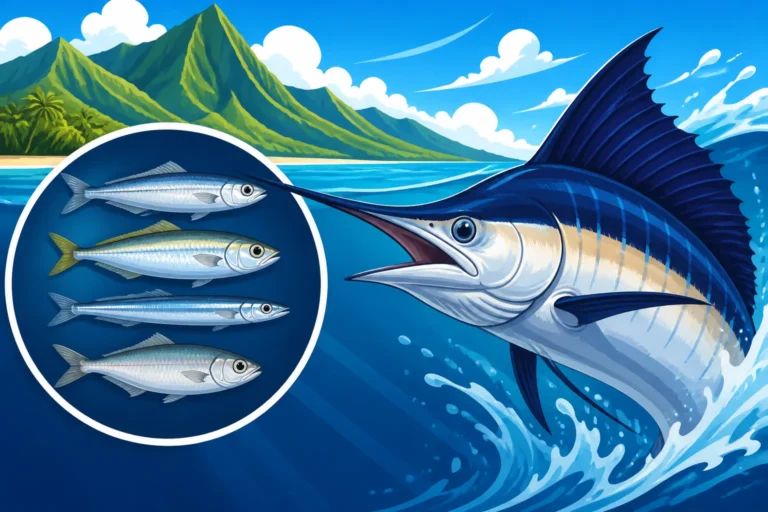
Marlin, particularly the large blue marlin, are apex predators, and their presence in certain waters is directly tied to the availability of their food source. Off Kona, a robust and diverse baitfish population is the foundation of the marlin fishery. Schools of mackerel scad (opelu), bigeye scad (akule), and various types of tuna, especially skipjack tuna (aku) and yellowfin tuna (ahi), form the core of their diet. When these baitfish schools are abundant and concentrated, the marlin are never far behind.
Captains spend countless hours not just looking for marlin, but for signs of bait. Diving birds, splashes on the surface, or even subtle changes in water color can indicate the presence of a baitball. The entire food chain is interconnected: plankton feeds small baitfish, which are then preyed upon by larger baitfish and smaller tuna, and finally, these larger schools become the target for the powerful marlin. It's a dynamic ecosystem, and understanding these relationships is crucial for consistently finding trophy fish. For instance, successfully targeting Ahi (Yellowfin Tuna) Fishing in Hawaii can often put you in the right areas where marlin are also hunting.
The Challenge and Thrill of the Hunt
Chasing a trophy marlin is not for the faint of heart, nor is it a guaranteed outcome. It's a test of patience, skill, and sheer physical endurance. The term "hunt" is truly appropriate here; you're often covering vast expanses of ocean, constantly scanning for signs of life, and making strategic decisions based on currents, water temperature, and past experience. When a fish does hit, the ensuing battle can last for hours, pushing both angler and crew to their limits.
The equipment used for trophy marlin fishing is specialized and heavy-duty, designed to withstand the incredible power of these fish. You'll need heavy tackle, strong lines, and robust lures capable of attracting and holding a grander. Many anglers invest heavily in their gear, and it's worth noting that you can find a great selection of heavy-duty marlin lures and specialized tackle on Amazon, ensuring you're prepared for whatever the ocean throws at you. The thrill isn't just in landing the fish, but in the entire process: the anticipation, the teamwork, and the respect for the powerful creature you're trying to outwit. Ultimately, a true trophy marlin is measured not just by its weight, but by the memories and the challenge overcome. You can delve deeper into the specifics by reading Marlin Fishing off the Kona Coast.
Navigating Other Promising Hawaiian Waters
While Kona reigns supreme for consistent trophy marlin action, it's important to remember that Hawaii is an archipelago of islands, each surrounded by deep, pelagic waters. Marlin are migratory fish, and they travel throughout the Hawaiian chain, offering opportunities for anglers on other islands as well.
Maui's Productive Pelagic Grounds
Maui, often celebrated for its stunning beaches and lush landscapes, also boasts impressive offshore fishing grounds that can yield trophy marlin. The deep channels between Maui and its neighboring islands of Lanai and Molokai are particularly productive. These channels, like the 'Alalākeiki Channel and the Pailolo Channel, funnel strong currents and baitfish, creating excellent feeding lanes for marlin. While perhaps not as renowned as Kona for granders specifically, Maui consistently produces large blue marlin, as well as striped marlin and spearfish.
Charters operating out of Ma'alaea Harbor and Lahaina Harbor regularly target these offshore areas. The close proximity of deep water to shore, similar to Kona, allows boats to quickly access prime fishing zones. Anglers on Maui often find success trolling skirted lures or live bait for these powerful predators. If you're planning a trip to the Valley Isle and want to test your luck against a big billfish, don't hesitate to check out a Maui Fishing Guide to learn more about the local hotspots and charter options.
Oahu's Offshore Opportunities
Oahu, the most populated of the Hawaiian islands, might be best known for Waikiki Beach and Diamond Head, but it also offers fantastic deep-sea fishing. While the focus on Oahu sometimes leans more towards other pelagic species like ahi (yellowfin tuna) and mahimahi, trophy marlin are certainly present and caught regularly. The deep waters off the South Shore, accessible from Honolulu's Kewalo Basin, and the West Side, departing from Ko Olina or Waianae harbors, are the primary hunting grounds.
The currents and underwater structure off Oahu, including various FADs (Fish Aggregating Devices), attract substantial baitfish schools, which in turn draw in blue and striped marlin. While a grander blue marlin might be less frequently reported than in Kona, trophy-sized fish in the 500-800 pound range are definitely within the realm of possibility. Many Oahu charters are highly experienced in big game fishing and can put you on a marlin that will provide an unforgettable battle. Exploring an Oahu Fishing Guide will give you specific insights into the best launch points and fishing zones around the island.
Kauai and the Neighbor Islands
Kauai, the "Garden Isle," also offers its share of blue water excitement. Like Maui and Oahu, Kauai is surrounded by deep ocean, and its leeward (south and west) coasts are excellent starting points for offshore adventures. Charters from Port Allen or Nawiliwili Harbor will venture into the rich pelagic waters where marlin hunt. While perhaps not having the same legendary status for consistent trophy marlin as Kona, Kauai's waters are abundant with various pelagic species, and anglers often hook into respectable blue marlin, striped marlin, and spearfish.
The channels between Kauai and Niihau can be particularly productive due to strong currents. For those seeking a more remote and less crowded fishing experience, exploring the waters off Molokai and Lanai can also yield fantastic results. These islands, with their rugged coastlines and deep drop-offs, are often less pressured and can surprise anglers with incredible catches. Remember that even if a specific island isn't world-famous for granders, the Pacific Ocean around Hawaii is teeming with life, and a trophy marlin could be lurking anywhere. A comprehensive Kauai Fishing Guide can help you plan your fishing adventure on that beautiful island.
| Island/Region | Primary Target Species (Trophy) | Key Features | Best Time of Year (Blue Marlin) | Charter Hubs |
|---|---|---|---|---|
| Kona Coast | Blue Marlin (Grander potential) | Deep water close to shore, calm seas, FADs | May – September (Year-round for marlin) | Honokohau Harbor |
| Maui | Blue Marlin, Striped Marlin | Deep channels, current funnels | May – September | Ma'alaea Harbor, Lahaina Harbor |
| Oahu | Blue Marlin, Striped Marlin | Offshore FADs, varied pelagic species | May – September | Kewalo Basin, Ko Olina |
| Kauai | Blue Marlin, Striped Marlin | Deep water access from leeward side, channels | May – September | Port Allen, Nawiliwili Harbor |
Equipping Yourself for the Trophy Hunt
Landing a trophy marlin is not solely about finding the right waters; it's equally about preparation, the right tools, and the knowledge to effectively use them. This is where experience, proper gear, and understanding marlin behavior truly come into play.
Choosing the Right Charter and Captain
When you're serious about targeting trophy marlin in Hawaii, your choice of fishing charter and, crucially, your captain, is paramount. You need an experienced captain who knows the local waters intimately, understands marlin behavior, and has a proven track record of finding and fighting big fish. These captains have often spent decades on the water, learning the subtle cues of the ocean, from current lines to bird activity, that indicate where marlin might be feeding.
Look for charters that specialize in big game sportfishing and have boats equipped with heavy tackle designed for granders. Don't be shy about asking questions regarding their experience with trophy marlin, their boat's capabilities, and their catch-and-release practices. A reputable captain will prioritize the health of the fish and ensure it has the best chance of survival if released. Choosing wisely can make all the difference between a pleasant boat ride and an actual trophy hunt. For more guidance on this crucial decision, consult How to Choose a Hawaii Fishing Charter.
Essential Gear and Preparations
Beyond the boat and captain, your personal preparation and understanding of the gear are critical. While most reputable charters provide top-of-the-line rods, reels, and tackle, it's beneficial to understand what goes into a trophy marlin setup. You're typically looking at 80-lb or even 130-lb class tackle, with heavy-duty reels capable of holding hundreds of yards of incredibly strong line. The lures used are often large, skirted designs, mimicking the various baitfish marlin prey upon.
However, the "gear" also extends to your personal items. Offshore fishing can mean long hours under the intense Hawaiian sun. Make sure you pack plenty of high-SPF sunscreen and a good wide-brimmed hat, easily found on Amazon. Hydration is key, so bring plenty of water or sports drinks. Polarized sunglasses are invaluable for spotting fish and reading the water, and sturdy, non-slip deck shoes are a must. Seasickness medication, if you're prone to it, should be taken well in advance. Many anglers stock up on their favorite high-quality trolling lures and leaders through Amazon before their trip, ensuring they have their preferred setup ready. For a comprehensive list, refer to What to Bring on a Hawaii Fishing Charter.
Understanding Marlin Behavior and Best Practices
To successfully catch a trophy marlin, it helps to think like one (or at least like the captain who hunts them). Marlin are constantly on the move, following bait and currents. Successful captains understand how to read the water – looking for temperature breaks, current seams, diving birds, and even subtle changes in water color that indicate the presence of feeding fish. Trolling speed, lure selection, and spread are all meticulously adjusted throughout the day based on these observations.
Ethical angling practices are also paramount, especially when targeting large, potentially ancient fish. Many trophy anglers practice catch and release, particularly for blue marlin, which can take decades to reach grander status. If you plan to release a fish, ensure your charter uses appropriate techniques to minimize stress and maximize the marlin's chances of survival. This includes proper handling, quick photos, and careful release. Learning How to Catch Marlin off the Kona Coast often includes discussions on responsible angling techniques, reflecting the deep respect Hawaiian fishermen have for these magnificent creatures.
Disclaimer
This article is for general informational purposes only and does not constitute professional advice. Laws, prices and regulations vary by location and change over time. Consult a qualified professional for guidance on your specific situation.