Best charters for anglers with mobility limitations
For anglers who love the thrill of the catch but face mobility challenges, the dream of fishing in Hawaii can sometimes feel out of reach. It’s a common frustration to scour charter websites, only to find vague descriptions or photos that don't clearly show how accessible a boat truly is. This guide is here to cut through that uncertainty, helping you understand exactly what to look for and how to find the best fishing charters in Hawaii designed to accommodate anglers with mobility limitations, ensuring your Hawaiian fishing adventure is both enjoyable and safe.
Understanding Accessibility: What to Look For in a Charter
Finding the right fishing charter when you have mobility limitations isn't just about finding a boat; it's about finding an experience that caters to your specific needs. It's important to be proactive and informed, because not all "accessible" charters are created equal, and some might only offer minimal accommodations. You need to know what features truly make a difference before you even think about booking.
Vessel Design and Boarding Assistance
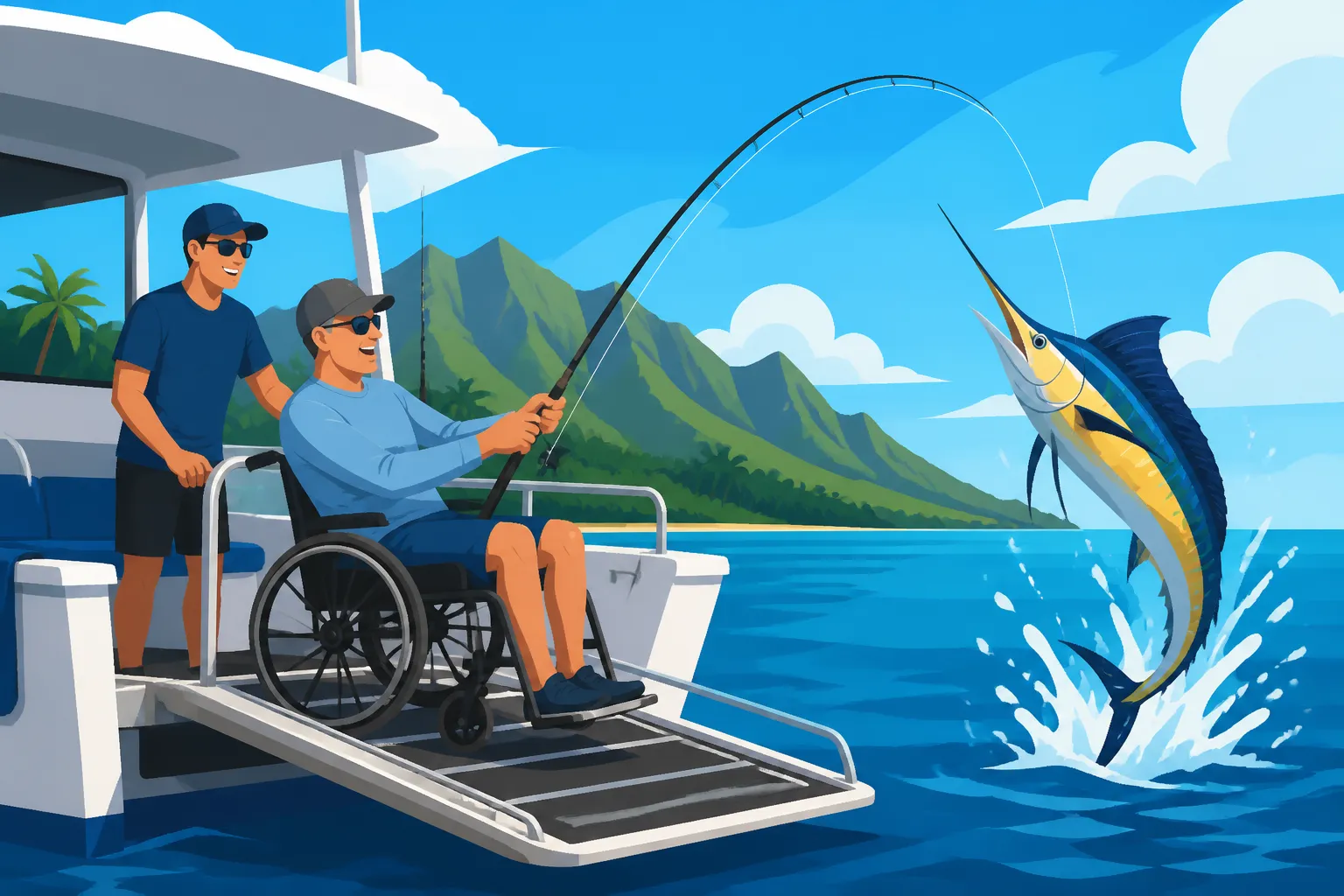
The very first hurdle for many anglers with mobility limitations is simply getting onto the boat. Standard boarding ramps or narrow gangways can be incredibly difficult, if not impossible, for someone using a wheelchair, walker, or who has limited balance. Look for charters that specifically mention features like wide, stable gangways with handrails, or even hydraulic lifts that can safely transfer an angler from the dock to the deck. Some larger vessels, especially those designed for whale watching or sightseeing but adapted for fishing, might have wider doors and flatter transitions.
Consider the deck space itself. A crowded, gear-laden deck can quickly become a maze of obstacles. An ideal accessible charter will boast an open, uncluttered deck layout, allowing for easy movement and maneuvering, whether you're using a wheelchair or just need space to safely walk without tripping. Are there sturdy railings at a comfortable height that you can use for support as you move around? These details, often overlooked by able-bodied anglers, are paramount for a truly inclusive experience.
Onboard Amenities and Space Considerations
Once you're on board, comfort and functionality are key. Think about the restroom facilities – a common pain point on many smaller fishing boats. An accessible charter should ideally have a head (boat toilet) that is spacious enough to accommodate a wheelchair, with grab bars and a wider door. This might seem like a small detail, but it can make or break a long day on the water. Many smaller vessels will have tiny, cramped heads that are simply not feasible.
Beyond the restroom, consider seating. Are there stable, secure seating options that offer good back support and can be easily accessed? Some boats might have dedicated fishing chairs that can pivot or have armrests, making it easier to brace yourself while reeling in a big catch. You'll also want to inquire about shaded areas. The Hawaiian sun can be intense, and having a protected spot to rest and rehydrate is crucial. If you're on a multi-hour trip, the ability to escape the sun and heat can significantly improve your overall enjoyment and prevent fatigue. Remember to also check for things like Best Charters with Restrooms on Board for specific needs.
Crew Training and Support
Perhaps one of the most vital, yet often intangible, aspects of an accessible charter is the crew itself. A boat can have all the right physical accommodations, but if the crew isn't trained, patient, and genuinely supportive, the experience can still fall short. Look for charters that explicitly state their crew members are experienced in assisting anglers with diverse needs. This isn't just about physical assistance; it's about understanding how to communicate effectively, anticipating needs, and ensuring dignity and respect throughout the trip.
A good crew will be proactive in offering help with baiting hooks, casting, or handling fish, without making you feel like a burden. They should be attentive to your comfort levels, offering water or a break when needed. Don't hesitate to ask prospective charters about their crew's experience with mobility-challenged guests during your initial inquiries. Their answers will give you a strong indication of their genuine commitment to accessibility. This kind of thoughtful support goes a long way in making sure your What to Expect on a Hawaii Fishing Charter is a positive one.
Key Considerations When Booking Your Accessible Charter
Once you have an idea of what makes a charter truly accessible, it’s time to start planning and booking. This phase is all about clear communication, choosing the right fit for your fishing ambitions, and prioritizing your safety and comfort above all else.
Communication is Crucial: Asking the Right Questions
This cannot be stressed enough: talk directly to the charter captain or owner before you book. Don't rely solely on website descriptions or online booking forms, as these can sometimes be generic. Explain your specific mobility limitations in detail. Are you using a wheelchair, crutches, a walker, or do you have limited stamina or balance? Be honest and thorough.
Here’s a checklist of questions you might ask:
- "Can you describe the boarding process in detail? Is there a ramp, and what is its incline and width? Are there handrails?"
- "What is the clear deck space like? Can a wheelchair easily navigate from the fishing area to the cabin/restroom?"
- "Are there grab bars or sturdy handholds available on deck and in the restroom?"
- "How large is the restroom, and does it have any accessibility features?"
- "What is the crew's experience with assisting anglers with mobility challenges?"
- "Is there a dedicated, secure spot for my mobility device (e.g., wheelchair) during the trip?"
- "Can you provide photos or a video of the specific boat's accessible features?"
A reputable charter will appreciate your thoroughness and provide clear, reassuring answers. If a charter seems hesitant or vague, it might be a red flag. For more general advice, consider reading How to Choose a Hawaii Fishing Charter.
Choosing the Right Fishing Style and Location
Hawaii offers a diverse range of fishing experiences, from thrilling deep-sea adventures offshore to more relaxed inshore or bay fishing. Your mobility limitations will naturally influence which style is best suited for you.
- Deep-Sea/Offshore: These trips often involve larger, more stable vessels, which can sometimes offer better accessibility features. However, the open ocean can be rough, and standing for long periods or battling a large pelagic fish might be physically demanding. If you're targeting big marlin or ahi, ensure you have strong support from the fighting chair and crew.
- Bottomfishing: Often done closer to shore, bottomfishing can be less physically strenuous and on calmer waters. Many bottomfishing boats are also larger and more stable. You can often fish from a seated position, making it a great option.
- Inshore/Bay Fishing: For the calmest waters and shortest travel times, bay fishing might be ideal. These trips often target smaller species like papio or small trevally and can be a fantastic, low-impact option. Smaller boats might be used, so check their specific accessibility.
Consider the length of the trip too. A full-day offshore trip might be too much if fatigue is a concern. A half-day charter might be a more manageable and enjoyable option, allowing you to experience the thrill without overdoing it. Check out options like Best Half-Day Fishing Charters in Hawaii for shorter excursions.
Planning for Comfort and Safety
Your comfort and safety are paramount. In addition to asking about the boat's features, think about what you need to bring yourself. While some charters might provide basic gear, it's always good to pack essentials tailored to your needs. This might include:
- Medications: Ensure all necessary medications are easily accessible and protected from the elements.
- Sun Protection: Wide-brimmed hats, UV-protective clothing, and plenty of reef-safe sunscreen are non-negotiable in Hawaii.
- Hydration & Snacks: While some charters offer drinks, bringing your own preferred beverages and easy-to-eat snacks can be helpful.
- Mobility Aids: Confirm that there's secure storage for your wheelchair or other mobility devices if you won't be using them constantly.
- Comfort Items: A small pillow for back support, a personal blanket if you get chilly easily, or any other items that enhance your comfort.
Always be aware of the Life Jacket Requirements for Hawaii Boaters and discuss with the crew any specific needs you have for wearing or donning a life jacket. Being prepared will make your trip much more relaxing and enjoyable. You can also review What to Bring on a Hawaii Fishing Charter for a general packing list to adapt for your needs.
Finding and Booking Accessible Charters in Hawaii
Finding an accessible charter might take a bit more legwork than a standard booking, but the resources are out there. It’s a matter of knowing where to look and how to leverage different tools.
Online Resources and Specialized Booking Platforms
Many general charter booking sites might not have specific filters for "accessibility" in the way you need. However, some are making strides. Platforms like FishingBooker are a great starting point. While they might not have a direct "wheelchair accessible" checkbox, you can often read detailed descriptions, view multiple photos of the vessel, and critically, contact the captain directly through the platform before booking. This direct communication is your most powerful tool.
When using sites like FishingBooker, pay close attention to the boat's size (larger boats often have more space), the type of fishing offered (as discussed, some styles are inherently more accommodating), and look for keywords in descriptions such as "spacious deck," "stable platform," "wide beam," or "family-friendly." These often indicate a boat that might be easier to navigate, even if not explicitly designed for full wheelchair accessibility. Then, follow up with those specific questions to the captain.
Local Knowledge and Personal Recommendations
Sometimes, the best information comes from those who have been there themselves. Search online forums, social media groups, or communities dedicated to accessible travel or fishing for people with disabilities. Fellow anglers who have successfully fished in Hawaii with mobility limitations can offer invaluable first-hand recommendations on specific charters or captains that truly go above and beyond.
Don't underestimate the power of calling local bait and tackle shops in areas like Kona, Honolulu, or Maui. These local businesses often know the captains personally and can recommend those known for their patience and willingness to accommodate diverse needs. While they might not have a formal list of "accessible" charters, they often know which boats have more deck space or a particularly helpful crew. They might even be able to connect you directly to a captain who can ensure a great experience.
The Importance of Early Booking
Once you find a charter that ticks all your boxes, book it as far in advance as possible. Accessible charters, or those that genuinely go out of their way to accommodate, are often in high demand. Booking early gives you the best chance of securing your preferred dates and ensures the captain has ample time to prepare for your specific needs. This might involve moving gear around, ensuring extra crew are on board for assistance, or simply confirming that the conditions on your chosen day will be as favorable as possible.
Early booking also allows you to finalize all the details with the captain and crew, ensuring everyone is on the same page regarding your mobility needs, desired fishing style, and any special requests. It's also a good idea to sort out any Hawaii Fishing License Guide for 2026 requirements well in advance. Planning ahead is your best strategy for a stress-free and successful fishing trip in the beautiful waters of Hawaii. For information on costs associated with such adventures, you might find Hawaii Fishing Charter Cost Guide useful.
Comparison of Accessible vs. Typical Charter Features
To help illustrate the differences, here's a quick comparison of what you might find on a typical fishing charter versus one that's genuinely geared towards accessibility for anglers with mobility limitations:
| Feature | Typical Fishing Charter | Accessible Fishing Charter (Ideal) |
|---|---|---|
| Boarding | Narrow gangplank, steep steps, minimal handrails | Wide, stable ramp with handrails; hydraulic lift for wheelchairs |
| Deck Space | Cluttered with coolers, gear, bait tanks | Open, clear deck for easy movement; secure points for wheelchairs |
| Restroom (Head) | Small, cramped, difficult to enter/exit | Spacious, grab bars, wide door, easy maneuverability |
| Seating | Standard boat benches, movable bucket seats | Stable, fixed seating with back support; fighting chair with armrests |
| Crew Assistance | Focus on fishing tactics, general help | Experienced in assisting diverse needs, proactive, patient |
| Vessel Stability | Varies greatly by boat size and design | Often larger, wider, and more stable for comfort in chop |
| Passageways | Narrow, tight turns | Wide, clear paths without obstructions |
| Communication | Standard booking, minimal pre-trip questions | Encourages detailed pre-trip discussion of specific needs |
This table highlights that while many charters can get you out on the water, a truly accessible one is designed with specific considerations in mind to ensure a smoother, safer, and more enjoyable experience for everyone.
Disclaimer
This article is for general informational purposes only and does not constitute professional advice. Laws, prices and regulations vary by location and change over time. Consult a qualified professional for guidance on your specific situation.