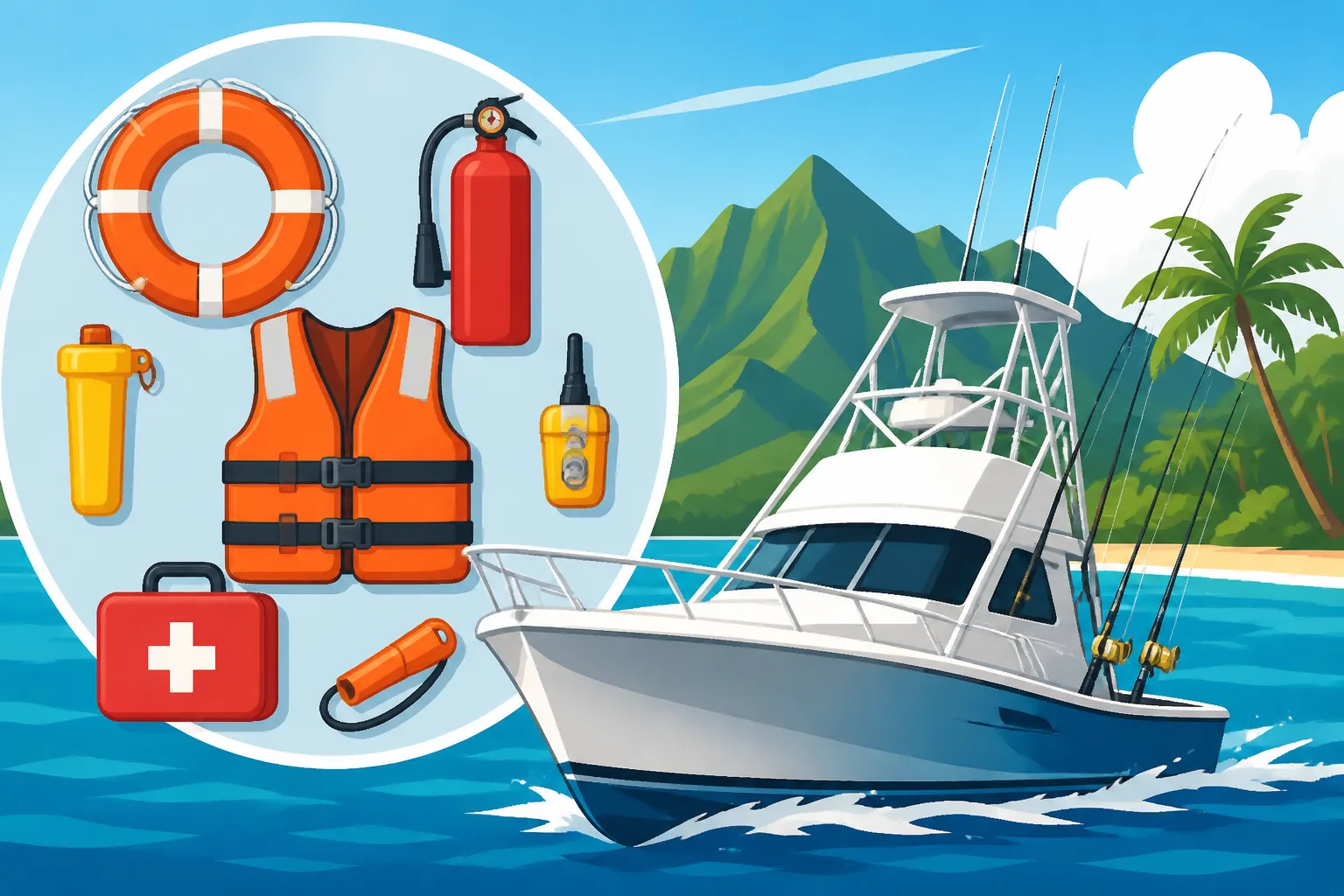
What safety equipment Hawaii charters are required to carry
Heading out for a fishing charter in Hawaii is an absolute dream for many, full of anticipation for reeling in that trophy marlin or a delicious mahimahi. But before you even think about dropping a line, there's a natural underlying concern for many anglers, especially those new to offshore adventures: what safety measures are actually in place? This guide will cut through the uncertainty and lay out exactly what safety equipment Hawaii fishing charters are legally required to carry, helping you book your trip with confidence and peace of mind.
The Foundation of Safety: US Coast Guard Regulations
When you step aboard a fishing charter in Hawaii, you're not just stepping onto someone's personal boat; you're boarding a commercial passenger vessel. This distinction is crucial because it means these boats operate under the strict eye of the United States Coast Guard (USCG). The USCG sets comprehensive federal regulations designed to ensure the safety of everyone on board, from the captain to the greenest angler. These aren't just suggestions; they are the law, and charter operators are regularly inspected to ensure compliance. It's this federal oversight that provides the baseline for your safety, no matter which island you're fishing from.
Understanding Federal Requirements for Passenger Vessels
The USCG classifies fishing charters as "uninspected passenger vessels" if they carry six or fewer paying passengers, or "inspected passenger vessels" if they carry more. While the term "uninspected" might sound alarming, it simply means they are subject to a different set of regulations and inspections than larger ferries or cruise ships. Regardless of classification, these vessels must meet specific stability, construction, and equipment standards. Captains and crew also undergo rigorous licensing processes, including extensive training in navigation, seamanship, and emergency procedures. This means the person at the helm isn't just a good fisherman; they're a certified maritime professional. You can read more about the general rules that govern these vessels in Hawaii Boating Laws for Anglers.
These federal requirements are designed to cover a wide range of potential scenarios at sea. For instance, the vessel itself must be deemed seaworthy for its intended use and area of operation, meaning it can handle the typical sea conditions found off the Kona Coast or around Maui. The design and construction are also considered, ensuring the boat has adequate freeboard (distance from the water to the top of the boat's side), sufficient stability to prevent capsizing, and proper watertight integrity. This foundational layer of regulation is what keeps the vessel afloat and stable, even when the Pacific decides to get a little choppy. Without these stringent federal rules, the very structure of the boat and the qualifications of its operator would be left to chance, which is exactly what the USCG aims to prevent.
Essential Personal Flotation Devices (PFDs)
Perhaps the most universally recognized piece of safety equipment is the Personal Flotation Device, or PFD – what most of us just call a life jacket. Every Hawaii fishing charter is legally required to carry a sufficient number of PFDs for all persons on board, including passengers and crew. But it's not just about having enough; it's about having the right types and ensuring they are accessible and in good condition.
The USCG categorizes PFDs into different "Types" based on their design and intended use. Most commonly, you'll see Type I, II, or III PFDs on a fishing charter. Type I PFDs are designed for rough, open water and are reversible, meaning they'll turn an unconscious person face-up. Type II PFDs are less bulky but still effective for general boating activities. Type III PFDs are often worn by anglers because they offer more comfort and freedom of movement, though they require the wearer to be conscious to maintain an face-up position. For specifics on these vital pieces of equipment, you can check out Life Jacket Requirements for Hawaii Boaters. Crucially, the PFDs must be readily accessible, not locked away in a cabinet or buried under gear. Crew members are usually trained to quickly distribute and assist with donning PFDs in an emergency.
Beyond adult-sized PFDs, there's a critical requirement for children's PFDs. Charters must carry PFDs that are appropriately sized for any children on board. This means vests that fit snugly and securely, designed for smaller bodies. Just like adult PFDs, these must be in serviceable condition, free from rips, tears, or excessive sun damage that could compromise their buoyancy. A good captain will usually conduct a safety briefing at the start of the trip, pointing out where the PFDs are stored and demonstrating how to properly wear them. This isn't just for show; it's a vital part of preparing everyone on board for the unlikely event of an emergency. Don't be shy about asking questions or requesting assistance with fit, especially for kids.
Beyond the Basics: Navigational and Emergency Equipment
While PFDs are crucial, a safe charter operation involves a comprehensive array of equipment designed for communication, navigation, and responding to various emergencies. It's about being prepared for anything the vast Pacific Ocean might throw at you, from a sudden change in weather to an unexpected mechanical issue. The charter experience should be exhilarating, not terrifying, and this equipment helps ensure that peace of mind.
Communication and Navigation Tools
In the expansive waters off Hawaii, reliable communication and precise navigation are non-negotiable. Every commercial fishing charter is required to have a Very High Frequency (VHF) marine radio on board. This isn't just for chatting with other boats; it's the primary means of contacting the Coast Guard in an emergency, typically on Channel 16. Many modern VHF radios also feature Digital Selective Calling (DSC), which can automatically transmit a distress signal with the vessel's GPS coordinates at the push of a button, providing an extra layer of safety. Some larger or longer-range charters might also carry satellite phones, especially when heading far offshore for species like marlin or ahi, ensuring communication even beyond VHF range.
Navigation is equally critical. GPS devices are standard, allowing the captain to know the boat's exact position, plot courses, and mark fishing spots. Electronic charts, often displayed on multifunction displays, provide detailed information about depths, hazards, and aids to navigation. A depth sounder (fish finder) is not only essential for locating fish but also for monitoring the bottom contour, preventing grounding in shallower areas, and helping with bottomfishing techniques. For visual distress, charters must carry flares or other USCG-approved visual signals. These can be handheld or aerial flares, designed to attract attention day or night, signaling for help if the boat is in distress and communication systems fail. Knowing that these systems are in place allows the crew to focus on finding fish while having the capability to summon assistance if needed.
Fire Safety and Damage Control
Fire at sea is one of the most terrifying scenarios a boater can face, and even small mechanical issues can lead to significant problems if not properly addressed. That's why Hawaii fishing charters are required to carry approved fire extinguishers. The type and number of extinguishers depend on the size and type of the vessel, but they are always strategically placed for easy access, often near the engine room, galley, or helm. Crew members are trained in their use, understanding the different classes of fires (electrical, fuel, ordinary combustibles) and how to extinguish them safely.
Damage control equipment is also essential. This typically includes bilge pumps, both manual and automatic, to remove water that might enter the hull from leaks or waves. An automatic bilge pump system is designed to activate on its own if water levels rise, providing continuous protection. For engines, emergency shut-off switches are a requirement, allowing the captain to quickly cut power in case of a runaway engine or other malfunction. Beyond these, a well-equipped charter will also have a comprehensive first-aid kit on board, stocked for everything from minor cuts and scrapes to more serious injuries. Many charter captains and crew hold certifications in CPR and advanced first aid, providing immediate medical attention if a passenger or crew member needs it, ensuring you’re in capable hands should an accident occur.
Hawaii-Specific Considerations for Charter Safety
While federal USCG regulations form the backbone of safety for fishing charters, local jurisdictions can sometimes introduce additional requirements or best practices that are particularly relevant to Hawaii's unique marine environment. It's a blend of universal maritime law and local wisdom that makes for a truly safe and enjoyable experience.
State and Local Regulations that Augment Federal Law
The Hawaii Department of Land and Natural Resources (DLNR) primarily focuses on fishing regulations, catch limits, and marine conservation, as detailed in guides like Reading the Hawaii DLNR Fishing Regulations. However, in terms of vessel safety equipment, the US Coast Guard typically takes the lead for commercial charters operating in federal and state waters. That said, local port authorities or county ordinances might have specific requirements for vessel operations within harbors or very near shore areas, though these usually pertain more to speed limits, anchoring, or waste disposal rather than onboard safety equipment. For example, some sensitive areas like Hawaii Marine Life Conservation Districts, Explained might have restrictions on certain activities, but the safety gear requirements remain largely federally driven.
It's also worth noting that the State of Hawaii has specific boating safety education requirements for certain operators, which can indirectly contribute to overall safety. While the USCG certifies charter captains, state-level boater education courses help ensure recreational boaters understand basic navigation, collision avoidance, and emergency procedures, contributing to a safer marine environment for everyone. While you might not notice direct "Hawaii-specific" safety equipment on a charter boat that isn't already covered by federal law, the layered approach to maritime governance ensures a comprehensive safety net.
Best Practices for a Safe Trip
Beyond the mandatory equipment, truly exceptional Hawaii fishing charters go above and beyond mere compliance. They understand that safety is a culture, not just a checklist. Many reputable charters will invest in additional safety gear like Emergency Position Indicating Radio Beacons (EPIRBs) or Satellite Emergency Notification Devices (SENDs), which automatically transmit a distress signal and location to rescue authorities anywhere in the world. For offshore trips, life rafts, designed to inflate automatically and provide shelter in an abandonment scenario, are also a wise investment, even if not always strictly required for all vessel sizes.
Another key aspect of best practices involves crew training. Most professional charter crews regularly undergo training in first aid, CPR, advanced marine safety, and even search and rescue techniques. They conduct regular drills to ensure they can respond effectively to a variety of emergencies, from a man overboard situation to a mechanical failure. Before setting off, a good captain will always conduct a thorough pre-trip safety briefing, explaining the location of PFDs, emergency exits, and emergency procedures. They'll also share information about what to expect on the water, including potential sea conditions and how to properly brace yourself. When booking your trip, it's a good idea to research How to Choose a Hawaii Fishing Charter and read reviews. Platforms like FishingBooker often include details about safety features and captain's experience, which can help you gauge a charter's commitment to safety.
Your Role as a Passenger in Ensuring Safety
While your charter captain and crew are ultimately responsible for your safety, you also play an important part in ensuring a smooth and secure fishing adventure. Being an informed and attentive passenger can make a significant difference, not just for your own well-being but for everyone on board.
Asking the Right Questions Before You Book
Don't ever feel shy about asking questions when you're booking a fishing charter. A reputable captain or booking agent will be happy to discuss their safety protocols. Some key questions you might consider asking include:
- "What safety equipment do you have on board?" While this guide covers the basics, a captain might mention additional features like an EPIRB or a specific type of life raft.
- "Are your crew members certified in CPR and First Aid?" This indicates a proactive approach to passenger well-being.
- "What's your emergency plan in case of severe weather or a mechanical issue?" Understanding their preparedness can put your mind at ease.
Many online booking platforms, such as FishingBooker, often highlight safety features and the captain's certifications directly on their listings, making it easier to compare and choose a charter that prioritizes safety. Knowing what to expect also includes understanding the overall experience, so checking out resources like What to Expect on a Hawaii Fishing Charter can be really helpful.
Observing and Reporting During Your Trip
Once you're on board, pay close attention during the captain's safety briefing. This is not the time to be distracted by the exciting views or the prospect of catching fish. Take note of where the PFDs are stored, how to access them, and the location of any emergency exits or safety equipment like fire extinguishers. If you have children with you, ensure they know where their properly-fitted PFDs are and how to put them on.
Throughout the trip, if you notice anything that seems out of place or raises a safety concern – perhaps a loose piece of equipment, a strong smell of fuel, or a PFD that appears damaged – don't hesitate to politely bring it to the attention of a crew member or the captain. They would much rather address a minor issue early than deal with a potential problem later. Trust your instincts. If you start to feel unwell, especially if it's seasickness, let the crew know immediately so they can assist you. There are always tips for Seasickness tips for a Hawaii fishing charter that they can help with. Remember, the crew is there to ensure everyone's safety and enjoyment, and open communication is key to achieving that. Make sure you also pack appropriately for your trip; a guide like What to Bring on a Hawaii Fishing Charter can help you prepare.
Here's a quick reference table summarizing key safety equipment categories:
| Equipment Category | Primary Purpose | Examples / Details | Regulatory Authority |
|---|---|---|---|
| Personal Flotation Devices | Keep individuals afloat in water | USCG-approved Type I, II, III PFDs; sufficient for all on board; child sizes required | USCG |
| Visual Distress Signals | Attract attention in emergency, day or night | Pyrotechnic flares (handheld, aerial), non-pyrotechnic signals | USCG |
| Sound Producing Devices | Alert other vessels, signal distress | Whistle, horn, bell (depending on vessel length) | USCG |
| Fire Extinguishers | Combat onboard fires | USCG-approved, appropriate class (B-I, B-II); readily accessible | USCG |
| Navigation Equipment | Determine position, plot course, avoid hazards | GPS, electronic charts, depth sounder, compass | USCG |
| Communication Equipment | Contact rescue services, other vessels | VHF marine radio (Channel 16, DSC capable); satellite phone (optional) | USCG |
| First Aid Kit | Treat injuries and medical emergencies | Comprehensive kit; often with trained crew (CPR/First Aid certified) | USCG (general) |
| Bilge Pumps | Remove water from hull | Manual and automatic pumps | USCG |
| Emergency Engine Shut-off | Stop engine in case of malfunction | Quick access switch | USCG |
| Additional Offshore Gear (Best Practice) | Enhance safety for extended offshore trips | EPIRB, life raft, redundant navigation/communication systems | Owner/Operator |
Disclaimer
This article is for general informational purposes only and does not constitute professional advice. Laws, prices and regulations vary by location and change over time. Consult a qualified professional for guidance on your specific situation.