How to Fish a Reef Flat for Uhu
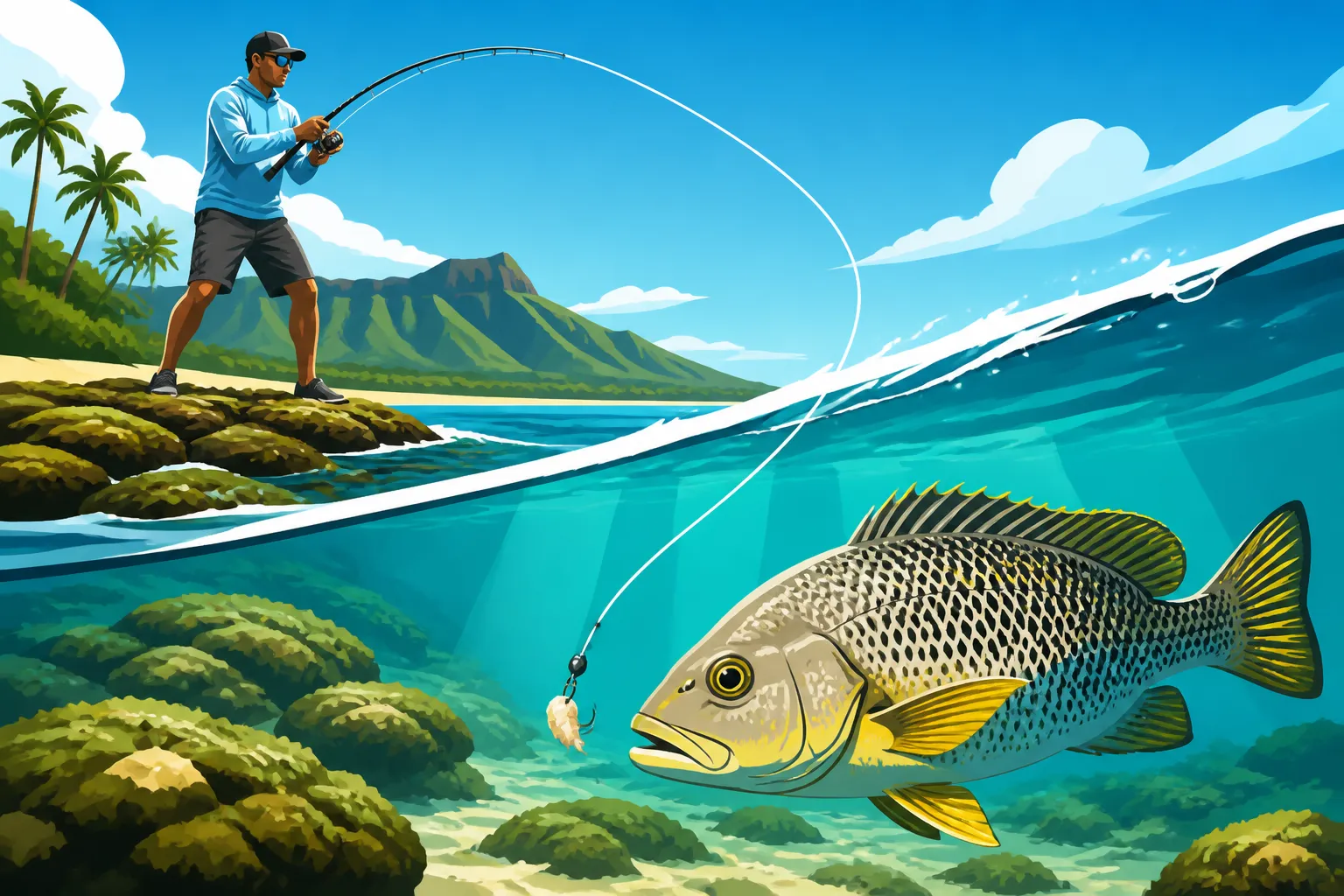
There's nothing quite like standing on a Hawaiian reef flat, sun beaming down, crystal-clear water lapping at your ankles, knowing that beneath the surface, the vibrant, often elusive uhu (parrotfish) are going about their day. But seeing them and actually catching them are two totally different stories, right? Many an angler has spent hours watching these beautiful fish graze, only to be left scratching their head, wondering how to entice a bite. If you've felt that frustration, this guide is for you. We're going to dive deep into the world of uhu fishing on Hawaii's reef flats, covering everything from understanding their behavior to mastering the right techniques.
The Elusive Uhu: Understanding Your Target
Uhu, or parrotfish, are truly unique inhabitants of Hawaii's coral reefs. They're a staple in local cuisine and a highly sought-after catch, but they certainly don't make it easy on us. Before you can hope to hook one, it's crucial to understand a bit about their lifestyle, their diet, and what makes them tick in their natural environment.
Identifying Different Uhu Species
Hawaii is home to several species of parrotfish, and while they share some common traits, there are subtle differences that can influence your approach. You'll often see them in a dazzling array of colors—blues, greens, reds, and yellows—making them one of the most visually striking fish on the reef. The most commonly targeted species include the uhu palukaluka (bullethead parrotfish), uhu uliuli (redlip parrotfish), and the larger uhu eleʻele (uhu blacktail). Each has slightly different preferred habitats and feeding patterns, though all are primarily herbivores, grazing on algae from rocks and coral. Their distinctive beak-like mouths, formed from fused teeth, are perfectly adapted for scraping algae, and they actually play a vital role in maintaining the health of our reef ecosystems by preventing algae overgrowth.
Knowing which uhu species you're encountering can sometimes give you a slight edge. For instance, the larger uhu eleʻele often prefer slightly deeper sections of the reef or areas with more substantial coral heads, whereas smaller palukaluka might be found in very shallow, exposed flats. Observing their color patterns can also give a clue to their sex and life stage, as many parrotfish exhibit incredible sexual dimorphism and even change sex throughout their lives. This understanding won't necessarily change your bait choice, but it can inform where you focus your efforts on a given reef flat. For a deeper dive into the specific characteristics of these and other reef dwellers, check out our guide on a Reef Fish Species Identification Guide for Hawaii.
Uhu Behavior and Feeding Patterns
Uhu are largely diurnal, meaning they are most active during the day. You'll rarely find them feeding after dusk. Their entire existence revolves around grazing on benthic algae, which they scrape off rocks, dead coral, and rubble. This constant grazing is what makes them so important to the reef; they essentially "clean" the reef, creating space for new coral growth. Because of this, you'll often see them in small schools or individually, systematically working an area of the reef. They tend to be skittish, easily spooked by sudden movements or loud noises, which is one of the biggest challenges for shore anglers.
Their feeding habit also means they aren't typically "predators" in the conventional sense, eagerly chasing down a lure. Instead, they're more like underwater grazers, meticulously picking at their food. This is why traditional hook-and-line fishing for uhu can be so frustrating—they're not looking for a flashy meal to strike. You need to present something that appears natural, unobtrusive, and easy for them to "graze" upon. Understanding this grazing behavior is fundamental to choosing the right bait and technique, moving away from aggressive presentations towards more subtle, natural offerings.
Decoding Hawaii's Reef Flats
Reef flats are dynamic, complex environments, and not all flats are created equal when it comes to finding uhu. Learning to read the water and identify prime uhu habitat is just as important as having the right gear. These shallow, often exposed areas can vary wildly, from expansive sandy-bottomed flats dotted with coral bommies to rugged, uneven lava rock structures.
Anatomy of a Productive Uhu Reef Flat
A productive uhu reef flat typically has a few key features. First and foremost, you're looking for areas with abundant algae growth on rocky outcrops, dead coral, or rubble zones. These are the "grazing pastures" for uhu. The presence of clear, moving water is also a good sign, as this indicates healthy circulation and often healthy algae growth. Look for subtle changes in depth—even a foot or two can make a difference—as uhu often feel more secure in slightly deeper pockets, especially during lower tides. Channels, gutters, and edges where the flat meets deeper water are also prime spots, as these offer both food and an escape route from predators.
Identifying areas where the current gently sweeps over rocky sections, but isn't raging, is key. Too much current and the uhu will struggle to graze; too little and the water might be stagnant. Pay attention to structure: large coral heads, submerged rocks, and even small lava tubes can provide shelter for uhu. These structures offer them places to rest, digest, and escape from larger predators like ulua. When exploring a new flat, take your time to observe before you even cast a line. Look for signs of feeding – the tell-tale white "poof" of scraped coral on the bottom, or even the iridescent flash of an uhu as it turns to graze. Many of Hawaii's incredible fishing spots, including some of the Best Reef Fishing Spots in Hawaii, are known for their healthy uhu populations due to these characteristics.
Reading the Tides and Water Clarity
Tides play a significant role in reef flat fishing for uhu. A rising or high tide is often the most productive time, as it brings more water over the flat, allowing uhu to move into shallower areas to feed that were previously inaccessible. It also provides a sense of security from predators that might be hesitant to venture into very shallow water. Conversely, extremely low tides can strand uhu in deeper pockets or force them off the flat entirely, making them harder to find and more concentrated, but also more skittish. A mid-tide, either rising or falling, can also be quite good, as the fish are actively feeding during the transition.
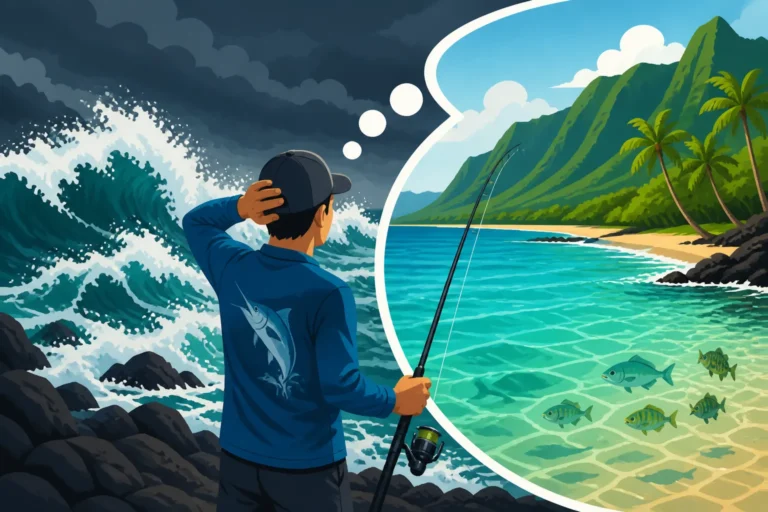
Water clarity is another non-negotiable factor. Uhu are highly visual feeders, relying on sight to find their algal meals. If the water is murky due to heavy rain runoff, strong surf, or stirred-up sediment, your chances of success plummet dramatically. You want that gin-clear Hawaiian water where you can easily spot the bottom. This also makes it easier for you to spot the fish, and more importantly, for them to spot your subtle offerings. A good rule of thumb is to avoid fishing reef flats after significant rain events or during periods of very large, churning surf. Patience, waiting for the right conditions, truly pays off when targeting uhu.
Essential Gear for Reef Flat Uhu Success
When it comes to fishing for uhu on Hawaii's reef flats, you need gear that's specifically suited to the environment and the fish's unique habits. This isn't your typical offshore trolling setup or heavy-duty surfcasting rig. We're talking about a more finesse approach, albeit one that needs to be robust enough to handle sharp coral and strong currents.
Rods, Reels, and Lines for Reef Flats
For uhu, you'll want a light to medium-light spinning rod, typically in the 7 to 9-foot range. This length gives you enough casting distance to reach productive areas without spooking the fish, while still being maneuverable in the often-tight confines of a reef flat. The rod should have a sensitive tip to detect subtle bites but enough backbone to pull a hooked fish away from abrasive coral. A fast action rod is generally preferred for quick hook sets.
Pair this with a reliable 2500 to 3000 size spinning reel. Durability and corrosion resistance are key here, as you'll be constantly exposed to saltwater spray and potentially dunking the reel. Brands like Shimano and Daiwa offer excellent options that can withstand the harsh Hawaiian environment. Spool your reel with 10 to 15-pound braided line. Braid offers superior casting distance, sensitivity, and strength-to-diameter ratio, which is crucial when fishing around sharp coral. To this, you'll want to add a leader of 15 to 20-pound fluorocarbon, about 3 to 6 feet long. Fluorocarbon is nearly invisible underwater and highly abrasion-resistant, giving you a better chance when the line inevitably rubs against the reef. You can find good quality braided and fluorocarbon lines on platforms like Amazon, ensuring you have the right tackle for the job.
Terminal Tackle and Accessories
Your terminal tackle for uhu needs to be precise. Small, sharp hooks are paramount. Circle hooks in sizes 4 to 1/0 are excellent choices, as they tend to hook the fish in the corner of the mouth, making for easier releases and reducing gut-hooking, which is particularly important for catch-and-release. The specific size will depend on your bait. You'll also need a selection of small weights, typically split shot or small egg sinkers from 1/8 to 1/2 ounce, to help your bait get down and stay put in the current. Swivels and snaps aren't usually necessary for this type of fishing, as they can add unnecessary bulk and visual distractions.
Beyond the basic rod and reel setup, there are some essential accessories for reef flat fishing. A good pair of polarized sunglasses is a game-changer; they cut the glare off the water, allowing you to see fish, structure, and potential hazards much more clearly. A small backpack or sling bag to carry your tackle, water, and snacks is indispensable. Don't forget sturdy reef shoes or wading boots with good grip to protect your feet from sharp coral and provide stability on slippery rocks. A pair of pliers for hook removal and a small measuring tape to ensure your catch meets the Hawaii Uhu (Parrotfish) Size and Bag Limits are also vital. Lastly, a hat and plenty of reef-safe sunscreen are a must in the Hawaiian sun!
Effective Techniques for Catching Uhu
Now that you're geared up and understand the environment, let's talk about the strategies that actually put uhu on the hook. It's less about power and more about finesse, stealth, and presentation. Remember, these are grazers, not aggressive predators.
Baiting Strategies for Uhu
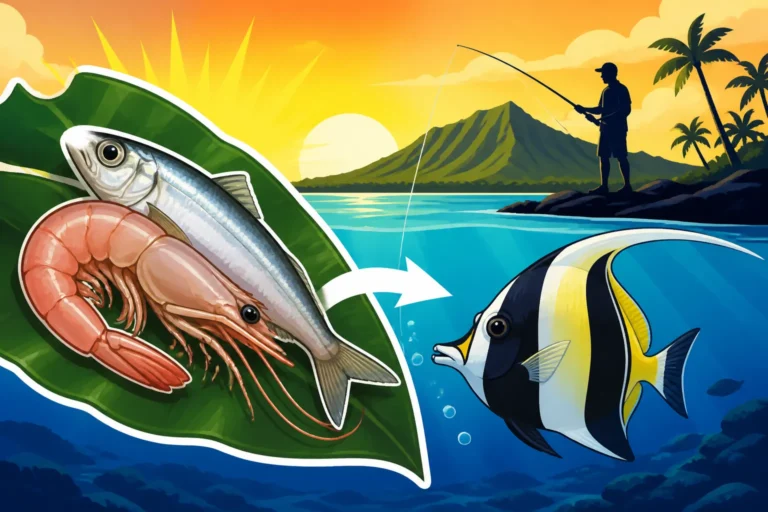
The most effective baits for uhu are those that mimic their natural diet of algae. While they are herbivores, they can sometimes be tempted by small pieces of limu (seaweed), but often what works best are subtle offerings that hint at something they'd pick off the reef. Here's where it gets a little interesting: some anglers have great success with small pieces of shrimp, crab, or even bread. The key is to present it in a way that looks like a natural, easy meal, not a suspicious foreign object.
Many local fishermen swear by using pieces of opihi (limpet) meat, or very small pieces of raw shrimp. The trick is to use just enough bait to cover the hook point, making it appear as natural and small as possible. You want them to "graze" over it, not inspect a large, unnatural offering. Another technique is to use a very small, green-colored soft plastic bait, mimicking algae, though this requires a very slow, subtle presentation. No matter the bait, cast gently and precisely, aiming for those areas where you've seen uhu grazing or where good algae growth is present. Let the bait settle naturally; avoid any jerky movements that might spook the fish.
Stealth and Presentation on the Flats
Stealth is your best friend when fishing for uhu. These fish are incredibly wary, and any sudden movement on your part can send an entire school scattering. Approach the water slowly and quietly. Avoid stomping on the reef or casting long shadows over the water. Wear natural, muted colors that blend in with the environment, rather than bright, contrasting attire. Think of yourself as a predator stalking its prey, moving with purpose and caution.
Once you've identified a promising spot or a group of uhu, cast well beyond them and retrieve your bait slowly into their strike zone. You want the bait to drift naturally with the current, mimicking a piece of food dislodged from the reef. A light weight is usually sufficient to get the bait down without anchoring it rigidly. The goal is to make it look like a natural, irresistible morsel that's easy to pick up. A common technique is to let the bait sit on the bottom for a few moments, then slowly, almost imperceptibly, twitch it a few inches. This often stimulates a "curiosity bite" from a grazing uhu. Patience is key here; you might need to leave your bait in the zone for a while, allowing the uhu to become accustomed to its presence before they decide to investigate. This approach can be similar to the finesse required for Wading Techniques for Hawaii Shore Fishing.
| Bait Type | Presentation Tip | Pros | Cons |
|---|---|---|---|
| Small Shrimp | Tiny piece, hook point barely exposed, natural drift. | Readily available, natural scent, subtle appearance. | Can be easily picked off by smaller reef fish; often requires fresh shrimp. |
| Crab Meat | Small, soft pieces, barely covering the hook, allowed to settle naturally. | Strong natural scent, good for tempting cautious fish. | Can be messy, may attract non-target species. |
| Bread/Dough Ball | Small, dense ball on hook, sinks slowly, attracts curiosity. | Easy to acquire, cheap, can create a small "chum" cloud. | Less natural, breaks down quickly, might not appeal to all uhu. |
| Limu (Seaweed) | Small, natural strands wrapped around hook, mimicking grazing. | Most natural food source, often locally sourced. | Can be difficult to keep on the hook, less scent-driven attraction. |
| Artificial Soft Plastic | Tiny green/brown grub or worm, very slow twitch or dead drift. | Durable, reusable, can be highly effective in clear water. | Requires highly skilled, subtle presentation; less natural scent. |
Respecting the Reef: Sustainable Practices and Regulations
Fishing Hawaii's reef flats for uhu is a privilege, and with that privilege comes a responsibility to protect these fragile ecosystems and ensure the sustainability of our fisheries. Adhering to regulations and practicing ethical angling are paramount.
Understanding Uhu Regulations
The Hawaii Division of Aquatic Resources (DAR) establishes specific rules for uhu, just as they do for other species. These regulations are in place to ensure healthy fish populations for future generations. For uhu, these typically include bag limits and minimum size limits. For instance, the minimum size limit for uhu can vary, so always consult the latest Hawaii Uhu (Parrotfish) Size and Bag Limits before heading out. Exceeding these limits can result in hefty fines and even confiscation of gear.
It's also important to be aware of other regulations that might apply to the area you're fishing. Some areas may be designated as Hawaii Marine Life Conservation Districts, Explained (MLCDs) where fishing is completely prohibited or heavily restricted. Always check local signage and the DAR website for the specific rules of your intended fishing spot. Ignorance of the law is not an excuse. Beyond legal requirements, consider practicing catch and release for larger breeding fish, especially if you've already met your family's needs for dinner. Every fish we release has the chance to reproduce and contribute to a healthier fishery.
Protecting the Fragile Reef Environment
Our reef flats are incredibly delicate ecosystems, and it's up to us anglers to minimize our impact. When wading, be mindful of where you step. Try to walk on sandy patches or bare rock, avoiding live coral whenever possible. Coral is a living organism, and a single step can kill decades of growth. If you hook a fish and it runs into the coral, try to release the tension and let it swim out rather than pulling directly against the reef, which can damage both the fish and the coral.
Proper disposal of trash, fishing line, and hooks is also critical. Monofilament line and hooks can be deadly to marine life if left behind. Carry a small trash bag with you and pack out everything you pack in—and maybe even a little extra if you see litter left by others. Using barbless hooks or crushing the barb on your hooks can also make for quicker, less damaging releases, especially for fish you intend to send back. Our reefs are a precious resource, and by being responsible stewards, we ensure they remain vibrant for everyone to enjoy.
Timing Your Uhu Hunt: Best Conditions and Seasons
Successful uhu fishing often boils down to being in the right place at the right time, under the right conditions. Understanding the interplay of seasons, tides, and weather can dramatically increase your chances of success.
Seasonal Considerations for Uhu Fishing
Unlike some pelagic species that migrate dramatically, uhu are reef residents, so they can generally be found on reef flats year-round in Hawaii. However, their activity levels can fluctuate with the seasons. During the warmer summer months (June to September), water temperatures are consistently higher, and overall fish activity tends to be robust. This can be a prime time for uhu, as they are actively feeding on the abundant algal growth. The calm, clear waters often associated with summer weather also make sight-fishing and subtle presentations much easier.
As we move into the cooler, wetter winter months (November to March), larger swells are more common, and water clarity can suffer due to increased runoff and wave action. While uhu are still present, finding good fishing windows often means carefully watching weather forecasts for breaks in the swell and periods of clear, calm water. Targeting the lee side of islands, like the Kona Coast, during periods of strong tradewinds might also offer calmer conditions. Generally, there isn't a "closed season" for uhu, but being aware of seasonal weather patterns will help you plan your trips effectively. You can learn more about general fish movements in our comprehensive Hawaii Fishing Seasons by Month guide.
Optimizing for Tides and Weather
We touched on tides earlier, but it bears repeating: an incoming or high tide is typically the most productive for reef flat uhu fishing. As the water floods the flat, it allows fish to move into shallower feeding grounds, and the rising water often creates a slight current that moves bait naturally. Avoid the dead low tide unless you know a specific deep channel or pocket holds fish, as they will be more concentrated and easily spooked.
Weather-wise, clear skies, light winds, and calm ocean conditions are your ideal scenario. This ensures good visibility both above and below the water. Strong winds can make casting light baits difficult, and choppy water significantly reduces your ability to see fish or present your bait subtly. Overcast days can sometimes be good, as they reduce shadows and make the fish feel a bit more secure in shallow water, but very dark, stormy conditions are generally a no-go. Keep an eye on the marine forecast, and aim for those beautiful, classic Hawaiian days where the water is like glass. You'll find that these conditions not only make for better fishing but also for a much more enjoyable experience out on the flats.
Disclaimer
Fishing inherently carries risks. Always prioritize your safety and be aware of your surroundings, especially when fishing near the ocean, steep cliffs, or in areas with strong currents. Adhere to all local fishing regulations, practice responsible angling, and respect private property. The information in this guide is for informational purposes only, and individuals should exercise their own judgment and take appropriate safety precautions.