Best Techniques for High Surf Shore Fishing
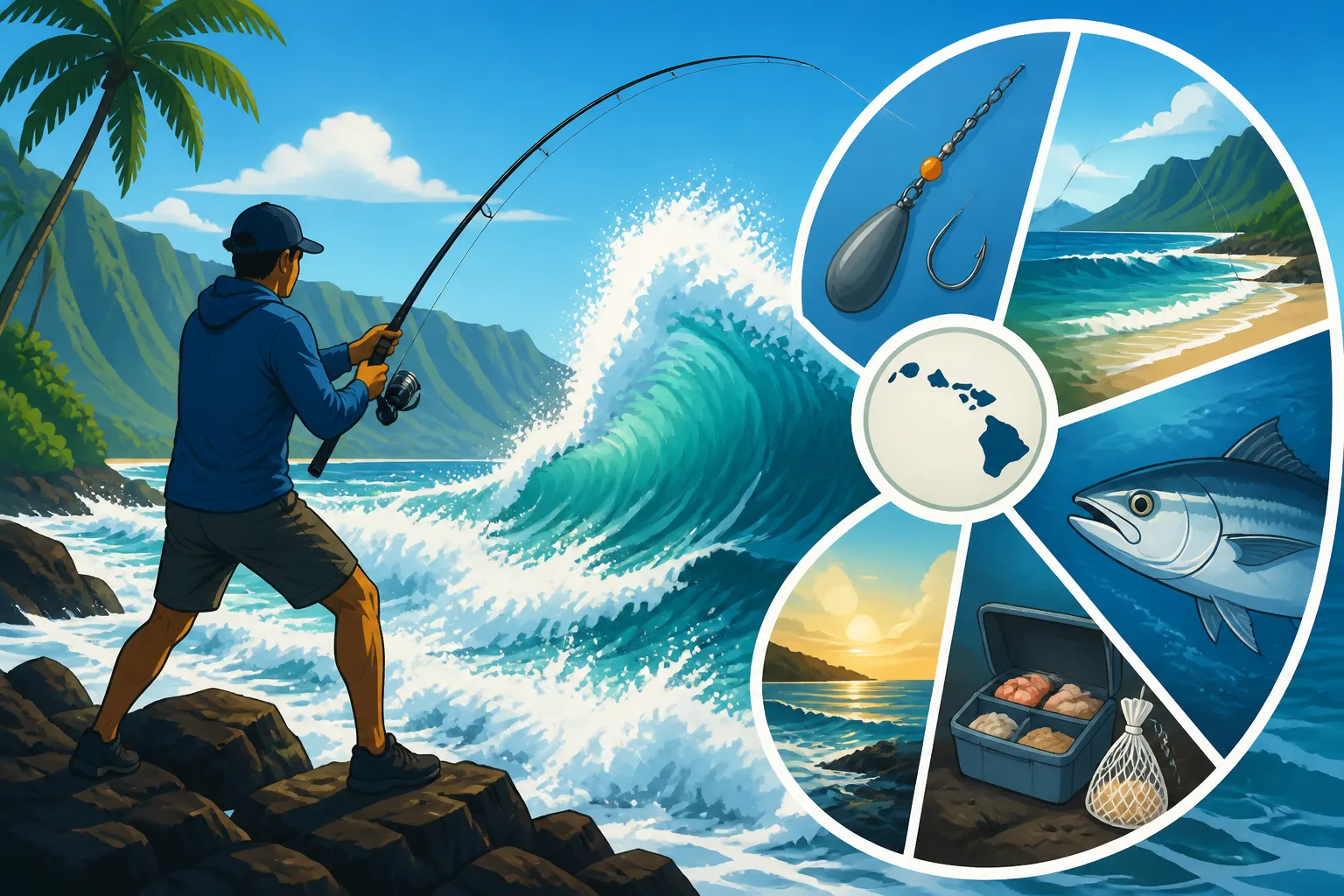
There’s nothing quite like the raw power of the Pacific Ocean slamming into Hawaii’s shores, creating those breathtaking high surf conditions. But as stunning as it is, fishing in that kind of turbulence can feel downright impossible. Waves crash, your line gets dragged, and holding your footing is a challenge in itself. This guide is here to walk you through the specialized techniques, gear, and mindset you need to successfully tackle high surf shore fishing in Hawaii, turning frustration into triumph.
Understanding Hawaii's High Surf Dynamics
Before you even think about casting a line, you need to be a student of the ocean. High surf isn't just "big waves"; it's a complex dance of energy, currents, and underwater topography that can make or break your fishing day – and your safety. Trying to fish without understanding these dynamics is like trying to drive a car blindfolded; you're just asking for trouble.
Reading the Ocean: Swells, Currents, and Breaks
High surf in Hawaii is primarily driven by powerful ocean swells, often generated by distant storm systems. These can be massive ground swells, characterized by long periods between waves, or more chaotic wind swells from local weather. When these swells hit the shallower coastal areas, they "stand up" and eventually break, creating the foamy, churning white water we associate with high surf. The key here is to observe. Watch the sets of waves, notice the lulls, and try to discern any patterns. Are the waves coming in perfectly parallel, or are they wrapping around a point? This will give you clues about where the fish might be staging and where the currents are strongest.
Beneath that frothy surface, powerful currents are at play. Rip currents, often identified by a channel of agitated water flowing directly out to sea, can be incredibly dangerous for swimmers, but they're also super highways for baitfish and, consequently, predatory species. Longshore currents, which run parallel to the shore, can transport food and bait right into the feeding zones. Your goal as an angler is to identify these current lines, as they often concentrate bait and provide a natural presentation for your lure or bait. Sometimes, just after a big surf swell in Hawaii, these features are even more pronounced, offering unique opportunities if you know how to read them.
The impact zone, where the waves are actively breaking, can be a wild and unpredictable place. But don't write it off entirely. Often, the waves dislodge crustaceans, small fish, and other food sources from the reef or sand, creating a veritable buffet for larger predators. Your job is to find the calmer seams, the deeper pockets, or the edges of these turbulent zones where fish can comfortably hold and ambush prey without constantly fighting the surge. Understanding the bottom structure – whether it's a sandy beach, a rocky point, or a lava shelf – will further inform how the waves break and where these fish-holding spots might be.
Safety First: Assessing Conditions and Gear
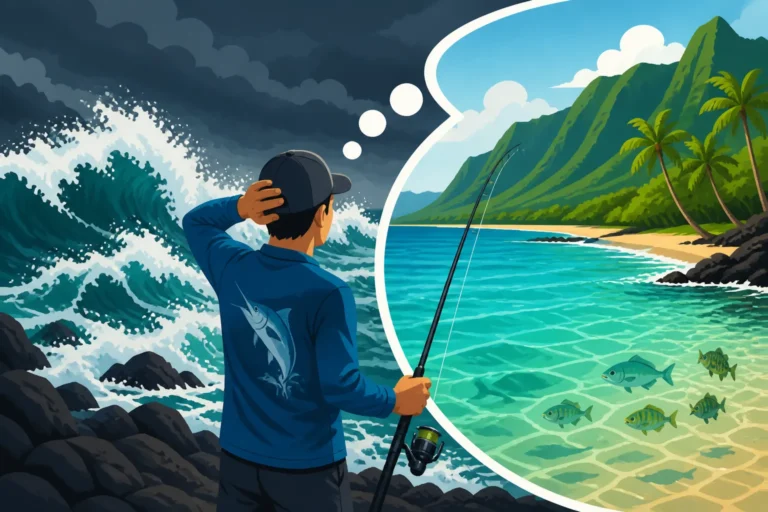
Let's be brutally honest: high surf fishing can be incredibly dangerous. There's a reason seasoned local anglers approach these conditions with extreme caution. The absolute golden rule here is to never, ever turn your back on the ocean. A rogue wave, larger than the rest of the set, can sweep you off your feet in an instant, dragging you into powerful currents or slamming you against rocks. Before you even get your gear ready, spend at least 15-20 minutes just observing the ocean, paying close attention to the biggest waves and the rhythm of the sets. If you feel uneasy, or if the conditions seem truly overwhelming, it's better to pack up and try another day. There’s always another fish, but you only have one life. Knowing when Hawaii's ocean waters get too rough to shore fish is critical.
When it comes to personal safety gear, you'll want to think defensively. Sturdy, closed-toe footwear with excellent grip is non-negotiable. Forget slippers or bare feet; you need reef boots or tabis that can handle slippery rocks and sudden surges. Some anglers even opt for a personal flotation device (PFD) if they're fishing particularly treacherous ledges or areas where being swept into the water is a real possibility. A waterproof bag for your phone and essentials is also a smart move, as is always fishing with a buddy. Communication is key, and having someone else keeping an eye on the ocean while you're focused on your cast can literally be a lifesaver.
Beyond personal safety, having the right gear is also a safety measure. You need tackle that can withstand the immense forces of high surf. This means robust rods that won't snap under pressure, reels with smooth, powerful drags that won't seize up from salt spray, and lines strong enough to handle not just the fish, but also the relentless tug of the waves. Investing in quality, saltwater-specific gear isn't just about catching more fish; it's about preventing equipment failure that could put you in a dangerous situation. Think of it as your primary defense against the elements.
Essential Gear for High Surf Success
You wouldn't bring a butter knife to a sword fight, and you certainly shouldn't bring light tackle to a high surf battle. The power of the waves, combined with the often large, powerful fish that inhabit these turbulent zones, demands a specific arsenal of rods, reels, lines, and terminal tackle. This isn't the time for finesse fishing; it's about brute strength, durability, and the ability to hold your ground.
Rods, Reels, and Lines Built for Battle
For high surf shore fishing in Hawaii, your rod needs to be a beast. We're talking long, heavy-action surf rods, typically in the 10 to 14-foot range, sometimes even longer for extreme distance casting. These rods need serious backbone to launch heavy weights (often 4-8 ounces, or even more) and large baits beyond the breaking waves. Look for rods rated for casting weights up to 8 ounces or higher, and line classes in the 30-80 lb test range. A stiffer rod will help you power through the wind and cast further, but it also needs enough flex in the tip to register bites. Brands like Daiwa and Penn offer excellent heavy-duty surf rods that can stand up to these conditions, and you can find a great selection on Amazon.
Your reel needs to match the rod's power and be built to withstand the harshest saltwater environments. A large, durable spinning reel, often in the 8000 to 14000 size range, is ideal. Look for models explicitly designed for saltwater use, with sealed bodies and robust internals to prevent corrosion from constant exposure to spray and sand. A high-quality drag system is non-negotiable – it needs to be smooth, consistent, and capable of applying significant pressure (25-40 lbs or more) without faltering when a strong ulua decides to run. Some anglers prefer conventional reels for their sheer cranking power, but spinning reels generally offer easier casting for most shore anglers in these conditions.
Line choice is critical. While some prefer heavy monofilament for its stretch and abrasion resistance around rocks, many modern surf anglers opt for braided line. A braided mainline in the 50-80 lb test range offers superior casting distance due to its thinner diameter, incredible strength, and zero stretch for maximum sensitivity, even through the wash. However, braid is less abrasion resistant, so a heavy monofilament or fluorocarbon shock leader is essential. This leader, typically 60-100 lb test and 6-10 feet long, absorbs the casting shock, provides a buffer against sharp rocks and coral, and offers the necessary give when a big fish makes a powerful run. Remember, the goal is to cast far and hold strong against both fish and waves.
Heavy Rigs and Baits that Hold Their Ground
When fishing in high surf, lightweight rigs simply won't cut it. The powerful currents and wave action will quickly sweep light tackle into the wrong areas, tangle your line, or prevent your bait from staying put. This is where heavy-duty terminal tackle comes into play. Your lead weight is arguably the most important component; pyramid sinkers or Sputnik (spider) weights, designed with wires that dig into the sand, are excellent choices for anchoring your bait in turbulent conditions. You'll often need weights from 4 ounces all the way up to 8 ounces or even 10 ounces in extreme surf to keep your rig from rolling. Don't be shy about going heavy; the goal is to keep your bait stationary where the fish are feeding.
The specific rig you use should be simple and robust. A fish finder rig, also known as a sliding sinker rig, is a popular choice. It allows the line to run freely through a slider attached to your weight, letting the fish pick up the bait without feeling the resistance of the heavy lead. This rig is particularly effective when targeting powerful species like Ulua (Giant Trevally) Fishing in Hawaii. Another reliable option is a modified Carolina rig, perhaps with a heavier leader and swivel system to prevent twisting. Regardless of the specific rig, ensure all your components – swivels, snaps, and hooks – are heavy-duty, corrosion-resistant, and rated for the kind of force you expect to encounter. Double-check all knots, as they are often the weakest link in high-stress situations.
For bait, durability and size are key. Delicate baits will be torn off the hook by the wave action before a fish even gets a chance. Whole dead baits like Akule (Bigeye Scad) or Opelu (Mackerel Scad), if you can source them, are excellent choices. Their robust bodies stay on the hook well and offer a substantial meal for large predators. Chunks of fresh octopus or squid are also incredibly effective, as they are tough, emit a strong scent, and are a natural food source for many Hawaiian reef and nearshore predators. Sometimes, even live bait, if it's hearty enough and presented correctly (e.g., a lively moi or small papio), can be deadly. The trick is to use baits that can withstand the assault of the waves and still look enticing when a hungry fish comes calling.
Mastering Casting and Retrieval in High Surf
Casting in high surf is an art form, a blend of power, timing, and precision. It’s not just about throwing your bait as far as you can; it's about placing it accurately, beyond the most violent white water, and then effectively managing your line as the ocean tries to reclaim it. Retrieval is equally challenging, especially when you have a powerful fish on the other end, fighting both you and the relentless waves.
Power Casting for Distance and Accuracy
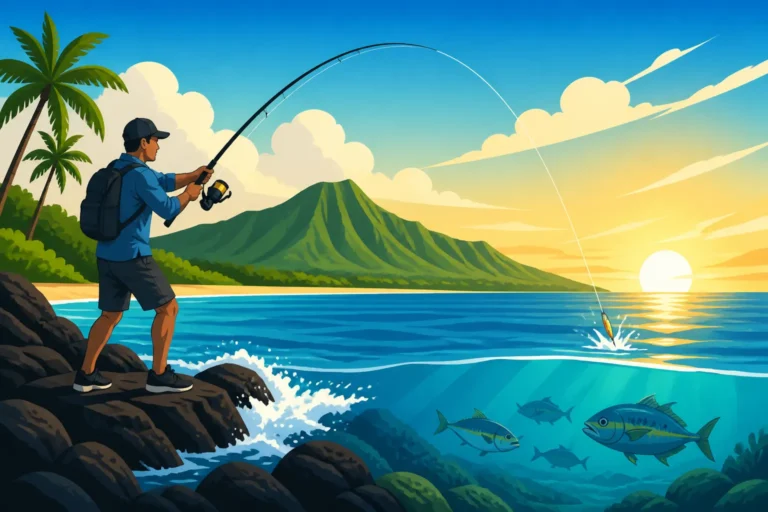
When the waves are roaring, distance is often your friend. You want to get your bait out past the initial shore break, into the slightly deeper, calmer water where larger predators might be patrolling. This requires power casting techniques like the pendulum cast, where you let the weight swing back behind you before unleashing a powerful, sweeping forward motion. It takes practice, but mastering it can add significant yards to your cast. For those less experienced, a traditional overhead cast with a long rod and heavy weight can still achieve good distance, but focus on a smooth, powerful motion rather than a jerky one. Ensure you’re using the full length of your rod to load up the cast, generating maximum force.
Accuracy is just as important as distance. High surf often creates channels, deeper pockets, and current lines that act as highways for feeding fish. Your goal is to identify these features and land your bait directly in them. This requires not just physical strength but also keen observation and timing. Watch the waves: there are often lulls between sets where the wave action momentarily subsides. This is your window. Time your cast to coincide with one of these lulls, allowing your bait and sinker to settle on the bottom before the next set of waves hits and potentially drags your rig. It’s a dance with the ocean, and finding your rhythm is crucial for success.
Wind can be a major factor in high surf conditions, often blowing onshore or cross-shore, making casting even more difficult. To combat this, you'll need to adjust your casting angle and body position. Cast low into the wind if possible, or use the wind to your advantage if it’s pushing your bait towards a desired spot. A proper casting technique, combined with a heavy-duty setup from Amazon, will help cut through the wind and deliver your bait effectively. Remember, every cast is a calculated risk and an opportunity. Don't rush; take your time to assess the conditions and execute your cast with purpose.
Managing Your Line and Fighting Fish in the Wash
Once your bait is out there, the battle isn't over – it's just begun. High surf will constantly pull and tug at your line, creating belly in the braid or mono. This slack line can be detrimental, making it hard to detect bites and giving fish too much leverage. Constantly working your rod tip, holding it high to keep as much line out of the water as possible, and slowly reeling in any excess slack is essential. You want to maintain a tight line to your weight, feeling for subtle taps that signal a bite. It’s a constant dance of reeling, bracing, and watching for the next wave to pass.
When a fish hits in high surf, be prepared for an explosive fight compounded by the force of the waves. Powerful species like Ulua (Giant Trevally) will use the turbulence to their advantage, trying to shake the hook or drag you into rocks. Keep your rod tip high, pointed towards the fish, and use the rod's parabolic bend to absorb the shock of both the fish and the waves. Don't try to winch the fish in; let the drag do its job, but be ready to gain line quickly during lulls in wave action. Understanding how to catch ulua during a big surf swell involves letting the fish tire itself out against the waves, but also using the receding water to your advantage when bringing it closer.
Retrieving a fish through the crashing waves near shore is perhaps the most critical moment. This is where many fish are lost. As the fish gets closer, wait for a large wave to recede, exposing the beach or rocks, and then quickly reel it in with the retreating water. If a large wave is coming in, hold your ground, brace your rod, and let the wave wash over the fish, maintaining tension. You might even have to backpedal up the beach to keep ahead of a strong wave. When you finally get the fish close, don't try to lift it directly out of the water through a breaking wave. Instead, wait for a calm moment or a receding wave to wash it onto the sand or rock shelf. Patience, agility, and a good understanding of wave timing are your best allies in landing your prize.
Targeting Species and Productive Zones
High surf isn't for every fish, and it certainly isn't for every angler. But for those who embrace the challenge, these tumultuous waters hold the promise of truly epic catches. Certain predatory species actively seek out these conditions, thriving in the chaos where disoriented baitfish become easy targets. Knowing what to target and where to find them is paramount to success.
Predators Drawn to the Turbidity
The kings of the high surf in Hawaii are undoubtedly the Ulua, or Giant Trevally. These powerful, intelligent predators are perfectly adapted to hunting in turbulent water. They use the reduced visibility and the disorienting effect of the crashing waves to ambush baitfish, crabs, and octopus that get dislodged from the reef or swept in from deeper water. When fishing for Ulua (Giant Trevally) Fishing in Hawaii, look for areas where the waves create strong currents or washouts, especially near rocky points or ledges where Ulua can position themselves to intercept passing prey. Other jacks, often called Papio when they're smaller, also frequent these zones, offering exhilarating fights on lighter tackle.
Beyond Ulua, other formidable predators are drawn to the high surf buffet. Large sharks, including hammerheads and tiger sharks, are not uncommon in these conditions, particularly if there's a lot of baitfish activity. While not typically targeted by shore anglers, be aware that hooking into one is a real possibility with heavy gear and large baits. Additionally, certain types of snapper and even some pelagic species like small tuna or mahimahi can occasionally be found closer to shore during periods of strong current and dislodged bait. The key is that these fish are opportunistic feeders, and the high surf creates an environment ripe with opportunities for them.
The sheer volume of dislodged food, combined with the decreased visibility, makes high surf a prime hunting ground. Smaller reef fish get confused, crabs are tumbled, and baitfish schools are broken up. This creates an easy meal scenario for larger predators who are comfortable navigating the turbulent water. Your job is to present a convincing offering that stands out amidst the chaos, mimicking a distressed or easy meal. This is why robust baits that stay on the hook and emit a strong scent are so effective.
Identifying Prime High Surf Hotspots
Not all shorelines are created equal when it comes to high surf fishing. You need to identify areas where the surf creates beneficial conditions for both fishing and safety. Deep channels that run parallel or perpendicular to the shore, often formed by strong currents or natural depressions in the seafloor, are excellent ambush points. These channels act as highways for fish moving in and out with the tide and swell, offering them a reprieve from the most violent wave action while still keeping them in a prime feeding zone. Look for darker patches of water or areas where the waves break differently, indicating deeper water.
Rocky points and lava ledges are classic high surf hotspots. As waves crash into these structures, they create powerful washouts and turbulent eddies that dislodge marine life, attracting hungry fish. The structure also provides cover and ambush points for predators. However, these areas also present significant safety challenges, with slippery surfaces and the danger of being swept off. Always exercise extreme caution when fishing how to fish a rocky point in high surf, and never fish alone. Shore Fishing Techniques for Hawaii will often emphasize these types of structures for a reason – they hold fish, but demand respect.
Sandy beaches with strong rips are another excellent option. While seemingly less structured than rocky areas, the powerful rip currents often carve out deeper troughs and deposit baitfish, creating feeding lanes for Ulua and other predators. The Best surf fishing spots on the North Shore of Oahu, for instance, are renowned for their powerful waves and the trophy fish they can yield if fished correctly. The trick is to cast your bait into the "guts" – the deeper areas between the sandbars – or along the edges of the rip currents, where fish will sit and wait for food to be delivered. Remember, Fishing after a big surf swell in Hawaii can be incredibly productive, as the ocean has just churned up a fresh supply of food, drawing in the biggest predators.
Safety and Ethics in Challenging Conditions
We've talked about gear and techniques, but nothing is more important than safety and respecting the ocean when you're engaging in high surf shore fishing. These conditions demand an elevated level of awareness and responsibility, not just for your own well-being but for the health of the marine environment and your fellow anglers.
Personal Safety Beyond the Waves
Let me emphasize this again: high surf fishing is not a casual activity. Always, always, always fish with a buddy. Having another set of eyes on the ocean can spot a rogue wave or a dangerous current that you might miss while focused on your line. Moreover, if an accident happens, having someone there to help or call for help is absolutely critical. Before you head out, make sure someone knows where you're going and when you expect to return. A waterproof bag for your phone and other essentials, even a small first-aid kit, should be standard in your gear.
Understanding the local conditions goes beyond just watching the waves. Pay close attention to tide charts. Fishing a rising or falling tide can significantly change the dynamics of the surf, creating new hazards or opening up new fishing opportunities. Be aware of any localized weather changes that could quickly alter the surf conditions. Even seemingly calm moments can be deceiving, and rogue waves can appear out of nowhere. Never turn your back on the ocean – a phrase that should be etched into every high surf angler's mind. It's not just a saying; it's a rule that could save your life.
Your personal limits are also paramount. Don't push yourself into conditions that feel too risky. If the waves are too big, the currents too strong, or the footing too precarious, it's okay to call it a day. There's no shame in prioritizing your safety over a potential catch. Respecting the power of the ocean means knowing when to back off. The ocean will always be there, and so should you. Sometimes, even the Best Time of Day to Catch Ulua might coincide with conditions that are simply too dangerous; choosing safety over ambition is always the right call.
Respecting the Resource and the Environment
As anglers in Hawaii, we are privileged to enjoy these incredible waters, and with that privilege comes a profound responsibility to protect them. This means practicing "leave no trace" principles. Pack out everything you pack in – and then some. Discarded fishing line, hooks, and bait packaging are not just unsightly; they are serious hazards for marine life. Consider bringing a small bag specifically for trash, and make it a habit to pick up any litter you find, even if it's not yours.
Beyond litter, it's crucial to adhere strictly to all Hawaii Fishing Regulations Explained, including Hawaii Bag and Size Limits by Species. These regulations are in place to ensure the sustainability of our marine resources for future generations. Ignorance of the law is not an excuse. Familiarize yourself with the rules for the specific species you might encounter, including any closed seasons or restricted areas. For example, some fish have specific closed seasons for spawning, while others like certain Pelagic Species Bag Limits are enforced to manage offshore populations. If you're catching and releasing, do so quickly and with minimal stress to the fish. Barbless hooks can make this process easier, and always handle fish with wet hands to protect their slime coat.
Finally, show respect for other ocean users – surfers, swimmers, and other anglers. High surf spots are often popular for multiple activities, and a little courtesy goes a long way. Don't cast where surfers are riding waves, and be mindful of your lines if other anglers are nearby. It's about sharing the resource responsibly and maintaining the aloha spirit on the water. By combining caution, preparation, and respect, high surf shore fishing can be a truly rewarding and sustainable pursuit.
| Gear Category | Item | Key Features for High Surf | Approximate Weight/Size | Typical Price Range (USD) |
|---|---|---|---|---|
| Rods | Surf Rod (Heavy) | 10-14 ft, heavy action, rated 4-10 oz casting weight | 1-2 lbs | $100 – $350+ |
| Reels | Saltwater Spinning Reel | 8000-14000 size, sealed, high drag (25-40+ lbs) | 1.5-2.5 lbs | $150 – $600+ |
| Main Line | Braided Line | 50-80 lb test, high abrasion resistance | N/A (spool) | $25 – $75 |
| Leader | Fluorocarbon/Mono Leader | 60-100 lb test, 6-10 ft length, excellent abrasion resistance | N/A (spool) | $15 – $40 |
| Sinkers | Pyramid/Sputnik Weights | 4-10 oz, designed to grip bottom | 4-10 oz each | $2 – $8 each |
| Hooks | Circle/J-Hooks (Heavy) | 8/0-12/0, strong, corrosion-resistant | Varies | $5 – $15 per pack |
| Footwear | Reef Boots/Tabis | Closed-toe, excellent grip, ankle support | 1-2 lbs | $40 – $100 |
| Safety | Personal Flotation Device (PFD) | High visibility, comfortable, secure fit | 1-3 lbs | $50 – $150 |
Disclaimer
The information provided in this guide is for general informational purposes only and is not a substitute for professional advice or local regulations. Fishing in high surf conditions can be extremely dangerous. Always prioritize your safety, understand your personal limitations, and strictly adhere to all local fishing regulations, warnings, and safety guidelines issued by authorities such as the Hawaii Department of Land and Natural Resources (DLNR). The author and publisher are not responsible for any accidents, injuries, or legal infractions that may occur as a result of using this information.