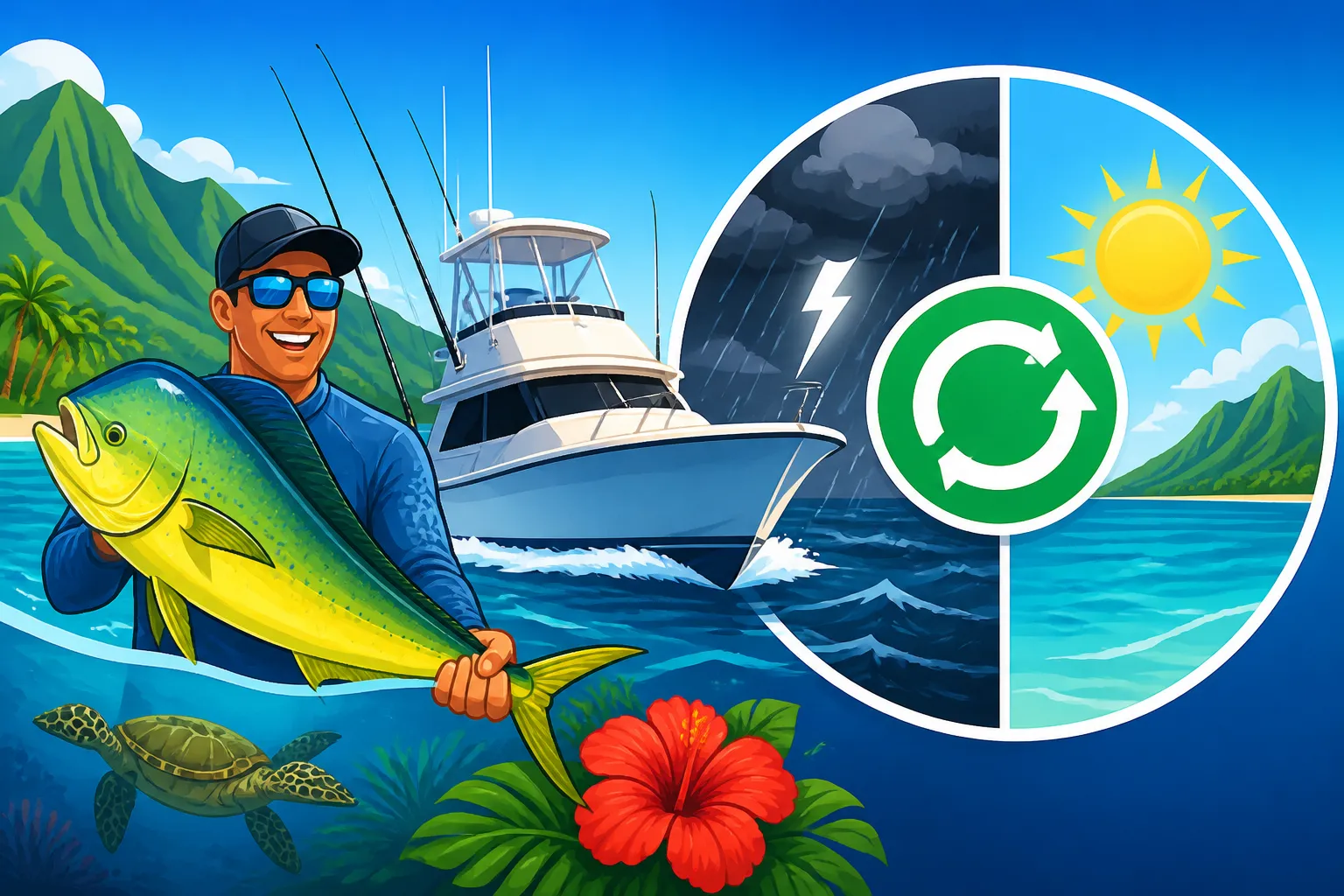
Best charters with flexible weather reschedule policies
There's nothing quite as deflating as dreaming of reeling in a trophy marlin or a vibrant mahimahi in the beautiful Hawaiian waters, only to have those plans potentially dashed by an unexpected weather front or a sudden Kona wind. The thought of losing your hard-earned charter fee because of conditions beyond your control is a real worry for many anglers. This guide will walk you through how to find Hawaii fishing charters that offer flexible weather reschedule policies, ensuring your fishing adventure isn't lost, just postponed.
Understanding Hawaii's Weather and Its Impact on Fishing
Hawaii might be paradise, but it's not immune to fickle weather patterns. While we often picture endless sunshine, the islands experience a dynamic climate that can shift quickly, especially out on the open ocean. Understanding these local nuances is key to appreciating why flexible rescheduling is so important.
Common Weather Challenges in Hawaiian Waters
We've all seen those picture-perfect postcards, but the reality of fishing here sometimes involves more than just calm seas and clear skies. One of the most common issues is strong winds, particularly the trade winds which, while usually a blessing for cooling breezes, can kick up significant chop and swell, making for an uncomfortable and sometimes unsafe offshore experience. Then there are the occasional Kona low systems, which bring southerly winds, heavy rain, and rough seas that can last for days, completely shutting down fishing operations. Tropical depressions or even distant hurricanes, while rare direct hits, can send massive swells our way, making harbor exits dangerous and nearshore fishing nearly impossible. Even localized squalls, though often short-lived, can pop up unexpectedly, bringing torrential rain and reduced visibility.
It's not just about comfort; it's about safety. No reputable captain wants to put their passengers or crew at risk, and sometimes, the conditions simply aren't safe for heading out, even if the sun is technically shining. A charter might get cancelled not because of rain, but because of high seas or dangerous currents that make fishing unproductive or even hazardous.
How Weather Affects Different Fishing Experiences
The type of fishing you plan to do heavily influences how sensitive your trip will be to weather changes. Offshore pelagic fishing for species like marlin, ahi, or mahimahi is particularly susceptible to wind and swell. When the ocean gets rough, it becomes incredibly challenging to spot fish, troll lures effectively, or even stand comfortably on deck. A choppy sea can also make for a miserable experience for those prone to seasickness, turning an exciting day into a battle with nausea. Charters targeting these big game species often have stricter weather windows due to the nature of their pursuit.
Inshore fishing, such as bottomfishing for opakapaka or onaga, or even targeting papio and ulua from a smaller boat near the reefs, can sometimes tolerate slightly rougher conditions if the boat is robust enough and the captain knows sheltered spots. However, even these trips can be called off if winds are too strong or swells are breaking heavily over shallow reefs. Freshwater fishing in Hawaii's reservoirs, like Wahiawa or Nuuanu, is far less impacted by ocean conditions, but heavy rainfall could lead to muddy runoff, making fish harder to find or bite. Shore fishing can also be impacted by massive swells and high surf, making certain spots inaccessible or dangerous, especially on exposed coastlines like the North Shore of Oahu.
What to Look For in a Flexible Reschedule Policy
When you're shelling out good money for a Hawaii fishing charter, you want peace of mind that if Mother Nature decides to throw a curveball, you won't be left high and dry. This means really digging into a charter's reschedule policy before you book.
Key Elements of a Good Weather Policy
A genuinely angler-friendly policy will prioritize your safety and experience, not just their bottom line. Look for policies that explicitly state that captain's discretion is paramount when it comes to weather. This means the captain has the final say on whether conditions are safe and suitable for fishing, regardless of what the general forecast might say. A good policy will also clearly outline that if the captain cancels the trip due to unsafe or unfavorable weather, you will be offered a full refund or the option to reschedule without penalty. This is crucial. Some less generous policies might offer a reschedule but only if they can fill your spot, or they might charge a rebooking fee.
Another important aspect is clarity on what constitutes "unfavorable weather." While it's subjective, the policy should hint at conditions that would genuinely impact the quality of the fishing or the safety of the trip – not just a light drizzle. Some charters might specify certain wind speeds or swell heights. A flexible policy should also give you a reasonable timeframe to utilize your rescheduled trip, rather than forcing you into an immediate rebooking that might not fit your travel schedule.
| Feature | Angler-Friendly Policy Example | Less Flexible Policy Example |
|---|---|---|
| Cancellation Authority | Captain has sole discretion; if captain cancels, full refund/reschedule offered. | Captain or client can cancel; client cancellation results in fee. |
| Refund/Reschedule | Full refund or reschedule offered with no penalty for weather cancellation. | Reschedule only, no refunds for weather; or only if charter can rebook your spot. |
| Definition of "Bad Weather" | Based on safety and reasonable fishing conditions (e.g., specific wind/swell limits). | Vague or only for extreme conditions (e.g., hurricane warning). |
| Reschedule Window | Flexible rebooking within a reasonable timeframe (e.g., 6-12 months). | Must reschedule within 30 days or forfeit deposit. |
| Communication | Proactive communication from charter about changing conditions. | Client expected to monitor weather; limited communication unless trip is confirmed. |
Questions to Ask Before Booking Your Charter
Don't be shy! Before you hand over your deposit, it's perfectly reasonable to ask detailed questions about their weather policy. Start by asking, "What happens if the captain decides the weather is too rough to go out?" Listen carefully for "full refund or reschedule, your choice, no fees." Follow up with, "At what point do you typically make a decision about weather cancellations?" Some charters decide the day before, giving you time to adjust, while others might wait until the morning of the trip. The earlier the notification, the better for you.
You might also ask, "Do you have any specific criteria for cancelling due to weather, such as wind speed or swell height?" While they might not give you exact numbers, their answer can reveal how seriously they take safety and client comfort. For example, if you're looking for a Best Half-Day Charters in Hawaii experience, a small craft might be more susceptible to moderate chop than a larger sportfisher. Finally, confirm, "If we choose to reschedule, what's the timeframe for booking our new trip?" This is especially important for visitors who might not have immediate future travel plans to Hawaii. This helps you avoid any nasty surprises related to their Cancellation policy for Hawaii fishing charters.
Navigating Rescheduling: Your Rights and Responsibilities
Even with a flexible policy, rescheduling isn't always as simple as waving a magic wand. There's a dance between the angler and the charter, and understanding your role can make the process much smoother.
When to Initiate a Reschedule Request
While a good charter will be proactive about weather concerns, sometimes you, as the angler, might see a developing weather pattern that makes you uneasy. It's perfectly okay to initiate the conversation, but timing is important. If you see a major storm brewing a week out, reach out to the charter. Don't wait until the night before the trip, hoping they'll cancel. However, understand that accurate marine forecasts can be unreliable more than a few days out. Most captains will make the final call within 24-48 hours of the scheduled departure. This is often the sweet spot where forecasts are more accurate, and they can assess real-time conditions.
If you are feeling unwell due to pre-existing conditions (like severe motion sickness that wasn't previously a concern) and the weather is marginal but not outright dangerous, you might have less leverage for a full refund. In such cases, it's best to communicate your concerns early and see if a compromise can be reached for a reschedule, perhaps offering a small rebooking fee if the captain was prepared to go out. The key here is open and honest communication, as covered in What happens if weather cancels a Hawaii charter.
Communicating Effectively with Your Charter
Clear and respectful communication is paramount. Once you've booked your charter, ensure you have their contact information readily available. If you have concerns about the weather, send a polite email or make a call, stating your booking date and asking for an update on the marine forecast and their plans. Avoid accusatory language or demanding a cancellation. Instead, frame it as seeking their professional opinion and understanding their plan to ensure a safe and enjoyable trip.
For instance, you might say, "Hi Captain, we're really looking forward to our trip on [Date]. We've been watching the forecast, and it looks like there might be some stronger winds. Could you let us know what your assessment is for our trip and what the plan would be if conditions become unfavorable?" This invites a dialogue rather than a confrontation. If they do decide to cancel, be sure to confirm the details of your refund or reschedule in writing, if possible, to avoid any misunderstandings later. Remember, these captains and their crews are often small business owners, and last-minute cancellations impact their livelihoods, so a respectful approach goes a long way.
Finding Charters with Angler-Friendly Policies
Finding the right charter involves a bit of research, but knowing what to look for will make the process much easier, especially when planning your ultimate Best Fishing Charters in Hawaii experience.
How Online Platforms Help
Many online booking platforms, like FishingBooker, have become invaluable tools for anglers seeking transparency. These platforms often list charter cancellation policies directly on their booking pages, making it easier to compare before you commit. You can filter by location, target species, and even read reviews from other anglers that might mention how a charter handled a weather-related issue. Look for charters with a high number of positive reviews that specifically praise their customer service and flexibility.
While FishingBooker is a great starting point, always double-check the details directly with the charter operator before finalizing your booking. Policies can sometimes be generic on platforms, and a quick call or email to the captain can clarify any nuances specific to their operation. Some platforms also offer their own "weather guarantees" or mediation services, which can add an extra layer of protection for the angler. They also allow you to browse many options, from Best Charters Out of Honokohau Harbor to those in Maui, helping you select the perfect fit.
Local Recommendations and Word of Mouth
Don't underestimate the power of local knowledge! If you're on the ground in Hawaii, strike up conversations with other anglers, bait shop owners, or even hotel concierges. They often have firsthand experience or hear stories about which charters are genuinely flexible and which ones might be less accommodating. A personal recommendation can be gold, as it often comes with insights into a captain's personality and how they truly treat their clients.
For example, asking around Kailua-Kona might lead you to a captain known for their integrity and willingness to work with clients if weather turns sour for Marlin Fishing off the Kona Coast. Check out local fishing forums or social media groups dedicated to Hawaii fishing. Anglers love to share their experiences, good and bad. This grassroots intelligence can often reveal the true nature of a charter's flexibility beyond what's written on their website. It's about finding a captain who understands that sometimes, Mother Nature has other plans, and they're willing to work with you to ensure your Hawaiian fishing dream still comes true, even if it's on a different day. When considering How to Choose a Hawaii Fishing Charter, this local insight is invaluable.
Disclaimer
This article is for general informational purposes only and does not constitute professional advice. Laws, prices and regulations vary by location and change over time. Consult a qualified professional for guidance on your specific situation.