Best charters for anglers with their own gear
One common dilemma for experienced anglers planning a Hawaii fishing trip is whether to rely on the charter's gear or bring their own. You've invested time and money into specific rods, reels, and tackle that you know like the back of your hand, and the thought of leaving them behind can be tough. This guide is all about helping you find the perfect Hawaii fishing charters that not only welcome your personal fishing equipment but also provide the ideal environment for you to truly put your skills and trusted gear to the test in these incredible waters.
Why Bring Your Own Gear on a Hawaii Fishing Charter?
For many seasoned anglers, bringing their own fishing gear on a charter isn't just about saving a few dollars on rental fees; it's a deeply personal choice that enhances the entire fishing experience. You've spent countless hours getting to know your rods, reels, and preferred lures, understanding their nuances, and developing a rhythm with them. That familiarity breeds confidence, and confidence often leads to better fishing.
The Comfort and Confidence of Familiar Tackle
Imagine hooking into a powerful ahi off the Kona Coast or a hard-fighting ulua from the shore. You want to be using the rod and reel setup that feels like an extension of your own arm, the one you've practiced with, the one that tells you every subtle twitch and run of the fish. When you use your own gear, there's no learning curve with an unfamiliar reel's drag system or a rod's specific action. You already trust it implicitly, and that trust allows you to focus purely on the fight, the technique, and the thrill of the catch. This is especially true for specialized fishing, like fly fishing for bonefish on the flats where specific rod weights and fly lines are crucial, or targeting deep-dwelling bottomfish with highly sensitive braided lines and custom jigging rods. The nuances of your personal gear can make all the difference in these precise situations.
Tailoring Your Approach to Specific Species and Techniques
Hawaii's waters offer an incredible diversity of fishing opportunities, from targeting grander marlin in the deep blue to whipping for papio in the shallows, or even freshwater trout at higher elevations. Each of these pursuits often benefits from highly specialized gear. While most reputable charters provide good general-purpose equipment, it might not be perfectly suited for the exact species or technique you're passionate about. If you're coming to Hawaii specifically to chase, say, a trophy peacock bass in Wahiawa Reservoir, your light tackle baitcasting setup might be far superior to a charter's standard spinning gear. Similarly, a dedicated popping rod and heavy-duty reel for giant trevally, or a specific slow-pitch jigging setup for opakapaka and onaga, might give you an edge that a generalized charter rod just can't. By bringing your own, you ensure that you're armed with the optimal tools for your target, maximizing your chances of success and enjoyment. This also means you can experiment with specific lures or baits that you've found effective elsewhere, rather than being limited to the charter's standard offerings.
What to Look for in a Charter When Bringing Your Own Gear
Not all fishing charters are created equal when it comes to accommodating anglers who prefer to bring their own equipment. Some operations are set up for a "turnkey" experience where everything is provided, and bringing extra gear might even be discouraged due to space or liability concerns. To avoid disappointment, it's crucial to do your homework and ask the right questions upfront.
Communicating Your Intentions and Gear Details
The first and most important step is clear communication. When you initially contact a charter, whether through their website, by phone, or via a booking platform like FishingBooker, make it explicit that you intend to bring your own rods, reels, and tackle. Don't just assume it's okay. Explain the type of gear you plan to bring – for example, "I'll be bringing two 7-foot heavy conventional rods for marlin trolling, along with my own 80-wide reels," or "I'd like to bring my 9-weight fly rod and a small tackle bag for bonefishing on the flats." This transparency allows the captain to assess if they have adequate storage space, if your gear is compatible with their fishing style, and if there are any additional fees or considerations. It also helps them understand your experience level and how best to guide you. Some captains might even be excited to see what specialized equipment you have! Remember that space can be at a premium on certain boats, especially smaller center consoles or bay boats, so being considerate of the boat's layout is key.
Charter Policies and Storage Considerations
Once you've communicated your intentions, inquire about the charter's specific policies regarding personal gear. Key questions to ask include:
- Is there a dedicated storage area for my rods and tackle boxes? You don't want your expensive gear rattling around on deck or getting stepped on. A good charter for anglers with their own gear will have safe, secure storage.
- Are there any restrictions on the number or type of rods I can bring? Some charters might have limits based on boat size or the number of anglers.
- What are the guidelines for using my own lures and baits? While most charters are flexible, some might have preferences or even rules against certain types of tackle that could interfere with their spread or target species.
- Is there any extra cost for bringing my own gear? While uncommon, it's always good to confirm.
- What is their liability policy if my gear gets damaged or lost? Most charters will not be responsible for personal equipment, so understanding this upfront is important.
- Do they have specific types of charters that are more accommodating to personal gear? Sometimes, private charters or specialized trips might be more flexible than large, shared group charters. You might find that a Best Private Fishing Charters in Hawaii option gives you more leeway.
For example, a charter specializing in Marlin Fishing off the Kona Coast might have ample rod holders for heavy tackle but less room for extensive fly-fishing gear. Conversely, an inshore guide focused on Shore Fishing Techniques for Hawaii might be perfectly fine with you bringing a backpack full of various lures and a couple of light spinning rods. Reviewing the charter descriptions on platforms like FishingBooker often provides initial insights, but a direct inquiry is always best. Don't hesitate to check out their website photos to get a sense of boat size and layout.
Insurance and Liability
This is a critical, often overlooked, aspect. Your expensive fishing rods, reels, and tackle represent a significant investment. Before you even pack them, check your personal property insurance policy. Does it cover your fishing gear while traveling or while on a charter boat? Many homeowner's or renter's policies have limitations on coverage for specialized equipment, especially when away from home. Some credit cards offer travel insurance benefits, but these often have limits as well.
It's highly unlikely that a fishing charter will assume liability for your personal equipment. Their insurance typically covers their vessel, their crew, and their own gear, but not a guest's belongings. If a favorite rod snaps in a rod holder during a rough run, or a custom reel goes overboard, you'll want to know if you're covered. Consider purchasing a separate rider on your existing policy or specialized fishing gear insurance if you're bringing high-value items. Having this peace of mind allows you to focus on the fishing rather than worrying about your gear. Always ask the captain directly about their policy, but prepare for the answer that personal gear is brought at your own risk.
| Aspect | Pros of Bringing Your Own Gear | Cons of Bringing Your Own Gear |
|---|---|---|
| Familiarity | Maximum comfort, confidence, and muscle memory with trusted tackle. | No opportunity to try new, high-end charter-provided gear. |
| Specialization | Perfect for targeting specific species or using niche techniques. | Charter's gear might be better suited for local conditions/fish. |
| Cost | Avoids potential gear rental fees. | Upfront cost of purchasing and maintaining your own gear. |
| Space/Logistics | Requires careful packing and communication with the charter. | Less to worry about; charter provides all necessary equipment. |
| Liability | You are responsible for any damage or loss to your gear. | Charter is responsible for their own gear. |
| Customization | Use your preferred lures, lines, and rigs. | Limited to the charter's selection of tackle and bait. |
Practical Tips for Bringing Your Own Gear to Hawaii
Traveling with fishing gear, especially internationally or inter-island, requires some planning. You want your rods and reels to arrive safely and be ready for action.
Packing and Transporting Your Gear Safely
Your biggest concern will be protecting your rods. A sturdy, hard-sided rod case is an absolute must, especially if you're flying. Look for cases that are lockable and can withstand the rigors of airport baggage handling. Don't skimp on this; a damaged rod can ruin a trip. For reels, remove them from the rods and pack them separately in your carry-on luggage if possible. This protects them from impacts and minimizes the risk of loss, plus they're often valuable items. If they must go in checked luggage, ensure they are well-padded within a hard case.
Tackle boxes should also be securely packed in checked luggage. Make sure all hooks are safely stowed, and any liquids (like reel oils or attractants) are sealed in plastic bags to prevent leaks. Many airlines have specific guidelines for sporting equipment, so always check with your chosen carrier well in advance of your flight. Also, be mindful of TSA regulations regarding sharp objects and fishing lines in carry-on bags. It’s always safer to put anything sharp or potentially weaponized (like pliers, knives, or even large jigs) into checked luggage.
When traveling between islands, inter-island flights also have baggage size and weight restrictions that can vary, so double-check those too. Once you're on the ground, having a rental car with sufficient space for your rod cases is important. Imagine trying to cram multiple 7-foot rod cases into a compact car – it's a nightmare!
Preparing Your Reels and Line for Saltwater
Hawaii is primarily saltwater fishing (though we do have some fantastic freshwater options for rainbow trout and bass, especially at places like Hawaii Wahiawa Reservoir Fishing Rules). If your reels aren't typically used in saltwater, or if they've been sitting for a while, a thorough service is in order. Clean and lubricate them according to the manufacturer's instructions. Check drag washers for wear and ensure the drag system is smooth and consistent.
Perhaps most importantly, inspect your line. Saltwater fishing can be brutal on monofilament and fluorocarbon, and even braided lines can suffer from sun exposure and abrasion. Consider spooling fresh line before your trip, especially if you're targeting strong fighting fish like marlin, ahi, or ulua. A fresh, strong line gives you maximum confidence during a prolonged battle. It's a small investment that can prevent a heartbreaking break-off. Also, tie all your knots with fresh line. You don't want to lose a fish of a lifetime because of an old knot or weak spot.
Understanding Local Regulations and Responsible Angling
Even with your own gear, you're still bound by Hawaii's fishing laws. It's not just about what you catch, but how you catch it and whether you're properly licensed.
Fishing Licenses and Permits
This is non-negotiable. While some charters cover the license for their clients, many do not, especially if you're bringing your own gear and effectively acting as an independent angler using their vessel as a platform. Always clarify with the charter if a license is required and if it's included. If not, you are responsible for obtaining one. Hawaii has specific requirements for both residents and non-residents, and depending on whether you're targeting marine or freshwater species, you'll need the appropriate license. You can usually purchase these online through the Hawaii Department of Land and Natural Resources (DLNR) website. Don't risk a hefty fine or even confiscation of your gear; secure your license well in advance. For more detailed information, check out resources like Do You Need a Fishing License in Hawaii and Where and How to Buy a Hawaii Fishing License.
Species-Specific Regulations and Conservation
Hawaii is incredibly committed to preserving its unique marine environment. This means there are strict regulations regarding bag limits, size limits, and closed seasons for many popular species. Even if you're on a charter that typically handles these details, if you're using your own gear, it's a good idea to familiarize yourself with the rules for your target species. For example, if you're hoping to catch ulua, you need to know the Hawaii Papio and Ulua Size Rules. If you're passionate about moi, be aware of the Hawaii Moi Closed Season, Explained.
Captains and crew are knowledgeable about these regulations, but as a responsible angler, knowing the rules yourself ensures you're always fishing ethically and legally. Always adhere to catch-and-release practices for protected species, and only keep what you need, within legal limits. Sustainable fishing practices help ensure that future generations can enjoy the incredible bounty of Hawaii's waters. Being informed also includes understanding protected areas, such as Hawaii Marine Life Conservation Districts, Explained, where fishing activities are heavily restricted or prohibited.
Making the Most of Your Trip
Bringing your own gear is a commitment, but it also opens up opportunities for a truly personalized and rewarding fishing adventure.
Working with the Captain and Crew
Even though you're bringing your own gear, remember that you're fishing on the captain's boat. They are the experts on local conditions, current bite patterns, and where the fish are holding. Be respectful of their knowledge and experience. Your gear might be top-notch, but their understanding of Hawaii's specific currents, reef structures, or pelagic migration routes is invaluable. Work with them, not against them.
For example, if the captain suggests a particular lure color or retrieve speed that differs from your usual, be open to trying it. They see these waters every day. If they advise against a certain technique due to current conditions, listen to them. Often, a good captain will appreciate your enthusiasm and skill with your own gear and will be more inclined to share their insights, teaching you how to apply your techniques effectively in Hawaiian waters. Treat the crew well, ask questions, and be engaged, and you'll find they become your greatest asset.
Considering Inshore vs. Offshore Charters
Your choice of charter type will heavily influence the feasibility and practicality of bringing your own gear.
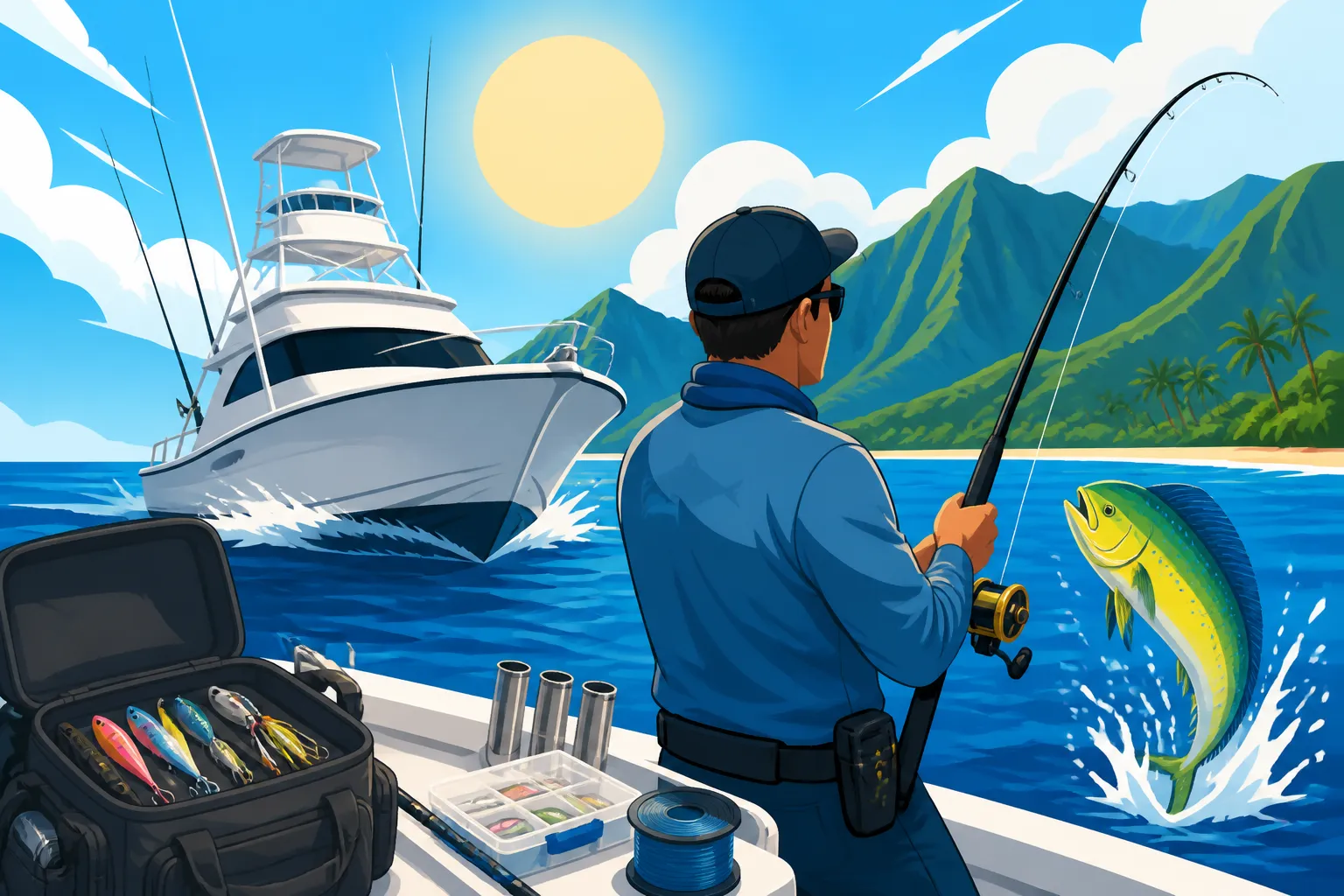
- Offshore Charters: For targeting big game like marlin, ahi, and ono, offshore boats tend to be larger and have more deck space and rod holders. They are generally more accustomed to anglers bringing their own heavy tackle. However, the sheer volume of their own gear and the necessity of running complex trolling spreads might still limit how much your gear can be actively used. You might be able to bring your favorite conventional reels to pair with their rods, or your own popping gear for casting to schooling tuna, but bringing a full quiver of offshore trolling rods might be overkill.
- Inshore/Nearshore Charters: These often use smaller boats and target species like papio, ulua, bonefish, and reef fish. Space can be tighter, but captains are often more flexible with anglers bringing specialized light tackle, fly rods, or specific shore-casting setups. These are often the ideal scenarios for anglers who want to fish their own gear, as the methods are more varied and personal choice in tackle plays a greater role. Think about guided trips focusing on Best Bonefishing Spots in Hawaii where specific fly rods and lines are crucial, or guides specializing in How to Catch Ulua from Shore where heavy surfcasting gear is key.
Ultimately, the best approach is to match your preferred fishing style and gear to the right type of charter. Use platforms like FishingBooker to filter by boat type and target species, then follow up with direct communication about your gear plans. Don't forget that if you're looking for a general overview, a guide like What to Expect on a Hawaii Fishing Charter can give you a baseline of information before diving into specifics about your personal gear.
Disclaimer
This article is for general informational purposes only and does not constitute professional advice. Laws, prices and regulations vary by location and change over time. Consult a qualified professional for guidance on your specific situation.