Best time to fish after a big swell
It's a familiar scenario for anyone who loves fishing in Hawaii: a huge swell rolls through, churning up the ocean, making the water look like a coffee-and-cream concoction, and forcing you to keep your gear packed away. The frustration is real, especially when you're itching to get out there. You see the massive waves, hear them crashing, and wonder, "When can I finally get back to fishing after all this?" This guide is all about navigating those post-swell conditions, helping you understand when the best opportunities arise and how to make the most of them once the ocean starts to settle down.
Understanding Hawaii's Big Swells and Their Lingering Effects
Hawaii's unique position in the middle of the Pacific means we're constantly buffeted by swells originating from distant storms or even closer-range weather events. These powerful waves are a fundamental part of our ocean environment, shaping our coastlines and, of course, impacting our fishing opportunities. Knowing what kind of swell you've just experienced can give you a huge leg up in predicting when the fishing will turn on again.
What is a Big Swell and How Does It Form?
A "big swell" isn't just a big wave; it's a series of ocean surface waves generated by distant weather systems. Here in Hawaii, we typically experience two main types: north swells, which roll in during our winter months from storms in the North Pacific, and south swells, which arrive during the summer from storms in the South Pacific. There are also less common east and west swells, often generated by hurricanes or tropical storms. The size, period (time between waves), and direction of a swell dictate its power and how much it will churn up our nearshore waters.
When these long-period, powerful swells march across the ocean and finally hit our shallower reefs and coastlines, they break with immense force. This energy transfer creates turbulence, lifts sediment from the ocean floor, and can completely alter the clarity and movement of water, especially in shallower areas. It's a natural phenomenon that, while beautiful and awe-inspiring, also puts a temporary damper on fishing visibility and access.
Beyond the initial impact, the residual energy of a big swell can last for days. Even as the wave height diminishes, the underlying currents and surge can persist, continuing to affect the environment where fish live and feed. This lingering effect is crucial to understand because the ocean doesn't just instantly calm down the moment the biggest waves have passed. It's a gradual recovery process that anglers need to respect and observe.
Immediate Effects of a Big Swell on Nearshore Waters
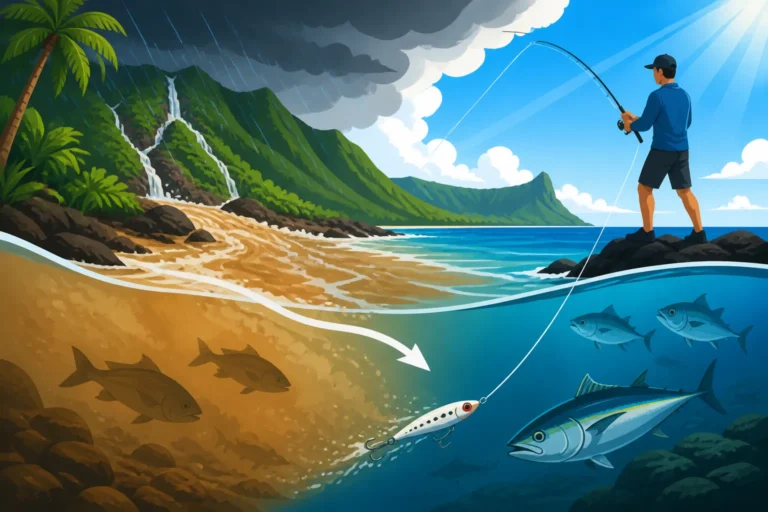
The most noticeable effect of a big swell on nearshore waters is a dramatic decrease in water clarity. All that powerful wave action picks up sand, silt, and organic matter from the bottom, turning crystal-clear turquoise into murky brown or milky green. This "dirty water" can severely reduce a fish's ability to see and hunt, making it much harder for anglers to entice a bite, especially for sight-dependent predators like many of our reef fish.
Strong currents are another immediate consequence. The massive amount of water moving with the swell creates powerful rips and surges along the coastline, making it dangerous for shore anglers and challenging for small boats. These currents can also disorient baitfish and other marine life, sweeping them from their usual haunts and making them harder for predatory fish to ambush. It's a chaotic environment that typically sends many fish seeking deeper, calmer waters or tighter cover.
Finally, a big swell often brings a lot of debris into the water. Broken coral, dislodged seaweed, tree branches, and even man-made trash can be churned up and carried by the currents. This debris not only makes fishing difficult by snagging lines and lures but can also be hazardous to boaters. It's an environment where most species are hunkered down, waiting for the turbulence to subside, and where the immediate prospects for a successful fishing trip are usually pretty slim.
How Swells Affect Offshore Pelagic Species
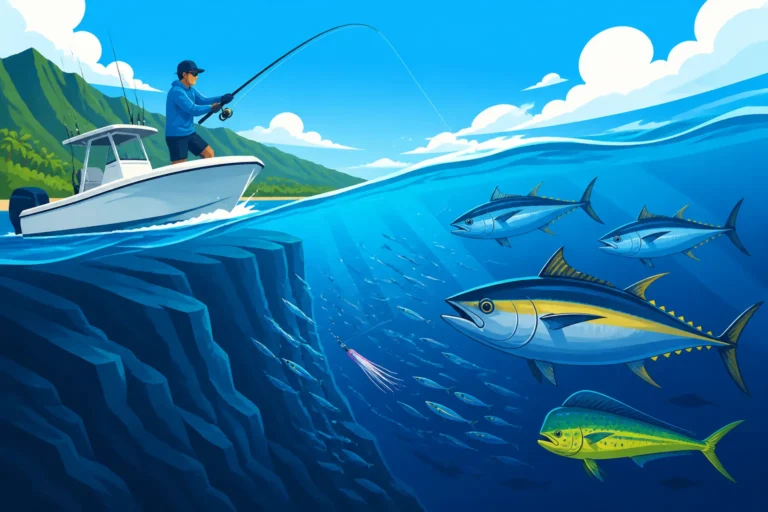
While big swells dramatically impact nearshore fishing, their effect on offshore pelagic species like marlin, ahi (yellowfin tuna), ono (wahoo), and mahimahi is often less direct but still significant. These powerful, open-ocean predators live in deeper waters, far from the breaking waves that churn up the coastlines. However, they are highly dependent on baitfish populations, and swells can certainly influence where these baitfish congregate.
A major swell event can push baitfish schools, such as opelu (mackerel scad) and akule (bigeye scad), further offshore or into deeper, more protected areas as they seek refuge from the turbulence closer to shore. When the bait moves, the pelagic predators often follow. This means that a good post-swell offshore bite might occur in slightly different locations than usual, or the fish might be concentrated where bait has accumulated. Anglers might need to adjust their trolling patterns or focus on offshore FADs (Fish Aggregating Devices) or temperature breaks where bait is likely to regroup.
Additionally, strong currents associated with the swell, even far offshore, can create current lines and rips where nutrients and baitfish accumulate. Experienced charter captains know to look for these subtle signs, as they often indicate prime feeding grounds for pelagics. While the water clarity itself isn't usually an issue in the deep blue, these current phenomena can concentrate fish in ways that are very beneficial to anglers once the main swell energy has dissipated. Targeting ahi by understanding their migration patterns around Hawaii or learning the best lure color for marlin trolling off Kona become even more critical when looking for these post-swell concentrations.
The "Sweet Spot" After the Storm: When Conditions Align for Success
Patience is a virtue, especially in fishing, and never more so than after a big swell. Rushing out too soon can be unproductive and even dangerous. However, there's a magical window that often opens up once the ocean begins to settle, a "sweet spot" where conditions align to create some of the most epic fishing opportunities. Identifying this window is key to a successful post-swell outing.
The "Too Soon" Factor: Why Fishing Right After a Swell is Often Unproductive
Stepping out to fish immediately after a major swell, while tempting, often leads to disappointment. The first and most obvious reason is safety. Rogue waves, strong undertows, and unpredictable surges can still be present, making shore access perilous and even putting small boats at risk. No fish is worth risking your life for, so always err on the side of caution. Remember, you might see what looks like smaller waves, but the underlying ocean energy can still be formidable.
Beyond safety, the fishing itself is typically poor. The nearshore waters are usually still heavily stirred up, resembling chocolate milk rather than clear ocean. This drastically reduces visibility for both fish and angler. Predators struggle to find their prey, and your lures or baits simply disappear in the murk. Many fish will have retreated to deeper, calmer areas or taken refuge in crevices and caves, making them difficult to locate or entice. The entire ecosystem is in a state of shock and readjustment, and feeding activity is often minimal.
Furthermore, fishing lines and tackle are more prone to snagging on the abundant debris washed up or suspended in the water column. You'll spend more time clearing your line or tying on new rigs than actually fishing, which can be incredibly frustrating. It's often better to take a day or two to observe, allow nature to do its cleaning, and let the fish settle back into their routine. This waiting period is crucial for setting yourself up for real success.
Reading the Water: Signs It's Still Too Rough or Dirty
Knowing how to "read the water" is an invaluable skill for any Hawaii angler, and it's especially critical after a big swell. The first thing you'll notice, and the primary indicator of unsuitability, is persistent murky water. If the nearshore waters still have that milky, brownish, or greenish tint from stirred-up sediment, it's generally still too dirty for effective fishing, particularly for visual predators. You're looking for that shift back towards clearer, more familiar hues.
Beyond color, observe the wave action. Are there still powerful sets rolling in, crashing with force on the shore? Is there a strong shore break or significant surge making it difficult to maintain footing or control your line? Even if the biggest waves have passed, residual long-period swells can create powerful underwater currents and unpredictable sets. You want to see the waves calming down, becoming more orderly, and the surge against the rocks or beach diminishing considerably. If you're still seeing large amounts of foam or debris being consistently pushed ashore, it's likely still too rough.
Pay attention to floating debris. If large mats of seaweed, tree branches, or other flotsam are still being actively washed in and out with the waves, it's a clear sign the water is still very agitated. This debris can foul your lines, hide fish, and simply make for an unpleasant fishing experience. You're waiting for the ocean to naturally cleanse itself, pushing the debris higher up the beach or carrying it further offshore, leaving behind cleaner, more inviting water.
Safety First: Prioritizing Your Well-being
It might sound obvious, but we can't stress this enough: your safety is paramount. After a big swell, the ocean is an unpredictable beast, and conditions can change rapidly. Even when the waves appear to have mellowed, underwater currents can still be exceptionally strong, capable of sweeping you off your feet or pulling a small boat into dangerous areas. Always check local forecasts, wave reports, and even consider talking to experienced local watermen before heading out.
When fishing from shore, be incredibly mindful of your footing on wet, slippery rocks, especially if they've just been pounded by waves. Never turn your back on the ocean, as a sneaker wave can come out of nowhere, even on an otherwise calm day. If you're wading, ensure you know the terrain and are comfortable with the current; a good pair of wading boots with sturdy grip is essential. And always, always let someone know where you're going and when you expect to return. Consider carrying a personal flotation device (PFD) even for shore fishing, especially on rocky points or areas known for strong currents.
For those venturing out in a boat, even a kayak, ensure all your safety equipment is in perfect working order. Check your PFDs, flares, communication devices, and know your vessel's limits. The channel between reefs might be calm, but just beyond, the residual swell might still be breaking dangerously. If there's any doubt, postpone your trip. The fish will still be there tomorrow, but you might not be if you take unnecessary risks. Investing in a good waterproof bag for your phone or a satellite communicator could be a lifesaver, and you can often find reliable options for these on Amazon.
The Golden Window: Best Time to Fish After a Big Swell
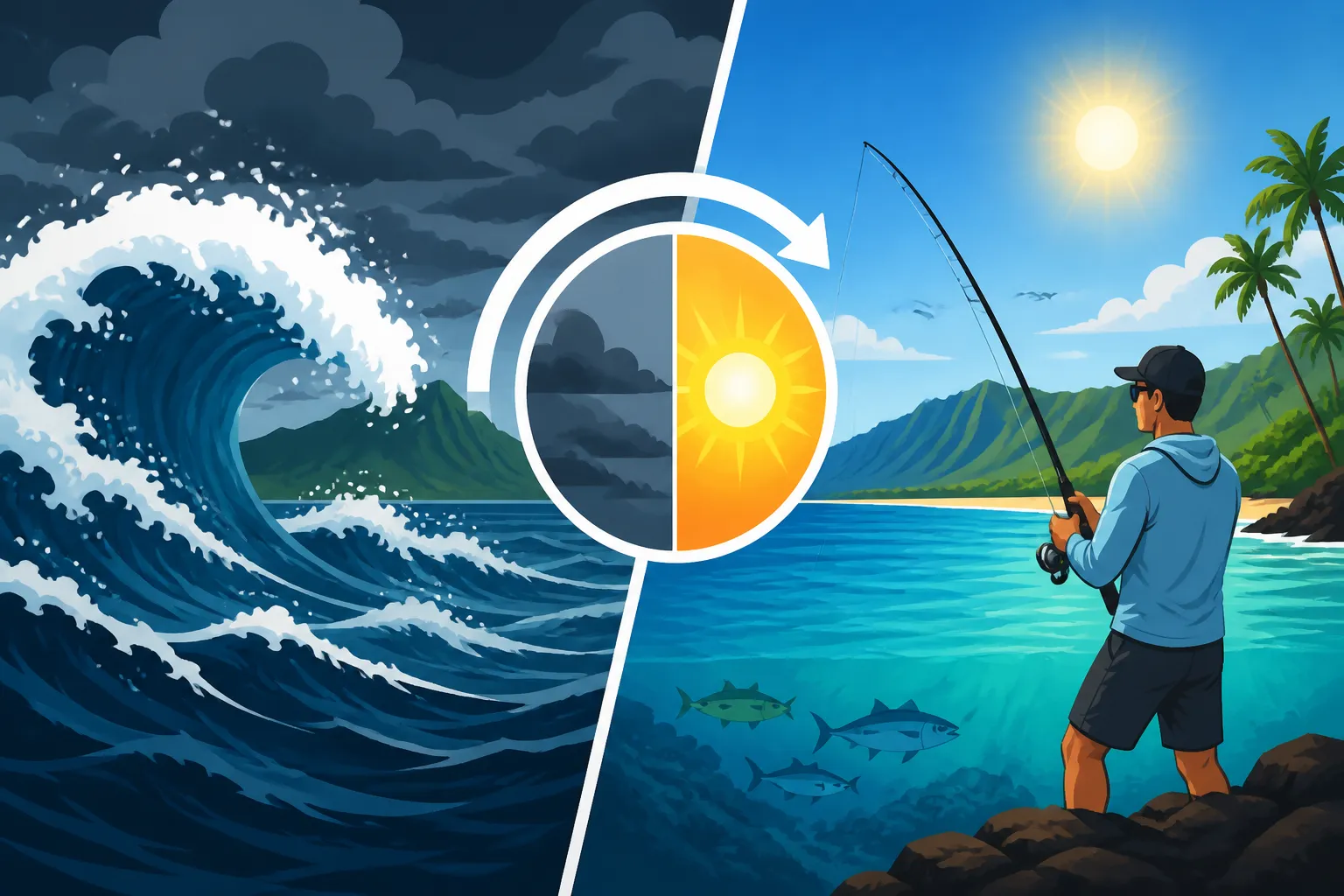
After the ocean's initial fury, there comes a period of transition, a "golden window" where the water begins to clear, and fish start to emerge from their hiding spots, often with a voracious appetite. This is the prime time for anglers who've patiently waited for conditions to normalize.
The Clearing Waters: When Clarity Returns
Generally, the best time to fish after a big swell is when the water clarity noticeably improves. This typically happens anywhere from 24 to 72 hours after the peak of the swell has passed and the wave heights have significantly diminished. The exact timing depends heavily on the size of the swell, the specific location (some bays clear faster than open coastlines), and local currents. For instance, a protected bay or harbor might clear up much quicker than an exposed rocky point that continues to get surge.
As the sediment settles and the stronger currents dissipate, the water will gradually transition from murky brown or green back to its usual clear, inviting blue. This returning clarity is like a switch for many fish species, particularly those that rely on sight to hunt. They become more active, moving out from their shelters and resuming their feeding patterns. This is the signal you've been waiting for – the visual confirmation that the chaos has subsided and the environment is becoming hospitable again.
This period of clearing water also means less suspended debris, making it easier to fish without constant snags. While some particulate matter might still be present, it won't be as dense or obstructive. It's a time when you can start to see structure again, identify bait schools, and have confidence that your lure or bait is being presented effectively. Patience during the murky phase truly pays off when you hit this sweet spot.
Increased Baitfish Activity: Why Post-Swell Can Be a Bonanza
One of the most exciting aspects of post-swell fishing is the surge in baitfish activity. During the height of a big swell, many smaller baitfish get disoriented, displaced, or simply try to hide from the turbulent conditions. As the waters calm and clarity returns, these baitfish often become more exposed and easier targets for predators. The calmer waters also allow them to regroup and feed, which in turn attracts larger game fish.
Furthermore, big swells can stir up the seabed, bringing nutrients to the surface in a process known as upwelling. This influx of nutrients can kickstart the food chain, leading to a bloom of plankton and other micro-organisms that attract small baitfish. Where the baitfish go, the predators follow, creating a prime feeding frenzy opportunity for species like papio (juvenile trevally) and ulua (giant trevally). If you learn how to pattern papio on an unfamiliar shoreline or the best time of day to catch ulua, applying this knowledge right after a swell can be incredibly rewarding.
Observing schools of akule (bigeye scad) or opelu (mackerel scad) close to shore or just outside bays is a strong indicator that the post-swell bite is about to ignite. These baitfish often gather in large numbers, seeking refuge in the calmer, clearer edges of the recovering swell. When you see these schools, it's a clear sign that the larger predatory fish are not far behind, making it an excellent time to target them with appropriate techniques.
Target Species and Techniques for the Post-Swell Bite
Once that golden window opens, certain species tend to be more active and responsive. Ulua and papio are often prime targets after a swell. They are opportunistic feeders and will aggressively hunt disoriented baitfish or anything washed up by the swell. For these species, heavy tackle and strong lines are a must, as they are powerful fighters. Techniques like sliding bait rigs using fresh whole bait, or casting large plugs and poppers, can be incredibly effective, especially during dawn or dusk. You'll want to review how to catch ulua from shore to maximize your chances.
Another excellent post-swell target, particularly for shore anglers, is moi (Pacific threadfin). These highly prized fish often move closer to shore and into slightly dirtier water along sandy beaches after a swell, feeding on small crustaceans and worms stirred up from the sand. Light tackle with small hooks and natural baits like limu (seaweed) or small pieces of shrimp fished on the bottom can yield fantastic results. Learning the best bait for moi from shore can significantly boost your success.
Bottomfish such as kumu (goatfish) and weke (goatfish) can also become active as the nearshore reefs settle. They'll be scavenging for food dislodged by the waves. Techniques like dropping weighted baits or small jigs into clearer pockets around reef edges can be productive. Even certain pelagics like mahimahi and ono can be found closer to shore than usual if baitfish are concentrated there by post-swell currents, making it a good time for trolling with lures or live bait just outside the surf line.
Tailoring Your Approach: Location-Specific Strategies Post-Swell
Not all fishing spots recover at the same rate or respond to the same techniques after a big swell. Hawaii's diverse coastline offers a variety of environments, each requiring a slightly different strategy to capitalize on the post-swell bite.
Shoreline Fishing: Rocky Points vs. Sandy Beaches
For shoreline anglers, the choice between a rocky point and a sandy beach post-swell is critical. Rocky points, while offering access to deeper water and structure, can remain turbulent for longer. The surge against the rocks can make footing hazardous and drag your bait around excessively. However, once the surge calms down and the water begins to clear, rocky points can be incredible. The swell often dislodges crabs, opihi, and other invertebrates, creating a buffet for ulua, papio, and other reef predators. Focus on the edges of the wash, where the water is clearing but still has some movement, and use sturdy gear for high surf shore fishing.
Sandy beaches, on the other hand, often clear faster. While the initial churn can turn them into a muddy mess, the sand settles more quickly than suspended sediment from reef areas. Once the water on a sandy beach starts to regain its clarity, it can be fantastic for moi, papio, and even small ulua. The swell often uncovers buried crustaceans and worms, making easy pickings for bottom feeders. Light to medium tackle with natural baits like shrimp or small fish can be very effective here. Look for subtle changes in current or depressions in the sand where fish might congregate to feed. This is where you might also find success using casting nets for bait fish in Hawaii.
Regardless of whether you choose rocks or sand, observe the conditions closely. Walk the shoreline, watch the waves for several minutes, and look for signs of feeding activity like birds diving or baitfish jumping. The clearer, calmer areas adjacent to still-turbulent zones are often the most productive. Always prioritize safety, especially on slippery, wave-swept rocks, and consider the "Best shore fishing spots in Hawaii" that might offer quicker post-swell recovery.
Reef and Nearshore Boat Fishing: Adapting to the Conditions
For those with access to a boat or kayak, reef and nearshore areas present unique opportunities and challenges after a swell. The first priority is to locate cleaner water. Often, this means moving slightly offshore, just beyond the area where the swell is actively breaking and churning up the bottom. Look for distinct color changes in the water – a line where the murky nearshore water meets the clearer offshore water. These current lines can act as highways for baitfish and predators.
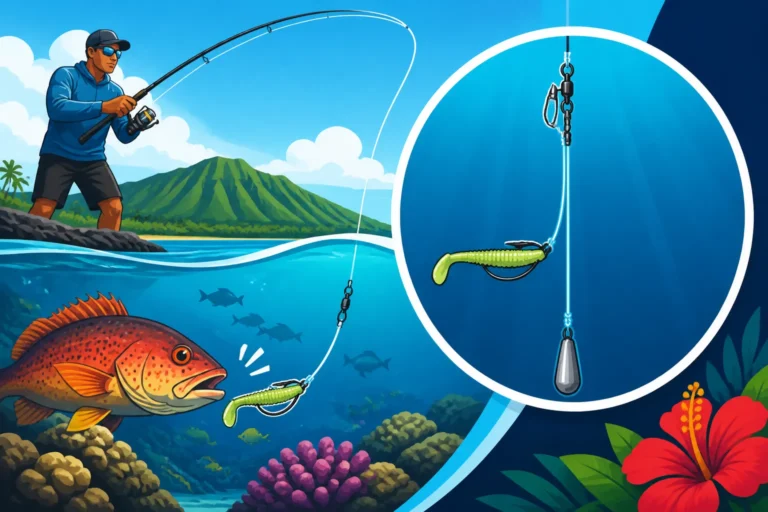
Once in cleaner water, focus on areas with structure, such as coral reefs, ledges, or submerged rocks, that might have been less impacted by the immediate surge. Bottomfishing techniques using live or cut bait can be highly effective for species like opakapaka (pink snapper) and onaga (ruby snapper) that might be returning to these structures to feed after the disruption. Jigging for bottomfish in Hawaii can also be a great strategy, as the vertical movement of the jig can attract attention even in slightly reduced visibility.
Kayak anglers should be especially cautious about residual swells and currents. While a kayak allows access to shallower, more protected reef areas, it also makes you vulnerable to unexpected waves. Look for protected coves or bays that are starting to clear, and focus on the calmer edges of the reef. Trolling small lures or baits from a kayak along current seams can be productive for papio, barracuda, and even small mahimahi, as fish begin to explore their recovering habitats. Always wear your life jacket and adhere to Hawaii Boating Laws for Anglers.
Freshwater Fishing: Unexpected Swell Impacts
While you might think big ocean swells have nothing to do with freshwater fishing, you'd be surprised. Intense weather systems that generate large ocean swells often bring heavy rainfall to the islands. This rain can have a significant impact on Hawaii's freshwater reservoirs and streams, albeit in a different way than the ocean.
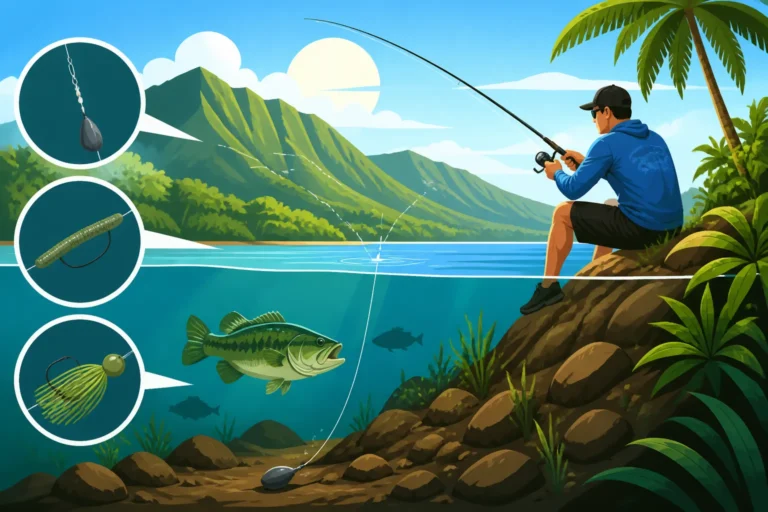
Heavy rainfall leads to increased runoff, carrying sediment, dirt, and organic matter from surrounding land into freshwater bodies like Wahiawa Reservoir or Nuuanu Reservoir. Just like in the ocean, this runoff can drastically reduce water clarity, turning the freshwater murky. For species like largemouth bass, peacock bass, and tilapia, this can temporarily slow down feeding activity, as they rely on sight to hunt. It also means that fishing immediately after heavy rains might be less productive.
However, once the runoff subsides and the water starts to clear, freshwater fishing can also see a "post-swell" surge. The influx of fresh water and nutrients can stimulate insect activity and dislodge terrestrial food sources (worms, grubs) into the water, attracting fish. Focusing on areas where the water is clearing, or targeting the edges of the muddy plume, can be effective. Using baits with strong scents or lures that create a lot of vibration can help fish find your offering in the still-somewhat-murky conditions. Always check the Hawaii Freshwater Fishing License and Rules before heading out.
Gear Up Smart: Essential Equipment for Post-Swell Fishing
After a big swell, the ocean is a different beast, and your usual tackle might not cut it. Preparing with the right gear can significantly improve your chances of success and, more importantly, ensure your safety.
Heavier Tackle and Stronger Lines
When fishing after a big swell, the general rule is to beef up your tackle. The water is often still moving with powerful surges and currents, and there might be more debris present. This means you'll want a rod with more backbone and a reel capable of handling stronger runs and potential snags. A medium-heavy to heavy action rod with a robust reel spooled with heavier line is a smart choice, especially if you're targeting ulua or other powerful predators that might be aggressively feeding.
For line, consider going up a size or two in pound test. Braided lines, known for their strength and minimal stretch, are excellent for cutting through the water and providing solid hooksets, but you'll still want a fluorocarbon or monofilament leader for abrasion resistance around rough structure or potential debris. A leader of at least 60-80 lb test, possibly even higher if targeting trophy ulua, isn't overkill in these conditions. Check out options on Amazon for durable, high-pound-test fishing lines.
It's also wise to use heavier sinkers or weights than you might typically use. This helps your bait or lure get down through the turbulent water and stay in the strike zone, preventing it from being swept away by currents. Ensure your knots are strong and regularly check your line for nicks or abrasions, as the post-swell environment can be harsh on your gear.
Bait Choices: Natural and Scented Options
In the clearing, but potentially still somewhat murky, waters after a swell, relying on sight alone to attract fish might not be enough. This is where natural baits and heavily scented options truly shine. Fresh, local bait is almost always king in Hawaii, and post-swell is no exception. Whole or cut pieces of opelu, akule, or even octopus (tako) are excellent choices for larger predatory fish like ulua. The natural oils and scent trail these baits emit can be detected by fish even when visibility is low.
For smaller reef fish or papio, fresh shrimp, limu (seaweed), or small pieces of squid can be very effective. These natural offerings are part of the fish's natural diet and are often what they'll be scavenging for after the bottom has been stirred up. You can often purchase fresh bait from local markets, but having some frozen squid or shrimp on hand is always a good backup.
Beyond natural baits, consider using artificial lures enhanced with scent. Many soft plastic baits designed for saltwater fishing have built-in scents, or you can add scent gels and sprays. These can provide an extra edge, creating an irresistible aroma that draws fish to your lure even if they can't quite see it clearly. When fish are actively feeding after a period of disruption, a potent scent can often be the difference between a bite and no bite.
Safety Equipment: Beyond the Basics
While we touched on safety earlier, it bears repeating and expanding on the specific gear. A good pair of polarized sunglasses is indispensable not just for glare, but for spotting submerged hazards and reading water clarity. Sturdy, closed-toe wading boots with excellent grip are a must for navigating slippery rocks and uneven shorelines. Beyond your fishing vest, a lightweight, comfortable personal flotation device (PFD) is always a smart addition, even for shore fishing, especially if you're on a rocky point or near strong currents. Many modern PFDs are compact and allow for full range of motion.
Communication is also vital. A fully charged cell phone in a waterproof case is a minimum. For more remote locations or offshore trips, consider a satellite messenger or a VHF radio for emergencies. A basic first-aid kit, especially one with items for cuts, scrapes, and punctures, should always be in your tackle bag. A bright headlamp or flashlight is also crucial if you're fishing into dusk or planning an early morning start, helping you navigate safely to and from your fishing spot.
Finally, carrying a sharp knife and a pair of pliers are not just for fishing, but for safety. A knife can cut through tangled line or free you from a snag, while pliers can quickly remove hooks. Investing in good quality, corrosion-resistant versions of these tools, perhaps through Amazon, will serve you well for years of Hawaii fishing adventures.
Navigating Different Fishing Environments Post-Swell
Understanding how different Hawaiian fishing environments react to a big swell, and how to approach them, is key to consistent success. The strategies for a protected bay will vary greatly from those for an exposed offshore bank.
Shoreline Fishing: Reading the Eddies and Current Seams
After a big swell, shoreline fishing becomes an art of reading subtle water movements. While the main current might still be powerful, look for eddies and current seams, especially around points, jetties, or large rock formations. These are areas where the turbulent water slows down, often creating calmer pockets where baitfish can gather and where predatory fish will stage to ambush. These seams can be excellent ambush points for papio and ulua, especially if they are associated with a distinct change in water color where murky meets clear.
Pay close attention to the "wash" areas – where waves crash on the shore and then pull back out. As the swell subsides, these zones can still be highly active, stirring up food. Cast your bait or lure into the wash and let it tumble naturally with the receding water, mimicking a disoriented baitfish or crab. This is where mastering "Sliding Bait Techniques for Ulua" can be particularly effective.
The general rule is to seek out areas where the water is clearing but still has some movement. Avoid the thickest, dirtiest water, but don't shy away from areas that have a slight tinge, as these often hold more concentrated food sources and attract hungry fish. Experiment with casting distances and angles to find where the fish are holding in relation to the clearing water and lingering currents.
Nearshore Boat Fishing: Looking for the Clean Water Edges
For boat anglers operating in nearshore waters, the strategy after a big swell revolves around finding the "clean water edges" and focusing on less-affected structures. Instead of blindly heading to your usual spots, take your time scanning the horizon and the water's surface for distinct color changes. Often, a noticeable line will separate the murky, inshore water from the clearer, offshore water. This line, where two different water masses meet, is a prime location for baitfish to congregate and, consequently, for predators to hunt.
Once you locate these clean water edges, consider trolling parallel to them, or drift fishing along them with live or cut bait. Mahimahi, ono, and smaller tunas will often patrol these areas, picking off disoriented baitfish pushed out from the shore. This is also a good time to check in on your favorite reef and bottomfishing spots, especially those in slightly deeper water (30-60 feet) that might have been less churned by the waves. The bottomfish, like opakapaka or ehu, will likely be returning to their structures and feeding.
Remember that navigation can still be tricky with residual surge and potential floating debris. Watch your sonar for signs of structure and bait, and keep a keen eye out for hazards. Being able to adapt your approach to the specific conditions you encounter on the water, rather than relying on pre-swell assumptions, is the mark of a seasoned Hawaii angler.
Offshore Fishing: Following the Bait and Current Breaks
Even far offshore, where the water is typically crystal clear, big swells can influence fishing by redistributing bait and creating subtle current breaks. After a major swell, it's particularly important to pay attention to your boat's electronics – fish finders and chartplotters – to locate bait schools and underwater topography that might be concentrating fish.
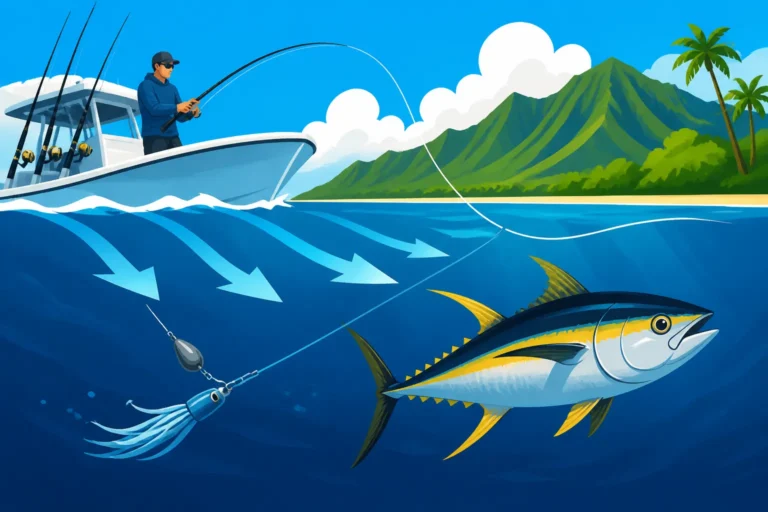
Pelagic species like marlin and ahi will follow their food. If the swell has pushed bait schools further offshore or into deeper water, that's where you'll need to go. Keep an eye out for diving birds, which are almost always a sign of bait activity and feeding predators below. Trolling a spread of lures or live baits around these concentrations can be highly effective. Understanding "Ahi Migration Patterns Around Hawaii" can help you predict where these schools might be moving after a disruption.
Also, look for current breaks and temperature changes, which can become more pronounced after a large-scale ocean event. These subtle underwater features can create invisible "walls" where baitfish stack up, making them irresistible to larger game fish. While the surface might appear calm, the underwater world is constantly shifting, and a big swell can reset these patterns, offering new opportunities for those who know how to read the signs and adjust their offshore trolling techniques for Hawaii pelagics accordingly.
Disclaimer
This article is for general informational purposes only and does not constitute professional advice. Laws, prices and regulations vary by location and change over time. Consult a qualified professional for guidance on your specific situation.