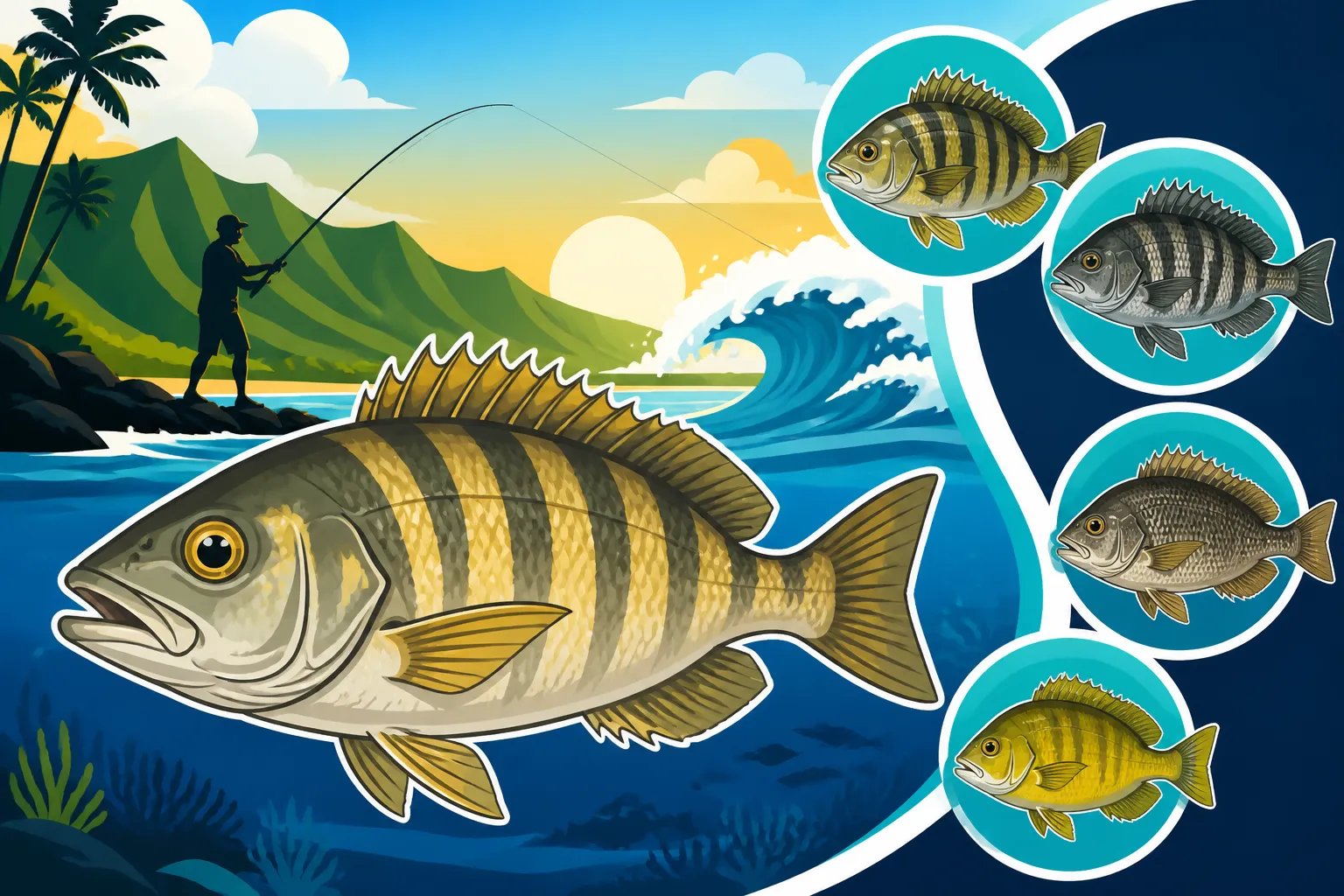
Uhu Species Identification Guide
Have you ever been snorkeling or fishing in Hawaii and seen a flash of vibrant blue, green, or even reddish-brown near the reef, wondering if it was a parrotfish, or something else entirely? Identifying the many species of uhu, the Hawaiian name for parrotfish, can be a real head-scratcher, especially since these incredible fish often change their colors and patterns throughout their lives! This guide is here to unravel the mysteries of uhu identification, helping you confidently recognize these crucial reef inhabitants and appreciate their unique contributions to Hawaii's underwater world.
Understanding Uhu: The Colorful Reef Dwellers of Hawaii
The ocean around the Hawaiian Islands is teeming with incredible marine life, and among the most vibrant and important residents are the uhu, or parrotfish. These aren't just pretty faces; they play a vital role in keeping our precious coral reefs healthy and thriving. For many anglers and ocean enthusiasts, spotting an uhu is a common occurrence, but truly knowing which uhu you're looking at requires a closer look at their distinct features and fascinating life cycles.
What Makes Uhu So Unique?
Uhu are easily recognizable by their distinctive "beak," which isn't really a beak at all, but rather fused teeth that resemble a parrot's bill. This specialized mouth structure is perfectly adapted for their primary job: scraping algae off rocks and dead coral. They spend their days munching away, grinding down surfaces with those powerful teeth. Imagine a tiny, underwater lawnmower constantly at work; that's an uhu on the reef! Their vibrant, often kaleidoscopic colors—ranging from brilliant blues and greens to dusky browns and purples—make them stand out, although these colors can change dramatically, leading to much of the identification confusion we're going to tackle.
Beyond their unique mouth, uhu are incredibly diverse in size and shape, though generally stout-bodied with large, prominent scales and powerful fins for navigating complex reef structures. These fish are typically diurnal, meaning they're most active during the day, which is why you'll often see them during daytime dives, snorkeling adventures, or while fishing in clear, shallow waters. Understanding these fundamental characteristics is the first step in truly appreciating the individual species that grace Hawaii's reefs.
Ecological Importance on Hawaii's Reefs
It's easy to admire uhu for their beauty, but their true value lies in their ecological service. By constantly grazing on algae, uhu prevent it from overgrowing and smothering delicate corals. Think of algae as a fast-growing weed; without herbivores like uhu, the reefs could quickly become overgrown, blocking sunlight and hindering coral growth. This diligent scraping is what allows corals to flourish, forming the foundation of the entire reef ecosystem.
Furthermore, a lesser-known but equally critical contribution of uhu is the creation of sand. Yes, that beautiful white sand you walk on at Waikiki Beach or Hapuna Beach? Much of it passed through an uhu! When they scrape algae, they also ingest tiny bits of rock and coral. Their digestive system processes this, and what comes out the other end is fine, white coral sand. So, next time you're enjoying a pristine Hawaiian beach, you can thank an uhu for a good portion of it. Protecting these vital grazers is paramount to the health and future of Hawaii's stunning marine environments, and understanding which species we're looking at helps us better appreciate and conserve them. For more on conservation efforts, you might want to look into Hawaii Marine Life Conservation Districts, Explained.
The Art of Uhu Identification: Key Physical Markers
Trying to identify a specific uhu species can feel like trying to solve a chameleon's riddle. Their color changes are legendary, and what might look like two different fish could actually be the same species at different life stages or sexes. However, by focusing on consistent physical markers beyond just color, you can become much more adept at telling them apart.
Beak, Teeth, and Body Shape
While all uhu share that iconic "parrot beak," the precise shape and structure of it, as well as their body proportions, can offer vital clues. Some species have a more pointed beak, while others are noticeably blunt or rounded. Look closely at the jawline: are the fused teeth visible, or are they covered by fleshy lips? In some species, the upper jaw slightly overlaps the lower, or vice-versa, which can be a subtle but consistent identifier. Beyond the mouth, observe the overall body shape. Is the fish relatively elongated and streamlined, or is it more robust and deep-bodied? Some species, for instance, might have a more pronounced hump on their forehead, especially in older, dominant males.
Consider also the fins. While fins can be folded or spread, pay attention to their general shape, size relative to the body, and any specific markings you can consistently observe. The caudal (tail) fin is often a good indicator; is it rounded, truncate (straight), lunate (crescent-shaped), or deeply forked? For example, some larger uhu might exhibit streamers on their tail fins, particularly in their terminal phase. These anatomical details, once you learn to spot them, become much more reliable than fleeting color patterns when you're trying to pin down an exact species.
Coloration and Pattern Changes: A Challenging Factor
Here's where it gets tricky, but also incredibly fascinating! Uhu are well-known for their dramatic color phases, which often correspond to their sexual development. Most species exhibit at least two main phases: an "initial phase" and a "terminal phase." The initial phase (IP) often consists of females and non-territorial males, typically appearing duller, with mottled patterns of browns, reds, or greens. Then, as some individuals transition into dominant males, they enter the "terminal phase" (TP), transforming into strikingly vibrant colors—brilliant blues, greens, purples, and often sporting intricate patterns, stripes, or bands that are completely different from their initial phase.
Imagine seeing a plain reddish-brown fish one day, and then encountering a brilliant blue one with yellow fins the next, only to learn they're the same species! This makes visual identification challenging without prior knowledge. Juveniles often have entirely different patterns too, sometimes resembling small, striped reef fish, which further complicates matters. When identifying uhu, it’s helpful to remember that color is a mutable trait, whereas the beak shape, fin structure, and overall body profile are more consistent. If you're serious about identification, having a good waterproof field guide on hand, perhaps one you picked up from Amazon, can be invaluable when you're out on the water or exploring tide pools.
Common Uhu Species Found in Hawaiian Waters
Hawaii is home to several species of uhu, each with its own unique charm and identifying marks. While many share similar characteristics, understanding the subtle differences is key to becoming a true uhu expert. Let's dive into some of the most commonly encountered species around the islands.
The Iconic Bluefin Uhu (Chlorurus perspicillatus)
The Bluefin Uhu, known locally as uhu uliuli, is arguably one of the most striking and frequently recognized parrotfish in Hawaiian waters. In its magnificent terminal phase, this fish is an unmistakable sight: a vibrant, almost iridescent blue or bluish-green body, complemented by contrasting yellow or orange fins, particularly the pectoral and caudal fins. It often has a paler, sometimes greenish, streak running down its side, enhancing its stunning appearance. Its head can sometimes appear a darker blue or purplish-blue. This bright coloration is a classic example of a terminal phase male.
The initial phase of the Bluefin Uhu is much more subdued, typically appearing reddish-brown or grayish-brown, sometimes with faint mottling or darker blotches. It might be challenging to connect this drabber fish to its vibrant counterpart, but paying attention to the overall body shape and beak structure will help. Bluefin Uhu tend to prefer rocky and coral reefs, often in slightly deeper waters than some other species, though they can be seen grazing in shallower zones too. They are among the larger parrotfish species found in Hawaii, and for anglers, they represent a prized catch, subject to specific Hawaii Uhu (Parrotfish) Size and Bag Limits to ensure sustainable populations.
The Bullethead Uhu (Chlorurus sordidus) and Its Many Faces
The Bullethead Uhu, or uhu paweo in Hawaiian, lives up to its name with a distinctive, somewhat blunt head profile. This species is perhaps the poster child for uhu identification challenges due to its incredible variability in coloration across its life stages and habitats. You might encounter an initial phase Bullethead Uhu that's a mottled brown, grayish-brown, or even reddish-brown, often with faint bars or spots along its flanks. These patterns provide excellent camouflage against the reef.
When they transition to the terminal phase, Bullethead Uhu transform into a much more colorful fish, but even then, their appearance can vary significantly. Some terminal phase individuals display intricate patterns of blue, green, and pinkish-orange, with distinct markings around the eyes and mouth. Others might be predominantly bluish-green with lighter fins. A key identifier, despite the color shifts, is that somewhat bullet-like, blunt head. They are incredibly common and widespread, found in nearly all reef environments, from shallow surge zones to deeper reef slopes. Their abundance and adaptability make them a fascinating species to observe, and their constant grazing is vital for many reef zones, including those in Best Reef Fishing Spots in Hawaii.
The Spectacled Uhu (Chlorurus japanensis)
The Spectacled Uhu, sometimes called uhu pākake by locals, gets its common name from a unique feature: a pair of distinct, often contrasting, markings or "spectacles" around its eyes. These markings can vary in color, sometimes appearing as yellowish or orange rings, or simply a lighter patch, but they are a consistent characteristic that helps set this species apart. The terminal phase Spectacled Uhu is generally a beautiful blue or greenish-blue, often with shades of purple or pink on the body and head, and sometimes has yellowish or orange tints on its fins, especially the pectoral fins.
The initial phase Spectacled Uhu can be quite different, often appearing a duller brown or reddish-brown, sometimes with faint bars or a reticulated pattern. The "spectacle" marking might be less pronounced but is usually still discernible if you look closely. They are typically found on rocky and coral reefs, preferring areas with good coral growth. While not as large as some other uhu species, they are a common and visually appealing part of Hawaii's reef ecosystems. Observing their feeding patterns and how they interact with other fish on the reef is always a treat for snorkelers and divers.
Other Notable Uhu Species
While the Bluefin, Bullethead, and Spectacled Uhu are among the most frequently observed, Hawaii's waters are home to other fascinating parrotfish species. For example, the Bicolor Parrotfish (Scarus rubroviolaceus), locally known as uhu uliuli (sharing a similar name to the Bluefin Uhu, which can add to the confusion!), is another stunning species. Its terminal phase is a vibrant blue-green with a striking red or purplish caudal fin, often with a darker head. The initial phase is a stark contrast, typically reddish-brown with a distinct yellow or orange tail. Its dramatic color change makes it another prime example of uhu identification challenges.
Then there's the Christmas Wrasse (Thalassoma trilobatum), which, while not a parrotfish, is a colorful reef fish that can sometimes be mistaken for uhu by the untrained eye due to its vibrant patterns. However, careful observation of the mouth structure – actual teeth versus the fused beak of an uhu – will quickly differentiate them. For a more exhaustive exploration, a comprehensive Reef Fish Species Identification Guide for Hawaii would be invaluable, offering detailed descriptions and images of the full spectrum of reef fish, including all the delightful uhu.
Navigating the Nuances: Avoiding Misidentification
Even with a good understanding of the primary uhu species, the dynamic nature of their coloration and the sheer diversity of Hawaii's marine life can still lead to confusion. It's not uncommon to mistake an uhu for another type of reef fish, or even for a different uhu species in a peculiar color phase. Being able to spot the subtle differences is what truly hones your identification skills.
Uhu vs. Hīhīmanu (Triggerfish) and Other Reef Fish
One common mistake is confusing uhu with triggerfish, known as hīhīmanu in Hawaiian, or even certain wrasses. Both groups are often colorful, reef-dwelling, and have distinct mouthparts. However, the key differentiator lies in the mouth. Uhu have that characteristic fused "beak" with no individually visible teeth (unless you look very closely at the cutting edge). Triggerfish, on the other hand, possess strong, prominent, separate teeth designed for crushing hard-shelled prey. Their body shapes are also quite different; triggerfish tend to be more compressed laterally, often with a taller, flatter profile and a distinctive dorsal spine that can be "locked" into an upright position (hence "triggerfish").
Wrasses, while often colorful and sometimes having protuberant teeth, generally lack the fused beak of the parrotfish. Many wrasses have more elongated bodies and a distinct swimming motion, often relying on their pectoral fins. By focusing on these fundamental differences—the beak, the presence or absence of individual teeth, and overall body morphology—you can confidently distinguish an uhu from many of its reef neighbors. Patience and keen observation are your best tools in this underwater detective work.
Utilizing Field Guides and Local Knowledge
Given the complexities of uhu identification, especially with their chameleon-like color changes, having reliable resources at your disposal is paramount. A high-quality, Hawaii-specific fish identification field guide is an absolute must-have. Many excellent waterproof guides are available, perfect for taking with you on a boat trip, to the beach, or even in the water (carefully!). These guides often feature detailed illustrations or photographs of both initial and terminal phases, as well as juvenile forms, alongside descriptions of key anatomical features, habitat, and size. You can often find a great selection of these on Amazon, making it easy to prepare for your next fishing or snorkeling adventure.
Beyond books, local knowledge is an invaluable resource. Talk to experienced local anglers, dive shop owners, or even Hawaiian cultural practitioners who have a deep understanding of the ocean and its inhabitants. They often have an intuitive grasp of how to identify various uhu species, having observed them for years in their natural habitats. They can share insights on specific locations where certain species are more common, or unique behavioral traits that aid in identification. Combining these practical resources with firsthand observation will quickly elevate your uhu identification skills.
Uhu Life Cycle and Behavior: More Than Just Pretty Fish
The world of uhu is filled with fascinating behaviors and intricate social structures. Their lives are a dynamic journey of change, from their appearance to their roles within the reef community. Understanding these aspects goes beyond simple identification; it offers a deeper appreciation for these incredible fish.
The Dynamic Life Phases: Initial, Terminal, and Juveniles
As we've touched upon, uhu undergo remarkable transformations throughout their lives. Most species are protogynous hermaphrodites, meaning they start life as females and can later change sex to become males. This is where the initial phase (IP) and terminal phase (TP) come into play. The initial phase typically includes all females and some non-territorial males, generally sporting the duller, more camouflaged coloration. These fish are usually engaged in feeding and are part of larger, sometimes mixed-species, schools.
When an initial phase fish (usually a female) transitions into a dominant, territorial male, it undergoes a dramatic color shift, becoming a terminal phase fish. These TPs are the dazzling blue, green, and brightly patterned individuals we often admire. They establish territories, engage in elaborate courtship displays, and play a crucial role in reproduction. Juveniles, on the other hand, are often quite small and exhibit entirely different patterns, usually more cryptic to help them hide from predators in shallow, sheltered areas. This three-stage life cycle—juvenile, initial phase, and terminal phase—is a hallmark of many Hawaiian uhu, making their identification a truly dynamic challenge.
Feeding Habits and Habitat Preferences
Uhu are voracious herbivores, and their feeding habits are a sight to behold. You'll often see them with their heads down, vigorously scraping algae from rocky substrates and dead coral. This constant grazing not only helps maintain reef health but also helps shape the underwater landscape. Different species may have slightly varied preferences; some might favor shallow surge zones where wave action brings fresh algal growth, while others might venture into deeper reef slopes, methodically cleaning larger areas. They are essential for preventing macroalgae overgrowth, which can choke out corals and other invertebrates.
Beyond their daytime activities, uhu have another fascinating behavior: at night, many species secrete a transparent, mucous cocoon around themselves. This "sleeping bag" is thought to protect them from nocturnal predators, especially sharks, by masking their scent. It's a clever adaptation that highlights their vulnerability and their crucial role in the ecosystem. You'll find uhu in diverse habitats across the islands, from the vibrant shallow reefs of Kāneʻohe Bay on Oahu to the deeper, pristine coral gardens off the Kona Coast. Their presence is a strong indicator of a healthy reef system, providing insight into the overall ecological balance of areas like Hawaii Fish Replenishment Areas in West Hawaii.
Uhu Fishing and Conservation: Respecting Hawaii's Reefs
Uhu are not only beautiful to observe but also represent a traditional and highly valued food fish in Hawaii. Their white, flaky flesh is considered a delicacy by many. However, due to their importance to the reef ecosystem and their popularity as a food source, responsible fishing practices and robust conservation efforts are critical to ensure their populations remain healthy for generations to come.
Regulations and Sustainable Practices for Uhu
Because uhu are so vital to coral reef health and are a popular target for local fishermen, there are specific regulations in place to manage their harvest. These regulations often include size limits, daily bag limits, and sometimes even seasonal closures, especially for certain species or during specific spawning periods. For instance, you should always check the most current Hawaii Uhu (Parrotfish) Size and Bag Limits before heading out. These rules are designed to allow fish to reach maturity and reproduce before being harvested, and to prevent overfishing of larger, reproductively important individuals.
Sustainable fishing practices for uhu involve not only adhering to these regulations but also considering your impact on the reef. Using appropriate gear that minimizes damage to corals, avoiding fishing during spawning aggregations, and practicing responsible catch-and-release for undersized fish are all important aspects. For those interested in how to target them sustainably from shore, exploring How to Fish a Reef Flat for Uhu can provide valuable insights into responsible techniques. Always remember that fishing in Hawaii comes with a responsibility to protect its unique marine resources. For comprehensive details on all marine life, it’s always wise to consult the latest Hawaii Fishing Regulations Explained from the Division of Aquatic Resources.
Why Uhu Conservation Matters
The conservation of uhu is not just about ensuring there are fish to catch; it's fundamentally about protecting the health of Hawaii's coral reefs. As we discussed, uhu are indispensable grazers. Without them, aggressive algae can quickly outcompete and suffocate corals, leading to a decline in reef biodiversity and resilience. A reef without its parrotfish is like a garden without gardeners – it will soon be overgrown and unhealthy. This ecological cascade has far-reaching consequences for all the other marine species that depend on healthy coral ecosystems for food, shelter, and reproduction.
Furthermore, uhu are long-lived species, and the larger, terminal phase males are crucial for successful reproduction. Overfishing these larger individuals can severely impact a population's ability to recover. Efforts like establishing Hawaii Marine Life Conservation Districts, Explained protect critical habitats and allow fish populations, including uhu, to thrive without fishing pressure, providing a source of larvae to replenish surrounding areas. Our actions as anglers and ocean users directly impact the future of these vibrant reef ecosystems. By identifying uhu correctly, understanding their roles, and fishing responsibly, we all contribute to the long-term health and beauty of Hawaii's underwater world.
Uhu Species Identification Table
To help summarize some of the key identification features for the common Uhu species in Hawaii, here's a handy table. Remember that color is variable, so focus on the structural hints!
| Feature | Bluefin Uhu (Chlorurus perspicillatus) | Bullethead Uhu (Chlorurus sordidus) | Spectacled Uhu (Chlorurus japanensis) |
|---|---|---|---|
| Common Name | Uhu uliuli, Bluefin Parrotfish | Uhu paweo, Bullethead Parrotfish | Uhu pākake, Spectacled Parrotfish |
| Terminal Phase Color | Brilliant blue/green body, yellow/orange fins | Highly variable (blue/green with pink/orange patterns) | Blue/green body, shades of purple/pink, yellow fin tints |
| Initial Phase Color | Reddish-brown or grayish-brown | Mottled brown, grayish, or reddish-brown | Dull brown/reddish-brown, faint bars |
| Key Head Feature | Generally smooth head | Distinct blunt, bullet-like head | "Spectacle" markings around eyes |
| Caudal Fin | Often yellowish/orange with blue tint | Variable, sometimes blue/green | Often bluish with yellowish tints |
| General Size | Large (up to 2 feet+) | Medium (up to 1.5 feet) | Medium (up to 1.5 feet) |
| Habitat | Rocky & coral reefs, slightly deeper often | Widespread in diverse reef environments | Rocky & coral reefs, good coral growth |
Disclaimer
This article is for general informational purposes only and does not constitute professional advice. Laws, prices and regulations vary by location and change over time. Consult a qualified professional for guidance on your specific situation.