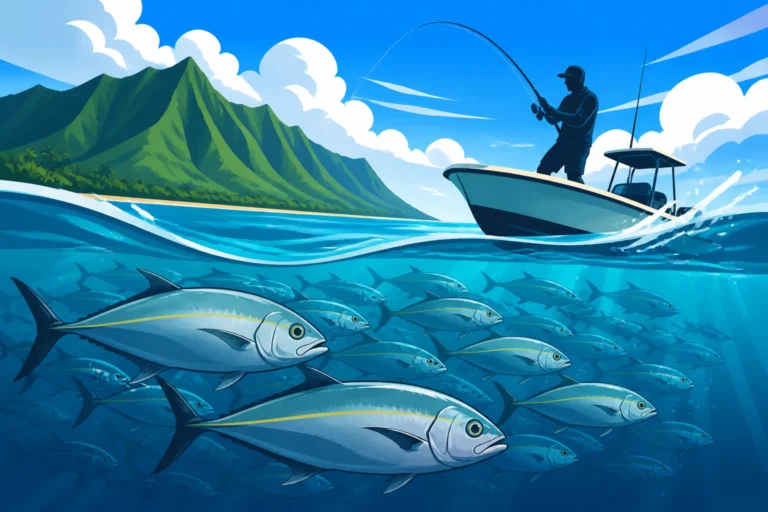
Where opelu schools gather
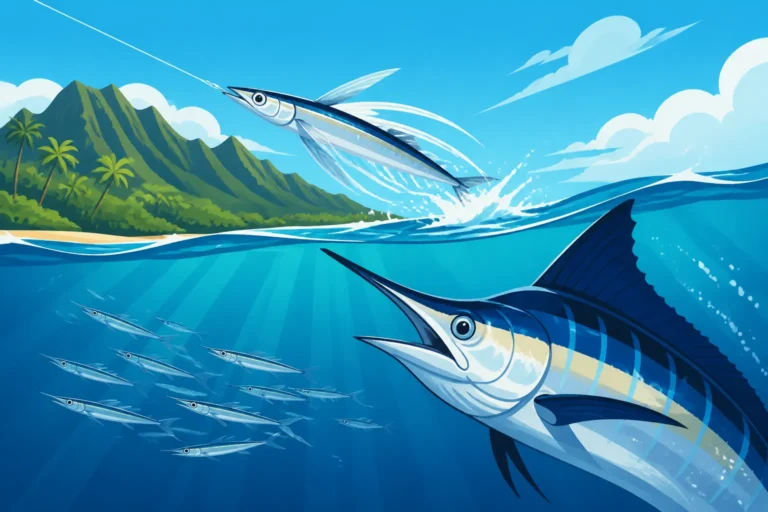
It's incredibly frustrating when you're out on the water, whether it's from shore or a boat, and you just can't seem to find the baitfish. Opelu, or mackerel scad, are not just excellent table fare themselves; they're also the lifeblood for targeting bigger game fish in Hawaii. If you've ever spent hours scanning the horizon or peering into the water, wishing you knew exactly where these elusive schools were hiding, you're not alone. This guide is here to pull back the curtain on the secrets of where opelu schools gather, giving you the knowledge to increase your chances of finding them, whether you're looking for bait or dinner.
Understanding Opelu: The Lifeblood of Hawaiian Nearshore Fisheries
Opelu, known scientifically as Decapterus macarellus, are small, sleek, and highly prized fish in Hawaii. They hold a unique and vital position in our ocean's ecosystem and in the hearts of local anglers. Without understanding their role and basic behaviors, finding them can feel like a shot in the dark.
The Importance of Opelu in the Ecosystem and for Anglers
In the vast blue waters surrounding our islands, opelu serve as a crucial forage species. They are a primary food source for a long list of Hawaii's most sought-after game fish, including ahi (yellowfin tuna), ono (wahoo), mahimahi, and especially the revered ulua (giant trevally). Think of them as the ocean's snack bar – when opelu are around, bigger predators aren't far behind. For anglers, this means that locating opelu schools is often the first step to a successful day, whether you're catching them for live bait, chunk bait, or simply to enjoy their delicate flavor fresh off the grill. Their abundance or scarcity can truly dictate the fishing success in a given area.
Beyond their bait value, opelu are also a significant food fish for local communities. Traditionally, opelu fishing with specialized nets and techniques was a communal and culturally important activity. Even today, many families cherish the taste of fresh opelu, prepared in a myriad of ways from frying to smoking. The availability of opelu schools directly impacts not just recreational fishing but also contributes to the local food system, reinforcing their importance far beyond just being "another fish."
Opelu Behavior and Diet: What Drives Their Schooling?
Opelu are schooling fish, meaning they typically travel and feed in large, cohesive groups. This schooling behavior is a primary defense mechanism against predators; there's safety in numbers. A single opelu is an easy target, but hundreds or thousands swimming together can confuse and overwhelm an attacker. This is why when you find one opelu, you often find many!
Their diet consists mainly of plankton, small crustaceans, and larval fish. They are filter feeders to a degree, often seen "straining" the water for microscopic morsels. This feeding strategy is a major driver of where they gather. They will congregate in areas where these food sources are abundant, often near current lines, upwellings, or areas where nutrients are concentrated. Understanding What opelu eat in Hawaii's waters helps us predict where they might be feeding.
Another key behavioral trait is their preference for certain water conditions. Opelu generally prefer clear, clean ocean water, often avoiding murky or heavily sedimented areas. They are also sensitive to temperature changes, tending to move to areas with optimal warmth. Their movements are highly dynamic, shifting with currents, tides, and the presence of predators or food. This constant movement is what makes them challenging, yet rewarding, to locate consistently. They are rarely in one place for long unless conditions are absolutely perfect.
Key Habitats: Where Opelu Naturally Congregate
When trying to locate opelu, it's helpful to think about the types of marine environments that consistently offer them food, protection, and the right conditions. These aren't always specific GPS coordinates, but rather types of zones that tend to attract these schooling fish.
Nearshore Reefs and Drop-offs: Prime Gathering Grounds
One of the most reliable places to find opelu schools is along nearshore reefs and adjacent drop-offs. These areas are ecological hotspots, teeming with life and providing a complex environment where opelu can thrive.
- Reef Edges and Ledges: Opelu often patrol the edges of shallow reefs where they meet deeper water. These transition zones create currents and upwellings that bring nutrient-rich water closer to the surface, concentrating their planktonic food sources. The structure of the reef also provides some refuge from larger predators that might be less inclined to chase them into the coral. Look for areas where the reef abruptly drops off into sand or deeper blue water. This is a classic opelu hangout, especially if there's a gentle current flowing along the edge.
- Submerged Structures and Pinnacles: Underwater pinnacles, ledges, and other submerged structures, even if they're a bit offshore but still within sight of land, are magnets for opelu. These formations disrupt currents, creating eddies and upwellings that concentrate food. These spots also provide hiding places for smaller baitfish, which opelu might prey upon, and offer shelter from stronger ocean forces. Anglers often find success focusing on the windward side of these structures, where plankton and nutrients accumulate. Using a good fish finder can help identify these hidden structures.
- Coastal Drop-offs: Hawaii's islands are essentially massive volcanoes rising from the ocean floor, meaning we have incredibly steep drop-offs very close to shore in many places. These abrupt changes in depth create prime feeding lanes for opelu. They can quickly ascend from deeper, cooler water to feed on surface plankton and then retreat if predators appear. The Kona Coast of the Big Island is particularly famous for its close-to-shore deep water, making its coastal drop-offs legendary for opelu and the big game fish that follow them. You can often see large schools of opelu here.
Harbors, Bays, and Protected Waters: Unexpected Hotspots
While many anglers associate opelu with open ocean, protected inshore areas like harbors and large bays can also be surprisingly productive for finding schools, especially for those fishing from shore or smaller vessels.
- Harbor Entrances and Channels: The mouth of a harbor, particularly one with good water circulation, can be a great place to find opelu. As tides ebb and flow, they push nutrient-rich water in and out of the harbor, drawing in baitfish. The deeper channels leading into and out of harbors also act as natural highways for fish. Opelu might gather here, not only for food but also for a temporary respite from the strong currents and larger predators of the open ocean. Be mindful of Hawaii Boating Laws for Anglers and local navigation rules when fishing near busy harbors.
- Large, Sheltered Bays: Bays like Hilo Bay on the Big Island or Kāne‘ohe Bay on Oahu offer vast, relatively calm waters where opelu can school. These bays often have a mix of sandy bottoms, reef patches, and deeper channels, providing diverse habitats. Opelu often cruise these bays, especially during slack tide or when the open ocean is rough. They might be found near channel markers, mooring buoys, or even just free-swimming in the open water. These spots can be great for casting small jigs or sabiki rigs to catch them for immediate bait.
- Anchorage Areas and Piers: Believe it or not, areas where boats frequently anchor or congregate can also attract opelu. The continuous disturbance of the bottom from anchors or the shade provided by boats can create micro-habitats. Piers and docks, particularly those with underwater lighting at night, become artificial reefs that attract baitfish, including opelu. These structures often have some growth on their pilings, which in turn attracts smaller organisms that opelu feed on. Remember to always check local regulations, as some piers might have specific fishing restrictions.
Open Ocean FADs and Buoys: Offshore Magnets
For offshore anglers, certain artificial structures in the open ocean are prime targets for finding massive opelu schools. These Fish Aggregating Devices (FADs) are intentionally deployed to attract pelagic species.
- FADs (Fish Aggregating Devices): These are large, anchored buoys or structures placed in deep ocean waters by the State of Hawaii. They are designed to attract and hold schooling baitfish like opelu, akule, and opelu, which in turn attract larger predatory fish such as ahi, marlin, and mahimahi. The FADs act as an oasis in the vast, otherwise featureless ocean, providing a point of reference and a gathering spot for various marine life. Anglers often refer to these FADs by their specific numbers or designations. When you visit a FAD, you might encounter dense schools of opelu right beneath or around the buoy itself. The more you fish these, the more you learn their typical holding depths and behaviors, which can sometimes vary by location and time of year.
- Other Offshore Buoys and Debris: Any floating object in the open ocean can act like a miniature FAD. This includes navigational buoys, abandoned longline buoys, or even large pieces of floating debris like logs or pallets. These objects provide shade, shelter from currents, and a place for marine growth to attach, which then attracts small baitfish. Opelu often school tightly around these objects, creating a miniature ecosystem. Spotting these from a distance can be challenging, but sharp eyes or radar can sometimes pick them up. If you come across floating debris while offshore, it's always worth a slow pass to check for opelu or other pelagic game fish underneath. Even a simple plastic bucket or net float from your boat can, over time, aggregate smaller baitfish like opelu, making it a handy tool for live bait collection while you're offshore.
Seasonal and Environmental Factors Influencing Opelu Schools
While knowing where opelu generally gather is vital, understanding when and why they move from those spots is equally crucial. Opelu movements are heavily influenced by the dynamic forces of the ocean, from the predictable push and pull of tides to the subtle shifts in water temperature.
Tidal Movements and Currents: The Ocean's Rhythms
Tides and currents are perhaps the most significant factors dictating where and when opelu schools concentrate. Ignoring these rhythms means missing out on prime opportunities.
- Strong Currents and Upwellings: Opelu are often found where currents are strong enough to carry their planktonic food source, but not so strong that they have to expend excessive energy swimming against them. Upwellings, where deeper, nutrient-rich water rises to the surface, are particularly attractive. These conditions create a buffet for opelu. Look for areas where currents create distinct "rips" or current lines – these are often boundaries where food accumulates, and opelu will hold just on the edge, waiting.
- Tidal Exchanges in Bays and Channels: In more sheltered areas like bays and channels, the incoming and outgoing tides play a massive role. Opelu will often move with the tide, entering bays on the incoming tide to feed in new areas and perhaps retreating to deeper water on the outgoing tide. The peak of the tide change, often called slack tide, can sometimes see a brief lull in activity, but the periods of stronger tidal flow (incoming or outgoing) are generally more productive. Understanding the local tide charts for your chosen fishing spot is essential, and many anglers swear by fishing the hour or two leading up to and after a tide change.
- Moon Phases and Their Impact: While not directly a current, moon phases strongly influence tidal strength. New and full moons bring "spring tides" with stronger currents, which can stir up more food and move opelu around more actively. Quarter moons bring "neap tides" with weaker currents. Many experienced anglers track moon phases closely, preferring to target opelu during periods of stronger tidal flow when the ocean is more dynamic. Best Time of Year to Fish in Hawaii often correlates with these cycles, but daily moon phases are critical for opelu.
Water Temperature and Clarity: Comfort Zones for Opelu
Opelu, like most fish, have a preferred range of water temperature and clarity. Deviations from these preferences can cause them to disperse or move to more suitable areas.
- Optimal Temperature Zones: Opelu generally prefer warmer, tropical waters, but they aren't immune to temperature shifts. They will seek out water within their comfort zone, which can mean moving deeper during hot periods or staying in shallower, warmer pockets during cooler spells. Large schools can often be found along temperature breaks, which are distinct boundaries between warmer and cooler water. These breaks are often visible on a boat's fish finder or can sometimes be felt if you're swimming or wading. A sudden drop in surface water temperature after a heavy rain, for example, might send opelu offshore to more stable conditions.
- Clear vs. Murky Water: Opelu are primarily sight feeders for their planktonic prey, and they also rely on their vision for schooling and avoiding predators. Because of this, they strongly prefer clear, clean ocean water. Areas with excessive runoff from heavy rains, or naturally murky areas, will typically be avoided. If you're looking for opelu nearshore, always prioritize spots with good water clarity. If the water looks like chocolate milk, the opelu have likely moved on. This is especially true after a significant rain event where streams and rivers dump sediment into coastal waters.
Moon Phases and Time of Day: Subtle but Significant Impacts
Beyond the broad strokes of tides and temperature, the time of day and specific moon phases can also subtly influence opelu movements and feeding behavior.
- Dawn and Dusk Activity: Like many baitfish, opelu are often most active during the low-light periods of dawn and dusk. This is when their planktonic food sources might be more concentrated, and the ambient light conditions offer a balance between feeding opportunities and predator evasion. Early morning, just as the sun begins to lighten the sky, is a prime time for many anglers to find opelu schools feeding near the surface. Similarly, the hour before sunset can be very productive.
- Nighttime Aggregation: Opelu can also be found at night, especially around artificial lights. Pier lights, boat lights, or even lights from shoreline homes can attract plankton, which in turn attracts opelu. Many local anglers will use bright lights suspended over the water at night to draw in schools of opelu, making them easier to net or jig. This is a common and effective technique for gathering bait or catching fish for consumption.
- Full Moon and New Moon Influences: While moon phases influence tides (as mentioned above), there's also anecdotal evidence from local fishermen suggesting that opelu behavior can be subtly different during full and new moons. Some believe opelu are more active and schooled up during full moons due to increased ambient light at night, while others find new moons, with their darker nights, to be better for certain fishing methods. These observations often vary by specific location and technique, making local knowledge invaluable. Observing Hawaii Marine Life Conservation Districts, Explained can sometimes give insight into how protected fish behave under different conditions, which can be applied to understanding opelu in open areas.
| Typical Opelu Gathering Spots | Key Environmental Factors | Best Times to Look | Fishing Considerations |
|---|---|---|---|
| Nearshore Reef Edges | Clear water, moderate current, plankton rich | Early morning, late afternoon | Jigging (sabiki rigs), small cast nets |
| Coastal Drop-offs | Steep depth change, current lines, upwellings | Incoming/outgoing tide, dawn/dusk | Trolling small lures, jigging deeper |
| Harbor Entrances/Channels | Tidal flow, nutrient exchange, structure | Stronger tides, especially incoming | Shore casting, small boat jigging |
| Sheltered Bays | Calm water, mixed bottom, protection from swell | Slack tide, low wind days | Kayak fishing, small boat, sometimes shore |
| Offshore FADs & Buoys | Deep water, shade, aggregation point | Any time, but often dawn/dusk | Boat-based jigging, live baiting |
| Floating Debris | Shade, shelter, marine growth | Anytime spotted, especially after rough seas | Slow trolling, jigging |
Locating Opelu Schools: Practical Tips for Anglers
Finding opelu schools can sometimes feel like a treasure hunt, but with the right approach and a keen eye, you can significantly improve your success rate. It's a blend of observation, technology, and a little bit of old-fashioned patience.
Visual Cues and Sonar: Seeing the Invisible
One of the most rewarding parts of finding opelu is spotting them with your own eyes, but sometimes you need a little help from technology.
- Look for Surface Activity: The most obvious sign of opelu schools is often activity on the surface. Look for subtle disturbances, ripples, or "nervous water" that indicate baitfish are balled up or feeding. Sometimes, you'll see small, silvery flashes as they turn in unison. If you see birds diving into the water or circling intently, especially terns or boobies, it's a huge clue – they're likely feeding on opelu or other baitfish that the opelu are chasing.
- Color Changes in the Water: From a higher vantage point, like a cliff or a larger boat, you can sometimes spot the dark "shadow" of a dense opelu school moving through the water. This dark mass can be quite large and distinct against the lighter blue of the open ocean or reef.
- Using Binoculars: A good pair of polarized binoculars, like those available on Amazon, can be an invaluable tool for scanning the surface for these subtle signs of baitfish activity, especially when covering large expanses of water from a boat or high shoreline.
- Sonar and Fish Finders: For boat anglers, a reliable fish finder or sonar unit is your best friend. Opelu schools will show up as dense, often crescent-shaped marks on your screen. Pay attention to their depth – they might be near the surface, suspended in the mid-water column, or hugging the bottom near structure. Learning to interpret your sonar readings will drastically improve your ability to locate these schools, even when there are no surface signs. Experiment with different frequencies and sensitivities on your unit to get the clearest picture of the bait balls.
Traditional and Modern Methods for Attracting Opelu
Once you've located a potential area, there are various techniques you can use to confirm the presence of opelu and even draw them closer.
- Chumming: This is a time-honored technique. By introducing small pieces of cut bait, fish scraps, or even mashed bread into the water, you can create a scent trail that attracts opelu. Many anglers will use a fine mesh "chum bag" filled with ground-up fish or crushed opihi shells to slowly release scent into the water column. The trick is to use small, consistent amounts to keep them interested without feeding them so much that they become satiated.
- Lights at Night: As mentioned, artificial lights are highly effective. A submersible green or white light dropped into the water at night will attract plankton, which in turn brings in opelu. This method is often used from piers, docks, or anchored boats, creating a glowing beacon that acts as a natural aggregation point.
- Sabiki Rigs: These are small, multi-hook rigs designed to mimic tiny baitfish or shrimp. When jigged up and down in the water column, they are incredibly effective at catching opelu and other baitfish. Many anglers keep a few sabiki rigs on hand, often purchased from local tackle shops or online retailers like Amazon, ready to deploy the moment a school is spotted. A small weight at the bottom helps cast them and get them to the desired depth.
- Cast Nets: For those skilled in their use, a cast net is a fast and efficient way to gather a large quantity of opelu once a school has been located and attracted close to the surface, especially from shore or a small boat. Make sure you're aware of Hawaii Net Fishing Restricted Areas before casting.
Ethical Considerations and Regulations When Fishing for Opelu
While opelu are abundant, it's always important to fish responsibly and be aware of local regulations.
- Bag and Size Limits: Always check the current Hawaii Bag and Size Limits by Species for opelu. While they are not usually subject to strict size limits due to their small size, there might be daily bag limits in place to ensure sustainable harvesting. These rules can change, so consult the Hawaii Department of Land and Natural Resources (DLNR) Division of Aquatic Resources (DAR) website.
- Fishing Methods: Be mindful of permissible fishing methods. Certain areas might restrict the use of nets or other gear. For instance, some Marine Life Conservation Districts (MLCDs) or Fish Replenishment Areas (FRAs) have very specific rules about what types of fishing are allowed. Knowing the Hawaii Fishing Regulations Explained is paramount.
- Releasing Unwanted Catch: If you're catching opelu for bait and accidentally catch something else, or more than you need, ensure proper catch-and-release techniques to minimize stress on the fish.
- Respect for the Environment: Always practice good stewardship of our ocean. Don't leave trash or discarded fishing line behind. Take only what you need and leave the environment healthier than you found it. Respect other anglers and ocean users, especially when fishing in popular spots. Remember, maintaining the health of opelu populations is key to the health of our entire Hawaiian fishery.
Disclaimer
This article is for general informational purposes only and does not constitute professional advice. Laws, prices and regulations vary by location and change over time. Consult a qualified professional for guidance on your specific situation.