Hawaii kumu minimum size limit
There’s nothing quite like the thrill of reeling in a beautiful kumu, one of Hawaii's most prized and delicious reef fish. But the joy can quickly turn to a pang of disappointment, or even a stressful moment, when you realize your catch might be too small to keep. Navigating the specific regulations, especially around minimum size limits, can feel like trying to read a textbook written in another language. This guide is here to untangle the complexities, focusing specifically on the Hawaii kumu minimum size limit, and offering practical advice to ensure your fishing adventures are both rewarding and compliant with local conservation efforts.
Understanding Kumu: A Coveted Hawaiian Catch
The kumu, often referred to as the goatfish, is more than just a tasty fish here in Hawaii; it's a vibrant part of our marine ecosystem and deeply rooted in our local culture. These striking fish, with their distinctive barbels resembling a goat's beard (hence the name!), are highly sought after by recreational anglers and subsistence fishers alike.
What Makes Kumu So Special?
From a cultural perspective, kumu holds a place of honor. Traditionally, it was considered a chief's fish, a delicacy reserved for aliʻi (royalty) and special occasions. Its vibrant colors, often shades of red, pink, and gold, make it stand out on the reef, and its delicate, flaky white meat is renowned for its flavor. There are several species of goatfish found in Hawaiian waters, but when most people refer to "kumu," they're often thinking of the red goatfish (Parupeneus porphyreus), though others like the weke (Upeneus taeniopterus) are also popular. You can dive deeper into these fascinating species by checking out our guide on What Kumu Look Like and Where They Live. They typically inhabit rocky and coral reefs, foraging along the bottom using those sensitive barbels to detect crustaceans, worms, and small invertebrates hidden in the sand and rubble. Catching one is a true testament to your skill and knowledge of these reef dwellers.
Beyond its culinary appeal, the kumu plays a crucial role in maintaining the health of our reefs. As bottom feeders, they help to churn and clean the substrate, preventing the buildup of organic matter that can smother corals. Their presence is a good indicator of a healthy, thriving reef system, which is something we all cherish and work hard to protect here in the islands. Knowing this, it becomes even clearer why we have regulations in place to ensure their populations remain robust for generations to come.
The Importance of Sustainable Kumu Fishing
Like any cherished resource, the kumu is susceptible to overfishing if not managed properly. Imagine a scenario where everyone just takes whatever they can, whenever they can. Soon, the populations would dwindle, and future generations wouldn't have the opportunity to experience the joy of catching and eating kumu. This isn't just a hypothetical; it's a reality we've seen play out in other fisheries around the world. That's why sustainable fishing practices, guided by thoughtful regulations, are absolutely vital.
The Hawaii Department of Land and Natural Resources (DLNR) Division of Aquatic Resources (DAR) implements these regulations to ensure that our marine resources are managed responsibly. These rules are designed to allow fish like the kumu enough time to grow, mature, and reproduce before they are harvested. Without these measures, the delicate balance of our reef ecosystems could be thrown off, impacting not just kumu, but all the species that depend on them, including us. It’s a collective responsibility for every angler, local or visitor, to understand and respect these guidelines. If you're curious about the broader regulatory landscape, our comprehensive article on Hawaii Fishing Regulations Explained offers a great overview.
Navigating Hawaii's Kumu Minimum Size Limit
So, you’ve hooked a kumu! Your heart is pounding, you’ve reeled it in, and now comes the moment of truth: is it a keeper? This is where understanding the exact minimum size limit for kumu in Hawaii becomes absolutely critical.
The Official Kumu Size Rule
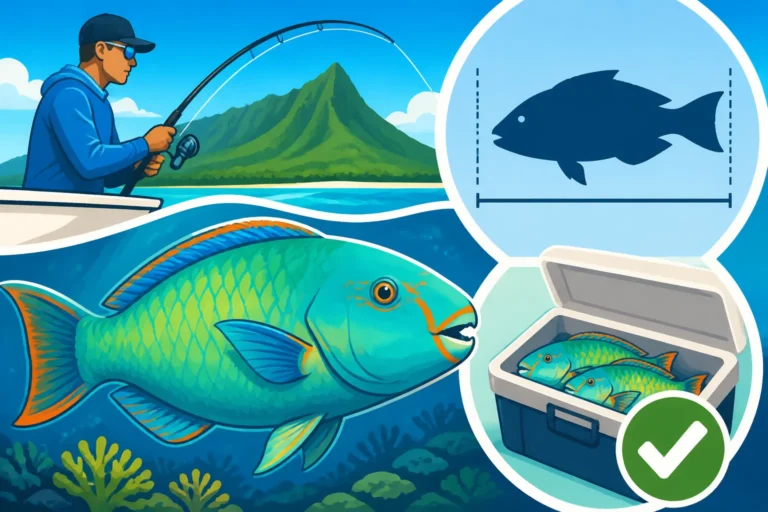
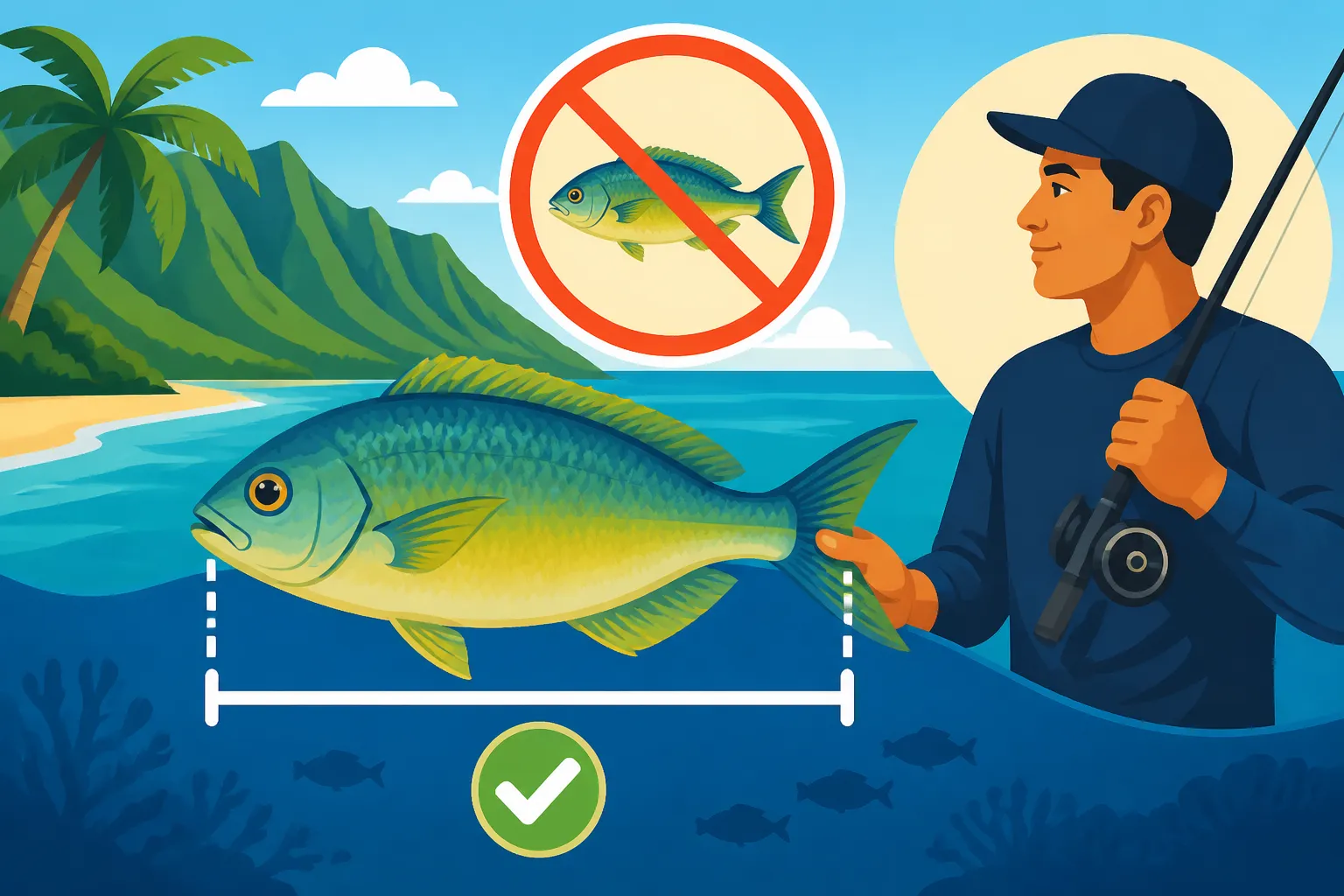
Currently, for most recreational fishing in Hawaii, the official minimum size limit for kumu (including species like the commonly targeted red goatfish, Parupeneus porphyreus) is 10 inches fork length. What does "fork length" mean exactly? It's not the total length from snout to the tip of the tail. Instead, you measure from the tip of the fish's snout to the deepest indentation of its tail fin. It’s a standard measurement used across many fisheries because it’s less variable than total length, especially if a tail fin gets damaged.
To illustrate, imagine placing your kumu on a measuring board. You'd align its nose at the zero mark, ensuring its mouth is closed. Then, you'd gently pinch its tail fin together to find that deepest point where the two lobes of the tail meet, and that's your measurement. If that measurement hits 10 inches or more, congratulations, you've got a legal keeper! If it's even a hair under, it needs to go back into the water immediately and carefully. These specific measurements, along with others for different species, are detailed in resources like our Hawaii Bag and Size Limits by Species guide.
Why Size Limits Matter
Minimum size limits aren’t just arbitrary numbers; they are scientifically determined tools for conservation. The 10-inch fork length for kumu is set to allow these fish to reach sexual maturity and reproduce at least once, if not multiple times, before they are harvested. Think of it this way: if we constantly remove all the younger, smaller fish, then fewer fish are left to contribute to the next generation. Over time, this leads to a decline in fish populations, smaller average sizes, and a less resilient fishery.
By adhering to these limits, we’re essentially giving the kumu a fighting chance to maintain healthy populations. It ensures a sustainable future for the species, allowing them to complete their life cycle. This isn't just good for the kumu; it's good for the entire reef ecosystem, and ultimately, it's good for us anglers who want to continue enjoying the bounty of Hawaii's waters for years to come. It’s a simple but incredibly effective way to practice responsible stewardship.
Real-World Scenarios and Measurement Tips
Let's be realistic – measuring a lively fish on a rocking boat or a slippery rock can be a challenge. But it's a challenge we must meet to stay compliant. Here are some real-world scenarios and tips:
- On the Boat: If you're on a boat, have a measuring board or a durable, waterproof measuring tape readily accessible. Many anglers keep one attached to their cooler or tackle box. As soon as you land a kumu, try to measure it quickly but carefully. Wet your hands or use a wet towel to handle the fish, minimizing damage to its protective slime coat.
- Shoreline Fishing: For shore anglers, a tape measure that's easily readable and can get wet is essential. Some prefer to use pre-marked lines on their rod or a dedicated fish ruler. Find a flat, stable surface away from the waves to quickly measure your catch. If it's a sandy area, lay the fish down gently and quickly get your measurement.
- Common Mistakes: The most common mistake is misjudging "fork length" for "total length." Always remember it's the deepest part of the tail. Another error is not measuring immediately. The longer the fish is out of water, the more stressed it becomes, making accurate measurement and potential release more difficult. Also, avoid guesswork; if in doubt, measure. It's better to be safe than sorry.
Consider investing in a sturdy, easy-to-read fish measuring board. You can find excellent options on Amazon, often made from durable plastic that floats or can be easily attached to your vessel or tackle bag. Having the right tool on hand removes much of the stress and guesswork from the process.
Beyond Size Limits: Other Kumu Regulations You Need to Know
While the minimum size limit for kumu is crucial, it’s just one piece of the regulatory puzzle. Hawaii’s comprehensive fishing laws encompass a variety of rules designed to protect our marine life. To be a truly responsible angler, you need to be aware of other restrictions that might apply to kumu and other species.
Bag Limits and Protected Seasons
For most recreational fishing of kumu and other goatfish species in Hawaii, there is a daily bag limit of 20 fish per person. This means that in any 24-hour period, you cannot possess more than 20 kumu. This limit is designed to prevent overharvesting by individual anglers, even if all their catches are of legal size. It promotes a more equitable distribution of the resource and reduces pressure on the fish populations. Think of it as a way to ensure everyone gets a fair shot at catching dinner, without any single person depleting the local stock.
As of current regulations, there is no specific closed season for kumu in Hawaii. This means you can fish for kumu year-round, as long as you adhere to the size and bag limits. However, regulations can change, and it’s always wise to double-check with the Hawaii DLNR’s Division of Aquatic Resources (DAR) website for the most up-to-date information. They sometimes implement seasonal closures for other species, so it’s good practice to be informed across the board. For example, some pelagic species like Ahi have specific rules, as detailed in Hawaii ahi bag limit rules, which can give you an idea of how varied these regulations can be.
Fishing Methods and Gear Restrictions
When it comes to catching kumu, certain methods are generally permitted, while others might have restrictions or be outright prohibited. Hook and line fishing is the most common and widely accepted method. This includes pole fishing from shore, boat, or pier, and hand-lining. Using a simple baited hook, often with pieces of shrimp, squid, or limu (seaweed), is a traditional and effective way to target kumu.
However, certain other methods, while potentially effective, are highly regulated or prohibited due to their impact on the reef ecosystem or specific species. For instance:
- Spearfishing: While spearfishing is popular in Hawaii, there are specific regulations governing its use, including restricted areas and species. You can find more details in our article on Hawaii Spearfishing Regulations. Generally, spearing kumu is allowed outside of protected areas, but size and bag limits still apply.
- Net Fishing: Net fishing, particularly lay nets or gill nets, is heavily restricted in Hawaii due to its potential for indiscriminate bycatch and damage to reefs. There are specific permits required and areas where net fishing is banned. Our guide on Hawaii Net Fishing Restricted Areas can provide more clarity on this complex topic. Recreational anglers should almost always stick to hook and line for kumu to avoid inadvertently breaking a rule.
- Toxic Substances: The use of any toxic substances or chemicals to stun or kill fish is strictly prohibited. This is an obvious one, as it harms the entire ecosystem.
Always ensure your chosen fishing method aligns with local rules to protect both the kumu and their vital habitat.
Marine Protected Areas and Their Impact on Kumu
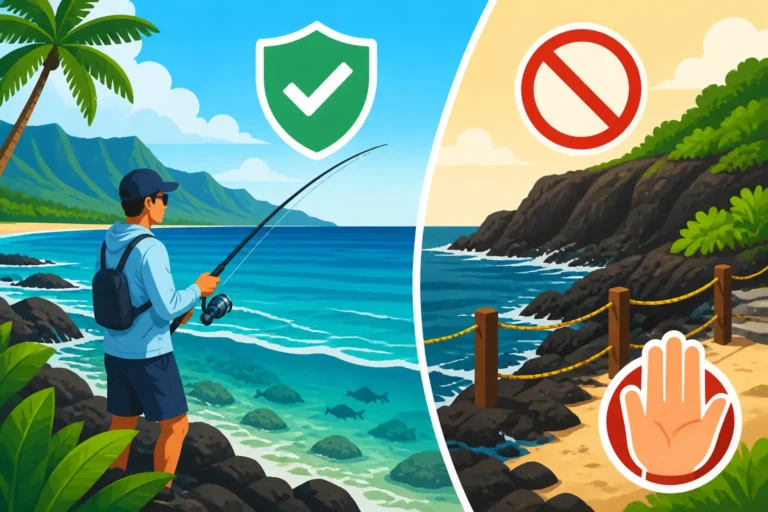
Hawaii is home to several Marine Life Conservation Districts (MLCDs) and Fish Replenishment Areas (FRAs), which are designated zones designed to protect and enhance marine resources. Fishing activities, including for kumu, are often heavily restricted or completely prohibited within these areas.
- Marine Life Conservation Districts (MLCDs): These are "look, don't touch" zones where taking any marine life, including kumu, is generally forbidden. They serve as critical refuges where fish can grow and reproduce undisturbed, helping to replenish surrounding fishing grounds. Examples include Hanauma Bay on Oahu and Kealakekua Bay on the Big Island (though certain traditional fishing rights may exist for residents in specific areas, it's safest for visitors and most recreational anglers to assume no take). Learning more about Hawaii Marine Life Conservation Districts, Explained is crucial for any angler.
- Fish Replenishment Areas (FRAs): While less restrictive than MLCDs, FRAs also have specific rules, often related to certain gear types or species. Their primary goal is to ensure a healthy breeding stock of reef fish.
Before heading out to your favorite spot, always double-check if it falls within a protected area. Ignorance of the law is not an excuse, and penalties for fishing in restricted zones can be severe, including hefty fines and confiscation of gear. The DLNR provides maps and detailed information, and it's always worth a quick look at resources like Reading the Hawaii DLNR Fishing Regulations before your trip.
Practical Tips for Responsible Kumu Fishing
Being a responsible angler goes beyond just knowing the rules; it's about adopting practices that minimize your impact on the environment and maximize the chances of healthy fish populations for the future.
Proper Catch and Release Techniques
Even if you’re aiming for dinner, you’ll inevitably catch some kumu that are under the 10-inch minimum size limit. How you handle these undersized fish is critical to their survival. A poorly handled release can result in injury or death, defeating the purpose of the size limit.
Here are some best practices for catch and release:
- Minimize Fight Time: Reel in the fish as quickly as possible without "horsing" it. This reduces stress and exhaustion.
- Wet Hands or Net: Always wet your hands thoroughly before touching the fish. A dry hand can remove the fish's protective slime coat, leaving it vulnerable to infection. A rubberized landing net (available on Amazon) can also be a good option as it's gentler on scales and slime than traditional knotted nets.
- Handle Gently: Support the fish horizontally, especially if it’s a larger one. Avoid holding it vertically by the jaw or tail, which can damage its internal organs or spine.
- Remove Hook Quickly: Use needle-nose pliers or a de-hooking tool to remove the hook efficiently. If the fish is deeply hooked, especially in the gills or throat, it's sometimes better to cut the line as close to the hook as possible rather than trying to rip it out. The hook will often rust out over time.
- Revive If Necessary: If the kumu seems lethargic, gently hold it in the water, facing into the current, allowing water to flow over its gills. Don't simply toss it back; wait until it shows signs of strong swimming before releasing.
Practicing these techniques ensures that those undersized kumu have the best possible chance to grow up and reproduce, contributing to the health of our reefs.
Essential Gear for Measuring and Handling Kumu
Having the right tools makes all the difference in complying with regulations and practicing ethical fishing. Don't just rely on approximations!
Here's what you should consider adding to your tackle box:
- Fish Measuring Board/Tape: As discussed, a dedicated fish measuring device is a must-have. These can be rigid plastic boards with clear markings or flexible, waterproof tapes. Many anglers prefer a measuring board because it provides a flat surface to lay the fish on, making measurements more accurate, especially for fork length. Look for one that's easy to clean and clearly marked. You can find a wide selection of durable, waterproof measuring tapes and boards on Amazon that are perfect for marine environments.
- Needle-Nose Pliers or De-hooker: These are indispensable for quick and safe hook removal, minimizing handling time and stress on the fish.
- Gloves: While wet hands are ideal, some anglers prefer to wear wet fishing gloves for better grip and to protect their hands from spines or sharp fins, further reducing handling time.
- Rubberized Landing Net: A net designed with soft, rubberized mesh is far superior to traditional knotted nylon nets for catch and release. It minimizes scale and slime removal and prevents fins from getting tangled. This can be particularly useful if you're targeting larger kumu or other reef fish.
Investing in these few key pieces of gear not only helps you follow the law but also demonstrates a commitment to sustainable fishing practices, preserving the health of our precious marine ecosystems.
Staying Informed with DLNR Resources
Regulations are not static. They can change based on new scientific data, shifts in fish populations, or evolving conservation needs. Relying on outdated information can lead to unintentional violations. The best way to ensure you're always compliant is to regularly consult the official sources.
The Hawaii Department of Land and Natural Resources (DLNR) Division of Aquatic Resources (DAR) is the primary authority for fishing regulations in the state. Their website is a treasure trove of information, providing detailed rules, updates, and educational materials.
Here’s how to stay informed:
- DLNR DAR Website: Bookmark their official website (dlnr.hawaii.gov/dar). They often have downloadable PDFs of the latest fishing regulations. Our article on Hawaii DLNR fishing regulations PDF can guide you to these resources.
- Sign Up for Updates: Some government agencies offer email newsletters or alerts for regulatory changes. Check if the DAR offers such a service.
- Local Tackle Shops: Your local tackle shop is often a fantastic resource. The owners and staff are usually well-versed in local regulations and can provide practical advice for your specific fishing area.
- Local Fishing Clubs/Forums: Joining local fishing communities, whether online or in person, can keep you updated on current practices and any emerging issues.
By actively staying informed, you contribute to a culture of responsible fishing and help ensure the longevity of Hawaii's aquatic resources. It's a small effort that yields huge benefits for everyone who loves to fish in these beautiful islands.
Here’s a quick summary of the key Kumu regulations:
| Regulation Type | Specific Rule for Kumu (Goatfish) | Notes |
|---|---|---|
| Minimum Size Limit | 10 inches fork length | Measure from snout to the deepest indentation of the tail fin. |
| Daily Bag Limit | 20 fish per person per day | Applies to most goatfish species, including kumu. |
| Closed Season | None currently | Kumu may be harvested year-round, subject to size and bag limits. |
| Gear Restrictions | Hook and line generally permitted | Spearfishing allowed outside MLCDs. Net fishing heavily restricted/prohibited for recreational anglers. |
| Area Restrictions | Prohibited in MLCDs and some FRAs | Always check local area rules before fishing. |
Disclaimer
The information provided in this guide is for general informational purposes only and is subject to change. While we strive to provide accurate and up-to-date content, fishing regulations are dynamic and can be updated by regulatory authorities without prior notice. It is the responsibility of every angler to consult the most current official publications from the Hawaii Department of Land and Natural Resources (DLNR) Division of Aquatic Resources (DAR) before engaging in any fishing activity. Non-compliance with fishing regulations can result in significant penalties.