Bottomfishing in Hawaii
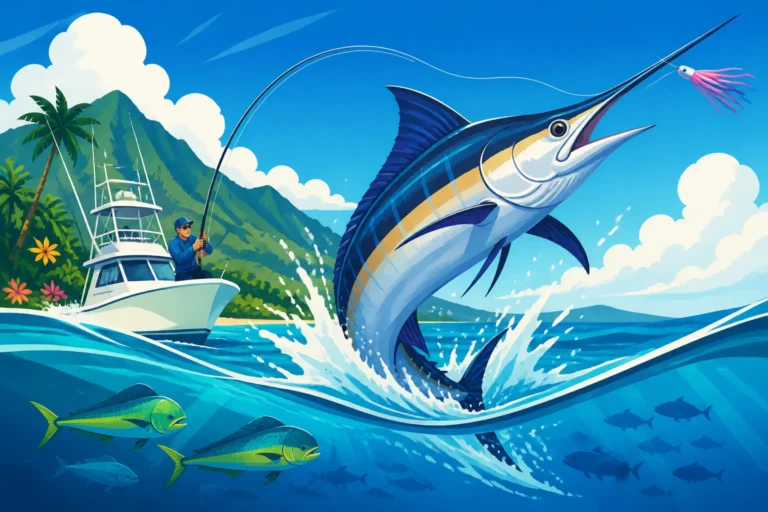
If you've ever dreamt of fishing in Hawaii, chances are your mind conjures images of massive marlin leaping out of the water or the shimmering flash of a mahimahi on the troll. But beneath the sun-drenched surface, in the mysterious depths surrounding our islands, lies an entirely different, incredibly rewarding challenge: bottomfishing. It's an often-overlooked pursuit that can leave many new to the islands feeling a bit lost, wondering how to tap into this hidden bounty. This comprehensive guide will pull back the curtain on bottomfishing in Hawaii, offering a deep dive into the gear, techniques, and species that make this such a thrilling and unique experience.
The Allure of Hawaii's Deep Reefs: Why Bottomfish Here?
There's a special kind of magic that draws anglers to the deep waters of Hawaii for bottomfishing. It’s not just about the fight; it’s about the anticipation, the mystery, and the exquisite reward that comes from plumbing the depths where daylight barely penetrates. While the glitz and glamor often go to the pelagic species, those of us who love the bottom know where the real treasures lie, both in terms of diverse species and incredible table fare.
A Unique Ecosystem: Beyond the Pelagics
When most people think of Hawaiian fishing, they envision the vast blue ocean where species like marlin, ahi, and ono roam freely. And don't get me wrong, those pelagic species are phenomenal targets! But the underwater landscape of Hawaii is far more complex and diverse than just open water. We have ancient volcanic structures, dramatic drop-offs, deep-water ledges, seamounts, and pinnacles that create incredibly rich ecosystems. These structures are home to a completely different set of fish – the deep-7 bottomfish, and many others – that thrive in colder, darker environments, often hundreds to a thousand feet down.
This unique ecosystem requires a completely different approach from surface trolling. Instead of covering miles of ocean in search of migratory fish, bottomfishing demands precision. You're trying to position your boat directly over a specific piece of structure, often no larger than a small car, in hundreds of feet of water, while battling currents and wind. It's a game of geometry, patience, and a deep understanding of marine topography. The fish down there are often older, wiser, and put up a formidable fight with the immense pressure and drag of a long line. The reward is not just a catch but a glimpse into a world few ever see, a world where exotic, often vibrant red-hued fish, unlike anything found in shallower reefs, thrive.
The Thrill of the Unknown: What Lies Beneath?
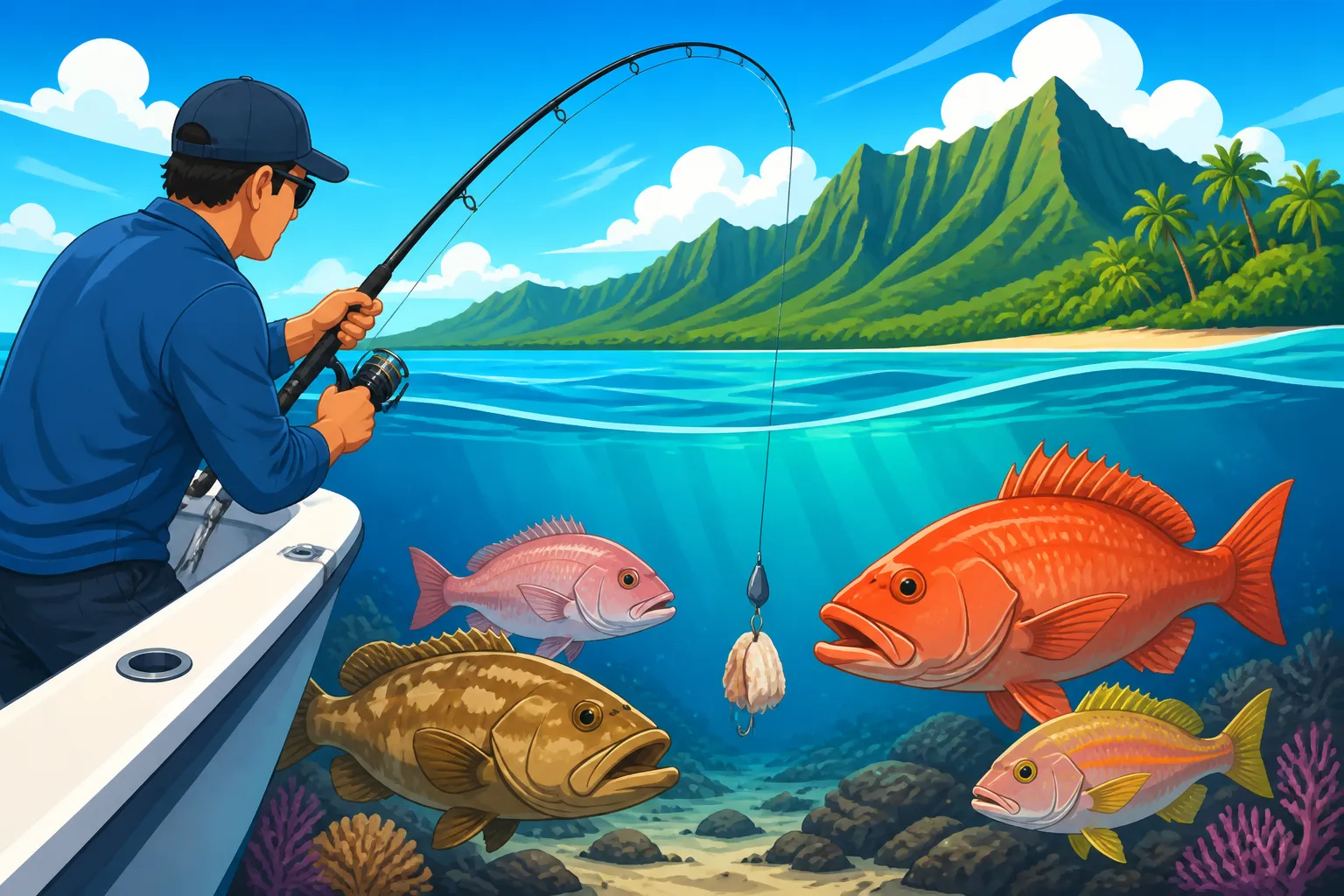
One of the most exciting aspects of bottomfishing in Hawaii is the sheer thrill of the unknown. Every time your bait hits the bottom, there's an incredible sense of anticipation. You never quite know what magnificent creature might be lurking in the shadows, ready to take your offering. Will it be a prized onaga, with its brilliant ruby-red scales and delicate white flesh? Or perhaps a hard-fighting opakapaka, known for its powerful runs? Maybe even a deep-water hapu'upu'u, a type of grouper that can dwarf some anglers!
The diversity of species is astounding, and each one offers its own unique challenge and culinary delight. Unlike the more predictable patterns of pelagic fish, bottomfish can be a delightful surprise, making every drop an adventure. Beyond the pure sport, the eating quality of these deepwater fish is legendary. They are often revered for their delicate flavor and firm, flaky texture, making them a highly sought-after delicacy in local markets and restaurants. Catching your own provides an unparalleled sense of accomplishment, knowing you've harvested a true gem from the deep Hawaiian waters, making the effort of specialized gear and techniques all the more worthwhile.
Essential Gear for Hawaiian Bottomfishing
Bottomfishing, especially in the deep waters around Hawaii, isn't something you can tackle with your average freshwater spinning rod. This pursuit demands specialized, heavy-duty gear designed to withstand immense pressure, deploy heavy weights, and handle powerful fish from significant depths. Investing in the right equipment is crucial for both success and safety, and fortunately, many excellent options are available from retailers.
Rods and Reels: Building Your Battle Station
When you're targeting fish hundreds of feet down, your rod and reel become your primary battle station. For serious deepwater bottomfishing in Hawaii, conventional reels paired with stout rods are the standard. You’ll want a rod that's relatively short, typically between 5'6" and 6'6", with a heavy action and a fast taper to provide leverage against deep-dwelling species. Look for rods rated for 50-80 lb or even 80-130 lb line classes, with a strong backbone to lift heavy weights and strong fish. Brands like Penn, Shimano, and Accurate are popular among local anglers for their durability and power.
For reels, heavy conventional reels are paramount. These reels need excellent drag systems that can be smoothly adjusted to handle sudden surges from a powerful fish. They also need substantial line capacity to hold hundreds of yards of braided line. While manual conventional reels are a classic choice and offer a true test of strength, electric reels have become incredibly popular, particularly for deep dropping in depths beyond 600 feet. Brands like Daiwa (especially their Tanacom series) and Shimano (BeastMaster) dominate the electric reel market. These reels take much of the back-breaking work out of retrieving hundreds of feet of line and a heavy sinker, allowing anglers to focus on detecting bites and fighting the fish effectively. When choosing line, 60-100 lb braided line is common, often paired with a top shot of monofilament for shock absorption. Many anglers find great deals on these specialized rods and reels, including electric models, on Amazon where a wide selection is available to compare.
Terminal Tackle: Hooks, Weights, and Leaders
The integrity of your terminal tackle is perhaps even more critical than your rod and reel, as it’s the direct connection to the fish. Everything from your hooks to your leader and weights needs to be robust enough to handle the harsh deepwater environment and the power of the fish.
Circle hooks are overwhelmingly preferred for bottomfishing in Hawaii, especially for deepwater species. They are incredibly effective at hooking fish in the corner of the mouth, which not only improves hook-up ratios but also significantly increases the survival rate of released fish, as they are less likely to be gut-hooked. Sizes typically range from 12/0 to 18/0, depending on the target species and bait size. Ensure they are strong, sharp, and corrosion-resistant.
For leaders, heavy monofilament or fluorocarbon is essential to withstand abrasion from rocky bottom structures and the sharp teeth of some species. A leader of 100-200 lb test is common, often several feet long, tied directly to your main line via a strong knot or a high-quality barrel swivel. The main reason for the heavy leader is not just abrasion, but also the shock absorption for the sudden strikes that can occur from fish in deep water. You can find robust fluorocarbon leader material from brands like Seaguar or Berkley on Amazon, ensuring you have ample supply for frequent re-rigging.
Finally, sinkers are a crucial component for getting your bait to the desired depth quickly and holding it there against currents. Depending on the depth and current, you might need anywhere from 1 to 5 pounds of lead, or even more for extreme depths. Pencil sinkers, bank sinkers, or pyramid sinkers are common choices. Some anglers even use rebar or rocks as disposable weights to avoid losing expensive lead on snaggy bottoms. Always carry a variety of weights, as conditions can change rapidly. Remember, the goal is to get your bait down and keep it in the strike zone, and a sufficiently heavy sinker is non-negotiable for this type of fishing.
Prime Bottomfishing Spots and Depths in Hawaii
Knowing what gear to use is one thing, but knowing where to use it is entirely another. Hawaii's bottomfishing hotspots aren't just random patches of ocean; they are specific underwater features that congregate bait and, in turn, the prized bottomfish we seek. Understanding these structures and the depths they inhabit is key to successful deepwater angling.
Deepwater Haunts: Ledges, Seamounts, and Pinnacles
The Hawaiian Islands are the peaks of massive submerged volcanoes, creating an incredible array of deepwater structures perfect for bottomfish. Our prime fishing spots are typically found along the continental shelf breaks, deepwater ledges, and especially around seamounts and pinnacles that rise up from the ocean floor. These features act as magnets for marine life, providing shelter, feeding grounds, and current breaks that attract baitfish, which in turn attract larger predators.
For example, off the Kona Coast of the Big Island, the seafloor drops off dramatically, creating numerous ledges and canyons that hold abundant bottomfish. Areas where depths rapidly transition from a few hundred feet to over a thousand feet are often honey holes. Similarly, off Maui and Oahu, there are specific underwater banks and "FADs" (Fish Aggregating Devices, though FADs are usually more for pelagics, the deepwater structures around them can hold bottomfish) that attract these species. The target depth range for the most prized bottomfish species, often called the "Deep-7," typically falls between 200 to 1,000 feet, sometimes even deeper. For anglers specifically interested in the Big Island, exploring the best reef fishing spots on the Big Island will provide an excellent starting point for identifying these promising deepwater structures. These depths require not just heavy tackle, but also advanced electronics to accurately locate and stay on these subtle features.
Reading the Ocean: Sonar and GPS Essentials
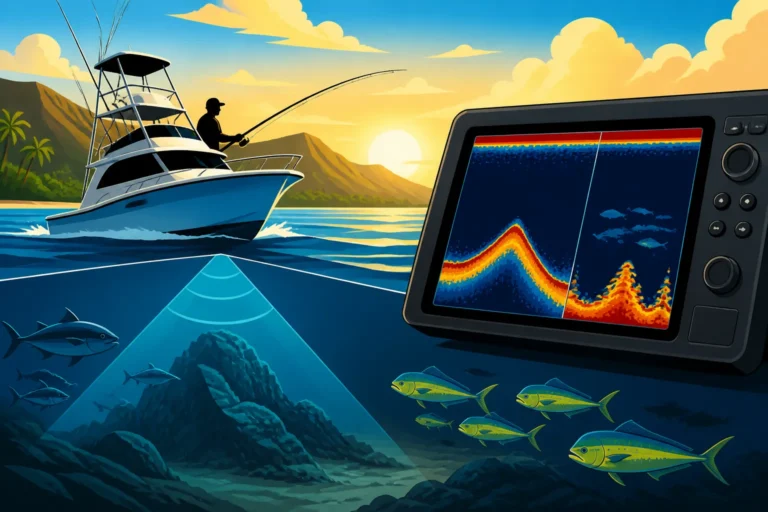
In the world of Hawaiian deep-sea bottomfishing, your sonar (fish finder) and GPS are arguably your most important tools after your rod and reel. You can't just blindly drop a line and hope for the best; you need to "read the ocean" beneath you. Modern fish finders, especially those with powerful transducers and CHIRP technology, are indispensable for identifying subtle changes in bottom topography, spotting bait schools, and marking individual fish or clusters of fish clinging to structure.
Learning how to interpret your sonar screen is a skill that takes practice. You'll be looking for ledges, humps, ridges, and even slight changes in bottom hardness that indicate a good holding spot for fish. Once you identify a promising area, your GPS becomes vital for marking that spot with precision. Dropping waypoints allows you to return to productive areas repeatedly. More importantly, understanding how to locate bottomfish structure with sonar is about more than just spotting fish; it's about understanding the underwater terrain. You need to observe the depth, the contours, and any signs of life. Factors like current and wind will dictate your drift, and you'll need to use your GPS to track your drift patterns, anticipating where your bait will land in relation to the structure. This constant interplay between reading your sonar, tracking your drift on GPS, and making precise adjustments to your boat's position is what separates consistently successful bottomfishers from those who just get lucky. If you're fishing off Kona, having a solid grasp of the best sonar settings for finding structure off Kona can significantly enhance your success rate.
Tried-and-True Techniques for Hawaii Bottomfish
Once you've got your gear dialed in and you're over a promising piece of structure, the real art of bottomfishing begins. It's not just about dropping a bait to the bottom; it's about presentation, patience, and knowing how to entice a bite from fish that often live in near-total darkness. Two primary methods dominate the Hawaiian deepwater bottomfishing scene: the classic drop-and-wait, and the more active deep drop jigging.
Conventional Drop-and-Wait Methods
The "drop-and-wait" method is the traditional cornerstone of Hawaiian bottomfishing, and it's effective for a reason. This technique involves sending a baited hook down to the seafloor, letting it settle, and then patiently waiting for a bite. The key here is proper bait presentation. Fresh bait is absolutely critical; deep-dwelling fish rely heavily on scent, and a fresh, oily bait will outperform a stale one every time. Common baits include pieces of squid, whole opelu (mackerel scad), or chunks of akule (bigeye scad). Cut your bait to expose the flesh and release maximum scent.
Once your bait is prepared, the process begins. Carefully let your line out, allowing the heavy sinker to take your bait straight down. It's important to monitor the line as it descends to detect any subtle bites on the way down, though most action will happen on the bottom. Once you feel the sinker hit the bottom, reel up a few feet to ensure your bait is suspended just above the structure, out of snags, but still in the strike zone. Then, it's a waiting game. You'll hold the rod, feeling for the distinct thumps and tugs that indicate a bite. Sometimes it's a gentle tap, other times a solid pull. Don't be too eager to set the hook; let the fish take the bait confidently, especially with circle hooks, which are designed to set themselves. Patience is a virtue in this method, and being prepared with the best bait for deep drop onaga fishing or the best bait for opakapaka bottomfishing will give you a significant advantage. This can sometimes involve long periods of waiting, but the reward of a big bottomfish makes it all worthwhile.
Deep Drop Jigging: An Active Approach
While drop-and-wait is effective, deep drop jigging offers a more active and engaging way to target bottomfish. This technique involves using heavy metal jigs, often in iridescent or luminescent colors, which are worked vertically through the water column near the bottom to mimic injured baitfish. Jigs can range from 200 grams to over 1000 grams, depending on depth and current.
There are various styles of jigging. Slow pitch jigging involves a more subtle, rhythmic lift-and-fall motion, allowing the jig to flutter enticingly as it descends. Speed jigging, on the other hand, is a more aggressive retrieve with fast lifts and drops, designed to provoke a reaction strike. The effectiveness of jigging lies in its ability to cover a wider area of the water column just above the bottom and to trigger aggressive strikes from predatory fish that might ignore a stationary bait. When learning this technique, focus on feeling the jig's action through the line. You're trying to make it dance, twitch, and dart like a panicked baitfish. Bites often come on the drop or during the pause, so stay alert. While it's more physically demanding than bait fishing, the thrill of feeling a fish smash a jig hundreds of feet down is incredibly exhilarating. Having a selection of the best jigging spoon for deep bottomfish or understanding the best technique for vertical jigging for opakapaka can drastically improve your results in this high-energy style of fishing. This active approach is a fantastic way to target species that are attracted to movement and flash, and it offers a dynamic contrast to the slower pace of bait fishing.
Target Species: What You'll Find on the Bottom
Hawaii's deep waters are a treasure trove of incredible fish, many of which are highly prized for their beauty, fighting prowess, and delectable taste. While there's a vast array of life on the bottom, a few species stand out as the primary targets for dedicated bottomfishers. These are often referred to as the "Deep-7" or "Precious 7" bottomfish, and they represent the pinnacle of deepwater angling in our islands.
Prized Snappers and Groupers: Onaga, Opakapaka, and Hapu'upu'u
Among the most sought-after bottomfish in Hawaii are the snappers, particularly the Onaga (Ruby Snapper) and Opakapaka (Pink Snapper). Onaga are stunningly beautiful fish, characterized by their vibrant ruby-red scales and long, flowing caudal fins. They are typically found in deeper waters, often beyond 600 feet, over rocky ledges and pinnacles. Onaga are solitary predators, ambushing smaller fish and squid. They put up a respectable fight, but their true prize lies in their delicate, rich white flesh, considered one of Hawaii's finest eating fish. Learning about Onaga (Ruby Snapper) Habits can greatly increase your chances of finding these elusive beauties.
Opakapaka, or Pink Snapper, are another highly valued species, recognizable by their beautiful iridescent pink-red coloration. They tend to school in slightly shallower depths than onaga, usually between 200-600 feet, often suspending just above structure. Opakapaka are strong fighters, making powerful runs, and are known for their firm, flaky, and delicious meat, making them a staple in local cuisine. Understanding Opakapaka (Pink Snapper) Habits, such as their schooling behavior, can help anglers locate productive fishing grounds more efficiently.
Then there's the formidable Hapu'upu'u (Hawaiian Grouper). These are robust, dark-colored groupers that can grow to impressive sizes, sometimes exceeding 100 pounds. Hapu'upu'u are powerful, stubborn fighters, often trying to "rock up" and break you off on the structure. They inhabit rocky bottom areas and deep ledges, usually in depths greater than 300 feet. While perhaps not as aesthetically striking as the snappers, their sheer size and fighting strength make them a thrilling catch, and their meat is excellent, often with a slightly firmer texture. Targeting these species is a test of skill, patience, and proper gear, but the reward is truly magnificent, both for the experience and the table.
Other Deepwater Delicacies: Ehu, Gindai, and More
While the Deep-7 are the stars of the show, Hawaii's deep reefs are bustling with other fantastic species that make bottomfishing so diverse and exciting. Ehu (Squirrelfish Snapper), for instance, are smaller but equally beautiful snappers, known for their bright red color and large eyes. They are often caught in similar depths as opakapaka, sometimes even shallower, and while not as large, they are plentiful and offer excellent eating.
Another stunning catch is the Gindai (Flower Snapper), a vibrant pink and yellow fish found in very deep waters, often exceeding 800 feet. Their striking colors make them a truly unique catch, and their flesh is also highly regarded. Beyond these, you might also encounter Uku (Grey Snapper), Kalekale (Von Siebold's Snapper), and various species of trevally or even smaller groupers depending on the depth and specific structure. The sheer variety means you never quite know what will come up from the deep, adding an element of surprise to every drop. For a comprehensive overview, checking out a detailed guide on Hawaii's Bottomfish Species of Hawaii will help you identify and appreciate the incredible marine life dwelling in our waters. These species collectively underscore the richness of Hawaii's unique deepwater ecosystems, offering anglers endless opportunities for discovery and an unforgettable fishing experience. For those looking to identify a wider range of catches, a Reef Fish Species Identification Guide for Hawaii can be an invaluable resource.
Regulations and Responsible Bottomfishing Practices
Just like any other form of fishing in Hawaii, bottomfishing is governed by a set of rules and regulations designed to protect our precious marine resources and ensure their sustainability for future generations. It's not just about catching fish; it's about being a responsible steward of the ocean. Ignoring these rules can lead to significant penalties, but more importantly, it can harm the very ecosystem we cherish.
Understanding Hawaii's Bottomfish Rules
The Department of Land and Natural Resources (DLNR) Division of Aquatic Resources (DAR) is responsible for setting and enforcing fishing regulations in Hawaii. For bottomfish, these rules often include specific bag limits, size limits, and sometimes even seasonal closures to protect spawning aggregations. For instance, the "Deep-7" bottomfish species (Onaga, Opakapaka, Ehu, Gindai, Kalekale, Hapu'upu'u, and Uku) have specific aggregate bag limits. It's crucial to understand that these regulations can change, so always check the most current information before heading out.
For example, there are often different rules for recreational versus commercial fishing, and specific areas might have unique restrictions. Failure to adhere to these can result in hefty fines and the confiscation of your catch and gear. Knowing the Hawaii Bag and Size Limits by Species is fundamental, as is regularly Reading the Hawaii DLNR Fishing Regulations, which are publicly available. These aren't just arbitrary rules; they are based on scientific data to ensure that these slow-growing, deep-dwelling species are not overfished. Being familiar with the Hawaii Fishing Regulations Explained in detail can prevent any unintended violations and contribute to the overall health of our fisheries. It's your kuleana (responsibility) as an angler to be informed.
Conservation and Sustainable Practices
Responsible bottomfishing goes beyond just following the law; it encompasses a strong commitment to conservation and sustainable practices. Deep-sea environments are particularly fragile, and the species that inhabit them are often long-lived and slow to reproduce, making them vulnerable to overfishing.
One of the most significant challenges in deep-sea bottomfishing is barotrauma – the physiological stress fish experience when rapidly brought up from extreme depths due to changes in pressure. This can cause their swim bladders to expand, making it difficult for them to swim back down. For fish you intend to release, especially if they are undersized or protected, employing venting tools (a hollow needle used to deflate the swim bladder) or descent devices (which carry the fish back to depth) can significantly increase their survival chances. Many commercial and recreational anglers are now adopting these practices.
Furthermore, minimizing your impact on the delicate deepwater habitats is paramount. Avoid dropping excessive amounts of lead on sensitive coral structures if possible, and always retrieve as much of your gear as you can to prevent "ghost fishing." Participate in data collection if requested by DLNR, and support organizations that advocate for marine conservation. By practicing mindful fishing, whether it's carefully releasing fish, respecting catch limits, or simply reducing your environmental footprint, you become a part of the solution in preserving Hawaii's unique and irreplaceable deepwater fisheries for future generations of anglers.
Choosing a Bottomfishing Charter: When a Guide is Best
For many anglers visiting Hawaii, or even local residents who are new to deepwater bottomfishing, the idea of gearing up, finding the spots, and mastering the techniques can feel overwhelming. That's where a reputable fishing charter comes into play. While some experienced anglers may prefer to go it alone, there are significant advantages to fishing with a professional guide, especially when targeting Hawaii's deep-dwelling species.
Benefits of Guided Trips for Deepwater Fishing
Hiring a bottomfishing charter offers a multitude of benefits that can transform a potentially frustrating outing into a highly successful and educational experience. First and foremost, a professional charter provides access to specialized equipment. Deepwater bottomfishing gear, especially electric reels and heavy-duty rods, represents a substantial investment. Charters already have this expensive, top-tier equipment on board, meticulously maintained and ready for action. This saves you the upfront cost and the hassle of transporting your own heavy gear to the islands.
Beyond the gear, local knowledge is absolutely invaluable. Hawaiian bottomfish spots are often tiny, precise pieces of structure in vast expanses of deep water. Experienced captains have spent years, even decades, charting these locations, understanding the currents, and knowing where the fish are holding based on countless hours on the water. They can navigate directly to these productive areas, saving you countless hours of searching. Furthermore, safety is paramount in deep-sea fishing. Charters come equipped with all necessary safety gear, experienced crew, and a thorough understanding of local marine conditions and weather patterns. They know when and where it's safe to fish. For those who want to experience the thrill without the steep learning curve or investment, exploring the Best Bottomfishing Charters in Hawaii is a highly recommended starting point. These guided trips also offer an incredible learning opportunity, allowing you to pick up techniques and insights from seasoned pros, making your entire experience more enjoyable and productive.
What to Look For in a Reputable Charter
When deciding to book a bottomfishing charter, it's essential to do your homework to ensure you choose a reputable and effective operation. Not all charters are created equal, and some specialize more in trolling for pelagics, while others are truly experts in bottomfishing. The first thing to look for is a captain with extensive experience specifically in deepwater bottomfishing. Ask about their track record, how long they've been running bottomfishing trips, and what species they commonly target. A good captain will be transparent about their specialty.
Next, inquire about their equipment. While most charters have good gear, for bottomfishing, you want to ensure they have high-quality electric reels and stout rods capable of handling the depths and the fight. Don't be afraid to ask about the condition of their boat, its safety equipment, and their safety procedures. Check online reviews and ask for recommendations from local tackle shops or fellow anglers. A great charter will have a strong reputation for customer service, safety, and consistent success. They should also be knowledgeable about and adhere strictly to all Hawaii Fishing Regulations Explained, ensuring a legal and ethical trip. Finally, consider their catch policy. Some charters are strictly catch-and-release, while others allow you to keep a portion of the catch. Be sure this aligns with your expectations. Booking through a well-regarded platform or directly with a highly-rated captain you find on sites like Amazon for fishing services (though Amazon is typically for products, you can find reviews of gear used by charters) or through local fishing forums, will help ensure you have a fantastic and memorable deep-sea bottomfishing adventure in Hawaii.
| Target Species | Preferred Depth Range (feet) | Best Bait | Average Adult Size (lbs) | Notes |
|---|---|---|---|---|
| Onaga | 600 – 1000+ | Squid, Opelu (Mackerel Scad) | 10 – 30 | Ruby-red, highly prized for delicate flavor, solitary. |
| Opakapaka | 200 – 600 | Squid, Cut Fish (Akule) | 5 – 20 | Pink-red, strong fighters, often school, excellent table fare. |
| Hapu'upu'u | 300 – 1000+ | Whole Squid, Live Bait | 20 – 100+ | Hawaiian Grouper, powerful and stubborn, firm white meat. |
| Ehu | 100 – 400 | Squid, Small Cut Bait | 2 – 8 | Squirrelfish Snapper, bright red, smaller but plentiful and tasty. |
| Gindai | 800 – 1200+ | Squid | 3 – 15 | Flower Snapper, pink/yellow, deepwater specialist, unique. |
| Uku | 100 – 400 | Live Baits (Opelu), Squid | 10 – 40 | Grey Snapper, strong fighter, good eating, found closer to shore. |
| Kalekale | 300 – 800 | Squid, Cut Fish | 5 – 15 | Von Siebold's Snapper, slender, excellent eating. |
Disclaimer
The information provided in this guide is for general informational purposes only and does not constitute legal advice. Fishing regulations in Hawaii are subject to change by the Department of Land and Natural Resources (DLNR) Division of Aquatic Resources (DAR). It is the responsibility of every angler to consult the most current Hawaii Revised Statutes and Administrative Rules prior to engaging in any fishing activity. Always prioritize safety and environmental stewardship.