Best technique for largemouth bass in Wahiawa Reservoir
Many anglers, especially those familiar with mainland bass fishing, often find themselves perplexed when they first tackle largemouth bass in Hawaii's unique freshwater reservoirs, with Wahiawa Reservoir being a prime example. The subtropical environment, distinct aquatic vegetation, and the presence of other aggressive predators mean that conventional techniques might need a significant local twist. This comprehensive guide aims to unravel the mysteries of Wahiawa's largemouth bass, providing you with the most effective techniques, gear insights, and strategic approaches to ensure a successful and rewarding day on this beautiful Oahu waterway.
Understanding the Unique Character of Wahiawa Reservoir
Wahiawa Reservoir, affectionately known as Lake Wilson, isn't just another body of water; it's a dynamic, man-made impoundment on Oahu with a character all its own. Its unique blend of structure, water conditions, and diverse aquatic life demands a thoughtful and adaptable approach from any angler hoping to consistently land largemouth bass. Before you even think about your lure choice, understanding the reservoir's personality is paramount.
Water Clarity and Depth Fluctuations
One of the most defining characteristics of Wahiawa Reservoir is its ever-changing water clarity. Unlike many pristine lakes, Wahiawa can swing from relatively clear to a murky, tea-stained brown, often depending heavily on recent rainfall and agricultural runoff. After a torrential downpour, the inflowing streams can carry significant sediment, drastically reducing visibility. Conversely, during extended dry periods, particularly in the calmer, shallower coves, the water can become surprisingly transparent, allowing bass to be much more wary of your presentation. This fluctuating clarity directly impacts lure selection, with vibrant, noisy baits often performing best in stained water, while more natural, subtle presentations are key when the water is clear and the fish have a better look at what you're offering.
Adding to this complexity are the water level fluctuations, which are influenced by both rainfall and irrigation demands. These shifts can expose or submerge critical bass habitat, transforming shallow flats into dry land or inundating brush piles that were once above the surface. A once-productive weed line might suddenly be too shallow, or a newly submerged creek channel could become a bass magnet. Experienced Wahiawa anglers consistently observe these changes, knowing that the bass will adjust their holding patterns accordingly. Keeping an eye on the reservoir's water levels, either through observation or local reports, is a critical step in pinpointing where the fish might be staging on any given day.
Diverse Habitat and Structure
Wahiawa Reservoir is a mosaic of diverse habitats, providing largemouth bass with an abundance of cover and ambush points. From expansive, shallow flats choked with hydrilla and other aquatic vegetation to deeper main lake channels and abrupt drop-offs, the bass here have many options for shelter and hunting grounds. These dense weed beds are particularly important, offering protection from the sun, oxygenated water, and a rich feeding environment teeming with baitfish and insects. The edges of these weed lines, or pockets within them, are often prime targets for largemouth.
Beyond the aquatic plants, the reservoir's bottom structure holds remnants of its past, including submerged trees, old fence lines, and rocky outcrops that were part of the original landscape. These hard structures provide excellent cover, cooler water, and a break from current, making them irresistible to bass seeking refuge or a strategic ambush point. Areas where different types of structure converge—say, a rocky point leading into a weed-choked cove—are often high-percentage zones. The bass will utilize all these varied structures throughout the day and across seasons, moving between them to find comfort, feed, or spawn. For those looking to explore more of Hawaii's freshwater offerings, our guide on Best Freshwater Fishing Spots in Hawaii offers additional insights into where these diverse habitats can be found.
Decoding Largemouth Bass Behavior in Wahiawa
To consistently put Wahiawa largemouth bass in your net, you need to develop an almost intuitive understanding of their behavior. It’s not just about what lure to throw, but why they’d be in a certain spot, when they’re likely to bite, and how they react to their unique Hawaiian environment. Their instincts are finely tuned to this subtropical setting, and understanding these nuances will significantly elevate your angling success.
Feeding Patterns and Preferred Ambush Points
Wahiawa's largemouth bass are apex predators within their ecosystem, and their feeding patterns are largely driven by opportunity and efficiency. Their diet is incredibly varied, consisting of everything from abundant tilapia and smaller juvenile peacock bass to crayfish, insects, and even frogs that venture too close to the water's edge. This wide-ranging menu means that a variety of lure types can be effective, provided they mimic something the bass are accustomed to eating. The key, however, lies in understanding their ambush mentality. Largemouth bass prefer to hide in areas where they can dart out quickly to surprise unsuspecting prey.
This translates to targeting dense weed beds, particularly the edges, open pockets within the mats, or lanes created by natural currents. Submerged brush piles, fallen trees, and rocky outcroppings also serve as perfect ambush points. Bass will hold tight to these covers, waiting for a meal to swim by. Their most active feeding periods typically coincide with low-light conditions—early morning and late evening—or during overcast days when they feel more secure venturing into slightly more open water. During the harsh midday sun, they'll often retreat deep into the thickest cover or seek the cooler depths, making them harder to entice with faster-moving baits. A slow, methodical presentation right into their sanctuary is often required during these times.
Seasonal Shifts and Environmental Factors
While Hawaii doesn't experience the dramatic four seasons of temperate zones, Wahiawa Reservoir still has its own subtle rhythms that influence bass behavior. The "cooler" winter months, though still mild by mainland standards, can see a slight decrease in water temperature, causing bass to become a bit more lethargic. During these times, they might hold tighter to deeper structure or slow down their feeding, favoring slower-moving baits. Conversely, the warmer summer months can lead to increased activity, especially during the low-light hours, with bass more willing to chase faster presentations. However, extremely hot and bright conditions can push them deep into shade and cover during the day.
Rain events are another significant environmental factor. Beyond affecting water clarity, heavy rains can introduce cooler freshwater runoff, altering water temperatures and oxygen levels in specific areas. Bass might move out of areas with excessive turbidity or seek the clearer, more stable water where inflow meets the main body of the reservoir. Conversely, a prolonged dry spell can lower water levels, concentrating fish in fewer, deeper areas or exposing previously submerged cover. Being observant of these subtle environmental shifts and adapting your fishing strategy accordingly, whether it's changing your target depth or lure color, is a hallmark of a successful Wahiawa angler. For a broader perspective on how these changes affect local fishing, our article on Best Time of Year to Fish in Hawaii can provide valuable context.
Coexisting with Peacock Bass
One of the truly unique aspects of fishing Wahiawa Reservoir is the thriving population of peacock bass, a non-native species that has carved out a significant niche. While your primary target might be largemouth, understanding their relationship with these aggressive, colorful cousins is beneficial. Both are formidable predators, sharing similar habitats and often competing for the same forage, like tilapia and smaller baitfish. This competitive dynamic can influence where largemouth choose to establish territories or when they prefer to feed.
For the angler, the good news is that many techniques effective for largemouth bass will also tempt a peacock bass. Both species are drawn to lures that mimic baitfish or crayfish, and both are ambush predators that relate strongly to cover. So, while you're specifically targeting largemouth bass with your chosen technique, be prepared for the explosive strike of a peacock bass – they’re equally exciting to catch! This often means carrying lures and tackle suitable for both, as you never quite know what will hit your line next. For those interested in learning more about this vibrant species, our dedicated guide on Peacock Bass in Wahiawa Reservoir delves deeper into their habits and how to target them.
Top Techniques and Lures for Wahiawa Largemouth Bass
Now that we've covered the "why" and "where," let's dive into the "how." These techniques and lure types are consistently productive for largemouth bass in Wahiawa Reservoir, offering a versatile arsenal to tackle various conditions and fish moods. Success here often comes down to knowing which tool to use and how to present it effectively.
Soft Plastics: Worms, Jigs, and Creature Baits
Soft plastics are, without a doubt, a cornerstone of successful largemouth bass fishing in Wahiawa. Their ability to imitate natural forage, coupled with their versatility in rigging, makes them indispensable for navigating the reservoir's diverse cover.
-
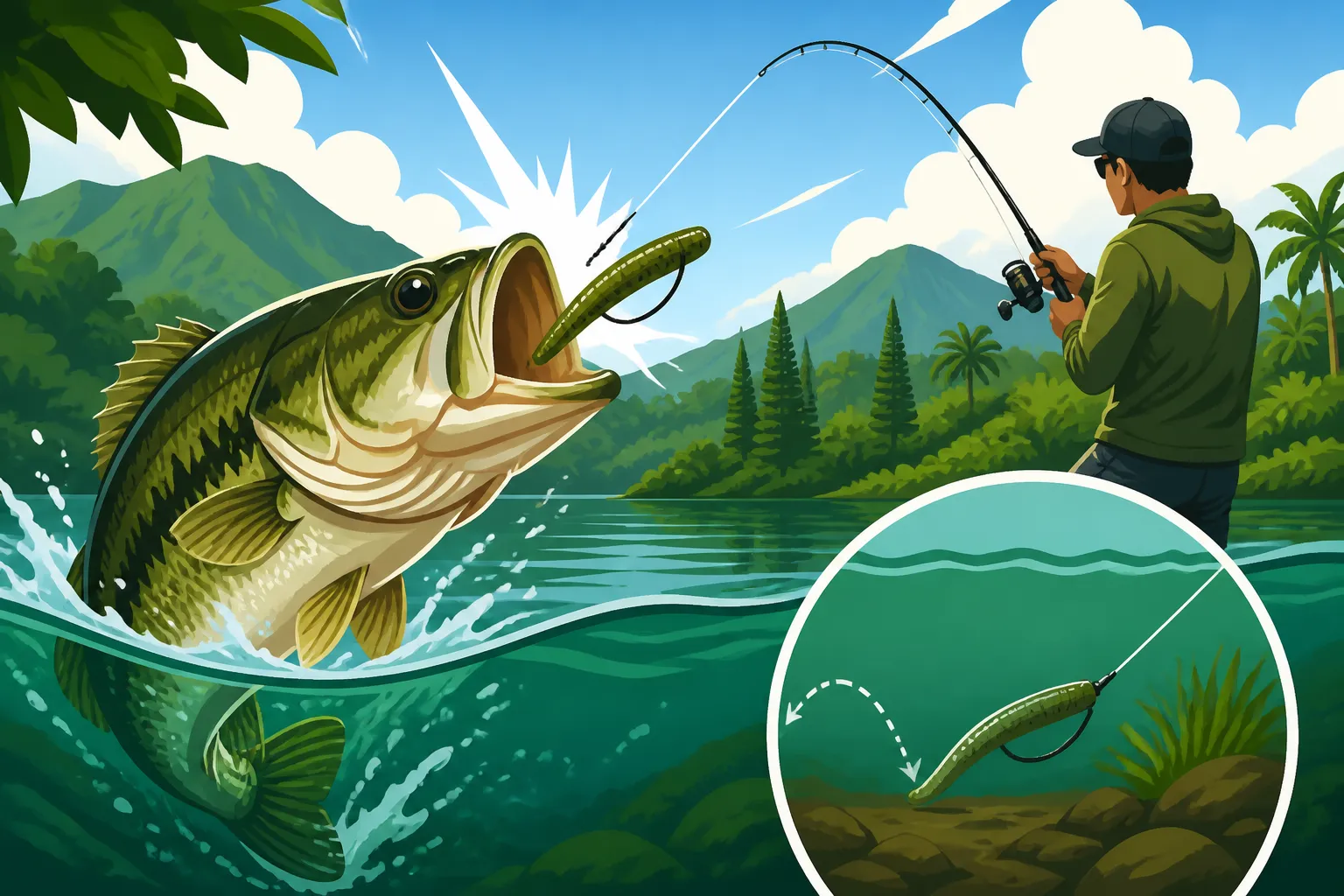
Texas Rigged Worms and Creature Baits: The Texas rig is an absolute workhorse for Wahiawa. By threading the hook point back into the plastic, you create a weedless setup that can be fished directly into the densest hydrilla, submerged brush piles, or around rocky snags without constantly snagging. Plastic worms, creature baits, and even senko-style baits rigged this way can be lethal. Opt for natural colors like green pumpkin, junebug, or black and blue, especially in clearer water, but don't shy away from brighter colors if the water is stained. The retrieve is usually slow and methodical: cast, let it sink to the bottom, then slowly drag, hop, or twitch it back, feeling for the subtle "thump" of a bass taking the bait. A good selection of these worms and a variety of bullet weights can easily be found on Amazon, ensuring you’re prepared for any scenario.
-
Flipping and Pitching Jigs: When bass are holding tight to heavy cover—think dense mats, deep timber, or the shaded recesses under overhanging branches—flipping or pitching a jig with a crawfish or creature bait trailer is an incredibly effective technique. This precision casting method allows you to present your bait quietly and accurately into small openings where bass are ambushing prey. The jig's bulky profile and slow fall, enhanced by the subtle action of the trailer, perfectly mimic a crayfish or a bottom-dwelling baitfish. Work the jig slowly with short hops and pauses, maintaining constant contact with the bottom. Many strikes occur on the initial fall or when the jig is briefly paused, so stay vigilant and feel for any unnatural weight or movement on your line.
-
Weightless and Wacky Rigged Senkos: For those times when the bass are pressured, finicky, or the water is exceptionally clear, a weightless soft plastic, particularly a Senko-style worm, can be a game-changer. The beauty of a weightless Senko lies in its incredibly seductive shimmy as it slowly falls through the water column, imitating a dying baitfish with uncanny realism. Rigging it "wacky style," with the hook piercing the center of the worm, enhances this enticing quiver on both the fall and a subtle twitch. Cast these baits around weed edges, boat docks (where permitted), or over submerged grass beds and allow them to sink on a slack line. Watch your line carefully; often, the only indication of a bite is a slight twitch or the line simply moving off to the side.
Topwater Action: Frogs, Poppers, and Buzzbaits
Few experiences in bass fishing compare to an explosive topwater strike, and Wahiawa Reservoir offers excellent opportunities for this thrilling method, especially during the cooler, low-light hours of dawn and dusk, or on overcast days when bass are actively hunting near the surface.
-
Hollow-Body Frogs: When you encounter thick, matted vegetation, lily pads, or dense floating grass, a hollow-body frog is your ultimate weapon. These baits are designed to be virtually weedless, allowing you to retrieve them directly over the nastiest cover where big bass love to hide. The trick is to mimic a real frog or a struggling rodent; pop them, walk them side-to-side, or simply retrieve them steadily, pausing occasionally right over an opening or a dark spot in the mat. The suspense builds with each twitch, and when a bass explodes through the cover, it’s an unforgettable moment. Remember to resist the urge to set the hook immediately; let the bass fully engulf the bait for a second or two before delivering a solid hookset.
-
Poppers and Walk-the-Dog Baits: In more open water, along clean weed lines, or around rocky points, classic topwater baits like poppers and "walk-the-dog" style lures can provoke aggressive strikes. Poppers create a distinct "chugging" or "popping" sound and splash, mimicking a struggling baitfish or a bug landing on the water. Vary your retrieve, trying different pauses and pops until you find what triggers a response. Walk-the-dog baits, like a Zara Spook, require a rhythmic rod twitch to make them sashay enticingly from side to side across the surface. This erratic, wounded baitfish action can be irresistible to active bass. Experiment with retrieve speed – sometimes a frantic pace works, other times a slow, deliberate walk is the key.
-
Buzzbaits: For covering water quickly, especially in shallower areas with scattered cover or along productive shorelines, a buzzbait is a fantastic choice. The churning blade creates a tremendous amount of surface disturbance, noise, and flash, which can call bass up from surprisingly deep cover and trigger violent reaction strikes. Cast your buzzbait out and begin a steady retrieve as soon as it hits the water, keeping the blade just breaking the surface. They are particularly effective when bass are aggressive and willing to chase. Don't be afraid to experiment with blade sizes and skirt colors; chartreuse and black are perennial favorites for their visibility and contrast.
Crankbaits and Spinnerbaits for Covering Water
When bass are actively feeding and you need to locate them quickly across larger areas, crankbaits and spinnerbaits are your go-to "search baits." They allow you to cover significant amounts of water efficiently, eliciting reaction strikes from active fish.
-
Lipless and Diving Crankbaits: Crankbaits are designed to appeal to the bass's predatory instincts with their erratic action and ability to mimic baitfish. Lipless crankbaits are excellent for ripping through submerged grass, creating a vibrating, fleeing baitfish presentation. They can also be fished with a yo-yo retrieve in deeper water. Diving crankbaits, on the other hand, are designed to reach specific depths, making them perfect for targeting contour lines, submerged ledges, or banging off rocky bottom structures. The deflection off cover often triggers an immediate strike. Choose colors that either closely match the forage in Wahiawa or offer a high contrast in stained water. Brands like Rapala and Strike King offer a wide selection, readily available on Amazon, known for their consistent diving depths and enticing actions.
-
Spinnerbaits: Spinnerbaits are incredibly versatile and effective, especially in stained water or around moderate cover. The combination of flash from the spinning blades and vibration from the skirt is a powerful attractor for bass. You can fish them in myriad ways: slow-rolling them along the bottom, burning them just under the surface, or "chunking and winding" them through scattered timber. Willow leaf blades offer a lot of flash and less lift, great for deeper retrieves, while Colorado blades create maximum vibration and more lift, ideal for shallower, murky water. Experiment with blade combinations and skirt colors (white, chartreuse, and natural baitfish patterns are common choices) to see what the bass prefer on a given day. For a general overview of freshwater fishing rules, our article on Hawaii Freshwater Fishing License and Rules can provide important context.
Table: Wahiawa Largemouth Bass Technique Comparison
| Technique | Primary Use Case | Preferred Habitat | Retrieval Action | Recommended Gear | Key Advantage |
|---|---|---|---|---|---|
| Texas Rigged Soft Plastics | Heavy cover, dense weeds, submerged timber | Bottom, through vegetation | Slow drag, hop, twitch, long pauses | Medium-Heavy Rod, Braided Line (fluorocarbon leader) | Highly weedless, natural presentation, subtle |
| Jig Flipping/Pitching | Precise targeting of dense cover (brush, docks) | Deep within cover, bottom | Short pitches, lift & drop, subtle shakes | Heavy Rod, Braided Line | Mimics crayfish, excellent for close quarters |
| Weightless Soft Plastics | Pressured fish, clear water, subtle presentation | Mid-column, slow fall over grass | Long casts, slow natural fall, gentle twitches | Medium-Light to Medium Rod, Fluorocarbon Line | Realistic fall, minimal disturbance, highly enticing |
| Hollow-Body Frogs | Fishing over thick matted vegetation, lily pads | Top of cover, surface | Pop, walk, steady retrieve, long pauses | Heavy Rod, Heavy Braided Line | Unmatched weedlessness, triggers violent strikes |
| Poppers/Walk-the-Dog | Open water, weed edges, rocky points, low light | Surface | Pop & pause, side-to-side glide (walking) | Medium-Heavy Rod, Monofilament Line | Creates disturbance, calls fish from a distance |
| Buzzbaits | Covering shallow water quickly, active fish | Surface | Steady, fast retrieve, keeping blade on surface | Medium-Heavy Rod, Braided or Monofilament Line | High visibility/noise, quick search bait |
| Diving Crankbaits | Targeting specific depths, structure, reaction bites | Mid-column to bottom, structure | Steady retrieve, deflection off cover | Medium Rod, Fluorocarbon or Monofilament Line | Depth control, triggers aggressive reaction strikes |
| Spinnerbaits | Stained water, scattered cover, active fish | Shallow to mid-column | Slow roll, burning, bumping cover | Medium-Heavy Rod, Fluorocarbon or Monofilament Line | Flash & vibration, versatile in varying clarity |
Gear, Best Practices, and Wahiawa Reservoir Rules
Mastering the techniques for Wahiawa largemouth bass is only part of the equation. To truly succeed and enjoy your time on the water, you need the right tools, a mindful approach, and a thorough understanding of the local regulations that protect this unique fishery. Without these elements, even the best angler can struggle.
Essential Gear and Tackle for Wahiawa
Having the right gear makes a world of difference when fishing for largemouth bass in Wahiawa Reservoir. For an all-around setup, a 7-foot medium-heavy to heavy action spinning or baitcasting rod is highly recommended. This provides enough backbone to pull fish out of thick vegetation and make accurate casts. Pair it with a reliable reel spooled with 15-20 lb braided line, which offers excellent sensitivity and strength. In clearer water, adding a 10-15 lb fluorocarbon leader will increase stealth, as it's nearly invisible underwater.
Beyond your rod and reel, a well-stocked tackle box is crucial. You’ll want a variety of hooks, including wide gap (EWG) hooks for Texas rigging soft plastics and specialized wacky rig hooks for those finesse presentations. Keep a selection of bullet weights in various sizes (from 1/8 oz to 1/2 oz) to match different depths and conditions. Don't forget swivels, extra leader material, and specialized tools like pliers for hook removal, sturdy line cutters, and a measuring tape to ensure your catch meets legal requirements. A quality tackle bag or box, perhaps from a reputable brand like Plano, which you can find easily on Amazon, will keep all your essentials organized and protected from the elements. Given Hawaii's intense sun, don't overlook personal items like a wide-brimmed hat, polarized sunglasses (essential for spotting fish and structure), plenty of water, and broad-spectrum sunscreen.
Best Practices for Success on the Water
Even with the perfect lure, success often boils down to your approach and mindset. Adopting these best practices will significantly increase your odds of a productive day at Wahiawa.
-
Scout the Area and Observe: Before making your first cast, take some time to observe your surroundings. Look for subtle signs: schools of baitfish flickering on the surface, changes in water color indicating depth or clarity variations, or visible structure like submerged logs or weed lines. Sometimes, a jumping fish or a disturbance on the surface can pinpoint a productive area. If you're using a kayak or small boat, idle slowly to scan for underwater features on your sonar.
-
Silence and Stealth: Largemouth bass, especially in shallower or clearer sections of Wahiawa, can be surprisingly wary. Minimize noise and sudden movements, whether you're bank fishing or maneuvering a small craft. Drop anchor gently, avoid loud talking, and if wading, move slowly and deliberately. A stealthy approach can mean the difference between spooking a trophy bass and getting a strike.
-
Fan Casting and Thorough Coverage: Don't limit your casts to one direction. When you find a promising area, use a "fan casting" technique to systematically cover the water in front of you. Cast to the left, then move your casts incrementally to the right, covering different angles and depths. This ensures you're presenting your lure to any fish holding in the zone, whether they're tight to cover or patrolling a slightly more open area.
-
Vary Your Retrieve and Lure Selection: If you're not getting bites, don't get stuck in a rut. Bass moods can change quickly, so be willing to experiment. If a fast retrieve isn't working, try slowing it down, adding pauses, or implementing erratic twitches. If a soft plastic isn't producing, switch to a topwater or a crankbait. Having a diverse selection of lures and being flexible with your presentation is crucial for "cracking the code" on any given day.
-
Patience and Persistence: Bass fishing is rarely a non-stop action sport. There will be periods of inactivity, and it's easy to get discouraged. Maintain a positive attitude, keep trying different spots, and refine your techniques. Sometimes, all it takes is one perfectly placed cast or a subtle change in retrieve to turn your day around. Remember, the next cast could be the one!
Wahiawa Reservoir Specific Regulations and Licenses
Before you even tie on your first lure, it's absolutely imperative that you understand and comply with all specific regulations for fishing Wahiawa Reservoir. Unlike ocean fishing, which has some exemptions for residents, freshwater fishing in Hawaii almost always requires a license. You will need a valid Hawaii freshwater fishing license to fish Wahiawa Reservoir. For specifics on how to obtain one, including costs and requirements, you can refer to our guides like Hawaii freshwater license cost for residents or, for visitors, Hawaii 30-day tourist freshwater license cost.
The Hawaii Department of Land and Natural Resources (DLNR) Division of Aquatic Resources (DAR) is the governing body, and their regulations can change. These rules often cover not just licensing, but also specific bait restrictions, daily bag limits, and minimum or maximum size limits for species like largemouth bass. For example, certain bait types might be prohibited to prevent the introduction of invasive species or diseases. Always consult the most current DLNR DAR regulations before your trip. Fishing without the required license or violating bag/size limits can result in significant penalties. Staying informed ensures you're not only fishing legally but also contributing to the sustainable management of this precious resource. For a detailed breakdown of all rules, be sure to check our comprehensive guide on Hawaii Wahiawa Reservoir Fishing Rules. Responsible angling preserves the beauty and bounty of Wahiawa for all.
Disclaimer
This article is for general informational purposes only and does not constitute professional advice. Laws, prices and regulations vary by location and change over time. Consult a qualified professional for guidance on your specific situation.