Ono Habits and Feeding Behavior
If you've spent any time fishing Hawaii's deep blue waters, you've probably heard tales of the ono – a fish that's as fast as a torpedo and as elusive as a ghost. Many anglers find themselves frustrated, wondering why these magnificent predators seem to appear and disappear without a trace. This guide is here to demystify the ono, diving deep into their habits and feeding behaviors so you can better understand where to find them, what they're eating, and how to successfully hook into one of Hawaii's most thrilling game fish.
The Elusive Ono: A Hunter of the Open Ocean
The ono, also known as wahoo in many parts of the world, is truly a creature designed for speed and predation. Its very existence is about hunting in the vast, open ocean, making it a challenging but incredibly rewarding target for anglers. Understanding its fundamental characteristics and its role in the ecosystem is the first step toward cracking the code of this sleek, silver bullet.
Distinguishing Ono from Other Pelagics
When you finally get an ono to the boat, its appearance is unmistakable. These fish possess a truly unique physique, perfectly adapted for their high-speed, predatory lifestyle. They have long, cylindrical bodies, tapering sharply from head to tail, giving them that classic torpedo shape. Their backs are an iridescent blue-green, fading to silvery sides with distinctive, irregular vertical stripes that serve as camouflage in the open water. Unlike the more robust, football-shaped tuna or the high-backed mahimahi, the ono is lean and streamlined. Their dorsal fin is long and continuous, and their powerful caudal (tail) fin is crescent-shaped, propelling them through the water with incredible force.
These physical characteristics aren't just for show; they're integral to how ono hunt. Their elongated body minimizes drag, allowing for bursts of speed that can reach astonishing levels, easily outstripping most prey. The razor-sharp, cone-shaped teeth are perfectly designed for slicing through flesh, enabling them to make quick, precise strikes. If you've ever seen an ono strike a bait, it's a blur of motion, often resulting in a clean cut on the leader if you're not careful. This distinct appearance is a key part of how they operate, showcasing their specialization as a top-tier open-water hunter. For a broader look at identifying other species you might encounter, check out our Pelagic Species Identification Guide for Hawaii.
Ono's Role in Hawaii's Marine Ecosystem
As an apex predator, the ono plays a vital role in maintaining the health and balance of Hawaii's marine ecosystem. They are part of the intricate food web, primarily feeding on smaller pelagic fish, squid, and crustaceans. By preying on abundant baitfish populations, they help to prevent overpopulation of certain species, which could otherwise disrupt the ecological balance. Their presence indicates a healthy offshore environment with a thriving baitfish population, as these fast hunters need a consistent food supply to sustain their high metabolism.
Their diet and hunting prowess mean they keep various prey species in check, ensuring that no single species dominates. However, because they rely on healthy baitfish schools, their abundance can also be an indicator of the overall health of the pelagic environment. When baitfish numbers decline, so too might the larger predators like ono that feed on them. This connection highlights how every species, even the fastest and most elusive, is a crucial link in the chain of oceanic life around the Hawaiian Islands.
Where Ono Call Home: Preferred Habitats and Structures
Ono are constantly on the move, but their movements aren't random. They're driven by instinct, seeking out areas that offer the best opportunities for feeding. Understanding these preferred habitats and structures is paramount to consistently finding these elusive fish. They gravitate towards specific environmental cues and underwater features that concentrate their prey.
Offshore FADs and Submerged Structures
One of the most reliable places to find ono are around offshore Fish Aggregating Devices, or FADs, and various submerged structures like seamounts, pinnacles, and deep-water ledges. FADs, which are essentially large buoys anchored in deep water, act like magnets for baitfish. For reasons still not fully understood, schools of baitfish, juvenile tuna, and mahimahi congregate around these devices, creating a bustling "dinner table" for larger predators. Ono, with their keen eyesight and incredible speed, regularly patrol these areas, ambushing unsuspecting prey.
Similarly, natural underwater structures create upwellings and eddies that concentrate nutrients and, subsequently, baitfish. A seamount that rises from thousands of feet deep to within a few hundred feet of the surface can be a hotbed of activity. Ono will patrol the edges of these structures, often lurking in the thermocline or at depth, waiting for the opportune moment to strike. These areas are not just places where fish hang out; they are strategic hunting grounds where the current and structure work together to funnel food.
Temperature Breaks and Current Lines
Beyond fixed structures, ono are highly attuned to dynamic oceanographic features, particularly temperature breaks and current lines. Temperature breaks occur where two different water masses, usually with varying temperatures, meet. These thermal boundaries often concentrate plankton, which attracts smaller baitfish, and in turn, draws in predators like ono. Imaging a visible "line" in the ocean where the water color or texture changes – this is often a current line, and it's a prime target for ono.
Current lines are essentially highways in the ocean, carrying nutrients and baitfish along. Ono will often "ride" these currents, conserving energy while waiting for prey to drift by, or using the current to their advantage for ambush attacks. They might lurk on one side of a strong current line, darting across to strike prey that's struggling against the flow. Learning to identify these subtle changes in the ocean's surface – a ripple, a foam line, or a distinct change in water color – can be a game-changer for ono fishing. These invisible features are often more productive than anything visible on the surface.
Water Depth and Clarity Preferences
Ono typically inhabit the upper to middle layers of the water column, generally from the surface down to several hundred feet. They are pelagic, meaning they live in the open ocean, not directly associated with the bottom or the reef. However, they will often descend to cooler depths during the day, especially in bright sunlight, only to rise higher in the water column during low light periods or when actively feeding. Their preference leans towards clear, blue offshore water, which is characteristic of productive Hawaiian fishing grounds.
Clear water is vital for ono because they are primarily sight feeders. Their exceptional eyesight, combined with their incredible speed, allows them to spot and pursue prey in these conditions. Murky or turbid waters tend to be less productive for ono, as it hinders their hunting effectiveness. While they can be found in a range of conditions, that deep, rich blue water, often referred to as "ono water," is usually a good indicator that you're in the right neighborhood.
The Ono's Menu: A Predator's Diverse Diet
To truly understand how to catch an ono, you need to think like one. What are they looking for? What makes them commit to a strike? The answer lies in their diet, which is both specific to certain types of forage and incredibly opportunistic.
Primary Baitfish Targets
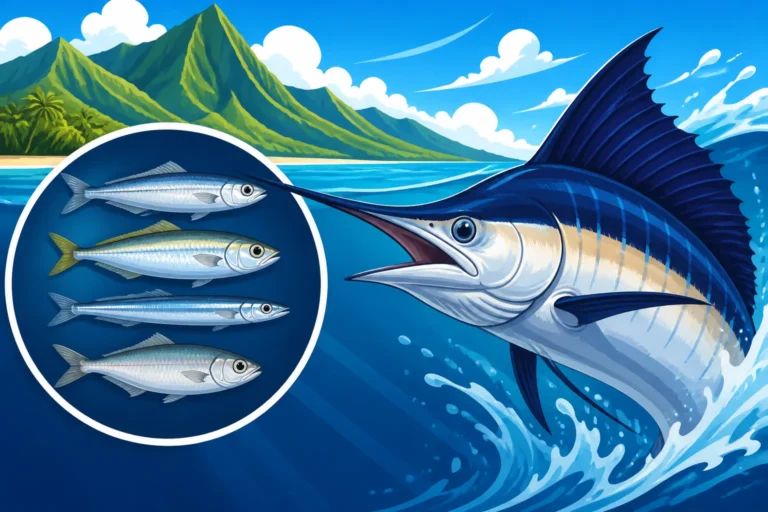
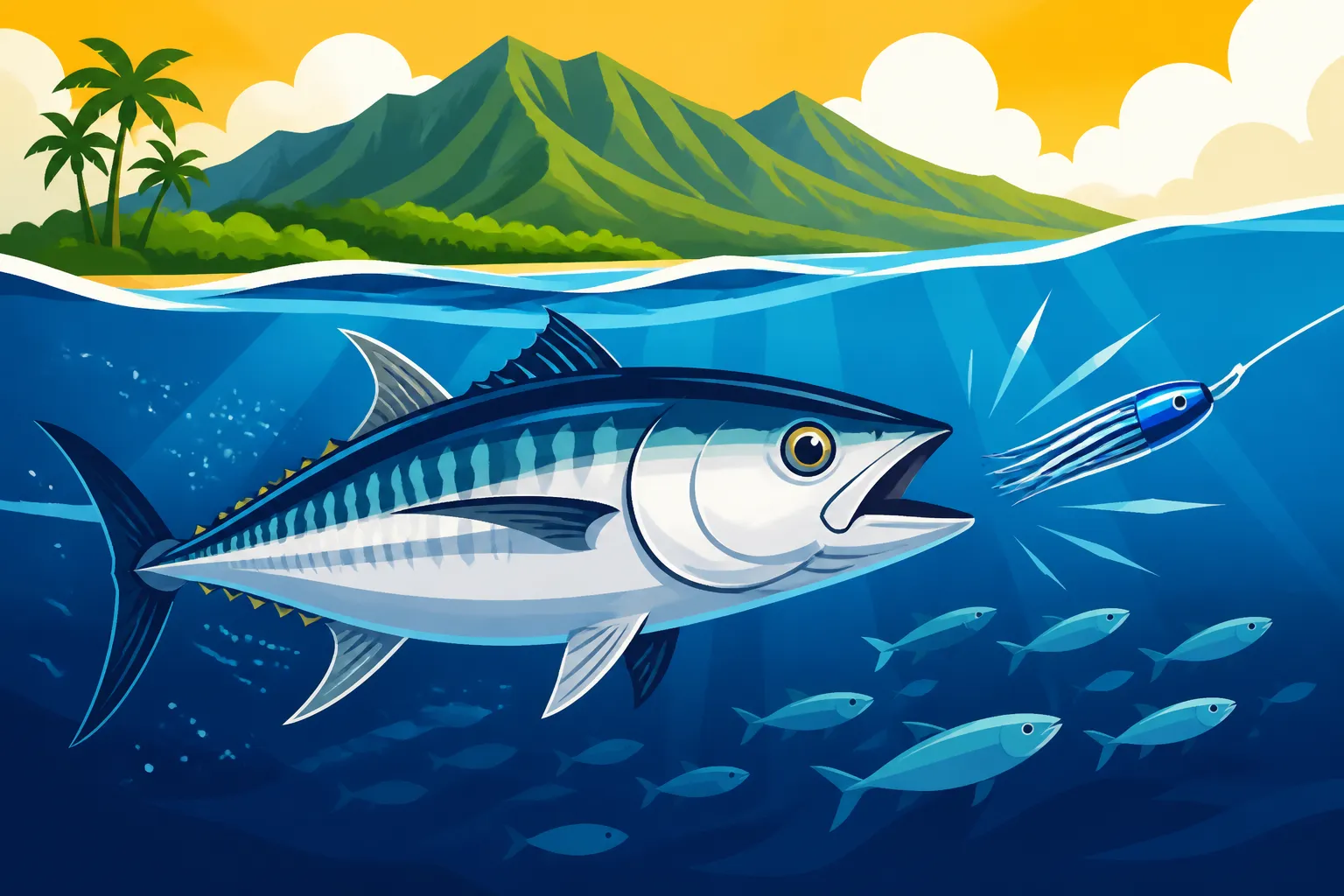
Ono have a refined palate when it comes to their preferred prey. Their primary diet consists of smaller pelagic fish, many of which school in abundance in Hawaiian waters. Chief among these are mackerel scad, locally known as opelu, and juvenile skipjack tuna, or aku. These baitfish often form large schools, making them an easy target for a fast, slashing predator like the ono. Small mahimahi and various types of squid are also high on their menu. The common thread among these species is their relatively high fat content and their tendency to school, offering a calorie-rich meal that an ono can easily intercept with a burst of speed.
Anglers who can "match the hatch" by using lures or baits that mimic these primary forage species often find the most success. For instance, if you notice schools of opelu flickering on the surface, choosing a lure that imitates their size, shape, and flash can be incredibly effective. Understanding what's available and abundant in the water at any given time can greatly increase your chances of getting a strike.
Opportunistic Feeding and Prey Pursuit
While ono certainly have their preferred meals, they are far from picky eaters and are highly opportunistic predators. If something looks like an easy meal or is struggling, an ono is likely to investigate and strike. This includes smaller reef fish that might stray too far offshore, or even injured fish that have fallen out of a school. They are known for their aggressive nature and will often attack anything that presents itself as vulnerable. This opportunistic streak is why they respond well to a wide variety of artificial lures, as long as those lures exhibit erratic, struggling, or fleeing movements.
It's not uncommon for an ono to slash through a school of baitfish, injuring several without immediately consuming them, only to return to finish the job later. This "hit and run" tactic is a testament to their efficiency as hunters. They might also pick off individual stragglers from a school rather than trying to consume an entire group at once. This adaptability in their feeding behavior means that even if the primary baitfish aren't around, an ono might still strike a well-presented offering.
Seasonal Shifts in Diet
The availability of baitfish in Hawaii's waters can fluctuate with the seasons, and consequently, the ono's diet adapts. For example, during certain times of the year, schools of opelu or aku might be more abundant, making them a primary food source. At other times, a different species of baitfish might be more prevalent, and the ono will shift its focus accordingly. This seasonal variation is a crucial factor for anglers to consider.
Knowing when certain baitfish are likely to be abundant can inform your fishing strategy, from the type of lure you choose to the fishing grounds you target. For a comprehensive understanding of these annual changes, consulting resources like Hawaii Fishing Seasons by Month can provide invaluable insights into what might be on the ono's menu throughout the year. Adapting your approach based on these natural cycles is often the key to consistent success.
The Art of the Ambush: Ono Hunting Strategies
Ono don't just passively swim around waiting for food; they are active, strategic hunters. Their entire physiology is geared towards the chase and the kill, employing a range of tactics to secure their meals in the vastness of the open ocean.
Lightning-Fast Strikes and Precision Attacks
The signature hunting strategy of the ono is its lightning-fast strike. These fish are built for incredible bursts of speed, allowing them to close distances to prey in fractions of a second. They don't just ram their prey; they execute precision attacks, often slicing through a baitfish with their formidable teeth. This is why you sometimes hear about ono "cutting off" lures or bait, leaving behind a perfectly sliced piece of fish – a testament to their surgical precision.
Their attacks are typically frontal or from the side, aimed at disabling or killing the prey quickly before it has a chance to escape. This hit-and-run tactic means that when an ono hits your lure or bait, it's often an explosive, sudden strike that can make your reel scream. This incredible speed and precision are what make fishing for ono so exhilarating; you often don't see them coming until your rod doubles over.
Solo Hunters vs. Pack Dynamics
While ono are often considered solitary predators, especially when compared to schooling pelagics like skipjack tuna or yellowfin tuna, they can sometimes be found in small groups or "packs." This usually occurs when there is an exceptionally abundant food source, such as a large school of baitfish or around a particularly productive FAD. In these situations, several ono might be patrolling the same area, all capitalizing on the easy feeding.
However, even when in a "pack," their hunting style tends to remain individualistic. Each ono will make its own rapid strikes rather than coordinating a group attack. You might hook one ono, and moments later, another will hit a different line, indicating multiple fish in the vicinity. But don't expect the tightly coordinated feeding frenzies you might see with other tuna species. Their preference is still generally to operate independently, relying on their individual speed and stealth.
Utilizing Structure and Current for Advantage
Ono are masters at using their environment to their advantage. They don't just patrol structures and current lines; they actively integrate them into their hunting strategies. Around a FAD or a submerged seamount, an ono might lurk on the down-current side or in the shadow of the structure, using it as cover to ambush prey that drifts or swims by. This allows them to conserve energy while waiting for an opportunity.
Similarly, current lines are not just travel routes but strategic ambush points. An ono might swim parallel to a current line, then burst across it to intercept prey struggling against the flow. They can use the subtle eddies and turbulence created by currents to their advantage, creating confusion for their prey before striking. Understanding how ono use these natural features is key to placing your baits and lures in the most productive zones.
Angling for Ono: Capitalizing on Their Habits
Now that we've explored the ono's world, it's time to translate that knowledge into actionable fishing strategies. Knowing their habits is one thing; putting yourself in a position to catch them is another.
Top Trolling Techniques and Lure Choices
Given the ono's incredible speed and predatory nature, high-speed trolling is often the most effective technique. This involves pulling lures behind a boat at speeds typically ranging from 7 to 15 knots, sometimes even faster. The idea is to mimic a fleeing baitfish, triggering the ono's predatory instinct to chase and strike. For optimal results, a varied spread of lures at different distances and depths behind the boat can be very effective, covering more water and appealing to different fish preferences.
When it comes to lure choices, heavy, bullet-head lures, jet heads, and diving plugs are popular options. The weight helps them track straight at high speeds, and the design often creates a bubble trail that mimics a struggling baitfish. Color can sometimes make a difference; dark colors like black and purple, or high-contrast patterns like green and yellow or blue and white, are perennial favorites. Don't be afraid to experiment, and remember that some principles from Best Lures for Marlin Trolling off Kona can be adapted for ono, as both are pelagic hunters that respond to fast-moving baits. Many excellent high-speed trolling lures, like those from well-known brands, can be found readily on Amazon, offering convenience and a wide selection for your next trip.
Live Baiting and Drifting Strategies
While trolling is king, live baiting and drifting can be incredibly effective, especially around FADs, current lines, or known ono hangouts. A lively opelu or small aku presented naturally can be irresistible to an ono. The key is to present the bait in a way that looks injured or disoriented, making it an easy target. This might involve slow trolling a live bait or simply drifting it with the current, allowing it to swim freely.
When drifting, pay close attention to where the current is taking your bait. Ono often patrol specific lanes, and a bait drifting naturally through those lanes can often elicit a strike. Using a light leader if conditions allow, or a short section of wire, can make the presentation more natural while still being robust enough to withstand those sharp ono teeth. Sometimes, the subtle, erratic movements of live bait are exactly what's needed to entice a wary ono that might be ignoring artificial lures.
Time of Day and Tidal Considerations
Ono, like many pelagic predators, are often most active during periods of low light. Dawn and dusk are prime times when they come higher in the water column to feed aggressively. The reduced light gives them an advantage over their prey, making these periods excellent for targeting them. Early morning, just as the sun is rising, is a particularly favored window for many successful ono anglers.
Tidal changes can also influence ono feeding behavior, especially in areas where currents are affected by the tides. Stronger currents associated with incoming or outgoing tides can concentrate baitfish and create productive feeding zones. For instance, a strong tidal flow around an offshore bank or through a channel can act as a funnel for baitfish, bringing them directly into the path of waiting ono. While often associated with inshore fishing, understanding these tidal influences can be beneficial for offshore endeavors as well, as currents can still impact pelagic movements.
Reading the Ocean: Signs of Ono Activity
Fishing for ono isn't just about blindly trolling; it's about observation and understanding the subtle clues the ocean provides. Being able to "read" the water and recognize signs of baitfish or predator activity can dramatically improve your success rate.
Bird Activity and Bait Balls
One of the most reliable indicators of offshore feeding activity is the presence of diving seabirds. Birds like frigatebirds, terns, and boobies will often congregate and dive into the water when baitfish schools are pushed to the surface by predators below. If you see a flurry of bird activity, especially concerted diving, it's a strong signal that there's a bait ball under attack – and ono could very well be part of the feeding frenzy.
Approaching these bird piles carefully, without spooking the bait or the predators, is crucial. You might see the baitfish flickering on the surface, or even larger splashes as predators break the water. These "boiling" bait balls are gold mines for ono, which will dart through them, slashing and feeding. Casting into these areas or trolling around the perimeter can yield immediate strikes.
Water Color and Temperature Changes
As discussed earlier, ono are drawn to temperature breaks and distinct changes in water color. Keep a sharp eye on your boat's electronics for sudden temperature drops or rises, and watch the surface of the water for visual cues. A sharp line where deep blue water meets slightly greener or muddier water, or a distinct foam line indicating a current seam, are all potential hotspots.
These features often concentrate nutrients, plankton, and ultimately baitfish, creating a productive feeding ground. When you encounter such a change, slow down and work the area thoroughly. Troll along the length of the break, or make repeated passes through the area where the current line is most pronounced. Your boat's sonar and temperature gauge are your best friends in identifying these subtle but significant offshore features.
Knowing Your Seasons and Locations
Finally, success with ono fishing hinges on knowing when and where to fish. While ono can be caught year-round in Hawaii, there are peak seasons when they are more abundant or active. Generally, the warmer months see an increase in pelagic activity, which often includes ono. Staying informed about the local fishing reports and seasonal patterns can give you a significant edge. For detailed information on specific times and places, resources like Ono (Wahoo) Fishing in Hawaii and How to Catch Ono in Hawaii offer invaluable local insights.
Beyond general seasonality, understanding the specific areas that are consistently productive for ono – such as particular FADs, offshore banks, or stretches of coastline known for current lines – is critical. Local knowledge, often gained through years of experience or by fishing with seasoned captains, is invaluable here. Combine this localized wisdom with your understanding of their habits, and you'll be well on your way to consistent ono success.
Here's a quick summary of key ono indicators:
| Indicator Type | Ono Habit/Behavior | How to Identify | Fishing Strategy |
|---|---|---|---|
| Water Temperature | Prefers warmer, clean water | Locate temperature breaks on sonar/thermometer | Troll along breaks, deeper in hot conditions |
| Current Lines | Uses currents for ambushes | Look for foam lines, color changes on surface | Troll or drift baits along and across the lines |
| Structure (FADs) | Concentrates baitfish | Target known FAD locations and deep seamounts | Troll around, live bait on down-current side |
| Baitfish Activity | Feeds on schooling bait | Look for diving birds, surface boils, bait on sonar | Troll lures mimicking bait, cast into boils |
| Time of Day | Most active during low light | Target dawn and dusk windows | Prioritize early morning/late afternoon fishing |
| Water Clarity | Sight feeder, prefers clear water | Visually inspect water; clear blue is optimal | Avoid turbid or murky areas if possible |
Disclaimer
This article is for general informational purposes only and does not constitute professional advice. Laws, prices and regulations vary by location and change over time. Consult a qualified professional for guidance on your specific situation.