What fish species are unique to Hawaiian waters
Have you ever gazed into the clear Hawaiian waters, marveling at the vibrant fish swimming past, and wondered if you were seeing something truly special? Many visitors and even some long-time residents don't realize that Hawaii is home to an incredible array of fish species found nowhere else on Earth. It's not just about pretty colors; it's about unique adaptations, a rich evolutionary history, and a delicate ecosystem that deserves our utmost respect and understanding. This guide will dive deep into the fascinating world of Hawaii's endemic fish, explaining why they're so special and how we can all help protect them.
Understanding Endemism in Hawaii's Waters
The concept of endemism, while it might sound a bit academic, is actually quite simple and incredibly important for understanding Hawaii's unique aquatic life. An endemic species is one that is native to a particular geographic region and found nowhere else in the world. For Hawaii, this isn't just a handful of creatures; it's a significant portion of the fish population, making these islands a true biological hotspot. It's why snorkeling or diving here often feels like stepping into a living aquarium with species you won't spot on the Great Barrier Reef or in the Caribbean.
The Isolated Archipelago Effect
Think about it: Hawaii is the most isolated island chain on the planet. Millions of years ago, these volcanic islands rose from the deep ocean floor, thousands of miles from any continental landmass. This extreme isolation is the primary driver behind Hawaii's incredible rate of endemism. Picture it like this: a few hardy pioneering fish larvae, perhaps carried by powerful ocean currents or even on floating debris, managed to make the arduous journey to these nascent islands. They were the lucky few. Once here, they found an environment devoid of many competitors and predators they might have faced elsewhere. This was a blank slate, an open invitation for evolution to work its magic.
Over countless generations, these initial colonizers, cut off from their ancestral populations, began to adapt to the specific conditions of their new home. Slight genetic mutations that helped them survive and thrive in Hawaii's unique reefs, currents, and food sources became dominant. Without the constant influx of new genes from outside populations, these changes accumulated, eventually leading to entirely new species that could no longer interbreed with their distant relatives. It’s a powerful testament to nature's ability to innovate when given the right conditions, creating a living laboratory of evolution right beneath our waves.
How Endemic Species Evolve
The process of speciation, or the formation of new and distinct species, is a slow dance with time and environment. In Hawaii, this dance played out over millions of years. Imagine a small group of fish, perhaps a type of butterflyfish, arriving on a newly formed Hawaiian island. The conditions might have been slightly different from their original home – different corals, different algae, perhaps a different predator landscape. Over time, individuals within that population who were slightly better adapted to these local conditions – maybe they had a slightly different mouth shape to access a specific food source, or a subtly altered color pattern for camouflage against local rocks – would be more likely to survive and reproduce.
As the islands aged and new ones formed, some fish populations might have been further separated, creating even more distinct evolutionary paths. For example, a species might evolve on the Big Island, and then a small group from that population might drift to Maui, where they face slightly different pressures and eventually become a distinct subspecies or even a new full species. This repeated process, known as adaptive radiation, has filled Hawaii's waters with a dazzling variety of fish, many of which look similar to their Pacific relatives but possess distinct genetic and often physical characteristics unique to these islands. It's a beautiful, intricate story written in the DNA of every endemic fish.
Iconic Endemic Fish Species You Might Encounter
When you're out exploring Hawaii's reefs, whether you're snorkeling in a calm bay or diving along a vibrant wall, you'll undoubtedly come across fish that are found only here. These are the true treasures of the Hawaiian ecosystem, each with its own story of survival and adaptation. Learning to identify them adds a whole new layer of appreciation to your time in the water. You can often find great Reef Fish Species Identification Guide for Hawaii books or waterproof cards on Amazon to help you spot these special creatures.
Reef Dwellers and Their Unique Adaptations
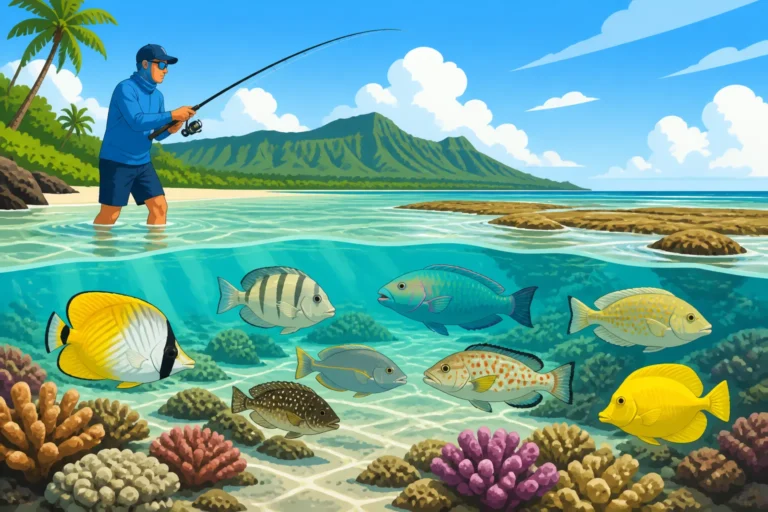
Many of Hawaii's most recognizable endemic fish make their homes directly on the vibrant coral reefs and rocky shores. These are the species you're most likely to see on a casual snorkel or dive.
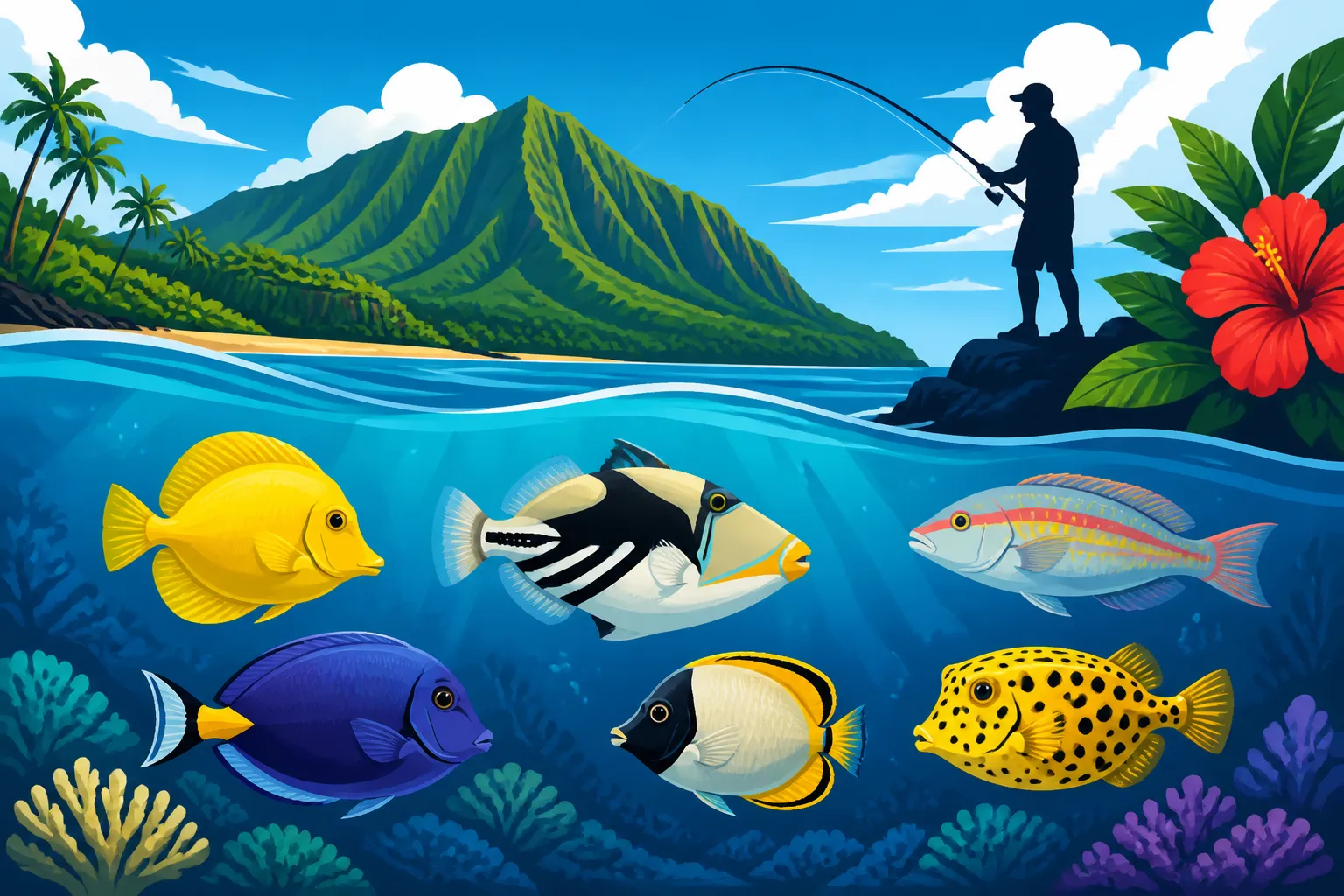
Take, for instance, the Potter's Angelfish (Centropyge potteri). This stunning little fish, rarely growing beyond a few inches, is a common sight in Hawaii and absolutely gorgeous with its vibrant orange body crisscrossed by thin blue lines. It's a true endemic, making its home exclusively in these waters, darting in and out of the coral heads. Then there's the Hawaiian Sergeant (Abudefduf abdominalis), a larger damselfish that's also endemic. You'll often see them in schools, especially around surge zones and rocky outcrops, easily identified by their black and white striped bodies. While some sergeant species exist elsewhere, Abudefduf abdominalis is distinctly Hawaiian.
Of course, we can't talk about iconic Hawaiian fish without mentioning the Humuhumunukunukuapua'a (Rhinecanthus rectangulus), Hawaii's state fish. While technically found across the Indo-Pacific, its deep cultural significance and common presence in Hawaiian waters make it a symbol of our unique marine environment. Anglers often inquire, What is the state fish of Hawaii? Its presence here is so strong, it feels uniquely ours. These triggerfish are masters of camouflage and can often be seen nibbling on algae or invertebrates on the reef. Their unique mouthparts are perfectly adapted for scraping and crushing, allowing them to exploit food sources that other fish might miss. When you spot one, take a moment to appreciate its clever design and its place in this special ecosystem.
Deepwater Endemics: The Lesser-Known Gems
While the shallow reefs teem with life, Hawaii's deep-water environments also harbor an incredible collection of endemic species, many of which are rarely seen by the average person unless they venture into technical diving or specialized research. These creatures live in the twilight zone, often between 100 to 500 feet, where light is scarce and conditions are vastly different from the sunny surface.
One prime example is the Bandit Angelfish (Apolemichthys arcuatus), also known as the Hawaiian Arc-Eye Hawkfish. This striking fish, with its distinct black band over its eyes and generally silvery body, is a deep-water gem that truly exemplifies Hawaiian endemism. It prefers the deeper ledges and caves, making it a challenging but rewarding sight for advanced divers. Similarly, the Masked Angelfish (Genicanthus personatus) is another spectacular endemic found in these deeper realms. The males and females have different colorations, with males typically having a more pronounced "mask" on their face. These fish are often found along drop-offs and seamounts, perfectly adapted to the cooler, darker conditions and different food sources available at depth. Understanding these species often requires specialized knowledge, and you can explore more about them in resources like Fish species unique to Hawaii's deep reef slopes. The existence of these deep-water endemics truly highlights how distinct and self-contained the Hawaiian marine ecosystem has become over geological time.
Protecting Hawaii's Unique Aquatic Heritage
With such a high percentage of unique fish species, protecting Hawaii's marine environment isn't just a local issue; it's a global responsibility. These creatures are irreplaceable, and their survival depends on careful management and respectful interaction from everyone who enjoys our waters. It's not just about what we catch, but how we interact with the entire ecosystem. Knowing the Hawaii Fishing Regulations Explained is a critical first step for any angler.
Regulations and Best Practices for Anglers
For anglers, understanding and adhering to local regulations is paramount. The state of Hawaii has specific rules designed to protect both the fish populations and their habitats. This includes bag and size limits for certain species, seasonal closures, and restrictions on gear types. For example, some fishing methods are restricted in certain areas to prevent overharvesting or damage to sensitive reef systems.
Responsible angling goes beyond just following the letter of the law. It also means practicing catch and release for vulnerable species, using appropriate tackle to minimize harm, and being mindful of your impact on the environment. Never leave fishing line or trash behind, as these can be deadly to marine life. If you're unsure about a specific regulation, always err on the side of caution or consult the Hawaii Department of Aquatic Resources (DAR). Familiarizing yourself with resources like Hawaii Bag and Size Limits by Species is crucial. Even when buying fishing gear on Amazon, make sure you're choosing environmentally friendly options where possible, such as lead-free weights or biodegradable lines if they become available. It's about being a good steward of the ocean, ensuring that future generations can also marvel at Hawaii's unique aquatic residents.
Marine Life Conservation Districts
One of the most effective tools for protecting Hawaii's unique fish species and their habitats is the establishment of Marine Life Conservation Districts (MLCDs). These designated areas are essentially underwater parks where fishing and sometimes even recreational activities are heavily restricted or completely prohibited. The goal is to allow marine life to thrive, undisturbed by human impact, creating healthy breeding grounds and nursery areas that can then replenish surrounding waters.
When you visit an MLCD, like the famous Hanauma Bay, you'll immediately notice the difference: the fish are abundant, often larger, and far less shy than in heavily fished areas. What a Marine Life Conservation District means for anglers is that fishing here is generally off-limits, but it's a small price to pay for the incredible biodiversity they foster. These protected zones are vital for the survival of Hawaii's endemic fish, providing safe havens where they can reproduce and grow without pressure. They act as living laboratories, demonstrating the power of protection and serving as a reminder of the richness that can return when we give nature a chance to recover. Always check signage and local guidelines when visiting any coastal area to determine if you are in an MLCD and what activities are permitted.
Conclusion
Hawaii's waters are a living testament to the power of evolution and isolation, boasting an incredible array of fish species found nowhere else on Earth. From the colorful Potter's Angelfish darting among the shallow corals to the elusive Bandit Angelfish patrolling the deep reefs, each endemic species is a priceless part of this island ecosystem. Understanding why these species are unique and the evolutionary journey they've taken helps us appreciate the fragility and beauty of this marine world. By embracing responsible angling practices, supporting conservation efforts, and respecting designated Marine Life Conservation Districts, we can all play a vital role in ensuring these unique aquatic treasures continue to thrive for generations to come.
| Category | Example Species | Endemic Status | Key Characteristics | Where You Might See Them |
|---|---|---|---|---|
| Shallow Reef Fish | Potter's Angelfish | Endemic | Orange body with blue stripes, small size | Coral reefs, rubble zones, surge areas, 10-60 ft |
| Hawaiian Sergeant | Endemic | Black and white stripes, deeper body | Rocky shores, surge zones, shallow reefs, 0-30 ft | |
| Deepwater Reef Fish | Bandit Angelfish | Endemic | Silvery body, black band over eyes | Deep ledges, caves, drop-offs, 100-500 ft |
| Masked Angelfish | Endemic | White body, black "mask" on face (males) | Steep drop-offs, seamounts, 100-300 ft | |
| Culturally Iconic | Humuhumunukunukuapua'a | Widespread | Distinct geometric patterns, small dorsal spine | Shallow reefs, lagoons, rocky areas, 0-50 ft |
Disclaimer
This article is for general informational purposes only and does not constitute professional advice. Laws, prices and regulations vary by location and change over time. Consult a qualified professional for guidance on your specific situation.