How baitfish schools affect Kona marlin fishing
One of the biggest head-scratchers for any angler heading out off the Kona Coast is figuring out where the marlin are hiding. It can feel like an endless ocean out there, and without a clear plan, you might just be trolling through empty water. This guide is all about demystifying one of the most crucial elements to finding those magnificent billfish: understanding and locating the baitfish schools that dictate their movements and feeding patterns.
The Deep Connection: Why Baitfish are Key to Kona Marlin Success
If you've spent any time on the water, you know the old adage: find the bait, find the fish. This couldn't be truer when you're targeting marlin off the Kona Coast. These apex predators are not just cruising aimlessly; they are actively hunting, and their hunting grounds are inextricably linked to the presence of dense schools of smaller fish. It's the fundamental principle of the ocean's food chain playing out in real-time, right before your eyes, if you know what to look for.
Think of it like this: if you're looking for a lion in the savanna, you don't just wander around hoping to stumble upon one. You look for the watering holes where the gazelles congregate, because that's where the lion will be. Marlin operate on the same principle. They conserve energy and patrol areas where their food source is abundant and easily ambushed. A healthy bait ball acts like a giant, flashing neon sign saying "dinner is served" to a hungry marlin. Without these schools, marlin have no reason to be in an area, making your chances of a strike dramatically lower. They're built for speed and power, but they're also smart about expending that energy efficiently.
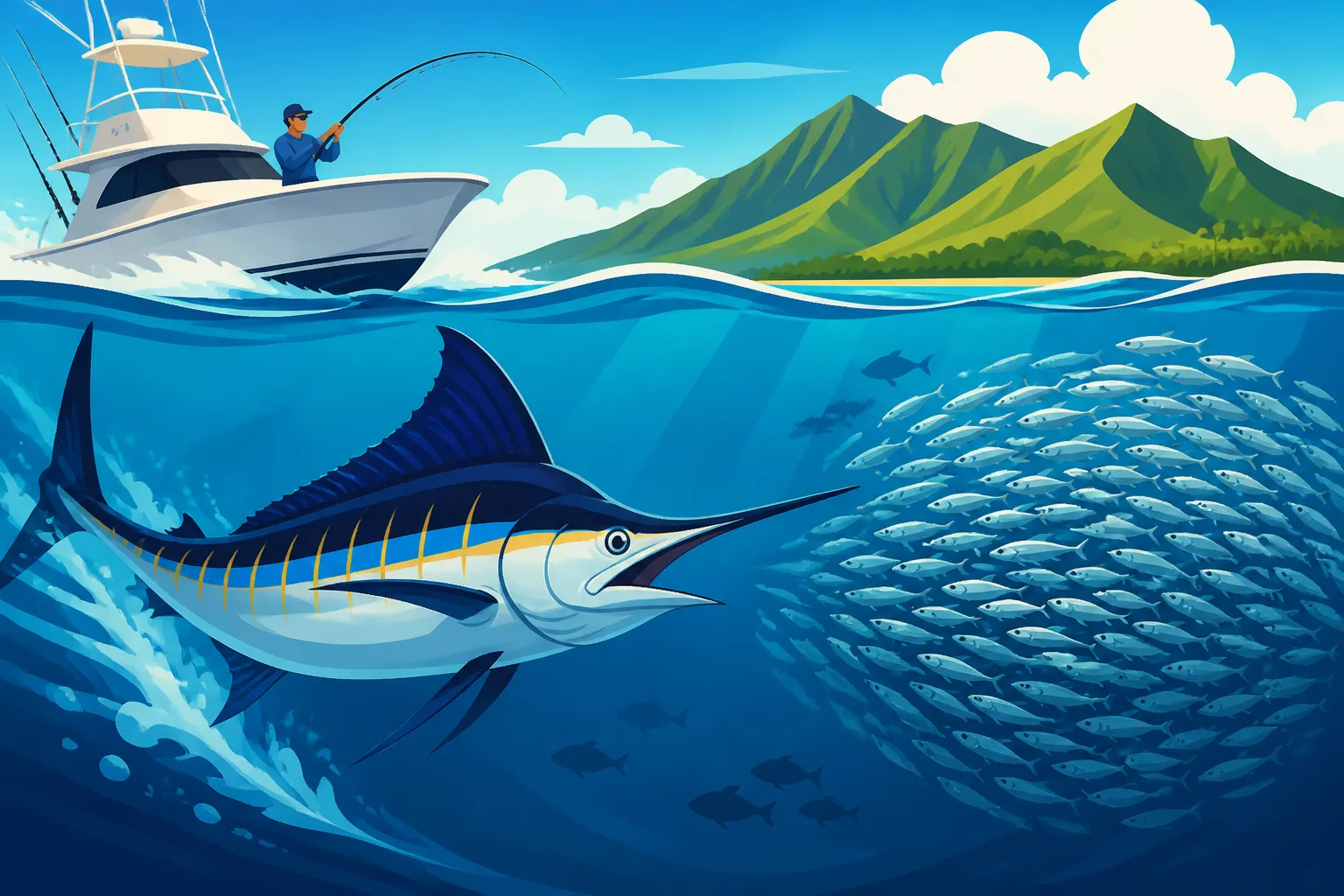
This connection goes beyond just basic sustenance. When baitfish are schooled up, they create a chaotic, vulnerable target. A single baitfish is hard to catch, but hundreds or thousands of them packed together become a swirling mass that a marlin can slash through, stunning multiple fish at once with its bill before turning back to consume them. This makes the hunt far more effective for the marlin. So, understanding the types of baitfish, their habits, and how to find them becomes the cornerstone of a successful Kona marlin fishing trip. It’s the secret sauce that separates a lucky catch from consistent success. You'll often hear seasoned captains talk about "finding the life" – that "life" is almost always centered around bait.
Understanding Kona's Primary Baitfish Species
The waters off the Kona Coast are incredibly rich and diverse, hosting a variety of baitfish species that attract everything from small reef fish to massive pelagic predators. Knowing which baitfish are present, and what they look like, can give you a significant advantage in figuring out what the marlin are likely feeding on. It's about "matching the hatch" in a big game context.
Mackerel Scad (Opelu) and Bigeye Scad (Akule)
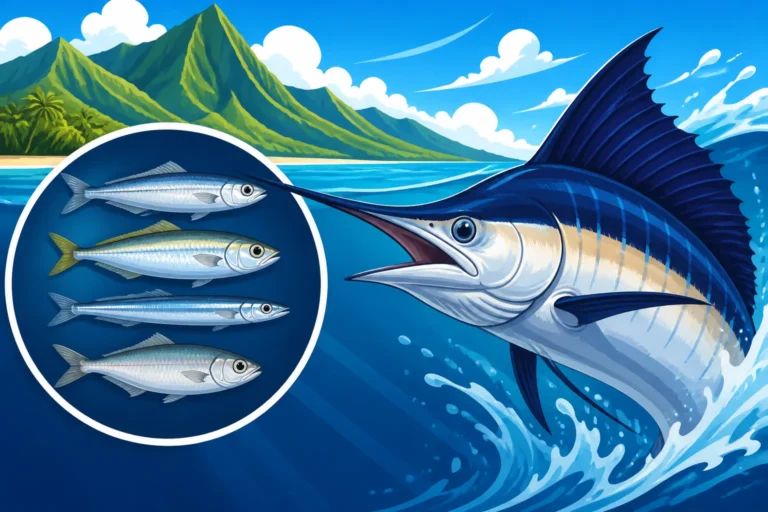
These two scad species are absolute staples in the Hawaiian diet, both for humans and for marlin. Opelu are generally smaller, often found closer to shore and around FADs (Fish Aggregating Devices) or natural structures like ledges and pinnacles. They have a slender body and are brilliant silver. Akule are a bit larger, more robust, and tend to form massive schools in deeper, offshore waters, though they can sometimes be found closer to the coast, especially around harbor entrances or bays. Both are highly prized by marlin.
When marlin are feeding on opelu or akule, their behavior can be quite aggressive. They'll often push schools to the surface, causing massive boils and splashes that are visible from a distance. Sometimes, you'll even see the marlin themselves breaching or tail-walking amidst the chaos. If you're on the boat and you suddenly see a huge school of either opelu or akule on your sonar screen, especially if it's tightly packed and showing signs of disturbance, you can bet there's a predator nearby. These baitfish are oily and provide a substantial meal, making them a prime target. Learning to spot the subtle movements of these schools, even when they're not on the surface, is a game-changer. You might notice a slight shimmer on the water, or a change in water color, that indicates a dense school just below the surface. Many local anglers will actively seek out Opelu (Mackerel Scad) in Hawaii or Akule (Bigeye Scad) Schooling Behavior specifically for live bait, which speaks to their effectiveness.
Juvenile Tunas (Aku) and Mahimahi
Beyond the scad, smaller tunas, particularly juvenile skipjack tuna (aku), are another critical food source for marlin. Aku are incredibly fast-moving schooling fish, and when they're abundant, marlin will aggressively pursue them. These tunas often form huge, fast-moving schools offshore, and the marlin will pick them off the edges or drive them up. This is a common scenario during prime marlin seasons, and it's why trolling lures that imitate small tuna are so effective.
Similarly, juvenile mahimahi, especially during certain times of the year when they are breeding, can also become a significant bait source. These bright, iridescent fish often congregate around floating debris, weed lines, or current breaks, which are also prime hunting grounds for larger marlin. A weed line isn't just a place to find mahimahi; it's a potential restaurant for a marlin, full of smaller fish taking refuge. If you're seeing a lot of smaller mahimahi, it's a good bet that bigger predators aren't far behind. Understanding the Ahi Migration Patterns Around Hawaii can also give clues, as marlin will often follow these larger tuna schools, preying on stragglers or smaller individuals.
Here's a quick comparison of some common Kona baitfish and what they generally attract:
| Baitfish Species | Typical Size Range | Common Habitat | Marlin Feeding Behavior |
|---|---|---|---|
| Opelu (Mackerel Scad) | 6-12 inches | Nearshore, FADs, reefs | Aggressive surface busts, pushed up against structures |
| Akule (Bigeye Scad) | 8-16 inches | Offshore, FADs, open water | Large boils, driven to surface in massive schools |
| Juvenile Aku (Skipjack) | 1-5 lbs | Offshore, open water | Fast-paced chases, picking off individuals from schools |
| Juvenile Mahimahi | 1-5 lbs | Weed lines, floating debris, current breaks | Ambush predators along structure, focused hunts |
| Flying Fish | 6-10 inches | Open ocean, surface | Surface strikes, aerial attacks (often by billfish) |
Reading the Signs: Locating Baitfish Schools for Marlin
Finding the bait is half the battle, but it's not always as simple as spotting a giant boil on the surface. Marlin and baitfish are constantly on the move, and successful anglers are those who can read the subtle clues the ocean provides. It takes patience, keen observation, and a little bit of technology.
Bird Activity: Your Aerial Spotters
Birds are your best friends when it comes to locating baitfish. Specifically, look for large flocks of seabirds like boobies, terns, and especially frigate birds, diving and congregating over a particular area. These birds are feasting on the same baitfish that marlin are targeting. However, not all bird activity is equal. A few birds lazily circling might mean nothing. What you're really looking for is frantic, active feeding.
If you see birds diving hard, smacking the water, or a large flock is tightly grouped and moving quickly, that's a huge indicator of bait being pushed to the surface by predators from below. Frigate birds, with their distinct "W" shaped tail and soaring flight, are particularly good indicators. They don't dive into the water; instead, they harass other birds to steal their catch or pick off baitfish driven to the surface. So, a tight group of frigate birds hovering intently is often a dead giveaway. Sometimes, you'll even see birds sitting on the water, gorged after a feeding frenzy – a sign that something big just happened. Many serious anglers will invest in high-quality binoculars, often found on platforms like Amazon, to scan the horizon for this kind of activity. It extends your visual range significantly, allowing you to cover more ground.
Water Color and Current Lines
The ocean isn't a uniform blue; subtle changes in water color and temperature can often indicate areas where baitfish gather. Look for distinct current lines or "rips." These are often visible as a line where two different currents meet, sometimes marked by floating debris, seaweed, or a noticeable change in water texture or color. These current lines act like natural highways or convergence zones, concentrating nutrients and, in turn, baitfish. Marlin will patrol these lines, waiting for an easy meal to be carried to them.
Similarly, changes in water temperature can be crucial. Warm currents meeting cooler water can create thermoclines, which baitfish often relate to. While you can't always see these from the surface, a good boat will have a temperature gauge. Keep an eye on any sudden drops or rises, especially when coupled with other signs like bird activity or current lines. Even a slight color change, from a deeper blue to a lighter, greener hue, can indicate shallower water or upwellings that bring nutrients closer to the surface, attracting bait. These environmental cues are what the most successful captains are constantly looking for and help them decide where to focus their efforts for Best Time of Year to Fish in Hawaii.
Using Your Electronics: Sonar and Radar
While visual cues are invaluable, modern marine electronics are indispensable for locating baitfish schools, especially when they're deeper in the water column. Your sonar or fish finder is your underwater eye. Look for dense, often arc-shaped marks on your screen, indicating schools of bait. The size and density of these marks can tell you a lot. A "nervous" bait ball, one that's tightly packed and perhaps showing signs of elongation or scattering, often indicates that a predator is working it.
Pay attention to what's below the bait as well. If you see larger, distinct marks lurking beneath or on the edges of a bait ball, you've likely found your target marlin. Radar can also be useful for spotting distant bird flocks that might be too far to see with the naked eye, extending your range of observation. Many anglers also use satellite imagery or apps to identify temperature breaks and chlorophyll concentrations before they even leave the dock. A good understanding of how to interpret your electronics, and cross-referencing that with visual clues, is paramount. If you're not sure how to get the most out of your boat's systems, there are many comprehensive guides and tutorials available, even instructional books you can find on Amazon, that can help you become more proficient.
Adjusting Your Strategy: Fishing Around Baitfish
Once you've successfully located baitfish schools, your job isn't done. Now comes the art of presenting your lures or baits in a way that entices a marlin that's likely already focused on its natural prey. It's about blending in while standing out, and not scaring off the very food source that's bringing the marlin in.
"Matching the Hatch" with Lures and Baits
When marlin are actively feeding on a specific type of baitfish, they become "keyed in" on that particular size, shape, and color. This is where "matching the hatch" comes into play. If you're seeing small aku being eaten, switch to lures that mimic the profile, color patterns, and swimming action of a small tuna. If it's opelu, consider lures that are more slender and silver. There's a huge array of Best Lures for Marlin Trolling off Kona designed to imitate different baitfish.
However, sometimes you need to offer something a little different to get a strike. A marlin might be full from eating hundreds of small baitfish, but a larger, easier-to-catch offering might still tempt it. This is why a diverse spread of lures, ranging from natural bait imitations to more aggressive, brightly colored "attractor" lures, can be effective. Your lure spread should essentially represent a confused school of baitfish, with one or two "wounded" or "outlier" fish that look like an easy target. Don't be afraid to experiment with different sizes, colors, and running depths until you find what triggers a bite.
Live Baiting Strategies
When you find dense schools of bait, especially opelu or akule, one of the most effective strategies is to switch to live bait. Nothing imitates a struggling baitfish better than an actual baitfish. This often involves catching the bait directly from the school using sabiki rigs or cast nets, then deploying them on heavy tackle. Live baiting is a highly effective way to target marlin because it's exactly what they are looking for.
When live baiting, it's crucial to present the bait naturally. A bridle-rigged opelu or akule swimming just below the surface can be irresistible to a cruising marlin. You can also slow troll these baits on the edge of a bait school, or even drift them through the school. The goal is to make your live bait appear like a vulnerable member of the school, but one that's just a little bit easier for the marlin to single out. This requires a bit of finesse and patience, but the results can be spectacular. This is a common tactic for How to Catch Marlin off the Kona Coast for trophy fish.
Stealth and Positioning
While marlin are powerful predators, they are also wary. When you find a bait ball being actively worked, approaching it correctly is critical. Don't charge in at full speed and blow through the middle of the school. This will scatter the bait and likely send the marlin deep. Instead, approach slowly and cautiously, positioning your boat on the downwind or down-current side of the activity, if possible. This allows your lures to drift naturally into the feeding zone without spooking the fish.
Keep an eye on the marlin's direction of travel and try to intercept it rather than chasing it directly. Marlin often make passes through bait schools, so timing your approach to coincide with their next pass can be incredibly effective. Consider the sun's position too; sometimes, approaching with the sun at your back can make it harder for the marlin to see your boat or lines. Sometimes, the best strategy is to sit and wait, observing the patterns of the bait and the predators, before making your move. It's all about understanding the rhythm of the ocean and integrating your boat into that rhythm seamlessly. The Kona Coast is a truly special place for anglers, and tuning into these natural cues will elevate your fishing experience immensely, whether you're targeting small papio along the shore or the legendary Marlin Fishing off the Kona Coast.
Disclaimer
This article is for general informational purposes only and does not constitute professional advice. Laws, prices and regulations vary by location and change over time. Consult a qualified professional for guidance on your specific situation.