How tilapia arrived in Hawaii’s freshwater
One common question many anglers, both kama'aina and visitors, have when they cast their lines in Hawaii's freshwater reservoirs and streams is, "Where did all these tilapia come from?" It's a valid question, especially given that Hawaii is known for its incredible ocean bounty, not typically its freshwater fisheries. The truth is, these prolific fish weren't always here; they have a fascinating, albeit somewhat complicated, history of introduction that has profoundly shaped Hawaii's inland aquatic ecosystems. This guide will take a deep dive into how tilapia made their way to our islands, why they thrived, and what that means for our local environment and fishing opportunities.
The Initial Introduction: Why and When Tilapia First Arrived
The story of tilapia in Hawaii's freshwater isn't one of accidental stowaways on ships, but rather a deliberate, if ultimately problematic, introduction by humans with what seemed like good intentions at the time. It harks back to an era when ecological understanding was different, and the idea of introducing non-native species to solve perceived problems was a common practice worldwide.
Early Intentions: Aquaculture and Mosquito Control
The primary reasons for bringing tilapia to Hawaii revolved around two main goals: developing a local aquaculture food source and controlling pesky mosquito populations. In the mid-20th century, particularly from the 1950s onwards, there was a significant push to find economical and sustainable protein sources for the islands. Tilapia, known for their rapid growth, hardiness, and ability to thrive in various conditions, seemed like a perfect fit. They could be raised in ponds, providing a readily available and inexpensive source of fish for local consumption, potentially reducing reliance on imported foods. Many saw them as "the aquatic chicken" – easy to farm and quick to reproduce.
Beyond food, mosquito control was a huge concern, especially in agricultural areas like rice paddies and taro patches, where stagnant water provided ideal breeding grounds. Mosquitoes weren't just a nuisance; they carried diseases. Tilapia are voracious eaters, and their diet includes mosquito larvae, making them appear to be a natural and effective biological control agent. The hope was that by introducing them into these watery environments, the mosquito problem could be significantly mitigated without relying heavily on chemical pesticides. It felt like a win-win solution: food production and pest management all rolled into one adaptable fish.
The Species Involved: Oreochromis mossambicus and Others
When we talk about "tilapia" in Hawaii, we're actually referring to a few different species that were introduced over time. The earliest and perhaps most impactful introduction was the Mozambique tilapia (Oreochromis mossambicus). This particular species is incredibly resilient, able to tolerate a wide range of salinities (from freshwater to brackish and even saltwater), varying temperatures, and even low oxygen levels, which makes them incredibly tough survivors. They also reproduce at an astonishing rate, reaching sexual maturity quickly and spawning frequently, often several times a year. This adaptability and reproductive prowess were precisely why they were selected for introduction, but they also laid the groundwork for their widespread proliferation.
Later, other tilapia species and hybrids were also introduced, sometimes for aquaculture experiments or accidental releases, adding to the mix. Examples include Nile tilapia (Oreochromis niloticus) and possibly Wami tilapia (Oreochromis urolepis hornorum), often hybridized to create faster-growing or more resilient strains for farming. While the Mozambique tilapia was arguably the trailblazer, the presence of multiple species and hybrids has only further complicated the ecological landscape, creating robust, adaptable populations that are well-suited to many of Hawaii's aquatic environments. The idea was to cultivate them in controlled settings, but nature, as it often does, had other plans.
Escape and Establishment: From Controlled Ponds to Wild Waters
Despite the best intentions of controlled aquaculture and targeted pest control, tilapia proved to be masters of escape. Their incredible adaptability, coupled with environmental factors and human actions, allowed them to break free from their confined ponds and establish thriving populations across Hawaii's freshwater systems. This transition from controlled environments to the wild was a pivotal moment for Hawaii's delicate freshwater ecosystems.
Pathways to the Wild: Flooding, Intentional Release, and More
The journey from pond to wild stream was multi-faceted. One of the most significant pathways for escape was through natural events, primarily heavy rainfall and associated flooding. Hawaii is no stranger to torrential downpours, and when aquaculture ponds, particularly those situated near natural drainages or canals, overflowed, tilapia were simply washed out into the surrounding waterways. A small gap in a dam, a damaged screen, or even just a period of sustained high water could provide the opportunity these fish needed to venture into new territory. Once in a stream or reservoir, their resilience allowed them to survive and quickly start reproducing.
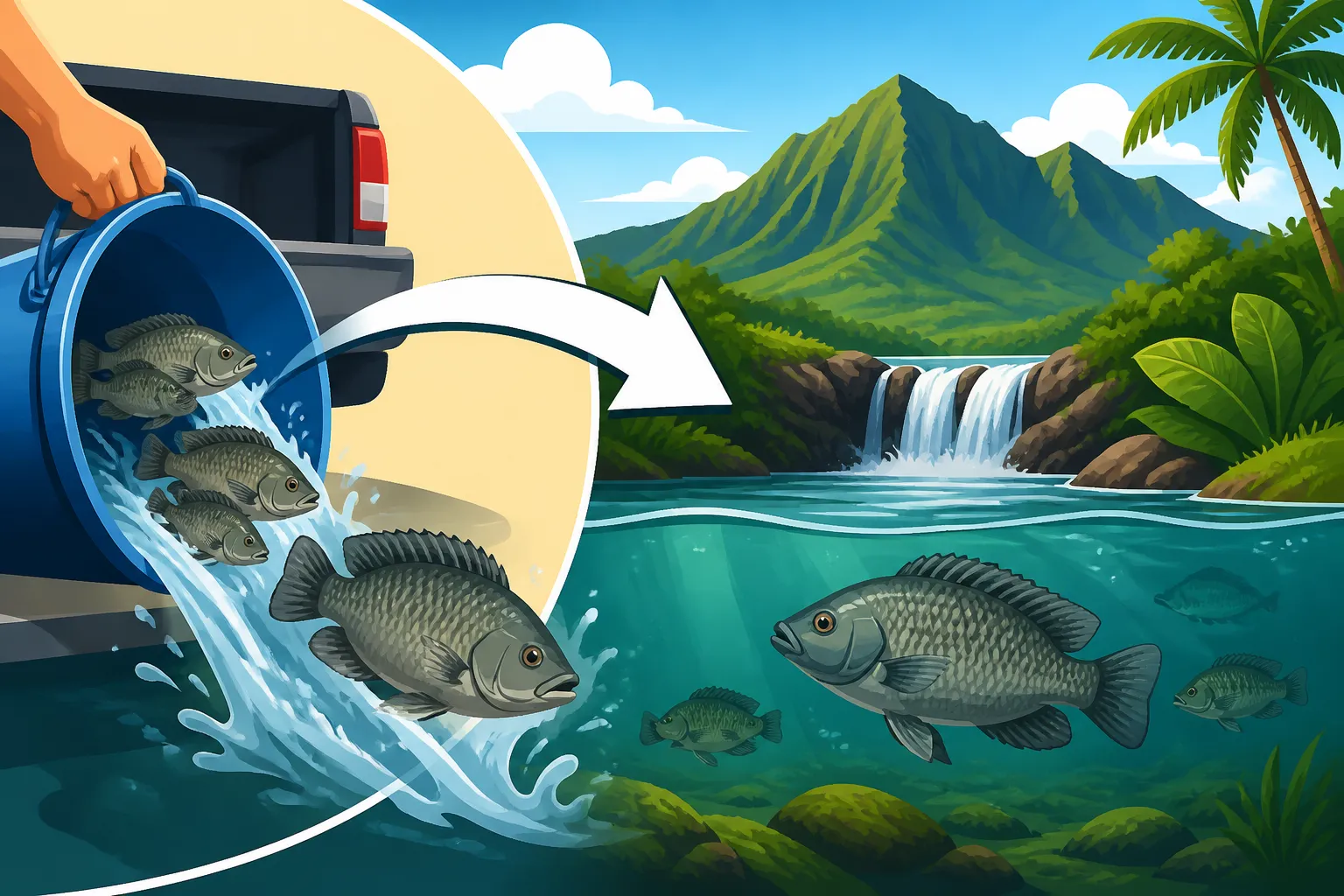
Beyond natural events, human actions also played a role. Sometimes, individuals would intentionally release tilapia into streams or reservoirs, perhaps thinking they were enhancing local fishing opportunities or establishing a convenient food source closer to home. Others might have used tilapia as bait for other fish and, through carelessness or intent, released live bait into the water. These seemingly small acts, multiplied over years and across islands, contributed significantly to their spread. Once a single breeding pair established itself, the clock began ticking on their rapid expansion. This uncontrolled dissemination, even if well-meaning in some instances, ultimately led to the widespread establishment we see today.
Rapid Proliferation: Why Tilapia Thrived in Hawaii
Once free, tilapia faced an ideal environment in Hawaii to not just survive, but to truly thrive. Several key factors contributed to their explosive proliferation. Firstly, Hawaii's warm, tropical climate is perfectly suited to tilapia, which are native to African and Middle Eastern waters. They don't have to contend with freezing winters or extreme temperature fluctuations, allowing for year-round growth and reproduction. This constant breeding cycle means that populations can rebound quickly even after periods of stress.
Secondly, and critically for an introduced species, Hawaii's freshwater ecosystems largely lacked natural predators capable of controlling tilapia populations. Our native freshwater fish, like gobies (o'opu) and flagtails (a'awa), are generally smaller and not equipped to keep the rapidly reproducing tilapia in check. This absence of predation pressure, combined with their ability to consume a wide range of food sources – from algae and aquatic plants to small insects and detritus – gave them a significant competitive advantage. They are remarkably efficient at finding and utilizing available resources.
Furthermore, tilapia are incredibly tolerant of varying water conditions. They can handle turbid (murky) water, areas with low oxygen levels, and even moderately brackish water. This means they aren't confined to pristine, clear streams but can colonize a wider array of habitats, including irrigation ditches, canals, and eutrophic ponds. Their mouth-brooding behavior, where parents protect their eggs and fry in their mouths, also contributes to high survival rates of their offspring. This combination of favorable climate, lack of predators, adaptable diet, environmental tolerance, and effective reproductive strategies created a perfect storm for tilapia to become one of Hawaii's most common, and sometimes controversial, freshwater inhabitants. You can find robust fishing gear, from basic rods to specialized nets, on Amazon to try your hand at catching them.
Ecological Impact and Management Challenges
The widespread establishment of tilapia in Hawaii's freshwater ecosystems, while initially seen as a boon for food and pest control, has brought with it a host of ecological challenges. These fish, being non-native and highly adaptable, can significantly alter the delicate balance of an environment that evolved without their presence. Understanding these impacts is crucial for appreciating the ongoing management efforts.
Impact on Native Species and Water Quality
The arrival of tilapia has created intense competition for Hawaii's unique native freshwater species. Our native o'opu (gobies) and 'opae (shrimp), which are often found in similar stream and estuarine habitats, now have to contend with a highly aggressive and prolific competitor for food and space. Tilapia are generalist feeders and can outcompete native fish for algal mats, aquatic insects, and detritus, reducing the food available for indigenous species. Imagine a small, quiet village suddenly inundated by a large, boisterous crowd that consumes all the local resources – that's often the experience for native fauna. The decline in native fish populations in some areas has been directly linked to the presence of thriving tilapia communities.
Beyond direct competition, tilapia can also degrade water quality and alter habitat structure. Many tilapia species are bottom feeders, constantly stirring up sediments as they forage. This activity can increase water turbidity, reducing light penetration needed for aquatic plants to grow, and potentially smothering sensitive native invertebrates and fish eggs. High turbidity also impacts the visual cues that many native species rely on for feeding and mating. Their high waste production can also contribute to nutrient loading, further impacting water quality and potentially leading to algal blooms that reduce dissolved oxygen, making conditions even more challenging for other aquatic life. For those interested in learning more about the intricacies of Hawaii's aquatic life, seeking out specialized literature or gear for studying fish behavior is easy to do on Amazon. It's a complex web, and tilapia have certainly tugged at many of the strands. For more about local species, consider reading Hawaii Moi Closed Season, Explained or Hawaii Uhu (Parrotfish) Size and Bag Limits.
Current Management Efforts and Angler Role
Managing tilapia populations in Hawaii is a significant challenge, largely due to their prolific nature and widespread distribution. State agencies, particularly the Hawaii Division of Aquatic Resources (DAR), focus on monitoring populations and educating the public about the impacts of invasive species. Eradication of established populations across entire watersheds is often deemed impractical or impossible due to the scale and cost involved. Therefore, management often shifts towards containment, prevention of further spread, and encouraging harvest.
Anglers play a crucial, if often overlooked, role in managing tilapia populations. Because tilapia are not a regulated game fish in the same way native species or specific recreational targets are, there are generally no bag or size limits on them in most areas. This means anglers are encouraged to harvest as many as they can catch. Every tilapia removed from a freshwater system contributes to reducing their competitive pressure on native species and can help mitigate their ecological impact. It's a direct way for the recreational fishing community to engage in conservation. When heading out for a day of fishing, remember that stocking up on essentials like tackle, bait, and even a good cooler can be done conveniently, with many options available on Amazon.
Fishing for Tilapia in Hawaii's Freshwater
While tilapia might be an invasive species with ecological impacts, they also present a unique and accessible fishing opportunity for anglers in Hawaii. They're plentiful, often willing to bite, and can be quite fun to catch, especially for beginners or families looking for some easy action. Plus, by catching them, you're actively helping to manage their populations!
Where to Find Them: Reservoirs and Slow-Moving Waters
Tilapia are incredibly widespread across Hawaii's freshwater systems, but certain locations are particularly known for thriving populations. The larger freshwater reservoirs on Oahu, such as Wahiawa Reservoir (also known as Lake Wilson) and Nuuanu Reservoir, are prime tilapia fishing spots. These man-made bodies of water offer the warm, nutrient-rich, and often turbid conditions that tilapia absolutely love. You'll find them congregating in coves, around submerged structures, and along shorelines where there's plenty of vegetation or muddy bottom for them to forage. For those exploring these specific locations, detailed rules can be found by looking into Hawaii Wahiawa Reservoir Fishing Rules or Hawaii Nuuanu Reservoir Fishing Rules.
Beyond the major reservoirs, tilapia can be found in many slower-moving streams, canals, and irrigation ditches across all the main islands. These include urban canals, agricultural drainages, and even some brackish water ponds near coastal areas. Anywhere there's relatively calm, warm water and a food source, you're likely to find tilapia. They're often visible, particularly in shallower areas, making them an excellent target for sight fishing. Observing the water for ripples or schools of fish near the surface can often indicate their presence.
Techniques and Tackle for Tilapia
Fishing for tilapia doesn't require specialized, expensive gear, which makes it very accessible. They're not particularly shy or finicky, and simple techniques often yield the best results.
Basic Setup: A light to medium-light spinning rod and reel combo, spooled with 6-10 lb monofilament or fluorocarbon line, is usually perfect. The lighter tackle makes even smaller tilapia feel like a good fight, adding to the fun.
Bait: Tilapia are opportunistic omnivores, so a wide variety of baits will work.
- Bread: This is often the top choice. A small piece of white bread balled up around a hook is incredibly effective.
- Corn: Canned corn kernels are another cheap and easy option.
- Worms: Earthworms or nightcrawlers are always a good bet for almost any freshwater fish.
- Dough Balls: Simple flour and water dough, sometimes mixed with a little garlic, can also be very enticing.
Rigs: A simple bobber rig is often the easiest and most effective. Attach a small bobber a foot or two above a small hook (size 8-12 is good) with a small split shot weight placed a few inches above the hook to help it sink. Cast it out, let it sit, and watch for the bobber to dip. You can also fish directly on the bottom with a small weight and a hook, especially if you're targeting fish in deeper pockets or where they're feeding on the bottom.
Technique: Tilapia often bite very subtly, so pay attention to your bobber or the feel of your line. They're known for nibbling, so a quick, gentle set of the hook is often all it takes. Once you have one on, be ready for a decent fight for their size! They can be surprisingly strong. For more general advice on fishing locally, check out Shore Fishing Techniques for Hawaii. And if you're looking to stock up on new fishing lines or a tackle box, Amazon has a vast selection to choose from. Many anglers enjoy taking their catch home, as tilapia, when properly cleaned, can be a tasty pan fish.
| Tilapia Species | Primary Introduction Reason | Key Characteristics | Common Habitat in Hawaii | Ecological Impact |
|---|---|---|---|---|
| Mozambique Tilapia (Oreochromis mossambicus) | Aquaculture, Mosquito Control | Extremely hardy, tolerant to varying salinity and oxygen | Reservoirs, slow streams, canals, brackish ponds | Outcompetes native species, alters water quality |
| Nile Tilapia (Oreochromis niloticus) | Aquaculture, faster growth | Faster growing, more tolerant to cooler temps than others | Primarily reservoirs, aquaculture escapees | Competition with natives, potential hybridization |
| Wami Tilapia (Oreochromis urolepis hornorum) | Aquaculture, often hybridized | Often hybridized for commercial traits | Less widespread than Mozambique/Nile, mostly reservoir areas | Similar to above, contributes to genetic mixing |
Catching tilapia is not only a fun pastime but also a great way to contribute to the health of Hawaii's aquatic environments. Every fish you remove is one less competitor for our precious native species. So next time you're wondering what to fish for in Hawaii's freshwater, consider targeting some tilapia! It's an opportunity to enjoy the outdoors, hone your skills, and do a little good for the local ecosystem. For more information on fish in these reservoirs, you might find Peacock Bass in Wahiawa Reservoir or Tilapia in Hawaii's Freshwater Reservoirs interesting. And if you're thinking about other species, perhaps Ulua (Giant Trevally) Fishing in Hawaii is more your speed, though that's in the ocean!
Disclaimer
This article is for general informational purposes only and does not constitute professional advice. Laws, prices and regulations vary by location and change over time. Consult a qualified professional for guidance on your specific situation.