Akule (Bigeye Scad) Schooling Behavior
For many anglers in Hawaii, the sight of a massive, shimmering school of akule is like striking gold. But finding these elusive baitfish, let alone understanding their intricate behaviors, can be incredibly frustrating, often feeling like a game of hide-and-seek with the ocean. This comprehensive guide will pull back the curtain on the fascinating schooling behavior of akule (Bigeye Scad) in Hawaiian waters, helping you decipher their patterns, predict their movements, and increase your chances of a successful day on the water.
Understanding Akule: The Vital Baitfish of Hawaii
Akule, known scientifically as Selar crumenophthalmus, are much more than just another fish in the sea; they are a cornerstone of Hawaii's nearshore marine ecosystem and a crucial resource for local fishermen. Their presence often dictates the success of a day's fishing, not just for those targeting akule themselves, but for anglers pursuing larger predators that feed on them.
Identification and Habitat
Akule are easily recognizable by their streamlined, somewhat compressed bodies, often with a silvery-blue back fading to a brighter silver belly. A distinguishing feature is their large eyes, which are indicative of their nocturnal or low-light feeding habits, though they are active throughout the day. They typically grow to about 10-14 inches in length, though larger specimens are certainly caught. Their habitat spans a wide range within Hawaiian waters, preferring coastal areas, bays, and around offshore structures like FADs (Fish Aggregating Devices) or natural reefs. You'll rarely find them in deep, open ocean devoid of structure or food sources, as they tend to hug the shallower, more nutrient-rich waters where plankton and smaller invertebrates are abundant. Understanding their preferred hangouts is the first step in locating their schools.
Akule are pelagic species, meaning they live in the open ocean or near the surface, rather than strictly on the seabed. However, they frequently associate with structure, especially as juveniles, using reefs and shoreline features for protection from larger predators. As they mature, their schooling becomes more pronounced, and they will venture further from the immediate reef, often aggregating in vast numbers over sandy bottoms adjacent to drop-offs or near harbor entrances. This adaptability in habitat is part of what makes them so ubiquitous and important across various fishing grounds around the islands. Knowing these tendencies helps narrow down search areas, whether you're scanning the horizon from shore or motoring along the coastline in a boat.
Importance as Bait and Food
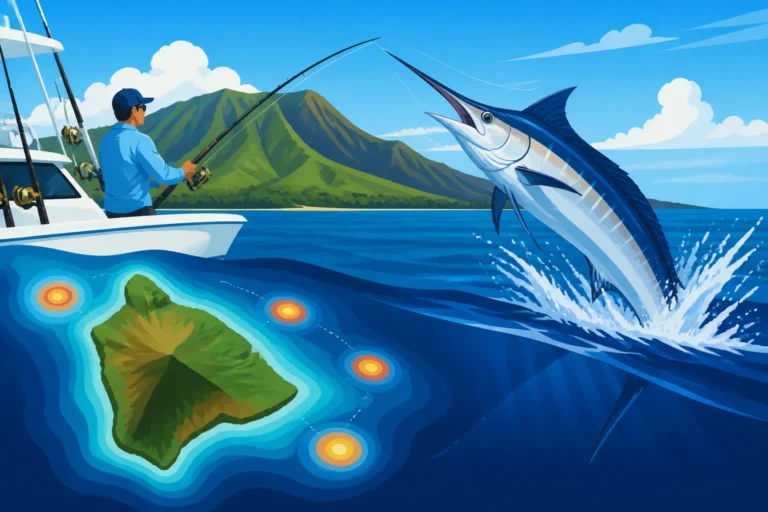
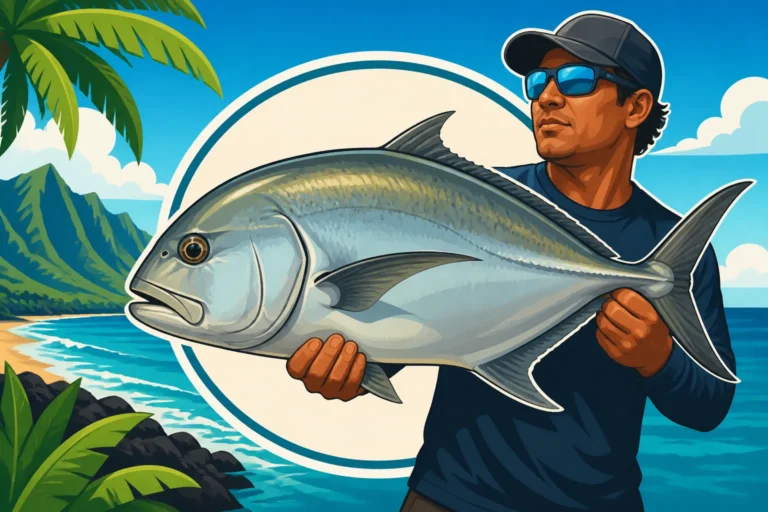
For many local anglers, akule are considered "candy bait" – a highly desirable and effective live bait for targeting prized game fish such as ulua (Giant Trevally), ahi (Yellowfin Tuna), marlin, and even certain species of bottomfish. Their lively nature on a hook, combined with their natural presence in the food chain, makes them irresistible to many predators. A successful day of akule fishing often translates directly into a successful day of targeting much larger, more sought-after species. When you have a livewell full of frisky akule, your chances of hooking into something significant skyrocket, making the effort to catch them well worth it.
Beyond their utility as bait, akule are also highly valued as a food fish in their own right. Their firm, flaky, and delicious white meat is popular for frying, grilling, or preparing poke. In local markets, fresh akule can fetch a good price, reflecting their culinary appeal. Many fishermen actively target akule not just for bait but specifically for the dinner table, appreciating the taste and versatility of this humble but important species. This dual role, as both a premium baitfish and a desirable food fish, solidifies akule's central place in Hawaii's fishing culture and economy, influencing everything from daily recreational trips to commercial operations.
The Science Behind Akule Schooling Behavior
Akule schooling is not just a random gathering; it's a sophisticated survival strategy and a fascinating display of collective intelligence. Understanding the underlying reasons and mechanics of their schooling behavior can give anglers a significant edge in predicting where and when to find these valuable fish.
Why Akule School
The primary reason akule school is for protection against predators. Imagine being a relatively small fish in an ocean full of hungry tuna, sharks, and ulua. By forming a massive, tightly packed school, individual akule drastically reduce their chances of being singled out and eaten. The sheer number of fish confuses predators, making it difficult to focus on a single target, a phenomenon often called the "dilution effect" or "predator confusion effect." A predator might charge into a school, but the fish disperse and reform so quickly that it struggles to lock onto one. This collective defense is incredibly effective and is a key reason why they are often found in such vast aggregations.
Beyond defense, schooling also offers advantages for foraging and reproduction. Within a school, individual fish can more efficiently locate and consume plankton and small invertebrates. A large school can sweep through an area, filtering food particles more effectively than scattered individuals. Furthermore, schooling facilitates reproduction by bringing mature fish into close proximity, increasing the likelihood of successful spawning. When akule are in a feeding or spawning frenzy, the school can become incredibly dense and active, presenting an opportune moment for anglers. These combined benefits make schooling an evolutionary imperative for akule, shaping their entire existence in the Hawaiian marine environment.
School Structure and Dynamics
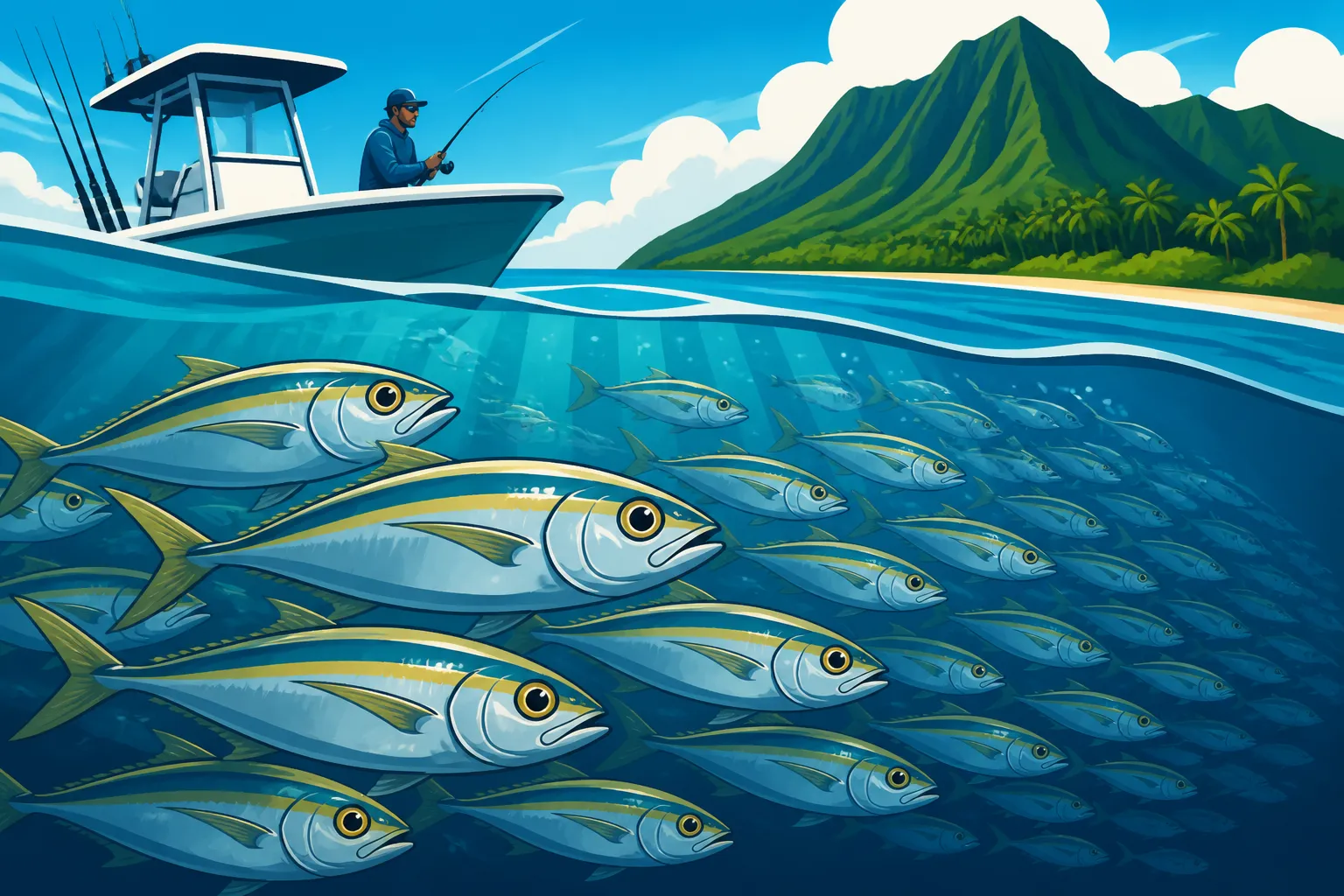
Akule schools are rarely static; they are dynamic, ever-changing formations that respond instantly to environmental cues and perceived threats. A school can range from a few dozen fish to thousands, or even hundreds of thousands, forming dense, shimmering clouds that can span dozens of yards. When undisturbed, a school might move in a coordinated, slow patrol pattern, but at the first sign of danger—perhaps a shadow overhead or a sudden movement in the water—the school can instantly coalesce into a tight ball, or "bait ball," a truly mesmerizing and chaotic defensive maneuver.
The dynamics of a school are influenced by factors like light levels, water clarity, and the presence of predators. In dimmer light, schools might be less tightly packed, relying more on lateral line senses to maintain cohesion. When predators are actively hunting, the school becomes incredibly agitated, forming tight, constantly moving spheres that pulse and undulate as fish try to evade attacks. From an angler's perspective, observing these dynamics is crucial. A "nervous" school, constantly shifting and balling up, often indicates that larger predators are nearby, signaling prime fishing conditions. Conversely, a relaxed school might indicate less predatory pressure, though still a good target for bait collection. Understanding these visual cues is key to interpreting what's happening beneath the surface, as detailed in articles like What akule schools look like from shore.
Seasonal and Environmental Influences on Akule Schools
Akule, like most marine species, are highly susceptible to changes in their environment. Understanding how seasons, tides, and weather patterns affect their behavior and locations is paramount for anyone hoping to consistently find and catch them around Hawaii.
Tidal and Current Effects
Tides and currents play a massive role in where and how akule schools aggregate and move. Akule, being planktivores in their younger stages and opportunist feeders throughout their lives, often position themselves in areas where currents concentrate their food source. Tidal currents, especially around points, channels, and reef edges, create eddies and upwellings that bring nutrient-rich waters and microscopic organisms to the surface, essentially setting the dinner table for akule. As the tide changes, these feeding zones shift, and with them, the akule schools.
For example, a strong incoming tide might push baitfish into a sheltered bay, making them accessible to shorecasters. Conversely, an outgoing tide might draw them out towards deeper water or along specific current lines where they gather plankton. Paying attention to tide charts and understanding local current patterns can reveal predictable windows for finding akule. Experienced akule fishermen often note that certain tides, whether it's the peak of the incoming or the start of the outgoing, consistently produce schools in particular locations. It's a dance with the ocean's rhythms, and learning the steps can lead to consistent success.
Seasonal Migrations and Patterns
While akule are present in Hawaiian waters year-round, their abundance and specific schooling patterns can definitely change with the seasons. There isn't a single "akule season" in the same way there might be for certain migratory pelagics, but localized patterns emerge. For instance, in some areas, large schools might be more prevalent during the warmer summer months when ocean productivity is higher, or they might move closer to shore during specific spawning periods. Other times, they might be found in deeper, offshore aggregations around FADs.
Local knowledge and observation are key here. Fishermen who spend a lot of time on the water will notice that When akule schools show up on Oahu or other islands can be influenced by annual cycles of plankton blooms, water temperature fluctuations, and even the migratory patterns of their main predators. These seasonal shifts aren't always dramatic, but they can mean the difference between seeing a few scattered fish and encountering a massive, vibrant school. Keeping a fishing journal or talking to seasoned local anglers can provide invaluable insights into these yearly variations, helping you anticipate their movements.
Weather and Water Conditions
Akule schools are also very sensitive to prevailing weather and water conditions. Calm, clear days often see schools swimming closer to the surface, making them visible to spotters on boats or from high vantage points on shore. However, sudden changes in weather, like heavy rain runoff or strong winds creating choppy seas, can disperse schools or push them deeper into the water column. Murky water, for example, might make them harder to spot but could also make them less wary of approaching anglers.
A crucial factor is ocean swell. Large swells can stir up the water, affecting visibility and even moving their food sources. While some fish might seek shelter in protected bays during big surf, others might be drawn to the churned-up waters where dislodged prey is plentiful. Water temperature also plays a role; while akule tolerate a range of temperatures, sudden drops or rises can influence their comfort and feeding behavior, causing them to move to more favorable conditions. Understanding these environmental cues allows you to anticipate how and where akule might react, giving you a better chance of finding them, even on challenging days.
Best Strategies for Locating and Catching Akule
Finding akule schools is often the biggest challenge, but once you've located them, the techniques for catching them are relatively straightforward. It's about combining keen observation with the right gear and approach.
Visual Cues for Spotting Schools
Spotting akule schools often involves a combination of keen eyesight and understanding what to look for. One of the most common and reliable indicators is bird activity. Frigatebirds (ʻiwa), terns, and boobies diving or circling intensely over a specific area are almost always a sign of baitfish being pushed to the surface by predators from below. The more frantic the bird activity, the more likely there's a feeding frenzy happening beneath the surface, which includes akule. Keep an eye on the horizon for these aerial clues; they are often the first sign of action.
Beyond birds, look for visual disturbances on the water's surface itself. This could be a dark, shimmering "ball" or "cloud" just below the surface, the distinct ripple of a massive school moving, or even the subtle flashes of light reflecting off their scales as they turn. Sometimes, you'll see a frothy, "boiling" effect on the water as the fish are pushed to the surface by predatory action. If you're on a boat, use your fish finder/sonar to scan the water column. Akule schools will show up as dense, often elongated marks, sometimes forming a distinctive "banana" shape. Learning What akule schools look like from shore can significantly improve your chances.
Gear and Techniques for Akule
Catching akule generally doesn't require heavy-duty gear. Light spinning tackle or even a handline is often sufficient. The most common and effective method is using a sabiki rig. This consists of multiple small, baited or feathered hooks tied in series, designed to imitate small baitfish or plankton. You simply drop the rig into the school, give it a few gentle jigs, and you can often hook multiple akule at once. These rigs are inexpensive and can be found at most tackle shops or online retailers like Amazon. Having a variety of sabiki sizes and colors can be helpful to match the hatch or adapt to the fish's preference on any given day.
Another popular method, especially for collecting large quantities for bait, is net fishing. A good quality cast net, readily available on Amazon, is essential for gathering your own bait, but remember to be mindful of local Hawaii Net Fishing Restricted Areas and regulations. For larger, more concentrated schools, some anglers use throw nets from shore or small boats. Chumming – throwing small pieces of bait into the water to attract and hold the school – can also be incredibly effective, bringing the akule closer to your boat or shore casting range. Learning Casting Nets for Bait Fish in Hawaii effectively is a skill that takes practice but yields great rewards.
Fishing Etiquette and Regulations
When targeting akule, it's crucial to be aware of and respect local fishing etiquette and regulations. While akule are generally abundant, sustainable practices ensure they remain so for future generations. Always check the current Hawaii Fishing Regulations Explained from the Hawaii Division of Aquatic Resources (DAR) for any specific bag limits, size restrictions, or seasonal closures that might apply. For instance, while generally not having strict limits like some other species, it's good practice to only take what you need, especially if you're collecting bait.
Respecting other anglers is also key. If you see someone already fishing a school, give them plenty of space. Don't crowd their spot or motor directly through their lines. If you're using a cast net, be mindful of swimmers, divers, and other ocean users. Also, be aware of any protected species. While akule are not protected, larger predators that follow the akule schools, such as certain shark species or marine mammals, might be. It's important to understand the regulations around Hawaii Pelagic Species Bag Limits for what you might catch while targeting akule. A good fisherman is not just skilled, but also responsible and respectful of the ocean and its resources.
The Role of Akule in Hawaii's Ecosystem and Fishery
Akule are more than just a target species; they are an integral thread in the intricate tapestry of Hawaii's marine ecosystem and a significant part of its fishing heritage. Their presence (or absence) can ripple through the entire food web.
Akule as a Food Source in the Ecosystem
Akule occupy a critical position as a mid-level forage fish in the Hawaiian marine food web. They primarily feed on zooplankton and small invertebrates, converting this microscopic energy into biomass that then becomes a vital food source for a vast array of larger predators. Without healthy akule populations, many of Hawaii's prized game fish would struggle to find sufficient food. Think of them as the oceanic equivalent of a foundational crop; everything else builds upon their availability.
Their schooling behavior, while a defense mechanism, also makes them a highly efficient food source for predators. A tuna can expend less energy chasing down a dense ball of akule than it would pursuing individual, scattered fish. This makes akule an attractive target for opportunistic feeders, driving much of the predatory activity around Hawaii's coasts and offshore waters. The health and abundance of akule schools are therefore a direct indicator of the overall health and productivity of the local marine environment, underscoring their ecological importance beyond their value to anglers.
Predators and the Food Web
The list of predators that actively target akule is extensive, reading like a who's who of Hawaii's most iconic and sought-after fish. On the larger end, you have apex predators like marlin, various species of tuna (especially ahi and aku), and ono (wahoo), which will aggressively tear through akule schools. Even sharks and dolphins are known to feast on these congregations. Closer to shore and around reefs, ulua (Giant Trevally) and papio (juvenile trevally), barracuda, and even larger reef fish like snapper and grouper will ambush akule.
This constant predatory pressure is what often creates the exciting fishing opportunities around akule schools. When you find an akule school, you're not just finding bait; you're often finding the entire ecosystem that revolves around it. Anglers capitalize on this by either using akule as live bait to entice these larger predators or by casting lures into the frenzied feeding activity. Understanding this predator-prey relationship helps you not only locate akule but also anticipate what other species might be lurking nearby, creating a dynamic and thrilling fishing experience.
Conservation Considerations
Given their ecological importance, the conservation of akule populations is a critical concern for Hawaii's marine environment. While generally robust, their abundance can fluctuate due to environmental factors, overfishing pressure in specific areas, or changes in their food sources. The Hawaii Commercial vs Recreational Fishing License Rules help manage overall take, but individual angler choices also matter. Practicing responsible fishing, such as taking only what you need, respecting minimum size limits if applicable, and releasing unwanted bycatch safely, all contribute to healthy akule stocks.
Maintaining the health of akule populations isn't just about ensuring there's enough bait for tomorrow's fishing trip; it's about preserving the entire intricate web of marine life that depends on them. This includes respecting marine protected areas and understanding specific regulations that may apply to the methods of harvest, such as Hawaii akule net fishing rules. As stewards of the ocean, we all have a role to play in ensuring that the shimmering schools of akule continue to thrive in Hawaii's waters for generations to come, providing both sustenance and excitement to the local fishing community.
| Visual Cue | What it Looks Like | What it Means for Akule | Best Action for Anglers |
|---|---|---|---|
| Bird Activity | Frantic diving, circling, or hovering birds (terns, boobies, frigatebirds) | Predators are pushing akule to the surface. Strong indicator of a feeding frenzy. | Head to the area cautiously; prepare sabiki rigs or cast net. |
| Boiling Water | Water surface appears to "boil" or erupt with splashes | Akule are being aggressively pursued by predators; a massive feeding event. | Move in quickly but quietly; cast lures or bait into the melee. |
| Dark Shimmering Patches | Large, dark, often oval or kidney-shaped patches just below the surface | A dense school of akule is present, possibly feeding or resting. | Approach slowly, cast sabiki rigs or throw a cast net gently. |
| Flashes in the Water | Quick, silver flashes of light seen just under the surface | Individual akule are turning and reflecting light as they swim. | Indicates scattered or loosely schooled akule; may need chumming to consolidate. |
| Sonar/Fish Finder Readings | Dense, often elongated marks in the water column, sometimes a "banana" shape | Direct confirmation of fish presence and depth; can show school size. | Target depth with sabiki rigs; use weighted rigs if deep. |
Disclaimer
This article is for general informational purposes only and does not constitute professional advice. Laws, prices and regulations vary by location and change over time. Consult a qualified professional for guidance on your specific situation.