Best Season to Book a Bottomfishing Charter
If you've ever dreamt of dropping a line into Hawaii's deep blue waters, hoping to pull up a magnificent opakapaka or a ruby red onaga, you've probably wondered: "When's the absolute best time to go?" It's a common question, and frankly, a bit of a tricky one, because Hawaii's fishing seasons don't quite align with what many anglers are used to in mainland temperate climates. This guide will dive deep into the unique rhythms of bottomfishing in the islands, helping you understand the nuances and pick the perfect season for your charter adventure.
The Unique Nature of Hawaii's Bottomfishing "Seasons"
Unlike places where seasons bring dramatic shifts in water temperature and fish migration, Hawaii operates on a more subtle clock. Our tropical climate means relatively stable ocean temperatures year-round, which in turn means many deepwater species are present and catchable throughout the year. But "catchable" doesn't always mean "peak season," and there are definitely times when the odds swing more in your favor for certain species or better fishing conditions.
Year-Round Opportunity vs. Peak Periods
One of the beautiful things about bottomfishing in Hawaii is that it's truly a year-round pursuit. The deep-water drop-offs, pinnacles, and ledges that hold species like opakapaka, onaga, ehu, and gindai are always there, and the fish generally don't migrate far due to drastic temperature changes. This means if you visit in January, June, or October, you'll still find charters actively targeting these prized bottom dwellers.
However, anglers and captains who spend countless hours on the water have observed subtle trends that can define "peak periods" for specific species or for overall comfort. For example, while onaga are often caught year-round, their activity might increase or decrease based on moon phases, current, or even specific bait movements. Understanding these subtle shifts is key to maximizing your chances and why choosing the "best season" isn't about outright closures but about optimizing for specific goals. It's not about "if" you can catch them, but "when" you might catch more or bigger ones, or simply have a more pleasant experience on the water.
Why Tropical Seasons Differ from Temperate Zones
In temperate regions, spring brings warming waters and aggressive feeding, summer means consistent patterns, fall sees fish fattening up for winter, and winter often means slower, deeper fishing under harsh conditions. Hawaii, nestled firmly in the tropics, largely skips these dramatic swings. Our air temperatures fluctuate little, and the ocean temperatures, especially in the deep waters where bottomfish reside, are remarkably constant. This consistency is a double-edged sword: it means year-round availability, but it also means you can't rely on obvious seasonal cues like spawning runs or mass migrations that trigger feeding frenzies elsewhere.
Instead, Hawaiian bottomfishing is influenced more by localized factors. Think about the strength and direction of trade winds, the presence of specific deepwater currents, or even the subtle availability of deepwater baitfish schools. These factors might shift weekly or monthly rather than seasonally, making local knowledge and experienced captains invaluable. You'll find that what makes one week "hot" might be entirely different from the next, regardless of the calendar month.
The Role of Deep Water and Stable Temperatures
The target species for Hawaiian bottomfishing charters are typically found in depths ranging from 300 to over 1,000 feet. At these depths, the water temperature remains remarkably stable, usually in the mid-40s to low-50s Fahrenheit, regardless of what's happening on the surface. This deep-water environment acts as a consistent habitat, providing a stable home for these fish year-round. This stability means there isn't a "too cold" or "too hot" season for the fish themselves.
What does change, however, is how accessible these deep-water grounds are to anglers. Surface conditions like strong winds or large swells can make reaching these spots difficult, uncomfortable, or even unsafe. So, while the fish are always down there, the "best season" often has more to do with comfortable boating weather and sea states than with the fish's metabolic rate or migratory patterns. A calm winter day can be just as productive as a calm summer day, if not more so, depending on the specific species you're targeting.
Target Species and Their Seasonal Habits
While bottomfish generally reside in stable deepwater environments, there are subtle patterns and traditional wisdom regarding when certain species are more prevalent or active. It's often less about a species disappearing and more about their feeding intensity or aggregation patterns.
Opakapaka (Pink Snapper): The Winter Darling
Opakapaka, arguably one of the most sought-after deepwater snappers, are often considered a "winter fish" by many local anglers and charter captains. While you can certainly catch opakapaka at any time of year, the cooler, calmer months from roughly October through March are traditionally thought to be prime time for these delicious pink fish. During these months, conditions are often conducive to reaching their preferred deepwater habitats, and many feel the fish are more actively feeding.
Imagine being out on a charter off the Kona Coast in December. The air is crisp, the sun is shining, and the ocean is a gentle roll. Your captain heads out to a favorite deep-water pinnacle, and suddenly, everyone's rods are bent with the distinct throb of opakapaka. This isn't to say summer opakapaka fishing isn't good, but for many, the winter period holds a special allure for these prized catches. The consistent presence of these tasty fish makes it an ideal time for a Best Bottomfishing Charters in Hawaii outing focused on table fare.
Onaga (Ruby Snapper): A Deep-Water Constant
The stunning ruby red onaga is another premium deep-sea bottomfish in Hawaii, and it's perhaps one of the most consistently available species year-round. Unlike opakapaka, which can show more pronounced seasonal peaks, onaga are generally found in their deepwater haunts, often between 600-1,200 feet, regardless of the calendar. This makes them a reliable target for bottomfishing charters throughout the entire year.
That said, even for a constant like onaga, factors such as strong currents or specific moon phases can influence their feeding patterns. Some captains might note a slight uptick in activity during the summer months when waters are generally calmer, making it easier to hold the boat over precise deep-water structure. But honestly, if onaga is your target, you shouldn't hesitate to book a trip whenever you're in Hawaii, as long as the weather is cooperative. Many experienced captains offer specialized Best Charters for Bottomfishing Opakapaka and Onaga that excel at finding these deepwater beauties.
Hapu'upu'u (Hawaiian Grouper) and Other Deepwater Gems
Beyond opakapaka and onaga, Hawaii's deep-sea ecosystem hosts a variety of other desirable bottomfish, each with its own subtle patterns. Hapu'upu'u, or Hawaiian grouper, are impressive fighters and delicious to eat. They tend to be more active in slightly shallower deepwater ranges, often found around 300-600 feet, and are generally available year-round. Similarly, ehu (squirrelfish snapper), gindai (flower snapper), and kalekale (silverjaw snapper) are often caught as part of a mixed bag, with their presence dictated more by the specific deep structure being fished and the bait presented than by a strict calendar season.
For these varied species, local knowledge is paramount. A skilled captain will know which deepwater spots are holding fish and adjust their strategy based on recent reports and current conditions. While no specific "season" dictates their presence, a general trend of calmer ocean conditions—often found in the summer and early fall—can improve access to a wider range of deep-sea fishing grounds, thus increasing the chances of encountering these diverse bottomfish species.
Weather, Ocean Conditions, and Their Influence on Bottomfishing
While the fish themselves might not care much about the season due to their deep-water habitat, we certainly do! The comfort and safety of your trip, and indeed, the ability of the charter to even reach the best bottomfishing grounds, are heavily dependent on surface weather and ocean conditions.
Wind, Swell, and Current: The Angler's Nemesis and Friend
Hawaii is famous for its trade winds, which blow consistently from the northeast for much of the year. These trades can create choppy seas, especially on the windward (east) sides of the islands, and particularly during spring and summer when they tend to be strongest. For bottomfishing, where boat positioning over precise deep structure is critical, strong winds and large swells can make it incredibly challenging to fish effectively and comfortably. Imagine trying to keep your line straight down in 800 feet of water while your boat is bouncing like a cork!
Conversely, periods of lighter winds and calmer seas—often found during the "Kona season" (roughly late summer through early winter) or during lulls in the trades—are gold for bottomfishing. These conditions allow captains to travel further, access more remote deep-water spots, and maintain better boat control, which directly translates to better fishing. Currents also play a huge role; sometimes a strong current makes it impossible to reach the bottom with your gear, while a gentle drift can be perfect for presenting bait naturally. This is why checking forecasts and having a flexible schedule can be a game-changer.
The Impact of Kona Storms and North Swells
While Hawaii doesn't experience "winter storms" in the mainland sense, we do have phenomena that can significantly impact fishing. "Kona storms" are low-pressure systems that bring winds from the south or southwest, often resulting in heavy rains, strong winds, and large, messy swells, particularly on the leeward (west and south) sides of the islands. These can occur sporadically, usually during the cooler months from November to April, and can shut down fishing for several days.
Similarly, the winter months, especially from November through February, bring large north and northwest swells to the exposed north shores of the islands. While these swells are celebrated by surfers, they can wrap around the islands, creating uncomfortable conditions even on traditionally calmer leeward coasts. Charters might still go out, but fishing grounds could be limited, or the ride might be a bit rougher than you'd prefer. It’s always a good idea to chat with the captain if you're booking during these months to understand potential impacts on your trip.
Water Temperature and Bottomfish Activity
As we touched upon earlier, the deep-water habitat of bottomfish remains consistently cool, largely unaffected by surface water temperatures. However, changes in surface water temperature can indirectly influence bottomfishing. For instance, cooler surface waters, sometimes seen in winter, can lead to less thermocline stratification, allowing for more vertical movement of baitfish and, consequently, predator activity. Warmer surface waters might mean faster currents or a shift in how bait congregates, which then impacts the bottomfish below.
While these subtle shifts aren't as dramatic as those for pelagic species like marlin or tuna, experienced captains pay close attention. They'll use their sonar, temperature gauges, and extensive knowledge of the local currents to pinpoint where the bait—and thus the bottomfish—are most likely to be holding. For example, a slight drop in water temperature might encourageopakapaka to feed more aggressively in certain zones. This nuanced understanding is why relying on a reputable charter, which you can often find and compare on platforms like FishingBooker, is so crucial for success.
Strategic Booking: When to Plan Your Bottomfishing Adventure
So, with all these variables, how do you actually choose when to book your Hawaii bottomfishing charter? It largely comes down to your priorities: comfort, specific species, or avoiding crowds.
High Season vs. Shoulder Season Advantages
Hawaii has distinct tourist "high seasons" which often coincide with holidays and school breaks (e.g., Christmas, Spring Break, summer vacation). During these times, the islands are bustling, and fishing charters, especially the popular ones, can be booked solid months in advance. While the fishing itself might still be good, you'll encounter more competition for prime dates and potentially higher prices due to demand.
- High Season (Peak Demand): Roughly mid-December to early January, March-April, and June-August.
- Pros: Generally good weather, lively atmosphere, more options for connecting flights/accommodations.
- Cons: Crowded charters, higher prices, need to book far in advance (3-6 months or more).
- Shoulder Season (Sweet Spot): April-May (post-Spring Break, pre-summer) and September-November (post-summer, pre-holiday rush).
- Pros: Fewer crowds, potentially better rates, excellent weather (especially Sept-Oct for calm seas), more flexibility in booking, often great fishing. This is often cited as the "best" time by locals for a more relaxed experience.
- Cons: Fewer overall tourist activities if that's also a priority.
If you prioritize calmer seas, fewer crowds, and potentially better value, the shoulder seasons often present the best opportunities. You'll still find plenty of available and highly rated charters on FishingBooker, offering a wide array of options for your preferred bottomfishing experience.
Last-Minute Opportunities and Flexibility
Sometimes, life just happens, and you find yourself in Hawaii with a few open days and a sudden urge to hit the deep blue. Can you find a bottomfishing charter last minute? It's definitely possible, especially outside of peak holiday weeks, but it requires flexibility.
- Weekdays: Your best bet for last-minute bookings. Many charters fill up first on weekends.
- Shoulder Seasons: More likely to have openings.
- Shared Charters: Often easier to get on a shared trip last minute than a private one, as they just need a few open spots to fill a boat.
The key here is being flexible with your dates and possibly your preferred charter. You might not get your first choice, but you can often find a great trip. Don't be afraid to call around or check online platforms like FishingBooker a few days before you want to go. Captains sometimes have cancellations or can squeeze in an extra angler or two.
Benefits of Booking in Advance, especially for specific charters
For serious anglers, or those with very specific dates, targeting particular species, or wanting a highly recommended captain, booking well in advance is almost always the smart play.
- Access to Top Captains: The most reputable and successful bottomfishing charters in Hawaii often have their calendars filling up months ahead of time, especially during peak seasons. Booking early ensures you get a spot with the best.
- Choice of Dates: If you have limited vacation days, booking in advance guarantees you get your preferred fishing day, rather than having to fit into whatever is left.
- Preparation Time: Booking early gives you time to research your target species, learn about Best Techniques for Deep Drop Bottomfishing, and prepare any personal gear you might want to bring.
- Better Communication: You'll have more time to communicate with your captain about your expectations, discuss target species, and understand the What is included in a Hawaii fishing charter price before your trip. This ensures everyone is on the same page for a successful outing.
For popular destinations like the Kona Coast on the Big Island or specific harbors like Ma'alaea on Maui, booking 3-6 months out is not uncommon, especially if you're planning for a high season or a prime weekend.
Choosing Your Charter and Maximizing Your Chances
The "best season" is only one part of the equation. Equally, if not more, important is the charter you choose and how you communicate your expectations. A fantastic captain can turn an "average" fishing day into a memorable one, regardless of the calendar month.
Matching Charter Expertise to Your Target Species
Not all fishing charters are created equal, and not all specialize in the same types of fishing. Some excel at targeting pelagic species like marlin and tuna, while others are renowned for their bottomfishing prowess. When booking, it's crucial to find a charter that specifically advertises and has a strong reputation for bottomfishing.
Look for captains who use specialized deep-drop electric reels, have extensive knowledge of the deep-water pinnacles and ledges, and are enthusiastic about putting you on opakapaka, onaga, and other deep-dwellers. Don't just pick any charter; do your homework. Read reviews, check their catch photos, and don't hesitate to call and ask directly about their bottomfishing experience and success rates. Platforms like FishingBooker allow you to filter by fishing type, making it easier to find charters that focus on Bottomfishing in Hawaii.
Communication with Your Captain: Key to Success
Once you've booked your charter, don't just show up on the day of the trip. Establish clear communication with your captain beforehand. This is vital for managing expectations and ensuring a successful outing.
- State Your Goals: Clearly tell the captain your primary goal. Are you hoping for a specific species like opakapaka? Are you just looking to catch some fresh fish for dinner? Or is the experience of deep-dropping the main draw?
- Discuss Conditions: Ask about recent fishing reports and current ocean conditions. A good captain will give you a realistic assessment of what to expect and might suggest alternative targets if bottomfishing conditions are poor.
- Ask About Gear: Confirm what gear they provide and if there's anything specific you should bring. (Hint: don't forget your Hawaii Fishing License Guide for 2026 details, even if the charter covers some aspects!)
- Flexibility: Be open to the captain's suggestions. They are the experts on the water and will know what's biting best or where conditions are most favorable on any given day. Their local knowledge of the Hawaii Fishing Regulations Explained is also invaluable.
Considering Boat Size and Amenities for Comfort
Bottomfishing often involves sitting or standing for extended periods while the boat holds position over deep structure. This means comfort on board can greatly enhance your experience, especially if the seas are a bit choppy.
- Boat Size: Larger boats generally offer a more stable ride, which can be a huge plus if you're prone to seasickness or if the forecast calls for some swell.
- Amenities: Consider what amenities are important to you. Is there a shaded area? A comfortable cabin? A marine head (toilet)? For longer full-day trips, these can make a big difference.
- Deck Space: Sufficient deck space allows everyone to fish comfortably without bumping elbows, especially if you're on a shared charter.
While a smaller, faster boat might be great for quickly reaching distant pelagic grounds, a stable, well-equipped vessel is often preferred for the more stationary nature of bottomfishing. Check photos of the boats on their websites or platforms like FishingBooker to get a sense of their setup before you book. And always, always heed the Tipping Etiquette for Hawaii Fishing Charters for the hard-working crew!
Beyond the Calendar: Other Factors for Bottomfishing Success
While understanding the "seasons" and choosing a great charter are crucial, there are several other subtle factors that can influence your bottomfishing success in Hawaii, often more so than the month on the calendar.
Moon Phases and Tides: Subtle but Significant Influences
Many experienced bottomfishermen swear by the moon and tides. While the exact science can be debated, anecdotal evidence strongly suggests that certain moon phases and tidal movements can influence fish activity, even in deep water.
- Full and New Moons: These often coincide with stronger tidal currents. Stronger currents can sometimes make it harder to fish deep (your line might get swept away), but they can also stir up nutrients and baitfish, leading to more active feeding windows for bottomfish.
- Quarter Moons: These periods often have more moderate tidal movements, which can be ideal for deep-dropping, allowing for better bait presentation and easier boat control.
While you might not plan your entire vacation around a moon phase, if you have flexibility, discussing the upcoming moon and tide cycles with your captain might give you a slight edge. They often have their own theories and preferred windows for hitting certain deep-water spots.
Gear and Technique: Making the Most of Any Season
Having the right gear and employing effective techniques are paramount to bottomfishing success in Hawaii, regardless of the season. Charters will provide all necessary gear, but understanding it can enhance your appreciation and improve your engagement.
- Electric Reels: For fishing depths of 300 to 1,000+ feet, electric reels are almost universally used. Winding up several pounds of lead and a fish from these depths manually is an Olympic-level workout. Electric reels make it accessible and enjoyable.
- Heavy Tackle: Bottomfishing requires heavy rods, reels, and strong braided line to withstand the powerful currents and the pull of large fish. Leaders are also heavy to resist abrasion from the rough bottom.
- Baits: Fresh squid, cut fish, and sometimes live bait are common for bottomfishing. The presentation of the bait – how it’s rigged and allowed to drift – is often as important as the bait itself.
- Drift vs. Anchor: Depending on the current and the captain's strategy, the boat might drift over a wide area or anchor directly over a specific pinnacle. Each method has its advantages.
Understanding these elements, even if you’re not personally handling the intricate rigging, helps you appreciate the effort and skill involved in a successful bottomfishing trip. Learning about How to Catch Ahi in Hawaii or How to Catch Marlin off the Kona Coast are different from deep-dropping, and it's good to know the distinctions.
Local Knowledge: The Ultimate Advantage
Ultimately, the single greatest factor in a successful Hawaii bottomfishing charter, more than any calendar season, is the captain's local knowledge. Years, often decades, of experience on these specific waters give them an intimate understanding of:
- Specific Spots: Where the honey holes are, the hidden pinnacles, and the lesser-known ledges that hold fish.
- Currents and Structure: How the currents behave over different deep-water structures and where fish are likely to congregate given those conditions.
- Fish Behavior: Subtle cues about when and why fish are biting or not biting.
- Weather Patterns: Interpreting local weather and ocean forecasts to find the most comfortable and productive fishing grounds on any given day.
You can visit Hawaii in the "best season" with poor local knowledge and have a mediocre trip, or you can go in an "off-season" with a highly experienced captain and have an epic day. When evaluating charters, look for those with a long history in Hawaii and captains who are passionate about bottomfishing. They are your best resource for a memorable deep-sea adventure, no matter when you decide to drop your line.
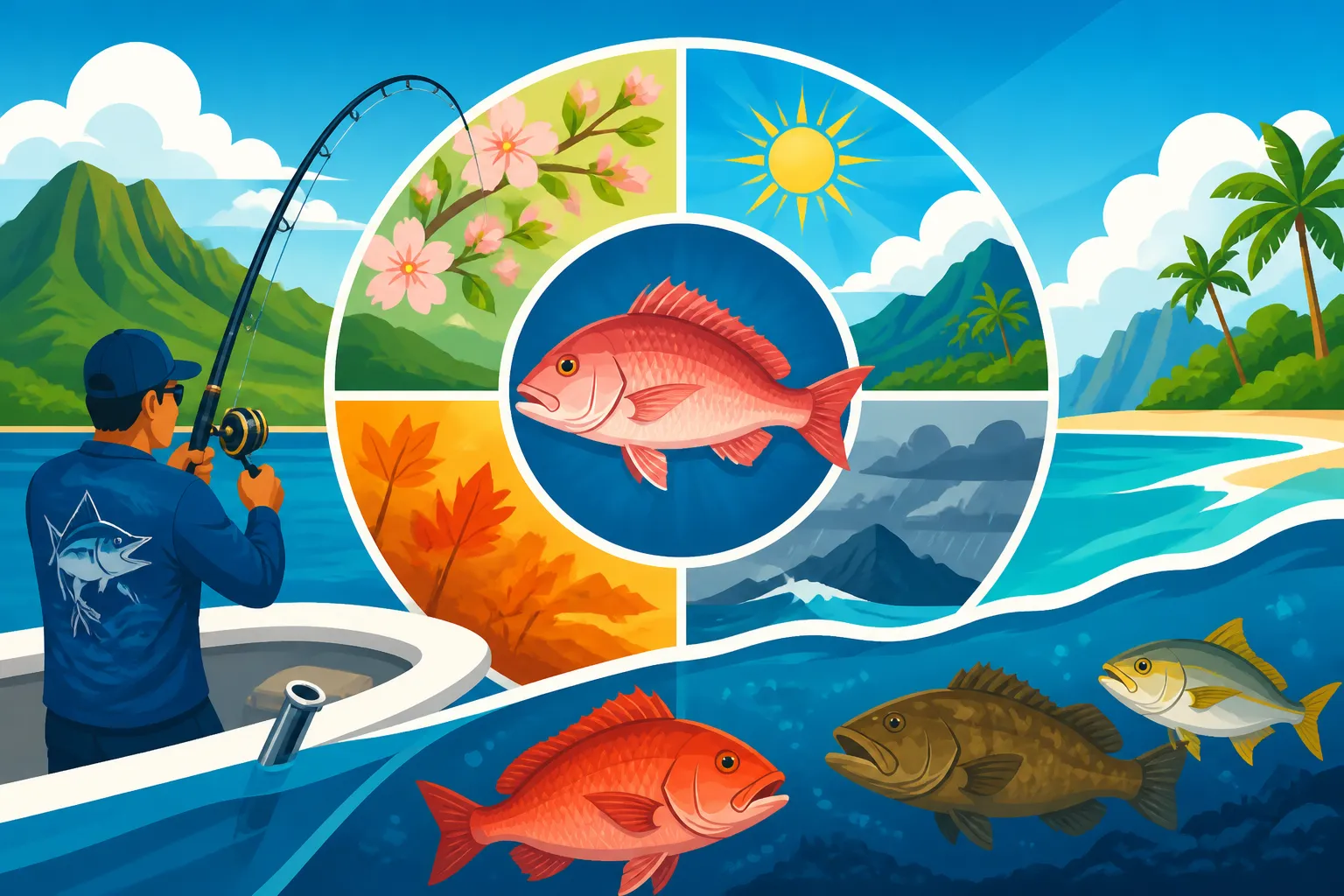
To summarize the key points regarding the best season for booking a bottomfishing charter in Hawaii, consider this table:
| Season | Typical Months | Dominant Conditions | Primary Bottomfish Targets | Pros for Bottomfishing | Cons for Bottomfishing | Booking Strategy |
|---|---|---|---|---|---|---|
| Winter | Dec – Mar | Cooler temps, potential for large N swells, occasional Kona storms. Trades often lighter. | Opakapaka, Onaga, Hapu'upu'u, Ehu | Peak time for Opakapaka; often calmer trades on leeward sides. | N swells can limit access; Kona storms can cause rough seas. | Book well in advance for holidays; good for shoulder winter. |
| Spring | Apr – May | Trades strengthening, generally good weather. | Onaga, Hapu'upu'u, Ehu, mixed bag | Excellent "shoulder season" – fewer crowds, stable weather. | Trades can be strong, leading to choppier waters. | Often a sweet spot for last-minute or flexible bookings. |
| Summer | Jun – Aug | Strongest trade winds, but also very calm periods (Kona side). Warmest surface temps. | Onaga, Hapu'upu'u, Gindai, mixed bag | Consistent fish activity; generally good conditions on leeward sides. | Strong trades can make windward fishing challenging. | Book very early, especially for weekends and top charters. |
| Fall | Sep – Nov | Trade winds lessening, generally calmest ocean conditions. "Kona season." | Onaga, Hapu'upu'u, Opakapaka starting to increase. | Arguably the best overall conditions – calmest seas, fewer crowds. | Early Kona storms can occasionally appear (Nov). | Excellent "shoulder season" for flexible, quality trips. |
In conclusion, while "winter" (roughly October-March) is often highlighted for opakapaka, and "fall" (September-November) for its calmest overall conditions, Hawaii offers incredible bottomfishing year-round. Your best bet is to align your visit with personal preferences regarding crowds and specific target species, then prioritize booking with a highly recommended, experienced captain who can navigate the nuances of Hawaii's deep-sea environment. Happy fishing, and I hope you pull up some gorgeous fish!
Disclaimer
This article is for general informational purposes only and does not constitute professional advice. Laws, prices and regulations vary by location and change over time. Consult a qualified professional for guidance on your specific situation.