Boat size that requires a throwable device in Hawaii
There's nothing quite like being out on the water in Hawaii, feeling the spray, and seeing those incredible views. But as every seasoned boater knows, the ocean demands respect, and that includes staying on top of all the safety regulations. It can be a real headache trying to decipher exactly what gear you need for your specific vessel, especially when it comes to those critical, yet sometimes overlooked, items like throwable flotation devices. This guide is here to clear up any confusion and break down exactly what boat sizes in Hawaii legally require you to have a throwable device onboard, so you can focus on enjoying your time responsibly and safely.
Understanding Hawaii's Boating Safety Equipment Requirements
Before we dive into the specifics of throwable devices, let's set the stage with a general understanding of boating safety in Hawaii. Our state, through the Department of Land and Natural Resources (DLNR) Division of Boating and Ocean Recreation (DOBOR), has clear guidelines to ensure everyone's safety on the water. These aren't just arbitrary rules; they're designed to save lives in an emergency.
The Basics of Personal Flotation Devices (PFDs)
When people think of boat safety gear, PFDs—life jackets—are often the first thing that comes to mind, and for good reason. Every vessel in Hawaii must have a Coast Guard-approved PFD for each person on board, and these PFDs must be readily accessible, in good condition, and appropriately sized for the wearer. For children under 13, wearing a PFD while underway on any vessel is usually mandatory, although there are specific exceptions, like when they are below deck or in an enclosed cabin. It's a fundamental requirement, and you can learn more about the nuances in a comprehensive guide on Life Jacket Requirements for Hawaii Boaters.
The primary purpose of a PFD is to keep someone's head above water if they accidentally fall overboard or if the boat capsizes. They're designed for continuous wear or for being put on quickly in an emergency. However, PFDs are personal, meaning one per person. This is where throwable devices come into play, offering a different, but equally vital, layer of safety.
The Specifics of Throwable Devices
A throwable device, often a buoyant cushion or a ring buoy, is a piece of safety equipment designed to be thrown to someone who has fallen into the water. Unlike a PFD, it's not meant to be worn, but rather to provide immediate flotation assistance until the person can be retrieved from the water. Think of it as a floating lifeline you can deploy quickly. These devices are particularly useful if someone goes overboard unexpectedly and doesn't have a PFD on, or if the conditions make it difficult for them to reach a standard life jacket. They provide crucial seconds or minutes of support, helping to prevent panic and conserve energy until a rescue can be effected.
The material used in these devices is typically a closed-cell foam that provides buoyancy, often covered in a durable fabric that can withstand sun and saltwater exposure. For a device to be considered Coast Guard-approved, it must meet specific standards for buoyancy and construction.
The Role of the Hawaii Department of Land and Natural Resources
The Hawaii Department of Land and Natural Resources (DLNR), specifically its Division of Boating and Ocean Recreation (DOBOR), is the agency responsible for overseeing and enforcing boating regulations in our islands. This includes everything from boat registration to safety equipment requirements. Their mission is to manage and conserve Hawaii's natural resources, which certainly extends to ensuring safe recreational use of our ocean waters.
When it comes to safety gear, DOBOR officers conduct patrols and routine inspections to ensure boaters are in compliance. Failing to meet their requirements can result in citations and fines, which nobody wants on their peaceful day at sea. It's always best practice to consult the official DLNR fishing regulations PDF or website directly, but this guide will give you a solid understanding of the throwable device rules.
What Boat Sizes Mandate a Throwable Device in Hawaii?
Now, let's get to the heart of the matter. The requirement for a throwable device isn't universal for all boats. It specifically kicks in once your vessel reaches a certain size threshold. This distinction is important because smaller boats often operate in different conditions and have different inherent risks than larger vessels.
Boats Under 16 Feet
For recreational boats that are less than 16 feet in length, the general rule is that a throwable device is not specifically mandated by Hawaii state law, as long as each person onboard has a wearable PFD. This includes many small fishing skiffs, dinghies, and personal watercraft (PWCs). While it's not legally required, having an extra buoyant cushion or small ring buoy on board is still a very smart idea.
Imagine you're out in a small 14-foot Boston Whaler, and someone unexpectedly tumbles overboard. If they're wearing their PFD, great! But what if they aren't, or what if the current is strong? Being able to quickly toss a buoyant cushion can be a lifesaver. It gives them something to hold onto immediately, even if it's just for a few moments, while you maneuver the boat back to them. Safety is always about going beyond the bare minimum, especially when the conditions can change so rapidly in Hawaiian waters.
Boats 16 Feet and Over
Here's the key takeaway for many recreational boaters and anglers: Any recreational vessel 16 feet in length or longer is legally required to carry at least one Coast Guard-approved throwable device. This is a critical regulation that applies to a vast majority of fishing boats, sailboats, and motor yachts that ply Hawaii's coastal and offshore waters.
This requirement for larger boats acknowledges that retrieving someone who has fallen overboard can be more challenging. Bigger boats have higher freeboards, making it harder for someone in the water to climb back in, and they often have more momentum, making quick stops and turns more difficult. A throwable device provides an immediate floatation aid that can be deployed faster than maneuvering a larger vessel for a direct rescue. It creates a target for the person in the water and a temporary support system. Whether you're chasing marlin off the Kona Coast or bottomfishing near the reefs, having that Type IV PFD (as throwable devices are classified) is non-negotiable.
Exemptions and Special Cases
While the 16-foot rule is generally steadfast, it's worth noting some specific exemptions or common-sense practices for certain types of vessels:
- Canoes, Kayaks, and Stand-Up Paddleboards (SUPs): These manually propelled vessels are typically exempt from the throwable device requirement, regardless of their length. However, each person on board or using these devices must still have a wearable PFD. Given their small size and close proximity to the water, the emphasis is placed on wearing the PFD, as quickly retrieving a throwable device from a kayak in rough conditions would be incredibly difficult.
- Sailboards/Windsurfers and Kiteboards: These are also generally exempt from both PFD and throwable device requirements in certain operating areas, though wearing a PFD is still highly recommended.
- Commercial Vessels: While this guide focuses on recreational boating, commercial vessels have their own set of stricter regulations, often requiring multiple throwable devices and more extensive safety gear.
It's vital to remember that these regulations are minimums. The unpredictable nature of the ocean means that having extra safety gear is always a wise choice. When considering the overall safety of your vessel, you might also want to review Hawaii Boating Laws for Anglers for a broader understanding of legal requirements.
Here's a quick summary table for clarity:
| Vessel Length | Wearable PFDs Required (Type I, II, III, V) | Throwable Device (Type IV) Required |
|---|---|---|
| Less than 16 feet | One per person onboard | No (Recommended) |
| 16 feet and over | One per person onboard | Yes, at least one |
| Canoes, Kayaks, SUPs | One per person onboard | No |
| PWCs (Personal Watercraft) | One per person onboard | No (Operator must wear PFD) |
Choosing and Maintaining Your Throwable Device
So, you've determined your boat needs a throwable device. Great! But not just any old cushion will do. You need a Coast Guard-approved device, and knowing how to choose one and keep it in tip-top shape is just as important as having it onboard.
Types of Throwable Devices and Their Uses
The two most common types of Coast Guard-approved throwable devices (classified as Type IV PFDs) are buoyant cushions and ring buoys (often called life rings). Both serve the same primary function, but they have slightly different applications.
- Buoyant Cushions: These are square or rectangular cushions designed with straps for throwing. They are incredibly versatile and often double as comfortable boat seating, making them a practical choice for many recreational boats. Their compact size makes them easy to store. When someone falls overboard, you can grab and toss it quickly. Many boaters find them convenient, and you can find a wide range of Coast Guard-approved options readily available at marine supply stores or even online platforms like Amazon. Just make sure it clearly states "Type IV PFD" and "USCG Approved."
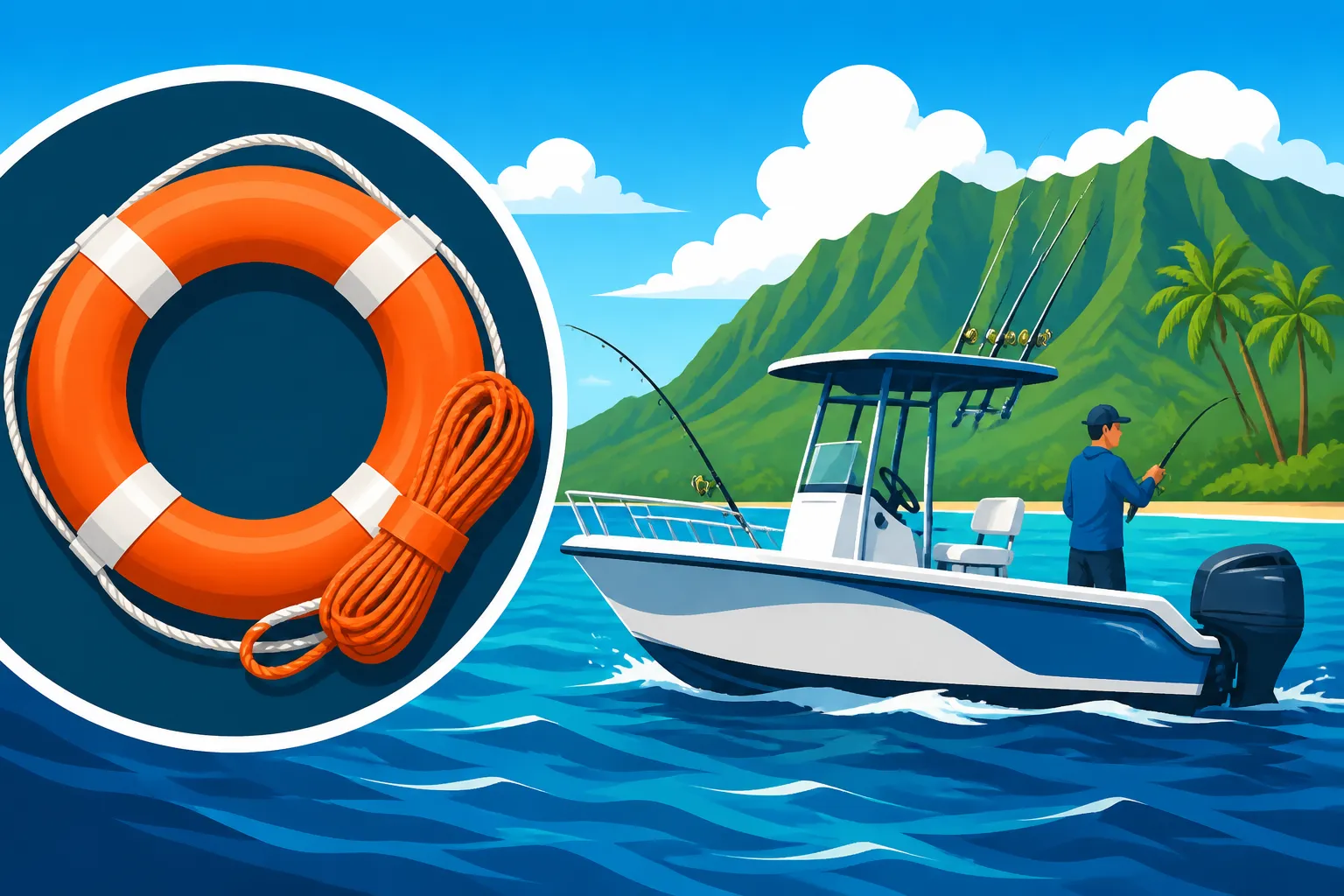
- Ring Buoys (Life Rings): These are the classic, donut-shaped devices, often seen on larger vessels or at public docks and pools. They are typically heavier and can be thrown further, especially if equipped with a line. For boats that operate further offshore or have higher freeboards, a ring buoy with a substantial line attached can be particularly effective, allowing the person in the water to grab the ring while the line keeps them tethered to the boat or allows for easier retrieval. Larger ring buoys, such as those that are 20 or 24 inches in diameter, are highly visible and provide excellent buoyancy.
When choosing, consider your boat type, the typical conditions you fish in, and your passengers. A fast-moving center console might benefit from a lighter buoyant cushion for quick deployment, while a larger offshore sportfisher might opt for a more substantial ring buoy with a retrieval line.
Placement and Accessibility
Having the right throwable device is only half the battle; it needs to be readily accessible. This isn't just a suggestion; it's a legal requirement. "Readily accessible" means it must be immediately available for use in an emergency. It can't be stowed in a locker, under a pile of gear, or strapped down so tightly that it takes precious minutes to free.
Think about a sudden accident: someone slips and falls overboard. In that chaotic moment, you need to grab the throwable device, turn, and throw it without fumbling. Ideal locations include:
- Mounted on the stern or near the helm: Often, ring buoys are mounted in cradles on the stern railing or near the helm, making them highly visible and quick to access.
- Within arm's reach in an open cockpit: Buoyant cushions can be kept on a bench seat, in an open storage compartment, or even used as a primary seating cushion, as long as they aren't buried.
- In a dedicated, unlocked compartment: If stored, it must be in a compartment that's easily opened and reached without delay from any position on the boat where an emergency might occur.
Avoid stowing it in an area where you'd have to move other equipment, unlock a latch, or struggle with a cover. The difference between a quick toss and a delayed deployment could mean everything.
Regular Inspection and Maintenance
Your throwable device isn't a "set it and forget it" piece of gear. Like all safety equipment, it needs regular inspection and maintenance to ensure it will perform when you need it most. Saltwater, sun, and general wear and tear can degrade its effectiveness.
Here’s a simple checklist:
- Check for Tears and Punctures: Inspect the fabric cover for any rips, holes, or frayed seams. Damage can compromise the buoyancy material inside.
- Look for Fading and UV Damage: Prolonged exposure to the Hawaiian sun can degrade the fabric and stitching, making it brittle.
- Assess for Mildew and Mold: If your device gets wet and isn't allowed to dry properly, mildew can set in, weakening the material and making it unhygienic.
- Test Buoyancy (if possible): While you shouldn't submerge it for extended periods, a quick check to ensure it feels robust and buoyant is good. If it feels waterlogged or excessively soft, it might be compromised.
- Ensure Lines are in Good Condition: If your ring buoy has a retrieval line, check for knots, fraying, or degradation of the rope.
- Clean Regularly: A simple rinse with fresh water after each trip, followed by air drying, will significantly extend its lifespan.
A well-maintained throwable device is a reliable one. It's a small investment in time and effort that could pay off immensely in an emergency. Remember, you might also want to check your other safety gear. For instance, knowing your Hawaii boat registration requirements and making sure that's up to date is another part of being a responsible boater.
Why a Throwable Device is More Than Just a Regulation
While meeting legal requirements is essential, understanding the "why" behind these regulations often reinforces their importance. A throwable device isn't just a checkbox item for the DLNR; it's a critical tool that can make a profound difference in a real-world emergency.
Real-World Scenarios
Let's imagine a few common, yet terrifying, scenarios in Hawaiian waters where a throwable device could be the key to a successful rescue:
- The Unexpected Slip: You're out fishing for ono (wahoo) with friends off Maui. Someone leans over the side to net a fish, a wave catches the boat just right, and they lose their footing, tumbling into the choppy water. They weren't wearing a PFD, perhaps because it was a calm day or they just stepped out of the cabin. In those first panicked seconds, being able to immediately grab a buoyant cushion from the helm and toss it within arm's length provides immediate flotation and a visible target. It prevents them from going under or drifting too far while you cut the engine and begin maneuvering back.
- The Unconscious Victim: A fellow angler has a medical emergency, perhaps a heart attack, and falls overboard, unconscious. They can't grab a PFD, let alone put one on. A ring buoy with a strong retrieval line could be thrown to them. While not designed to hold an unconscious person indefinitely, it provides critical buoyancy until you can get the boat alongside and hoist them back onboard. This is a far better outcome than them being lost without any immediate aid.
- The Swimmer in Distress: Perhaps a family member decided to take a quick dip off the boat in a calm bay, but an unforeseen current or sudden cramp leaves them struggling to get back to the vessel. If they are too far or too tired to swim back, a well-aimed throwable device offers immediate assistance and prevents them from expending all their energy.
In each of these situations, the throwable device bridges the gap between the initial incident and a full-scale rescue. It buys time, provides buoyancy, and offers a beacon of hope in a stressful, life-threatening situation.
Legal Consequences of Non-Compliance
Beyond the moral imperative of safety, there are tangible legal consequences for not adhering to Hawaii's boating safety regulations. When a DOBOR officer conducts a safety check and finds your vessel lacking a required throwable device, you're likely to receive a citation.
The specific penalties can vary, but typically include:
- Fines: These can range from a few hundred dollars for a first offense, increasing significantly for repeat violations.
- Mandatory Boating Safety Courses: In some cases, you might be required to complete an approved boating safety course.
- Delayed Operations: Your day on the water could be cut short, as you might be instructed to return to shore to rectify the safety violation before proceeding.
- Increased Scrutiny: Once you've been cited, your vessel might be subject to more frequent inspections in the future.
These penalties are designed to deter non-compliance and encourage safe boating practices. It's far less costly, both financially and in terms of peace of mind, to simply have the correct equipment on board from the start. You can find more details on general infractions and penalties in guides such as Fishing Without a Required License in Hawaii: Penalties, though specific boating violation fines may vary.
Beyond the Law: Best Practices for Boating Safety
While adhering to the letter of the law is crucial, a truly responsible boater understands that regulations are often minimum standards. For optimal safety, especially when out in the vast and sometimes unpredictable Hawaiian waters, it's wise to consider best practices that go above and beyond:
- Carry More Than One Throwable Device: If your boat is 16 feet or over and the law requires one, consider carrying two. One might drift away, or you might need to throw it in a direction that prevents you from retrieving it quickly. Having a backup is never a bad idea.
- Train Your Crew/Passengers: Don't just have the gear; ensure anyone on board knows where it is and how to use it. A quick briefing before departure can make all the difference. Practice throwing the device to a floating object (like a fender) in calm water so everyone is familiar with its trajectory and limitations.
- Have a Plan: In addition to a throwable device, have a clear plan for a "man overboard" situation. Who drives the boat? Who points to the person in the water? How will you retrieve them? Speed is of the essence, and a practiced response saves critical time.
- Equip Your Device with a Light: For night fishing or evening cruises, consider attaching a water-activated strobe light or reflective tape to your throwable device. This will greatly improve visibility if it needs to be deployed in low-light conditions.
Ultimately, your responsibility as a boater in Hawaii extends beyond just your own safety; it encompasses the well-being of your passengers and anyone else you might encounter on the water. A throwable device is a simple, effective, and mandatory piece of equipment that embodies this commitment to safety. Always consider all aspects of your vessel's readiness, from your fishing gear to your Hawaii boat registration requirements, to ensure every trip is as safe as it is enjoyable.
Disclaimer
Please note that boating regulations, including those related to safety equipment, can change. While this guide provides current and accurate information based on Hawaii's Department of Land and Natural Resources (DLNR) regulations, it is always advisable to consult the official DLNR Division of Boating and Ocean Recreation (DOBOR) website or contact them directly for the most up-to-date and authoritative information before heading out on the water. This content is for informational purposes only and should not be considered legal advice.