Hawaii marlin bag limit rules
Trying to figure out Hawaii's fishing regulations, especially when it comes to big, iconic fish like marlin, can feel like navigating a maze blindfolded. You just want to enjoy the incredible fishing opportunities here, but the rules aren't always crystal clear, leaving you worried about accidentally breaking them. This comprehensive guide is designed to cut through that confusion, giving you a clear understanding of Hawaii's marlin bag limit rules so you can fish with confidence and peace of mind.
Understanding Hawaii's Approach to Marlin Management
Hawaii's waters are a true treasure, teeming with an incredible diversity of marine life, including several species of marlin. Given the popularity and economic importance of these magnificent pelagic fish, the state, in conjunction with federal bodies, takes their management very seriously. It's not just about setting limits; it's about ensuring these populations remain healthy for generations to come, balancing the needs of recreational anglers, commercial fishermen, and the ecosystem itself. The regulations are designed to prevent overfishing while still allowing people to experience the thrill of targeting these powerful ocean predators.
Why Bag Limits Matter for Pelagic Species
Pelagic species, like marlin, travel vast distances across the open ocean, often crossing international boundaries. This makes their management a complex dance between various jurisdictions. Bag limits are a crucial tool in this management strategy. They help regulate the total number of fish removed from the ocean, playing a vital role in preventing overharvesting and ensuring sustainable populations. Without carefully considered bag limits, even highly migratory species could face severe depletion, impacting not only the fishing industry but also the delicate balance of the marine environment. For instance, a single grander marlin can lay millions of eggs, making every adult fish incredibly important for future stock. When you consider the life cycle and migratory patterns of fish like the blue marlin, it becomes clear why every effort to protect them matters, especially as fishing pressure increases globally. These limits are a proactive measure, aiming to avoid the kind of stock collapse seen in other fisheries around the world.
The Distinction Between Commercial and Recreational Harvest
It's important to understand that the rules often differ significantly between commercial and recreational fishing, and marlin are no exception. Recreational anglers typically fish for sport, personal consumption, or the sheer joy of the experience, and their catch limits are usually much lower. Commercial fishermen, on the other hand, operate under strict federal and state permits to harvest fish for sale, often requiring specialized gear, reporting, and quotas. In Hawaii, federal regulations primarily govern highly migratory species like marlin, especially beyond the state's three-mile offshore boundary. This means that if you're out on a charter boat or your own vessel far offshore, federal rules will often take precedence, or at least run concurrently with state guidelines. Understanding this distinction is key to adhering to the proper regulations, especially for larger vessels or those venturing into federal waters. For a deeper dive into the broader regulatory landscape, you might want to read our guide on Hawaii Fishing Regulations Explained.
Hawaii's Recreational Marlin Bag Limits Explained
For most of us who hit the water for fun, the focus is on recreational fishing. The good news is that for recreational anglers, Hawaii's regulations around marlin are generally pretty straightforward compared to some other states, mostly due to the federal oversight of highly migratory species. However, it's crucial to know the nuances for each species and any size requirements that might apply. Always remember that even if you're on a private boat, the captain is responsible for knowing and following these rules, and you as an angler share that responsibility.
Species-Specific Limits for Blue, Striped, and Shortbill Spearfish
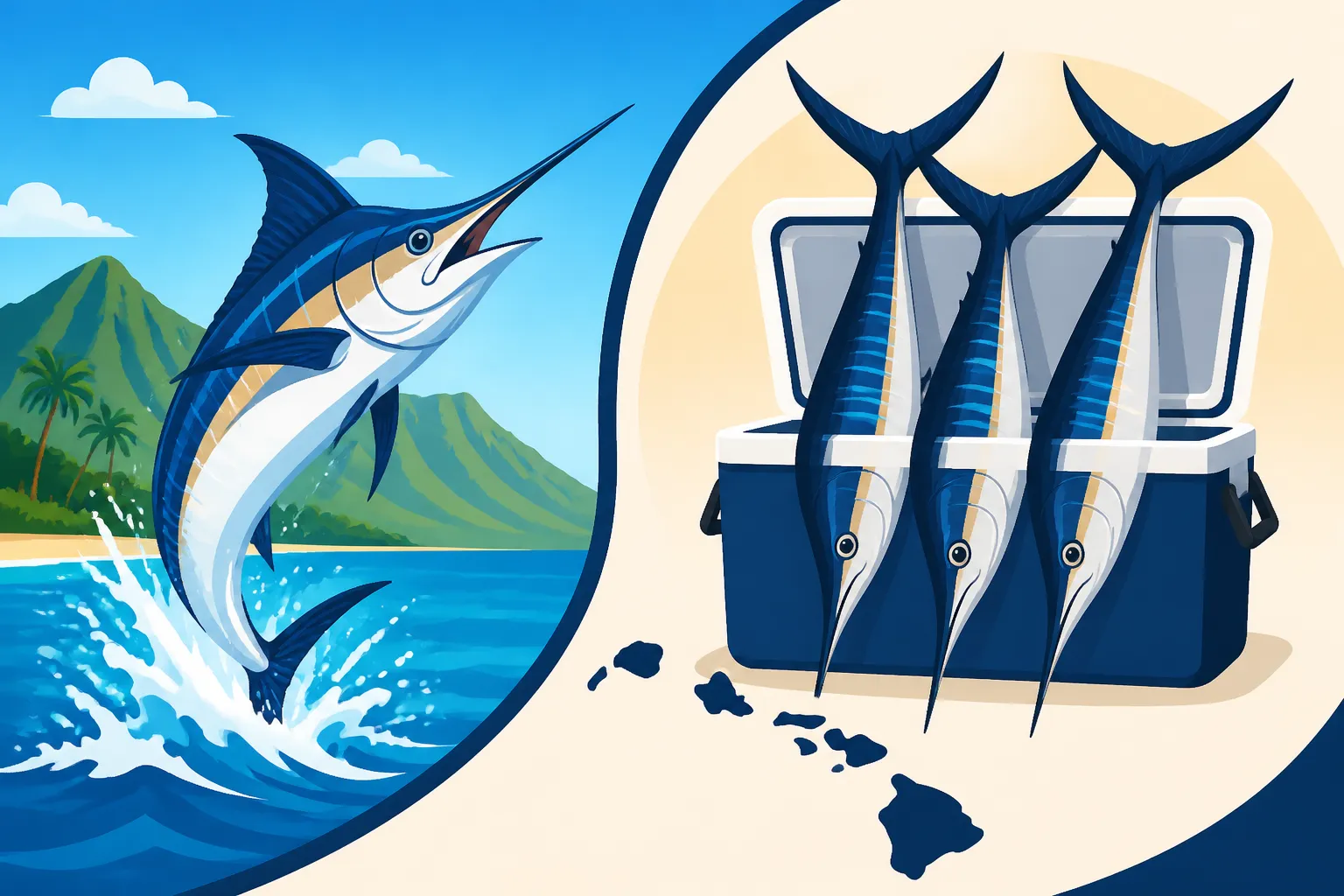
When you're out chasing billfish in Hawaii, you're primarily going to encounter three main types: blue marlin, striped marlin, and shortbill spearfish. Each has its own characteristics and, sometimes, its own specific regulations. The general rule of thumb for recreational anglers in Hawaii, particularly concerning billfish, is quite generous: there is no daily bag limit for blue marlin, striped marlin, or shortbill spearfish.
Now, before you get too excited thinking you can fill your boat with billfish, let's add a dose of reality. While there's no number limit, there are rules, particularly federally driven, that influence what you can do with your catch, especially if you plan to sell it. The primary management tool for these species from a recreational standpoint in Hawaii is actually more about minimum size limits and the commercial aspects. For instance, the National Marine Fisheries Service (NMFS) sets specific rules for highly migratory species. While a recreational angler can technically catch multiple marlin in a day, most anglers either practice catch and release for smaller fish or simply don't have the capacity or desire to keep more than one large trophy fish. Plus, the sheer effort involved in landing even one large marlin often makes catching multiple in a single outing a significant challenge. If you're wondering how to target these majestic fish, our article on How to Catch Marlin off the Kona Coast offers some fantastic tips.
For striped marlin, also known as nairagi, these fish are generally smaller than blue marlin and are highly prized for their meat. Like blue marlin, there isn't a strict recreational bag limit on the number you can catch. Shortbill spearfish, often mistaken for a smaller marlin species, are also a fantastic fighting fish and table fare, and again, recreational anglers typically aren't restricted by a numerical bag limit. However, as with all fishing, common sense and conservation ethics should always prevail. Don't take more than you need, and consider releasing fish you don't intend to eat or that aren't of trophy size.
Size Considerations and Minimums for Marlin
While numerical bag limits might be absent for recreational marlin fishing in Hawaii, minimum size limits are very much in play, primarily to protect juvenile fish and ensure they have a chance to reproduce. These size limits are set by federal regulations, specifically by the National Marine Fisheries Service (NMFS) for highly migratory species (HMS).
For Blue Marlin, the minimum size limit for retention in Hawaii's federal waters is generally 99 inches (measured from the tip of the lower jaw to the fork of the tail, or LJFL). This means if you catch a blue marlin shorter than 99 inches, you are required to release it. This rule is critical for the sustainability of the blue marlin population, as it allows younger fish to grow and contribute to future spawning. Landing a blue marlin of this size is a significant achievement and often represents a fish weighing well over 200 pounds.
Striped Marlin have a lower minimum size limit, typically 53 inches LJFL. These fish are generally smaller than blue marlin, and a 53-inch striped marlin is a respectable catch, often weighing 30 to 60 pounds, sometimes more. Their fast, acrobatic fights make them a favorite among many anglers.
Shortbill Spearfish generally have a minimum size limit of 47 inches LJFL. These are often the smallest of the billfish caught in Hawaiian waters but are equally exciting to catch on lighter tackle.
It's absolutely essential to carry a measuring device on your boat or when fishing from shore if there's any chance you'll encounter these species. Trying to eyeball a length can lead to violations. If you're unsure about the precise current regulations, it's always best to check the latest NOAA Fisheries Pacific Islands Region guidelines, or consult with your charter captain, who will certainly be up-to-date. Understanding these size limits is a key component of Hawaii Pelagic Species Bag Limits and helps ensure responsible fishing practices. Keep in mind that these regulations can sometimes change, so a quick check before your trip is always a good idea. Many experienced anglers even mark their boat decks or have a sticker on their cooler to quickly check fish length. You can find durable, waterproof measuring tapes on sites like Amazon that are perfect for marine environments.
Here's a quick summary of the recreational billfish minimum size limits in Hawaii:
| Species | Minimum Size (Lower Jaw Fork Length – LJFL) | Notes |
|---|---|---|
| Blue Marlin | 99 inches | Measured from tip of lower jaw to fork of tail. |
| Striped Marlin | 53 inches | Highly prized for meat, important to measure accurately. |
| Shortbill Spearfish | 47 inches | Smaller billfish, often caught on lighter tackle. |
Note: Always verify current regulations with NOAA Fisheries Pacific Islands Region or the Hawaii Department of Aquatic Resources (DAR) as rules can change.
Navigating Commercial Marlin Regulations
While this guide primarily focuses on recreational rules, it's worth briefly touching on commercial regulations for marlin, as they are part of the broader management picture and sometimes influence recreational access or perceptions. Commercial fishing for highly migratory species like marlin involves a much more intricate web of permits, quotas, and reporting requirements, largely governed by federal authorities. These regulations are designed to manage large-scale harvesting and ensure that commercial activities do not jeopardize the long-term health of the stock.
Federal Permitting and Reporting Requirements
Commercial fishermen targeting marlin in Hawaii operate under strict federal Highly Migratory Species (HMS) permits issued by NOAA Fisheries. These permits are specific to the gear used (e.g., longline, handline) and the species targeted. Unlike recreational anglers, commercial operators face strict quotas and catch limits, which can be modified seasonally or annually based on stock assessments. They are also required to report every single catch, including species, size, weight, and location, often within 24 to 48 hours of landing. This data is critical for scientists to monitor fish populations and make informed management decisions.
The reporting requirements are incredibly detailed, far beyond what a recreational angler would ever need to do. For example, a commercial fisherman might need to log specific vessel identification, trip start and end dates, port of landing, gear type, number of hooks used, and even the set and haul times for longline operations. This rigorous data collection is what allows for the sophisticated management models used to ensure sustainability. Anyone considering fishing for profit in Hawaii needs to be intimately familiar with these complex rules and possess the correct Hawaii Commercial vs Recreational Fishing License Rules to avoid severe penalties. The systems in place for commercial harvest are a testament to the effort put into preserving these valuable fish stocks.
How Commercial Catches Impact Management Decisions
The data collected from commercial fishing operations, combined with scientific research and recreational catch data, forms the backbone of marlin management decisions. When commercial catches increase or decrease significantly, or if stock assessments show changes in population health, federal agencies like NOAA Fisheries can adjust quotas, permit requirements, and even closed seasons. These decisions are made to ensure that the overall harvest, both commercial and recreational, remains sustainable.
For instance, if scientists determine that a particular marlin stock is showing signs of decline, commercial quotas might be reduced, or certain areas might be closed to fishing temporarily. While recreational anglers might not have direct bag limits in the same way, these broader commercial management decisions indirectly affect everyone. A healthier overall stock means better fishing for all, which is why a holistic approach to fisheries management is so important. This interconnectedness highlights why staying informed about all aspects of Hawaii Fishing License Guide for 2026 and regulations is beneficial for every angler. It's a system of checks and balances designed to protect the resource for future generations, ensuring that the thrill of catching a marlin in Hawaii remains a possibility for years to come.
Essential Practices for Responsible Marlin Fishing
Catching a marlin in Hawaii is often a once-in-a-lifetime experience for many anglers, representing the pinnacle of offshore sportfishing. However, with such magnificent creatures comes a responsibility to fish ethically and ensure their long-term survival. Responsible fishing practices go beyond just following bag and size limits; they encompass how you interact with the fish from hook-up to release, or to bringing it aboard. Every action you take can impact the fish's chances of survival or the health of the fishery.
Best Practices for Catch and Release of Marlin
Catch and release is a cornerstone of responsible marlin fishing, especially for fish that are undersized, or if you simply don't intend to keep it. The goal is to maximize the fish's chances of survival after being released. Here are some critical best practices:
- Use Appropriate Tackle: Ensure your rod, reel, and line are strong enough for the size of marlin you expect to encounter. Using tackle that is too light can prolong the fight, exhausting the fish to the point where it may not recover after release. A longer, harder fight can lead to lactic acid buildup, internal injury, and increased stress, all of which reduce survival rates. This isn't just about landing the fish; it's about landing it efficiently.
- Minimize Fight Time: Once hooked, fight the fish hard and try to bring it to the boat as quickly as safely possible. Every minute a marlin spends on the line increases its stress and exhaustion. Work together with your boat captain and crew to maneuver the vessel to gain line and pressure the fish effectively.
- Avoid Bringing Fish Aboard: If you intend to release the fish, try to release it boat-side without lifting it out of the water. Taking a large marlin out of its element can cause significant physical trauma, especially to its internal organs, as its body is not designed to support its weight without the buoyancy of water. If you absolutely must bring it closer for a photo, keep it partially submerged if possible.
- Careful Hook Removal: Use dehooking tools to remove the hook quickly and efficiently. If the hook is deeply swallowed, it's often better to cut the leader as close to the hook as possible. Hooks made of non-stainless steel will eventually corrode and fall out. Barbless hooks can also make removal easier and quicker, causing less damage.
- Support the Fish for Revival: If the fish appears sluggish, hold it by the bill, keeping it in the water, and move it forward to push water through its gills. This helps it revive and regain strength before swimming off. Do not pull it backward through the water, as this can damage its gills. Look for strong tail kicks before releasing.
- Minimize Handling: Avoid touching the fish's body, especially its eyes and gills. The slime coat on a fish protects it from disease, and human hands can remove it.
Practicing these methods significantly increases the survival rate of released marlin. You can learn more comprehensive tips in our article about Marlin catch and release survival tips. Responsible release ensures that these magnificent creatures can continue to thrive in Hawaii's waters.
How to Properly Handle and Report Your Catch
If you decide to keep a legal-sized marlin, proper handling is crucial for both conservation and the quality of the meat.
- Measure and Confirm Legality: Before gaffing or bringing the fish aboard, double-check its length against the minimum size requirements. Having a clearly marked measuring tape or a pre-measured section on your boat railing or cooler (you can find great, durable ones on Amazon) can prevent mistakes. There's nothing worse than bringing a fish aboard only to realize it's undersized and then having to release a potentially injured fish.
- Dispatch Quickly and Humanely: Once you've confirmed it's a keeper, dispatch the fish as quickly and humanely as possible. Iki jime (brain spiking) is a highly effective method that minimizes stress, preserves meat quality, and prevents the fish from thrashing and injuring itself or the crew. A strong whack to the head with a billy club followed by a brain spike is commonly used.
- Bleed and Ice Immediately: Bleeding the fish immediately after dispatch is vital for meat quality. Cut the gill arches or sever the caudal artery just in front of the tail to allow the blood to drain. Then, get the fish on ice as quickly as possible. A properly iced marlin will yield far superior fillets compared to one left to warm up on deck. Large, insulated fish bags or well-insulated fish holds are indispensable for this.
- Filleting and Storage: Once back at the dock, proper filleting and portioning for freezing or cooking is next. Consider sharing your catch with friends, family, or even local restaurants if you have an abundance.
- Reporting (if applicable): While recreational anglers generally aren't required to formally report every single marlin caught, some federal programs (like the HMS Recreational Angler Survey) might ask for voluntary participation. Always comply if approached by official personnel from NOAA Fisheries or the Hawaii Division of Aquatic Resources (DAR). If you are involved in a tournament or if you have a federal HMS permit for charter or commercial activities, then formal reporting becomes mandatory.
By embracing these responsible fishing practices, you not only comply with the spirit of the law but also contribute to the long-term health and abundance of Hawaii's incredible marlin fishery. Knowing the rules and applying good ethics means more fantastic fishing days for everyone, for many years to come.
Disclaimer
The information provided in this guide is for general informational purposes only and is not intended as legal advice. Fishing regulations in Hawaii, particularly those pertaining to highly migratory species, can be complex and are subject to change by both state and federal agencies (such as NOAA Fisheries and the Hawaii Department of Land and Natural Resources, Division of Aquatic Resources). Always consult the most current official regulations directly from these authorities before engaging in any fishing activity. The author and publisher are not responsible for any violations that may occur due to reliance on this information.