Hawaii PWC operator minimum age
Picture this: You're on vacation in beautiful Hawaii, the sun is shining, and the allure of zipping across the pristine ocean on a personal watercraft (PWC) is incredibly tempting. But then a nagging question pops up – "How old do you actually have to be to drive one of these things?" It's a common point of confusion for residents and visitors alike, and getting it wrong can lead to serious headaches, fines, or even danger. This comprehensive guide is here to clear up all the mystery surrounding the Hawaii PWC operator minimum age, ensuring you can enjoy the waters responsibly and legally.
Navigating Hawaii's Minimum Age for PWC Operation
The thrill of a PWC on Hawaii's azure waters is undeniable, but it's not a free-for-all. Like any other motorized vehicle, there are strict rules in place to protect operators, passengers, and everyone else enjoying the ocean. Understanding these foundational age requirements is the first step toward a safe and compliant adventure.
The Straightforward Legal Age Requirement
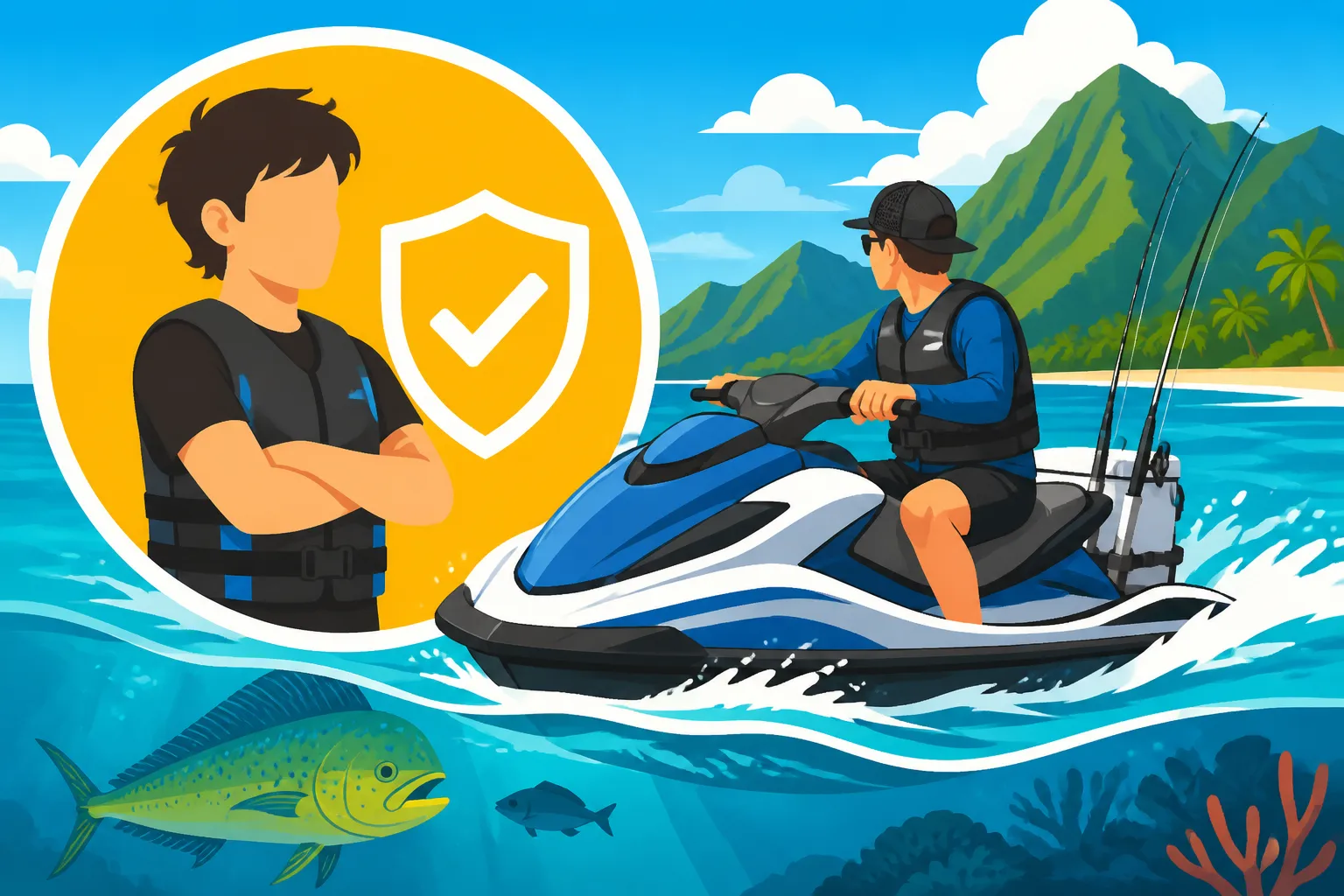
Let's cut right to it: In Hawaii, no one under 15 years of age is permitted to operate a personal watercraft (PWC), which many people commonly refer to as a jet ski. This isn't just a friendly suggestion; it's a clear and concise legal mandate enforced by the Hawaii Department of Land and Natural Resources (DLNR) Division of Boating and Ocean Recreation (DOBOR). The law is unambiguous, making it easy for both locals and visitors to understand.
This specific age limit isn't arbitrary. It’s a direct reflection of the state's paramount commitment to public safety on its often-crowded waterways. PWC are powerful vessels, capable of high speeds and rapid maneuvers that demand a significant degree of maturity, quick decision-making skills, and a fundamental understanding of navigation rules. These are attributes that are typically not fully developed in younger children, no matter how much experience they might have with other types of recreational vehicles.
It’s important to note that this is different from other water-based activities. For example, while obtaining a Hawaii fishing license age requirements might involve different age considerations for younger anglers simply casting a line from shore, PWC operation involves inherent risks that necessitate a higher age threshold. The focus here is on operating a high-speed vessel, which carries a far greater potential for accidents and injury if not handled by a capable individual.
So, if you're a parent imagining letting your eager 14-year-old take a PWC out for a spin, no matter how responsible or seemingly experienced they are, the law is clear: 15 is the absolute minimum age. Attempting to circumvent this rule can lead to significant legal and financial consequences for both the minor and any supervising adult, turning a dream vacation into a stressful ordeal.
Why Age Restrictions are Critical for Safety
The emphasis on a minimum age for PWC operators in Hawaii stems directly from the inherent power and speed of these machines, coupled with the dynamic and often unpredictable nature of the ocean environment. A PWC can be an exhilarating ride, but it's also a serious piece of equipment.
Modern personal watercraft are designed for high performance, with many models easily capable of exceeding 60 miles per hour. Even at lower cruising speeds, the force of an impact with the water, another vessel, or a submerged object can cause severe injury. This combination of speed and the fluid, ever-changing ocean environment demands an operator who is not only physically capable but also mentally alert and responsible. Younger operators may lack the spatial awareness, foresight, and experience needed to anticipate potential hazards effectively.
Unlike driving a car on a road with clear lanes, traffic signals, and relatively predictable movement, the open ocean presents a constantly evolving scene where other boats, swimmers, snorkelers, divers, and marine life can appear unexpectedly and from any direction. The ability to quickly assess risks, understand right-of-way rules, and react appropriately in an instant is paramount, and these skills are developed through a combination of age, experience, and training.
Furthermore, Hawaii's waters, while breathtakingly beautiful, can also be deceptively challenging. Strong currents, unexpected swells, shifting winds, hidden reefs, and quickly changing weather conditions all add layers of complexity to PWC operation. An operator needs the judgment to understand and respect these powerful natural elements. This consideration ties into the broader framework of Hawaii Boating Laws for Anglers, which stresses safe and responsible practices for all vessels on the water. The age restriction, therefore, implicitly acknowledges that by 15, individuals are generally more capable of understanding and applying these fundamental boating safety principles, thereby making the waters safer for everyone.
Beyond Age: The Mandatory Boater Education Requirement
Simply meeting the minimum age requirement isn't enough to legally operate a PWC in Hawaii. The state recognizes that knowledge and trained skill are just as crucial as age when it comes to safely navigating its precious ocean resources. This is where mandatory boater education comes into play.
The Essential Boater Safety Education Course
In Hawaii, anyone operating a PWC, provided they meet the minimum age of 15, must complete an approved boater safety course. This isn't an optional suggestion or a nice-to-have; it's a critical, non-negotiable component of ensuring responsible and safe operation on the water. The law mandates this for all PWC operators, without any exemptions for residents or visitors who are over the age of 15. Think of it much like needing a driver's license to operate a car; you need a boater education certificate to legally operate a PWC.
These comprehensive courses are meticulously designed to instill in operators a thorough understanding of essential navigation rules, proper safety procedures, critical environmental responsibilities, and effective emergency responses. The curriculum typically covers a wide array of vital topics, including how to interpret aids to navigation (like buoys and markers), the safest operating practices, crucial collision avoidance techniques, the importance of maintaining a proper lookout, understanding various weather conditions, basic vessel maintenance, and the absolute necessity of having the correct safety equipment onboard. For instance, you'll learn all about the specific Life Jacket Requirements for Hawaii Boaters and exactly what should be included in your Hawaii required boat safety equipment checklist.
Fortunately, these essential boater safety courses are widely accessible and offered in several convenient formats. Many certified providers offer online courses, allowing you to complete the certification at your own pace and from the comfort of your home. Websites such as Boat-Ed or Boating Safety First are popular and reputable choices, and you might even discover relevant study guides or practice tests conveniently available on platforms like Amazon to aid in your preparation.
Upon successful completion of the course and passing the final exam, you will be issued a boater education certificate. This certificate serves as your official proof of compliance with Hawaii's regulations, and it is absolutely imperative that you carry it with you at all times when you are operating a PWC. Forgetting to have your certificate on hand is akin to driving a car without your driver's license – it simply won't be accepted by law enforcement. This specific and vital requirement is often detailed thoroughly under Hawaii required boater education certificate rules.
Where and How to Obtain Your PWC Safety Certificate
For many individuals, especially those visiting or with busy schedules, the most convenient and efficient way to obtain the necessary boater education certificate is through online courses. Several state-approved providers offer engaging and interactive online programs that cover all the required material comprehensively. These courses are typically structured with quizzes and modules, culminating in a proctored final exam that ensures you've absorbed the critical information. When selecting an online course, always look for providers that are certified by the National Association of State Boating Law Administrators (NASBLA) to guarantee that your certification will be recognized and valid in Hawaii. A quick and easy search on Amazon for "boater safety course Hawaii" might even point you directly to official course links or supplementary study materials.
While less prevalent in the digital age, some local boating organizations or community centers in Hawaii do periodically offer in-person boater safety classes. These classroom settings can be particularly beneficial for those who prefer direct interaction with instructors, the ability to ask questions in real-time, and a structured learning environment. If you're interested in an in-person option, it's worth keeping an eye on local announcements from the Hawaii DLNR or checking community boards for upcoming schedules.
The cost for these essential boater education courses typically ranges, generally falling between $30 and $50 for most online versions. The time commitment is also quite manageable, with most online courses designed to be completed in just a few dedicated hours of study. Considering the legal compliance and the invaluable safety knowledge it provides, this small investment is undeniably worthwhile for the peace of mind it brings to your PWC adventures.
A significant advantage for visitors is that Hawaii generally honors boater education cards issued by other states, provided those courses were approved by NASBLA. This reciprocity is a huge relief, meaning that if you already possess a valid NASBLA-approved boating certificate from your home state, you typically won't need to take a separate Hawaii-specific course for your vacation. However, it's always prudent to double-check with the Hawaii DOBOR if you have any lingering doubts, as regulations can occasionally shift.
Special Circumstances and Enforcement
While the core rules for PWC operation in Hawaii are clear, there are always nuances and specific scenarios that warrant further explanation. Understanding these special circumstances and how enforcement agencies operate can save you from potential headaches.
The Role of Adult Supervision for Younger Operators
It's crucial to clarify the common misconception about supervision. While the absolute minimum operating age for a PWC in Hawaii is 15, there isn't a general provision that allows someone under 15 to operate a PWC with adult supervision. The age 15 threshold is firm. The concept of "direct supervision" primarily applies to individuals who are already 15 years old or older but might not yet have their boater safety card, or who are still gaining comfort and experience operating a PWC. In these specific learning scenarios, the supervising adult must be at least 18 years old, possess their own valid boater education certificate, and be physically present on the PWC or an accompanying vessel in very close proximity, capable of taking immediate control if needed.
"Direct supervision" is a stringent requirement and should not be taken lightly. It absolutely does not mean simply "watching from the beach" while a young person operates a PWC alone. For instance, a responsible father who is 18+ and certified might ride tandem with his 15-year-old son, who is learning to navigate. The adult's presence is about active guidance and immediate intervention, not just observation. This is a learning provision for those at or over the minimum age but not yet fully certified or confident, not an exemption for someone underage.
If an individual under 15 is caught operating a PWC, or a person aged 15 or older is operating without the proper certification and supervision, the primary legal responsibility will fall heavily on the supervising adult (if present and negligent) or the owner of the PWC who allowed the illegal operation. This negligence can lead to severe legal repercussions, including substantial fines and potential charges, mirroring penalties you might encounter for general boating violations such as those detailed in Fishing Without a Required License in Hawaii: Penalties.
It's also important to be aware that many PWC rental companies, particularly those operating in popular tourist areas like Waikiki Beach or near Lahaina Harbor, often impose even stricter policies than state law. They commonly require operators to be 16 or 18 years old, or even older, and will invariably demand proof of boater education. These heightened requirements are a reflection of their efforts to mitigate risk and liability, and their rules, when more restrictive, always supersede the state minimums. Always, always check with the specific rental company beforehand to avoid any disappointment or legal issues.
Recognition of Out-of-State Certifications
For the many visitors to Hawaii, there's a piece of good news regarding boater education: Hawaii generally honors boater education cards that have been issued by other states. This is provided, of course, that those courses were approved by NASBLA (National Association of State Boating Law Administrators). This reciprocity is a genuine lifesaver for tourists who might already hold a valid boating certificate from their home state, meaning you typically won't be required to take a separate, Hawaii-specific course just for your vacation.
While reciprocity is a common practice, it is always a wise and recommended practice to carry your physical boater education card with you. If possible, having a printout of the NASBLA approval for your specific course can also be helpful. For complete peace of mind, a quick visit to the Hawaii DOBOR website or a phone call to their office before your trip can confirm the validity of your out-of-state certificate. It’s always better to be prepared than to face unexpected issues on the water.
There are rare instances where certain older or less comprehensive out-of-state courses might not fully meet Hawaii's specific standards. This is precisely why it is crucial to ensure that any course you take, whether in Hawaii or elsewhere, is NASBLA-approved. If you find yourself in doubt about your existing certificate, or if it's an older one, investing in an inexpensive online course that is specifically certified for Hawaii can be a worthwhile decision. Many of these universally recognized courses are easily purchasable online, ensuring you are fully compliant.
Regardless of where your certification originates, the golden rule for PWC operation in Hawaii remains steadfast: always have proof of completion readily available when operating the vessel. This means having your physical card or a readily accessible digital copy on your smartphone. Think of it just like carrying your car registration or driver's license; you wouldn't drive without it. This simple act is an integral part of being a responsible and law-abiding boater in Hawaii's beautiful waters.
Consequences of Non-Compliance
Nobody wants their Hawaiian vacation or a peaceful day on the water to be ruined by a citation or, worse, an accident. Understanding the serious consequences of non-compliance with PWC operating laws is crucial for preventing such unfortunate events.
Fines and Citations for Underage Operation
Operating a PWC under the age of 15, or by a person 15 or older without the required boater education certificate, is not merely a suggestion; it's a direct violation of Hawaii state law. This is far from a minor infraction; these offenses can and do result in significant fines. These penalties are deliberately structured to deter unsafe behavior and ensure strict adherence to Hawaii's comprehensive boating safety regulations.
While the specific fine amounts are subject to change based on legislative updates and the discretion of law enforcement, you should anticipate a minimum of several hundred dollars for a first offense. The penalties escalate for repeat offenses or in situations where reckless operation or an accident is involved, potentially leading to much higher fines, mandatory court appearances, and even community service. Law enforcement agencies such as the Hawaii DLNR and the Honolulu Police Department's Marine Patrol actively patrol Hawaii's waters, and they are authorized and equipped to issue citations to violators.
A critical question often arises: "Who exactly gets fined?" Typically, if a minor under 15 is caught operating a PWC illegally, the supervising adult (if they were present and found negligent) or the owner of the PWC (if they permitted or facilitated the illegal operation) will be held legally responsible. If an individual aged 15 or older is operating without the necessary boater education certificate, they will receive the citation directly. It's a harsh but necessary reality; the state prioritizes safety above all else, ensuring accountability. Adherence to rules like those broadly covered in Hawaii Boating Laws for Anglers is not just good practice, it's the law.
Beyond the immediate financial burden, a boating citation can remain on your record. While not necessarily a "criminal" record in the traditional sense, such infractions can potentially impact future recreational boating privileges or even lead to increased insurance rates. It serves as a potent reminder that understanding and adhering to all aspects of Hawaii Boating Laws for Anglers is crucial for all forms of water recreation, extending well beyond just fishing.
Safety and Insurance Implications
The ramifications of operating a PWC illegally extend far beyond just legal penalties and fines. Critically, operating a personal watercraft without proper certification, or by an underage individual, dramatically elevates the risk of accidents. Without the necessary training, maturity, and judgment, the chances of collision, capsizing, or causing injury to oneself or others skyrocket. These unfortunate incidents can lead to severe physical injuries, extensive property damage, and, in the most tragic circumstances, fatalities.
A less obvious, but equally devastating, consequence relates to insurance coverage. If an accident occurs while a PWC is being operated illegally – for example, by an underage operator, or by someone over 15 who lacks the mandatory boater education certificate – the PWC owner's insurance policy may completely refuse to cover the damages. This chilling scenario means you could be personally liable for tens of thousands, or even hundreds of thousands, of dollars in medical bills, property repair costs, and legal fees. Imagine the financial devastation of purchasing a PWC, whether from a reputable dealer or a private seller found on Amazon, only to have your entire insurance policy invalidated due to a simple oversight in legal compliance. It's a risk that is simply not worth taking.
Furthermore, even if insurance covers some of the immediate costs, the operator and owner could still face civil lawsuits for negligence. For example, a vacationing family could find themselves entangled in protracted and expensive legal battles, all stemming from the decision to let their 14-year-old take a PWC for a ride. This underscores precisely why a thorough understanding of all facets of Hawaii Boat Registration Requirements and operational laws is critically important, not just for the PWC itself, but for the operator. Ignoring these regulations can also expose you to severe consequences like Hawaii boating under the influence penalties if other factors are involved, highlighting the need for complete adherence to all safety rules.
Ultimately, the regulations and age requirements are not implemented to hinder your enjoyment; they are meticulously designed to protect everyone on the water. By ensuring that all PWC operators meet the minimum age requirement and possess the proper certification, you are doing more than just avoiding fines; you are actively contributing to a safer, more enjoyable, and harmonious environment for everyone who shares Hawaii's magnificent ocean playground. To further enhance safety for any PWC outing, remember you can readily find essential safety equipment such as emergency whistles, flares, and comprehensive first-aid kits, as well as necessary PWC accessories like floating keychains or protective covers, available for purchase from retailers like Amazon.
| Requirement | Minimum Age | Mandatory Boater Education Certificate | Required Adult Supervision (for 15+ learners) | Applies To |
|---|---|---|---|---|
| PWC Operation | 15 | Yes | N/A | All PWC Operators |
| Boater Education Certificate | N/A | Yes (for 15+ operators) | N/A | All PWC Operators (15 years old and older) |
| Adult Supervision | 18+ | Yes (for adult) | Mandatory (if operator 15+ lacks cert/experience) | PWC Learners (15+ who are not fully certified/experienced) |
| Out-of-State Certificate Accepted | N/A | Yes (if NASBLA-approved) | N/A | Non-Resident Certified Boaters |
Disclaimer
The information provided in this guide is for general informational purposes only and does not constitute legal advice. While we strive to keep the information accurate and up-to-date, boating laws and regulations can change. Always refer to the most current official publications from the Hawaii Department of Land and Natural Resources (DLNR) Division of Boating and Ocean Recreation (DOBOR) or consult with a legal professional for specific guidance.