Hawaii wild trout waters regulations
For many anglers, the thought of fly fishing for wild trout in Hawaii conjures images of pristine, remote mountain streams teeming with native fish. It’s a beautiful daydream, but the reality of wild trout fishing in the Aloha State is far more specific and often misunderstood, leading to a lot of questions about where, when, and how you can actually pursue them legally. This comprehensive guide will cut through the confusion, detailing Hawaii's very particular wild trout waters regulations, focusing on the unique, limited opportunities and the strict rules you absolutely need to follow to enjoy this niche fishery.
The Reality of Wild Trout in Hawaii
Let's address the elephant in the room right away: Hawaii does not have widespread, naturally reproducing populations of native wild trout. When we talk about "wild trout" in Hawaii, we're almost exclusively referring to rainbow trout that have either survived and grown from previous stockings or, in very rare instances, have reproduced in a very limited, localized capacity within the designated public fishing areas. It's a significant distinction from what anglers might imagine if they've fished wild trout in mainland states. The environment here is challenging for trout to establish self-sustaining populations, primarily due to warm water temperatures in many areas and the lack of truly extensive, year-round cold-water habitats.
Distinguishing Wild vs. Stocked Trout
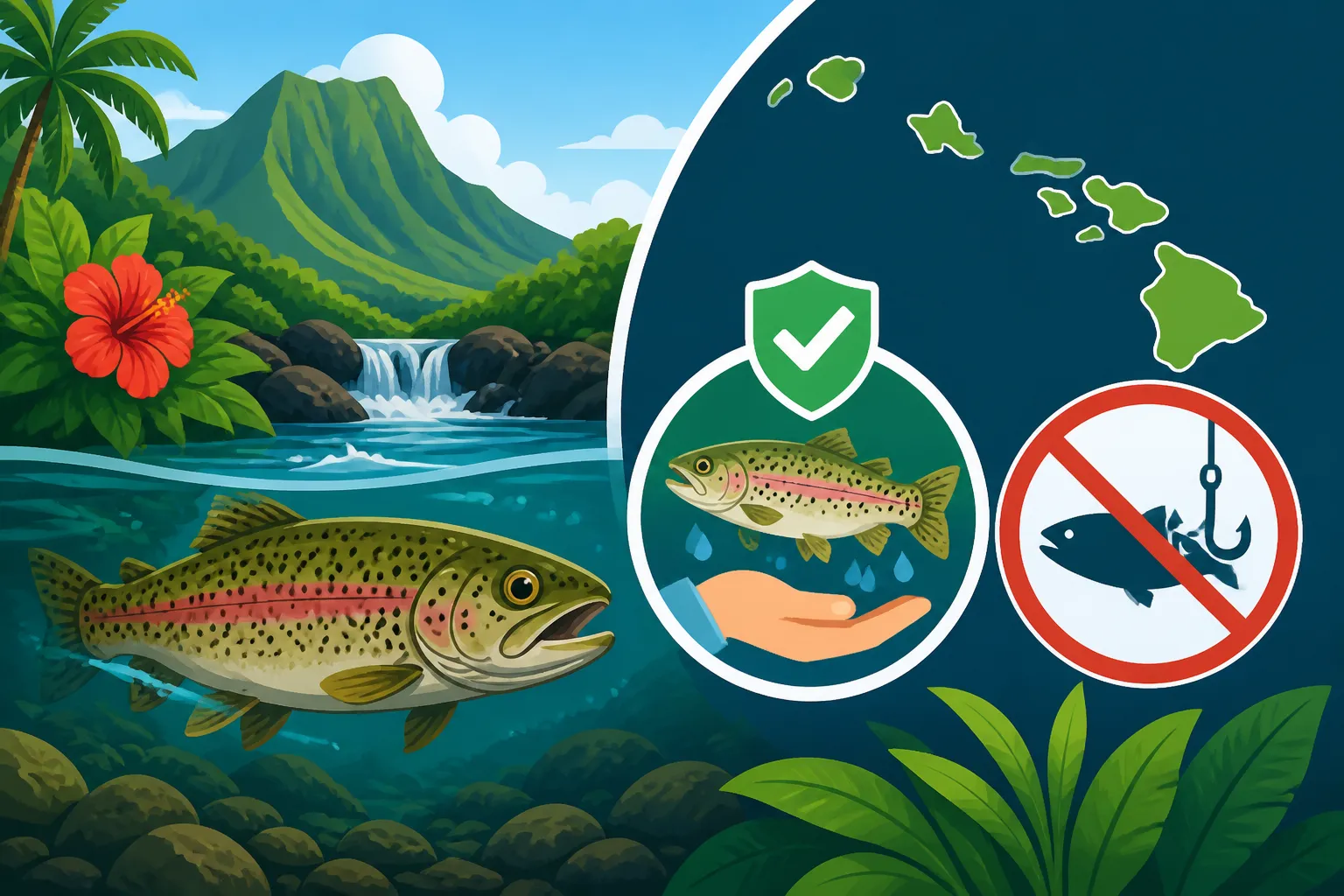
Most of the trout you’ll encounter in Hawaii are actually stocked fish. The Department of Land and Natural Resources (DLNR), specifically its Division of Aquatic Resources (DAR), manages a unique rainbow trout fishery. They stock hatchery-raised trout, primarily in the Kokee Public Fishing Area on Kauai, to create a recreational fishing opportunity that wouldn't otherwise exist. These stocked fish are often smaller, less wary, and have fin clips or other markings that differentiate them from potential "holdovers" or "wild-spawned" fish.
A true "wild" trout, in the traditional sense, is born, lives, and reproduces in its natural habitat without human intervention. In Hawaii, while some stocked fish do survive, grow large, and adapt to the stream environment, mimicking wild behavior, the genetic and ecological reality is that they originate from hatchery programs. There might be some very limited, localized natural reproduction occurring in certain cold-water pockets within the Kokee streams, but it's not a widespread phenomenon that sustains the fishery. Therefore, almost all regulations treat these fish as part of a managed, put-and-take fishery, rather than protecting fragile native wild populations. It's a critical difference for understanding why the rules are structured the way they are.
The Unique Environment of Kokee State Park
The only place in Hawaii where you can legally fish for trout is the Kokee Public Fishing Area, located within Kokee State Park on the island of Kauai. This isn't a vast network of streams across multiple islands; it’s a specific, relatively isolated area. The streams here—such as the Mohihi, Waiakoali, and a few others—are at a higher elevation, which keeps the water temperatures cool enough for rainbow trout to survive and thrive, especially after being stocked. The lush, verdant landscape of Kokee is absolutely breathtaking, offering a truly unique backdrop for trout fishing, even if the "wild" aspect isn't what many initially envision. You'll find yourself surrounded by native forest, dramatic cliffs, and often misty conditions, which add to the adventurous feel of fishing here. Because of this unique, singular location, all Hawaii wild trout waters regulations are intrinsically tied to the Kokee Public Fishing Area. It's not like you can just cast a line into any mountain stream you happen upon; access and legality are very specific to this region on Kauai.
Specific Regulations for Kokee Public Fishing Area
Fishing in the Kokee Public Fishing Area is a highly regulated activity, and for good reason. It's a fragile ecosystem, and the trout fishery relies heavily on careful management to ensure its sustainability for future generations of anglers. Ignoring these rules can lead to serious penalties, not to mention harming the resource itself. This section dives into the specifics you'll need to know before planning your trip.
Defining the Fishing Season
Unlike many fisheries with year-round opportunities, Hawaii’s trout season is intentionally short and specific. The rainbow trout season in the Kokee Public Fishing Area typically opens on the first Saturday of August each year and runs for a period of about three months, usually closing at the end of September or early October. For precise dates, always consult the official Hawaii Kokee Trout Fishing Season Dates from the DLNR-DAR. This limited season is designed to align with the period when stream conditions are most favorable for fishing and when the stocked trout are at their prime. Fishing outside of these dates is strictly prohibited, and wardens patrol the area to ensure compliance. It's not uncommon for anglers, particularly those visiting from the mainland, to be caught off guard by such a short season, so planning ahead is absolutely essential. Imagine traveling all the way to Kauai only to find the season closed – a real bummer!
Designated Fishing Areas and Access
The Kokee Public Fishing Area encompasses specific streams and their tributaries within Kokee State Park. These typically include the Mohihi Stream and its branches (Mohihi-wai, Mohihi-iki) and the Waiakoali Stream. Other streams in the park are either off-limits, have insufficient trout populations, or are designated as sensitive ecological areas. Access to these streams can range from relatively easy, roadside pull-offs to more challenging hikes through dense, sometimes muddy, forest trails. Some areas are more accessible for families, while others require a bit more rugged determination.
It's crucial to obtain a detailed map of the Kokee Public Fishing Area and understand its boundaries. The DLNR-DAR often provides these maps, highlighting the open and closed sections. Respecting private property boundaries and designated natural areas is also paramount. You might consider purchasing a detailed topographical map of Kauai online, perhaps from Amazon, to help visualize the terrain and stream networks. While some fishing spots are well-known, part of the adventure is exploring and finding your own productive stretches within the legal zones. Always be mindful of weather conditions, as heavy rains can quickly swell streams, making access dangerous and fishing impossible.
Understanding Catch Limits and Gear Restrictions
Just like any managed fishery, the Kokee trout program has specific rules governing what you can catch and how you can catch it. These regulations are in place to ensure fair chase, prevent overfishing of the stocked populations, and maintain the ecological balance of the streams. It's not just about getting a fish on the line; it's about doing it responsibly.
Daily Bag and Size Limits
For rainbow trout in the Kokee Public Fishing Area, there is a strict daily bag limit. Historically, this has been ten (10) trout per person per day. However, it's vital to check the current Hawaii Bag and Size Limits by Species from the DLNR before you head out, as these limits can change from season to season based on stock assessment and management goals. There might also be a minimum size limit, usually around seven inches (7"), though again, always verify. This size limit is generally designed to protect smaller, younger fish and allow them to grow, contributing more to the overall fishery.
These limits are not suggestions; they are legal requirements. Over-bagging or keeping undersized fish can result in fines and other penalties, which can quickly turn a fun fishing trip into a costly mistake. If you're fishing with family, remember that each licensed angler has their own bag limit, but rules for children might differ. It’s also important to note that once you've reached your daily limit, you must stop fishing for trout, even if you’re planning to catch and release. This rule helps ensure everyone has a fair chance and minimizes stress on the fish.
Allowed Tackle and Bait
The methods permitted for trout fishing in Kokee are also very specific. Typically, only certain types of tackle are allowed. While the exact rules can vary, generally, artificial lures with single barbless hooks are encouraged, or sometimes even mandated. This often means no live bait, no treble hooks, and certainly no nets or other prohibited methods. The rationale behind barbless hooks and artificial lures is to minimize harm to any fish that are caught and released, increasing their survival rate, especially for those smaller fish that fall below the legal size limit or if you're practicing catch and release. Some streams or sections might even be designated as Hawaii Catch and Release Only Freshwater Waters, where only artificial lures and barbless hooks are permitted, and all trout must be immediately returned to the water.
When packing your gear, double-check the current regulations. A small spin rod with inline spinners or spoons, or a lightweight fly rod with nymphs, dry flies, or streamers, would be appropriate. Fly fishing is particularly popular here, given the stream environment. If you're looking for gear, Amazon offers a wide selection of trout fishing tackle, from fly rods to ultralight spinning combos and an array of artificial lures that would meet the barbless, single-hook criteria. Remember, using bait that could introduce invasive species is a serious concern, which is another reason live bait is generally restricted. Always err on the side of caution and adhere strictly to what’s allowed to protect Hawaii’s unique aquatic ecosystems. If you want to refine your approach, check out Best Techniques for Freshwater Trout at Kokee for more specific advice.
Permits, Licenses, and Enforcement
Before you even think about setting foot in a Kokee stream, you need to ensure you're legally authorized to fish. Hawaii has clear requirements for freshwater fishing licenses, and the enforcement of these regulations is taken seriously by the DLNR.
Required Freshwater Fishing Licenses
Yes, you absolutely need a freshwater fishing license to fish for trout in Hawaii. This is one of the most common misunderstandings, as many people assume that because Hawaii is surrounded by ocean, an ocean fishing license is the only concern (and even that's often exempted for residents). However, when it comes to freshwater, a specific license is mandatory for anyone over a certain age. You can't just show up and start casting.
The requirements for obtaining a freshwater license vary slightly depending on your residency status and age.
- For Residents: A Hawaii freshwater license for residents is typically an annual permit, and the cost is relatively low. You’ll need to prove residency, usually with a Hawaii state ID or driver's license. For specific details on cost, you can look into Hawaii freshwater license cost for residents.
- For Nonresidents: If you're visiting from outside Hawaii, you'll need a nonresident freshwater license. These often come in various durations, such as a 7-day or 30-day tourist freshwater license, which might be more practical for a short vacation. The Hawaii freshwater license cost for nonresidents will be higher than for residents.
- Age Requirements: Generally, anyone 18 years of age or older needs a license. However, always double-check What age requires a freshwater fishing license in Hawaii for the most current rules. Younger anglers might be exempt, making it a great family activity.
You can usually purchase these licenses online through the DLNR-DAR website, or from authorized vendors across the islands. It’s always a good idea to secure your license before you even travel to Kauai, just to avoid any last-minute scramble. For a complete overview of the process, consult the Hawaii Freshwater Fishing License and Rules.
It's also worth noting that charter boat operations typically cover your marine fishing license if you're fishing offshore, but this does not extend to freshwater fishing. Even if you're on a guided trout trip in Kokee, you're responsible for your own individual freshwater license. For a broader understanding of licensing, you can always check the Do You Need a Fishing License in Hawaii guide.
Consequences of Non-Compliance
Fishing without a proper license or violating any of the Kokee Public Fishing Area regulations can lead to serious consequences. The DLNR Division of Conservation and Resources Enforcement (DOCARE) officers regularly patrol these areas, and they are not hesitant to issue citations.
Penalties can range from hefty fines to the confiscation of your fishing gear. For example, Hawaii fishing without a license penalty can be substantial, and repeat offenders might face even stricter repercussions, including potential jail time for severe violations. Imagine having your prized fly rod, perhaps one you carefully selected from Amazon, seized because you forgot to buy a $10 license. It's simply not worth the risk.
Beyond the legal ramifications, non-compliance also harms the very resource you’re trying to enjoy. Over-bagging, using illegal methods, or fishing out of season puts undue stress on the limited trout population and undermines the efforts to maintain this unique fishery. As responsible anglers, it’s our duty to understand and adhere to all Hawaii fishing regulations explained, not only for our own benefit but for the health of the ecosystem and the enjoyment of future generations. So, before you head out, take the time to read through all the rules and ensure you're fully compliant.
To summarize the key distinctions and regulations for fishing in Kokee:
| Feature | Wild Trout Expectation (General) | Hawaii Kokee Trout Reality (Managed Fishery) |
|---|---|---|
| Origin of Trout | Self-sustaining native populations | Primarily hatchery-stocked rainbow trout |
| Location | Widespread mountain streams | Exclusively Kokee Public Fishing Area, Kauai |
| Season Duration | Often year-round, or long seasons | Short, specific season (e.g., Aug-Sept/Oct) |
| Daily Bag Limit | Varies widely, often low for wild trout | Specific numerical limit (e.g., 10 trout/day) |
| Size Limit | Varies, often minimum or slot limits | Minimum size often applies (e.g., 7") |
| Tackle Restrictions | Varies, often fly-fishing only, single barbless hooks | Artificial lures, single barbless hooks encouraged/mandated, no live bait |
| License Required? | Yes, freshwater license | Yes, Hawaii Freshwater Fishing License is mandatory |
| Enforcement | Strict, with penalties for violations | Strict, with fines and gear confiscation |
This table clearly illustrates that Hawaii's trout fishery is a unique, highly managed experience that differs significantly from typical "wild trout" expectations. Being informed is your best defense against unintended violations and ensures you have a smooth, enjoyable, and legal fishing trip. Remember to regularly check the official DLNR-DAR resources, or browse for specialized gear that meets the regulations, perhaps from Amazon, to keep your fishing experience within bounds. For a broader understanding of fishing licenses in general, don't forget to check out the Hawaii Fishing License Guide for 2026.
Disclaimer
The information provided in this guide is for general informational purposes only and is subject to change. Fishing regulations, license requirements, and designated fishing areas in Hawaii can be updated by the Department of Land and Natural Resources (DLNR) at any time. It is the responsibility of every angler to consult the most current official regulations issued by the Hawaii DLNR Division of Aquatic Resources (DAR) before engaging in any fishing activity. Non-compliance with current regulations may result in penalties.