Best deep water access at Kaena Point
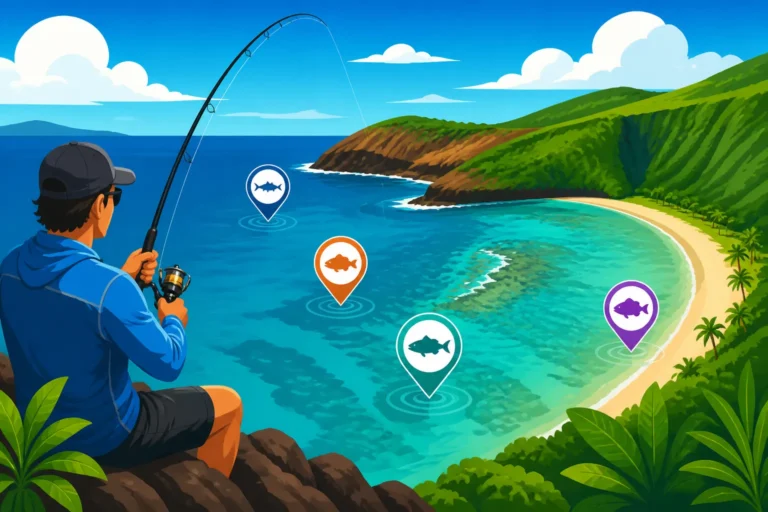
Fishing Kaena Point for deep-water species is an exciting prospect, but actually finding legitimate deep water access from shore can feel like searching for a needle in a haystack amidst its rugged, often shallow reef-laden coastline. Many anglers dream of pulling a monster ulua from these legendary waters, only to arrive and find challenging terrain and deceptive depths. This guide will meticulously break down the best and safest deep water access points at Kaena Point, equipping you with the knowledge to target those elusive offshore species right from the land or a paddle craft.
Understanding Kaena Point's Unique Shoreline for Deep Water Access
Kaena Point, the westernmost tip of Oahu, is a place of raw beauty and powerful ocean forces. It's where the North Shore's mighty swells meet the calmer, but still strong, currents of the Leeward Coast. This convergence creates a dynamic marine environment that's a magnet for baitfish and, consequently, the larger predatory species that anglers covet.
The Allure and the Challenge of Kaena Point
For generations, local anglers have been drawn to Kaena Point, captivated by its wild, untamed spirit and the promise of giant fish. It's a place where you truly feel connected to the power of the Pacific, far from the crowds. The idea of casting into those deep, blue waters and battling a fish capable of ripping line off your reel is a powerful motivator. Stories of monster ulua and surprise pelagic catches abound, fueling the dreams of every angler who makes the trek.
However, the reality of fishing here is often tempered by its challenging terrain. The point itself is a protected natural area, part of a State Natural Area Reserve and a Natural Area State Park, meaning access is strictly regulated and primarily by foot. Much of the immediate shoreline is characterized by shallow, treacherous lava rock ledges and exposed reef flats. While these areas are fantastic for smaller reef fish and papio (juvenile trevally), they don't offer the direct deep-water access that anglers targeting larger pelagic or bottom-dwelling species crave. This inherent contradiction is what makes Kaena Point both incredibly appealing and frustrating for those seeking that immediate deep drop-off. You might spend hours hiking, only to find the perfect casting spot is surrounded by a vast, shallow shelf.
The journey to the point itself can be an adventure. While there are roads from both the North Shore (via Farrington Highway past Mokuleia) and the Leeward Coast (via Farrington Highway past Makaha), both terminate a few miles from the actual point. This means a hike is usually involved, varying in length depending on your starting side and desired fishing spot. This isolation is part of its charm, but also adds to the logistical challenge of hauling heavy deep-water fishing gear. It’s not a place for light tackle or a casual stroll; preparedness is paramount.
Why Deep Water Matters at Kaena Point
When we talk about "deep water access" from shore in Hawaii, we're not necessarily talking about thousands of feet, but rather areas where the ocean floor drops off quickly, allowing access to water that is 30, 50, or even hundreds of feet deep within reasonable casting distance or a short paddle. This sudden change in depth is crucial because it often coincides with current lines, temperature breaks, and ledges that attract larger predatory fish. Think of these drop-offs as underwater highways where big fish cruise, waiting to ambush bait.
Species like ulua (giant trevally), omilu (bluefin trevally), moi (Pacific threadfin), and even larger pelagics like tuna, ono (wahoo), and mahimahi can venture close to these deep drop-offs, especially during certain tides, current pushes, or when baitfish schools are present. Without this deep water access, anglers are largely limited to smaller reef fish and juvenile trevally in the shallows. The ability to reach deeper currents means tapping into a completely different class of fish, often trophy-sized, that prefer the cooler, richer waters found further offshore. These fish aren't just bigger; they fight harder and represent a true challenge.
Beyond the sheer size of the fish, deep water provides a more stable environment, less affected by constant wave action and turbidity. This can improve water clarity, which makes it more attractive for certain species, and also allows for more consistent water temperatures. It also offers a pathway for migratory fish moving along the coast. Understanding where these deep channels and ledges are at Kaena Point is key to unlocking its full fishing potential and moving beyond just shallow-water whipping and bait fishing for smaller fare. It's about strategic angling, not just blind casting.
Navigating the Access Points for Deep Water Fishing
Kaena Point offers two primary approaches for deep water access, each with its unique characteristics and challenges. Understanding these differences is critical to planning a successful trip.
The Western Tip Access: What You Need to Know
The very tip of Kaena Point, where the paved road ends and the foot trail truly begins, is where the main ocean currents converge. This dramatic meeting point of north and south swells is often considered the most prime location for deep water access from shore. Here, the ocean floor can drop off dramatically relatively close to shore, creating deep channels and turbulent waters that are irresistible to large predators. This makes it a prime location for casting into deeper water, often hundreds of yards out, depending on the specific spot and your casting ability.
However, it's also arguably the most challenging and potentially dangerous spot. The currents are incredibly strong, creating powerful rips and eddies that can be a nightmare for maintaining your line or even staying upright. The footing on the sharp, eroded lava rock can be treacherous, especially during high surf, incoming tides, or when wet from spray. Anglers often target this area by casting heavy sliding baits or large poppers into the turbulent waters where the currents meet. The deep channels carved by centuries of strong ocean action act as highways for larger predators. While the hike is substantial – typically 2.5 to 3 miles from either the North Shore or Leeward side parking lots – the reward can be immense. Those who make the trek often use specialized gear, including heavy-duty surf rods and reels, capable of casting long distances and handling incredibly powerful fish.
For those considering a guided trip, many local guides specialize in these remote, challenging areas, providing not just expertise but also crucial safety considerations. Platforms like FishingBooker can be a great resource for finding reputable local guides who know these waters intimately. Even if you're an experienced angler, a local guide can point out the safest deep water access points, read the intricate currents, and offer invaluable local knowledge of fish behavior, significantly increasing your chances of success and safety. The sheer power of the ocean here demands respect and, ideally, local guidance.
The Northern Shoreline: Opportunities and Obstacles
Moving eastward along the northern side of Kaena Point (towards Mokuleia and the North Shore), you'll find a few stretches that offer slightly more approachable deep water access, though still challenging in their own right. These areas are generally characterized by rocky ledges that extend into deeper water, often interspersed with sandy pockets and smaller coves. Unlike the very tip, which is a singular convergence, the northern side presents more varied topography, with several distinct mini-drop-offs.
One particular spot, often simply referred to by locals as "the blowhole," can provide decent access when conditions are relatively calm and the swells aren't too large. Here, the reef shelf drops off fairly quickly into deeper channels, allowing anglers to target respectable depths without the extreme casting required at the very tip. Anglers might use a technique called "slide baiting" to get their offerings into these deeper zones without needing extreme casting distance. This involves casting a heavy sinker out, then clipping a baited line to the main line with a slider and allowing the current to take it out. This allows you to present large baits, such as whole akule or opelu, in deep water effectively. For more details on baitfish techniques, you can explore articles like Best Techniques for Akule in Hawaii.
Access along the northern shoreline is still primarily by foot, but the trails can be a little less rugged and the distances shorter than the hike to the immediate tip, especially if you start from the Mokuleia side. However, always be vigilant about rogue waves and tides, as the North Shore is renowned for its powerful swells, which can wrap around the point with surprising force. Kayak anglers also find good opportunities along this stretch, paddling out a short distance to access deeper reef edges and even some offshore FADs (Fish Aggregating Devices) if they venture further. Just remember, launching and landing a kayak from these rocky shores requires skill, careful timing, and an understanding of Hawaii Boating Laws for Anglers. It’s a rewarding but demanding area for any angler.
Essential Gear and Safety Considerations for Deep Water Fishing at Kaena Point
Deep water fishing at Kaena Point isn't for the faint of heart or the unprepared. The environment demands specific gear and an unwavering commitment to safety.
Recommended Rods, Reels, and Line for Kaena Point
Deep water fishing at Kaena Point demands robust, heavy-duty gear that can withstand both the environment and the powerful fish. For shorecasters targeting ulua and other powerful bottom dwellers, a heavy-duty surf rod, typically 10-14 feet in length, with a fast action and strong backbone is absolutely ideal. These rods provide the leverage needed for incredibly long casts – essential to reach those deep drop-offs – and the sheer power to fight strong, stubborn fish in heavy current and near abrasive structure.
Pair this with a high-capacity spinning reel (size 8000-20000) or a conventional reel, capable of holding 300-500 yards of heavy braided line, usually 60-100 lb test. The braid's lack of stretch is crucial for detecting subtle bites at long distances and for maximizing pulling power. A strong leader, often 100-200 lb fluorocarbon or monofilament, is critical to withstand the sharp lava, the gill plates of powerful fish, and any unseen underwater obstacles. Without a heavy leader, you're just asking for a break-off.
For kayak anglers, a shorter, heavy-action conventional rod (6-7 feet) paired with a robust star drag or lever drag reel spooled with 50-80 lb braid is more appropriate. This setup allows for precise jigging, bait dropping directly into deep holes, and light trolling along deeper ledges. Remember, even though you're on a kayak and might be fishing different depths, the fish are still incredibly powerful, and the structure is unforgiving. Ensure your reels have smooth, reliable drags, as a stuck drag against a fleeing ulua near a lava tube can quickly lead to a lost fish and valuable gear.
Beyond rods and reels, consider a sturdy rod holder that can be securely anchored to the rocks – a tripod stand for shore anglers is almost a necessity. Bring plenty of terminal tackle, including heavy sinkers (4-8 oz pyramid or grapple sinkers are common to hold bottom in strong currents), strong swivels, and a variety of extra-strong circle hooks (8/0-12/0) appropriate for large baits. Don't forget a substantial gaff or landing net if you plan on keeping larger fish; trying to hand-land a thrashing ulua on slippery lava rocks is a recipe for disaster and potential injury. You can also gain insight into general gear and preparation by checking out a resource like What to Bring on a Hawaii Fishing Charter, even if you're shore fishing, as many principles apply.
Safety First: Tides, Waves, and Footing
Kaena Point is beautiful, majestic, but utterly unforgiving if disrespected. The number one rule for fishing here, more than anywhere else, is safety first. Always check the ocean conditions and weather forecast diligently before heading out. North Shore swells can wrap around the point with surprising force, even when the immediate area seems deceptively calm on the Leeward side. Rogue waves are a very real danger and can easily sweep an unsuspecting angler off the rocks, potentially leading to serious injury or worse. Never, ever turn your back on the ocean. Keep a constant vigil on the incoming sets.
Footing is another major concern. The lava rock is sharp, uneven, and often covered in incredibly slippery limu (algae) that can make even a dry surface treacherous. Wear sturdy, non-slip footwear with excellent ankle support. Felt-soled wading boots or tabi boots (reef shoes with spikes) are highly recommended. Regular sneakers will not cut it and are a hazard. Consider bringing a hiking stick for added stability, especially if you're carrying a lot of heavy gear over uneven terrain. The hike itself can be strenuous, particularly in the hot Hawaiian sun, so bring plenty of water, sunscreen, a wide-brimmed hat, and snacks. Dehydration and sunburn are real risks.
Always inform someone of your plans, including your exact route and expected return time. Cell service can be spotty or non-existent in certain parts of Kaena Point, making communication difficult in an emergency. If you're new to fishing these types of remote, rugged coastlines, consider going with an experienced local angler or booking a guided trip. It's a wise investment in both your success and your safety. Remember, fishing without a required license in Hawaii: Penalties can be severe, so ensure you understand all regulations, including catch and size limits (like Hawaii Papio and Ulua Size Rules), before you go. Your safety and compliance with the law are paramount.
Target Species and Best Practices for Kaena Point's Deep Waters
With the right gear and safety measures in place, you're ready to tackle the challenge of Kaena Point's deep waters. Knowing what you're likely to encounter and the most effective techniques will greatly improve your chances.
What You're Likely to Hook
The primary draw for deep-water anglers at Kaena Point is the chance at a trophy ulua (giant trevally). These powerful predators patrol the deeper ledges, channels, and turbulent current lines, especially at night or during twilight hours when they actively hunt. Papio, the juvenile stage of ulua, are also abundant and can be caught closer to shore, but the deeper spots offer the best chance at truly large specimens. Beyond trevally, you might encounter omilu (bluefin trevally), kamanu (rainbow runner), and various other hard-fighting jacks.
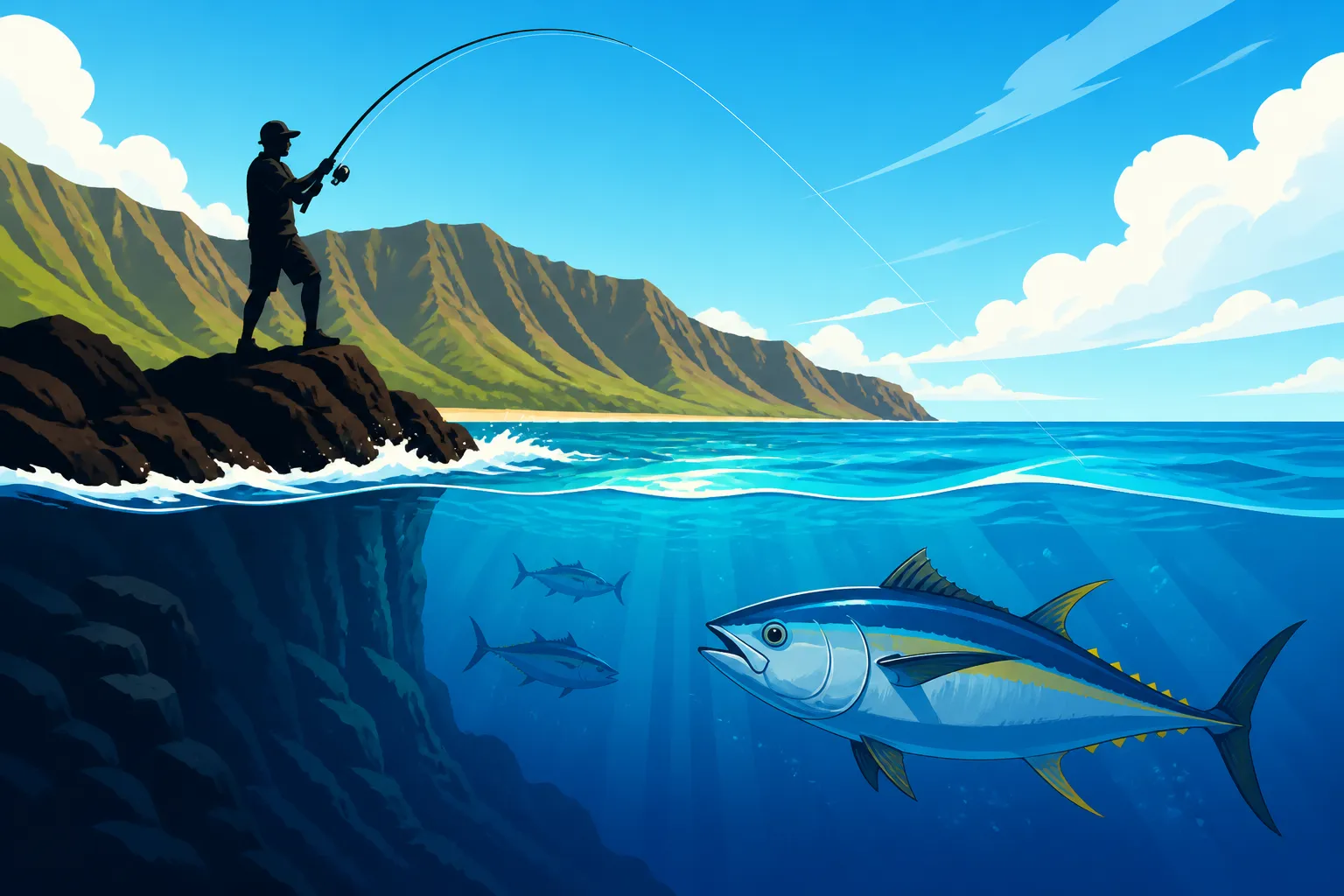
Occasionally, pelagic species like ono (wahoo), mahimahi, or even smaller ahi (yellowfin tuna) can cruise close to the point, especially if there's an abundance of baitfish schools or favorable current conditions. The point acts as a natural aggregation zone. Bottomfishing in the deeper pockets and crevices can also yield various snappers like opakapaka or onaga, though these are typically more consistently accessible by boat. Live bait, such as fresh akule or opelu, fished on a sliding rig, is often the most effective method for targeting larger fish in these deep, current-swept areas, as it presents a natural, irresistible offering.
Keep in mind that while the potential for large fish is high, so is the chance of getting "rocked" – having a fish run into the sharp lava, coral, or other underwater structure and cut your line. That's just part of the game at Kaena Point, emphasizing the need for strong gear, heavy leader, and a powerful, smooth drag system that can turn a fish before it finds refuge. It's a high-stakes game of angling prowess.
Effective Techniques from Shore and Kayak
For shore anglers aiming for those deep pockets and current lines, slide baiting is a tried-and-true method that has accounted for countless large ulua. This technique allows you to cast a heavy sinker far out into the desired deep water, then send a live or dead bait (like a whole akule or opelu) down your main line using a specialized slider rig. This allows the bait to drift or sink naturally into the strike zone, often where powerful currents converge or sweep along deep ledges. Night fishing is incredibly popular here for ulua, as these fish are often more active and aggressive after dark, feeding under the cover of low light.
Another effective method, especially for those casting into deep washouts, turbulent channels, or pockets created by the waves, is whipping with heavy casting lures. Large poppers, stickbaits, and heavy metal spoons can entice aggressive surface strikes from papio and even smaller ulua that are feeding on baitfish near the surface. The key is to find spots where the waves push bait into deeper cuts or where currents create feeding lanes. Be prepared for explosive, often brutal, strikes and fast, powerful retrieves.
Kayak fishing offers an incredible advantage at Kaena Point, allowing anglers to get directly over the deep drop-offs and intricate structure that are simply out of reach for shore casters. Trolling lures or live baits along the deeper ledges and current seams for ono or mahimahi can be highly productive. Vertical jigging or dropping bait straight down into deep holes for bottomfish is also a popular and effective technique. Always use a dependable anchor system or a drift sock to maintain position in the strong currents, as getting swept away from your target zone or, worse, into a dangerous area, is a real concern. If you're interested in honing your Kayak Fishing Techniques for Hawaii Waters, Kaena Point provides a fantastic proving ground for your skills and bravery. For those looking for a truly unique and challenging fishing experience, Kaena Point delivers, but it demands respect and careful preparation.
| Access Point | Primary Fishing Method | Best Time to Fish | Target Depth (Approx.) | Key Species Targeted | Primary Challenges |
|---|---|---|---|---|---|
| Western Tip | Shore (Slide Baiting, Heavy Casting) | Night, Dawn/Dusk | 30-100+ ft | Ulua, Omilu, Ono | Long Hike, Extremely Strong Currents, Slippery Rocks, Rogue Waves |
| Northern Shoreline | Shore (Slide Baiting, Whipping), Kayak | Day & Night, Calm Conditions | 20-60 ft | Papio, Ulua, Kamanu, Mahimahi | Rocky Kayak Launch, Swells, Variable Access |
Disclaimer
Please be aware that fishing regulations, conditions, and access points can change. Always consult the latest Hawaii Division of Aquatic Resources (DAR) regulations before fishing. Exercise extreme caution when fishing at Kaena Point, as ocean conditions can be unpredictable and dangerous. Your safety is your responsibility.