Best bonefishing flats in Keehi Lagoon
Finding the elusive "ghost of the flats" can be one of the most rewarding, yet incredibly frustrating, experiences for any angler visiting or living in Hawaii. Keehi Lagoon, right in the heart of Honolulu, might seem like an unlikely hotspot, but its shallow, nutrient-rich waters hold some truly remarkable bonefish. This guide will walk you through the very best flats within Keehi Lagoon, sharing insider tips to help you conquer this unique urban fishery.
Understanding Keehi Lagoon's Unique Bonefish Habitat
Keehi Lagoon is far from your typical picturesque Hawaiian fishing spot, nestled between the bustling Honolulu International Airport and Nimitz Highway. Yet, beneath the flight paths and urban sprawl lies a surprisingly vibrant ecosystem that supports a healthy population of bonefish, or ʻōʻio as they’re known locally. Don’t let the surroundings fool you; these fish are just as wary and challenging as their counterparts on more remote flats.
The Allure of Keehi Lagoon for Bonefishing
What makes Keehi Lagoon such a compelling place for bonefish, despite its urban setting? It's a combination of factors, starting with its geography. The lagoon is a large, relatively shallow expanse of water, protected by the surrounding landmasses and breakwaters, which creates a somewhat calmer environment compared to the open ocean. This protection allows for extensive, relatively undisturbed mud and sand flats to form, which are prime feeding grounds. The depth changes are subtle, often just a foot or two, creating perfect ambush points and foraging areas.
The water itself is rich in nutrients, fed by a mix of tidal ocean water and, unfortunately, some urban runoff (though efforts are continually made to improve water quality). This nutrient load supports a huge diversity of small crabs, shrimp, and worms – the exact delicacies that bonefish crave. They patrol these flats relentlessly, nosing into the bottom to stir up their meals, often giving away their presence by "tailing" as their tails break the surface or creating tell-tale "mud clouds." The tides play a huge role here, flushing in fresh bait and oxygen, and anglers quickly learn to time their visits with the rising and falling waters.
Identifying Prime Bonefish Flats Features
Successfully finding bonefish in Keehi Lagoon comes down to understanding what to look for. It’s not about casting blindly; it’s about reading the water and the environment. Bonefish are masters of camouflage, blending seamlessly with the bottom, so visual cues are paramount. You’re looking for any anomaly, any movement, or any disturbance that screams "fish!"
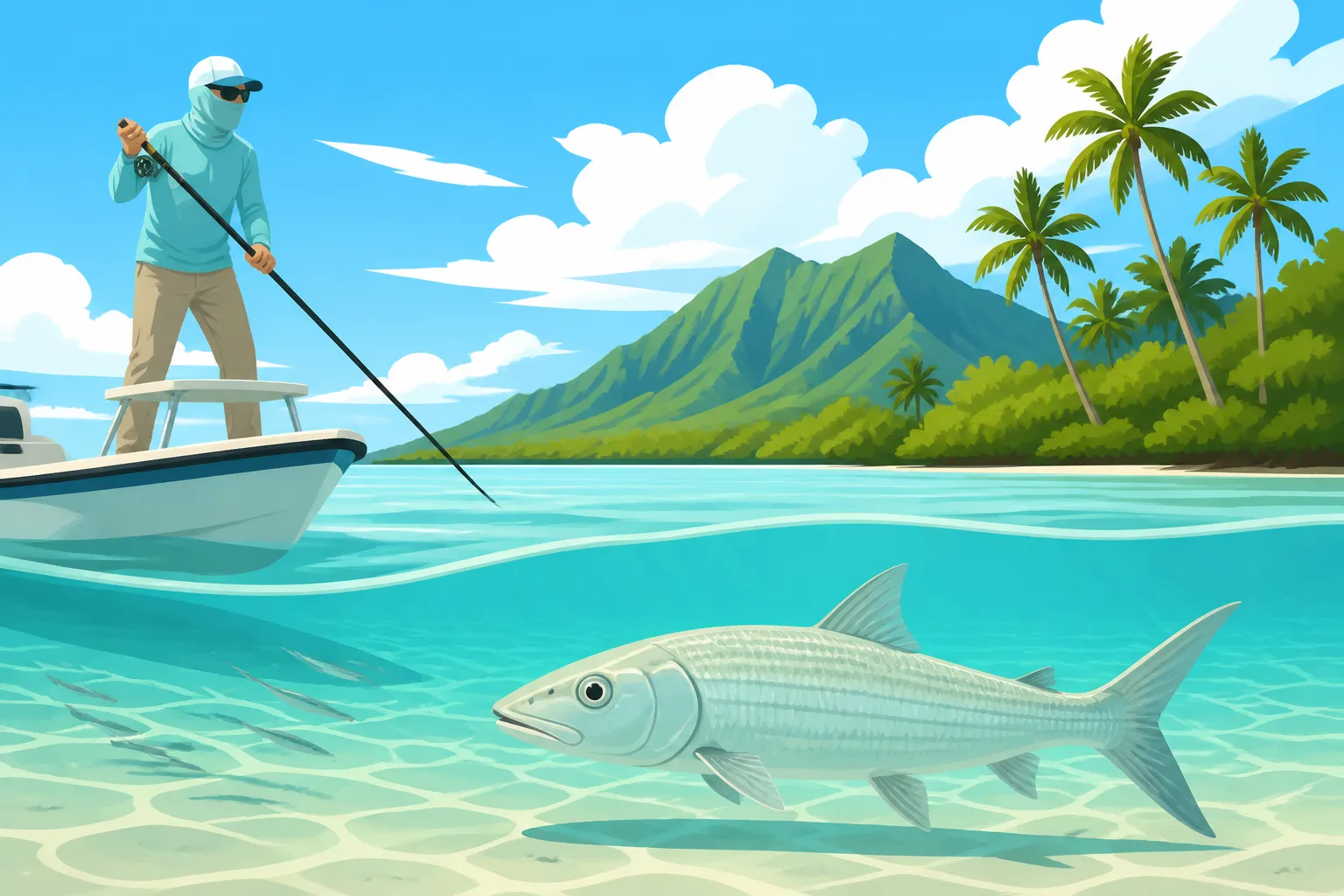
One of the most obvious signs is "nervous water" – subtle ripples or a change in the water's surface texture that isn't caused by the wind. This often indicates a school of bonefish moving stealthily. Even more exciting is seeing a fish "tailing," where its tail or dorsal fin pokes out of the water as it feeds head-down on the bottom. This usually happens during calmer conditions and lower tides when the fish are actively grubbing. "Mudding" is another key indicator, where a cloud of disturbed sediment appears in the water as a bonefish roots around for food. These mud clouds can be small and fleeting, or larger and persistent if a whole school is feeding. Look for slight depth changes, edges where sand meets mud or sparse coral rubble. These transition zones often hold more bait and provide bonefish with a sense of security while still allowing easy access to feeding flats. Public access points, like the shoreline around Sand Island State Recreation Area, are excellent starting points for scouting these features.
Navigating the Best Bonefishing Flats within Keehi Lagoon
Keehi Lagoon offers a few distinct areas where bonefish tend to congregate. Each has its own characteristics, challenges, and rewards. Knowing these specific zones can significantly increase your chances of success.
The Eastern Flats Near Sand Island State Recreation Area
The eastern side of Keehi Lagoon, particularly around the Sand Island State Recreation Area, is arguably the most well-known and accessible spot for bonefishing. This area features extensive shallow flats that stretch out from the shoreline, dotted with sand patches, areas of soft mud, and scattered coral heads. It's a fantastic spot for wading anglers, offering plenty of room to roam and stalk fish. Access is relatively easy, as you can park and walk right onto the flats from the park.
When fishing these flats, pay close attention to the tidal movements. An incoming or rising tide often brings bonefish onto the shallower sections to feed, while an outgoing tide might concentrate them along the edges or in slightly deeper channels as they retreat. You'll want to target those transition zones where the bottom changes, as well as any areas where you see baitfish scattering. The bonefish here can range from smaller "schoolie" fish to much larger, solitary specimens. The deeper channels interspersed within these flats are also worth exploring, as fish will often stage there before moving onto the shallower feeding grounds. For more insights on specific locations, you might find useful information in our guide to Sand Island Bonefishing.
Central Keehi Lagoon's Extensive Mud Flats
Moving towards the central parts of Keehi Lagoon, you'll encounter more expansive mud flats. These areas can be a bit more challenging to wade due to the softer bottom, but they are incredibly rich in the crustaceans and worms that bonefish feed on. The visibility can sometimes be lower here, especially after heavy rains or strong winds, making spotting fish even more of a skill. However, the rewards can be significant, as these flats often hold larger schools of active bonefish.
Successful angling in the central mud flats often requires patience and a keen eye for subtle signs. Look for distinct mud clouds that linger, indicating actively feeding fish. The best time to approach these areas is usually during the quieter parts of the day, early morning or late afternoon, when boat traffic is minimal and the light might be less harsh. Wading slowly and deliberately, disturbing the water as little as possible, is crucial. Pay attention to how the light hits the water; sometimes, the angle of the sun can reveal patterns or shapes that you wouldn't otherwise see. If you're looking to enhance your chances, services like FishingBooker can connect you with experienced local guides who know these challenging mud flats intimately and can help you navigate their intricacies.
Western Edges and Channel Inflows
The western edges of Keehi Lagoon, closer to the main shipping channels and the mouth of the lagoon, offer a different bonefishing experience. Here, you'll find more pronounced currents and often deeper water nearer the channels, but still with plenty of shallow flats extending outwards. These areas benefit from the constant exchange of water with the open ocean, bringing in fresh bait and oxygen. The confluence of these currents and the structure of the channel edges create natural pathways and feeding lanes for bonefish.
Angling near these channel inflows requires a bit more understanding of the currents. Fish will often orient themselves into the flow, waiting for food to be swept past. Look for flats that border these channels, especially during incoming tides when bait is being pushed in. The bonefish here might be more accustomed to boat traffic, but they are no less wary. You might also encounter other species, such as papio (juvenile trevally) or barracuda, making for a diverse fishing experience. These areas can sometimes offer clearer water due to the stronger tidal flush, which can aid in spotting. Remember to check local regulations carefully, as certain areas around harbors or channels might have specific rules. For a comprehensive overview, our Hawaii Fishing Regulations Explained article is a valuable resource.
Essential Techniques and Gear for Keehi Lagoon Bonefish
Catching bonefish in Keehi Lagoon is a pursuit that demands finesse, patience, and the right approach. It’s a true test of an angler’s skill, combining the thrill of the hunt with precise casting and presentation.
Mastering the Art of Spotting and Presentation
The number one rule of bonefishing, especially in a place like Keehi Lagoon, is to spot the fish before you cast. Bonefish have incredible eyesight and are notoriously spooky. High-quality polarized sunglasses are not just recommended, they are absolutely essential. They cut the glare off the water, allowing you to see into the shallow depths and pick out the subtle shapes and movements of bonefish against the bottom. Look for movement, shadows, or any unnatural outline. Often, a bonefish might just appear as a darker "smudge" on the sand, or a slight flash as it turns.
Once you've spotted a fish or a school, the presentation of your fly or lure is critical. You want to lead the fish by several feet, casting beyond it and retrieving your offering into its strike zone. The goal is to make your fly or lure land softly, mimicking a natural food item, without spooking the fish. A hard splash will send them darting away instantly. When retrieving, use short, subtle strips or twitches that mimic the natural movements of a crab or shrimp trying to escape. If the fish doesn't react, let the lure sit briefly, then try another gentle strip. It's a game of subtlety and patience.
Tides, Weather, and Timing for Success
Understanding the interplay of tides, weather, and light conditions is paramount for consistent bonefishing success in Keehi Lagoon. These factors dictate when and where bonefish will be feeding most actively, and how visible they will be to you.
| Condition | Optimal for Bonefishing in Keehi Lagoon | Notes |
|---|---|---|
| Tide Stage | Incoming/Rising Tide: As water floods the flats, bonefish move in to forage. First half of Outgoing Tide: Fish may concentrate on flat edges as water recedes. |
Avoid extreme low tides, which can leave fish in deeper channels or make wading difficult. Strong tidal flow is generally good. |
| Light | Overcast (but bright): Diffused light reduces glare and makes spotting fish easier without harsh shadows. Early Morning/Late Afternoon: Lower sun angles can help with visibility if not directly in your eyes. |
Midday sun can be challenging due to glare. Harsh shadows can spook fish. |
| Wind | Light to Moderate (10-15 mph): Creates a ripple on the surface, breaking up the water's reflection and making it harder for fish to see you, while still allowing for accurate casting. Wind at your back: Aids in longer, more accurate casts. |
Strong winds make casting difficult and reduce visibility. Dead calm water increases spookiness. |
| Water Clarity | Clear to Moderately Clear: Allows for visual spotting of fish and bottom structure. | After heavy rains, runoff can cloud the lagoon, making spotting nearly impossible. Give it a few days to clear. |
| Moon Phase | New or Full Moon (stronger tides): Can bring more aggressive feeding, but also very fast currents. Quarter Moons (moderate tides): Often provide more consistent, manageable fishing conditions. |
Extremely strong tides can sometimes push fish off the flats too quickly or make them hold in deeper water. |
An incoming tide, especially over a rising flat, is often considered prime time. As the water slowly creeps over the shallow areas, it brings new food sources, and bonefish will move in with the tide to feed. The first half of a falling tide can also be productive, as fish may congregate along the edges of the flats before retreating to deeper water. Light conditions are crucial for spotting. Overcast days, with bright but diffused light, can be fantastic as they reduce glare and harsh shadows, making fish more visible. Early mornings and late afternoons also offer softer light. Strong winds can make casting a nightmare and ripple the water too much for spotting, but a light breeze can actually be helpful, as it breaks up the water's surface, making it harder for the fish to spot you.
Fly Fishing vs. Spin Fishing Strategies
Both fly fishing and spin fishing can be incredibly effective for bonefish in Keehi Lagoon, and the choice often comes down to personal preference and skill level.
For fly fishing, an 8 or 9-weight fly rod is generally ideal. This provides enough backbone to fight strong bonefish and enough power to cast in windy conditions. A fast-action rod with a weight-forward floating line is standard. Your leader setup is critical: typically a 9-12 foot leader with a 10-15 lb fluorocarbon tippet for stealth and abrasion resistance. Fly patterns should mimic the local food sources, so small crab patterns (like a Del Brown's Merkin or similar), Gotchas, and Crazy Charlies in natural colors (tan, olive, pink) are excellent choices. Sizes #4 to #8 are usually sufficient. The key is to make quiet, accurate casts and execute subtle retrieves. If you're really serious about honing your skills, consider booking a guided trip, and FishingBooker can help you locate guides specialized in Best Bonefishing Techniques for Oahu Flats.
For spin fishing, an ultra-light to medium-light spinning rod (6'6" to 7'6") paired with a matching reel spooled with 10-15 lb braided line is a great setup. A sensitive rod tip is important for detecting subtle bites. Attach a 6-10 foot fluorocarbon leader (8-12 lb test) to your main line. The best lures are small jigs (1/8 oz to 1/4 oz) tipped with a small plastic grub or shrimp imitation. Colors like white, pink, tan, or chartreuse can be effective. Some anglers also use small, weedless soft plastics rigged on jig heads. The retrieve should be slow and methodical, hopping the jig along the bottom to imitate a foraging crustacean. Again, accuracy is key; cast well ahead of the fish and work the lure into its path.
Conservation and Responsible Angling in Keehi Lagoon
Being able to fish for bonefish in an urban environment like Keehi Lagoon is a privilege, and it comes with a responsibility to protect this unique fishery. Sustainable practices ensure that these amazing fish continue to thrive for future generations of anglers.
Navigating Regulations and Best Practices
First and foremost, always be aware of and follow the specific rules set by the Hawaii Department of Land and Natural Resources (DLNR) Division of Aquatic Resources (DAR). While a marine fishing license is not currently required for recreational shoreline fishing in Hawaii, it's always wise to stay informed as regulations can change. For those who want to be fully prepared for any fishing in Hawaii, checking out a resource like Hawaii Fishing License Guide for 2026 can be helpful. Bonefish are primarily a catch-and-release species for most recreational anglers, highly valued for their fight rather than their table fare. When practicing catch-and-release, handle the fish as little as possible and always with wet hands. Avoid touching their eyes or gills. Minimize their time out of the water, snap a quick photo if you must, and then gently revive them by holding them in the water, facing into the current, until they swim off strongly.
Beyond formal regulations, common courtesy and environmental stewardship are paramount. Keehi Lagoon is a busy area with boat traffic, other anglers, and various recreational users. Be mindful of your surroundings, give others space, and always pack out everything you pack in – and then some. Help keep the flats clean by picking up any trash you encounter.
Protecting Keehi Lagoon's Fragile Ecosystem
Keehi Lagoon, despite its urban setting, is a delicate ecosystem. The bonefish here rely on healthy mud and sand flats, thriving populations of baitfish, and good water quality. Anglers have a role to play in protecting this balance. Avoid walking or boating over sensitive coral areas, and be mindful of your footprint on the flats. Minimize disturbance to the bottom where possible.
Participating in local conservation efforts, even if it's just by being an informed and responsible angler, contributes to the health of the lagoon. Educate yourself and others about the importance of keeping our oceans and coastal areas clean. The more we respect and care for places like Keehi Lagoon, the longer we can enjoy the incredible experience of pursuing these magnificent bonefish right on the doorstep of Honolulu. Remember, the continued enjoyment of this special place depends on all of us. You can learn more about general conservation efforts by reviewing information on topics such as Hawaii Marine Life Conservation Districts, Explained.
Disclaimer
Please be aware that fishing regulations, conditions, and access points can change. Always consult the official Hawaii Department of Land and Natural Resources (DLNR) Division of Aquatic Resources (DAR) for the most current information before heading out on your fishing adventure. Safety should always be your top priority.