Best months to catch ahi in Hawaii
Trying to figure out the "best" time to catch ahi (yellowfin tuna) in Hawaii can feel like chasing a ghost in the vast Pacific. One day, the ocean is teeming with them, and the next, it's just endless blue with nary a fin in sight. It's a common frustration for anglers, both seasoned locals and excited visitors, because these powerful pelagic fish are constantly on the move, driven by bait, currents, and water temperature. This guide aims to pull back the curtain on ahi seasonality in Hawaii, helping you understand their patterns, pinpoint the prime months, and boost your chances of landing one of these magnificent fighters.
Understanding Ahi Migratory Patterns in Hawaii
Ahi fishing in Hawaii isn't as simple as picking a random day and heading out. These incredible yellowfin tuna are highly migratory, meaning they're constantly moving across vast stretches of the open ocean. Their presence in Hawaiian waters is deeply tied to their life cycle, feeding habits, and the dynamic environment of the Pacific. It's a complex dance between predator and prey, ocean currents, and even the lunar cycle, all playing a role in where and when these fish decide to show up.
The Life Cycle and Movements of Yellowfin Tuna
Yellowfin tuna, or Thunnus albacares as they're known scientifically, are built for speed and endurance. They spend their lives traversing open ocean, rarely lingering in one spot for too long. In Hawaii, we often see them following schools of baitfish, which are their primary food source. These baitfish, like opelu (mackerel scad) and akule (bigeye scad), are themselves influenced by plankton blooms and ocean currents.
Younger, smaller ahi, often called "schoolie" ahi, tend to travel in larger groups and can be found closer to shore, sometimes even congregating around structures like FADs (Fish Aggregating Devices) or around offshore banks. As they mature, ahi become more solitary and often move into deeper, bluer waters, where they hunt larger prey. Their movements are less about a strict seasonal migration to a breeding ground and more about a constant search for food and optimal water conditions. This continuous roaming is why understanding their habits is so crucial to knowing How to Catch Ahi in Hawaii.
Influence of Ocean Currents and Water Temperature
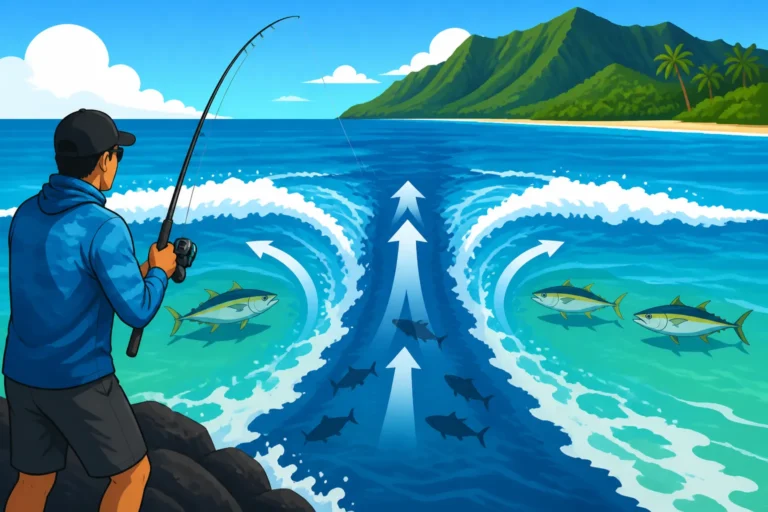
The tropical waters surrounding the Hawaiian Islands are a dynamic highway of ocean currents. The North Pacific Gyre and various local eddies and currents play a massive role in concentrating nutrients and, subsequently, baitfish. Ahi are highly sensitive to water temperature. While they prefer warm waters, they are often found on the edges of temperature breaks or current lines, where different water masses meet. These areas are ecological hot spots where baitfish are swept together, creating a feeding frenzy opportunity for tuna.
For instance, a strong current pushing against an underwater seamount or an island can create an upwelling, bringing nutrient-rich cold water to the surface. This can concentrate bait, which in turn attracts ahi. Fishermen often look for these "temperature breaks" or "current lines" by observing changes in water color, clarity, or even looking for birds diving into the water, signaling a bait ball. Staying informed about Ahi Migration Patterns Around Hawaii requires paying close attention to these subtle, yet significant, oceanic cues.
Monthly Breakdown: When Ahi Fishing Peaks Across the Islands
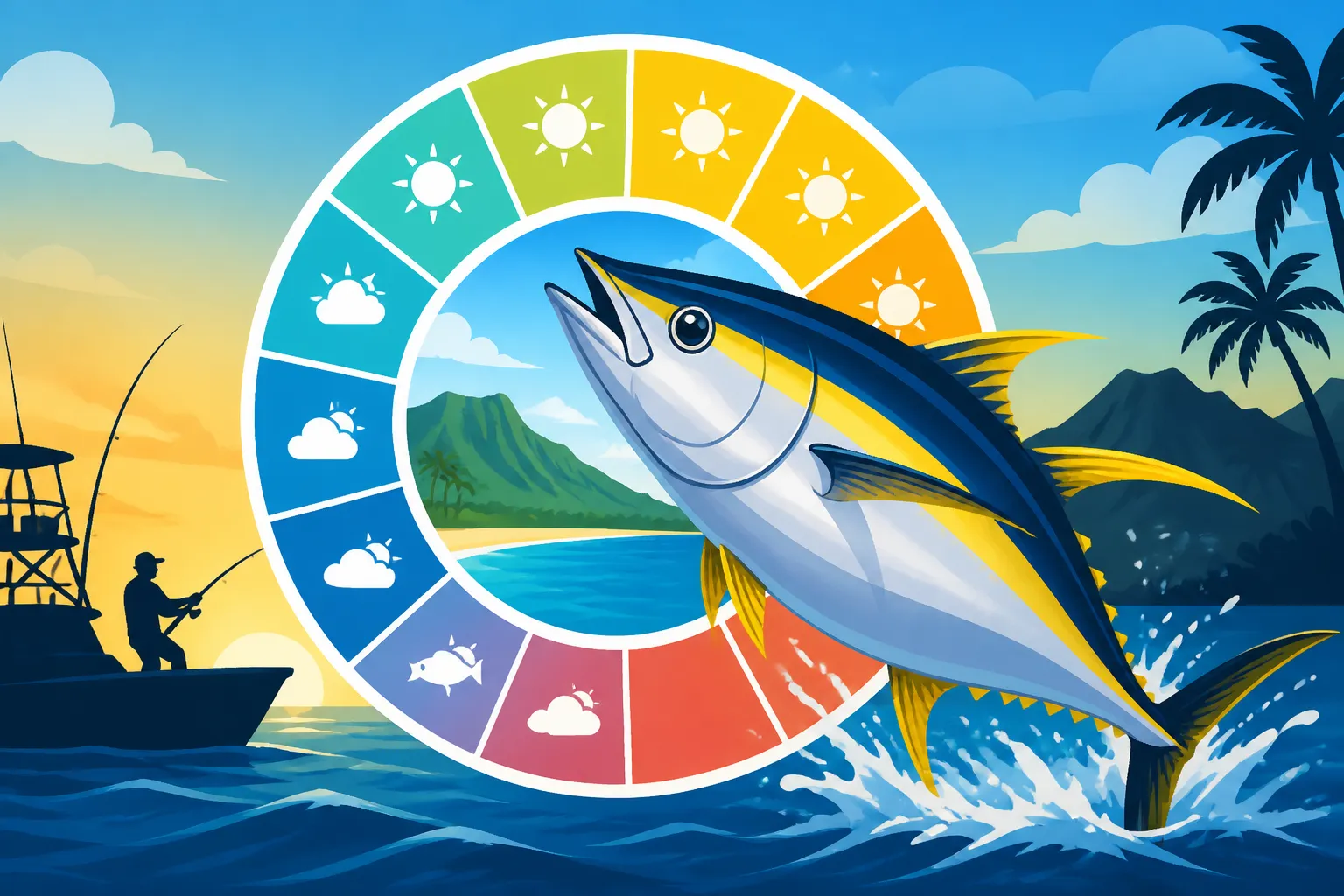
While ahi are present in Hawaiian waters year-round to some extent, there are definite peak seasons when your chances of encountering these prized fish dramatically increase. It's not a hard-and-fast rule, as Mother Nature always has the final say, but historical data and local knowledge point to specific windows of opportunity that every angler should be aware of.
Spring: The Promise of Bigger Ahi (March-May)
Spring can be a truly exciting time for ahi fishing in Hawaii. As the ocean temperatures gradually begin to climb after the cooler winter months, it often signals the arrival of larger yellowfin tuna. This isn't usually the time for massive schools of smaller ahi, but rather for those bigger, more mature fish that are pushing through the Hawaiian waters.
In March and April, the bite can sometimes be a bit sporadic, but when it's on, it's often for quality fish. By May, things really start to pick up, particularly on the leeward side of the islands like the Kona Coast of the Big Island, which is renowned for its calm waters and deep-sea access. Anglers here often report solid ahi catches as the waters warm up. It’s a fantastic time to try techniques that target these larger, more solitary fish, perhaps focusing on methods like slow trolling live bait or larger lures. This period can offer some of the most rewarding battles, often with fish in the 100-200lb range, making it a favorite for many charter captains and serious sport fishermen.
Summer: Peak Season for Consistent Action (June-August)
When summer hits, that's often when ahi fishing explodes across the Hawaiian Islands. June, July, and August are widely considered the absolute prime months for yellowfin tuna. The warmer water brings in vast schools of baitfish, and the ahi follow right behind them. This is the time when you'll hear stories of double and triple hookups on the radio, and the harbors are buzzing with activity.
During these months, you can expect more consistent action, often with a mix of schoolie ahi (typically 20-60lbs) and larger "grander" sized fish, though the latter are always harder to come by. The sheer abundance means more opportunities, whether you're trolling offshore, chunking near FADs, or even targeting them with poppers if they're busting on the surface. Islands like Oahu, Maui, and the Big Island all see significant ahi runs during the summer. If you're planning a trip specifically to target yellowfin tuna, booking a charter during these months, especially considering the Best Time of Day to Book a Charter for Ahi, gives you the best statistical chance of success. Just remember to check the Hawaii ahi bag limit rules before you head out, as regulations are in place to ensure sustainable fishing.
Fall: A Transition Period (September-November)
As summer transitions into fall, ahi fishing can remain strong through September, especially if the warm water and bait concentrations hold. However, as October and November roll around, the action tends to become a bit more variable. You might still find excellent fishing on certain days, but the consistency that defines the summer bite often tapers off.
This period can be a fantastic time for larger, migrating ahi. The fish might be less numerous than in the peak summer months, but those you do encounter can often be some of the biggest of the year. It becomes more of a hunt, requiring patience and a keen eye for subtle signs like diving birds or changes in water conditions. The weather can also start to become a factor, with stronger winds and bigger swells possible, particularly on exposed coastlines. It's a time when local knowledge and adaptability really pay off.
Winter: The Slow Season, But Not Without Hope (December-February)
Winter is generally considered the slowest season for ahi fishing in Hawaii. The water temperatures are at their coolest, and many of the large schools of baitfish have moved on or dispersed. This doesn't mean ahi are entirely absent, but they become much harder to locate.
During these months, if you do find ahi, they are often solitary, larger fish. It becomes a game of persistence, often requiring more specialized techniques like deep dropping or focusing on very specific offshore structures that might hold a few resident fish. While fewer charter boats might actively target ahi during winter, those that do are often looking for the trophy fish. If you're here in winter and itching for ahi, it’s worth considering Drift Fishing for Ahi in Hawaii in deeper waters or focusing on other pelagic species that might be more prevalent. Don't write off winter entirely, but adjust your expectations for fewer, but potentially larger, catches.
Factors Influencing Ahi Presence Beyond Just the Calendar
While understanding the general seasonal patterns is incredibly helpful, Mother Nature is rarely that predictable. There are numerous other factors at play that can dramatically influence when and where ahi decide to show up, regardless of what the calendar says. True ahi experts understand that successful fishing is a blend of seasonal knowledge and keen observation of the dynamic ocean environment.
Baitfish Availability and the Food Chain
Hands down, the single most critical factor influencing ahi presence is the availability of their primary food source: baitfish. Ahi are opportunistic predators, and they will follow the food. If there's a dense school of opelu, akule, or even squid, you can bet ahi won't be far behind. These bait schools are the foundation of the pelagic food chain, and their movements dictate where the tuna will be.
Sometimes, bait schools are pushed into shallower waters by strong currents or larger predators, creating incredible opportunities for both boat and even some adventurous shore anglers (though offshore is where the real ahi action is). Conversely, if the bait has moved on due to environmental changes or fishing pressure, the ahi will follow suit, leaving an otherwise prime fishing ground barren. This is why experienced captains are constantly looking for signs of bait – diving birds, slick water, or even sonar readings – as these are the ultimate indicators of where the ahi might be. Knowing the Best Bait for Ahi Fishing also means understanding what the ahi are naturally feeding on in a given season or location.
Weather Patterns and Sea Conditions
You can have the perfect month on the calendar, but if the weather turns sour, your ahi chances can plummet. Strong winds, large swells, and heavy rains can dramatically impact fishing conditions and ahi behavior. For instance, extremely rough seas make it difficult, if not impossible, for boats to get offshore safely and effectively. It also disperses bait, making ahi harder to locate.
On the other hand, a prolonged period of calm, clear weather can make for ideal ahi fishing. Flat seas allow for easier spotting of diving birds, surface busts, and even subtle slicks that indicate feeding activity. After a major storm, the ocean can sometimes "clean up" as the dirty water disperses, leading to a surge in activity as fish move back in. Barometric pressure changes can also affect how actively fish feed. Anglers always need to keep a close eye on the marine forecast, understanding that even the "best" month can be a bust if the conditions aren't cooperating.
Fishing Pressure and Local Hotspots
Just like any popular fishing destination, certain areas in Hawaii become known as ahi hotspots. Think of places like the waters off Honokohau Harbor on the Big Island or the FADs (Fish Aggregating Devices) maintained by the DLNR. These spots often hold ahi because of their unique topography, current patterns, or simply because they attract bait. However, popularity can also mean increased fishing pressure.
If too many boats are constantly working a small area, it can disrupt the baitfish and make the ahi wary, causing them to move to less pressured zones. This is why local knowledge, acquired over years on the water, is invaluable. Experienced captains know how to read the patterns, when to try a less popular spot, or how to subtly approach a productive area without spooking the fish. Sometimes, the best fishing is found by venturing slightly off the beaten path or employing a different strategy, like Best Techniques for Chumming for Ahi to draw them in without heavy trolling pressure.
Gearing Up for Ahi Fishing in Hawaii
Successfully catching ahi, especially the bigger ones, isn't just about being in the right place at the right time. It's also about having the right tools for the job. These fish are incredibly strong and fast, demanding stout tackle and reliable gear. Cutting corners on your equipment can lead to heartbreak when you hook into a true Hawaiian "grander" ahi only to have your gear fail.
Essential Rods, Reels, and Line for Ahi
When targeting ahi, you're looking for serious power. Your rod and reel setup needs to be able to handle sustained, brutal runs and the immense pressure these fish exert. For trolling or live baiting for larger ahi, most anglers opt for heavy-duty conventional setups.
- Rods: Look for rods rated for 50-80 lb or even 100 lb class, typically 5.5 to 7 feet long, with a strong backbone and a sensitive tip. Graphite composite rods offer a good balance of strength and sensitivity.
- Reels: High-quality lever drag reels are paramount. Brands like Shimano Tiagra, Penn International, or Daiwa Saltiga are popular choices for their robust construction and smooth drag systems. A 50W (wide) or 80W size is common for offshore trolling for larger ahi. For jigging or lighter applications, a high-quality spinning reel in the 10000-20000 size range with a strong drag can also work.
- Line: Braid main line is almost universally preferred due to its incredible strength-to-diameter ratio, allowing you to spool more line. 80-130 lb test braid is common. This is usually topped with a monofilament or fluorocarbon leader of 100-300 lb test, depending on the target size and technique. The stretch in mono leaders helps absorb the shock of an ahi's powerful head shakes. Ensuring your line is in top condition is vital; you can find high-quality braided and monofilament lines on Amazon from reputable brands.
Lures and Baits That Ahi Can't Resist
Ahi are aggressive feeders, and a variety of lures and baits can entice them. The choice often depends on the season, local bait conditions, and preferred fishing technique.
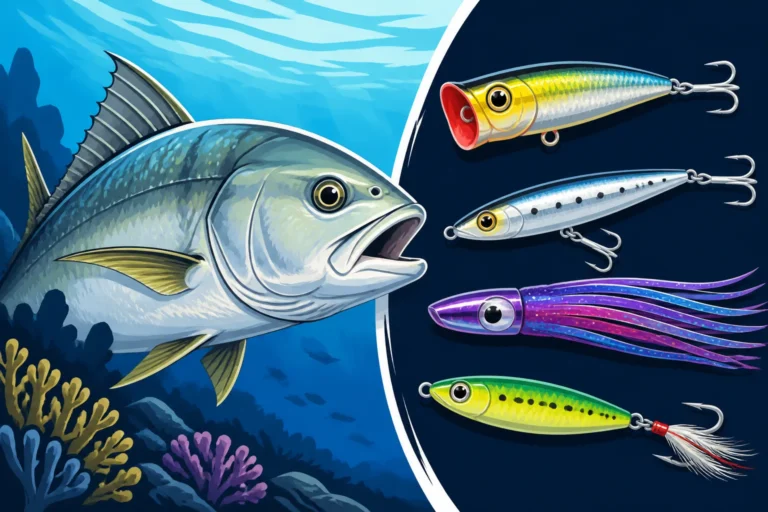
- Trolling Lures: These are a staple for offshore ahi fishing. Skirted lures, often with bright, reflective heads and contrasting skirts in colors like black and purple, blue and silver, or green and yellow, are highly effective. Brands like Aloha Lures, Marlin Magic, and Black Bart make lures specifically designed for Hawaii's pelagics. The action of the lure in the water, mimicking a fleeing baitfish, is key. Consider learning more about Trolling Techniques for Hawaii Pelagics to maximize your lure's effectiveness.
- Live Bait: If you can get your hands on fresh live bait like opelu, mackerel, or even small skipjack tuna, it's often irresistible to ahi. Live bait can be slow-trolled or fished on a drift.
- Chunk Bait/Chumming: Cutting up fresh baitfish into small pieces and throwing them into the water (chumming) can create a feeding frenzy, drawing ahi close to the boat. Once they're in the chum slick, you can present a baited hook. This is especially effective when you've located a school of ahi.
- Jigs: Heavy-duty vertical jigs, in weights ranging from 6 to 12 ounces or more, can be very effective when ahi are holding deeper. Drop them down and work them back up with a fast, erratic retrieve.
Safety and Comfort on the Water
Fishing for ahi in Hawaii often means spending long hours offshore under the intense tropical sun. Prioritizing safety and comfort will make your trip much more enjoyable and productive.
- Sun Protection: The Hawaiian sun is no joke. A wide-brimmed hat, sunglasses (polarized are a must for spotting fish and structure), and long-sleeved, breathable UV-protective clothing are essential. Don't forget high-SPF sunscreen, which you can easily stock up on through Amazon before your trip. Reapply frequently!
- Hydration and Snacks: Bring plenty of water and electrolytes to stay hydrated. Pack snacks that are easy to eat on a rocking boat. A good cooler, like those from Yeti or Igloo, can keep your drinks and food (and later, your catch) cold all day. Many popular cooler brands are conveniently available on Amazon.
- Seasickness Medication: If you're prone to seasickness, take preventative measures. Over-the-counter medications like Dramamine or Bonine, or even a transdermal patch, should be taken well before you get on the boat. Being sick can ruin an otherwise fantastic fishing day.
- First Aid Kit: A well-stocked first aid kit is always a good idea for minor cuts, scrapes, or other emergencies.
- Appropriate Footwear: Wear non-slip, closed-toe shoes to protect your feet and provide good traction on a wet deck.
Having the right gear and being prepared for the conditions will not only increase your chances of landing that dream ahi but also ensure you have a safe and memorable experience on the beautiful Hawaiian waters.
Ahi Fishing Hotspots and Strategic Timing
Knowing the peak months is one piece of the puzzle, but knowing where to go during those months significantly increases your odds. While ahi are pelagic and can be found throughout Hawaii's offshore waters, certain areas are historically more productive due to their unique oceanographic features. Combining strategic timing with location knowledge is the mark of a truly successful angler.
Kona Coast: The Big Island's Ahi Mecca
The Kona Coast on the Big Island is arguably the most famous ahi fishing destination in Hawaii, if not the world. Its deep waters drop off dramatically very close to shore, creating an immediate highway for pelagic species. The often calm leeward conditions make it ideal for sportfishing throughout much of the year, particularly during the peak ahi months.
- Year-Round Potential, Summer Peak: While ahi can be caught off Kona almost any time, the summer months (June-August) are phenomenal for both quantity and quality. The "schoolie" ahi are abundant, and larger "grander" sized fish are consistently encountered.
- FADs and Seamounts: Kona's offshore FADs (Fish Aggregating Devices) and various seamounts (underwater mountains) are prime locations for ahi. These structures concentrate baitfish and provide ambush points for tuna. Captains often troll between FADs or drift around them, keeping a keen eye on sonar. If you're planning a trip, consider looking into Best ahi fishing spots off Honokohau Harbor as a starting point.
- Strategy: Trolling lures and live bait are standard methods here. Chumming can also be very effective once a school is located. The deep waters make vertical jigging a viable option if you find fish holding deep.
Oahu and Maui: Diverse Offshore Opportunities
Oahu and Maui also offer fantastic ahi fishing, particularly during the summer. While they might not have the "grander" reputation of Kona, they consistently produce excellent catches for both recreational anglers and charter operations.
- Oahu: The waters off Oahu's leeward (west) and south shores, particularly out of Kewalo Basin or around the numerous offshore FADs, are productive. In summer, large schools of ahi move through these areas. Local knowledge is key here, as currents and bait movements can be highly localized.
- Maui: Maalaea Harbor and Lahaina Harbor on Maui's west side provide access to great offshore ahi grounds. The channel between Maui and Lanai, and the waters around the FADs off Kahoolawe, are known for holding ahi. Maui's diverse underwater topography creates many areas where bait congregates.
- Strategy: Trolling is the most common method on both islands, often targeting current lines, temperature breaks, and FADs. When you find a school, switching to casting poppers or jigs can also be exhilarating. Remember to always be aware of the Hawaii Pelagic Species Bag Limits for all species you might encounter.
Kauai and Other Islands: Hidden Gems and Local Secrets
While less publicized for ahi than the Big Island or Oahu, Kauai and the smaller islands also host significant ahi populations, especially for those with local knowledge or on specialized charters.
- Kauai: The waters off Kauai's south and west sides, accessible from Nawiliwili Harbor, can be incredibly productive, particularly in summer. The island's unique currents and underwater features attract tuna.
- Molokai and Lanai: These islands, often less fished by large charter fleets, can offer excellent opportunities for ahi, especially for private boaters or specialized charters that know the local "ono" (wahoo) and ahi grounds.
- Strategy: Again, trolling is king, but keen observation of bird activity and baitfish schools is paramount. These islands often have less pressure, meaning ahi might be less wary if you can find them.
Regardless of which island you choose, the key to successful ahi fishing lies in combining the seasonal knowledge with real-time observation of the ocean. Local fishing reports, discussions with bait shop owners, and the advice of experienced charter captains are invaluable resources that can turn an average day into an epic one.
| Season | Peak Months | Key Characteristics | Primary Locations | Average Size (lbs) |
|---|---|---|---|---|
| Spring | March-May | Larger, more solitary ahi; increasing water temps | Kona Coast, deeper offshore banks | 80-200+ |
| Summer | June-August | Most consistent action; abundant schools | All islands, especially Kona, Oahu, Maui FADs | 20-150+ |
| Fall | Sep-Nov | Variable, but potential for large fish persists | Offshore seamounts, deeper current lines | 50-200+ |
| Winter | Dec-Feb | Slower, fewer fish, but trophy potential | Deep drop-offs, specific offshore structures | 100-250+ |
Final Thoughts on Hawaii Ahi Seasonality
Catching ahi in Hawaii is an experience unlike any other. The sheer power, speed, and beauty of these fish make them a truly sought-after prize for anglers worldwide. While there are certainly "best months" when the odds are stacked in your favor, it's important to remember that ahi are wild creatures in a dynamic ocean. Their movements are influenced by a complex interplay of factors, from ocean currents and water temperature to baitfish abundance and even lunar cycles.
By understanding these patterns, staying informed about current conditions, and equipping yourself with the right gear and knowledge, you significantly increase your chances of success. Whether you're targeting massive ahi during the spring and fall pushes or enjoying the consistent action of the summer schoolie run, every day on the water in Hawaii holds the potential for an unforgettable encounter with one of the ocean's most magnificent predators.
Disclaimer
The information provided in this guide is for general informational purposes only and is subject to change. Fishing regulations, seasons, and fish behavior can vary. Always consult the most current regulations from the Hawaii Department of Land and Natural Resources (DLNR) Division of Aquatic Resources (DAR) before engaging in any fishing activity. Safe boating and fishing practices are highly recommended.