Best technique for freshwater largemouth bass in Hawaii
It's easy to get caught up in the allure of Hawaii's spectacular ocean fishing, but for those of us who appreciate the quiet challenge of freshwater angling, the islands offer a unique and often overlooked pursuit: largemouth bass. If you're used to mainland lakes, you'll find our reservoir environments present their own set of puzzles. This guide will help you unravel the best techniques and strategies to confidently target and reel in largemouth bass in Hawaii's freshwater havens.
Understanding Hawaii's Largemouth Bass Habitat
Chasing largemouth bass in Hawaii isn't like fishing a sprawling natural lake on the mainland. Our freshwater opportunities are primarily centered around a few key reservoirs, which means understanding their specific dynamics is crucial. These aren't pristine, untouched wilderness areas; they are managed systems with unique characteristics that influence where bass live and how they behave.
Reservoir Dynamics and Structure
Hawaii's main largemouth bass fisheries are predominantly found in man-made reservoirs like the iconic Wahiawa Reservoir on Oahu, or other smaller, less-frequented impoundments. These bodies of water often feature varying depths, submerged structures, and fluctuating water levels that can dramatically impact bass behavior. Unlike some mainland lakes with vast, consistent weed beds, Hawaiian reservoirs might have more defined areas of submerged trees, rock piles, or old roadbeds. The water clarity can also vary significantly, from stained to relatively clear, depending on recent rainfall and reservoir management.
For example, the Wahiawa Reservoir, also known as Lake Wilson, has a distinct contour. You'll find areas with deeper channels, old creek beds, and points that extend into the main body of water. These structural elements act as highways and ambush points for bass. They'll use these features to transition between deeper, cooler water and shallower feeding grounds. The shorelines can be steep and rocky in places, while others might offer gradual sloping banks with more vegetation. Understanding these nuances, even from satellite maps or local tips, can save you hours of fruitless casting. It’s also important to be aware of rules specific to these locations, like those covered in the article, Hawaii Wahiawa Reservoir Fishing Rules.
Identifying Prime Bass Locations
Finding the best spots for largemouth bass often comes down to looking for changes in the underwater landscape. Bass are ambush predators, so they love structure. Think about areas where different types of habitat meet: a rocky point transitioning to a muddy flat, the edge of a submerged brush pile, or even an old fence line that's now underwater. In Hawaii's reservoirs, these transitions can be subtle but incredibly productive.
One key aspect is identifying the thermocline if you're fishing deeper water during warmer months. Bass will often hold just above or within this layer where the water temperature is most comfortable. Look for baitfish activity; if you see schools of tilapia or other small fish dimpling the surface or scattering, chances are there's a predator nearby. Don't overlook shaded areas created by overhanging trees or cliff faces, especially during the brighter parts of the day. These spots offer bass a reprieve from the sun and an excellent ambush point. Sometimes, the best locations are those accessible to shore anglers, like the various Wahiawa Reservoir top fishing coves.
Top Techniques for Hawaiian Largemouth
When it comes to actually putting a hook in a Hawaiian largemouth, a blend of universal bass techniques and some local adaptations will serve you best. Don't just throw what worked on your home lake; be prepared to experiment a bit! The bass here can be pressured and finicky, requiring a subtle approach at times.
Soft Plastics and Texas Rigging
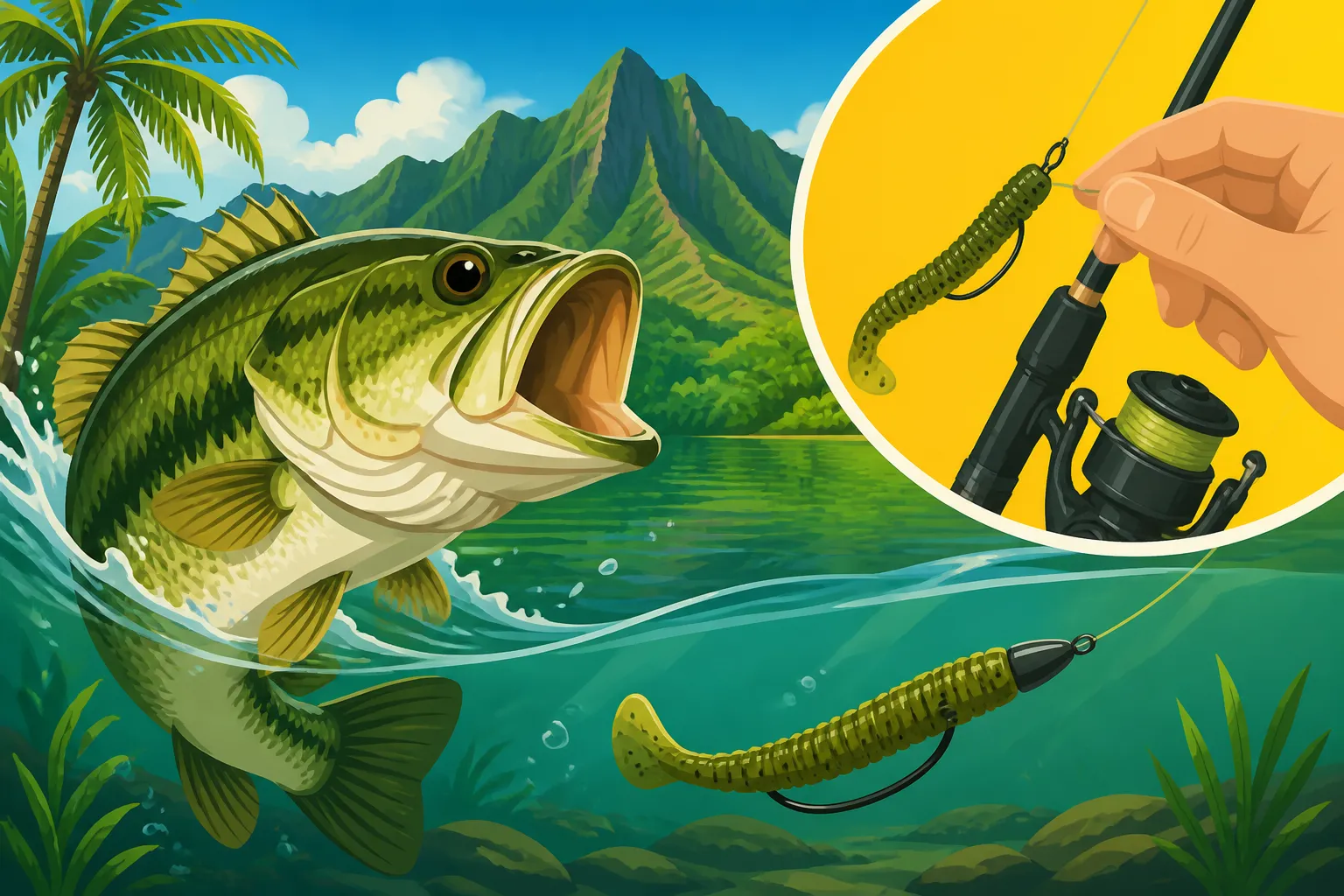
Soft plastics are absolutely indispensable for Hawaiian largemouth bass. They are versatile, imitate a wide range of forage, and can be fished effectively in various conditions. The Texas rig, in particular, is a workhorse that every angler targeting bass here should master. Why? Because our reservoirs often have submerged brush, weeds, and rocky bottom structures that can snag exposed hooks. A Texas-rigged worm or creature bait, with its hook point buried in the plastic, becomes virtually weedless, allowing you to present your bait right where the bass are hiding without constant hang-ups.
When choosing soft plastics, consider darker colors like junebug, black and blue, or green pumpkin, which tend to work well in stained water. For clearer conditions, something more natural like a watermelon red flake or a ghost shad can be deadly. Experiment with different sizes and shapes too – from 7-inch worms to smaller creature baits that imitate crawfish or juvenile tilapia. The key to fishing a Texas rig is a slow, methodical retrieve. Cast it out, let it sink to the bottom, and then use subtle lifts of your rod tip, letting the bait fall back down. Most bites will come on the fall or when the bait is resting on the bottom. Don't be afraid to leave it still for a few seconds; sometimes that's all it takes to entice a wary bass. You can find a huge selection of these plastics on Amazon, ensuring you have the right colors and sizes for any condition.
Crankbaits and Reaction Baits
While soft plastics cover the slow-and-steady approach, crankbaits and other reaction baits are fantastic for covering water quickly and eliciting aggressive strikes. These lures are designed to imitate fleeing baitfish or crawfish, triggering a predatory instinct in bass. Shallow-diving crankbaits work wonders around visible cover like emergent vegetation or submerged wood near the shoreline. Medium- and deep-diving crankbaits are excellent for targeting points, submerged humps, or old creek channels in deeper sections of the reservoir.
The trick with crankbaits is to "deflect" them off structure. When your crankbait bumps into a rock or a log, it often causes an erratic movement that mimics an injured baitfish, which is a huge strike trigger. Experiment with different retrieve speeds; sometimes a fast, aggressive retrieve is best, while other times a slower, more deliberate retrieve with pauses can be more effective. Beyond traditional crankbaits, consider spinnerbaits and chatterbaits, especially in areas with moderate vegetation. The flash and vibration can draw bass from a distance. Again, a diverse selection of these, perhaps a mix of brands available on Amazon, will give you options. The article Best Techniques for Largemouth Bass in Hawaii Reservoirs also delves into other effective reaction bait strategies.
Topwater Action
There's nothing quite like the explosive strike of a largemouth bass on a topwater lure. While not always the most consistent technique, when conditions are right, it can be incredibly exciting. Topwater fishing is generally most effective during low light conditions – dawn, dusk, or on overcast days – or when bass are actively feeding on the surface. These are typically the times when baitfish are most active near the surface, and bass are looking up for an easy meal.
Poppers, walk-the-dog lures (like a Zara Spook), and prop baits are all excellent choices for topwater action. Each has its own unique presentation. Poppers create a "chugging" sound and splash, mimicking a struggling baitfish. Walk-the-dog lures glide side-to-side, imitating a distressed fish. Prop baits have propellers that churn water, creating both flash and vibration. The key is to experiment with your retrieve. Sometimes a slow, deliberate cadence with long pauses works best; other times, a more aggressive, faster retrieve with minimal pauses will draw strikes. Pay attention to how the bass are reacting, or not reacting, and adjust accordingly. Often, a bass will follow a topwater lure for a long distance before deciding to strike, so be prepared for a sudden explosion!
Essential Gear and Tackle for Success
Having the right tools for the job can make all the difference, especially when you're fishing in a new environment. While you don't need to break the bank, investing in quality gear suited for bass fishing in Hawaii's reservoirs will enhance your experience and increase your hook-up ratio.
Rods, Reels, and Line Selection
For general largemouth bass fishing in Hawaii, a medium-heavy action rod, typically between 6'6" and 7'6" in length, is a great all-around choice. This rod action provides enough backbone to cast heavier lures and handle larger bass, while still having enough tip sensitivity to detect subtle bites. Both spinning and baitcasting setups have their place. Spinning reels are often preferred for lighter lures, finesse techniques, and for beginners, while baitcasting reels excel at casting heavier baits, making long, accurate casts, and offer more power for fighting bigger fish in dense cover. A good quality baitcasting combo sourced from Amazon can be a solid investment.
Line selection is also critical. For Texas rigging and general versatile applications, fluorocarbon lines in the 12-20 lb test range are excellent. Fluorocarbon is nearly invisible underwater, has low stretch for better sensitivity, and is quite abrasion-resistant, which is important around rocky or brushy areas. Alternatively, braided line (30-50 lb test) with a fluorocarbon leader (12-20 lb test) is a popular choice, especially if you're fishing very heavy cover. The braid offers superior strength and castability, while the fluorocarbon leader maintains stealth. For topwater lures, monofilament line in the 10-17 lb test range can be beneficial as it floats, which helps keep your topwater bait riding high on the surface.
| Technique/Lure Type | Rod Action | Rod Length | Reel Type | Line Type & Test (main/leader) | Notes |
|---|---|---|---|---|---|
| Texas Rigged Worms | Medium-Heavy | 6'10" – 7'4" | Baitcasting | Fluorocarbon 12-17lb | Good for penetrating cover, strong hooksets. |
| Crankbaits | Medium-Heavy | 6'6" – 7'0" | Baitcasting | Fluorocarbon 12-17lb | Good for casting accuracy, sensitivity to feel deflections. |
| Spinnerbaits/Chatterbaits | Medium-Heavy | 6'8" – 7'2" | Baitcasting | Fluorocarbon or Braid 15-20lb / Fluoro 15-20lb | Versatile for various cover, good backbone for powerful strikes. |
| Topwater Lures | Medium-Heavy | 6'6" – 7'0" | Baitcasting or Spinning | Monofilament 10-17lb | Monofilament floats, helping topwater action. |
| Finesse (e.g., Wacky Rig) | Medium-Light | 6'6" – 7'0" | Spinning | Fluorocarbon or Braid 10-15lb / Fluoro 6-10lb | Lighter tackle for sensitive bites and lighter baits. |
Must-Have Lures and Baits
Beyond the general categories, having a specific collection of "go-to" lures is key. For soft plastics, make sure you have a good supply of stick baits (like Senkos), creature baits, and straight-tail worms in various colors. These are incredibly effective in many situations. Jigheads for soft plastics should range from 1/8 oz to 3/8 oz, giving you options for different depths and wind conditions. Offset worm hooks in sizes 3/0 to 5/0 are essential for Texas rigging.
For reaction baits, a couple of shallow-running crankbaits, a medium-diving crankbait, and at least one spinnerbait or chatterbait will cover most bases. Don't forget a couple of topwater options, perhaps a popper and a walk-the-dog style lure, for those early morning or late evening bites. Always have a few extra swivels, snap-swivels, and various weights in your tackle box. It's also smart to carry some wire cutters and needle-nose pliers for unhooking fish. Having these essentials means you'll be prepared for anything the largemouth bass in our reservoirs throw at you. Remember, places like Best Largemouth Bass in Hawaii's Reservoirs will also benefit from a diverse tackle box.
Timing Your Largemouth Bass Excursion
Timing is everything in fishing, and targeting largemouth bass in Hawaii is no exception. Understanding when these fish are most active, both throughout the day and across the seasons, can significantly impact your success.
Best Times of Day
Just like bass everywhere, Hawaiian largemouth are generally most active during low light periods. This means dawn and dusk are prime times. As the sun rises and falls, baitfish become more active, and bass move from deeper, more secure areas into shallower feeding grounds. The reduced light also provides bass with a predatory advantage, making it easier for them to ambush prey. These times are fantastic for topwater lures, as mentioned, but also for spinnerbaits, chatterbaits, and even casting soft plastics around shallow cover.
During the brighter, hotter parts of the day, bass tend to retreat to deeper, cooler water or seek refuge in dense shade. This is when fishing slower, more methodical presentations shines. Texas-rigged worms worked meticulously along deep structure, submerged brush piles, or shady banks will often get bites when faster presentations fail. Don't be afraid to experiment with letting your bait soak longer in these spots. On overcast days or during periods of light rain, bass may remain active in shallower water throughout the day, offering a fantastic opportunity for consistent action.
Seasonal Considerations
Hawaii's tropical climate means we don't experience the dramatic seasonal swings of mainland fishing. However, there are still subtle changes that influence bass behavior. The warmer months, generally from late spring through early fall, can mean bass are more active in deeper water during the day, following the thermocline. Early mornings and evenings are still your best bet for shallow water action. This is also when bass are often post-spawn, making them aggressive as they recover and feed heavily.
As the "cooler" months arrive, usually late fall through early spring, water temperatures can drop slightly. This might cause bass to hold tighter to structure and potentially become a bit more sluggish. This is often a great time for slower retrieves with soft plastics or jigs, really working the bait thoroughly in known bass hangouts. You might find them in slightly shallower water for longer periods during the day, especially if the sun is out, warming the shallows. Regardless of the season, understanding general bass biology will help you adapt. For specific location insights, check out resources like Nuuanu Reservoir top fishing coves to see how seasonal patterns might affect fishing there.
Disclaimer
This article is for general informational purposes only and does not constitute professional advice. Laws, prices and regulations vary by location and change over time. Consult a qualified professional for guidance on your specific situation.