How barometric pressure affects Hawaii bottomfishing
You've probably been there: one day the bottomfish are biting like crazy, and the next, you're getting nothing but looks of pity from the ocean, even though everything else seems the same. It’s frustrating, right? This inconsistency often leaves anglers scratching their heads, wondering what secret ingredient they missed. Well, my friends, one of the most powerful, yet frequently overlooked, factors influencing bottomfishing success in Hawaii is barometric pressure. This guide is all about demystifying how changes in atmospheric pressure directly impact the behavior of our beloved deep-dwelling fish and what you can do about it.
Understanding Barometric Pressure and Its Role in Fishing
Before we dive into how our favorite bottom-dwellers react to atmospheric shifts, let’s get a clear picture of what barometric pressure actually is and why it matters. It’s not just some fancy weather term; it's a fundamental force influencing everything from our comfort to the very fish we're trying to catch.
What Exactly is Barometric Pressure?
Think of barometric pressure as the weight of the air above us. The Earth's atmosphere is a massive blanket of air, and it's constantly pressing down on everything, including the ocean's surface. This pressure isn't static; it's always changing due to weather systems, temperature fluctuations, and even altitude. When a weather forecast talks about "high pressure" or "low pressure," they're referring to whether that column of air is heavier or lighter at a given moment.
We measure barometric pressure with a device called a barometer, usually in inches of mercury (inHg) or millibars (mb). A reading around 29.92 inHg (or 1013 mb) is generally considered average at sea level. Anything above that is high pressure, and below it is low pressure. These seemingly small fluctuations can have profound effects on the environment, from wind patterns and cloud formation to, crucially for us, the underwater world where our target bottomfish reside.
For the keen angler, understanding these readings isn't just about predicting rain or shine; it's about predicting fish activity. You can pick up a reliable barometer or a weather station with a barometer function on platforms like Amazon, making it easy to keep track of local trends right from your home or boat. Paying attention to these numbers, even when the sky looks perfectly clear, can give you a significant edge in planning your fishing trips.
How Fish Sense Pressure Changes
Fish, especially those residing in deeper waters, are incredibly sensitive to changes in pressure. They don't have barometers, of course, but their bodies are finely tuned to their aquatic environment. The primary mechanism through which many fish sense these changes is their swim bladder. This gas-filled organ helps fish maintain buoyancy at specific depths.
When atmospheric pressure changes above the water, it also affects the pressure in the water column. If the barometric pressure drops, the water pressure on the fish decreases, causing the gas in their swim bladder to expand. Conversely, if the barometric pressure rises, the water pressure increases, compressing their swim bladder. While fish can adjust their swim bladder's gas content, rapid or significant changes can cause discomfort or force them to seek different depths to equalize the pressure. This physiological response can make them feel out of sorts, less inclined to feed aggressively, or even drive them to deeper or shallower water.
Beyond the swim bladder, many fish also possess a lateral line system, a series of sensory organs running along their sides. This system detects vibrations and pressure changes in the water. While primarily used for detecting prey and predators, it's also believed to play a role in sensing ambient water pressure fluctuations caused by barometric changes. Think of it as their built-in early warning system for weather shifts, prompting behavioral changes long before we humans feel a drop of rain.
High Pressure Systems and Hawaii Bottomfishing
When a stable high-pressure system settles over Hawaii, it brings with it a distinct set of atmospheric and oceanic conditions that directly influence bottomfish. Understanding these patterns can help you anticipate the bite, or lack thereof.
Characteristics of High Pressure
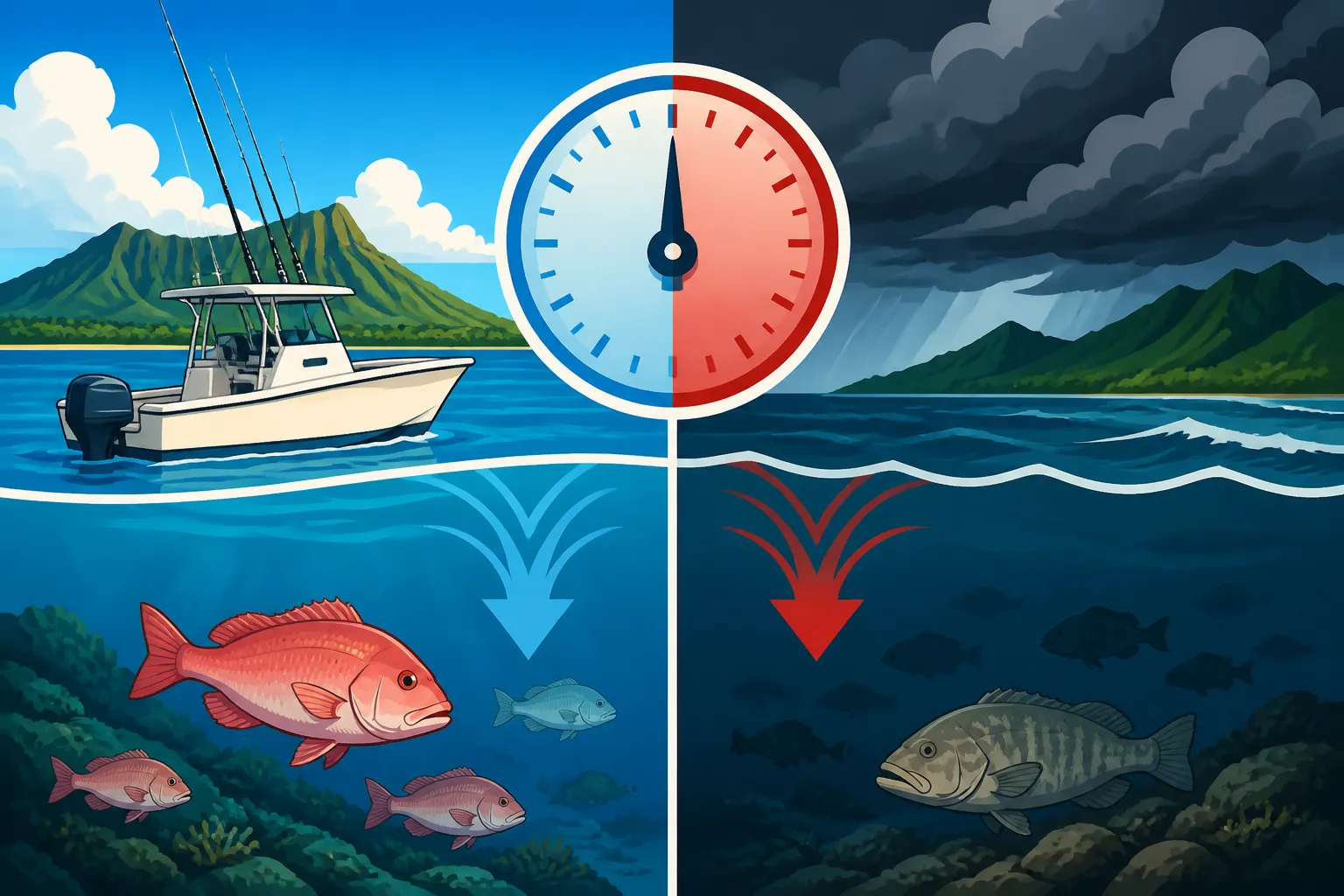
A high-pressure system typically ushers in beautiful, clear, and calm weather. We're talking about those postcard-perfect Hawaii days: bright sunshine, gentle breezes, and generally flat or very mild ocean conditions. The barometer reading will be steady or slowly rising, indicating a stable atmospheric environment. For many islanders and visitors alike, these are the ideal conditions for a day out on the water, whether for fishing, diving, or just cruising.
From a fishing perspective, the calm seas associated with high pressure mean easier navigation and more comfortable drifts over your favorite deep-water spots. The visibility tends to be excellent, both above and below the surface, which is a blessing for spotting surface activity but can sometimes make fish more wary. These systems often linger for several days, providing extended periods of consistent weather. While they promise pleasant boating, their impact on bottomfish behavior is a nuanced story that seasoned anglers have learned to read over countless hours on the water.
Bottomfish Behavior Under High Pressure
When a high-pressure system has been dominant for a while, you might notice that while the fishing is generally good, the bite can sometimes be a bit slower or more methodical. The fish are there, but they might not be in a ravenous feeding mood. This isn't to say you won't catch anything; it just means you might need to work a little harder for it. Deep-dwelling species like opakapaka, onaga, and ehu often become a bit more lethargic. They may hold tighter to structure or show less interest in your offerings.
One theory suggests that the increased water clarity and calmer conditions allow more light to penetrate deeper into the water column. This increased visibility, combined with the stable pressure, can make bottomfish more cautious and less likely to stray far from the safety of their rocky hiding spots. You might find that the fish are holding deeper within the structure, requiring precise bait placement. This is where patience and subtle technique come into play. It's often a great time for precise deep dropping techniques, perhaps with smaller baits or jigs, to tempt those less aggressive biters.
Low Pressure Systems and Hawaii Bottomfishing
In contrast to the serene stability of high pressure, a low-pressure system typically signals a shift towards more dynamic and often challenging weather conditions. These changes have a very different effect on bottomfish.
Characteristics of Low Pressure
Low-pressure systems are often associated with unsettled weather: clouds, rain, stronger winds, and rougher seas. The barometer will show a falling or consistently low reading. These systems can bring anything from light showers to significant tropical depressions or cold fronts. For boaters, low pressure generally means it's time to keep a close eye on marine forecasts and potentially reconsider offshore plans due to increased swells and choppy conditions.
In Hawaii, these systems can develop quickly, especially during certain seasons. A rapidly falling barometer is a strong indicator of an approaching front or storm, and it's a signal that savvy anglers pay close attention to. While rougher weather might deter some, the transition period before a full-blown storm can be a golden opportunity for certain types of fishing. However, fishing during a strong low-pressure event can be not only uncomfortable but also dangerous, underscoring the importance of safety and good judgment.
Bottomfish Behavior Under Low Pressure
Now, here's where it gets interesting: the period just before a low-pressure system really settles in, when the barometric pressure is steadily dropping, is often hailed by many anglers as the absolute best time for a feeding frenzy. Fish seem to instinctively sense the impending change in weather and water conditions, and they go on a heightened feeding spree, almost as if stocking up for the lean times ahead. This pre-frontal bite can be phenomenal for a variety of species, including our deep-water bottomfish. They become more aggressive, more willing to chase baits, and generally easier to entice off structure.
However, once the low pressure truly takes hold and the weather turns nasty, the bite typically shuts down hard. Fish tend to become very inactive, hunkering down deep within the reef or structure to weather the storm and the associated pressure changes. The turbulent water, decreased visibility, and continued physiological stress from the pressure drop make them extremely reluctant to feed. Trying to fish during these conditions is often an exercise in futility and can even be dangerous, as discussed in "Hawaii Boating Laws for Anglers" when dealing with rough seas. It's during these times you might be better off reading up on new techniques or checking your gear, perhaps on Amazon, for the next good weather window.
The Impact of Changing Barometric Pressure on Bottomfish
It's not just whether the pressure is high or low, but how it's changing that really dictates the mood of our bottom-dwelling friends. The speed and direction of these shifts are critical cues for fish behavior.
Steady vs. Rapid Pressure Changes
When barometric pressure remains relatively steady, whether it's high and stable or low and stable (though sustained low pressure is less common in Hawaii without active weather), fish behavior tends to be more predictable. Under steady high pressure, as we discussed, bottomfish might be a bit more lethargic, requiring finessed techniques, but they will still bite consistently. Under steady low pressure (assuming it's not a severe storm), fish might be somewhat inactive, but again, their patterns can be anticipated. The key here is consistency; fish have time to acclimate to the environmental conditions.
The most dramatic shifts in fish behavior occur with rapid changes in barometric pressure. A rapid drop in pressure, often signaling an approaching storm, can trigger that intense pre-frontal feeding frenzy. It's almost as if the fish know their feeding window is closing, and they need to capitalize before conditions become unfavorable. Conversely, a rapid rise in pressure, typically after a storm has passed and a high-pressure system is moving in, can often put fish into a state of "lockjaw." They might be recovering from the previous pressure changes and turbulent conditions, making them extremely difficult to tempt, even with the most enticing bait or jig. Understanding these quick shifts is paramount for anglers targeting bottomfish.
Localized Effects and Microclimates
Hawaii's unique volcanic topography means that weather patterns, and thus barometric pressure, can vary significantly from one side of an island to another, creating distinct microclimates. What might be a sunny, high-pressure day on the leeward (west) side of the Big Island, for example, could be a cloudy, showery, lower-pressure day on the windward (east) side. This means that a general island-wide forecast might not tell the whole story for your specific fishing spot.
The sheer cliffs and towering mountains can create or dissipate weather systems, leading to localized pressure cells that behave differently from the broader regional pattern. This makes it crucial for bottomfish anglers to consult hyper-local weather reports and even keep a portable barometer on board. If you're planning a trip to a specific deep-water ground, knowing the local pressure trend for that immediate area, rather than just the general island forecast, can be the difference between a productive day and a frustrating one. This localized understanding helps you adapt your strategy, whether you're focusing on "Bottomfishing in Hawaii" or specific species detailed in "Bottomfish Species of Hawaii."
Practical Strategies for Anglers
Knowing how barometric pressure affects bottomfish is one thing; putting that knowledge into practice is another. Here are some actionable strategies to help you leverage this often-overlooked environmental factor.
Monitoring Barometric Pressure
The first step in using barometric pressure to your advantage is to actively monitor it. Don't just rely on a quick glance at the general weather forecast. Get specific. Invest in a good digital barometer, which you can easily find on Amazon. Many marine GPS units and fishfinders also come with built-in barometers or can display pressure trends when connected to external sensors. Better yet, download a dedicated marine weather app that provides detailed barometric pressure readings and, crucially, trends (rising, falling, steady).
What you're looking for isn't just the current pressure, but the trend. A slowly falling barometer over several hours, especially leading up to a predicted weather change, is often the signal for that aggressive pre-frontal bite. A rapidly falling barometer indicates an impending, potentially severe, low-pressure system and means it's likely time to stay off the water. Conversely, a steady rise after a period of low pressure suggests fish might be recovering and could be less active for a while. Always cross-reference your barometer readings with NOAA marine forecasts and local buoy data for the most comprehensive picture. This meticulous planning is key to understanding "Hawaii Fishing Seasons by Month" and planning your bottomfishing trips effectively.
Adjusting Techniques and Depths
Once you've got a handle on the barometric pressure trends, it's time to adjust your fishing strategy. This is where experience and adaptability come into play.
During a rapidly falling barometer (pre-frontal bite):
- Be aggressive: This is the time to use more active techniques like jigging (check out "Jigging for Bottomfish in Hawaii") or larger, more scent-laden baits. Fish are often less selective.
- Target active zones: Look for areas where baitfish might be congregating, as the bottomfish will be actively hunting.
- Consider varied depths: Fish might be moving up or down the water column, so try different depths to find where they're most active.
During stable high pressure:
- Finesse is key: The bite might be subtle. Use lighter leaders, smaller hooks, and natural, fresh bait.
- Precise presentation: Bottomfish may be holding tight to structure. Drop your bait or jig directly into their hiding spots.
- Patience: Be prepared for longer waits between bites and subtle take-downs. Sometimes, adding a bit of scent to your bait can make a huge difference.
During rapidly rising pressure (post-frontal):
- Expect a tough bite: Fish will likely be sluggish and inactive. This might be a good day to explore new spots, try different tactics you wouldn't normally use, or even just clean your gear.
- Fish slower: Very slow retrieves for jigs, or just letting bait sit for longer periods can sometimes tempt a reluctant bite.
- Consider different species: If bottomfish are completely shut down, perhaps try targeting pelagic species if conditions allow, though be mindful of "Hawaii Pelagic Species Bag Limits."
By understanding how barometric pressure influences the behavior of "Bottomfish Species of Hawaii," you can significantly increase your chances of success. It’s about becoming a better observer of the natural world and adapting your approach rather than just blindly casting a line. This level of detail extends to understanding factors like "What water temperature bottomfish prefer" as well, creating a holistic view of successful angling.
Barometric Pressure and Bottomfishing: A Quick Reference
Understanding the nuances of barometric pressure can feel like a lot to take in, so here's a quick reference table to help you visualize how different pressure trends generally affect Hawaii bottomfishing. Remember, these are guidelines, and local conditions can always add their own unique twist!
| Barometric Pressure Trend | Associated Weather | General Bottomfish Behavior | Recommended Angling Adjustments |
|---|---|---|---|
| Rapidly Falling | Approaching storm/front, increasing wind/swell | High Activity: Pre-frontal feeding frenzy, aggressive bites, fish less selective. | Be aggressive! Heavier tackle, larger baits/jigs, work different depths. Act fast before weather worsens. |
| Stable Low | Persistent cloudy/rainy, rough seas | Low Activity: Fish inactive, hunkered down, minimal bites. | Avoid fishing if conditions are unsafe. If safe, fish slowly, small baits, very subtle presentations. |
| Stable High | Clear skies, calm winds, calm seas | Moderate Activity: Fish present but cautious, often deeper, less aggressive. | Finesse techniques, lighter leaders, fresh natural baits, precise drops, more patience. |
| Rapidly Rising | Post-storm clearing, improving weather | Very Low Activity: "Lockjaw," recovering from pressure changes, very lethargic. | Difficult fishing. Consider exploring, trying new tactics, or waiting for conditions to stabilize. |
Why Barometric Pressure is Your Secret Weapon
Over the years, I've seen countless anglers, myself included, scratch their heads over an inexplicable change in fishing success. We often focus on tide, moon phase, water temperature, and even current – all crucial factors, no doubt. But barometric pressure often flies under the radar for many, despite being a profound environmental driver of fish behavior. In Hawaii, where weather can shift with surprising speed thanks to our unique geography, paying attention to the barometer is even more critical.
Think of it this way: fish live in a world where every inch of pressure change directly impacts their physical well-being. Their swim bladders are constantly adjusting, and their lateral lines are sensing every subtle shift. When we understand this, we move beyond just being a reactive angler, casting lines and hoping for the best. We become a proactive one, capable of anticipating the fish's mood and adjusting our tactics accordingly. This might mean knowing that today, after that big storm passed, the bottomfish bite will be tough, and it's better to plan for "Best Time of Year to Fish in Hawaii" next week instead.
This understanding also extends to safety. Knowing when a low-pressure system is rapidly developing not only tells you about the fish but also warns you about deteriorating ocean conditions, reminding you to check "Hawaii Boating Laws for Anglers" and prioritize your safety. Whether you're targeting the prized opakapaka, the delectable onaga, or any of the other fascinating "Bottomfish Species of Hawaii," integrating barometric pressure monitoring into your pre-trip planning will give you a significant edge. It’s about reading the subtle language of the ocean and its inhabitants, turning frustrating days into learning opportunities and good days into truly epic ones.
Disclaimer
This article is for general informational purposes only and does not constitute professional advice. Laws, prices and regulations vary by location and change over time. Consult a qualified professional for guidance on your specific situation.