How to fish a swimbait for giant trevally
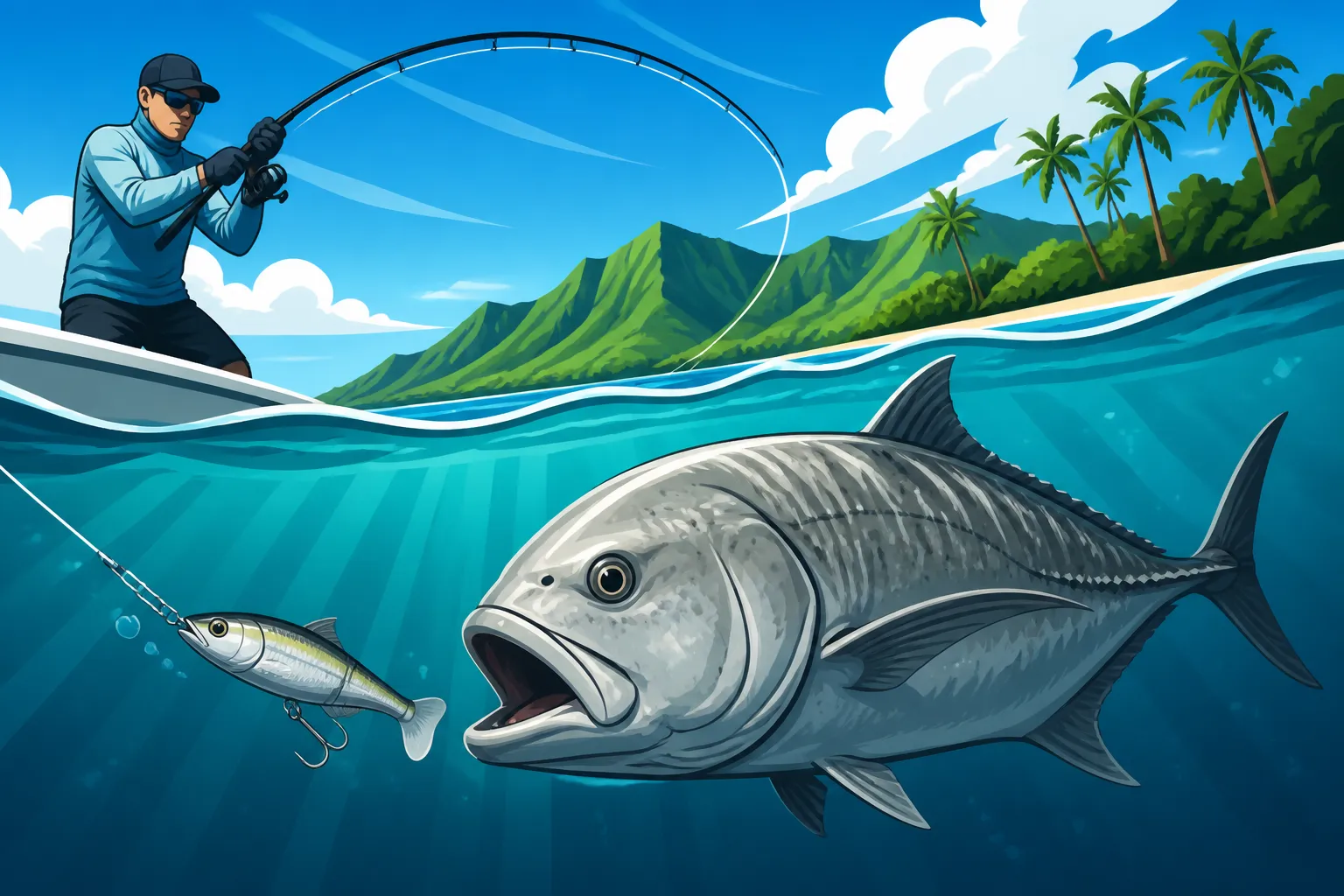
Trying to entice a powerful giant trevally (ulua) with traditional methods can sometimes feel like you're talking to a brick wall, especially when they're locked onto natural prey. This guide is all about giving you the edge, diving deep into the art of fishing swimbaits in Hawaii to help you hook into these incredible fighting fish from shore or boat.
Understanding Giant Trevally and the Swimbait Advantage
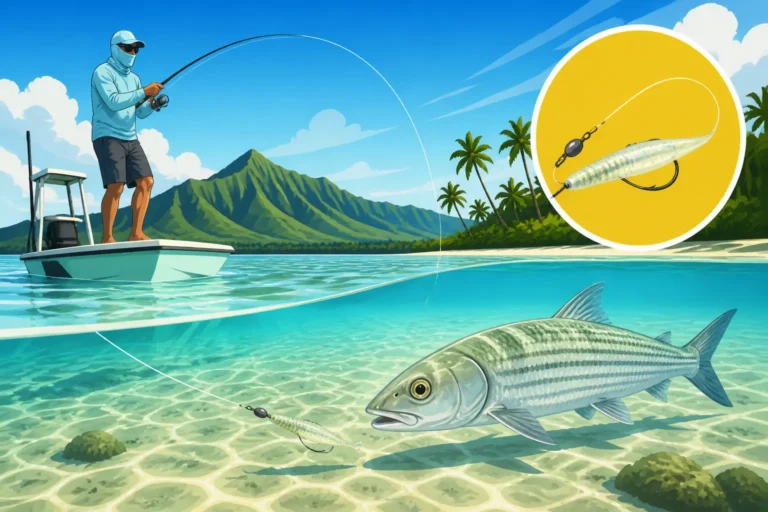
Giant trevally, or ulua as they're known here in Hawaii, are apex predators of our nearshore waters. They are incredibly strong, fast, and notoriously finicky, which is why many anglers find them challenging to catch. But when you hit that sweet spot with the right presentation, the reward is simply unforgettable. Swimbait fishing offers a unique advantage because these lures are specifically designed to mimic the natural movement and appearance of baitfish, often more realistically than traditional hardbaits or plastics.
Why Swimbaits Work for Ulua
Ulua are opportunistic hunters, and their diet consists primarily of smaller fish, crabs, and even juvenile octopus. A well-presented swimbait taps directly into their predatory instincts in a way that can be hard to replicate. Unlike many poppers or stickbaits that create a lot of surface commotion, swimbaits often work below the surface, appealing to ulua that might be cruising deeper or in areas with less surface activity. The natural swimming action of a swimbait, whether it's a soft plastic or a jointed hardbody, can be incredibly convincing, triggering strikes from even the most cautious of fish.
Think about it: you're trying to fool a fish that has evolved to hunt some of the fastest and most elusive prey in the ocean. A swimbait, particularly those with a lifelike profile and tail action, can mimic an injured or confused baitfish perfectly. This often presents an irresistible target, especially when the ulua are actively feeding on schooling bait like opelu or akule. It’s not just about flash; it's about fooling their eyes and their lateral lines into believing that a meal is right in front of them, vulnerable and easy to snatch.
Common Misconceptions About Swimbaiting for Ulua
One common misconception is that swimbaits are only for freshwater bass. While they gained immense popularity in the bass world, their effectiveness translates beautifully to saltwater predators like ulua. Another myth is that they're too delicate for the harsh Hawaiian environment or the brutal fight of an ulua. While some soft plastic swimbaits might get torn up after a few strikes, many are designed with reinforced materials or can be easily replaced. The trade-off in realism and strike-inducing power often far outweighs the cost of replacing a few baits. Plus, hardbody jointed swimbaits are quite robust and can withstand many battles.
Some anglers also assume swimbaits are only effective in clear, calm waters. While clear water certainly helps with visual appeal, the vibration and movement of a swimbait can still be incredibly effective in murkier conditions, relying on the ulua's lateral line to detect the lure. The key is often finding the right balance of size, color, and retrieve speed for the specific conditions you're fishing. Don't be afraid to experiment, because what works one day might not the next, and the ulua are always full of surprises. This adaptability is what makes swimbait fishing such a powerful tool in your arsenal when targeting these incredible fish.
Choosing the Right Swimbait for Hawaiian Ulua
Selecting the perfect swimbait for ulua in Hawaii involves considering several factors: the type of swimbait, its size and weight, and the all-important color. Matching your lure to the local baitfish and the prevailing conditions is paramount to success.
Soft Plastic Swimbaits: Versatility and Natural Action
Soft plastic swimbaits are incredibly popular due to their lifelike action and versatility. These come in many forms, from paddle tails to split tails, and can be rigged in various ways. For ulua, you'll often be looking at larger paddle-tail swimbaits, typically in the 5- to 8-inch range, though bigger can be better if you're targeting truly monstrous fish. The paddle tail creates a thumping vibration that mimics a fleeing baitfish, which ulua can detect from a distance.
You can rig soft plastics on heavy-duty jig heads, often weighing from 1 to 4 ounces or more, depending on depth and current. The jig head provides the necessary weight for casting distance and getting the lure down quickly. When shopping online, many anglers find a good selection of durable soft plastic swimbaits and heavy-duty jig heads on Amazon, making it easy to experiment with different sizes and colors. The beauty of soft plastics is their incredible life-like movement even at slow retrieve speeds, making them ideal for working reefs and structure where ulua might be lurking. Experimenting with different tail designs can also change the vibration and swimming action, giving you more options to present to finicky fish.
Hardbody Jointed Swimbaits: Durability and Realistic Profile
Hardbody jointed swimbaits offer a different set of advantages. Constructed from durable plastics or wood, these lures feature multiple segments connected by hinges, allowing them to swim with an incredibly realistic S-curve motion. They often come pre-rigged with strong treble hooks, but it's always a good idea to check and upgrade to robust single hooks if targeting large ulua, as treble hooks can sometimes straighten under extreme pressure.
These swimbaits tend to be more expensive than soft plastics but are significantly more durable, often lasting through many catches. Their buoyancy and diving depth vary, with some designed to be slow-sinking, others fast-sinking, and some even suspending. This allows you to target different depths of the water column. They also often come with incredibly detailed paint jobs that mimic specific baitfish found in Hawaiian waters. When ulua are feeding aggressively, a hardbody jointed swimbait can be the ticket to consistent action, as its robust construction stands up to repeated violent strikes.
Size, Weight, and Color Selection
- Size: For ulua, you'll generally want to err on the larger side. Fish in the 5-inch to 10-inch range are common, but don't shy away from 12-inch or even larger swimbaits if you're hunting for a true giant. Match the hatch – if you see smaller baitfish around, scale down slightly, but remember ulua aren't afraid of a big meal.
- Weight: This is critical for casting distance and desired depth. Heavier swimbaits or jig heads are needed for long casts from shore, deep water, or strong currents. Lighter weights are suitable for shallower reefs or when you want a slower, more deliberate fall.
- Color: Natural colors are almost always a safe bet. Think shades of silver, blue, green, and white to imitate common baitfish like opelu, akule, or various reef fish. On overcast days or in murky water, brighter colors like chartreuse or pink can sometimes trigger a reaction strike by offering higher visibility. Black or dark colors can be surprisingly effective for night fishing or in deep, dark water, as they create a strong silhouette against the moon or surface light. Always carry a variety, as ulua can be finicky about color.
Hawaii Pelagic Species Bag Limits outlines some of the common prey fish species you might encounter.
Swimbait Selection Guide for Ulua
| Swimbait Type | Key Advantage | Ideal Conditions | Typical Size Range (inches) | Primary Rigging Options | Durability |
|---|---|---|---|---|---|
| Soft Plastic | Highly realistic action, versatile, cost-effective | Varying depths, working structure, mimicking injured bait | 5-10+ | Heavy jig head, weedless hook | Moderate |
| Hardbody Jointed | Extremely realistic profile, durable, S-curve swim | Targeting specific depths, strong currents, aggressive bites | 6-12+ | Pre-rigged (upgrade hooks) | High |
Mastering the Swimbait Retrieve for Ulua
The retrieve is where the magic happens with swimbaits. It’s not just about cranking; it's about making that lure look alive and irresistible to a lurking ulua. The goal is to mimic a natural baitfish, whether it's leisurely cruising, frantically fleeing, or appearing injured.
The Slow Roll: Mimicking a Cruising Baitfish
The slow roll is perhaps the most fundamental and often most effective retrieve for swimbaits, especially when prospecting an area or when fish aren't overtly aggressive. The technique is simple: cast out your swimbait and begin a slow, steady retrieve, just fast enough to get the tail or jointed body working its natural action.
The beauty of the slow roll is that it allows the swimbait's inherent design to shine. A paddle-tail swimbait will provide a subtle thump, while a jointed hardbody will gracefully undulate through the water. This retrieve works exceptionally well around reef edges, drop-offs, and rocky points where ulua might be ambushing prey. The key is to maintain constant contact with your lure, feeling for any subtle bumps or changes in resistance that might indicate a follow or a soft take. You're trying to emulate a baitfish that's unaware of the predator, casually moving along. Sometimes, adding a very slight twitch of the rod tip every few seconds can add just enough erratic movement to seal the deal. This method is particularly deadly when Night Fishing for Ulua in Hawaii.
Erratic Retrieve: Triggering Reaction Strikes
When ulua are more active, or if the slow roll isn't getting attention, an erratic retrieve can often provoke a violent reaction strike. This involves varying your retrieve speed, incorporating sudden jerks, pauses, and accelerations to make the swimbait appear like a wounded or panicking baitfish.
Imagine a baitfish suddenly darting away, then pausing, then darting again – that's what you're trying to achieve. Cast your swimbait, let it sink to your desired depth, then reel quickly for a few turns, then pause, letting the bait fall naturally for a second or two. Repeat this pattern, mixing it up so it's not predictable. A common technique is to "sweep" the rod sideways while reeling quickly, then drop the rod tip and allow slack to gather momentarily before repeating. This combination of speed and sudden drops can often trigger strikes from ulua that were previously just following the lure. This works great when Topwater Fishing for Papio in Hawaii but adapted for a deeper water column. It's a high-energy retrieve that requires your full attention, as strikes can be sudden and brutal.
Fishing Structure: Targeting Ulua's Lairs
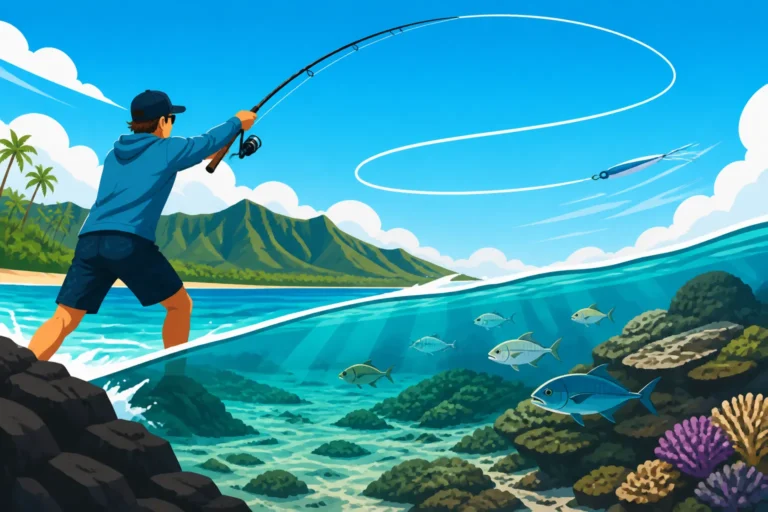
Ulua love structure. Whether it's a rocky reef, a submerged lava flow, a channel entrance, or a harbor wall, these areas provide ambush points and cover for both the ulua and their prey. Fishing swimbaits effectively around structure means being precise with your casts and understanding how to work the lure through potential strike zones without getting snagged.
When fishing a rocky point or reef, cast your swimbait parallel to the structure, allowing it to sink slightly before starting your retrieve. Keep the lure just above the reef, bumping it occasionally if you dare, as this can mimic a foraging baitfish. If you're fishing a channel or an eddy, cast up-current and let the swimbait drift naturally with the current while slowly retrieving, allowing the ulua an easy shot. For deeper structure like ledges or pinnacles, you might need heavier jig heads on your soft plastics to get down quickly. Always be ready for a strike as your swimbait comes over the edge of a drop-off, as ulua often position themselves there to ambush unsuspecting prey rising from below. Utilizing a good quality fluorocarbon leader, which you can find readily on Amazon, is crucial when fishing around sharp coral or lava rock. This will provide necessary abrasion resistance against the unforgiving Hawaiian environment.
Gearing Up: Rods, Reels, Line, and Leader for Swimbaiting Ulua
Successfully landing a giant trevally on a swimbait requires not just skill but also the right tackle. Ulua are incredibly powerful fish, and your gear needs to be up to the task of handling their explosive runs and brute strength.
Rods: Power and Sensitivity
For swimbaiting ulua, you'll want a rod that offers a robust backbone for fighting powerful fish, combined with enough sensitivity to feel the subtle action of your swimbait and any light takes. A rod in the 7-foot to 9-foot range is generally ideal for shore casting, providing good leverage for long casts and battling fish.
Look for a heavy-action or extra-heavy-action rod, rated for at least 20-50 lb test line, and capable of handling lure weights from 1 to 4 ounces, or even more for larger swimbaits. A fast-action tip will give you the sensitivity to feel your lure and subtle bites, while the powerful mid-section and butt will allow you to put serious pressure on a fighting ulua. Many anglers prefer rods designed for heavy jigging or large swimbait applications in saltwater. You want something that feels like an extension of your arm, allowing you to work the lure confidently and respond instantly when a fish hits. For specific recommendations, looking at "heavy saltwater jigging rods" on Amazon can give you an idea of the types of rods suitable for this kind of intense fishing.
Reels: Strength and Drag Performance
Your reel is arguably the most critical component when targeting ulua. It needs to be incredibly strong, with a smooth and powerful drag system, and capable of holding a substantial amount of heavy line. Spinning reels are a popular choice for shore fishing due to their ease of casting and retrieve.
Opt for a heavy-duty saltwater spinning reel, typically in the 8000 to 14000 size range, from a reputable brand. The key features to look for are a high maximum drag rating (at least 25-30 lbs, but more is better), a robust gear system, and excellent corrosion resistance. A fast retrieve ratio can also be beneficial for quickly taking up slack or burning a swimbait, but ultimately, torque and drag smoothnes are paramount. A sealed drag system is a huge plus in the saltwater environment to protect against sand and corrosive spray. Some anglers also prefer baitcasting reels for their power and direct line feel, especially for heavier jigging or boat applications, but spinning reels offer more casting distance flexibility for shore-based swimbaiting. When an ulua makes its first blistering run, your reel's drag is the only thing standing between you and a broken line, so invest wisely.
Line and Leader: Unyielding Connection
Your mainline needs to be strong and durable. Braided line is the overwhelming choice for swimbaiting ulua due to its incredible strength-to-diameter ratio, zero stretch for maximum sensitivity, and excellent casting performance.
- Mainline: A braided line in the 50-80 lb test range is a good starting point. You want enough breaking strength to handle the fish, but not so heavy that it severely limits casting distance. The lack of stretch in braid means you'll feel every bump and wobble of your swimbait, and every head shake of a fighting fish.
- Leader: A fluorocarbon leader is absolutely essential when targeting ulua with swimbaits. Fluorocarbon is nearly invisible underwater, extremely abrasion resistant, and offers good knot strength. You'll want a leader significantly heavier than your mainline, typically 80-130 lb test, and at least 3-6 feet long. This heavy leader provides a buffer against the ulua's powerful jaws, sharp gill plates, and the unforgiving lava rock and coral reefs. Connect your braid to your fluorocarbon leader using a strong knot like the FG knot or an Albright knot, both of which are slim and pass through rod guides smoothly. For ultimate durability, ensure your chosen leader material can withstand the potential chafing against coral and sharp lava. When browsing for fishing supplies, high-quality fluorocarbon leader material is another item readily available through retailers like Amazon, ensuring you get a reliable product. How thick a leader you need for ulua fishing often depends on how aggressive the terrain is where you’re fishing.
Essential Accessories
Beyond the core tackle, a few accessories will make your swimbaiting adventures more successful and enjoyable:
- Pliers/Forceps: Essential for hook removal, cutting line, and crimping. Ensure they are saltwater-resistant.
- Lure Box: Keep your swimbaits organized and protected.
- Heavy-Duty Snaps/Split Rings: If your swimbait comes with flimsy hardware, upgrade it immediately. Ulua will exploit any weakness.
- Gloves: Protect your hands from line cuts and sharp fins when handling fish.
- Headlamp/Flashlight: Crucial for Night Fishing for Ulua in Hawaii or preparing gear in low light.
- Cooler: To keep your catch fresh if you plan to harvest it, or to keep drinks and snacks cool.
- Sun Protection: Hat, sunglasses, and sunscreen are non-negotiable in the Hawaiian sun.
Locating Ulua and Prime Swimbaiting Spots in Hawaii
Finding ulua requires understanding their habits and preferred habitats. While they roam vast areas, certain features consistently attract these powerful predators, making them prime targets for swimbait anglers.
Reef Edges and Drop-Offs
Ulua are often found patrolling the edges of coral reefs and along steep drop-offs into deeper water. These areas serve as highways for baitfish and provide excellent ambush points. The transition zone where shallow reef meets deep ocean is a feeding hotspot. Swimbaiting these edges involves casting parallel to the drop-off or casting out and retrieving your swimbait up and over the deeper edge, letting it "fall" into the depths before resuming your retrieve. This mimics a baitfish struggling with the current or trying to escape a predator from below.
Look for areas where the current pushes baitfish along these edges. Tidal changes can significantly influence fish activity, with the incoming or outgoing tide often concentrating baitfish and, consequently, predators. Best Reef Fishing Spots in Hawaii often coincide with these types of features. Using heavier swimbaits can help you keep your lure in the strike zone longer in areas with strong currents.
Rocky Points and Ledges
Hawaii's volcanic coastline is characterized by numerous rocky points, lava flows, and submerged ledges. These structures break up currents, create eddies, and provide shelter for smaller fish, making them magnets for ulua. Casting swimbaits around these features requires precision and a good understanding of the bottom contour.
Target the leading edge of the point where current hits, the calmer water in the lee, and any visible ledges or fissures in the rock. Ulua will often sit just out of the main current, waiting for an easy meal to be swept by. A slow roll retrieve that hugs the contours of the bottom can be incredibly effective here. Be prepared for aggressive strikes near these structures, as ulua will often hit hard and immediately try to dive back into the rocks. This is where a strong rod, reel, and heavy leader are absolutely critical to prevent break-offs. Best Rocky Point Fishing Spots in Hawaii are definitely worth exploring with a swimbait.
Harbor Mouths and Channel Entrances
While perhaps less glamorous than open ocean reefs, harbor mouths and channel entrances can be incredibly productive for ulua, especially during certain tides or after heavy rains when freshwater runoff flushes baitfish out. These choke points concentrate baitfish, making them easy pickings for opportunistic predators.
Cast your swimbait into the outgoing current, letting it drift naturally while maintaining a slow retrieve. The ulua might be lurking just outside the channel, or inside, waiting for bait to be carried to them. Pay close attention to any visible baitfish activity, such as nervous water or birds diving. These are sure signs that ulua are likely in the area. Fishing these areas during dawn or dusk can often yield the best results when ulua are most active. You can often find some Best Harbor Fishing Spots in Hawaii that are perfect for this technique. However, always be mindful of local regulations and boating traffic in these areas.
Advanced Swimbaiting Tactics and Tips
Once you've got the basics down, there are always ways to refine your swimbaiting approach to increase your chances of hooking a trophy ulua. These advanced tactics often involve paying closer attention to environmental cues and adapting your presentation on the fly.
Reading the Water: Currents, Baitfish, and Structure
The most successful ulua anglers are keen observers of the water around them. Before even making a cast, take a few minutes to "read the water." Look for:
- Currents: Identify rips, eddies, and areas where current converges or pushes against structure. These are natural funnels for baitfish.
- Baitfish Activity: Look for schools of opelu or akule, nervous water on the surface, or birds diving. If you see bait, you know predators are likely nearby.
- Structure: Visually identify visible rocks, reef lines, changes in water color (indicating depth changes), and any other features that could hold fish.
- Water Clarity: This influences your color choice. Clear water favors natural colors; murky water might call for brighter, higher-contrast options.
By understanding these elements, you can make more educated casts and choose the retrieve that best suits the conditions. For instance, if you spot a school of baitfish getting busted up, a fast, erratic retrieve mimicking a fleeing baitfish would be more appropriate than a slow roll.
Adjusting to Conditions: Tide, Time of Day, and Weather
Ulua fishing success is often heavily influenced by external factors, and swimbaits offer a versatile tool to adapt.
- Tide: As mentioned, moving tides are often best. Fish the last hour of an incoming tide and the first hour of an outgoing tide, or vice-versa, depending on your location and how it concentrates bait. Pay attention to how the current changes your swimbait's action and adjust your retrieve speed accordingly.
- Time of Day: Dawn and dusk are prime times for ulua, as these low-light conditions favor their ambush hunting style. Night fishing for ulua can also be incredibly productive, often yielding larger fish. During the bright midday, ulua may retreat to deeper water or shaded structure, requiring deeper presentations.
- Weather: Overcast days can extend the prime fishing window, as low light conditions persist longer. After a storm, runoff can sometimes attract ulua to river mouths or harbor entrances as baitfish get flushed out. Be mindful of safety, though, if surf conditions are rough. Hawaii Fishing Seasons by Month can give you an idea of general fish activity throughout the year.
The Importance of Hook-Setting and the Fight
When an ulua hits a swimbait, it's often a violent, jarring strike. Unlike some fish that peck, ulua typically try to engulf their prey. A solid hook set is crucial.
When you feel the strike, reel down quickly to take up any slack, then set the hook with a powerful, sweeping motion of the rod. Don't be timid; you're driving a heavy hook into a hard mouth.
Once hooked, the fight is on! Ulua will make blistering runs, often peeling line off your reel at an alarming rate. They will also try to dive into structure to cut your line.
- Maintain pressure: Keep constant, heavy pressure on the fish. Pump and reel, gaining line whenever possible.
- Steer the fish: Try to steer the ulua away from any structure. If it tries to run into rocks, apply side pressure with your rod, turning its head away.
- Anticipate runs: Be ready for sudden surges, especially as the fish gets closer to shore or the boat. Your drag should be set tight but smooth enough to prevent break-offs on these powerful runs.
- Patience: An ulua fight is rarely quick. Be patient, conserve your energy, and trust your tackle. The feeling of bringing a strong ulua to hand after a hard-fought battle is truly exhilarating.
Remember, practice makes perfect. The more you cast swimbaits and learn how they behave in the water, the more confidence you'll gain. Don't be afraid to experiment with different retrieves, colors, and sizes. Ulua are a challenging but rewarding target, and adding swimbaits to your arsenal can open up a whole new world of exciting fishing opportunities here in Hawaii.
Disclaimer
This article is for general informational purposes only and does not constitute professional advice. Laws, prices and regulations vary by location and change over time. Consult a qualified professional for guidance on your specific situation.