Best technique for late fall ulua
As the days shorten and the air takes on a crisp edge, many anglers start thinking of slowing down their pace. But here in Hawaii, late fall brings a unique set of challenges and opportunities for those chasing the mighty ulua, or giant trevally. It can be frustrating when the consistent summer patterns fade, leaving you wondering where these powerful fish have gone. This guide will walk you through the very best techniques to adapt your strategy and target these impressive fighters during the late fall season, making sure your time on the rocks is rewarded.
Understanding Ulua Behavior in Late Fall
Late fall in Hawaii isn't a dramatic shift to winter, but it certainly brings subtle changes that impact ulua behavior. The water temperatures might dip slightly, and the prevailing swells can change, all of which influences where these powerful predators choose to hunt. If you want to succeed, you need to think like an ulua!
The Transition Period: From Warm Summer to Cooler Waters
While our waters never get truly "cold," the slight drop in ocean temperature as late fall progresses can trigger shifts in the local ecosystem. Ulua are highly migratory and opportunistic feeders, and they'll follow their food sources. During summer, the warmer waters might hold baitfish in more widespread areas, but as temperatures cool, baitfish can school up more tightly and seek out specific thermal refuges or areas with abundant food. This means ulua might congregate in areas where bait is concentrated, often around deeper channels or structured points where currents bring in nutrients. Instead of broad patrols, they might become more focused on specific ambush points. Understanding these subtle temperature changes and how they affect bait migration is key to locating active ulua.
Prey Availability and Feeding Patterns
Late fall often means a slight change in the variety and abundance of baitfish that ulua prefer. While their diet is incredibly diverse year-round, certain species might become more prevalent, or conversely, less so. For instance, opelu (mackerel scad) and akule (bigeye scad) might be schooling heavily, drawing ulua closer to shore or specific offshore structures. Ulua are also keen on crabs, octopus (tako), and other reef inhabitants, especially if these creatures are disturbed by changing wave patterns or strong currents. Your presentation needs to match what they're actively hunting. If you're consistently using a bait that's less common, you might be missing opportunities. Observe what local baitfish are doing, and even what seabirds are diving on – these are often tell-tale signs of ulua feeding activity.
Tidal Influences and Current Shifts
Tides and currents are always crucial for ulua fishing, but in late fall, they can become even more pronounced in their impact due to potential changes in swell direction and intensity. Strong currents can dislodge prey from the reef or wash baitfish out of protective coves, creating easy feeding opportunities for ulua. Pay close attention to outgoing tides around river mouths or channels, which can flush out crabs and other edibles. Incoming tides, especially during a strong swell, can bring nutrient-rich water and disoriented baitfish closer to shore. The "slack tide," where water movement is minimal, can sometimes offer a brief reprieve for ulua, but the periods of strongest current are often the most productive. Knowing the local tide charts and how they interact with specific spots is paramount. For a deeper dive into these environmental factors, check out our guide on how barometric pressure affects Hawaii bottomfishing.
Gear and Rigging for Late Fall Ulua
Fishing for ulua in late fall often means encountering larger, more powerful fish that have been bulking up for months. The conditions can also be more challenging with stronger swells or winds. This isn't the time for light tackle; you need robust gear that can handle serious strain and keep you connected to a true monster.
Heavy Duty Rods and Reels for Shore Casting
When targeting late fall ulua from shore, your setup needs to be absolutely bombproof. We're talking about heavy-duty rods, typically 10 to 14 feet long, with a strong backbone that can cast heavy weights (8-16 oz) and baits a good distance, then muscle a powerful fish away from jagged reef. Look for rods rated for lines in the 50-100 lb class. Matching these with large, robust spinning reels (like a Penn Spinfisher VI 8500 or a Shimano Saragosa 14000) or conventional reels designed for big game is essential. Your reel needs a smooth, powerful drag system and a high line capacity, capable of holding at least 400-500 yards of heavy braided line. Trust me, you don't want your gear failing when you finally hook that fish of a lifetime. You can find many reliable options for "heavy duty fishing tackle" on Amazon, often with reviews from other big game shore anglers. For more on selecting the right gear, refer to our detailed article on the best rod setup for surfcasting ulua.
The Art of the Sliding Bait Rig
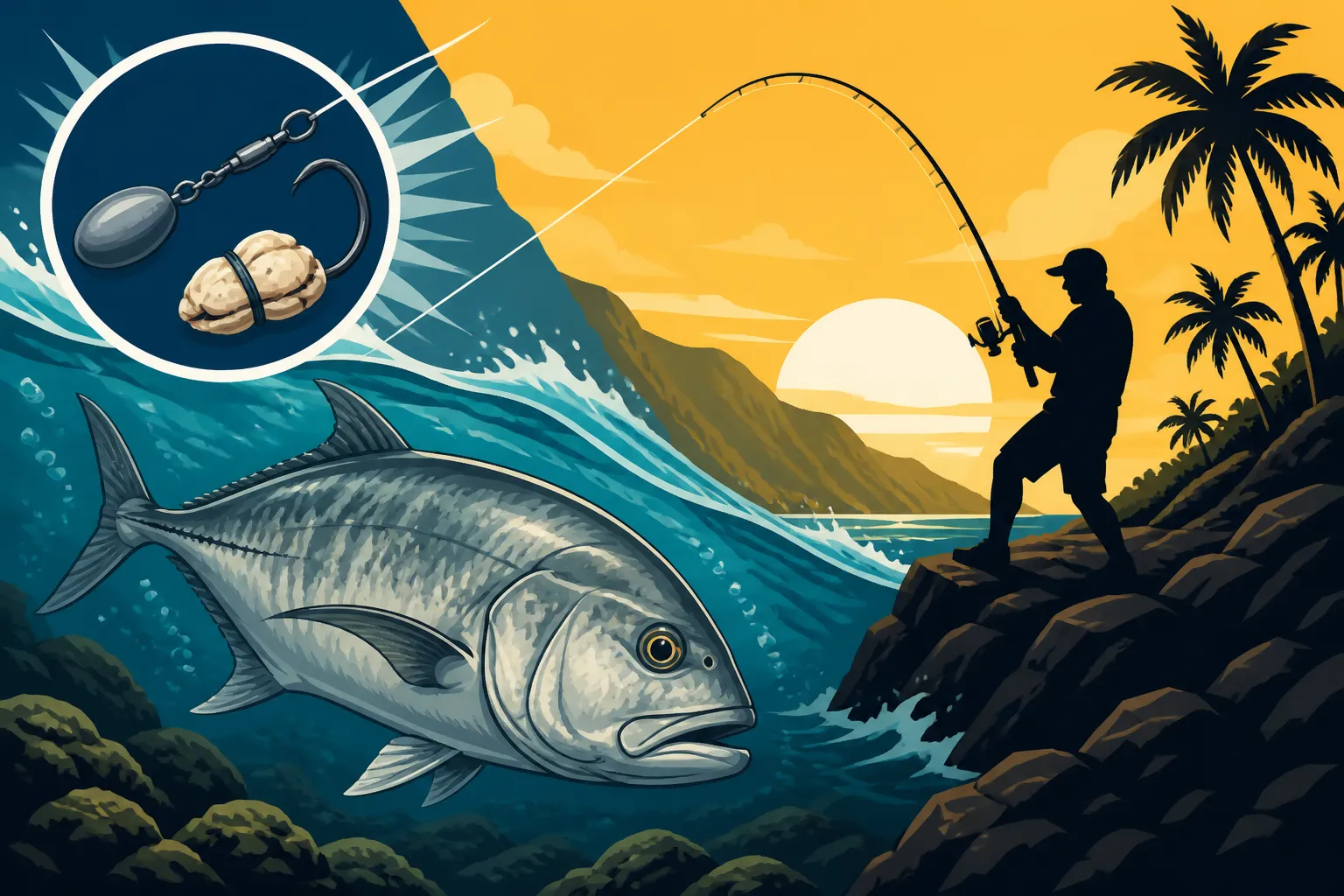
The sliding bait rig is the go-to technique for targeting ulua from shore in Hawaii, and it's especially effective in late fall. This rig allows your bait to be presented naturally on the bottom, or just above it, after your weight has already sunk and settled.
Here's the basic breakdown:
- Main Line: Start with a heavy braided main line, typically 60-100 lb test. The strength and minimal stretch of braid are critical for feeling bites at a distance and driving hooks home.
- Shock Leader: Attach a monofilament or fluorocarbon shock leader, often 100-200 lb test, about 1-2 rod lengths long. This leader absorbs the shock of the cast and provides abrasion resistance against rocks and coral. Knowing how thick a leader you need for ulua fishing is vital to avoid break-offs.
- Sliding Sinker: Thread a large egg sinker or pyramid sinker (the "slider") onto your shock leader. The weight depends on current and casting distance, usually 8-16 oz.
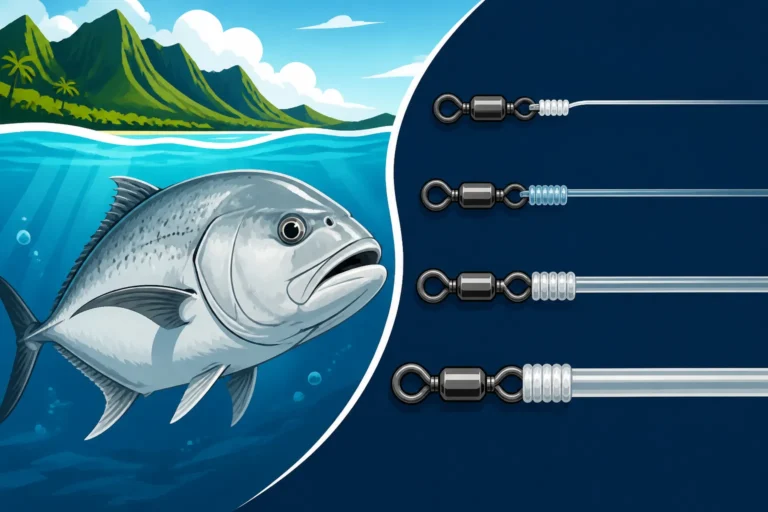
- Swivel & Leader: Tie a heavy-duty barrel swivel (300 lb +) to the end of your shock leader. Then, attach a monofilament or fluorocarbon leader (100-300 lb test, 3-6 feet long) to the other side of the swivel. The heavier leader prevents bite-offs from an ulua's powerful jaws and abrasive scales.
- Hooks: Use two large, strong single hooks (often 9/0 to 14/0, like Owner or Gamakatsu). One hook is snelled directly to the leader, and the second hook is snelled above it, creating a tandem rig. This allows you to present a larger bait more effectively.
The beauty of this rig is that the ulua can pick up the bait and move off without immediately feeling the resistance of the heavy sinker, giving you a better chance for a solid hookset. For more detailed instructions on building this rig, read our article on Sliding Bait Techniques for Ulua.
Choosing the Right Bait: Fresh is Best
When it comes to late fall ulua, freshness is king. These powerful predators are incredibly discerning, and a lively, fresh bait will always outperform a stale one. Here are some top choices:
- Fresh Opelu (Mackerel Scad): If you can catch them, opelu are absolute ulua candy. They have a good oil content and a natural appeal. You can fish them whole or cut into large chunks.
- Fresh Akule (Bigeye Scad): Another excellent choice, akule are often found schooling in late fall. Their silver flash and oily flesh are irresistible.
- Kawakawa (Bonito): If you catch a smaller kawakawa, don't overlook it! Cut into steaks or large chunks, it makes fantastic ulua bait.
- Crab: Larger crabs, especially during high surf or after heavy rains when they're dislodged from the rocks, are a natural part of an ulua's diet. This can be particularly effective in late fall.
- Octopus (Tako): While harder to obtain, fresh octopus is a legendary ulua bait. Its tough texture keeps it on the hook, and its scent trail is potent.
Always aim to use the freshest bait possible. If you're buying bait, ensure it's firm, bright-eyed, and smells like the ocean, not fishy. For more ideas on what these fish eat, check out what ulua eat around Hawaii's reefs. You can often find specialized "ulua bait hooks" and heavier leader material on Amazon that are perfectly suited for these robust baits and powerful fish.
Prime Locations and Conditions for Late Fall Ulua
Finding ulua isn't just about the technique; it's about being in the right place at the right time, especially when conditions start to shift in late fall. You need to understand how the ocean's mood influences where these fish will be.
Identifying Productive Rocky Points and Ledge Systems
In late fall, ulua tend to gravitate towards areas that offer both ambush points and access to deeper water where baitfish might be congregating. This means rocky points, lava outcroppings, and prominent ledges are prime real estate. These structures create current breaks, eddies, and upwellings that concentrate bait, making it easier for ulua to feed efficiently. Look for areas where the reef drops off quickly into deeper water, or where channels cut through shallower flats. These are natural highways for ulua on the hunt. Pay attention to how the swell interacts with these points – a moderate swell can actually be beneficial, stirring up the bottom and disorienting bait, while a massive, unruly swell can make fishing impossible and dangerous. Our guide on the Best Rocky Point Fishing Spots in Hawaii can give you some ideas for promising locations.
Reading the Ocean: Swell, Wind, and Water Clarity
Understanding ocean conditions is paramount for successful late fall ulua fishing.
- Swell: While flat calm conditions can be productive, a moderate swell (often 4-8 feet) can be ideal. It creates white water and surge that dislodges prey and provides cover for ulua to hunt. Too large a swell, however, makes shore fishing dangerous and can push fish further offshore. You need to identify a swell that's just right – enough to stir things up without being overwhelming.
- Wind: Moderate offshore winds can sometimes create a calm surface closer to shore, making it easier to cast and manage your line. However, strong onshore winds can make casting nearly impossible and create unfavorable currents. Pay attention to wind direction and strength, and how it impacts your chosen fishing spot.
- Water Clarity: Ulua are primarily sight feeders, but they also rely heavily on their lateral line to detect vibrations. Slightly murky water, stirred up by a good swell, can actually be beneficial as it provides cover for the ulua and makes baitfish more vulnerable. Crystal clear, flat calm water might make ulua more wary. The sweet spot is often water that has some "color" but isn't completely chocolate milk brown from heavy runoff.
Always check the surf report before heading out, and never take unnecessary risks. The ocean demands respect, especially when fishing big water.
Night Fishing Advantages in Cooler Months
As the days shorten in late fall, the advantages of night fishing for ulua become even more pronounced. Ulua are naturally nocturnal feeders, and the cover of darkness allows them to hunt more aggressively, venturing into shallower waters than they might during the day. The cooler ambient temperatures at night in late fall also make it more comfortable for both angler and fish.
During the darkest hours, ulua lose some of their wariness, and their incredible lateral line system gives them a distinct advantage in low light conditions. This is when they often move into shallower reef flats or closer to shorelines to ambush unsuspecting baitfish, crabs, and octopus. Using strong headlamps (many robust, waterproof versions available on Amazon) is essential for rigging, baiting, and safely navigating rocky terrain. Just be mindful of shining your light directly into the water, as it can spook fish. Many trophy ulua are caught under the cloak of darkness, making Night Fishing for Ulua in Hawaii a highly effective strategy for this season.
Executing the Late Fall Ulua Strategy
Alright, you've got your gear, your fresh bait, and you've identified a promising spot under optimal conditions. Now comes the exciting part: actually getting that bait out there and hooking into a monster ulua. This requires a blend of power, precision, and plenty of patience.
Mastering the Cast for Distance and Accuracy
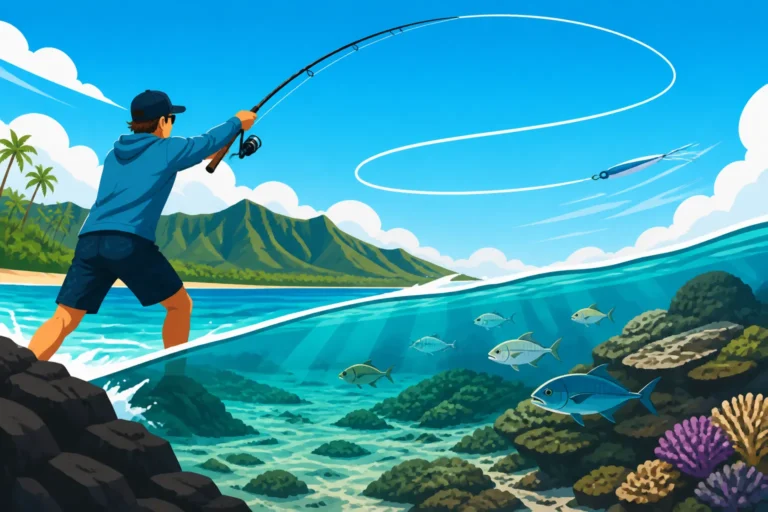
Casting for ulua from shore is not for the faint of heart. You're typically dealing with heavy weights, large baits, and often strong winds. Mastering a powerful overhead cast or a pendulum cast is crucial to reach those distant ledges and channels where ulua patrol.
- Technique: Focus on a smooth, powerful motion that loads the rod deeply. Keep your core engaged and use your entire body, not just your arms. Practice in an open field to get a feel for your setup without the pressure of the ocean.
- Bait Securing: Your bait needs to be securely attached to your hooks so it doesn't fly off mid-cast. Using bait elastic or tying knots around the bait can help. When using a whole fish bait, ensure the hooks are strategically placed for both holding power and effective hook-up. Our guide on the Best whole bait for ulua sliding rigs offers great tips for this.
- Accuracy: It’s not just about distance; it's about landing your bait in the strike zone – that specific channel, drop-off, or eddy where ulua are likely to be. On a dark night with a strong swell, this can be challenging, but repetition and familiarity with your spots will improve your accuracy.
After a successful cast, let your sinker settle to the bottom. Once it's secure, slowly take up any slack line until you feel the weight. You want just enough tension to feel a bite, but not so much that the ulua feels resistance when it first picks up the bait.
Patience and Persistence: The Ulua Angler's Mantra
Ulua fishing is a waiting game. These fish can cruise for hours before deciding to strike, and a single session might involve many casts with no action, followed by a sudden, violent strike. This is where persistence truly pays off, especially in late fall when feeding patterns can be a bit more unpredictable.
- Waiting it out: Don't be discouraged by long periods of inactivity. Keep your bait fresh, re-cast every 30-60 minutes, or if you suspect your bait has been picked clean by smaller reef fish.
- Reading the signs: Pay attention to subtle taps or nudges on your line. Sometimes, a ulua will play with the bait before committing. Don't set the hook too early on a soft bite. Wait for that distinctive, powerful pull that signifies the fish has taken the bait and is running.
- The Strike: When an ulua hits, there's usually no mistaking it. Your rod will often double over, and the reel's drag will scream. This is not the time to hesitate. Drive the hook home with a powerful sweep of the rod, and hold on! Remember, these fish fight dirty, often trying to cut you off on the reef. Maintain constant pressure and pump the fish in, regaining line whenever you can.
Safety First: Fishing Big Water
Fishing for ulua from Hawaii's rugged shorelines is an exhilarating experience, but it comes with inherent risks, especially in late fall when swells can be larger and more unpredictable. Safety should always be your number one priority.
- Know Your Limits: Never fish alone, especially at night or in big surf. Always go with a buddy. Don't attempt to fish a spot if the swell is too large or if you're unfamiliar with the area's dangers. No fish is worth risking your life for.
- Footwear and Clothing: Wear sturdy, non-slip footwear designed for wet, rocky terrain. Tabis (reef shoes) are excellent for grip. Long pants and sleeves can protect you from abrasions and sun exposure. At night, a good waterproof headlamp is non-negotiable, and it’s always wise to have a backup.
- Watch the Ocean: Always keep an eye on the ocean for rogue waves. Even on a seemingly calm day, a larger set can come in and sweep you off your feet or wash gear into the water. Never turn your back on the ocean.
- Escape Route: Before you even make your first cast, identify a safe, high ground escape route in case a large wave washes over your position. Know where you can retreat quickly.
Remember, the ocean can be a powerful and unforgiving force. Respect it, be prepared, and stay safe so you can enjoy many more years of chasing Hawaii's magnificent ulua. For more general guidelines on fishing responsibly, be sure to review the Hawaii Fishing Regulations Explained and understand the Hawaii Boating Laws for Anglers if you plan to use a vessel to access your spots.
Disclaimer
This article is for general informational purposes only and does not constitute professional advice. Laws, prices and regulations vary by location and change over time. Consult a qualified professional for guidance on your specific situation.