Best charters that fish the FAD buoys off Kona
One of the most thrilling experiences for any angler visiting Hawaii is the pursuit of pelagic species in the deep blue waters off Kona. But if you're like many folks, you might feel a bit overwhelmed trying to figure out how to put yourself in the best position for a truly epic catch. This guide is all about simplifying that journey by focusing on the absolute sweet spots for big game: the FAD buoys, and how to find the perfect charter to take you there.
Understanding Kona's FAD Buoys and Why They're So Productive
The waters off the Kona Coast are legendary for their big game fishing, and a huge part of that reputation comes from a network of cleverly deployed Fish Aggregating Devices, or FADs. These aren't just random buoys; they're strategically placed underwater magnets for the very fish we dream of catching. Understanding what they are and why they work so well is the first step to unlocking their potential.
What Exactly Are FADs?
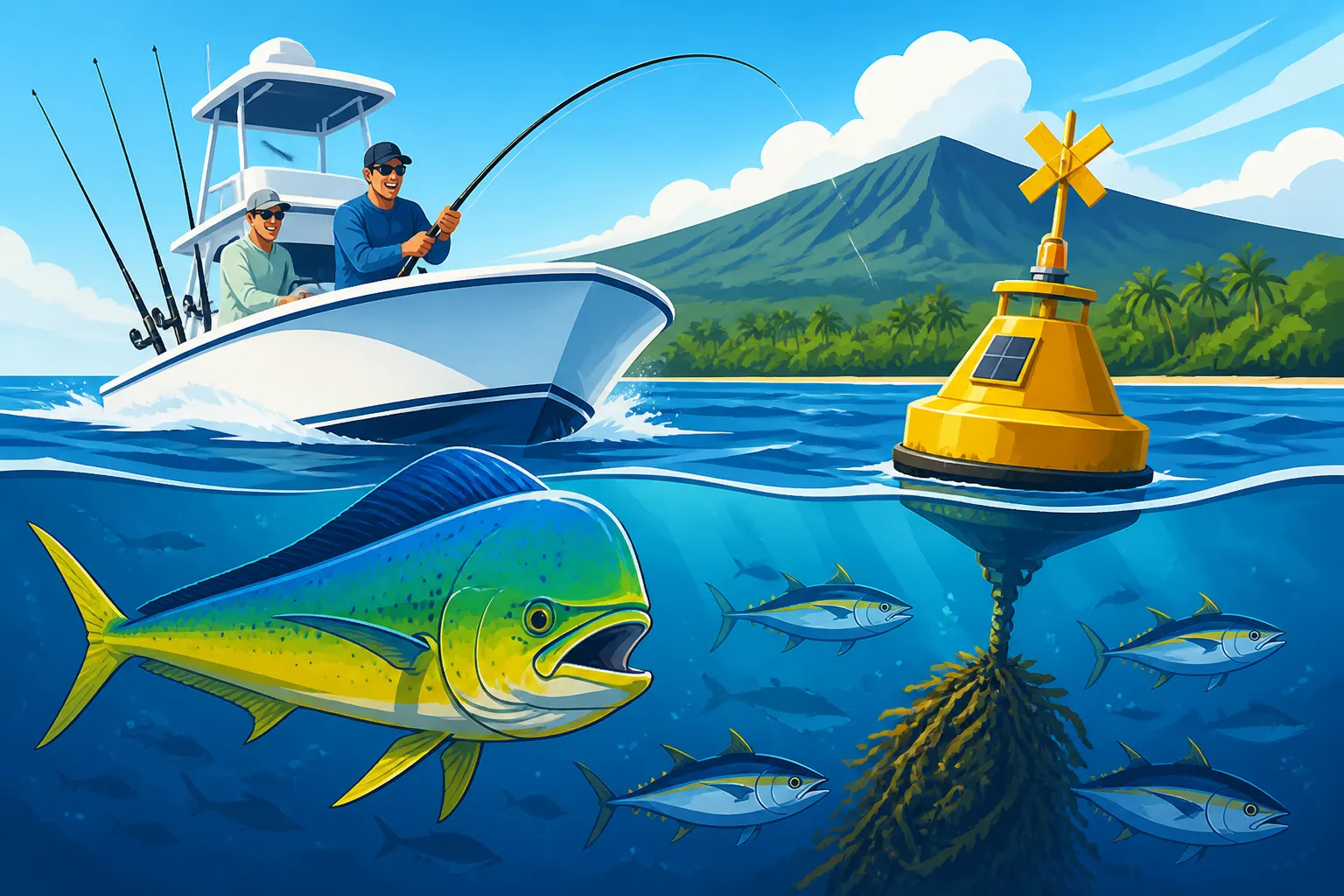
At its core, a FAD is any object floating in the ocean that attracts marine life. Think of it as an artificial reef or a tiny oasis in the vast, open ocean. These devices can range from simple, privately deployed floating debris to large, officially maintained buoys that are anchored to the seafloor in thousands of feet of water. The magic of a FAD lies in its ability to disrupt the monotonous expanse of the open ocean, providing a point of interest, shelter, and a congregating spot for smaller baitfish.
As these smaller fish gather, they, in turn, attract larger predatory species – the game fish that every angler dreams of. It's a classic food chain scenario playing out in the deep blue. The FAD acts as the initial attractor, drawing in plankton and small invertebrates, which then become food for juvenile fish. These juveniles then attract larger pelagic species, creating a vibrant, albeit temporary, ecosystem around the device. For anglers, this means a significantly higher chance of encountering schooling fish and the big predators that follow them, compared to simply trolling across vast, featureless ocean.
The Kona Advantage: Deep Water, Close to Shore
What makes Kona's FADs particularly special, and indeed, much of its world-renowned fishery, is the unique geography of the Big Island. Unlike many other fishing destinations where you might have to run dozens or even a hundred miles offshore to reach truly deep water, the Kona Coast plunges into incredible depths just a few miles from the coastline. We're talking about thousands of feet of water right outside the harbor. This proximity is a game-changer.
This means that charters can get you to prime FAD locations much faster, sometimes in as little as 30 minutes to an hour from Honokohau Harbor. This quick access translates directly into more fishing time and less travel time, which is precious on any charter trip. It also means less fuel burn for the boats, making these trips more efficient. For anglers, it means less time bouncing around in transit and more time with lines in the water, actively pursuing fish. The deep, nutrient-rich waters that are so close also contribute to a healthy and abundant pelagic ecosystem, making the FADs off Kona incredibly productive for a wide variety of species. It's a perfect storm of natural advantages and strategic deployments that make Kona's FAD fishing truly exceptional.
Targeting Pelagic Giants: What You'll Catch at Kona's FADs
The FADs off Kona are like a magnet for some of the ocean's most impressive inhabitants. When you head out with a charter specifically targeting these devices, you're not just hoping for a bite; you're setting yourself up for an encounter with true pelagic giants and other highly sought-after game fish. It's an experience that can go from calm anticipation to heart-pounding action in a split second.
The Big Game Stars: Marlin and Ahi
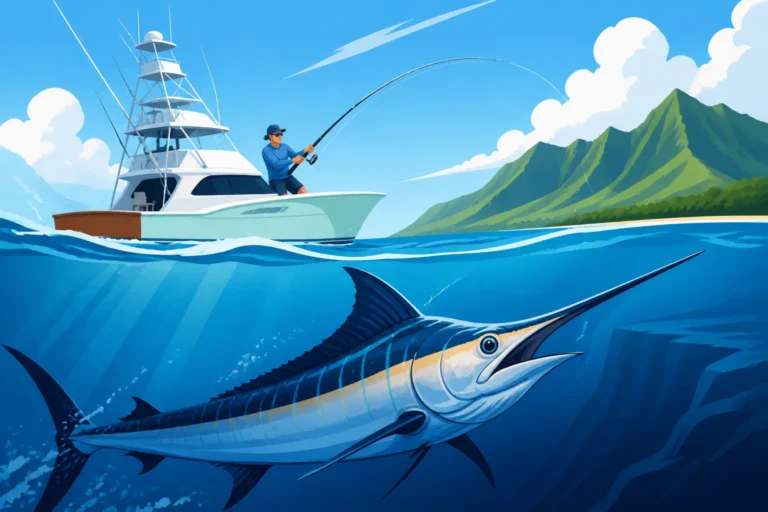
Without a doubt, the undisputed stars of Kona's FAD scene are the marlin and the mighty yellowfin tuna, known locally as ahi. Blue marlin are the most famous, of course, with Kona being one of the few places in the world where grander (1,000+ pound) marlin are caught with some regularity. These apex predators are drawn to FADs because of the concentrations of baitfish and other pelagic species they prey upon, such as skipjack tuna (aku) and mackerel scad (opelu). You'll often find them lurking in the deeper waters around the FADs, ready to ambush anything that looks like an easy meal. Trolling lures or live bait around these structures is a classic strategy for tempting these magnificent billfish. If you're coming to Hawaii with dreams of a true trophy, fishing the FADs with an experienced captain gives you one of your best shots at a lifetime fish. We delve deeper into this incredible fishery in Marlin Fishing off the Kona Coast.
Yellowfin tuna, or ahi, are another prime target around FADs, and they're often what truly brings these structures to life with frenetic energy. Schools of ahi, sometimes weighing over a hundred pounds, will congregate around the FADs, feeding on the smaller fish that gather there. When an ahi school is feeding, the water can literally boil with activity, and it's an exhilarating sight to behold. Charters will often switch tactics when ahi are present, using chunking (throwing out cut bait) or live baiting techniques to entice these powerful fighters. The fight of a big ahi is legendary, known for its incredible speed and stamina. Catching one is a true test of strength and skill, and the reward is not just the fight, but also some of the most prized table fare in the ocean. Learn more about pursuing these fast-moving fish in Ahi (Yellowfin Tuna) Fishing in Hawaii.
Other Prized Catches: Mahimahi and Ono
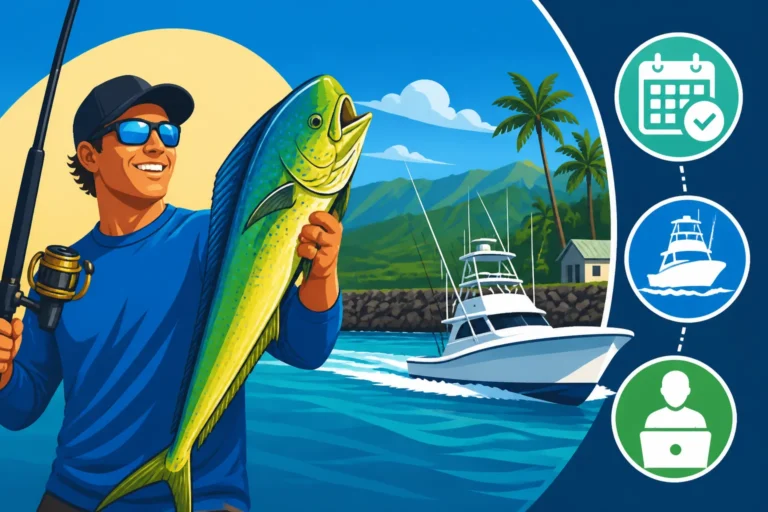
While marlin and ahi might grab the headlines, FADs are also incredibly productive for two other highly desirable pelagic species: mahimahi and ono. Mahimahi, often called dolphin fish or dorado, are stunningly beautiful and incredibly acrobatic fish that provide fantastic light-tackle action. They are typically found closer to the surface around FADs, often in vibrant schools. Their iridescent colors and spectacular aerial displays make them a favorite among anglers, and they are also superb eating fish. Trolling small lures or using live bait around the FADs often yields incredible numbers of mahimahi, making for fast-paced and exciting fishing, especially for families or less experienced anglers looking for consistent action. Discover more about chasing these colorful fish in Mahimahi Fishing in Hawaii.
Ono, which translates to "delicious" in Hawaiian, is more commonly known as wahoo, and it lives up to its name in every sense. These sleek, torpedo-shaped fish are renowned for their blistering runs and razor-sharp teeth. They are often found patrolling the edges of FADs, ambushing baitfish with incredible speed. Ono typically strike trolled lures with ferocious intensity, providing a thrilling initial run that can spool a reel in seconds. They are a highly prized catch for their incredible fight and their delectable, flaky white meat. A good FAD charter will be prepared with the right tackle and wire leaders to handle these toothy predators. The diversity of species found around Kona's FADs ensures that every trip can offer a different and exciting challenge, making it a truly dynamic fishing experience. Find out more about these speedsters in Ono (Wahoo) Fishing in Hawaii.
How to Find and Choose the Best Kona Charters for FAD Fishing
Choosing the right fishing charter is crucial for any successful trip, but it becomes even more vital when you're specifically targeting the FAD buoys off Kona. Not all charters are created equal, and some specialize far more in this type of fishing than others. Taking the time to research and ask the right questions will significantly increase your chances of a memorable and productive day on the water.
Experience and Equipment: Key Factors for FAD Charters
When you're looking for a charter that truly excels at FAD fishing, the captain and crew's experience is paramount. This isn't just about being a good boat handler; it's about intimately knowing the FADs themselves. An experienced FAD captain will know which buoys have been holding fish recently, how currents affect fish positioning around them, and the subtle signs that indicate a bite. They'll also be adept at reading the water, spotting bird activity (a major indicator of baitfish and predators), and adapting tactics on the fly. This local knowledge, refined over countless hours on the water, is invaluable.
Beyond expertise, the right equipment is non-negotiable. FAD fishing, especially for marlin and ahi, often requires heavy-duty tackle capable of handling powerful, fast-running fish. Look for charters that boast well-maintained, high-quality rods and reels, appropriate line strengths, and a wide array of lures and baits suited for pelagic species. Good electronics – including sophisticated sonar and radar to locate bait balls and spot birds – are also key. A comfortable and capable boat that can handle the offshore conditions quickly and safely is also a must. You want a vessel designed for serious sportfishing, not just sightseeing. Platforms like FishingBooker can be incredibly helpful here, allowing you to filter charters by their specialties and read reviews from other anglers who have fished the FADs. When considering your options, it's worth reviewing a comprehensive guide like How to Choose a Hawaii Fishing Charter to make an informed decision.
Asking the Right Questions and Booking Your Trip
Before you commit to a charter, don't be shy about asking specific questions to ensure they align with your FAD fishing goals. First and foremost, ask if they regularly target the FADs. Some charters might prefer to stay closer to shore or focus on different types of fishing, so clarify their primary strategy. Inquire about the types of species they typically catch at the FADs during the time of year you plan to fish. You'll want to know what their go-to techniques are around the FADs – do they primarily troll lures, or are they set up for chunking and live baiting if ahi are present?
Also, consider the length of your trip. While a half-day charter might offer a taste of offshore fishing, a full-day or even a three-quarter-day trip will generally provide much more productive time at the FADs, allowing the captain to move between buoys if necessary and employ varied techniques. Most reputable charters will be happy to discuss their approach in detail. Booking in advance, especially during peak season, is always recommended. Utilize online booking platforms like FishingBooker, which often provide detailed boat profiles, captain biographies, and angler reviews, making it easier to compare and select the ideal charter for your FAD adventure. This also provides an excellent resource if you are looking into Booking a Last-Minute Fishing Charter in Hawaii.
Strategies and Considerations for a Successful FAD Fishing Trip
Once you've secured your charter and are heading out to the FADs off Kona, understanding the common fishing strategies and being prepared for the conditions will make your trip even more enjoyable and successful. It’s a dynamic environment, and a good captain will adapt to what the fish are doing, but knowing what to expect can help you appreciate the process.
Trolling, Chunking, and Live Baiting at the FADs
Fishing the FADs is often a multi-faceted approach, as different species respond to different presentations. The most common technique you’ll likely start with is trolling. Your charter will deploy a spread of lures or rigged baits, often at varying depths and distances behind the boat, and circle the FAD. This method is highly effective for catching marlin, ono, and mahimahi as they patrol the FAD's vicinity looking for an easy meal. The captain will watch the fish finder for signs of life and adjust speed and direction to optimize strikes. We often discuss specific tactics in Trolling Techniques for Hawaii Pelagics.
However, when schools of ahi are actively holding around a FAD, the captain might switch to chunking or live baiting. Chunking involves slowly drifting near the FAD while continuously throwing out small pieces of cut bait (chum) to draw the tuna closer to the boat and into a feeding frenzy. This is often paired with live bait, such as opelu or skipjack, presented on circle hooks. The goal is to get the tuna so excited by the free food that they aggressively strike your baited lines. This method is incredibly exciting, with multiple hookups possible. It’s a great way to experience the raw power of ahi up close, and you can learn more about it in Best Techniques for Chumming for Ahi. Being versatile and prepared for these different techniques is key to maximizing your catch potential at the FADs.
Weather, Conditions, and Being Prepared
The open ocean around the FADs can be a magnificent place, but it's also dynamic and subject to changing conditions. While Kona is famous for its typically calm lee waters, offshore conditions can vary. Keep an eye on the weather forecast leading up to your trip, but trust your captain’s judgment – they are the experts on safety and comfort. Rougher seas can make getting to the FADs less comfortable, and a skilled captain will know when conditions are unfavorable or when to adjust course for a more pleasant ride.
Being prepared personally is just as important. The Hawaiian sun is intense, even on a cloudy day, so pack plenty of reef-safe sunscreen, a wide-brimmed hat, and polarized sunglasses. Light, long-sleeved clothing can offer protection from the sun. Hydration is crucial, so bring plenty of water or sports drinks, though most good charters will provide beverages. If you're prone to seasickness, take preventative measures before you even step on the boat; Kona's waters can be calm, but offshore swells are always a possibility. A well-prepared angler is a comfortable angler, ready to enjoy every moment of the FAD fishing adventure. You can find more practical advice on what to pack in What to Bring on a Hawaii Fishing Charter and tips for handling rough water in Seasickness tips for a Hawaii fishing charter.
Here's a quick look at some of the prime species you might encounter around Kona's FADs, and the typical techniques used to target them:
| Species | Common Fishing Techniques at FADs | Ideal Conditions | Notes |
|---|---|---|---|
| Blue Marlin | Trolling lures, Live baiting | Any, often deeper | Apex predator, powerful fight |
| Ahi (Yellowfin) | Chunking, Live baiting, Trolling | Active bait schools | Fast, strong, excellent table fare |
| Mahimahi | Trolling lures, Live baiting | Surface, sunny | Acrobatics, schooling fish, vibrant colors |
| Ono (Wahoo) | High-speed trolling, Live baiting | Edges of FAD, sunny | Blistering runs, sharp teeth, delicious meat |
| Spearfish | Trolling small lures | Upper water column | Elusive, elegant fighters |
Disclaimer
This article is for general informational purposes only and does not constitute professional advice. Laws, prices and regulations vary by location and change over time. Consult a qualified professional for guidance on your specific situation.