Best rivers for oio (bonefish) sightings in Hawaii
It can be incredibly frustrating for anglers and wildlife enthusiasts alike to hear about elusive species like the oio, or bonefish, and then struggle to find reliable information on where to actually spot them, especially in what seems like an unusual habitat like a river. Many of us think of these sleek, silver ghosts gliding over shallow ocean flats, but the truth is, Hawaii's unique hydrology means they sometimes venture into surprising places. This guide will dive deep into the specific conditions and locations where you might just catch a glimpse of these incredible fish in Hawaii's riverine and estuarine environments.
Understanding Oio Behavior and Habitat Preferences
Before we dive into specific locations, it's really important to understand why an oio, a creature primarily associated with shallow ocean flats and coral reefs, might even be found in a river. It's not their typical hangout, that's for sure, but there's a method to their occasional madness.
The Oio's Preferred Coastal Environment
Traditionally, when you think of bonefish, you picture vast, sandy flats, often with a mix of coral rubble and turtle grass, usually in crystal-clear saltwater. They're built for it—their downturned mouths are perfect for rooting around in the sand for crustaceans, worms, and small fish, and their silvery camouflage makes them nearly invisible against the bottom. They thrive in these sun-drenched, shallow-water ecosystems, where they can feed and evade predators effectively. This is why places like Best Bonefishing Spots in Hawaii are so famous for them.
However, the "river" aspect comes into play because many of Hawaii's rivers, especially on islands like Oahu and Kauai, don't just flow directly into the deep blue ocean. Instead, they often broaden into estuarine systems, lagoons, and bays that are heavily influenced by the tides. These areas represent a fascinating transition zone between freshwater and saltwater, creating unique habitats that can sometimes attract opportunistic feeders like the oio.
Why Oio Venture into Brackish and River Mouth Waters
So, what pulls these saltwater specialists into a river? It primarily comes down to food availability and refuge. Estuaries, where freshwater rivers meet the ocean, are incredibly rich ecosystems. The mixing of waters brings in a wealth of nutrients, supporting a diverse array of small crabs, shrimp, and baitfish that might not be as abundant on the open flats. For a bonefish, this can be a veritable buffet.
Think about a strong outgoing tide from a river after a heavy rain. It washes all sorts of delectable morsels out of the river system and into the bay or estuary. Oio, being smart and constantly on the hunt, will sometimes patrol these transition zones, waiting for an easy meal. Furthermore, these slightly murkier waters, particularly at the river mouth or within protected lagoon systems, can offer a sense of security from larger marine predators that might be less inclined to enter the shallower, less saline areas. It’s a calculated risk for a potential payoff. You often find them on the edges of these systems, where the salinity gradient allows them to move in and out comfortably.
Key Rivers and Estuaries for Oio Sightings in Hawaii
While "rivers" might imply deep freshwater, when we talk about oio sightings, we're really focusing on the lower reaches, tidal zones, and estuarine environments where freshwater rivers merge with the ocean. These specific locations provide the unique conditions that might draw bonefish in.
Oahu's Estuarine Systems and River Mouths
Oahu, being the most populated island, also has several significant river and stream systems that create estuarine habitats perfect for oio to explore. These areas often feature shallow sand and mud flats, mangrove-lined banks, and strong tidal flows that make them prime hunting grounds.
Keehi Lagoon and Connecting Canals
Keehi Lagoon, located near Honolulu International Airport, is arguably one of Oahu's most famous bonefishing destinations. While it's a lagoon, it receives significant freshwater runoff and tidal exchange, creating extensive brackish flats. The network of canals and dredged channels leading into and out of Keehi can act as highways for oio, especially during tidal movements. I've spent countless hours wading these flats, and you can absolutely spot them cruising along the edges of the deeper channels or nosing into the mouths of smaller streams that feed the lagoon. The water might not always be crystal clear, but the sheer abundance of bait and protection can make it an attractive spot for these fish. Keehi Lagoon Bonefishing is definitely a topic that gets a lot of interest because of spots like this.
Anahulu River (Haleiwa) and Waimea Bay
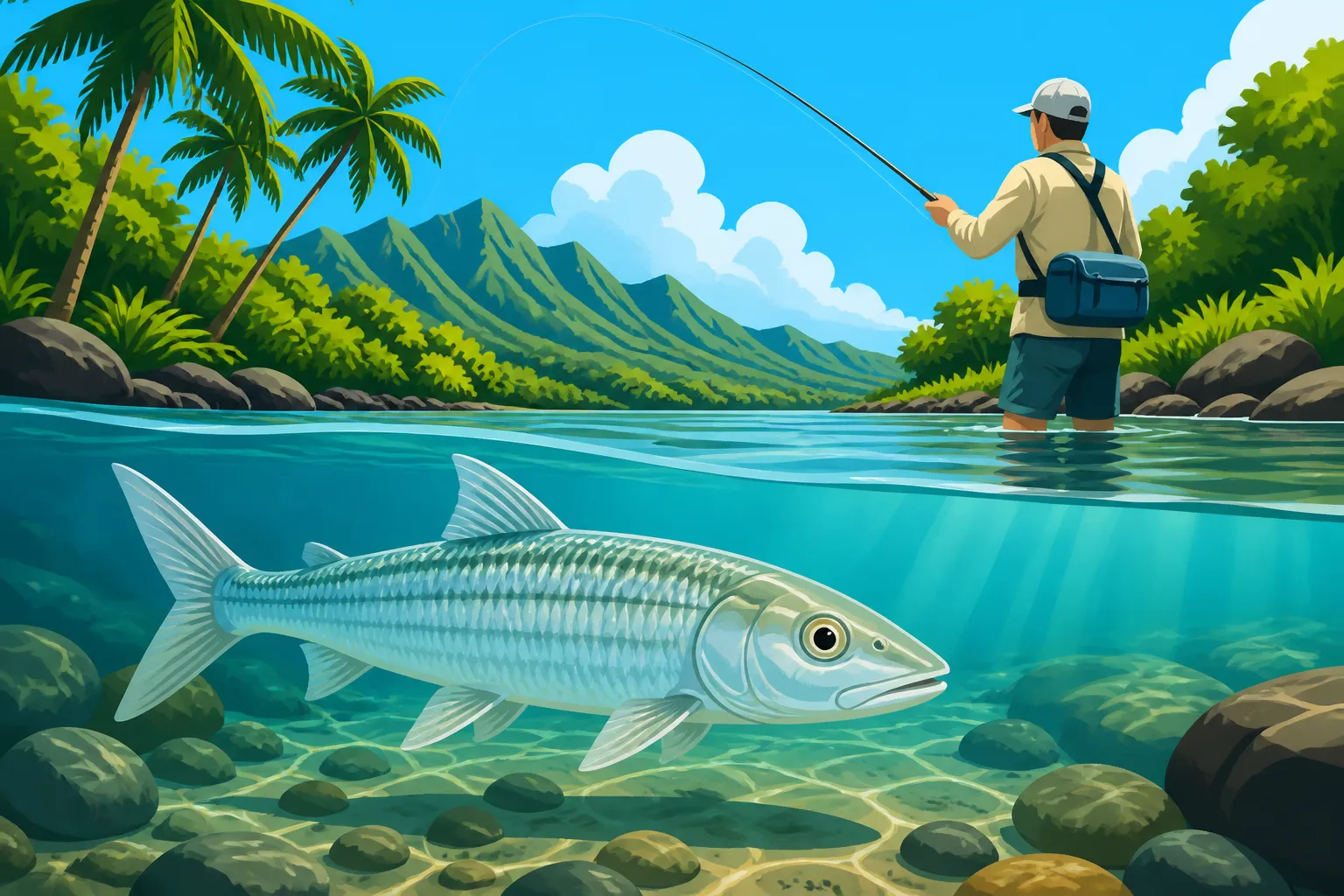
Moving to Oahu's North Shore, the Anahulu River, which flows into Haleiwa Harbor, offers another excellent opportunity for oio sightings in a riverine context. The lower stretches of the Anahulu River, particularly where it widens before emptying into the harbor and then the ocean, are brackish and tidal. Bonefish have been observed pushing into these areas, especially on incoming tides, likely following baitfish or scavenging for crabs stirred up by the flow. Further east, the mouth of the Waimea River, which empties into famous Waimea Bay, also creates a dynamic estuarine environment. While known for its big waves, the calmer river mouth area can hold fish, especially during periods of lower surf when the water isn't too churned up. It’s a tricky spot, but definitely worth exploring for observant anglers looking for something a bit different.
Kauai's Hanalei River Estuary
On the Garden Isle of Kauai, the Hanalei River is a prominent feature, flowing through lush valleys before reaching the ocean at Hanalei Bay. The Hanalei River estuary is a rich, biodiverse area, and its lower reaches are definitely known to hold a variety of fish species, including, occasionally, oio.
The Tidal Zone of Hanalei River
The section of the Hanalei River closest to Hanalei Bay is a broad, slow-moving tidal zone, characterized by muddy banks and deeper channels. This area is a nursery for many species and a feeding ground for others. On a strong incoming tide, as saltwater pushes upstream, oio can follow the salinity gradient, moving into the river mouth to feed. They might not go far upstream into the purely freshwater sections, but the brackish mix is where you'd be looking. Local knowledge is key here, as conditions can change rapidly with rainfall and tidal shifts. If you're exploring Hanalei Bay Fishing Access, pay close attention to the river mouth's edges.
Other Potential River Mouths and Protected Bays
Beyond these specific examples, it's worth remembering that many other Hawaiian islands and coastlines feature smaller streams and rivers that empty into protected bays or expansive reef flats. These less-known spots, often found in more remote areas, can sometimes be surprisingly productive for oio sightings, particularly if they have:
- Shallow, sandy or muddy bottom: Perfect for their feeding habits.
- Good tidal exchange: Allows for the movement of saltwater and baitfish.
- Abundant small crustaceans and baitfish: The primary food source.
- Limited boat traffic or human disturbance: Allows the fish to feel more secure.
For example, on Maui, while there aren't many large rivers that consistently hold bonefish, smaller stream mouths emptying into protected bays, especially along the Kihei coastline, could offer similar opportunities during the right tidal conditions. It always pays to do some on-the-ground reconnaissance and observe local patterns.
Best Practices for Spotting Oio in Riverine Environments
Spotting oio in these river-influenced areas requires a slightly different approach than the wide-open ocean flats. The environment can be murkier, and the currents more varied. But with the right techniques and a good dose of patience, you can significantly increase your chances.
Gear and Observation Techniques
Success in spotting these elusive fish often comes down to careful observation and minimizing your own disturbance.
The Power of Polarized Sunglasses
This isn't just a suggestion; it's practically a requirement. Good quality polarized sunglasses are your best friend for cutting through the glare on the water, especially in brackish environments where the water might be less clear than offshore. They allow you to see deeper into the water column and distinguish the subtle movements or shadows that indicate an oio. Brands like Costa Del Mar or Maui Jim, often available on Amazon, are popular for a reason—they make a huge difference. Without them, you're essentially blind to the subtle world beneath the surface.
Stealth and Slow Movement
Bonefish are incredibly wary, and in the often-confining spaces of a river mouth or estuary, any sudden movement or splash will send them darting away. Approach these areas slowly and deliberately. If you're wading, shuffle your feet to avoid kicking up mud. If you're in a kayak or paddleboard, keep your paddles quiet and your movements smooth. The goal is to become part of the environment, not a sudden intrusion. Look for subtle signs: a faint puff of mud, a nervous ripple, or a sudden flash of silver just beneath the surface.
Timing and Environmental Factors
Understanding the ebb and flow of the tides and how they interact with the river's current is paramount.
Tides and Water Clarity
The tides are your secret weapon. For oio in river mouths, the incoming tide is often the best time. As clean, salty ocean water pushes into the estuary, it brings with it higher water levels, potentially clearer conditions, and a fresh supply of baitfish. This is when bonefish are most likely to venture into these areas. Conversely, a strong outgoing tide can sometimes be productive, as it washes food out, but it can also make the water very murky, reducing visibility for both you and the fish.
Water clarity is another huge factor. After heavy rains, river mouths can become chocolate milk, making spotting nearly impossible. Look for periods after a few days of dry weather when the river has had a chance to settle and clear up. Sunny days, when the sun is at your back, also greatly improve visibility, allowing those polarized lenses to work their magic. You're trying to stack the odds in your favor, so picking the right weather and tide is crucial.
| Location Type | Primary Oio Activity Zone | Best Tide for Sightings | Water Clarity Preference | Key Indicator to Look For |
|---|---|---|---|---|
| River Mouth/Estuary | Edge of salinity gradient | Incoming Tide | Moderate to Clear | "Puffs" of mud, nervous water |
| Shallow Lagoon Flats | Open sand/mud flats | Incoming/High Tide | Clear | Tail fin out of water |
| Tidal Canals | Channel edges, drop-offs | Moving Tide | Moderate | Subsurface flashes, shadows |
What to Look For: The "Puff" and "Shadow"
Spotting bonefish isn't always about seeing the entire fish. More often than not, it's about interpreting subtle clues. One of the most common signs that an oio is actively feeding is a "puff" of mud. As they root around on the bottom with their noses, they stir up small clouds of sediment. If you see a series of these puffs moving along, you've likely found a feeding bonefish.
Another common sighting is a fast-moving "shadow." Because of their incredible camouflage, an oio often appears as a fleeting, dark shape against the bottom, especially when spooked or moving quickly. Train your eyes to look for anything that seems out of place or moves purposefully. Sometimes, it's just the tip of their tail or dorsal fin breaking the surface (known as "tailing"), but in murkier river mouths, you'll be relying more on those subsurface clues. Having a pair of good binoculars or a monocular can also help you scan wider areas from a vantage point before wading in. If you're looking for Best Bonefishing Techniques for Oahu Flats, these observation skills are fundamental.
Conservation and Responsible Angling Practices
Finding oio in Hawaii's unique riverine and estuarine environments is a special experience, and it comes with the responsibility to protect these fish and their fragile habitats.
Adhering to Regulations and "Catch and Release"
It's critical to remember that oio are primarily considered a sportfish in Hawaii, highly valued for their fighting ability and elusiveness. While they are not specifically designated as "catch and release only," many ethical anglers choose to release them due to their exceptional recreational value and relatively bony flesh (hence "bonefish"). Always consult the latest Hawaii Division of Aquatic Resources (DAR) regulations for any specific rules regarding bag limits or size restrictions, especially as these can change. You can usually find comprehensive information by looking up Reading the Hawaii DLNR Fishing Regulations.
If you do decide to fish for them in these river systems, using single, barbless hooks can minimize harm if you plan to release the fish. Handle them gently with wet hands, support their body weight, and release them quickly. Avoid dragging them on shore or holding them by the jaw, which can cause internal damage. A good pair of long-nosed pliers, like those you might find on Amazon, can be invaluable for quickly and safely removing hooks.
Protecting Estuarine Ecosystems
The river mouths and estuaries where you might find oio are often incredibly sensitive and vital ecosystems. They act as nurseries for countless marine species, filtering water and providing crucial habitat for birds and other wildlife. When exploring these areas:
- Pack out everything you pack in: Leave no trace. This includes discarded fishing line, plastic bottles, and food wrappers.
- Stay on established paths or tread lightly: Avoid trampling sensitive vegetation along the banks.
- Be mindful of runoff: Avoid using harmful chemicals or soaps that could enter the water system.
- Respect private property: Many riverbanks may be privately owned; always seek permission if unsure.
By practicing responsible angling and environmental stewardship, we ensure that these beautiful fish and their unique habitats remain healthy for future generations to enjoy. It's not just about the thrill of the chase, but about preserving the magic of Hawaii's aquatic world.
Supporting Local Conservation Efforts
Consider supporting local organizations dedicated to protecting Hawaii's aquatic resources. These groups often work on habitat restoration projects, research initiatives, and educational programs that directly benefit species like the oio and the health of our estuaries and rivers. Understanding the interconnectedness of Hawaii's marine and freshwater environments is key. For example, issues affecting upstream freshwater quality can directly impact the health of the downstream estuary and, consequently, the fish that rely on it. A healthy river system contributes to a vibrant coastal ecosystem where these incredible bonefish can continue to thrive, even if it's just for a fleeting visit to the river mouth.
Disclaimer
This article is for general informational purposes only and does not constitute professional advice. Laws, prices and regulations vary by location and change over time. Consult a qualified professional for guidance on your specific situation.