Do Hawaii Waters Have Great White Sharks?
Great white sharks in Hawaii are rare transient visitors rather than local residents because tropical waters lack their preferred mammal prey.
Know what’s on the line.
Gamefish and panfish profiles — identification, behavior, feeding habits, and species-specific strategies for every catch.
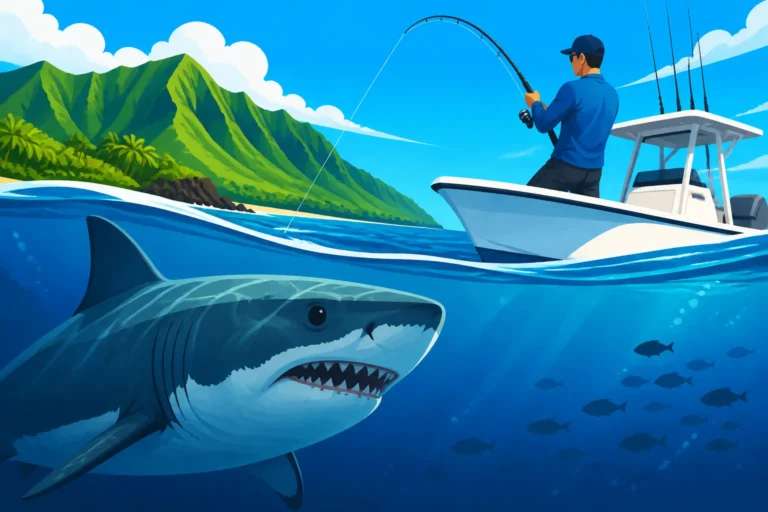
Great white sharks in Hawaii are rare transient visitors rather than local residents because tropical waters lack their preferred mammal prey.
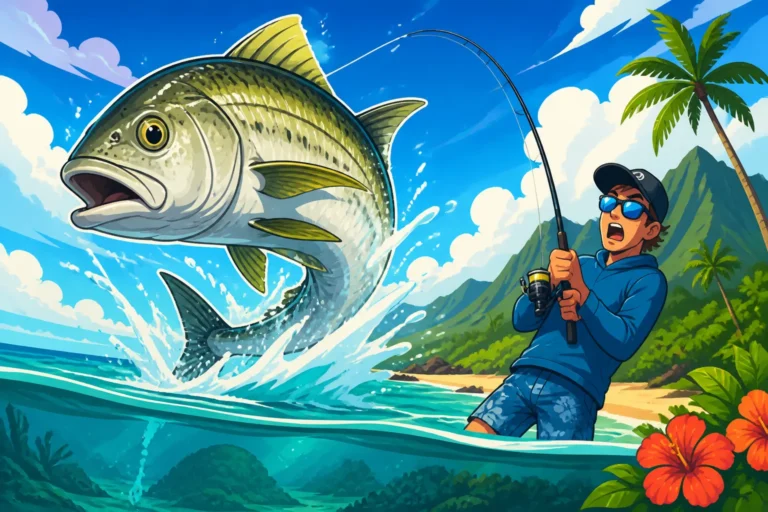
Hawaiian uhu parrotfish reproductive cycles, spawning seasons, and ecosystem roles for local anglers planning sustainable reef fishing trips.
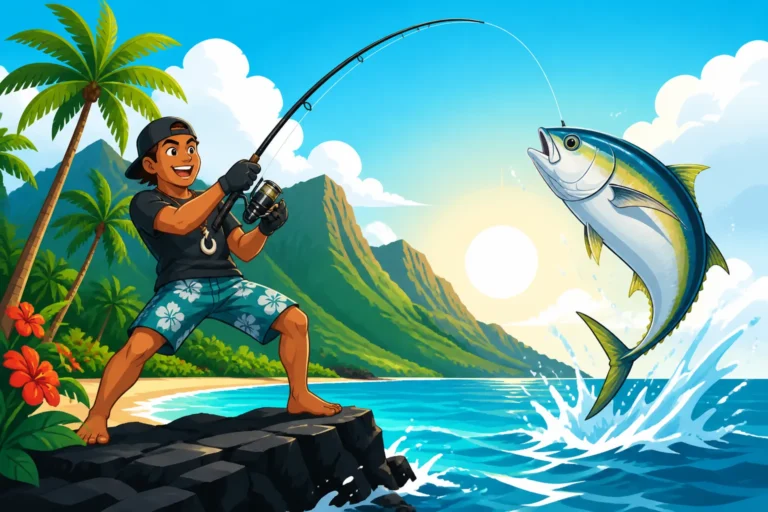
Moi spawning seasons and environmental triggers in Hawaii, helping anglers fish responsibly and follow local regulations.
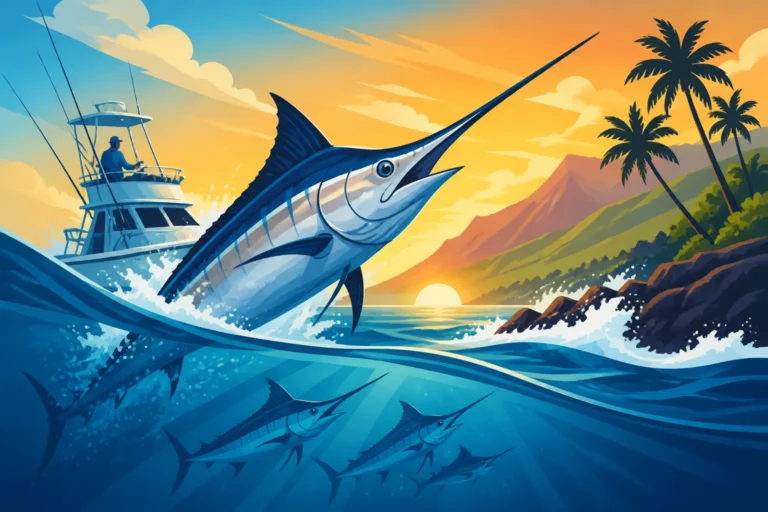
Marlin migration patterns along the Kona Coast explain seasonal movements for blue marlin, striped marlin, and shortbill spearfish.
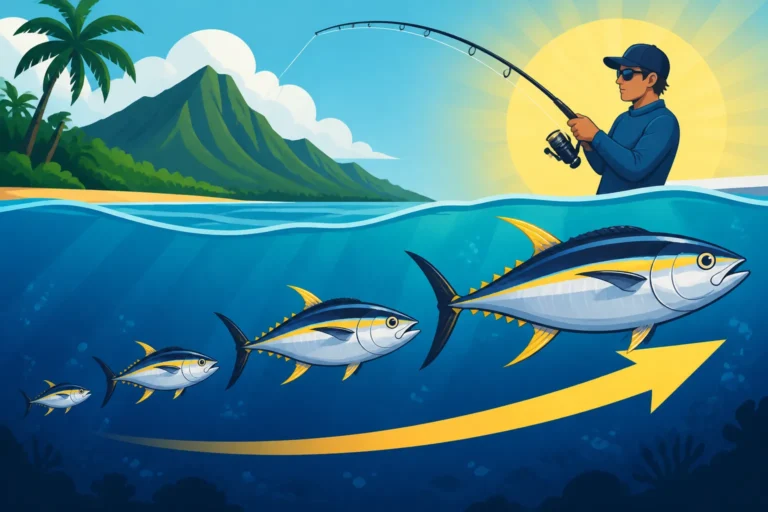
Hawaiian ahi growth rates depend on warm water temperatures, ocean currents, and abundant food availability like squid and fish.
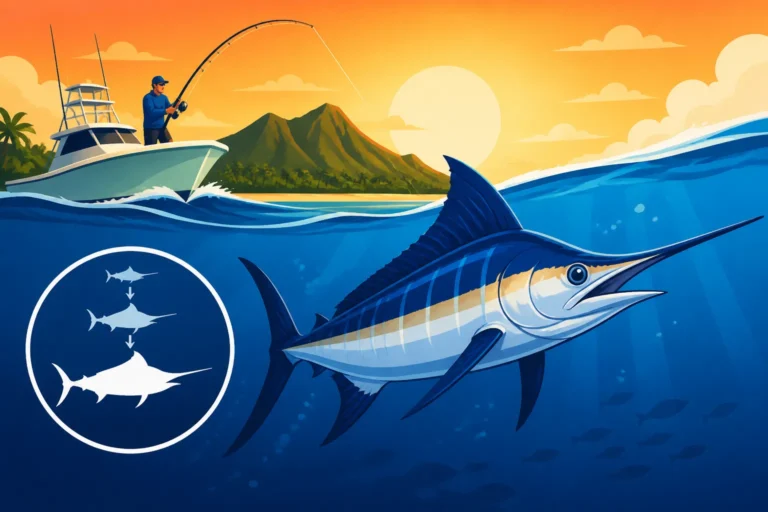
Marlin lifespans and the environmental factors affecting Hawaiian blue marlin longevity are explained through scientific age estimation methods.
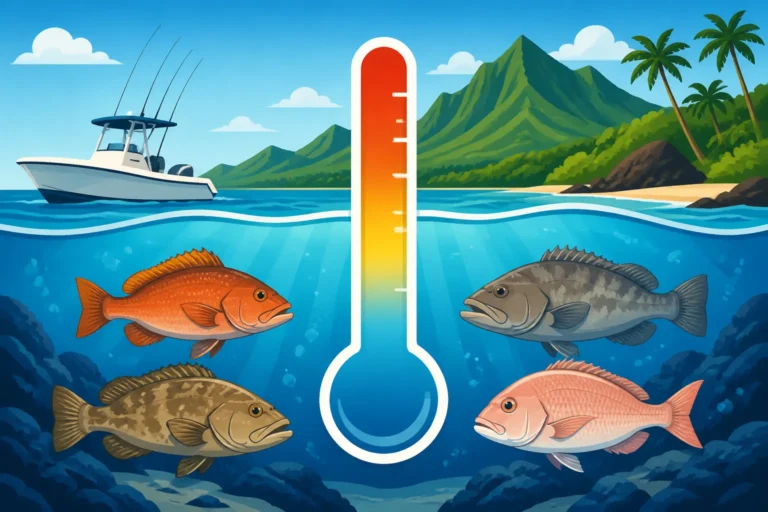
Hawaii bottomfish thermal preferences and thermocline layers explain deepwater fish behavior, metabolism, and successful fishing spots.
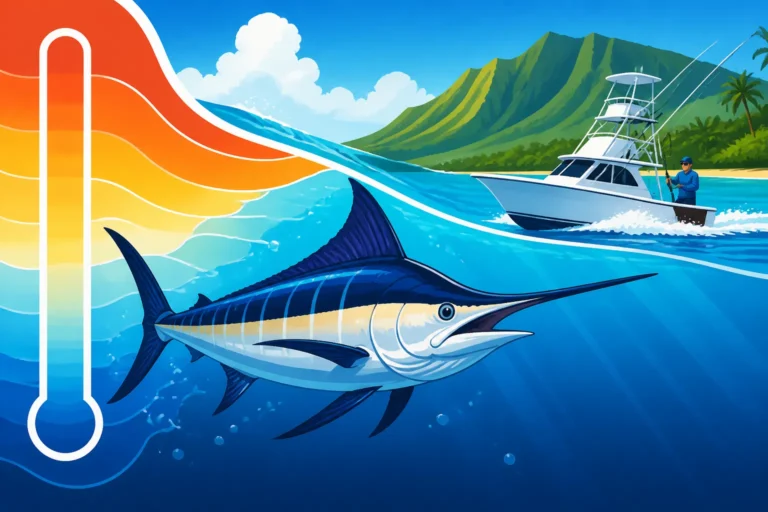
Hawaiian marlin preferred water temperatures, ranging from seventy to eighty-six degrees, explain seasonal billfish movements and feeding habits.
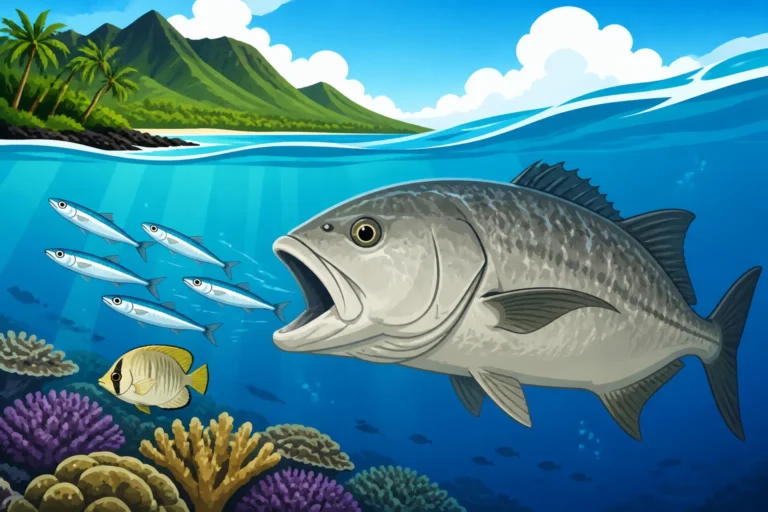
Giant trevally feeding habits around Hawaii reefs include crabs, lobsters, parrotfish, goatfish, akule, and opelu.
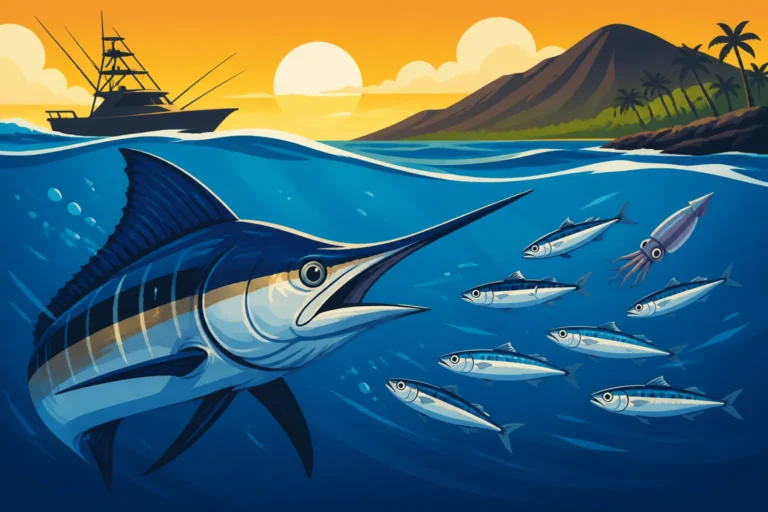
Marlin diets along the Kona Coast include skipjack tuna, yellowfin tuna, mahimahi, and ono, helping anglers choose baits.