What water temperature marlin prefer
One of the biggest head-scratchers for any angler chasing the mighty marlin in Hawaii is figuring out where these incredible fish are actually lurking. It's not just about finding bait schools or sharp drop-offs; often, the invisible hand of water temperature plays the most critical role, and overlooking it can lead to endless, frustrating hours of trolling without a single strike. This guide will demystify the preferred water temperatures for marlin around our islands, helping you understand this vital factor so you can better predict their movements and improve your chances of a successful catch.
The Optimal Temperature Window for Marlin in Hawaii
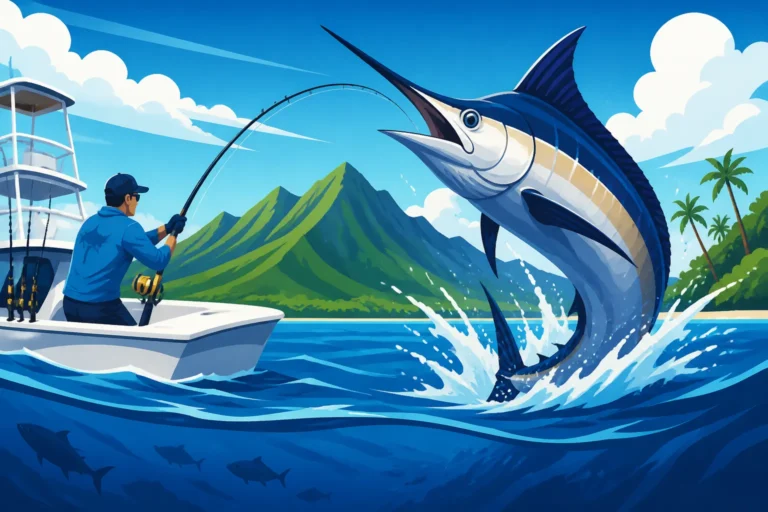
Marlin, particularly the magnificent blue marlin that put Hawaii's Kona coast on the world fishing map, are highly sensitive to water temperature. They are warm-water pelagic predators, meaning they thrive in tropical and subtropical seas. While they are incredibly powerful and fast, they also seek out comfort and the richest feeding grounds, both of which are heavily influenced by temperature.
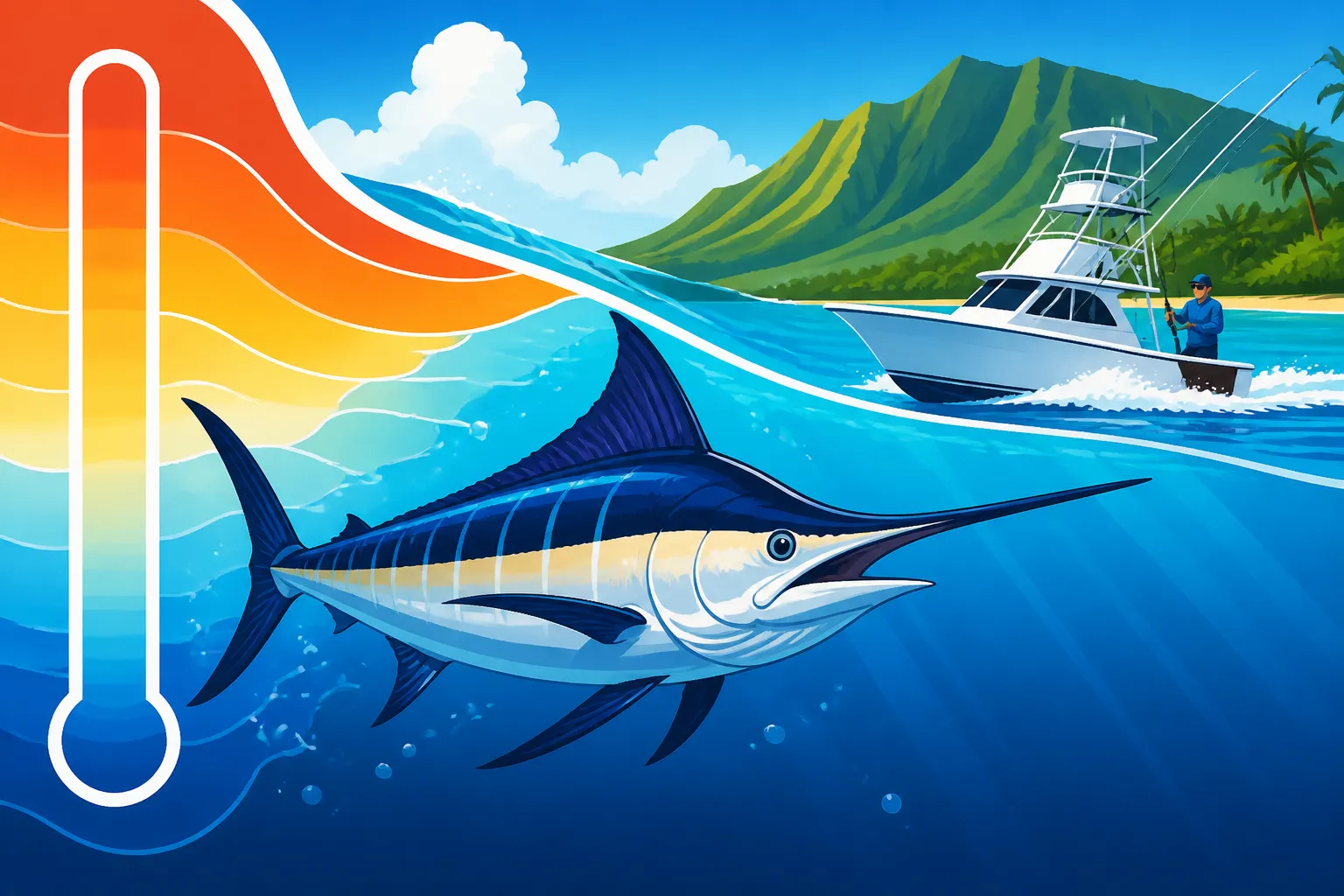
Think of it like this: just as we humans have a comfortable temperature range where we feel our best, fish do too. For blue marlin, this sweet spot generally falls between 76°F and 84°F (24.4°C to 28.9°C). Within this range, their metabolism is efficient, their prey is abundant, and they can hunt effectively. When temperatures dip too low or climb too high, marlin tend to become less active, disperse, or move to areas where the water is more to their liking.
Why This Range is So Crucial
This specific temperature window isn't arbitrary; it's intricately linked to the entire marine ecosystem that marlin depend on. Their primary food sources, like various tuna species (including the smaller ahi and aku), mahimahi, and ono, also prefer similar warm-water conditions. These baitfish congregate in these temperatures, creating fertile hunting grounds for marlin. If the water gets too cold, these baitfish move deeper or migrate, and the marlin follow suit.
For anglers, understanding this range is your first clue. Instead of blindly trolling, you can start looking for areas where the water temperature reads within this ideal zone. On a calm day off the Kona Coast Fishing Guide, you might notice your boat's temperature gauge holding steady at 78°F, and that's often exactly where you want to be. It's a key piece of information that seasoned captains constantly monitor.
Subtle Differences Between Marlin Species
While the 76-84°F range is a good general guideline for blue marlin, other billfish species that frequent Hawaiian waters might have slightly different preferences, or at least tolerances.
Striped marlin, for instance, are known to tolerate slightly cooler water than their blue counterparts. You might find striped marlin showing up in good numbers when the water is in the low 70s, or even high 60s during certain times of the year, particularly during the cooler months. This is why when you're targeting Blue Marlin vs Striped Marlin Identification, the time of year and prevailing water temperatures can often give you a hint as to which species you're more likely to encounter.
Spearfish, which are also fantastic sportfish, tend to be found in similar warm oceanic waters, often overlapping with blue marlin territories. The general rule of thumb for all pelagic billfish in Hawaii is "warm water, healthy bait," and temperature is the easiest way to gauge this invisible boundary.
| Marlin Species | Preferred Temperature Range (Fahrenheit) | Common Hawaiian Seasonality (General) |
|---|---|---|
| Blue Marlin | 76°F – 84°F | Peak Summer (June-September) |
| Striped Marlin | 70°F – 80°F | Peak Winter/Spring (December-May) |
| Shortbill Spearfish | 74°F – 82°F | Year-round, often with Blue Marlin |
| Black Marlin | 78°F – 86°F (Less common in Hawaii) | Rare, typically warmer currents |
Note: These ranges are general guidelines. Marlin are highly migratory and can be found in wider ranges depending on food availability and ocean currents.
The Role of Temperature Gradients and Thermoclines
Beyond just the overall water temperature, how that temperature changes vertically and horizontally is incredibly important to marlin. These subtle shifts, known as temperature gradients and thermoclines, are often the precise spots where marlin and their prey will concentrate.
Understanding Temperature Gradients
A temperature gradient simply refers to a noticeable change in water temperature over a relatively short distance, either across the surface or down through the water column. Imagine trolling along and suddenly your temperature gauge jumps two degrees Fahrenheit within a mile. That's a surface temperature gradient, and it's a huge flag for potential marlin activity.
Why are these important? Because these gradients often indicate the presence of current lines, nutrient upwellings, or the edges of different water masses. These are all features that attract baitfish. For example, if a cooler current meets a warmer current, the convergence can push baitfish together, creating an easy buffet for predators like marlin. Experienced captains constantly watch for these subtle changes, as they often mark the boundary where the fishing suddenly comes alive. These lines can be visible as a change in water color, or simply felt on the boat's instruments.
Deep Dive into Thermoclines
Perhaps even more critical than surface gradients are thermoclines. A thermocline is a distinct layer within a larger body of water where temperature changes more rapidly with depth than it does in the layers above or below. Think of it as an invisible "false bottom" in the ocean.
Thermoclines are like underwater highways or cafeterias for pelagic fish. Marlin often patrol these layers for several reasons:
- Oxygen Levels: Below a certain depth, oxygen levels can drop, making it uncomfortable for both predators and prey. The thermocline often marks the bottom of the comfortable, oxygen-rich water.
- Bait Concentration: Baitfish, like smaller tunas and squids, will often stack up on top of or along a thermocline. It provides them with a boundary, a place to orient themselves, and often concentrates their food sources (like plankton) at this depth.
- Comfort Zone: Marlin themselves will find their preferred temperature range within or just above the thermocline. They can dive below it for short bursts to hunt, but they prefer to spend their time in that ideal temperature.
Using your boat's sonar or fish finder, you can often "see" the thermocline as a distinct layer on the screen. It might appear as a soft, hazy line, or even a clearer delineation depending on the strength of the temperature change. Knowing its depth helps you set your lures or Best Lures for Marlin Trolling off Kona to the right level, increasing your chances of getting a strike. For instance, if the thermocline is sitting at 200 feet, you might want to run some of your deeper lures at or just above that depth.
Upwellings and Downwellings
These temperature dynamics are further complicated by oceanographic phenomena like upwellings and downwellings. Upwellings occur when deep, nutrient-rich, colder water rises to the surface. While the surface temperature might drop in an upwelling zone, the influx of nutrients fuels plankton blooms, which in turn attract baitfish, eventually drawing in marlin. Downwellings are the opposite, where surface water sinks. Both can create significant temperature changes and current lines that marlin exploit.
For anglers, identifying these areas means looking for signs like concentrated bait, bird activity, or even just asking local knowledge from fellow fishermen at Honokohau Harbor. These are often transient but highly productive areas.
Reading the Water: Tools and Techniques for Anglers
Alright, so knowing that marlin prefer certain water temperatures and areas where temperatures shift is one thing, but how do you actually find these sweet spots when you're out on the vast Pacific? Thankfully, modern technology and age-old observation techniques can help you read the water like a pro.
Onboard Electronics: Your Eyes Below the Surface
The most direct way to monitor water temperature is through your boat's electronics. Most modern fish finders and chartplotters come equipped with transducers that include a water temperature sensor. This allows you to see the current surface temperature right on your display.
As you troll, keep a keen eye on that temperature reading. Even a half-degree change can signal you're entering a different water mass. Some more advanced units can even give you a rough idea of the thermocline depth by showing temperature profiles with depth, though a dedicated temperature probe or sensor is best for truly accurate deep-water readings. Many portable fish finders, even smaller units you can buy on Amazon, now include basic temperature readings, making this valuable information accessible to almost any angler, whether you're in a large sportfisher or a smaller skiff.
External Resources: Data Before You Depart
Before you even leave the dock, you can do some crucial homework. There are various online resources that provide sea surface temperature (SST) charts derived from satellite data. While I can't point you to specific live websites, general satellite SST maps are invaluable. These maps often show clear temperature breaks, eddies, and currents that are invisible to the naked eye. By studying these charts, you can identify potential hotspots where warm and cool water masses converge, or where favorable temperature bands are located.
Additionally, some organizations maintain networks of ocean buoys that collect real-time data, including water temperature at various depths. Checking this data for your local fishing grounds can help you identify thermoclines or unique temperature profiles before you ever set a hook. Think of these as your weather forecast for fish, giving you an advantage in planning your trip. You might even find books on oceanography or specific marlin fishing tactics available on Amazon that teach you how to interpret these charts effectively.
Visual Cues: Trust Your Senses
Even without fancy electronics, the ocean often gives visual clues about temperature changes:
- Current Lines: Look for distinct lines on the surface where debris, seaweed, or foam accumulates. These often mark the boundaries where different currents or water masses meet, and thus, where temperature gradients exist. Baitfish and predators frequently patrol these lines.
- Water Color Changes: Sometimes, a distinct change in water color – from a deep indigo to a lighter blue, or even a murky green – can indicate a shift in water temperature, nutrient content, or the presence of an upwelling.
- Bird Activity: Diving birds often signal baitfish activity. Where there's bait, there's a good chance marlin are nearby, and baitfish are usually found in their preferred temperature range.
- Wind and Waves: Sustained winds can push surface water around, creating localized temperature shifts. Pay attention to how the wind has been blowing for the past few days, as it can influence where the warmer water and bait might be concentrated.
Combining these visual observations with your electronic data creates a powerful strategy. You might see a current line, check your temperature, and confirm it's a favorable 79°F, giving you confidence to work that area hard. Don't forget proper sun protection, like hats and polarized sunglasses, easily found on Amazon, which will not only protect you but also help you spot these subtle visual cues more clearly.
Seasonal Variations and Microclimates in Hawaii's Marlin Waters
Hawaii's ocean temperatures aren't static; they ebb and flow with the seasons, creating prime opportunities for different types of marlin fishing throughout the year. Understanding these annual cycles and how localized "microclimates" can form is key to year-round success.
Annual Temperature Swings and Marlin Seasons
The Pacific Ocean surrounding Hawaii experiences distinct, though subtle, temperature shifts from winter to summer. Generally:
- Winter (Roughly December to April): Water temperatures tend to be at their coolest, often dropping into the low to mid-70s. This is when Hawaii Fishing Seasons by Month shows that striped marlin fishing often heats up, as these billfish are more comfortable in slightly cooler conditions. While blue marlin are still around, they might be found deeper or in specific warm pockets.
- Summer (Roughly May to November): The ocean warms up significantly, typically holding steady in the upper 70s to low 80s. This is prime time for blue marlin, especially off the Kona Coast. The consistent warm water attracts massive schools of baitfish, bringing the big blues in close. This period is often considered the Best Time of Year to Fish in Hawaii for blue marlin.
These seasonal shifts are why a technique or location that was hot in July might be quiet in January, and vice-versa. A captain targeting blue marlin in August will be looking for those 80-degree thermal breaks, whereas in February, the focus might shift to cooler edges for striped marlin.
Microclimates and Localized Hotspots
Beyond broad seasonal changes, Hawaii's unique geography creates localized temperature variations, or "microclimates," that can attract marlin.
- Leeward Sides: The leeward sides of the islands (like Kona's coast on the Big Island or the west side of Oahu) are often protected from prevailing winds and swells. This can result in warmer, calmer waters closer to shore compared to the windward sides. These calmer, warmer conditions can hold bait and attract marlin, even when other areas are rougher or cooler. This is particularly true off Kona, where the deep water is just offshore, creating ideal conditions.
- Oceanic Eddies and Currents: Large-scale ocean currents, like the North Pacific Gyre and its offshoots, constantly swirl around the Hawaiian Islands. These currents can create eddies—circular movements of water—that trap and concentrate baitfish. These eddies often have distinct temperature signatures, either warmer or cooler than the surrounding water, and serve as fantastic hunting grounds for marlin. Tracking these can be complex, but their impact on Ahi Migration Patterns Around Hawaii and other baitfish is profound.
- Thermal Retention Near Land: During periods of strong sunshine and calm seas, the water closer to the islands can sometimes warm up faster and retain that heat longer than the open ocean, especially in shallower bays or along protected coastlines. While marlin typically prefer deep water, these localized warm spots can pull bait closer to shore, and sometimes a hungry marlin will follow.
The takeaway here is that an angler should never assume one size fits all for Hawaii fishing. Constantly observe, adapt, and consult multiple sources of information to understand the ever-changing temperature landscape of our beautiful ocean. It's a dynamic environment, and the more you learn to read its subtle cues, the more successful your marlin fishing adventures will be.
Disclaimer
This article is for general informational purposes only and does not constitute professional advice. Laws, prices and regulations vary by location and change over time. Consult a qualified professional for guidance on your specific situation.