How many freshwater fish species live in Hawaii
It's easy to get swept up in the dream of Hawaii's boundless ocean, picturing grand marlin and vibrant reef fish. Many visitors and even some residents might assume that all the fishing action happens offshore or along the coastline. But what about inland? What about the streams, rivers, and reservoirs that dot these islands? You might be surprised to learn there's a fascinating, albeit often overlooked, freshwater world here, home to a unique mix of native and introduced fish species. This guide will dive deep into that often-misunderstood aquatic landscape, revealing just how many freshwater fish species call Hawaii home and what that means for local anglers.
Unpacking the Numbers: Native vs. Introduced Freshwater Fish
When we talk about how many freshwater fish species live in Hawaii, it's crucial to distinguish between native species and those that have been introduced by humans over time. Hawaii's isolation means it has a very low number of naturally occurring freshwater fish, especially compared to continental landmasses. However, human intervention has drastically changed the composition of these aquatic environments.
The true native freshwater fish species that call Hawaii home are incredibly unique and few in number. These species, often referred to collectively as 'o'opu, have adapted over millennia to Hawaii's challenging stream environments, navigating steep waterfalls and strong currents. They represent a remarkable evolutionary story. On the other hand, the vast majority of fish species you'll find in Hawaii's freshwater today were brought here intentionally for various reasons – primarily for food, sport, or mosquito control. These introduced species have established populations and now form the backbone of what most people consider "freshwater fishing" on the islands. Understanding this distinction is key to appreciating the full scope of Hawaii's freshwater fish diversity.
The Unique World of Hawaii's Native Freshwater Fish
Hawaii's native freshwater fish community is truly one-of-a-kind. Because these islands are so isolated, very few fish species managed to colonize and adapt to the freshwater streams. The ones that did are incredibly resilient and have developed fascinating life cycles. We're talking about a small, specialized group here, all belonging to the goby family.
The Five 'O'opu Species: Hawaii's True Freshwater Natives
When we speak of truly native freshwater fish, Hawaii is home to five species of 'o'opu (Gobiidae family). These aren't the kind of fish you typically target with a rod and reel, but they are vital to the health of Hawaii's stream ecosystems. They are:
- 'O'opu alamoo (Lentipes concolor): Known for its striking colors, often found clinging to rocks in fast-moving water.
- 'O'opu nakea (Awaous stamineus): One of the larger species, often found on stream bottoms.
- 'O'opu nopili (Sicyopterus stimpsoni): Famous for its specialized mouth that it uses to scrape algae from rocks, and its incredible ability to climb waterfalls using a suction disc.
- 'O'opu akupa (Eleotris sandwicensis): A more estuarine-dependent species, often found in the lower reaches of streams and brackish water.
- 'O'opu okuhe (Stenogobius hawaiiensis): Another species typically found in the lower, slower sections of streams.
These five species are 'amphidromous,' meaning they hatch in freshwater, drift out to sea as larvae, and then return to freshwater streams as juveniles to live out their adult lives. Imagine the journey! They have to battle currents and climb waterfalls, often using specialized suction cups on their bellies, to reach their preferred upstream habitats. It's an incredible feat of nature.
Challenges Faced by Native Species
Despite their incredible adaptations, Hawaii's native 'o'opu face significant challenges. Habitat degradation due to human development, water diversion for agriculture and urban use, and the introduction of non-native species (which we'll get to in a moment) have all taken a toll. Many of the streams they call home have been altered, reducing the areas where they can thrive and complete their life cycle. These fish are true ecological indicators; their presence and health tell us a lot about the overall well-being of a stream system. Protecting these delicate ecosystems is crucial for their survival, and it's something the Department of Land and Natural Resources (DLNR) works hard to achieve.
The Freshwater Angler's Bounty: Introduced Species
While Hawaii's native freshwater fish are few, the list of introduced species that have made a home in its rivers, streams, and especially reservoirs is much, much longer. These are the fish that most freshwater anglers in Hawaii are targeting, offering diverse and exciting opportunities far removed from the ocean. These introductions began in earnest in the late 19th and early 20th centuries, often with good intentions: to provide food, create sportfishing opportunities, or control mosquito populations.
Key Introduced Species and Their Habitats
Hawaii's freshwater systems are now home to a fascinating mix of species from all over the world. Many of these thrive in the island's reservoirs, which offer stable, nutrient-rich environments.
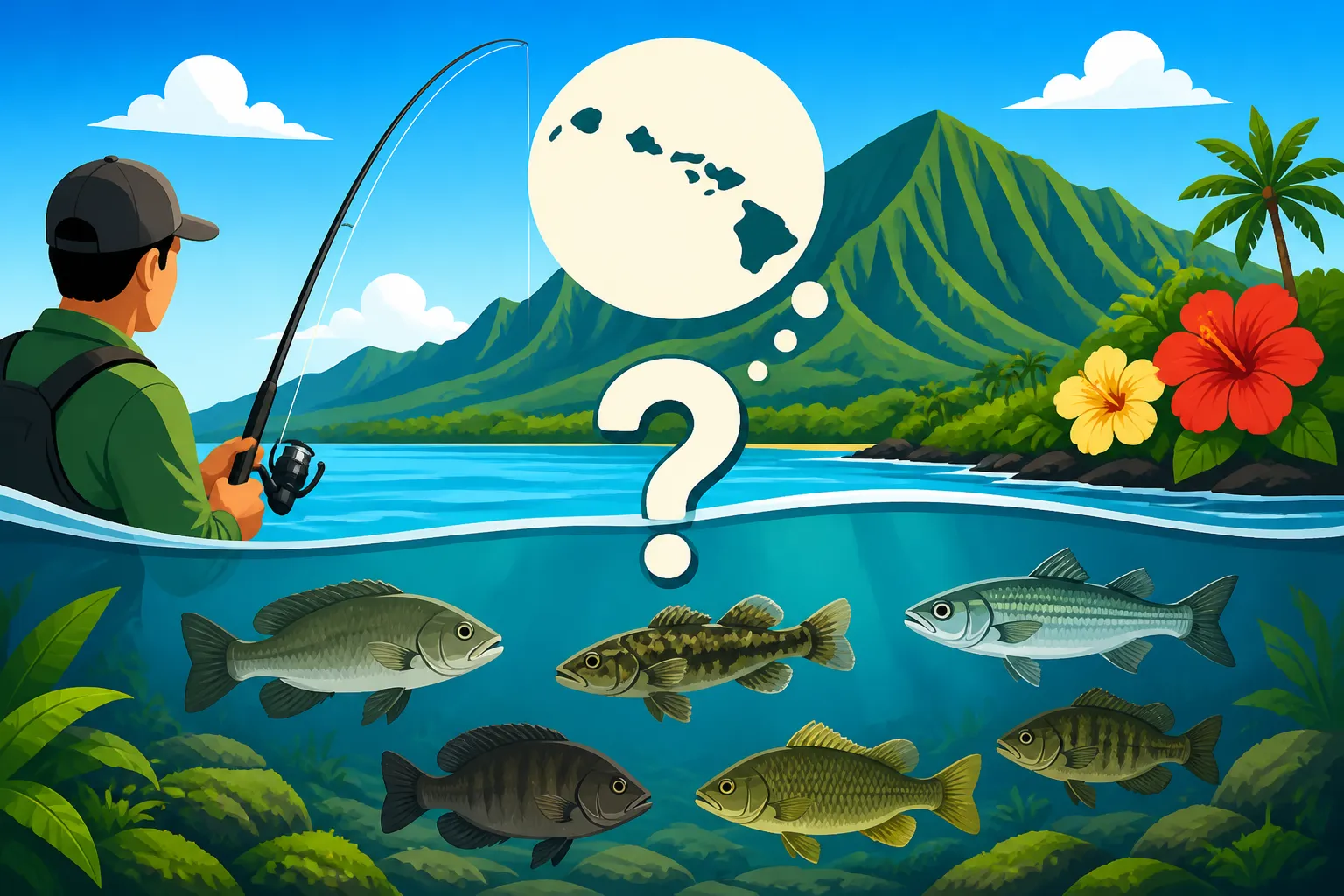
- Peacock Bass (Cichla ocellaris): These vibrant, aggressive fighters are probably the most sought-after freshwater game fish in Hawaii. They were introduced in the 1950s and have established strong populations, particularly in Oahu's Wahiawa Reservoir. Anglers travel from all over to experience the thrill of catching a peacock bass here. If you're looking for specialized lures, you can often find a good selection on Amazon that mimics the local baitfish these bass love. You can learn more about these exciting fish in Peacock Bass in Wahiawa Reservoir.
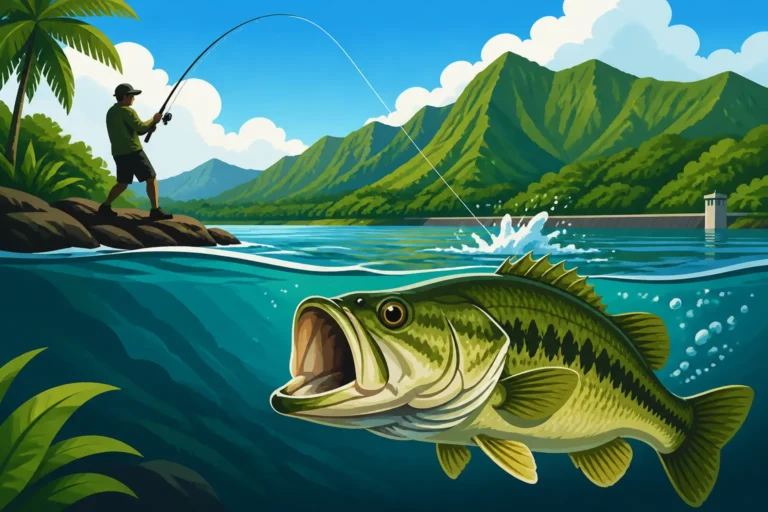
- Largemouth Bass (Micropterus salmoides): Another popular sport fish, largemouth bass are also present in several of Hawaii's reservoirs. While not as flashy as peacock bass, they offer a familiar challenge for many mainland anglers. They were introduced for sportfishing and food. For details, check out Largemouth Bass in Hawaii's Reservoirs.
- Tilapia (Oreochromis spp. and Sarotherodon spp.): Several species of tilapia, including Blue Tilapia and Mozambique Tilapia, are ubiquitous in Hawaii's freshwater, from reservoirs to irrigation ditches and even some brackish stream mouths. They were primarily introduced as a food source and for aquatic weed control. While not typically a sport fish for many, they are a readily available catch for food. Tilapia in Hawaii's Freshwater Reservoirs has more details.
- Channel Catfish (Ictalurus punctatus): These bottom-dwelling fish can grow quite large and are present in some reservoirs, including Lake Wilson (Wahiawa Reservoir). They provide a different kind of angling experience, often targeted with bait on the bottom. Check out Channel Catfish in Hawaii's Reservoirs for more information.
- Rainbow Trout (Oncorhynchus mykiss): A unique case in Hawaii, rainbow trout are stocked annually in the high-elevation streams of the Kokee Public Fishing Area on Kauai. They require colder water than most Hawaiian freshwater systems offer, making Kokee a singular trout fishery in the tropics. This is a very specific, managed fishery. Rainbow Trout: Hawaii's Only Freshwater Trout Fishery covers this in detail, as does Hawaii Kokee Trout Fishing Season Dates.
- Other Introduced Species: Beyond these main sport and food fish, many other species have been introduced, some intentionally and some accidentally. These include various species of carp (common carp, grass carp), cichlids (like jaguar guapote), mollies, guppies, swordtails, and even crayfish. These smaller species often serve as forage for the larger game fish and can be found in a variety of stream and pond habitats.
Impact of Introduced Species
While these introduced species have created vibrant recreational fisheries, their presence isn't without ecological consequences. They can outcompete native species for food and habitat, prey on native larvae and juveniles, and introduce diseases. The balance of Hawaii's unique ecosystems is delicate, and the long-term impact of non-native species is a constant concern for conservationists. This is why careful management by the DLNR is so critical, aiming to balance recreational opportunities with ecological protection.
Navigating Hawaii's Freshwater Fishing Opportunities
So, with this mix of native and introduced species, what does freshwater fishing in Hawaii look like for an angler? It primarily revolves around the established populations of introduced game fish in specific, managed locations.
Where to Find the Action
The majority of freshwater fishing in Hawaii takes place on the island of Oahu, particularly at the Wahiawa Reservoir (Lake Wilson), which is teeming with peacock bass, largemouth bass, tilapia, and channel catfish. It's a fantastic spot for a dedicated freshwater fishing trip. Maui also has some limited freshwater opportunities, and Kauai offers the unique rainbow trout fishery in the Kokee Public Fishing Area. While streams and smaller ponds may hold some introduced panfish and baitfish, the reservoirs are where you'll find the most consistent and exciting action for larger species. Our guide to the Best Freshwater Fishing Spots in Hawaii can provide more specific locations.
Licenses and Regulations
Just like with ocean fishing, you'll need to be aware of the rules and regulations for freshwater fishing in Hawaii. A freshwater fishing license is required for anyone over the age of 15, and there are specific rules regarding seasons, bag limits, and legal methods. It's not always intuitive, so it's always best to check the latest guidance from the Hawaii Division of Aquatic Resources (DAR). You'll find everything you need to know in our comprehensive guide, Hawaii Freshwater Fishing License and Rules. For specifics on costs, you can look into Hawaii freshwater license cost for residents and Hawaii freshwater license cost for nonresidents.
Essential Gear for Freshwater Anglers
Preparing for a freshwater trip in Hawaii isn't much different from preparing for one elsewhere, but a few local considerations are helpful. Light to medium spinning gear is usually sufficient for bass and tilapia, while heavier setups might be preferred for larger catfish. Don't forget essentials like polarized sunglasses (you can find great options on Amazon), sunscreen, insect repellent, and plenty of water. A good pair of comfortable, quick-drying shoes is also a must, especially if you'll be walking along reservoir banks or stream edges. For specific fishing rules at the prime spot, read Hawaii Wahiawa Reservoir Fishing Rules.
Here's a quick comparison of the types of freshwater fish you'll encounter:
| Category | Species Example | Typical Habitat | Angling Interest | Conservation Status |
|---|---|---|---|---|
| Native | 'O'opu nopili | Fast-flowing mountain streams | Low (Protected) | Vulnerable |
| Introduced | Peacock Bass | Reservoirs, slower streams | High (Sportfish) | Stable |
| Introduced | Largemouth Bass | Reservoirs, ponds | High (Sportfish) | Stable |
| Introduced | Tilapia | Reservoirs, canals, brackish | Medium (Food Fish) | Stable, often invasive |
| Introduced | Channel Catfish | Reservoir bottoms | Medium (Food/Sport) | Stable |
| Introduced/Managed | Rainbow Trout | High-elevation streams (Kauai) | High (Sportfish) | Stocked Fishery |
The Dynamic Nature of Hawaii's Freshwater Fish Populations
The number of freshwater fish species living in Hawaii isn't a static figure; it's a dynamic landscape influenced by ongoing environmental changes, management practices, and occasional new introductions (though new intentional introductions are now heavily scrutinized).
Continued Monitoring and Research
The Hawaii Division of Aquatic Resources (DAR) continuously monitors fish populations in streams and reservoirs. This isn't just about counting fish; it's about understanding population health, the impacts of introduced species, and the overall ecological balance. Research helps inform management decisions, such as stocking programs for trout or strategies to control invasive species. Anglers can play a vital role by adhering to regulations and reporting unusual catches or observations. Books on native Hawaiian ecosystems, often available on Amazon, can provide a deeper understanding of these delicate balances.
How Anglers Can Help
For those who enjoy freshwater fishing in Hawaii, being a responsible angler is paramount. This means understanding and following all regulations, practicing proper catch and release when appropriate, and never, ever introducing new species into Hawaii's waters. Releasing baitfish or unwanted aquarium pets into local waterways can have devastating consequences for native species and disrupt existing ecosystems. Educating yourself about Introduced freshwater species stocked in Hawaii and their history can help foster a deeper appreciation for Hawaii's unique aquatic environment.
The freshwater fishing experience in Hawaii is a unique blend of supporting thriving introduced sport fisheries while also being mindful of the fragile native ecosystems. It offers a different perspective on the islands' natural beauty and challenges, proving that there's more to Hawaii fishing than just the vast blue ocean.
Disclaimer
This article is for general informational purposes only and does not constitute professional advice. Laws, prices and regulations vary by location and change over time. Consult a qualified professional for guidance on your specific situation.