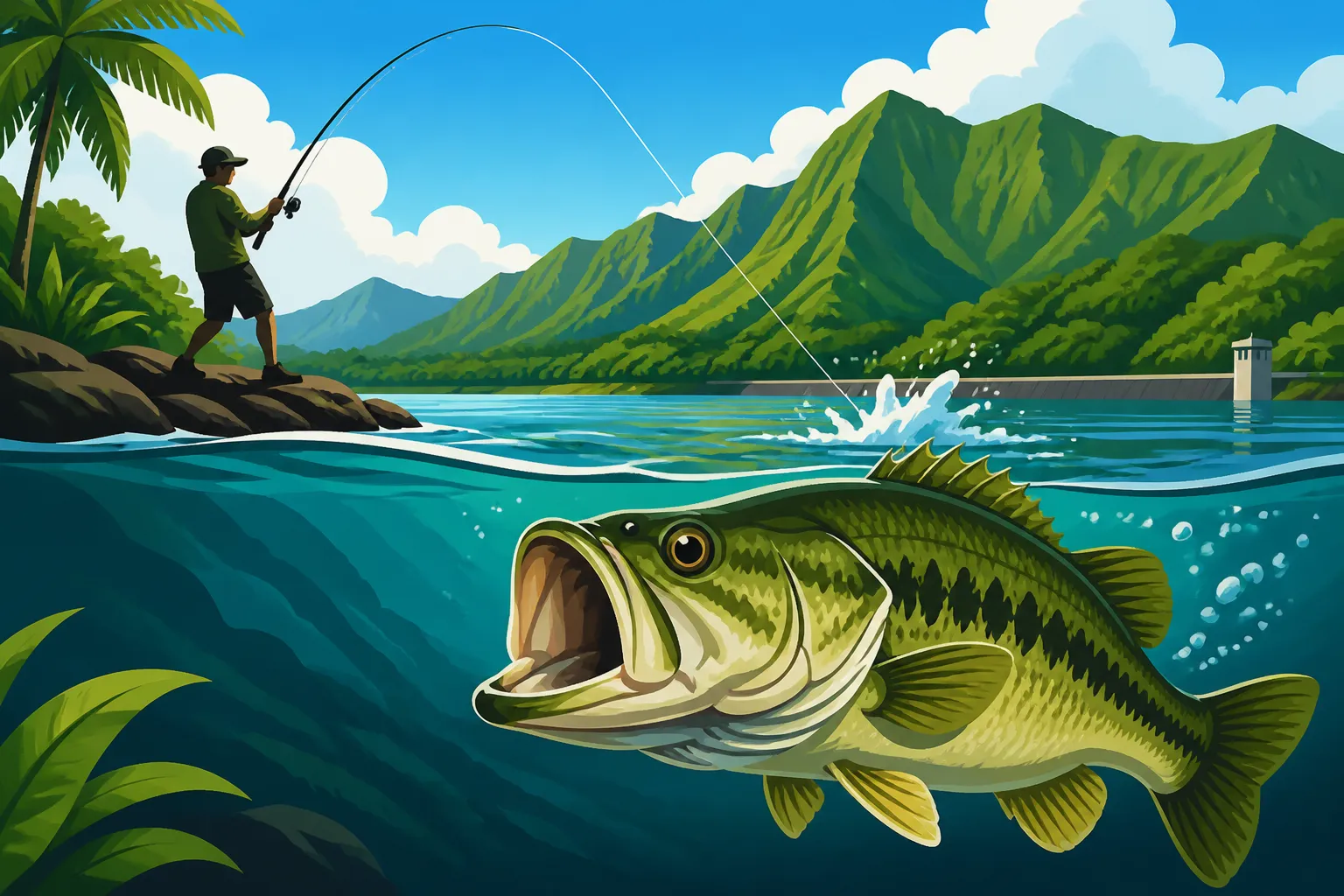
Largemouth Bass in Hawaii’s Reservoirs
If you've ever dreamt of casting a line in Hawaii, chances are you've pictured sparkling blue ocean and giant marlin or tuna. But what if I told you there's a vibrant, often overlooked freshwater fishing scene right here in the islands? Many anglers arrive feeling a bit lost about where to find some exciting bass action, and this guide is here to shed light on the thriving largemouth bass populations in Hawaii's picturesque reservoirs, offering insights into where they hide and how to catch them.
The Journey of Largemouth Bass to Hawaiian Waters
It might seem a bit unusual to talk about largemouth bass, a species synonymous with mainland lakes and rivers, in the middle of the Pacific Ocean. But like many things in Hawaii's unique ecosystem, the story of these fish here is one of introduction, adaptation, and surprisingly successful integration into specific niches. They didn't swim here on their own, of course; they were brought here with a purpose.
Early Introductions and Stocking Efforts
The journey of largemouth bass to Hawaii began in the early 20th century. With an increasing population and a desire for more diverse recreational opportunities beyond ocean fishing, as well as a food source, various freshwater fish species were introduced. The largemouth bass, known for its sporting qualities and adaptability, was a prime candidate. These initial stockings weren't always perfectly documented, but the intent was clear: to create viable freshwater fisheries in the islands' numerous irrigation reservoirs and impoundments. It wasn't just bass; other species like tilapia and channel catfish were also brought in, creating a fascinating mix of non-native fish that have carved out their own ecological niches.
These early efforts largely focused on Oahu, particularly in the larger impoundments that could support a robust population. The idea was to utilize these man-made bodies of water, which weren't necessarily teeming with native fish suitable for angling, to provide a new kind of fishing experience. While this practice of introducing non-native species has come under much scrutiny over time due to potential impacts on delicate native ecosystems, in these confined, purpose-built reservoirs, the largemouth bass found a surprisingly suitable home.
Adapting to a Tropical Reservoir Environment
Once introduced, largemouth bass proved quite resilient in Hawaii's tropical reservoir environments. Unlike their native habitats with distinct four seasons, Hawaii offers year-round warmth, which means a prolonged growing season and different spawning patterns. The bass here adapted to a continuous food supply and warm water temperatures, allowing them to grow quite large, though perhaps not always as heavy as their cold-water counterparts due to constant activity. They still exhibit their classic ambush predator behavior, seeking out structure, drop-offs, and shady spots to hide and hunt.
However, anglers coming from the mainland often find that Hawaiian largemouth can be a bit more challenging to pinpoint. The warm water can make them more active and spread out, rather than concentrating in predictable temperature zones. Plus, the forage base is different, often including introduced species like tilapia, which influences their feeding habits and the types of lures that prove most effective. Understanding this adaptation is key to successfully targeting these fish; what works in an Alabama lake might need a subtle Hawaiian twist to entice a bite.
Premier Largemouth Bass Fishing Spots in Hawaii
When it comes to targeting largemouth bass in Hawaii, your focus will primarily be on the larger freshwater reservoirs on Oahu. These man-made bodies of water, originally built for agriculture and water storage, have become fantastic havens for introduced freshwater species. While some smaller ponds might hold bass, these larger reservoirs offer the most consistent and exciting opportunities for anglers seeking that satisfying tug on the line.
Wahiawa Reservoir (Lake Wilson), Oahu
Wahiawa Reservoir, more commonly known as Lake Wilson, is arguably the crown jewel of Hawaii's freshwater fishing scene, especially for largemouth bass. Located right in the heart of Oahu, this sprawling impoundment is well-known not only for its healthy population of largemouth but also for the vibrant peacock bass that share its waters. The reservoir features a diverse underwater landscape, with plenty of submerged structure, weed beds, and varying depths that largemouth absolutely love. You'll find areas with cypress trees, rocky points, and mud flats, all providing excellent cover.
Anglers here often report catching bass in the 2-5 pound range, with occasional trophies pushing well beyond that. The sheer size of Lake Wilson means you can explore different areas and fishing techniques without feeling crowded. Access is relatively straightforward, with a public boat launch available, making it ideal for those with kayaks, small boats, or even just planning to fish from shore in designated areas. Just be sure to familiarize yourself with the Hawaii Wahiawa Reservoir Fishing Rules before heading out, as specific regulations apply to protect this valuable fishery. Many local anglers consider this reservoir the best place on Oahu for consistent bass action.
Nuuanu Reservoirs, Oahu
The Nuuanu Reservoirs, specifically Reservoir Number 4, offer another excellent opportunity for largemouth bass fishing, though with a slightly different flavor than Lake Wilson. Nestled in the lush Nuuanu Valley above Honolulu, these reservoirs have a more serene and picturesque setting, often surrounded by mist and dense vegetation. While not as large as Wahiawa, Nuuanu Reservoir Number 4 still holds a very respectable population of largemouth bass, along with other introduced species.
Fishing here often involves targeting submerged timber, lily pads, and the edges of steep drop-offs. The cooler, clearer waters can sometimes make the bass a bit more finicky, but when they're on, the action can be fantastic. Due to its location and slightly more restrictive access compared to Lake Wilson, Nuuanu offers a more tranquil fishing experience, perfect for those looking to escape the bustle and enjoy the peaceful surroundings. Remember that specific regulations, often more stringent than other areas, apply to Nuuanu Reservoirs due to their proximity to water supply infrastructure, so always check the latest rules from the Hawaii Division of Aquatic Resources (DAR). More details can be found in a guide like Hawaii Nuuanu Reservoir Fishing Guide.
Understanding the Biology and Habits of Hawaiian Largemouth Bass
To become a successful largemouth bass angler in Hawaii, it helps to understand a bit about these fascinating fish and how they behave in their unique island home. While they share many characteristics with their mainland cousins, the tropical climate and specific forage present in Hawaii's reservoirs influence their daily routines and seasonal patterns.
Feeding Patterns and Forage Preferences
Largemouth bass are opportunistic predators, and their diet in Hawaiian reservoirs is diverse. They'll readily consume smaller fish, crustaceans, and insects. A significant part of their diet in these waters often includes smaller introduced species like juvenile tilapia. This is a crucial piece of information for anglers, as "matching the hatch" – or in this case, matching the prey – can significantly increase your success rate. Lures that mimic the size, color, and action of small tilapia, particularly those with a silver or dark olive back and white belly, are often highly effective.
Unlike temperate regions where feeding activity slows down drastically in winter, Hawaiian largemouth bass can maintain a more consistent feeding pattern year-round due to the stable warm temperatures. However, they will still have peak feeding times, often around dawn and dusk, or during periods of overcast skies when light penetration is reduced. During the brightest parts of the day, they tend to retreat to deeper, cooler water or seek out heavy cover where they can ambush prey from the shadows. Understanding these nuances helps you choose the right time and location to cast your line.
Spawning and Growth Cycles in a Tropical Climate
The spawning cycle of largemouth bass in Hawaii also differs from what you might expect on the mainland. Instead of a distinct spring spawn, the prolonged warm temperatures can lead to extended or even multiple spawning periods throughout the year, though there are still peak times. Bass generally prefer water temperatures in the 60-70 degree Fahrenheit range for spawning, building nests in shallow, protected areas. After the eggs hatch, the male bass guard the fry until they are large enough to disperse.
This extended spawning season means you might encounter bass on nests or guarding fry at various times, which can affect their aggressive behavior. A female bass can lay tens of thousands of eggs, and with a consistent food supply, the young bass grow rapidly. The lack of harsh winters means less energy is expended on survival, contributing to impressive growth rates. While a Hawaiian largemouth might not achieve the sheer girth of a Northern strain bass, they can reach impressive lengths and still pack a powerful punch on the end of your line.
Effective Techniques and Gear for Catching Hawaiian Largemouth Bass
Now that you know where they live and a bit about their habits, let's talk about how to actually get these Hawaiian largemouth bass to bite! The right techniques and gear can make all the difference, especially when you're dealing with bass that might have seen a few lures in their lifetime.
Top Lures and Baits for Hawaiian Bass
When fishing for largemouth bass in Hawaii's reservoirs, you'll want to pack a versatile tackle box. Because the bass often key in on tilapia and other baitfish, lures that imitate these forage species are highly effective.
- Spinnerbaits and Chatterbaits: These are fantastic for covering water and triggering reaction strikes, especially around submerged vegetation and timber. Colors mimicking bluegill or tilapia are excellent choices.
- Plastic Worms and Jigs: Texas-rigged or Carolina-rigged plastic worms, especially in natural greens, browns, and black, are perennial bass favorites. Swim jigs with soft plastic trailers also perform well when pitched into heavy cover.
- Crankbaits and Lipless Crankbaits: For deeper water or when bass are chasing baitfish in open water, medium-diving crankbaits in baitfish patterns can be deadly. Lipless crankbaits are great for covering flats and ripping through grass.
- Topwater Lures: Don't underestimate the thrill of a topwater strike! Poppers, walking baits, and hollow-body frogs can be incredibly effective during low light conditions or over thick mats of vegetation where bass are lurking. The explosive strikes are unforgettable.
- Live Bait: If you're looking for a more traditional approach, live bait such as tilapia fry (where legal and permissible to catch) or even small crayfish can be irresistible to hungry bass. Always check local regulations regarding live bait use.
Many anglers find that having a good selection of these lure types, perhaps picked up from a reputable online retailer like Amazon before your trip, ensures you're prepared for whatever the bass are doing on any given day. You can easily find a range of sizes and colors to experiment with.
Rods, Reels, and Line Considerations
For largemouth bass in Hawaii, a medium to medium-heavy action casting or spinning rod is generally ideal, paired with a reliable reel.
- Rods: A 6'6" to 7'6" rod offers a good balance of casting distance and sensitivity. For heavier cover fishing with jigs or frogs, a heavier power rod will give you more control and leverage to pull fish out.
- Reels: A baitcasting reel with a good gear ratio (around 7.1:1 or 8.1:1) is excellent for quickly retrieving slack line and setting the hook, especially when fishing reaction baits. Spinning reels are versatile for lighter presentations like wacky-rigged worms or small jerkbaits, or for beginners.
- Line: Fluorocarbon line in the 10-17 pound test range is a popular choice for its low visibility and sensitivity. If you're fishing extremely heavy cover or need extra abrasion resistance, braided line (30-50 pound test) can be a game-changer, especially when paired with a fluorocarbon leader. Don't forget, fishing around submerged trees and rocks means your line will take a beating, so having a strong, abrasion-resistant line is key. You can find excellent quality braided lines and fluorocarbon leaders on Amazon to ensure your setup is ready for Hawaiian conditions.
Remember, the goal is to have a setup that allows you to cast accurately, feel subtle bites, and have the power to bring in a fighting bass, especially when they dive into cover.
Best Techniques for Different Reservoir Structures
Different structures within the reservoirs will demand different techniques. Knowing how to approach each one can significantly improve your catch rate.
- Submerged Timber and Brush Piles: These are prime ambush points. Pitching or flipping jigs and Texas-rigged worms into and around these structures is highly effective. Work your lure slowly, letting it fall into the nooks and crannies where bass hide.
- Weed Beds and Lily Pads: Bass love the shade and cover provided by vegetation. Hollow-body frogs, soft plastic toads, and weedless spinnerbaits are perfect for working over and through these areas. Don't be afraid to make some commotion on the surface to draw attention.
- Points and Drop-offs: These are transition areas where bass often patrol, moving from deep to shallow water. Crankbaits, lipless crankbaits, and even deep-diving jerkbaits can be excellent here. Work them along the contours of the point or parallel to the drop-off.
- Open Water: Sometimes bass will suspend in open water, chasing schools of baitfish. Trolling with deep-diving crankbaits or casting out spoons and soft plastic swimbaits can entice these pelagic bass. Keep an eye out for surface activity like schooling bait or bass busting the surface.
Understanding the terrain, both above and below the water, is like solving a puzzle. Each piece of cover or structure offers a clue as to where a bass might be waiting. Don't be afraid to try different approaches until you crack the code for the day. For more on general freshwater rules, check out Hawaii Freshwater Fishing License and Rules.
Regulations and Conservation for Bass Fishing in Hawaii
While the pursuit of largemouth bass in Hawaii is an exciting endeavor, it's absolutely crucial to remember that responsible angling is paramount. The freshwater ecosystems, though home to many introduced species, are still part of Hawaii's unique natural heritage, and adhering to regulations helps ensure these fisheries remain vibrant for years to come.
Licensing Requirements and Fees
First and foremost, if you plan to fish for largemouth bass in Hawaii's public freshwater reservoirs, you will need a freshwater fishing license. This isn't just a suggestion; it's a legal requirement, and fishing without one can result in penalties. The Hawaii Division of Aquatic Resources (DAR) is the agency responsible for issuing these licenses and overseeing fishing regulations.
Licenses are available for both residents and non-residents, and there are different durations available, from annual to short-term tourist options. For residents, the fees are typically quite reasonable, while non-residents can choose between annual, 30-day, or 7-day licenses. It's always best to check the official DAR website or visit a local license agent for the most current pricing and application procedures. You can often purchase these licenses online, which is super convenient, or at various vendors across the islands. Don't forget to look into Hawaii freshwater license cost for residents or Hawaii freshwater license cost for nonresidents for specific details.
Bag and Size Limits for Largemouth Bass
Beyond just having a license, you'll need to be aware of the specific bag and size limits for largemouth bass, which can vary depending on the reservoir. These limits are put in place to manage the fish population, prevent overfishing, and promote healthy growth rates. For example, some reservoirs might have a daily bag limit of a certain number of bass per person, and often, there's a minimum size limit to ensure that juvenile fish have a chance to grow and spawn before being harvested.
It's vital to check the latest Hawaii Freshwater Fishing Regulations booklet, usually available from the DAR or where you purchase your license. These regulations are subject to change, so what was true last year might be different this year. Always practice catch and release for fish that don't meet the legal requirements, or if you simply prefer to release them. Handling fish carefully is also a big part of conservation – wet hands, minimal air exposure, and a quick release help ensure the fish's survival. Remember, the goal is to enjoy the sport while also being a steward of the resource.
Conservation Efforts and Sustainable Practices
Hawaii's freshwater fisheries are unique, and while largemouth bass are not native, their presence has created a valuable recreational resource that the DAR actively manages. Conservation efforts often involve regular monitoring of fish populations, habitat management within the reservoirs, and enforcing regulations. Anglers play a crucial role in these efforts.
Beyond adhering to licenses and limits, practicing ethical angling is key. This includes:
- Responsible Catch and Release: If you're not keeping fish for dinner, learn proper catch and release techniques to minimize stress and injury to the fish.
- Preventing the Spread of Invasive Species: Always clean your gear (boats, kayaks, waders, nets) thoroughly before moving between different bodies of water to avoid transferring invasive plants, animals, or diseases.
- Respecting the Environment: Pack out all your trash, avoid disturbing wildlife, and leave the fishing area cleaner than you found it.
- Reporting Violations: If you witness illegal fishing activity, report it to the DAR. This helps protect the resource for everyone.
By understanding and following these guidelines, we can all contribute to the sustainability of largemouth bass fishing in Hawaii's reservoirs. It ensures that future generations can also experience the thrill of battling a hard-fighting bass in a Hawaiian freshwater paradise.
| Reservoir/Location | Primary Target Species | Key Features for Bass | Common Techniques |
|---|---|---|---|
| Wahiawa Reservoir (Oahu) | Largemouth, Peacock Bass | Submerged trees, weed beds, varying depths | Spinnerbaits, Jigs, Topwater, Crankbaits |
| Nuuanu Reservoir No. 4 (Oahu) | Largemouth, Tilapia | Submerged timber, lily pads, drop-offs | Soft Plastics, Frogs, Crankbaits |
| Various Small Ponds (Oahu) | Largemouth, Tilapia | Shallow cover, lily pads | Worms, Small crankbaits |
Challenges and Rewards of Hawaiian Bass Fishing
Fishing for largemouth bass in Hawaii is an experience unlike anywhere else. It presents its own unique set of challenges, from navigating unfamiliar waters to dealing with the tropical environment, but the rewards—oh, the rewards—are absolutely worth every effort.
Navigating Unique Island Conditions
One of the first challenges you'll encounter is simply the novelty of freshwater fishing in a place known for its oceans. While some reservoirs offer convenient boat launches, many require a bit more legwork or the use of smaller, more portable craft like kayaks or float tubes. Access points can sometimes be tricky to find, and navigating dense shoreline vegetation is part of the adventure. It's not always manicured parks and easy access. Doing your research on specific spots, perhaps checking out Best largemouth bass ponds on Oahu, is a smart move.
The weather itself, while generally pleasant, can throw a wrench in your plans. Sudden tropical downpours can muddy up waters, impacting visibility and fish behavior. The intense sun means you need to prioritize sun protection—hats, sunglasses, and long-sleeved UPF clothing are non-negotiables. And let's not forget the heat and humidity, which can be taxing if you're not used to it. Hydration is key, and bringing enough water for your trip is absolutely essential. These are small considerations, but they can make a big difference in your comfort and success on the water.
The Thrill of the Fight: What to Expect from Hawaiian Bass
Despite the challenges, the rewards of hooking into a Hawaiian largemouth bass are immense. These fish are known for their strong, aggressive fights, especially in the warm, oxygen-rich waters of the reservoirs. When a largemouth explodes on a topwater lure, or gives a solid thud on a jig, your heart will race. They pull hard, jump often, and will try every trick in the book to throw the hook, diving into cover or making strong runs. It's a testament to their adaptability and fighting spirit in this tropical environment.
And it's not just the largemouth! Remember that many of these reservoirs, especially Lake Wilson, are also home to other exciting species like peacock bass. Catching one of these brightly colored, hard-fighting fish is an incredible bonus and a completely unique Hawaiian freshwater fishing experience. The potential for a mixed bag, or even just the stunning scenery of the Nuuanu Valley or the central plains of Oahu, adds to the overall enjoyment. It truly is a unique blend of tropical beauty and exhilarating freshwater action. If you're curious about the other species you might encounter, a guide like Peacock Bass in Wahiawa Reservoir can provide more information.
Beyond the Catch: The Serenity of Freshwater Angling
While the fight is undoubtedly a major draw, there's something incredibly serene and grounding about freshwater fishing in Hawaii that goes beyond just landing a fish. Away from the crashing waves and bustling beaches, these reservoirs offer a peaceful escape into a different side of the islands. The lush green landscapes, the quiet ripple of the water, and the sounds of native birds create a tranquil atmosphere that rejuvenates the soul.
It's a chance to slow down, connect with nature, and appreciate the unexpected beauty of Hawaii's interior. Whether you're patiently working a jig along a drop-off or casting a frog into dense lily pads, the focus required by fishing allows you to truly immerse yourself in the moment. It's a reminder that Hawaii offers diverse angling experiences, and sometimes, the most memorable ones are found in the quiet corners, far from the ocean's roar. So, next time you're planning a fishing adventure in the islands, don't overlook the incredible opportunities that lie within Hawaii's reservoirs for targeting largemouth bass. You might just discover your new favorite fishing spot.
Disclaimer
This article is for general informational purposes only and does not constitute professional advice. Laws, prices and regulations vary by location and change over time. Consult a qualified professional for guidance on your specific situation.