Are Taape and Roi Bad for Hawaii’s Reefs?
If you've spent any time fishing Hawaii's beautiful nearshore waters lately, you've probably noticed something unsettling: the increasing presence of certain fish that just don't quite belong. We're talking about taape and roi, two invasive species that have truly taken root in our delicate reef ecosystems. This guide will dive deep into what these fish are, why they pose such a threat to our native marine life, and what you, as a responsible angler, can do to help mitigate their impact and protect our precious Hawaiian reefs.
Understanding Taape and Roi: The Uninvited Guests
Before we can tackle the problem, we need to understand exactly who these "bad actors" are. Taape and roi are both foreign species introduced to Hawaii, and while they might look pretty or even offer a good fight on the line, their presence here disrupts the natural balance that has evolved over millennia. They're not just visitors; they've moved in and started changing the neighborhood.
Taape: The Bluestripe Snapper's Proliferation
The taape, also known as the bluestripe snapper (Lutjanus kasmira), is easily recognizable by its distinctive yellow body with four bright blue horizontal stripes. They tend to have large eyes and can grow to a decent size, often seen schooling in open water near reef structures or in harbors. These fish were intentionally introduced to Hawaii from the Marquesas Islands in the 1950s by the state's Division of Fish and Game, with the misguided hope that they would become a viable food source and sportfish. However, they rapidly outcompeted native species, establishing huge populations across the islands.
The taape's adaptability and rapid reproduction rate are major factors in its success here. They are opportunistic feeders, consuming a wide variety of small fish, crustaceans, and other invertebrates. This broad diet means they directly compete with our native reef fish, like the highly prized kumu and weke, for vital food resources. When you see dense schools of taape, it's often a sign that their population has exploded, putting immense pressure on the available food, leaving less for the endemic species that are struggling to survive.
Roi: The Peacock Grouper's Predatory Prowess
The roi, or peacock grouper (Cephalopholis argus), presents a different, but equally concerning, problem. These fish are stunning, with a mottled brown or greenish body covered in iridescent blue spots, often ringed with a darker margin. They have a more solitary, ambush predator nature compared to the schooling taape. Like the taape, the roi was also introduced to Hawaii in the 1950s from the South Pacific, again with the intention of enhancing local fisheries. This decision, in hindsight, has proven to be incredibly detrimental.
Roi are voracious predators, and their primary diet consists almost entirely of small reef fish. They have a habit of hiding within reef crevices and darting out to snatch unsuspecting prey. This makes them a direct threat to juvenile native fish, including species like the humuhumunukunukuapuaa (Hawaii's state fish) and other small, colorful inhabitants that are crucial to the reef ecosystem's health. The problem is exacerbated by the fact that roi often carry ciguatera toxin, making them risky to consume and thus less attractive for recreational harvesting, leading to even fewer being removed from the ecosystem. You can learn more about Are Roi Safe to Eat in Hawaii? by checking out our dedicated article.
Why Taape and Roi Are Detrimental to Hawaii's Reefs
The impact of these invasive species goes far beyond simply taking up space. They actively disrupt the delicate balance of Hawaii's unique marine ecosystems, leading to a decline in native fish populations and a potential cascade of negative effects throughout the reef. It's a classic ecological disaster playing out right before our eyes, and anyone who cherishes our oceans should be deeply concerned.
Competition and Predation: A One-Sided Battle
The most immediate and obvious impact of taape and roi is their intense competition and predation on native species. Taape, forming large schools, act like vacuum cleaners on the reef, consuming food that would otherwise sustain local fish. Imagine a bustling local market suddenly flooded with a new, aggressive chain store that can outcompete all the small businesses for customers and resources. That's essentially what's happening on our reefs. Our native fish simply aren't equipped to handle this level of competition from a fast-growing, highly adaptable invader.
Roi, on the other hand, are efficient predators. They are masters of camouflage and ambush, picking off native fish one by one. Many of Hawaii's native reef fish evolved in an environment with relatively few large, aggressive predators. The introduction of the roi fundamentally altered this dynamic, adding a significant new threat that native populations are struggling to cope with. This predation pressure can reduce the numbers of critical herbivorous fish that graze on algae, which can then lead to an overgrowth of algae, further damaging the coral reefs themselves.
Ecosystem Imbalance and Reduced Biodiversity
The long-term consequence of taape and roi proliferation is a significant shift in the entire reef ecosystem. As native species decline due to competition and predation, the overall biodiversity of the reef suffers. This isn't just about losing a few pretty fish; it's about losing the intricate web of interactions that make a healthy reef resilient. Each native species plays a role, whether it's grazing algae, consuming parasites, or serving as a food source for larger predators. When these roles are disrupted, the entire system becomes more fragile.
Consider the ripple effect: fewer native grazers mean more algae, which can smother corals. Fewer native prey species mean less food for larger, native predators like ulua, potentially impacting their populations. The presence of taape and roi can also indirectly affect the success of native fish by altering their spawning grounds or forcing them into less ideal habitats. This creates a feedback loop where the invasive species thrive at the expense of the native ones, leading to what some refer to as "invasive monocultures" where the reef becomes dominated by a few hardy, invasive species. For more context on the general rules governing our marine environments, see Hawaii Fishing Regulations Explained.
| Invasive Species | Primary Threat to Reefs | Typical Habitat & Behavior | Management Strategy |
|---|---|---|---|
| Taape | Food competition with native fish | Schools in open water near reef; opportunistic feeder | Encourage harvest, no limits |
| Roi | Direct predation on native fish | Solitary ambush predator within reef structure | Encourage harvest, no limits |
What Anglers Can Do to Help
While the problem of invasive species might seem overwhelming, individual anglers actually have a powerful role to play in mitigating their impact. Every taape or roi removed from Hawaii's waters is one less competitor or predator for our native fish. It’s not just about compliance; it’s about becoming part of the solution.
Active Harvesting: Catching for Conservation
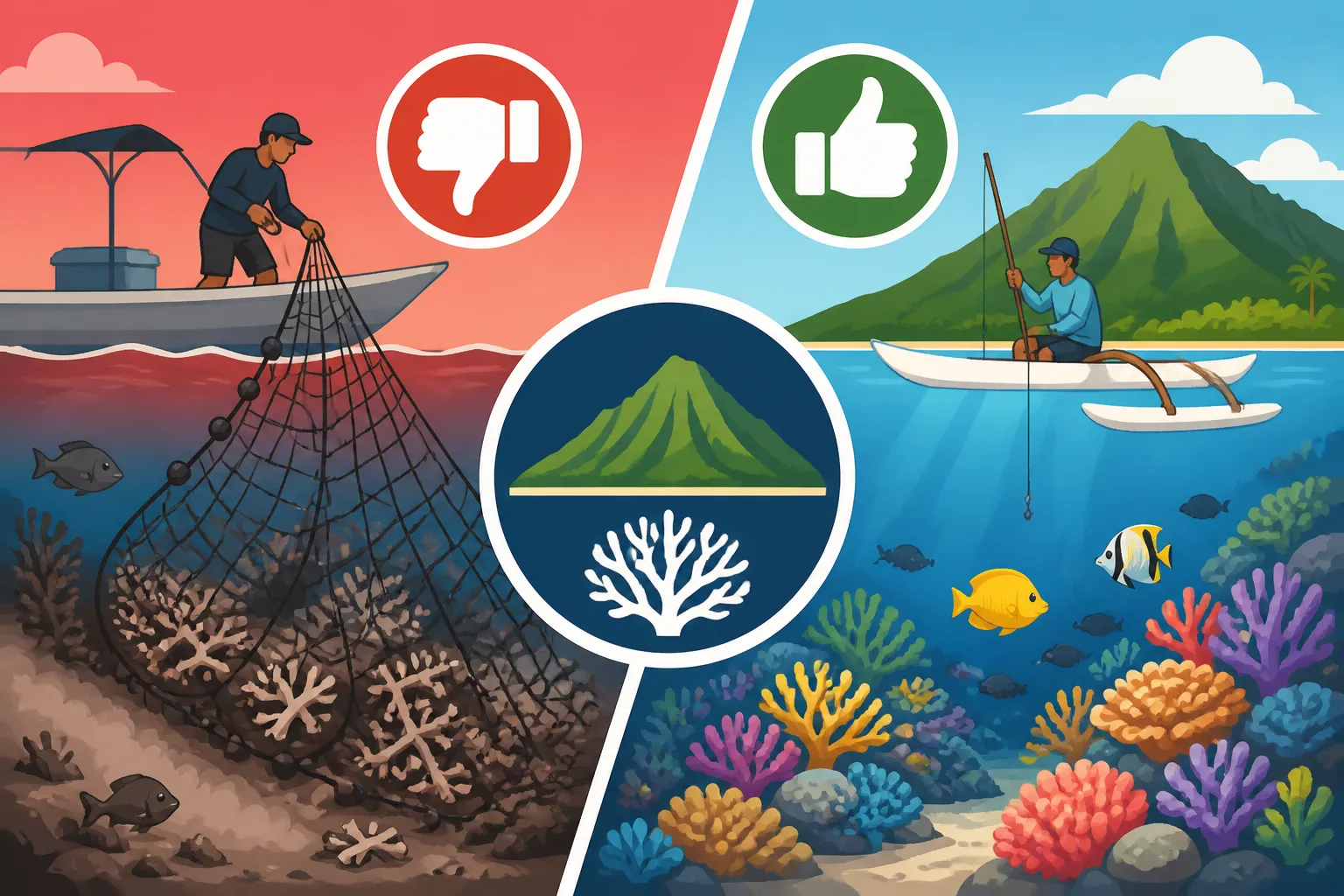
The most direct way anglers can help is by actively targeting and harvesting taape and roi. Unlike native species, which often have strict bag and size limits to protect their populations, there are generally no such restrictions on these invasive fish. In fact, the Hawaii Division of Aquatic Resources (DAR) encourages their removal. When you're out bottomfishing or doing some shore fishing around the reefs, make it a point to keep any taape or roi you catch. Many local anglers make a conscious effort to remove these fish, understanding the ecological benefit. If you're looking for gear, you can find a wide range of fishing rods, reels, and tackle suitable for reef fishing on Amazon, ensuring you're well-equipped to target these specific species.
Don't be afraid to experiment with different baits and techniques. Taape are often caught with small pieces of squid or cut bait, and they respond well to chumming. Roi, being ambush predators, might require a bit more patience and targeting structure with live bait or artificial lures. Learning Common taape and roi habits in Hawaiian waters can significantly increase your success rate. Consider bringing a cooler filled with ice—easily found among the many reliable, insulated coolers on Amazon—to keep your catch fresh for dinner, as both species are edible when properly handled.
Responsible Fishing Practices and Species Identification
Beyond actively removing invasive species, practicing responsible fishing techniques is crucial. This means minimizing bycatch of native species and ensuring proper handling and release of any non-target fish. It's vital to be able to distinguish between invasive and native fish. While taape and roi are fairly distinct, there are many species on the reef that can look similar, especially to an untrained eye. If you're unsure, it's always best to err on the side of caution and release the fish if it appears to be a native species and doesn't meet the legal harvest criteria. A good fish identification guide specific to Hawaiian waters, which you can purchase on Amazon, can be an invaluable tool. Learning about Reef Fish Species Identification Guide for Hawaii is an excellent way to prepare yourself.
Familiarize yourself with Hawaii Bag and Size Limits by Species for native fish. Adhering to these regulations is paramount for sustaining healthy populations. When you’re fishing in specific areas, be aware of any special rules. For example, Hawaii Marine Life Conservation Districts, Explained often have very strict regulations, or even prohibit fishing entirely, to protect delicate ecosystems. Always check local guidelines before heading out.
Education and Advocacy
One of the most powerful things you can do is educate yourself and others. Share your knowledge about the negative impacts of taape and roi with fellow anglers, friends, and family. The more people who understand the problem, the more collective action we can take. Encourage others to harvest these invasive species and adopt responsible fishing practices. Learning What to do if you catch an invasive fish species in Hawaii is a great step.
Consider supporting local conservation efforts and organizations that are working to restore Hawaii's reefs. Many groups are dedicated to scientific research, public education, and hands-on restoration projects. Every voice and every action, no matter how small it may seem, contributes to the larger goal of protecting Hawaii's unique and irreplaceable marine environment. For those interested in learning more about marine conservation or even new recipes for invasive species, Amazon offers a treasure trove of educational materials that can further your understanding.
Targeting Taape and Roi: Techniques and Locations
Knowing what these fish look like and why they're a problem is one thing; actually getting them on the hook is another. Luckily, both taape and roi are generally not shy, and with the right approach, you can have a productive day on the water while doing your part for conservation. You might also want to consult guides on Shore Fishing Techniques for Hawaii or Bottomfishing in Hawaii for broader context on techniques.
Where to Find Them
Taape are ubiquitous around the main Hawaiian Islands. You'll often find large schools in harbors, near pier pilings, around shallow to mid-depth reef structures, and even in sandy areas adjacent to reefs. They're particularly common in areas with good cover and food availability, like the outer edges of coral bommies or ledges where baitfish gather. Areas with strong current breaks can also hold taape schools. For example, when fishing in a place like Best Reef Fishing Spots in Hawaii, you can almost guarantee encountering taape.
Roi prefer more structured, rocky environments. They are ambush predators, so they'll typically be found tucked into caves, under ledges, or within intricate coral formations. You're less likely to see them schooling in open water; instead, they'll be solitary or in very small groups, waiting for prey to swim by. Good places to look for roi are near dramatic drop-offs, lava tubes, or any part of the reef that offers plenty of hiding spots. Anglers practicing Hawaii Spearfishing Regulations often encounter roi, especially when targeting other reef fish.
Effective Techniques for Harvest
For taape, a common and effective technique is light tackle bottom fishing. Use small hooks (sizes 4 to 1/0 are usually good) with light to medium line. A simple paternoster rig or a small sliding sinker rig works well. Bait them with small pieces of squid, shrimp, or cut fish bait like opelu or akule. Chumming with mashed up fish or stale bread can be incredibly effective in drawing schools of taape close to your fishing spot. They are not particularly picky eaters and will often hit a bait aggressively. Topwater lures or small jigs can also entice them, especially if they are actively feeding on the surface.
Targeting roi requires a slightly different approach due to their predatory nature. Live bait, such as a small opelu, akule, or even a juvenile taape, fished near heavy structure is often the most effective. You can also use artificial lures that imitate small fish, like soft plastic swimbaits or diving plugs. Jigging near rocky ledges or dropping a weighted bait right into a suspected hideout can often provoke a strike. Be prepared for a strong, quick fight, as they will try to dart back into cover immediately. A sturdier rod and reel setup than what you'd use for taape might be a good idea for roi, especially to pull them out of structure. When selecting lures or jigs, you can explore the extensive selection available on Amazon to find options that imitate the local baitfish that roi prey on.
Ultimately, by understanding these invasive species and taking active steps to remove them, we can all contribute to the long-term health and resilience of Hawaii's precious coral reefs and the native marine life that calls them home.
Disclaimer
This article is for general informational purposes only and does not constitute professional advice. Laws, prices and regulations vary by location and change over time. Consult a qualified professional for guidance on your specific situation.