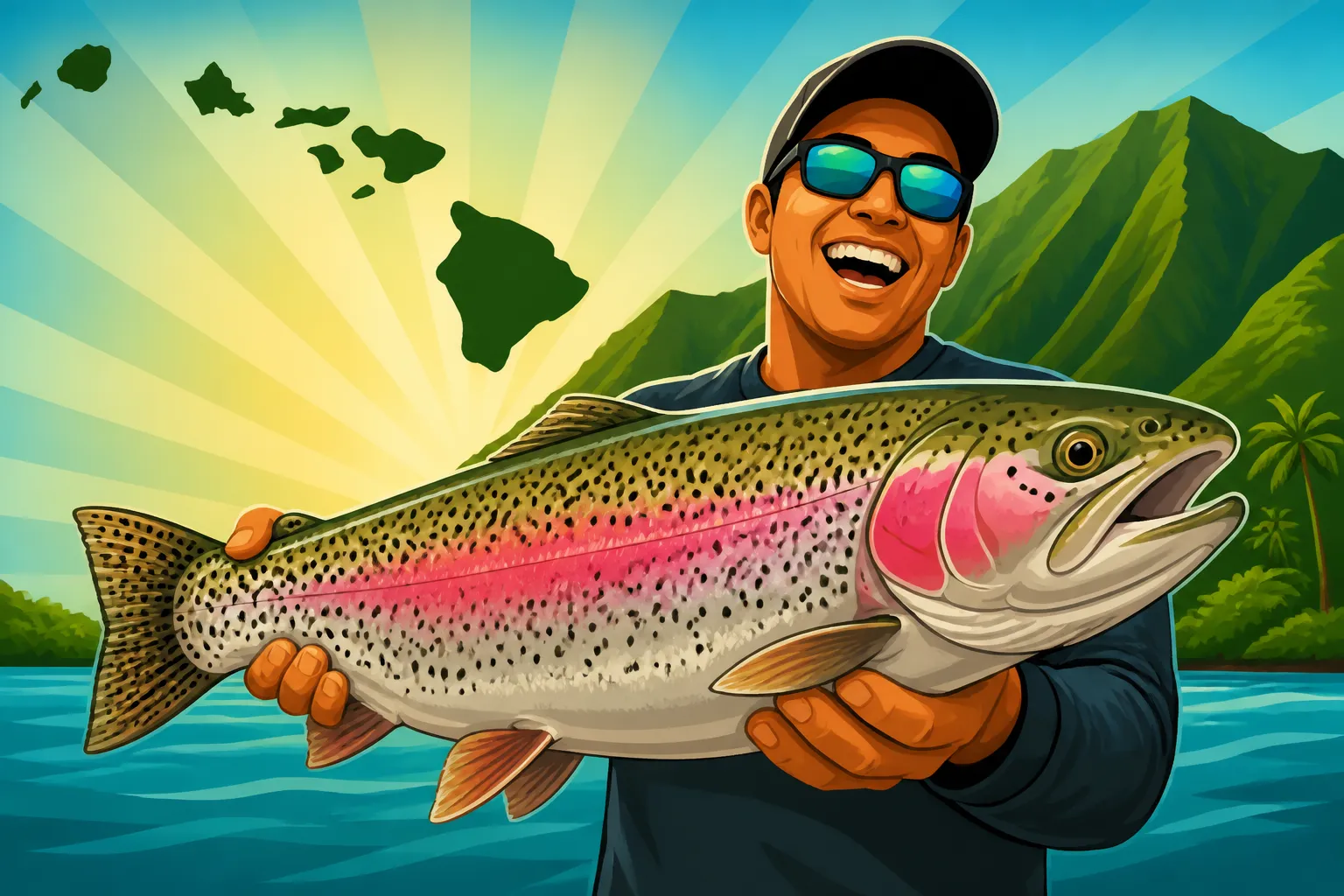
Hawaii state record rainbow trout weight
For anglers who dream of catching a record-breaking fish, the idea of pursuing a state record rainbow trout in Hawaii might seem like something out of a fantasy. After all, Hawaii is known for its incredible offshore pelagics and vibrant reef fish, not typically cold-water trout. However, there's a unique and often overlooked freshwater fishery here that offers a legitimate, albeit challenging, opportunity for those looking to etch their name into the state's fishing history books by landing the heaviest rainbow trout. This guide will dive deep into what it takes to understand and pursue this remarkable freshwater record.
The Elusive Hawaii State Record Rainbow Trout: Understanding the Target
When most people think of Hawaii fishing, they picture towering blue marlin leaping from turquoise waters or vibrant mahimahi flashing in the sun. But nestled in the cooler, higher elevations of Kauai, there's a small but dedicated community of anglers who chase a different kind of prize: the rainbow trout. These aren't native fish; they were introduced decades ago to provide a unique recreational fishing opportunity. For those chasing records, the allure isn't just the fight, but the knowledge that they're pursuing a truly unique accomplishment in a truly unique location. The existing Hawaii state record for rainbow trout stands as a testament to the potential for these fish to thrive and grow to impressive sizes in specific Hawaiian waters. This record acts as a benchmark, a challenge to every freshwater angler on the islands.
What Makes a Record-Breaking Trout in Hawaii?
Unlike the massive pelagic fish that can weigh hundreds or even thousands of pounds, a record rainbow trout in Hawaii is measured in pounds and ounces. This isn't about brute strength or offshore battles; it's about finesse, knowledge of the local waters, and a touch of luck. A "record-breaking" trout means a fish that surpasses the current documented weight, often by mere ounces, making every weigh-in a nail-biting event. These trout, while not as enormous as their mainland counterparts in some large rivers, are robust and healthy, adapting surprisingly well to their island home. They develop a strong fight, fueled by the pristine mountain stream environments they inhabit.
The Significance of a Freshwater Record in a Saltwater Paradise
Achieving a freshwater record in a place synonymous with ocean fishing carries a special kind of prestige. It highlights the diversity of Hawaii's aquatic ecosystems and the dedication of anglers who look beyond the obvious. It's a nod to conservation efforts and the careful management of these specific freshwater areas. For many, it's about proving that quality freshwater angling exists here, and that the thrill of the catch isn't limited to the deep blue sea. Imagine telling stories of your record-setting trout against a backdrop of volcanic peaks and lush rainforest – it’s a truly distinctive Hawaiian fishing tale.
Where to Find Hawaii's Rainbow Trout: The Kokee Public Fishing Area
The vast majority of rainbow trout fishing, and thus the hunt for the Hawaii state record, is concentrated in one primary location: the Kokee Public Fishing Area (PFA) on Kauai. This isn't a sprawling network of rivers; it's a specific, managed area where trout have been stocked for generations. Understanding the Kokee PFA is crucial for anyone hoping to land a trophy-sized trout. It’s a completely different experience than what you'd find on other islands, demanding a shift in mindset from ocean swells to tranquil mountain streams. You'll need to be prepared for the specific conditions and regulations of this unique high-elevation environment.
Navigating the Kokee Public Fishing Area
The Kokee PFA encompasses several streams within Kokee State Park, notably the Waimea River and its tributaries like Mohihi Stream, Waiakoali Stream, and Kawaikoi Stream. These are not wide, meandering rivers, but rather smaller, often fast-flowing mountain streams that wind through dense, beautiful rainforest. Access can range from relatively easy roadside stops to challenging hikes through muddy, uneven terrain. This means anglers need to be physically prepared and equipped with appropriate hiking gear in addition to their fishing tackle. The dense foliage and rocky bottoms present their own challenges, requiring careful casting and stealthy approaches to avoid spooking the fish. For a deeper understanding of the area, check out our guide on the Kokee Public Fishing Area Guide.
Stocking Efforts and Their Impact on Trout Size
The rainbow trout in Kokee PFA are sustained through an annual stocking program managed by the Hawaii Department of Land and Natural Resources (DLNR). This program introduces hatchery-raised fingerlings into the streams, ensuring a viable population for recreational fishing. While most of these fish are caught at a modest size, some evade capture, continue to grow, and adapt to the wild. These "holdover" trout are the ones that typically reach impressive sizes and become potential record breakers. They learn to forage naturally, become more wary, and develop the strength that makes them formidable opponents on the line. Understanding the Rainbow Trout: Hawaii's Only Freshwater Trout Fishery can provide more context on these stocking practices.
Strategies for Targeting Record-Sized Trout in Hawaii
Catching a truly large rainbow trout in Hawaii is more than just luck; it involves strategic planning, the right gear, and a deep understanding of trout behavior in these unique island streams. It’s about being patient, persistent, and prepared for the unpredictable conditions of a mountain environment. This isn't a fishery where you can just toss a line in and expect a monster; it requires a thoughtful approach, just like any other pursuit of a record.
Gear and Tackle for Kokee Trout
When it comes to tackle, lighter setups are generally preferred for Kokee's streams. A light to ultra-light spinning rod (4-6 foot range) paired with a small spinning reel spooled with 4-6 lb test monofilament or fluorocarbon line is a common choice. Fly fishing is also incredibly popular, with 2-5 weight rods being ideal for these smaller waters.
- Lures and Baits: Small spinners (like Rooster Tails or Mepps), spoons, and flies (woolly buggers, nymphs, dry flies like stimulators) are all effective. Live baits like worms or salmon eggs can also be highly productive, especially for larger, less pressured fish.
- Essential Accessories: Don't forget a small landing net with a fine mesh to protect the fish (especially if you plan to release it), forceps for hook removal, and a reliable scale if you're seriously chasing a record. You can find many of these specialized items, including precise digital scales and a wide array of lures, on platforms like Amazon.
- Waders and Boots: The stream banks can be slippery, and water levels can vary. Waders or waterproof boots with good traction are essential for safely navigating the streams and accessing prime fishing spots.
Reading the Water and Approaching Fish
Trout in Kokee often hold in pools, behind larger rocks, or in deeper runs where they can ambush prey and find cover. Learning to "read the water" – identifying these prime holding spots – is key. A stealthy approach is paramount; trout are easily spooked by shadows, sudden movements, or heavy footsteps on the bank. Cast upstream and let your lure or fly drift naturally downstream into these likely spots. Pay attention to changes in current, depth, and structure. Understanding Best Techniques for Freshwater Trout at Kokee will certainly give you an edge.
Timing Your Record Attempt
The fishing season for rainbow trout in Kokee PFA is typically regulated and announced annually by the DLNR. This season usually runs from late spring through late summer or early fall. The opening weekend is often crowded, but subsequent weeks can offer excellent fishing as pressure subsides. Weather conditions also play a huge role. After heavy rains, the streams can be high and murky, making fishing difficult. Clear, stable weather generally provides the best conditions. Early mornings and late afternoons are often the most productive times of day, as trout are more active during cooler periods and lower light. Keep an eye on announcements for Hawaii Kokee trout fishing season dates to plan your trip effectively.
Preserving the Catch: Documentation for a State Record
So, you've hooked into a monster, battled it to the bank, and it looks like a potential state record rainbow trout. The adrenaline is pumping, but this is where preparation and adherence to strict rules become critical. A potential record fish needs to be handled and documented meticulously to be recognized officially. This isn't just about showing off; it's about following a rigorous process to ensure the integrity of the record books.
Weighing and Measuring Your Trout
The most crucial step is getting an accurate weight. You'll need a certified scale, ideally one that has been recently calibrated. Many tackle shops or official weigh stations have these. The fish should be weighed as quickly as possible after being caught, ensuring it is fresh and intact. For measurements, note the total length (from the tip of the nose to the tip of the tail) and girth (around the thickest part of the body). It's also wise to take clear photographs of the fish, especially with a ruler or measuring tape next to it, and with the scale showing the weight. Remember, precision is everything when it comes to claiming a record. Many serious anglers even carry a small, portable certified scale, often purchased through retailers like Amazon, just for such occasions.
Adhering to Rules and Regulations
Before even heading out, it's essential to be intimately familiar with Hawaii's fishing regulations. This includes understanding the Hawaii Bag and Size Limits by Species for trout, as well as any specific rules for the Kokee PFA. You'll also need to ensure you have the proper Hawaii Freshwater Fishing License and Rules. Fishing without the required license can lead to serious Hawaii fishing without a license penalty and automatically disqualify any potential record. Some areas may be designated Hawaii Catch and Release Only Freshwater Waters or have Hawaii Special Regulation Waters in Hawaii, so double-check your exact fishing location. The DLNR website is the authoritative source for all current rules.
Submitting Your Record Claim
Once you have all your documentation – weight, measurements, photographs, and witness statements (if available) – you'll need to submit your claim to the appropriate authorities, typically the Hawaii DLNR Division of Aquatic Resources. They will have specific forms and procedures that must be followed precisely. It might involve a biological verification of the species if there's any doubt. This process can take time, but the reward of having your name in the record books is worth the effort for those dedicated few who pursue these unique freshwater giants in Hawaii.
| Characteristic | Typical Stocked Trout | Holdover/Potential Record Trout |
|---|---|---|
| Size | 8-12 inches, <1 lb | 15+ inches, 1+ lb (up to current record) |
| Coloration | Often lighter, less vibrant | Deeper, more distinct colors; darker backs, richer reds |
| Condition | Good, but sometimes uniform | Robust, powerful, often thicker girth |
| Fight | Spirited, but generally short | Strong, sustained runs, head shakes, often jumps |
| Warilyness | Less cautious, easier to catch | Highly wary, easily spooked, harder to fool |
| Location | More commonly in accessible areas | Often in deeper, more secluded pools or runs |
| Diet | Hatchery pellets initially, then natural | Primarily natural forage (insects, small fish) |
Disclaimer
This article is for general informational purposes only and does not constitute professional advice. Laws, prices and regulations vary by location and change over time. Consult a qualified professional for guidance on your specific situation.