What marlin eat off the Kona Coast
One of the most common frustrations for anglers heading out to the legendary waters off the Kona Coast is figuring out what, exactly, those elusive marlin are biting on. It's easy to feel overwhelmed by the sheer size of the ocean and the myriad of potential food sources. This comprehensive guide will pull back the curtain on the typical diet of marlin in this renowned fishing ground, giving you the insights you need to confidently choose your bait and lures.
Understanding the Marlin's Predatory Nature
Marlin are apex predators of the open ocean, built for speed and power. Their entire physiology is geared towards hunting down fast-moving prey. They possess incredible eyesight, allowing them to spot potential meals from a distance, even in choppy water. Their long, pointed bill isn't just for show; it's a formidable weapon used to stun or injure prey before they move in for the kill. This predatory prowess means they're constantly on the lookout for a hearty meal, and their diet is a direct reflection of what's abundant and accessible in the vibrant ecosystem of the Kona Coast.
The Dynamics of a Marlin Hunt
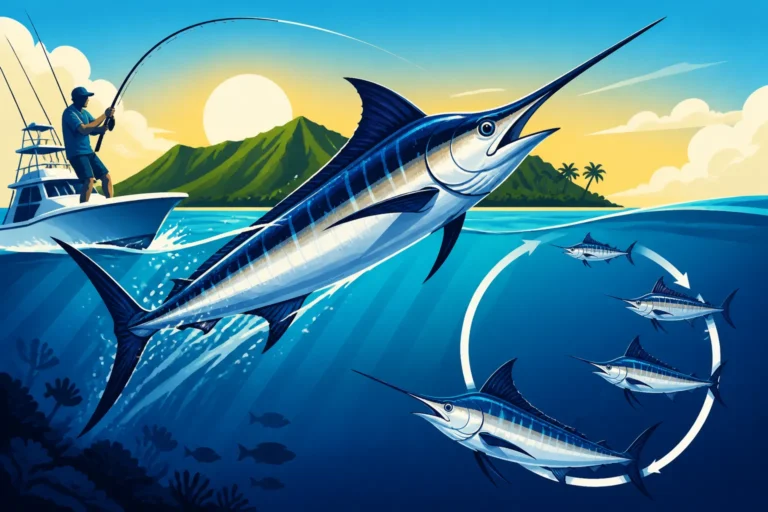
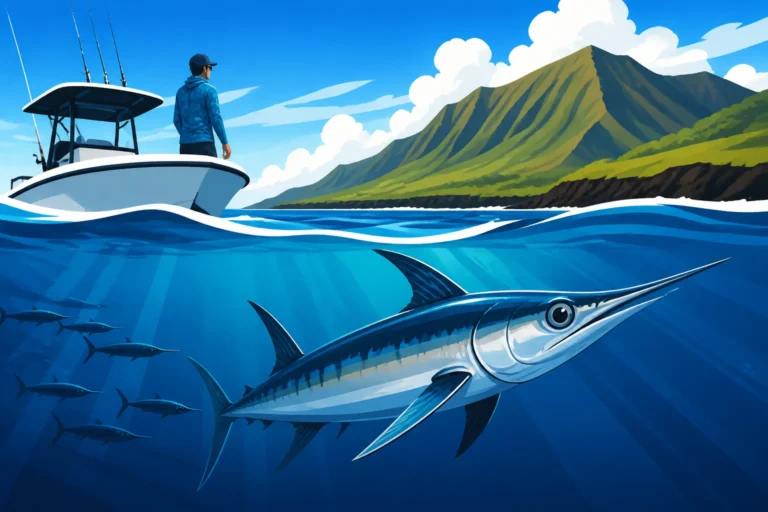
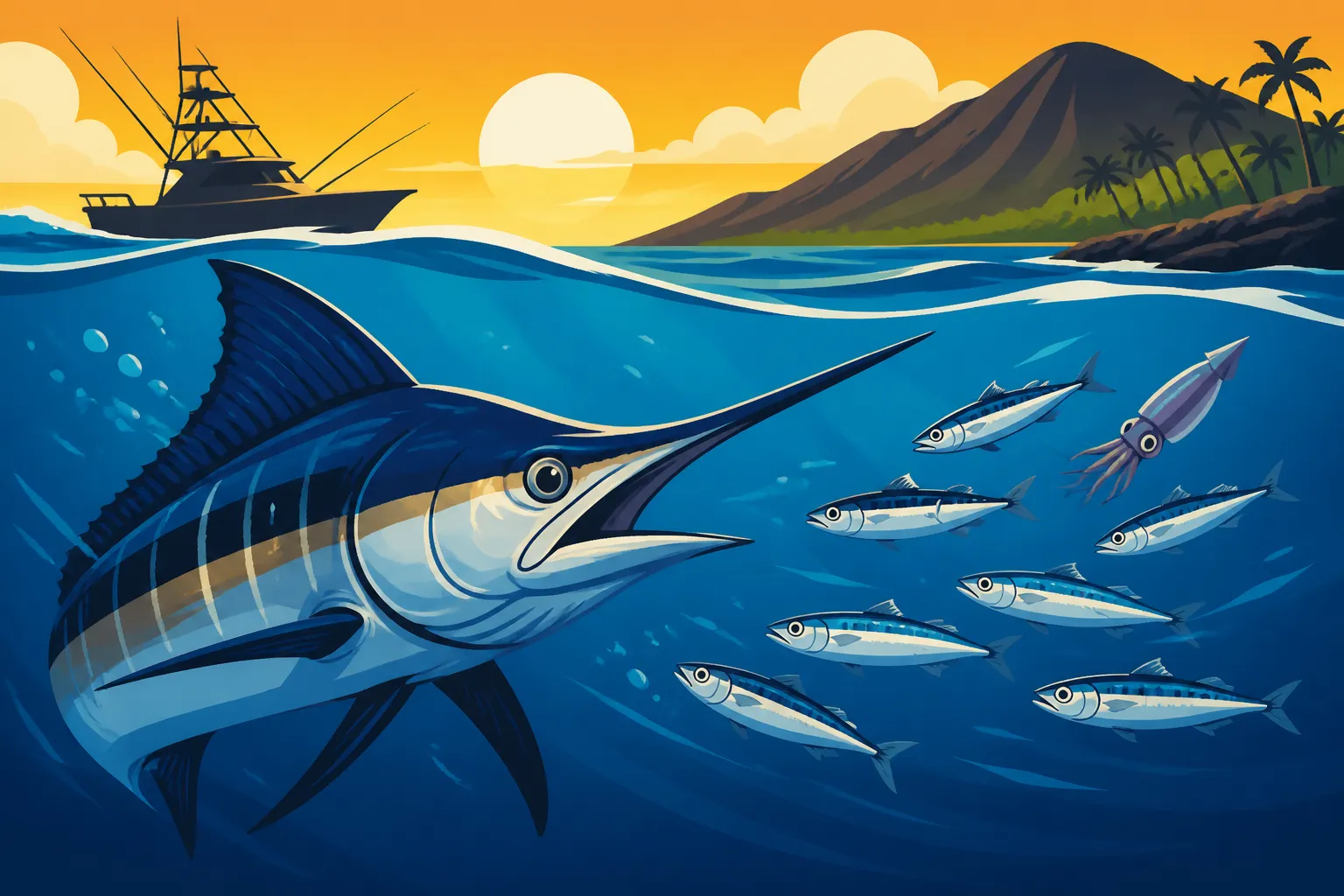
Imagine a massive blue marlin, a true leviathan of the deep, cruising silently in the sapphire-blue waters off Kona. It's not just idly swimming; it's actively hunting. Marlin often stalk schools of baitfish, using their dark backs to blend into the depths below, then ambushing their targets from beneath. They might slash through a bait ball, scattering fish and then picking off the stunned or injured ones. This makes them incredibly effective hunters, always on the move, always searching for the next opportunity. Understanding this dynamic helps us appreciate why certain baits and lures are so effective. They're designed to mimic the exact behavior of the marlin's natural food source.
Why Kona is a Marlin Hotspot
The Kona Coast is unique because the Big Island's volcanic slopes drop precipitously into deep ocean trenches just a few miles offshore. This means that pelagic species like marlin, which typically inhabit deep waters, are accessible much closer to shore compared to other locations. These deep waters are also home to a rich food chain, from small baitfish to larger game fish, all attracted by the currents and upwellings that bring nutrients to the surface. This unique geography creates a perfect feeding ground, making it a prime destination for Marlin Fishing off the Kona Coast.
Primary Prey Species for Kona Marlin
Marlin are opportunistic feeders, meaning they'll pretty much eat whatever is available and seems like a good meal. However, certain species make up the bulk of their diet off the Kona Coast due to their abundance and how easily marlin can hunt them.
Tunas and Mackerel
Without a doubt, smaller tuna species and various types of mackerel are high on the marlin's menu. Skipjack tuna, often called "aku" in Hawaii, and juvenile yellowfin tuna ("ahi") are incredibly fast and energetic, but they form large schools that marlin can easily target. Marlin will often patrol the edges of these schools, or even charge right through them, to grab a meal. It's a classic example of a predator-prey relationship playing out in the open ocean. These are some of the most sought-after food items for a hungry marlin. You can learn more about these fascinating fish by checking out Ahi (Yellowfin Tuna) Fishing in Hawaii.
Mahimahi and Ono
Mahimahi (also known as dorado or dolphin fish) and ono (wahoo) are also significant components of a marlin's diet. These fish are fast, aggressive, and often found in similar open-ocean environments as marlin. Mahimahi, with their vibrant colors, often congregate around floating debris or FADs (Fish Aggregating Devices), which makes them easy targets for lurking marlin. Ono, with their elongated bodies and razor-sharp teeth, are incredibly speedy, but a marlin's burst of acceleration can often outmatch them. These encounters are a common sight, making them ideal targets for marlin. If you're keen to learn more about targeting these exciting species, dive into Mahimahi Fishing in Hawaii or Ono (Wahoo) Fishing in Hawaii.
Squid and Flying Fish
While not as frequently discussed as tuna or mahimahi, squid and flying fish also play a crucial role in the marlin's diet, especially during certain times of the year or under specific conditions. Flying fish are often seen "flying" across the surface of the water, attempting to escape predators like marlin, mahimahi, and ono. This surface activity makes them an irresistible target for a marlin looking for an easy meal. Squid, on the other hand, are often found deeper in the water column or come closer to the surface at night, and marlin are perfectly equipped to hunt them down. Many successful marlin lures mimic the appearance and action of these important bait species.
The Role of Bait Balls and Ocean Currents
Marlin are incredibly efficient hunters, and they often capitalize on natural phenomena that concentrate their prey. Bait balls and ocean currents are two of the most significant factors influencing where marlin feed and what they encounter.
Bait Balls: A Marlin's Buffet
Imagine thousands upon thousands of small baitfish, like opelu (mackerel scad) or akule (bigeye scad), schooling together in a dense, swirling mass. This is a bait ball, and it's essentially a giant buffet for pelagic predators. Marlin, along with other species like tuna and mahimahi, will crash into these bait balls, disorienting and devouring the fish. When you're out on the water and spot signs of a bait ball – like diving birds or splashes on the surface – it's a strong indicator that larger predators, including marlin, are likely in the vicinity. Targeting these areas with appropriate lures and baits is often key to a successful marlin trip.
Ocean Currents and Temperature Breaks
The ocean off Kona is a dynamic environment, constantly shaped by powerful currents. These currents often create "current lines" or "temperature breaks" where different bodies of water meet. These areas are natural convergence zones for nutrients, which in turn attract baitfish, and consequently, larger predators like marlin. Marlin will often patrol these current lines, waiting for unsuspecting prey to drift by. Smart anglers and charter captains know to look for these subtle signs on the water, as they often mark prime feeding zones. The Kona Coast's unique geological features mean these deep water currents and upwellings are consistently bringing food sources into accessible fishing grounds. This is why understanding Hawaii Fishing Seasons by Month can be so helpful.
Seasonal Shifts and Opportunistic Feeding
Marlin don't just eat the same thing all year round. Their diet, like that of many predators, is influenced by the availability of prey, which can shift with seasons, weather patterns, and even lunar cycles. Being aware of these changes can significantly impact your fishing strategy.
Adapting to Seasonal Prey Availability
During certain times of the year, specific baitfish or game fish populations might boom or migrate through the Kona waters. For instance, there might be periods when skipjack tuna are incredibly abundant, and marlin will gorge themselves on them. Other times, mahimahi might be more prevalent. Marlin are highly adaptable; they'll switch their primary food source based on what's most plentiful and easiest to catch. This means that a bait or lure that was killer last month might be less effective this month if the local food chain has shifted. It's why seasoned captains constantly monitor conditions and adapt their spread.
The True Opportunists of the Open Ocean
Beyond their primary prey, marlin are also incredibly opportunistic. If something looks like a meal and presents itself, they'll often strike. This could be anything from a wounded fish struggling on the surface to a stray reef fish that ventured too far offshore. Their predatory instinct is incredibly strong. This also means that artificial lures, which don't perfectly mimic any single species but create a compelling flash and action, can be highly effective. The key is to present something that triggers that aggressive, predatory response.
Matching Your Bait and Lures to Marlin Preferences
Knowing what marlin eat is one thing; translating that into a successful fishing strategy is another. This is where understanding how to present your offerings comes into play. Whether you're using live bait or artificial lures, the goal is always to imitate the marlin's natural prey.
Live Bait: The Real Deal
For many serious marlin anglers, nothing beats live bait. A frisky skipjack tuna, mahimahi, or even a large mackerel trolled slowly behind the boat is often irresistible to a marlin. The natural scent, swimming action, and distress signals of a live baitfish are incredibly potent attractants. When using live bait, the presentation needs to be as natural as possible, allowing the bait to swim freely and realistically. This can be particularly effective when marlin are being finicky or when targeting truly massive fish. Learning How to Rig Ballyhoo for Marlin Trolling is also a good skill, as dead ballyhoo can be rigged to swim like live bait.
Artificial Lures: Mimicking Nature's Best
The world of marlin lures is vast and exciting. These lures are designed to imitate the appearance, action, and sometimes even the sound of the marlin's preferred prey.
| Lure Type | Primary Prey Mimicked | Action / Presentation | Best Conditions |
|---|---|---|---|
| Chugger/Popper | Wounded baitfish, flying fish | Creates surface commotion, splashes | Choppy water, active fish |
| Plunger/Jet Head | Small tuna, mahimahi | Slashes subsurface, leaves a smoke trail | Calm to moderate seas |
| Bullet/Pencil Lure | Skipjack tuna, ono | Fast, straight runner, subtle action | High-speed trolling |
| Skirted Lures | General baitfish, squid | Erratic movement, color flash | Versatile, all conditions |
When selecting lures, consider factors like color (bright colors for clear water, darker for overcast days), size (matching local baitfish), and head shape (which dictates the lure's action). Different lure shapes and sizes create various actions in the water, from subtle swimming motions to aggressive splashing. Experimentation is often key, and many successful anglers will deploy a spread of different lures to see what the marlin are keying in on that day. You can find a huge variety of these on Amazon, from basic trolling skirts to advanced, weighted jet heads. Diving into Best Lures for Marlin Trolling off Kona can give you even more specific recommendations.
The Importance of a Well-Planned Spread
It's not just about the individual bait or lure; it's about how you present them together. A "spread" refers to the arrangement of multiple lines with baits or lures, staggered at different distances behind the boat. This creates a lifelike school of "baitfish" for the marlin to target, covering more water and appealing to different types of strikes. A well-designed spread ensures that whether a marlin prefers to strike something on the surface or something a little deeper, there's an enticing offering waiting for them. Knowing how to set up a good spread is crucial for How to Catch Marlin off the Kona Coast and for maximizing your chances. Don't forget, a good tackle box filled with a variety of lures, leaders, and hooks, all easily purchased from Amazon, is essential before you even hit the dock.
Disclaimer
This article is for general informational purposes only and does not constitute professional advice. Laws, prices and regulations vary by location and change over time. Consult a qualified professional for guidance on your specific situation.