Common taape and roi habits in Hawaiian waters
Fishing in Hawaii is an unparalleled experience, but like any cherished natural environment, our precious marine ecosystems face unique challenges. Among these are introduced species like taape and roi, which, despite offering an exciting catch for anglers, have distinct habits that profoundly impact local populations. Understanding these common behaviors and preferred habitats is crucial for anyone fishing in Hawaii, as it directly contributes to managing their presence and protecting our native marine life. This guide will delve deep into the world of taape and roi, giving you the knowledge you need to identify them, understand their place in our waters, and even target them responsibly.
Understanding Taape and Roi: The Basics
When you're out on the water, whether you're dangling a line from shore or dropping baits in deeper blue, you're bound to encounter a myriad of fish. Among them, two non-native species often stir up conversations: taape and roi. They've established themselves firmly in Hawaiian waters, and while they can be a fun fight, it's important to understand why they're here and what impact they have.
Identifying Taape and Roi in the Wild
Let's start with the basics of telling these two apart. It's not uncommon for new anglers, or even seasoned ones visiting Hawaii, to confuse them with native species, but they have some pretty clear distinguishing features once you know what to look for.
Taape, also known as bluestripe snapper, are quite distinctive. They typically have a yellowish body with prominent horizontal bright blue stripes running along their sides. Their fins are often yellow, and they have a fairly classic snapper shape. They're usually found schooling, and seeing a bright yellow and blue mass moving over the reef is a dead giveaway. They tend to be on the smaller side, often in the 10-14 inch range, though larger ones are certainly caught. Roi, on the other hand, are commonly called peacock grouper or toadfishes, and their appearance is quite different. They have a more mottled, camouflage pattern, typically greenish-brown with numerous small, iridescent blue spots, almost like peacock feathers. Their mouth is quite large and their body can be chunky, reminiscent of a toad, which is where that nickname comes from. Unlike taape, roi are generally solitary hunters, though you might find them in close proximity to each other in rocky areas. They can also grow much larger than taape, sometimes reaching well over two feet in length. For a broader look at species, check out our Reef Fish Species Identification Guide for Hawaii.
Their Arrival and Impact on Hawaiian Ecosystems
Neither taape nor roi are native to Hawaii. Taape were intentionally introduced in the 1950s by the State of Hawaii as a food fish, primarily from the Marquesas Islands. The idea was to supplement the local food supply and provide new fishing opportunities. Roi, also an intentional introduction in the 1950s, came from the South Pacific, specifically French Polynesia. Both introductions, despite good intentions, have had unforeseen and largely negative consequences on Hawaii's delicate marine balance.
The issue with both species is that they've proven to be incredibly successful at reproducing and establishing themselves, often outcompeting or preying on native fish populations. Taape are voracious feeders that compete directly with native snappers and goatfish for food and habitat. Their schooling behavior means they can quickly deplete food sources in an area. Roi are ambush predators that feast on small native reef fish and invertebrates, disrupting the natural food web. This predatory pressure can significantly impact the populations of our unique endemic species, which haven't evolved to deal with such efficient hunters. This concern is why you'll often hear discussions about Are Taape and Roi Bad for Hawaii's Reefs?.
Where Taape and Roi Call Home in Hawaiian Waters
Understanding the preferred stomping grounds of taape and roi is key to finding them, whether you're targeting them for removal or simply want to know what you might encounter. They’ve managed to adapt to a wide range of marine environments across the islands.
Preferred Habitats and Depths
Taape are incredibly adaptable and can be found in a variety of marine habitats. You'll primarily encounter them in coral reefs, rocky bottoms, and even in sandy areas adjacent to structure. They show a preference for depths ranging from just a few feet in shallow lagoons and nearshore reefs, all the way down to several hundred feet in deeper offshore waters. Their schooling nature means they often congregate around ledges, drop-offs, and submerged structures where they can find cover and food. You might spot them shimmering in the clear waters of a reef flat or see them in your sonar display on a deeper patch reef. They're not picky, which is part of their success story here.
Roi also love rocky and coral reef environments, but they tend to be more associated with caves, crevices, and other hiding spots. As ambush predators, they prefer areas where they can lie in wait, concealed, before darting out to snatch their prey. You'll find them in shallower reefs, tide pools, and deeper rock formations, typically from just a few feet to about 150 feet deep. Unlike the schooling taape, roi are solitary and territorial, often having a preferred den or hunting ground. Their camouflaged appearance makes them blend in seamlessly with the reef, making them harder to spot until they move.
Common Locations Across the Islands
You can pretty much expect to find taape and roi on any of the main Hawaiian islands. They've established populations throughout the archipelago. On Oahu, for instance, you'll find taape in places like Maunalua Bay and around the rocky points of the Windward Coast. Roi are prevalent in the rocky areas along the Wai'anae Coast and in the reef systems off the North Shore. On the Big Island, both are common along the Kona Coast, especially around the numerous lava formations and reef structures. Maui and Kauai are no different; anywhere there's suitable reef habitat, you'll likely find these species lurking.
Anglers targeting a mix of species, especially when bottomfishing, will frequently encounter taape. If you're dropping a line near a reef structure in, say, 30 to 80 feet of water off Maui's south shore, chances are you'll pull up a taape or two. Roi are often caught by spearfishers in shallower reefs or by hook-and-line anglers fishing right on the bottom near rocky hideouts. Even casual shore anglers might hook a taape near a breakwater or rocky outcropping. If you're looking for Best Shore Fishing Spots in Hawaii, be aware that these species are likely present in those areas.
Unpacking Their Daily Lives: Habits and Behaviors
To truly understand taape and roi, it's not enough to just know what they look like and where they live. Delving into their daily habits reveals a lot about why they've become such a dominant force in Hawaii's waters.
Feeding Habits and Diet
Taape are opportunistic and highly effective predators and scavengers. Their diet is incredibly varied, making them fierce competitors for food resources. They will happily eat small fish, crabs, shrimp, mollusks, and other invertebrates. They're not particular about how they get their food either; they'll hunt actively in schools, pick at algae, or scavenge scraps. Their schooling behavior allows them to overwhelm baitfish schools, making them very efficient at finding and consuming food. This broad and aggressive feeding habit means they are constantly competing with native snappers, goatfish, and other reef dwellers for sustenance. When you're bottomfishing, you'll find they hit bait with enthusiasm, often taking chunks intended for other species.
Roi are pure ambush predators. They spend much of their time lurking in the shadows of the reef, waiting for an unsuspecting smaller fish or invertebrate to swim by. Their large mouths are designed for gulping down prey whole. Their diet primarily consists of small reef fish like damselfish, wrasses, and juvenile surgeonfish, but they'll also consume crabs and shrimp. They are excellent at camouflage, blending into the background until they strike with surprising speed. This makes them a direct threat to many of Hawaii's smaller, less assertive native reef fish. If you're fishing with live bait in rocky areas, a roi is a very likely candidate to take your offering.
Schooling, Spawning, and Social Structures
Taape are famous for their schooling behavior. You'll rarely see a single taape; they almost always move in groups, sometimes forming massive schools that can number in the hundreds. This schooling provides protection from larger predators and increases their efficiency in hunting and feeding. They are known to aggregate in large numbers for spawning, releasing eggs and sperm into the water column. This strategy, combined with their fast growth and early maturation, contributes to their high reproductive success, allowing their populations to explode quickly.
Roi, conversely, are typically solitary creatures. While they might occupy the same general reef area, they don't form schools or social groups in the way taape do. They are territorial and will defend their preferred den or hunting spot from other roi. Spawning for roi is a more discreet affair, often involving pairs, and their eggs are typically demersal, meaning they sink to the bottom. Although they don't have the schooling advantage of taape, their predatory efficiency and protective camouflage allow them to reproduce effectively and maintain strong populations without large congregations.
Interaction with Native Species
The presence of both taape and roi significantly alters the natural dynamics of Hawaii's reefs. Taape, with their large schools and aggressive feeding, directly compete with native herbivores and carnivores for food. They can quickly out-compete native snappers, such as the opakapaka, and goatfish like kumu and weke, especially when food resources are limited. This competition puts stress on native populations that are already facing other challenges like habitat loss and climate change.
Roi's impact is more direct and predatory. They actively hunt and consume native reef fish, many of which are slower, less aggressive, and have not evolved defenses against such efficient ambush predators. This can lead to a decline in native fish populations, altering the balance of the reef ecosystem. The concern over their impact is so great that anglers are often encouraged to harvest both species with no bag or size limits, unlike many native fish which have specific Hawaii Bag and Size Limits by Species to protect their numbers. When considering the health of our reefs, these interactions highlight why managing invasive species is so crucial.
Targeting Taape and Roi: An Angler's Approach
Given their widespread presence and ecological impact, anglers are actually encouraged to harvest taape and roi. This isn't just about getting a meal; it's about actively participating in conservation efforts to help restore balance to Hawaii's reefs. So, let's talk about how you can effectively target these species.
Effective Fishing Techniques
Both taape and roi can be caught using similar fishing methods, often as bycatch when targeting other bottomfish. However, if you specifically want to remove them from the ecosystem, there are some tried-and-true approaches.
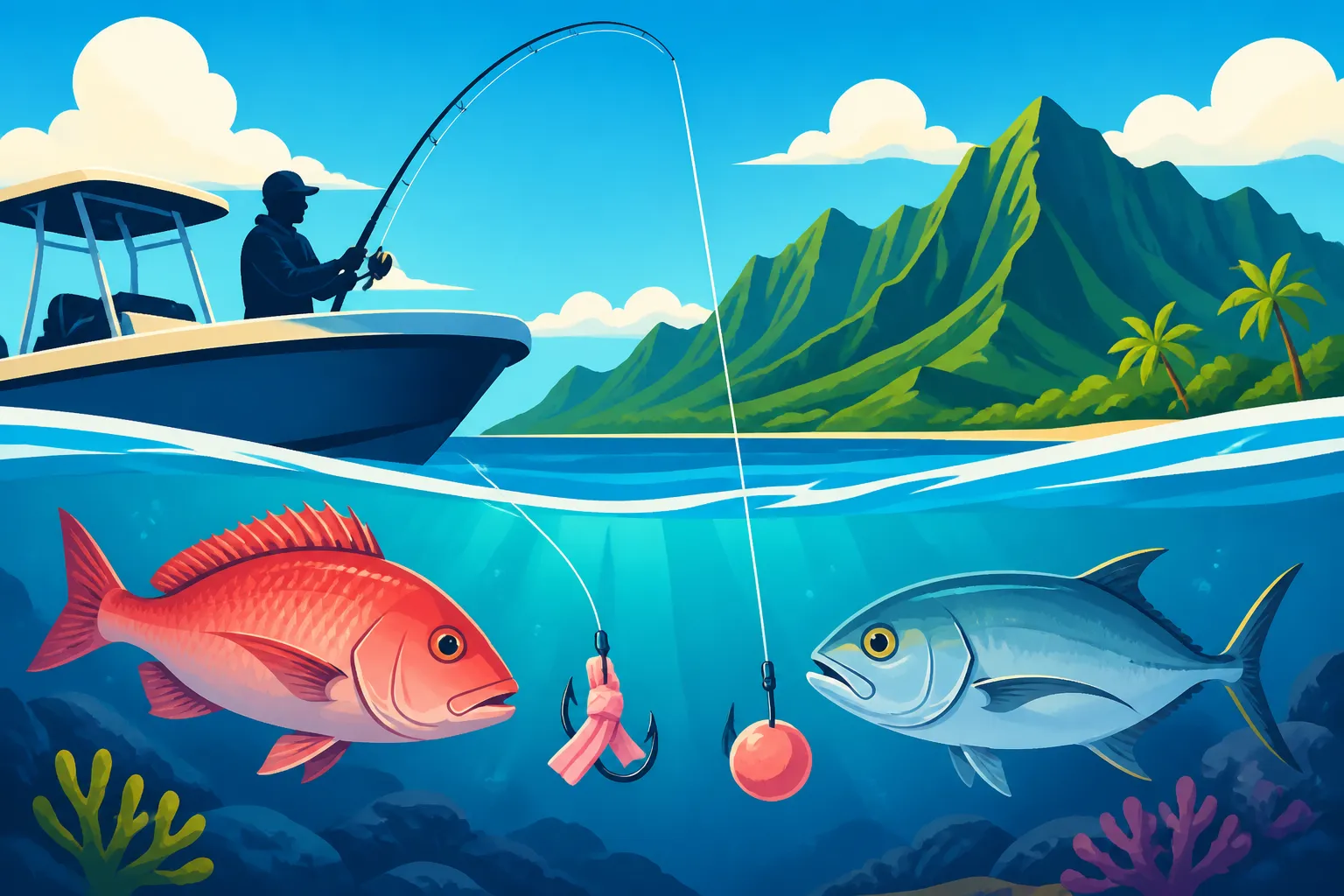
For taape, bottomfishing is incredibly effective. They school up and are not shy when it comes to taking a bait. Dropping a multi-hook rig (often called a sabiki rig or a local equivalent with multiple small hooks) down to the reef with cut bait, shrimp, or even small pieces of squid will often result in multiple hook-ups. They are also known to hit artificial lures, especially small jigs or metal spoons that mimic baitfish. If you're on a boat, drifting over a known reef structure and jigging can be very productive. For shore anglers, casting small weights with baited hooks into deeper pockets around rocky ledges or piers can also yield taape. They often bite aggressively, so you'll know when they're on the line.
Roi are a bit more challenging due to their solitary and ambush nature. They prefer live bait, but will also take cut bait if it's presented close to their hiding spots. The key is to fish tight to the structure – near ledges, caves, and coral heads. Dropping a single hook with a live baitfish (like a small opelu or akule) or a chunk of fresh squid right into a crevice where a roi might be hiding is often the best approach. Jigging can work, but a slower, more deliberate presentation is usually needed. Spearfishing is also a very common and effective method for roi, as their territorial nature makes them somewhat predictable targets once located. Just remember to be mindful of Hawaii Spearfishing Regulations.
Recommended Gear and Tackle
You don't need highly specialized gear to catch taape and roi, which is good news for most anglers. For taape, a light to medium spinning rod and reel combo, spooled with 10-20 lb monofilament or braided line, is usually sufficient. A sensitive tip will help detect their often subtle bites, especially when they're picking at bait. Using a fluorocarbon leader of 20-30 lbs can increase your chances, as taape can be somewhat line-shy in clear water. For hooks, use sizes appropriate for the bait and their mouth size, generally 1/0 to 3/0 circle or J-hooks. Sinkers will depend on the current and depth, but a 1-3 ounce egg sinker or similar weight often does the trick for bottom fishing. Many anglers find their favorite fishing lines and weights readily available on Amazon, making it easy to stock up before a trip.
For roi, you might want to step up your tackle slightly, especially if you expect to encounter larger specimens. A medium to medium-heavy spinning or conventional setup with 20-40 lb line is a good choice. Their powerful initial pull can quickly put stress on lighter gear, especially when they try to dive back into structure. A strong, abrasion-resistant leader of 40-60 lbs fluorocarbon is essential due to their sharp gill plates and the rocky environments they inhabit. Hook sizes from 4/0 to 7/0 are suitable for the larger baits often used for roi. Again, live bait is often preferred, but cut bait can be effective. You can often find a wide selection of durable fishing hooks and robust leaders on Amazon that stand up to the challenge of these reef dwellers.
Responsible Harvesting and Consumption
Because taape and roi are invasive species that negatively impact native Hawaiian fish, anglers are strongly encouraged to keep everything they catch. There are generally no bag or size limits for these species in Hawaii, which is a rare allowance given how carefully other fish populations are managed. This encouragement to harvest is a direct conservation measure. When you remove a taape or roi, you're not just getting a meal; you're helping reduce competition and predation pressure on our precious native fish.
Regarding consumption, both taape and roi are edible, but there are important considerations. Taape are generally considered good table fare, with white, flaky meat. They're often fried, baked, or used in fish stews. Roi, however, carry a higher risk of ciguatera poisoning, a foodborne illness caused by toxins that accumulate in certain reef fish. The risk increases with the size of the fish and from certain geographic areas. While many locals do eat roi, it's wise to exercise caution, especially with larger specimens, and understand the potential risks. For more information, you might want to read Are Roi Safe to Eat in Hawaii?. Always be mindful of What to do if you catch an invasive fish species in Hawaii and consider responsible disposal or consumption.
Here’s a quick comparison of our two invasive friends:
| Feature | Taape (Bluestripe Snapper) | Roi (Peacock Grouper) |
|---|---|---|
| Appearance | Yellow body, distinct blue horizontal stripes, yellow fins | Mottled green-brown, iridescent blue spots, large toad-like mouth |
| Average Size | 10-14 inches (can be larger) | 1-2 feet (can be larger) |
| Preferred Habitat | Coral reefs, rocky bottoms, sand adjacent to structure, lagoons | Reefs, caves, crevices, rocky hideouts |
| Depth Range | Shallow (few feet) to deep (hundreds of feet) | Shallow (few feet) to moderate (150 feet) |
| Social Behavior | Highly schooling, often in large groups | Solitary, territorial ambush predator |
| Diet | Opportunistic; small fish, crustaceans, mollusks, algae, scavengers | Ambush predator; small reef fish, crabs, shrimp |
| Ecological Impact | Outcompetes native fish for food and habitat | Predatory on native reef fish |
| Eating Quality | Good table fare, white flaky meat | Edible, but higher risk of ciguatera poisoning (especially larger fish) |
| Harvest Recommendation | Encouraged to keep all | Encouraged to keep all (with ciguatera caution) |
| Common Gear | Light to medium tackle, multi-hook rigs, cut bait, jigs | Medium to heavy tackle, live bait, cut bait, spearfishing |
Ultimately, understanding the common habits and behaviors of taape and roi isn't just academic; it's an empowering tool for every angler in Hawaii. By knowing their preferences and impacts, you can make informed decisions that contribute to the health and sustainability of our unique ocean environment. So next time you're casting a line, keep an eye out for these two, and know that every catch can be a small victory for Hawaii's precious native fish.
Disclaimer
This article is for general informational purposes only and does not constitute professional advice. Laws, prices and regulations vary by location and change over time. Consult a qualified professional for guidance on your specific situation.